Compare every Japan city in March →
Stay in Osaka in March
125 hotels in the Trip.com pool for Osaka, from US$13 a night.
Opens Trip.com on Fri 5 Mar to Sun 7 Mar 2027; change the dates there.
March in Osaka is really about one thing: cherry blossoms. The city's sakura typically begin opening in the last week of the month, and if you time it right (which, to be fair, is partly luck) you'll catch one of the most photogenic moments in all of Japan. But here's what most guides skip: early March is still firmly winter's tail end. Mornings hover around 5.1°C (41°F), the kind of chill that has you reconsidering that spring jacket you packed. Highs reach about 14.5°C (58°F) by afternoon, comfortable enough for walking but nowhere near warm.
The month splits into two distinct halves. The first couple of weeks feel like a quiet shoulder season: fewer tourists, reasonable hotel rates, plum blossoms still hanging on at Osaka Castle Park. Then around the 20th, something shifts. Vernal Equinox Day brings a national holiday, cherry blossom forecasts start dominating the news, and by the final week, Kema Sakuranomiya Park fills with picnic blankets and the smell of grilled yakitori from temporary yatai stalls. Hotel prices jump accordingly: if you're arriving after March 20th, you'll want those reservations locked in well ahead of time.
Worth noting: March also brings the Spring Grand Sumo Tournament to Edion Arena Osaka. Fifteen days of live sumo in one of only three cities that hosts a honbasho tournament. That alone pulls a dedicated crowd, and the overlap with early sakura season makes late March one of the most rewarding (and most competitive for bookings) windows of the year.
Why visit in March
- Cherry blossoms typically begin opening in the final week, offering the first sakura of the season before the April crowds peak: catch them along the Okawa River at Kema Sakuranomiya Park with far fewer people than you'd see in early April
- The Spring Grand Sumo Tournament (Haru Basho) runs for fifteen days at Edion Arena Osaka, one of only six honbasho held each year across three cities: March is your only chance to see top-division sumo in Osaka
- Temperatures are cool enough for comfortable all-day walking without the oppressive humidity that shuts you down in July and August: you can spend six hours on your feet in Shinsekai and Tennoji without wilting
- Plum blossoms at Osaka Castle Park peak in early March, giving you a quieter, less photographed alternative to sakura before the crowds arrive
- Seasonal spring ingredients appear at Kuromon Market and neighborhood izakayas: fresh bamboo shoots, nanohana greens, and the tail end of prime strawberry season
Worth knowing
- Rainfall picks up sharply: 123mm across roughly 11 rainy days, nearly triple January's total. You'll likely get at least two or three full days of steady rain that can disrupt outdoor plans
- Late March hotel prices surge once cherry blossom forecasts drop, especially near Namba and Dotonbori. Waiting until mid-month to book can cost you 50-80% more than booking two months out
- Cedar and cypress pollen season hits hard in March: if you have any pollen sensitivity, your sinuses will know within hours of landing. Pharmacies stock masks and antihistamines, but the pollen count can be genuinely miserable
- Cherry blossom timing is inherently unpredictable. Some years they open March 22nd, other years not until April 1st. If sakura is your main reason for visiting, you're gambling on a moving target
Best for
Think twice if
March in Osaka is a transitional month that still leans cool. Mornings tend to feel properly cold: the kind where you see your breath if you're walking along the Okawa River before 8am. Afternoons warm enough that a light jacket feels right by lunchtime, but you won't be in a t-shirt. Rain arrives in earnest compared to the dry winter months, often as steady drizzle rather than dramatic downpours, though you'll get the occasional proper storm front pushing through. The humidity sits at a middling 73%, noticeable but nothing like the wet blanket of summer. By the final week, there's a tangible shift in the air: that damp, slightly sweet smell of spring soil that signals the blossoms are close.
Seasonal caution
- Cedar and cypress pollen counts peak across the Kansai region in March: some days register 'very high' on the pollen index. If you have respiratory sensitivities, bring antihistamines from home or pick up masks and medication at any Japanese pharmacy. The pollen can be genuinely debilitating for allergy sufferers.
Year-round climate
Averages from the last 5 years.
| Month | Avg high (°C) | Avg low (°C) | Rainfall (mm) |
|---|---|---|---|
| Jan | 9 | 1 | 42 |
| Feb | 10 | 1 | 61 |
| Mar | 15 | 5 | 123 |
| Apr | 20 | 10 | 158 |
| May | 23 | 14 | 235 |
| Jun | 27 | 20 | 253 |
| Jul | 32 | 25 | 202 |
| Aug | 33 | 26 | 206 |
| Sep | 30 | 23 | 197 |
| Oct | 24 | 15 | 135 |
| Nov | 18 | 9 | 97 |
| Dec | 12 | 3 | 44 |
Holidays and festivals in March
Public holidays
- Vernal Equinox Day(春分の日)21 March 2027
Headline events
Cherry Blossom Season (Sakura)
Late March (roughly March 23-31, varying by year)
Osaka's sakura season typically begins in the final week of March, with the earliest blooms appearing along the Okawa River and at Osaka Castle Park. The exact opening date shifts year to year (sometimes as early as March 22nd, sometimes not until the first days of April) but when it hits, the city transforms. Kema Sakuranomiya Park becomes a corridor of pale pink arching over the riverside path, temporary food stalls appear, and the sweet, faintly grassy scent of the blossoms hangs in the cool air. Full bloom usually follows about a week after first opening, which for many years means early April, but catching the trees at 30-50% bloom has its own quieter appeal.
Haru Basho (Spring Grand Sumo Tournament)
Second Sunday of March through the fourth Sunday (roughly March 9-23)
The only grand sumo tournament held in Osaka each year, the Haru Basho runs for fifteen consecutive days at Edion Arena Osaka in Namba. This is one of six honbasho on the annual calendar, and the Osaka tournament has a reputation for a louder, more raucous crowd than the Tokyo equivalents. Upper-tier seats sell out weeks in advance, but same-day general admission tickets go on sale each morning: get in line early. The crack of the tachiai collision, the referee's sharp calls, the smell of chanko-nabe drifting from the basement restaurant: it's a full sensory event.
Best things to do in March
Hanami (cherry blossom viewing) along the Okawa River
natureKema Sakuranomiya Park stretches roughly 4.2 kilometers (2.6 miles) along the Okawa River, lined with over 4,500 cherry trees. When the blooms open in late March, the path becomes a tunnel of pale pink, with yatai food stalls selling yakitori, takoyaki, and beer. The evening light through the petals has a quality that stops people mid-stride. Bring a ground sheet: the grassy banks fill with hanami parties by mid-afternoon on weekends.
Sakura season typically begins in the final week of March in Osaka, and catching the early 30-50% bloom means fewer crowds than the full-bloom chaos of early AprilBooking tipNo booking needed for the park itself, but nearby restaurants fill fast on weekends during bloom: reserve dinner by Wednesday of that week
Attend the Haru Basho at Edion Arena Osaka
culturalFifteen days of live professional sumo in an arena that holds around 8,000 people. The energy builds through the day: lower-division bouts in the morning, top-division makuuchi matches in the late afternoon. The collision of the tachiai, the referee's barked commands, the ritual salt tossing: it's far more visceral in person than on screen. Tamari-side seats are expensive and sell out months ahead, but masu-za (box seats) and chair seats on the upper levels offer good sightlines.
The Haru Basho is held exclusively in March: this is the only time all year you can see a grand sumo tournament in OsakaBooking tipAdvance tickets go on sale in mid-February through the official Sumo Association site. Upper-level chair seats are the easiest to get. Same-day general admission (jiyuseki) tickets sell from the box office each morning: arrive before 7:30am on weekends
Plum blossom viewing at Osaka Castle Park
natureThe Ume-bayashi plum grove inside Osaka Castle Park holds around 1,270 plum trees across roughly 100 varieties. In early March, the grove is a patchwork of white, pink, and deep red blossoms, with a fragrance that carries: sharper and more honeyed than cherry blossoms. The castle tower rising behind the grove makes for the kind of layered composition photographers travel for. It's notably less crowded than sakura season, almost contemplative by comparison.
Plum blossoms peak in late February through mid-March: by the time cherry blossoms open, the ume season is finishedBooking tipFree access to the plum grove; no booking required. The castle tower interior costs 600 yen. Weekday mornings are the quietest
Night sakura illuminations at Osaka Castle
natureOnce the cherry blossoms begin opening in late March, Osaka Castle Park runs evening illuminations along the Nishinomaru Garden. The trees are lit from below, turning the blossoms translucent against the dark sky, with the castle tower lit in the background. The visual contrast (warm light, cold night air, the faint rustle of petals) is genuinely striking. The crowds thin after 8pm when the temperature drops.
The illuminations only run during cherry blossom season, typically starting late March when the first blooms open and continuing into early AprilBooking tipNishinomaru Garden charges a small entry fee during the illumination period. Arrive after 7:30pm to avoid the post-work rush
Seasonal kaiseki dinner featuring spring ingredients
foodMarch marks the shift to haru-kaiseki (spring kaiseki) at Osaka's traditional restaurants. The multi-course progression uses sakura motifs in the plating and showcases ingredients that exist for only a few weeks: nanohana, young bamboo shoots (takenoko), firefly squid (hotaru-ika), and sakura-dai sea bream. The presentation tends toward restraint: single stems, pale ceramics, a deliberate sense of fleeting beauty that mirrors the blossoms outside.
Spring kaiseki menus appear only in March and April, built around ingredients at their brief seasonal peak: takenoko and hotaru-ika in particular have windows of just a few weeksBooking tipReserve at least a week ahead for well-known kaiseki restaurants in Kitashinchi and Fukushima. Lunch kaiseki courses typically cost a third of dinner and offer similar seasonal ingredients
Strawberry picking day trip to Kishiwada or Sakai
foodStrawberry farms south of Osaka open for ichigo-gari (strawberry picking) through the winter and spring months. March tends to be the sweet spot: the berries are still at peak sweetness, but the farms are less booked than during the February school-holiday rush. Most farms operate on a 30-minute all-you-can-eat format. The berries are warm from the greenhouse, impossibly sweet, and nothing like what you'd buy in a supermarket back home.
March is late enough in the season that the strawberries have concentrated their sugars, but early enough that the plants haven't been picked over: the quality-to-crowd ratio tends to be at its bestBooking tipBook online at least a few days ahead for weekends: walk-in availability is more common on weekdays
Explore Shinsekai and Tsutenkaku Tower on a rainy day
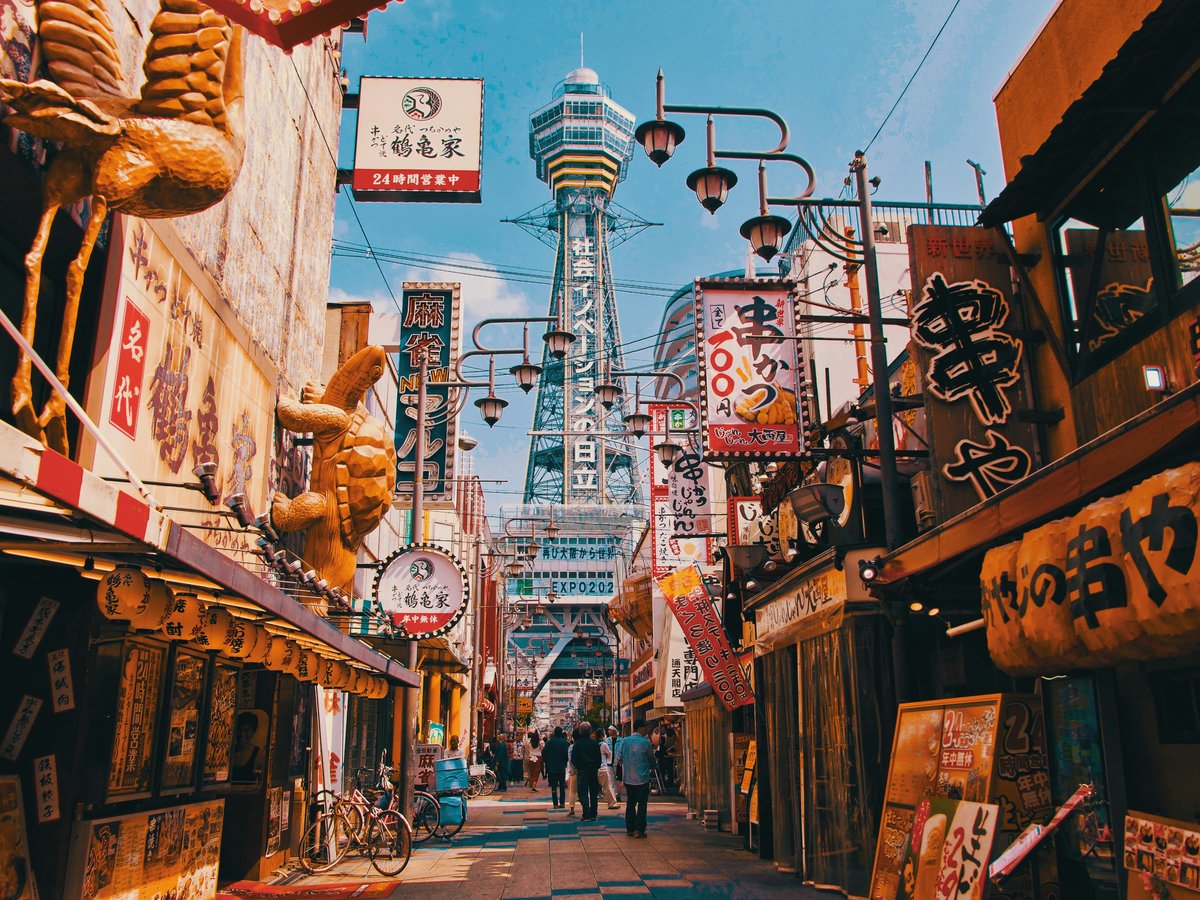
foodShinsekai's covered shopping streets and packed kushikatsu joints make it ideal for the rainy days that March delivers. The neighborhood has a rough, retro energy: neon signs, game arcades with 1990s cabinets, the smell of deep-frying batter leaking from every other doorway. Tsutenkaku Tower looms overhead. The kushikatsu here is the real draw: battered and fried skewers of everything from pork to lotus root to cheese, dipped once in the communal sauce. The no-double-dipping rule is enforced by social pressure and hand-painted signs.
With 11 rainy days on average, you'll want at least one covered, indoor-friendly itinerary: Shinsekai's arcade-covered streets and basement izakayas are purpose-built for wet weatherBooking tipNo reservations needed at most kushikatsu spots, just queue. Peak lunch rush is 12-1pm; arrive at 11:30 or wait until 2pm
Vernal Equinox temple visits at Shitennoji
culturalShitennoji, one of Japan's oldest Buddhist temples, holds its Higan-e ceremony around the Vernal Equinox (March 20-21). The week-long observance draws families paying respects to ancestors, and the temple grounds host a flea market during this period. The atmosphere is quieter and more local than the major tourist temples in Kyoto: you'll see grandmothers in their best clothes, incense smoke curling through the main hall, the low murmur of sutras. It's a window into a side of Osaka that the Dotonbori neon doesn't show.
The Higan ceremony is tied to the spring equinox and only happens twice a year: this is the spring observance, and Shitennoji is one of the most significant sites for it in all of KansaiBooking tipNo booking required. Free entry to the outer grounds; a small fee for the inner precinct. The flea market runs during daylight hours: morning is best for selection
What to eat in March
In season: fruit
Ichigo (Japanese strawberries)
March is still peak strawberry season in the Kansai region. Varieties like Amaou and Tochiotome show up at Kuromon Market and department store food halls, absurdly red and sweet. The price per pack drops slightly from the winter gift-giving peak, making this a good month to eat as many as you can justify.
On menus now
Hamaguri Ushio-jiru (clam clear soup)
Traditional for Hinamatsuri on March 3rd, this delicate clear soup with whole hamaguri clams appears on set menus and at izakayas through early March. The broth is barely seasoned (just dashi and a whisper of salt) letting the briny, mineral flavor of the clams carry everything.
Tai (sea bream) sashimi and tai-meshi
Spring is tai season in the Seto Inland Sea, and Osaka: historically the commercial capital where seafood from across western Japan converged: takes this seriously. The flesh is firm, clean, almost sweet. You'll find it as sashimi, in tai-meshi (sea bream rice), and as part of seasonal kaiseki courses. Sakura-dai, the spring catch, gets its name from the faintly pink skin.
What to drink
Amazake
This warm, lightly sweet fermented rice drink appears at shrine stalls and street vendors through early spring. Low or no alcohol depending on the preparation, it has a thick, porridge-like texture and a comforting yeasty sweetness: the kind of thing you want in your hands while standing under plum blossoms on a cold morning at Sumiyoshi Taisha.
In markets
Nanohana Ohitashi (blanched rapeseed greens)
These bright green shoots with tiny yellow flower buds signal spring on menus across Osaka. Blanched, chilled, and dressed with dashi and soy, they have a mild bitterness and a snap to the stem that works as a palate cleanser between heavier izakaya dishes. Look for them at the small counter spots in Tenma and Ura-Namba.
Festival food
Sakura Mochi
Soft pink rice cake wrapped in a pickled cherry leaf, filled with sweet red bean paste. The salt-sweet contrast and the faintly floral taste of the leaf are distinctive: you'll find them at wagashi shops and convenience stores alike from early March onward. Eating the leaf is optional, but most people do.
Regular events in March
Hinamatsuri (Girls' Day / Doll Festival)Free
Celebrated on March 3rd across Japan, Hinamatsuri sees elaborate tiered displays of traditional hina dolls in department stores, shrines, and some public buildings. Sumiyoshi Taisha and Shitennoji typically have notable displays. Not a public holiday, but restaurants feature seasonal chirashi-zushi and hamaguri clam soup on their March 3rd menus.
March 3Shunbun no Hi (Vernal Equinox Day)Free
A national holiday around March 20-21 marking the spring equinox. Temples and shrines across Osaka hold Higan-e ceremonies for ancestral remembrance. Shitennoji's week-long Higan flea market is the most notable local event. Expect crowds at major temples and some business closures.
March 20 or 21 (varies by year)Osaka Castle Park Plum Festival (Ume Matsuri)Free
The plum grove inside Osaka Castle Park draws visitors through early to mid-March for the tail end of ume season. Not a single-day festival: more of a seasonal draw with occasional weekend performances and tea ceremonies in the grove. The fragrance of the blossoms is reason enough to go.
Early to mid-March (continuation from February)Nishinomaru Garden Cherry Blossom Evening Illuminations
Once the cherry blossoms begin opening in late March, Nishinomaru Garden inside Osaka Castle Park runs evening illuminations. The lit trees against the castle backdrop draw large crowds on weekends. Dates shift each year based on bloom timing: check forecasts around March 20th for confirmation.
Late March through early April (dates follow bloom forecasts)Best places this March
Kema Sakuranomiya Park
parkThe single best cherry blossom spot in central Osaka. Over 4,500 trees line both banks of the Okawa River for about 4.2 km (2.6 mi). In late March, the first blooms open and yatai stalls appear along the riverbank paths. The stretch between Temmabashi and Sakuranomiya stations is the most concentrated. Even before full bloom, the pale buds against the river and the city skyline are worth the walk.
MiyakojimaOsaka Castle Park (Osaka-jo Koen)
parkThe plum grove peaks in early March with roughly 1,270 trees in full bloom: deep reds, pale pinks, whites, all releasing that sharp honeyed fragrance. By late March, cherry blossoms begin replacing the ume, and the Nishinomaru Garden illuminations start up. The park works for the entire month, just for different reasons depending on when you visit. The moat reflects whichever blossoms happen to be out.
Chuo-kuSumiyoshi Taisha
shrineOne of Japan's oldest Shinto shrines, with a distinctive architectural style that predates Chinese-influenced shrine design. In March, the grounds are quieter than the downtown temples, and the curved Sorihashi Bridge photographs beautifully in the soft spring light. The shrine holds equinox-related observances, and the surrounding neighborhood has a local, unhurried feel that contrasts sharply with Namba twenty minutes away by train.
SumiyoshiKuromon Market
marketOsaka's 'Kitchen' market is worth visiting in March for the seasonal shift on display: winter's root vegetables giving way to spring greens, strawberries piled high, fresh tai (sea bream) laid out on ice. The market gets tourist-heavy by mid-morning, but go before 9am and you'll see the restaurant buyers making their rounds. The grilled seafood stalls are the main draw for visitors, but the vegetable and tofu vendors are where the season really shows.
NippombashiExpo '70 Commemorative Park (Banpaku Kinen Koen)
parkAbout 30 minutes north of central Osaka by monorail, this expansive park has around 5,500 cherry trees across multiple varieties that bloom at slightly different times. The scale is different from the urban spots: wide lawns, distant views of the iconic Tower of the Sun sculpture, room to spread out. Late March catches the earliest varieties. Less crowded than the central Osaka spots, with a spaciousness that feels almost rural.
Suita (north Osaka)Nakanoshima Park and River Walk
parkThis narrow island between the Dojima and Tosabori rivers is lined with roses in May, but in March the draw is the quiet riverside walk and the backdrop of early-blooming cherry trees against Osaka's business district architecture. The Central Public Hall, a striking red-brick Meiji-era building, sits at the eastern end. On weekday evenings, the office workers clear out and the river paths feel almost private.
NakanoshimaShitennoji Temple
templeFounded in 593, this is one of Japan's first Buddhist temples. The equinox Higan-e ceremony in mid-to-late March fills the grounds with families and the smell of incense. The monthly flea market (normally the 21st/22nd of each month) aligns with the equinox period in March, drawing antique dealers, vintage kimono sellers, and food vendors. The five-story pagoda and surrounding garden have a contemplative weight that's easy to miss if you only stick to the entertainment districts.
TennojiTsurumi Ryokuchi Park
parkSite of the 1990 International Garden and Greenery Exposition, this large park in eastern Osaka has an underrated cherry blossom display: fewer than a thousand trees, but the international garden sections give the blooms unusual backdrops. It rarely appears on tourist lists, which is precisely the appeal if you want hanami without competing for blanket space. The windmill garden and the Japanese-style garden are the strongest sections.
Tsurumi-ku
Your packing checklist
Tick items off as you pack. Your progress saves in this browser.
All packed — have a great trip.
Insider tips
Cherry blossom forecasts from the Japan Meteorological Corporation update weekly starting in early March: check their site or the Weathernews Sakura Ch. app for Osaka-specific predictions. The forecasts are surprisingly accurate within a 3-4 day window, and locals plan their hanami parties around them. If you have any date flexibility, even one or two days can make the difference between bare branches and peak bloom.
For the Haru Basho, the cheapest way in is the same-day jiyuseki (general admission) ticket, sold from the arena box office each morning. These go fast on weekends: arrive by 7:30am. On weekday mornings, you might walk up at 9am and still get one. Bring a cushion or buy one inside: the seats are concrete and you'll be sitting for hours.
Osaka's indoor food markets and department store basement floors (depachika) are the backup plan that never fails on rainy March days. The Hankyu and Hanshin department stores in Umeda have basement food halls that rival any restaurant: you can graze through free samples of wagashi, pickles, and seasonal sweets for an hour. Mind you, the staff will notice if you circle the same counter three times.
If you're visiting Shinsekai for kushikatsu, avoid the places with the loudest touts out front and the longest English menus. The spots one or two streets back from the main Tsutenkaku-facing drag (slightly grimier, counter-only, handwritten menu) tend to use better oil and fry to order rather than in batches. Ask for the seasonal special (kisetsu no osusume) if there's a board you can point at.
The JR Osaka Loop Line between Osaka Station and Sakuranomiya Station runs directly alongside Kema Sakuranomiya Park. In late March, the train passes through the cherry trees: for about 90 seconds, the windows fill with blossoms. It's not a secret, exactly, but most tourists take the subway. The Loop Line ride costs the same and gives you a preview of the bloom level before you commit to the walk.
Avoid these mistakes
- Booking a late-March trip without reserving hotels at least six weeks ahead. The moment cherry blossom forecasts confirm Osaka's expected bloom date (usually announced in early March) remaining hotel inventory near Namba and Umeda gets snapped up within days. By mid-March, you're left with capsule hotels or properties 40 minutes out. This catches people every year.
- Planning every day outdoors without rain contingencies. Eleven rainy days across the month means at least two or three will be full washouts. If your entire itinerary is parks and outdoor temples, you'll spend those days frustrated. Have indoor options ready: the sumo tournament, depachika food halls, covered shopping arcades in Shinsaibashi, or the Osaka Museum of Housing and Living.
- Assuming cherry blossoms will be in full bloom throughout March. In most years, the first blooms don't open until the final week, and full bloom (mankai) comes in early April. If you arrive March 10th expecting Instagram-worthy sakura tunnels, you'll find bare branches with green buds. Plum blossoms are the show in early March: plan accordingly.
- Packing only for spring weather and leaving winter layers at home. A 14.5°C (58°F) high sounds mild on paper, but 5°C (41°F) mornings with wind along the rivers feel genuinely cold, especially if you're walking between shrines or waiting in line for sumo tickets at 7am. Under-dressing in March Osaka is one of the most common regrets.
Practical tips for March
Book March accommodation as early as January if your dates are fixed past March 15th: cherry blossom season pricing kicks in hard once the JMC issues its first forecast, typically in the first week of March. Sumo tickets for the Haru Basho go on sale in mid-February through the official Japan Sumo Association website; popular days (opening day, final day, weekends) sell out within hours, so set a reminder. Most businesses operate on normal hours through March, but Vernal Equinox Day (March 20 or 21) is a national holiday: banks and government offices close, tourist spots get busier, and some smaller restaurants take the day off. Train schedules run as usual on holidays. Dress in removable layers: you'll enter and exit heated buildings and trains constantly, and the temperature difference between a warm Osaka Metro car and a windy temple courtyard is jarring. If you have pollen allergies, Japanese pharmacies carry effective antihistamines (look for アレグラ, the Japanese brand of Allegra, available without prescription), and disposable masks are everywhere. For cherry blossom tracking, download the Weathernews app and check the Sakura Channel: it gives park-by-park bloom percentages updated daily during the season. IC cards (ICOCA, Suica, or Pasmo) work across all Osaka trains and buses and can be loaded at any station: avoid buying individual tickets each ride.
FAQ
Is March a good time to visit Osaka?
March is one of the best months to visit Osaka, though the experience differs sharply depending on which half of the month you're in. Early March is quiet shoulder season with plum blossoms and comfortable walking weather. Late March brings the start of cherry blossom season and the Spring Grand Sumo Tournament: two genuinely world-class draws. The main trade-off is rain (about 11 days of it) and the sharp price increase once sakura forecasts drop. If you can handle cool mornings around 5°C (41°F) and occasional wet days, March rewards you with a city in seasonal transition that feels alive in a way the summer heat and winter chill don't match.
What is the weather like in Osaka in March?
Cool and transitional. Average highs reach about 14.5°C (58°F) and lows dip to 5.1°C (41°F), so mornings feel properly cold and afternoons are jacket weather. Rainfall averages 123mm across roughly 11 rainy days: a noticeable jump from the dry winter months, usually arriving as steady drizzle rather than tropical downpours. Humidity sits at 73%, comfortable by Osaka standards. You'll want layers, a good umbrella, and the mental flexibility to pivot indoors on wet days. It's not warm enough for a t-shirt, but it's extremely comfortable for walking all day.
When do cherry blossoms bloom in Osaka?
The first blooms (kaika) typically open in the last week of March: some years as early as March 22nd, other years not until March 31st or even early April. Full bloom (mankai), where 80% or more of the buds are open, usually follows about 5-7 days after first opening, which often lands in the first week of April. If catching peak sakura is critical, aim for late March into early April and watch the Japan Meteorological Corporation forecasts, which start issuing Osaka-specific predictions in early March. Kema Sakuranomiya Park and Osaka Castle Park are the two best central spots.
Is Osaka crowded in March?
It depends on the week. Early March feels like shoulder season: manageable crowds at major attractions, easy restaurant reservations, reasonable hotel rates. The shift happens around March 20th with the Vernal Equinox holiday, and intensifies once cherry blossom forecasts confirm bloom timing. The last week of March, especially weekends, brings crowds to popular hanami spots like Kema Sakuranomiya Park and Osaka Castle. The sumo tournament also draws its own dedicated audience to the Namba area. It's busy but not unmanageable if you plan around peak times: weekday mornings at parks, restaurants before noon or after 2pm.
Can I see sumo wrestling in Osaka in March?
Yes: March is the only month you can see a grand sumo tournament in Osaka. The Haru Basho runs for 15 days starting on the second Sunday of March at Edion Arena Osaka near Namba Station. Advance tickets go on sale in mid-February through the Japan Sumo Association website; upper-level chair seats and box seats are the most accessible. If advance tickets sell out, same-day jiyuseki (general admission) tickets are sold each morning from the arena box office: these are unreserved and limited, so arrive early, especially on weekends. Matches run from around 8:30am to 6pm, with the top-division bouts in the late afternoon.
Things to Do in Osaka in March
 Free cancellation
 Osaka Kickstart: Hotspots & Hidden Gems Tour
Day trip: free cancellation.
via Viator Free cancellation
 Sushi Making Osaka Roll and Authentic Japanese Sushi Class
Cooking class: 1.7 hours, free cancellation.
via Viator Free cancellation
 Ultimate Osaka Walking Tour: Castle, Dotonbori, Gems & Lunch
Day trip: free cancellation.
via Viator Free cancellation
 Kyoto Day Tour: Fushimi Inari, Arashiyama, Kinkaku-ji & Kiyomizu
Day trip: 10 hours, free cancellation.
via Viator Free cancellation
 Osaka Local Foodie Walking Tour in Dotonbori and Shinsekai
City tour: 3 hours, free cancellation.
via Viator Free cancellation
 From Kyoto / Osaka: Kyoto Must-see Spots & Nara Park One Day Tour
Day trip: 9 hours, free cancellation.
via ViatorFind a flight to Osaka
Live fares to Osaka appear here once cookies are accepted.
Last verified by automated review (v1.7.2) on . What is automated review?