Compare every Japan city in November →
Stay in Osaka in November
125 hotels in the Trip.com pool for Osaka, from US$13 a night.
Opens Trip.com on Fri 6 Nov to Sun 8 Nov 2026; change the dates there.
November in Osaka is all about the leaves. Koyo (autumn foliage season) hits its peak across Kansai from mid-to-late November, and the city's parks, temple grounds, and riverside walks turn shades of crimson, amber, and deep gold that stop you mid-sentence. Daytime temperatures sit around 17.6°C (64°F) with lows near 8.7°C (48°F), which translates to the kind of crisp, dry weather where you can walk for hours without overheating or freezing. For a city built around outdoor food markets and long neighborhood strolls, that matters.
The flip side is predictable: everyone knows November is gorgeous here. This is one of the busier and pricier stretches of the year in Kansai. Domestic tourists pour in for koyo, international visitors have caught on, and hotels across Osaka fill up fast: especially in the second half of the month when the maples peak. Weekend trains heading toward Kyoto's famous temple foliage get uncomfortably packed. Worth noting, though: Osaka handles the crowds better than Kyoto. The energy here spreads across Dotonbori, Shinsekai, and a dozen food districts rather than funneling into narrow temple gates.
Osaka also has its own foliage spots that tend to fly under the radar. Minoo Park's waterfall trail turns a deep red that genuinely rivals Kyoto's famous gardens, and you'll share it with a fraction of the crowd. The ginkgo-lined paths through Osaka Castle Park go solid gold around mid-November. Shitennoji Temple's gardens are quietly striking. You can have a first-rate autumn experience without ever boarding a train to Kyoto, though you'll probably want to at least once.
Why visit in November
- Peak autumn foliage from mid-to-late November: maples and ginkgos across the city reach their best color, particularly at Minoo Park and Osaka Castle Park.
- Comfortable walking weather with daytime highs around 17.6°C (64°F) and roughly seven rainy days on average, mostly brief showers rather than downpours.
- Fugu and snow crab seasons both open in November, making this one of the strongest months for Osaka's already legendary food scene.
- Strategic base for Kyoto, Nara, and Kobe autumn day trips: all under an hour by train, all with their own foliage worth seeing.
- The Midosuji Illumination kicks off mid-November, lining a 4km stretch of Osaka's main boulevard with hundreds of thousands of lights for evening walks.
Worth knowing
- Accommodation prices climb sharply, especially in the second half of the month: expect rates 30–50% above the annual average as koyo season peaks across Kansai.
- Popular foliage spots like Minoo Park and the Osaka Castle Park ginkgo avenue draw significant weekend crowds, and day-trip trains to Kyoto get packed.
- Late November evenings drop quickly toward 5–8°C (41–46°F), which catches visitors off guard if they packed for the mild daytime temperatures.
- Daylight hours shorten noticeably: sunset comes around 4:50 PM by month's end, cutting into afternoon outdoor time.
Best for
Think twice if
November brings Osaka's most comfortable outdoor weather. Days are crisp and mostly clear with moderate humidity, broken now and then by brief rain showers that rarely last long. The temperature range is noticeable: afternoons feel pleasant in a light jacket, but once the sun drops around 5 PM the chill sets in fast, especially near the rivers. Morning fog along the Yodo River is common in the first half of the month. The air has a clean autumn sharpness to it, totally different from the thick, heavy blanket of summer humidity.
Year-round climate
Averages from the last 5 years.
| Month | Avg high (°C) | Avg low (°C) | Rainfall (mm) |
|---|---|---|---|
| Jan | 9 | 1 | 42 |
| Feb | 10 | 1 | 61 |
| Mar | 15 | 5 | 123 |
| Apr | 20 | 10 | 158 |
| May | 23 | 14 | 235 |
| Jun | 27 | 20 | 253 |
| Jul | 32 | 25 | 202 |
| Aug | 33 | 26 | 206 |
| Sep | 30 | 23 | 197 |
| Oct | 24 | 15 | 135 |
| Nov | 18 | 9 | 97 |
| Dec | 12 | 3 | 44 |
Holidays and festivals in November
Public holidays
- Culture Day(文化の日)3 November 2026
- Labour Thanksgiving Day(勤労感謝の日)23 November 2026
Headline events
Koyo (Autumn Foliage) Season
Mid-November to early December, with peak color usually in the last week of November
Osaka's maples, ginkgos, and other deciduous trees reach peak autumn color from mid-to-late November, drawing foliage chasers to parks, temple grounds, and riverside walks across the city and the wider Kansai region. Minoo Park, Osaka Castle Park, and Shitennoji Temple are among the city's top viewing spots, while Kyoto and Nara offer world-class foliage within an hour's train ride.
Best things to do in November
Autumn foliage walk at Minoo Park
natureA 2.7km (1.7mi) trail from Minoo Station to Minoo Falls, lined with towering maples that turn deep red in late November. The waterfall at the end (33 meters tall) framed by crimson leaves is one of the most photogenic spots in the Kansai region. Momiji tempura vendors line the path, and the smell of frying batter mixes with damp forest air.
Maples along the trail peak in the last two weeks of November, and this is the only time of year to get fresh momiji tempura from the trailside vendors.Booking tipNo booking needed, but go on a weekday if possible: weekend crowds on the narrow trail slow the walk considerably. The trail starts a 5-minute walk from Hankyu Minoo Station.
Ginkgo avenue walk at Osaka Castle Park
natureThe long avenue of ginkgo trees lining the eastern approach to Osaka Castle turns a uniform, blazing gold in mid-November. The carpet of fallen leaves on the ground is just as striking as the canopy above. The contrast against the white castle walls and dark stone foundations draws photographers here year after year.
Ginkgos typically peak a week or two before the maples, making early-to-mid November the sweet spot for golden foliage here.Booking tipFree to enter the park grounds; castle tower entry is separate. Early morning visits (before 9 AM) give you the avenue nearly to yourself.
Fugu dinner in Shinsekai
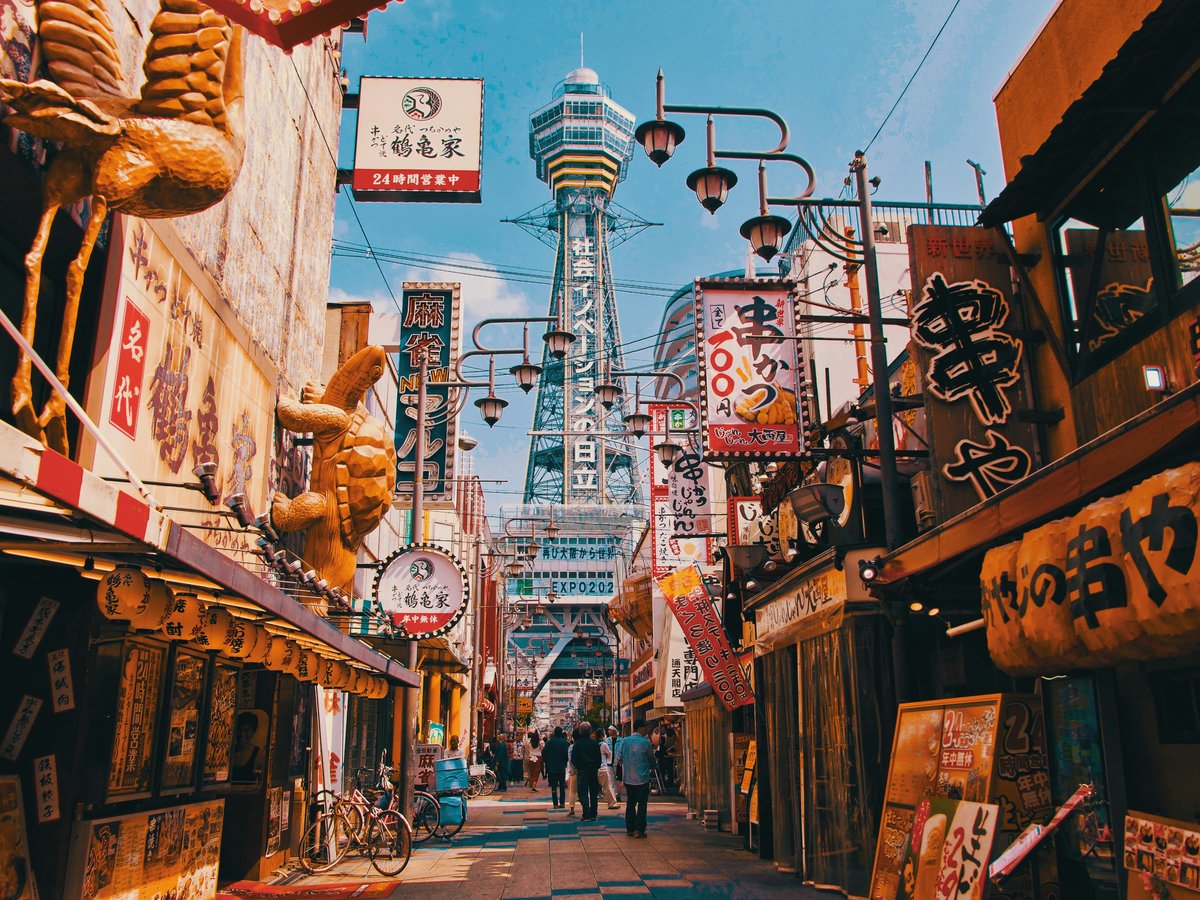
foodShinsekai's cluster of fugu restaurants offers the full pufferfish experience at accessible prices: translucent sashimi (tessa), hot pot (tecchiri), deep-fried (karaage), and the final rice porridge made from the broth. The neighborhood's retro neon signs and Tsutenkaku Tower overhead set a mood that feels distinctly Osaka.
Fugu season opens in autumn and the earliest catches are considered the finest. November is when restaurants debut their seasonal menus with the freshest fish.Booking tipReservations aren't always necessary at the smaller Shinsekai spots, but weekends in peak koyo season can fill up. Calling a day ahead is a safe bet.
Evening walk along the Midosuji Illumination
sightseeingStarting mid-November, over a thousand ginkgo trees lining Midosuji boulevard (Osaka's main north-south artery from Umeda to Namba) are wrapped in warm LED lights stretching roughly 4km (2.5mi). The golden and bare ginkgo branches overhead catch the light in a way that tends to stop people mid-stride, and the walk takes you past some of the city's best shopping and cafe districts.
The illumination typically launches in the second or third week of November, and the overlap with still-golden ginkgo leaves is a narrow window that only lasts about ten days before the leaves fall.Booking tipFree and open to all. The stretch between Hommachi and Shinsaibashi tends to be the most striking.
Kuromon Market seasonal tasting
foodOsaka's so-called Kitchen has a different energy in November: the crab stalls set up dramatic displays of fresh zuwaigani, fugu appears in sashimi trays, and persimmon vendors stack pyramids of bright orange fruit. The market is compact enough to walk end-to-end in twenty minutes, but tasting your way through takes considerably longer.
Both the crab and fugu seasons open in November, meaning the market's two most dramatic seasonal products arrive at the same time. Persimmon season rounds it out.Booking tipGo before 10 AM to beat the tourist wave, especially on weekends. Many stalls close by early afternoon once stock runs out.
Day trip to Kyoto's autumn temples
sightseeingKyoto's most famous foliage spots: Tofukuji's valley of maples, Eikando's lakeside reflections, the bamboo-and-maple contrast at Arashiyama: peak in late November. From Osaka, the Keihan Line gets you to eastern Kyoto in about 50 minutes, and the Hankyu Line reaches Arashiyama directly.
Late November is the single best window for Kyoto koyo. The colors are at their most intense and many major temples run special nighttime illumination events only during this period.Booking tipTemple illumination events often sell tickets in advance: check Tofukuji and Eikando's sites by early November. Aim for weekday visits; weekend train platforms at Kyoto Station can require queuing just to board.
Autumn gardens at Shitennoji Temple
cultureShitennoji's Gokuraku-jodo Garden (a recreation of a Buddhist paradise with a central pond and arched bridge) turns vivid with maple reflections in late November. The temple complex dates to 593 AD, making it one of the oldest in Japan, and the autumn garden has a contemplative quiet that Kyoto's famous temples have largely lost to tourist traffic.
The garden's maples peak in the last week of November, and the pond reflections on a still morning double the color. Significantly fewer visitors than comparable Kyoto gardens.Booking tipSmall entry fee for the garden. Weekday mornings are the most peaceful: bring a warm layer, the garden is shaded and cool.
Dotonbori and Namba evening food crawl
foodDotonbori's canal-side restaurants, takoyaki stands, and kushikatsu joints draw visitors year-round, but November's cool evenings make the experience distinctly more comfortable than the sweltering summer version. Steam rising from takoyaki griddles, the warmth of a kushikatsu counter seat, the glow of neon reflected in the canal: the sensory density of this neighborhood peaks when the air has some bite to it.
Summer heat makes Dotonbori's packed streets physically uncomfortable; November's temperatures are ideal for extended outdoor eating and walking. Hot street food tastes better when it's warming your hands.Booking tipNo reservations needed for street food. For sit-down spots, weekday evenings are easier; the peak koyo tourist wave makes weekend evenings notably busier than usual.
What to eat in November
In season: fruit
Kaki (persimmon)
Nara and Wakayama prefectures (both a short train ride from Osaka) are Japan's top persimmon producers, and November is peak harvest. The fuyu variety is firm and sweet like an apple; the hachiya type needs to fully ripen to a jelly-like softness before eating. Fruit shops and depachika basement food halls stock both at their seasonal best.
On menus now
Fugu (pufferfish)
Osaka is Japan's fugu capital, and November marks the start of the season when the fish is at its freshest. Shinsekai's fugu restaurants offer full-course meals (sashimi, hot pot, fried, and porridge) at prices well below Tokyo or Kyoto. The texture is firm and clean, almost crunchy in the thinnest sashimi slices, and the hot pot broth develops a delicate sweetness as the fish cooks.
Zuwaigani (snow crab)
The Sea of Japan snow crab fishing ban lifts on November 6 each year, and within days the crabs appear in Osaka's restaurants and at Kuromon Market. Served boiled, grilled, as sashimi, or in full kaiseki courses. The sweet, briny flavor of fresh-season crab is noticeably different from the frozen product available year-round.
Street food peaks
Momiji tempura (fried maple leaves)
A Minoo specialty you likely won't find anywhere else in Japan. Vendors along the park's waterfall trail batter and deep-fry actual maple leaves: they're salted and preserved beforehand, then fried to a sweet, delicate crisp. More snack than meal, and the smell of the frying oil drifting through cold autumn air is half the experience.
Oden
Cool weather brings oden carts and konbini counters to life across Osaka. The Kansai version uses a lighter dashi-based broth compared to Tokyo's darker soy-heavy style: the difference is immediately noticeable. Daikon, boiled egg, konnyaku, and various fish cakes simmer all day and cost almost nothing per piece.
Yakiimo (roasted sweet potato)
The unmistakable smell of slow-roasting sweet potatoes drifts from vendor trucks and street stalls once the temperature drops in November. The Japanese satsumaimo variety caramelizes inside, turning the flesh golden and almost custard-like. Vendors sell them wrapped in newspaper: the perfect hand-warming walking snack on a chilly evening.
Regular events in November
Shichi-Go-San (七五三)Free
Families bring children aged three, five, and seven to shrines in their finest kimono to pray for health and growth. Sumiyoshi Taisha and Osaka Tenmangu are two of the most popular shrines in Osaka for the celebration. Seeing small children in full traditional dress crossing the arched stone bridge at Sumiyoshi is a window into a ritual that has continued for centuries.
Centered on November 15, but families visit throughout early-to-mid NovemberMidosuji Illumination (御堂筋イルミネーション)Free
One of Japan's largest illumination events, stretching roughly 4km along Midosuji boulevard from Umeda to Namba. Over a thousand ginkgo trees are wrapped in warm-toned LED lights, and the color scheme changes block by block. The event runs into late December, but the November overlap with lingering golden ginkgo foliage is the most scenic window.
Mid-November through late December (exact start date varies by year, usually the second or third week)Katsuoji Temple Autumn Illumination (勝尾寺紅葉ライトアップ)
Katsuoji Temple in northern Osaka is known for its thousands of daruma dolls and its striking autumn foliage. During peak koyo the temple lights up its grounds in the evening, creating dramatic reflections in the main pond. The illuminated hillside covered in daruma amid red and gold maples is unlike anything else in the region.
Mid-November through early December, evening hours on select datesBest places this November
Minoo Park (箕面公園)
parkThe premier autumn foliage destination within Osaka's borders. The 2.7km trail to Minoo Falls winds through a valley of towering maples that peak in late November. Momiji tempura stands line the path, and the waterfall itself (framed by crimson and gold) is the payoff at the end. The forest air smells of damp leaves and frying batter in equal measure.
MinooOsaka Castle Park (大阪城公園)
parkThe ginkgo avenue on the eastern approach goes uniformly gold in mid-November, and the surrounding park has scattered maples that follow a week or two later. The park's scale means you can find quiet corners even during peak season. Moat reflections of autumn color against the castle walls are the classic November photograph.
ChuoShitennoji Temple (四天王寺)
templeThe Gokuraku-jodo Garden is a peaceful autumn foliage spot without the crowds of Kyoto's temples. Pond reflections of red maples on a calm morning are worth the small entry fee. The surrounding Tennoji neighborhood has its own low-key charm: older shopping streets and local restaurants that feel a world away from the tourist circuits.
TennojiSumiyoshi Taisha (住吉大社)
shrineOne of Japan's oldest Shinto shrines, and in November the place to observe Shichi-Go-San celebrations: families in kimono crossing the iconic arched bridge with dressed-up children. The shrine grounds have subtle autumn color, and the atmosphere is more local than the major Kyoto shrines. The vermilion bridge against autumn leaves makes for a strong photograph.
SumiyoshiExpo '70 Commemorative Park (万博記念公園)
parkThe Japanese Garden within the park grounds is one of the Kansai region's best-kept foliage spots. Maples, ginkgos, and ornamental trees reflect in still ponds and stream beds, and the space is large enough that it never feels crowded. Taro Okamoto's Tower of the Sun sculpture rising above the autumn tree line is a surreal bonus.
SuitaNakanoshima Park
parkThe sandbar island between the Dojima and Tosabori rivers is lined with ginkgo and plane trees that turn gold in early-to-mid November. The adjacent Nakanoshima Museum of Art and several riverside cafes make it a good half-day combination. Evening light on the water with golden canopies overhead has a particular warmth to it.
NakanoshimaKuromon Market (黒門市場)
marketNovember transforms the market with dramatic crab displays, fresh fugu, and seasonal persimmons stacked high. The narrow covered arcade keeps you dry on rainy days and concentrates the smells (grilling seafood, dashi broth, fresh citrus) into a corridor that hits you the moment you walk in. Go early for the best selection before stock runs out.
NippombashiDotonbori Canal
entertainment districtThe neon-lit canal district is a year-round landmark, but November's cool air makes the packed streets comfortable rather than stifling. Steam from takoyaki grills, the Glico Running Man sign reflected in the water, the clatter of kushikatsu counters: it all works better when you're not drenched in sweat. The canal walk at dusk, with neon just starting to warm up, is the sweet spot.
Namba
Your packing checklist
Tick items off as you pack. Your progress saves in this browser.
All packed — have a great trip.
Insider tips
The ginkgo trees along Midosuji boulevard typically peak about a week before the maples at Minoo and the temples, so early November visitors get golden avenues while late November visitors get crimson temple gardens. Plan around which color you're after, or split the difference around the third week.
Konbini oden is a November institution. Every 7-Eleven, Lawson, and FamilyMart stocks a simmering pot starting in autumn, and the Kansai dashi is noticeably lighter and more fragrant than Tokyo's soy-heavy version. At roughly 100 yen per piece, it's the cheapest hot meal in the city, and a genuine local comfort food, not a tourist novelty.
For Minoo Park, walk past the waterfall. Most visitors turn around at the falls, but the trail continues deeper into quieter forest with scattered momiji that sees almost no foot traffic. The trailside momiji tempura stands also thin out above the falls, so the few that remain tend to have fresher batches and shorter waits.
If you're using Osaka as a base for Kyoto foliage day trips, the Keihan Line to eastern Kyoto or the Hankyu Line to Arashiyama are often faster and cheaper than the JR Line to Kyoto Station. They also drop you closer to the major foliage temples, saving a bus transfer on the Kyoto end.
Late November is when fugu restaurants (especially the higher-end ones) start booking out for bonenkai (year-end party) season. If a multi-course fugu dinner is on your list, book it for the first half of the month or reserve at least a week in advance.
Avoid these mistakes
- Planning Kyoto foliage day trips on weekends without an early start: Saturday and Sunday trains from Osaka to Kyoto get packed from mid-November onward, and temple queues at popular spots like Tofukuji can stretch past 30 minutes by 10 AM. A weekday visit, or arriving before 8 AM on weekends, cuts wait times dramatically.
- Packing only for the daytime temperature: 17°C at noon feels pleasant, but after-dark foliage illumination events and evening food crawls happen in 5–8°C air. Visitors who packed a single light jacket often end up buying emergency layers at Uniqlo within a day of arriving.
- Assuming Osaka Castle's interior is the main attraction: the castle tower is a concrete reconstruction housing a museum, and the wait to enter can stretch past 40 minutes in peak koyo season. The park grounds, ginkgo avenue, and moat views are the real draw in November. Spend your time outside.
- Not booking accommodation early enough: Kansai's koyo season fills hotels in Osaka, Kyoto, and Nara simultaneously, and rates climb steeply for last-minute bookings in the second half of November. Three to four weeks ahead is the minimum for central locations at reasonable prices.
Practical tips for November
Book accommodation three to four weeks ahead if visiting in the second half of November: Kansai koyo season fills hotels across Osaka, Kyoto, and Nara simultaneously, and last-minute rates reflect the demand. Pick up an ICOCA card at Kansai Airport or any major station; it works on all trains, buses, convenience stores, and vending machines across the region and saves time at every gate. For Kyoto day trips, check the Keihan and Hankyu line routes before defaulting to JR: they often get you closer to the foliage spots with fewer transfers. Many Kyoto temples run special evening illumination events during late November that require separate advance tickets; check temple websites by early November. Dress in removable layers: you will move between well-heated indoor spaces and chilly outdoor air constantly, and a single fixed-warmth outfit will leave you either sweating or shivering. Most Osaka restaurants do not need reservations, but November is the exception for fugu specialists and crab kaiseki places, especially on weekends: book ahead or accept a wait. Temple and park hours shorten with the daylight; many close gates by 4:30 PM, so plan outdoor sightseeing for morning and early afternoon and save the illumination events and food crawls for evening.
FAQ
Is November a good time to visit Osaka?
November is one of the best months to visit Osaka. The weather is comfortable for walking: highs around 17.6°C (64°F) with minimal rain, and autumn foliage peaks across the city's parks and temples from mid-to-late November. Fugu and crab seasons both open this month, putting Osaka's food scene at a seasonal high. The trade-off is that it's one of the pricier and busier months, especially in the second half when koyo peaks. But the combination of weather, food, and autumn scenery is hard to match at any other time of year.
What is the weather like in Osaka in November?
Expect daytime highs around 17.6°C (64°F) and lows near 8.7°C (48°F), with about 97mm of rain spread over roughly seven days. Humidity sits around 76%, which is noticeable but nothing like the oppressive summer months. Days are pleasant in a light jacket; evenings get genuinely cool and you'll want an extra layer after sunset, which comes early: around 4:50 PM by month's end. Rain tends to come in brief, light showers rather than all-day downpours.
When do autumn leaves peak in Osaka?
It depends on the tree. Ginkgo trees along boulevards like Midosuji and at Osaka Castle Park typically peak in early-to-mid November, turning a bright uniform gold. Maples at spots like Minoo Park, Shitennoji, and the temple gardens tend to peak later: usually the last week of November into early December. The exact timing shifts by a week or so each year depending on October temperatures, but the third and fourth weeks of November are the safest bet for catching both types of foliage near their best.
Is Osaka crowded in November?
Yes, noticeably more so than most months. Koyo season draws large numbers of domestic Japanese tourists and an increasing wave of international visitors. The crowds concentrate at foliage hotspots: Minoo Park on weekends, Osaka Castle Park, and especially on trains headed to Kyoto's famous autumn temples. That said, Osaka's food-and-entertainment districts like Dotonbori and Shinsekai absorb crowds well because they're spread out. Weekday visits to parks and temples make a real difference.
Should I stay in Osaka or Kyoto for autumn foliage?
Osaka is the stronger base for most travelers. Hotels are cheaper than Kyoto even in peak season, the food scene is deeper and more casual, and Kyoto's main foliage spots are 40–60 minutes away by Keihan or Hankyu train. Kyoto accommodation during late November koyo is genuinely expensive and books out early. Staying in Osaka also gives you easy access to Nara and Kobe for additional day trips. The main reason to base yourself in Kyoto is if you plan to spend multiple full days there and want to catch both daytime foliage and evening illumination events without a late train back.
Things to Do in Osaka in November
 Free cancellation
 Osaka Kickstart: Hotspots & Hidden Gems Tour
Day trip: free cancellation.
via Viator Free cancellation
 Sushi Making Osaka Roll and Authentic Japanese Sushi Class
Cooking class: 1.7 hours, free cancellation.
via Viator Free cancellation
 Ultimate Osaka Walking Tour: Castle, Dotonbori, Gems & Lunch
Day trip: free cancellation.
via Viator Free cancellation
 Kyoto Day Tour: Fushimi Inari, Arashiyama, Kinkaku-ji & Kiyomizu
Day trip: 10 hours, free cancellation.
via Viator Free cancellation
 Osaka Local Foodie Walking Tour in Dotonbori and Shinsekai
City tour: 3 hours, free cancellation.
via Viator Free cancellation
 From Kyoto / Osaka: Kyoto Must-see Spots & Nara Park One Day Tour
Day trip: 9 hours, free cancellation.
via ViatorFind a flight to Osaka
Live fares to Osaka appear here once cookies are accepted.
Last verified by automated review (v1.7.2) on . What is automated review?