What cultural etiquette should I know for Osaka?
Osaka runs looser than Tokyo but the core rules still apply: shoes off indoors, bow when greeted, never tip. Stand on the right side of escalators (the opposite of Tokyo, and locals will correct you). Chopsticks never go upright in rice. Quiet on trains. Loud at dinner is fine.
Osaka has a reputation as Japan's most relaxed big city, and there's something to it. People here are louder, funnier, and more willing to strike up a conversation with a stranger than in Tokyo or Kyoto. That said, 'relaxed' still means Japanese-polite by most global standards. The escalator rule trips up every visitor who learned the Tokyo version: in Osaka, you stand on the right and walk on the left. Get it backwards on the Midosuji line during the 8 a.m. crush and someone will tap your shoulder within seconds. Shoes come off before you step onto tatami, into a home, into most ryokan hallways, and at plenty of restaurants: look for the raised floor and the row of slippers. The shoe-off radius in Osaka is wider than you'd expect; even some izakaya in Tenma have a genkan step.
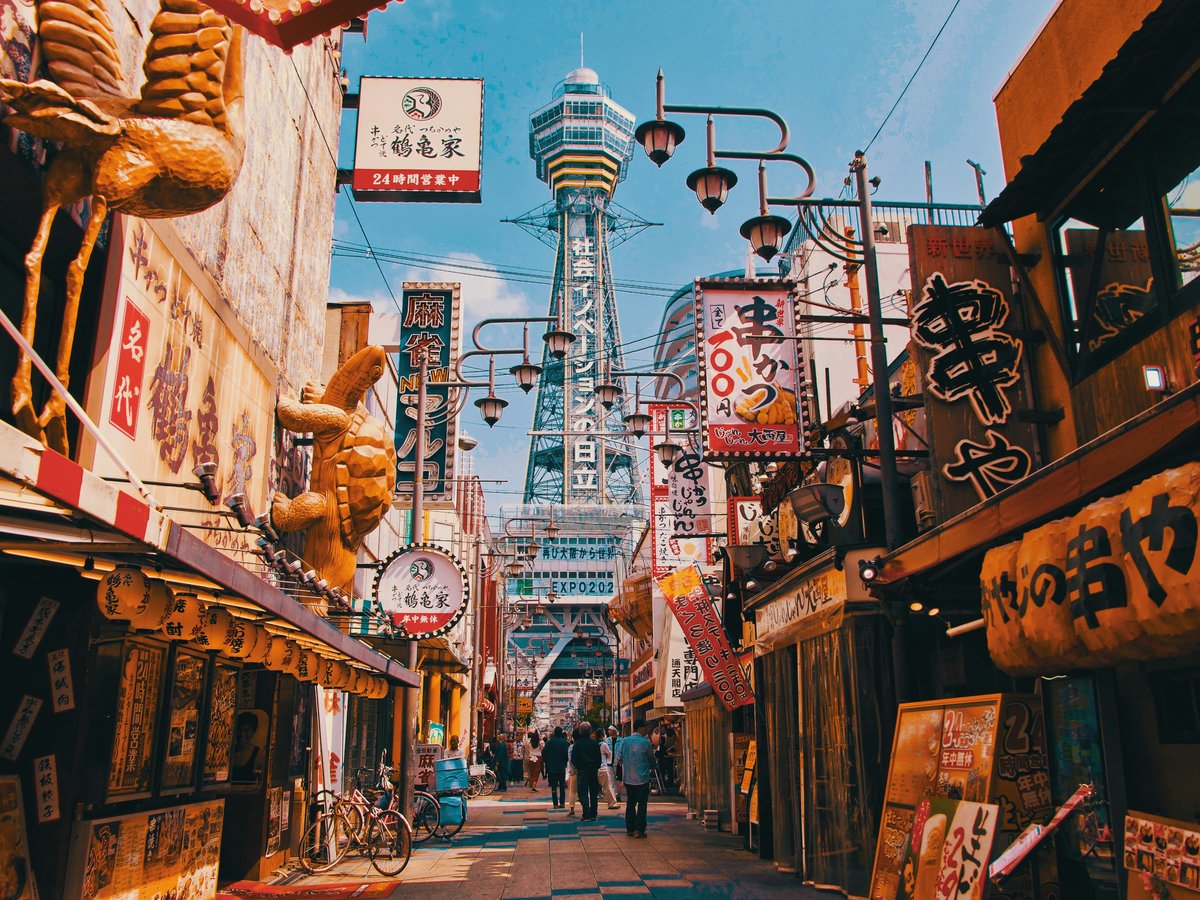
Chopstick mistakes carry weight here. Never stand them upright in a bowl of rice: it mirrors the incense sticks at a funeral altar, and even at a rowdy kushikatsu joint in Shinsekai, someone will notice. Don't pass food chopstick-to-chopstick either; that mimics the bone-picking ritual after cremation. Slurping noodles, though: slurp away. At ramen spots along Dotonbori the louder you go, the more it signals you're enjoying the meal. One Osaka-specific rule worth knowing: kushikatsu places have communal sauce troughs. You dip once. Only once. Signs everywhere say 'nido-zuke kinshi', no double-dipping. The regulars at Daruma near Tsūtenkaku (open since 1929, skewers from around ¥110 each) take this seriously enough to scold strangers. The flashy chain places lining the main Shinsekai drag are tourist traps with identical menus; the smaller joints one street over tend to have better batter and shorter waits.
Trains in Osaka are quiet zones. No phone calls: put it on manner mode and text instead. Near the priority seats, signs ask you to switch your phone off entirely, though enforcement is mostly social pressure and pointed looks. Eating on local trains and subways is frowned on; the shinkansen is the exception. One thing that catches people off guard: blowing your nose in public is considered gross. If you need to, step into a restroom or at least turn away. Sniffling repeatedly is somehow the more polite option, which takes some adjusting to. Queuing is almost ritualistic: at train platforms, painted lines on the ground show exactly where to stand, and everyone files in order. Cutting the queue in Osaka might be the one thing that turns those friendly locals cold.
If you visit a sentō or onsen, the rules are non-negotiable. Wash thoroughly at the shower stations before entering the water: soap, shampoo, rinse everything. The communal tub is for soaking, not cleaning: water sits around 40–42°C, hot enough that you ease in slowly. Tattoos remain a real barrier; most traditional sentō in neighborhoods like Tsuruhashi will refuse entry if you have visible ink. Spa World near Shinimamiya is more lenient and has relaxed its policy in recent years, but check current rules at the door. Small tattoos can sometimes be covered with skin-colored patches sold at Don Quijote. Towels stay out of the bath water; fold yours on your head or set it at the tub's edge. Nobody talks much in the soaking area. The heat and the steam and the silence are the whole point.
Cultural norms
A bow replaces the handshake in Osaka: a slight fifteen-degree incline of the head and shoulders suits most encounters, though Osakans are less formal than their Tokyo counterparts and may extend a hand to foreigners. Address people with -san after their family name. On the metro, phone calls are prohibited; set your device to manā mōdo (manner mode) and avoid eating. Queues form on the right side of escalators here, the reverse of Tokyo, and standing left draws pointed looks.
Remove shoes at the genkan when entering temple buildings like Shitennō-ji or Sumiyoshi Taisha, stepping onto the raised floor without treading on the threshold beam. Sleeveless tops and shorts are not banned but attract disapproval inside shrine prayer halls; a light cover over the shoulders is sufficient. Look for the crossed-camera sign before photographing any main hall interior.
Tipping does not exist: leaving coins on a counter at a kaiseki restaurant or in a taxi reads as careless, not generous. Cash is still expected at smaller stalls in Kuromon Market and Shinsekai, though ICOCA cards cover most transit and shops. The two chopstick errors visitors commit most often are standing them upright in a bowl of rice, which replicates the funeral offering tsukitate-bashi, and passing food directly from one pair of chopsticks to another, which mirrors the cremation rite kotsuage.
Greetings
A slight bow with 'konnichiwa' covers most daytime situations. Osaka locals tend to be warmer than Tokyo: you might hear 'ookini' (Osaka dialect for thank you) tossed your way. Reciprocate with a head nod. Skip the handshake unless someone offers first.
Don't do this
- Standing chopsticks upright in rice: it mirrors funeral incense and will get a reaction even in a casual izakaya
- Passing food chopstick-to-chopstick: mimics the bone-picking ceremony after cremation
- Standing on the left side of escalators: Osaka stands right, walks left, the reverse of Tokyo
- Talking on your phone on trains or subway: manner mode is expected, not optional
- Tipping at restaurants, taxis, or hotels: it implies charity, not gratitude
- Wearing shoes on tatami or inside someone's home: always check for a genkan step
- Blowing your nose loudly in public: step away to a restroom instead
- Cutting queues at train platforms or restaurants: the painted queue lines exist for a reason
Tipping
Don't tip. Anywhere. A waiter at a kushikatsu counter in Shinsekai will chase you down the street to return the money. Service charge is built in. Say 'gochisousama deshita' when leaving: that's how you show gratitude here.
Dress code
Osaka is casual: shorts and t-shirts are fine around Dotonbori or Amerikamura. Temples require covered shoulders and knees; Shitennō-ji will turn you away in a crop top. Bring socks you're not embarrassed by: shoes come off constantly, and holey socks in a ryokan dining room get noticed.
Religious norms
At Shinto shrines like Sumiyoshi Taisha, bow twice, clap twice, bow once: that's the full prayer sequence. At Buddhist temples like Shitennō-ji (founded 593), bow and stay quiet. Don't photograph monks during services. Incense smoke at the main hall entrance is meant to be wafted over yourself for purification: watch locals do it first. Touch nothing on the altar.
Last verified by automated review (v1.7.2) on . What is automated review?