What's happening in Osaka this week?
Osaka runs on a weekly rhythm shaped by summer heat. Weekday mornings at Kuromon Market are manageable before 34°C afternoons force everyone underground into the Whity Umeda and Namba Walk arcades. Monday shuts most museums. Dotonbori peaks Friday and Saturday nights after 8pm. Shinsekai's kushikatsu strip and Tenma's izakaya row operate 7 days a week. Food is the one constant.
Midsummer in Osaka means 34°C by 1pm and humidity that sits above 85% for weeks at a time. At 2am, the temperature still feels like 33°C. Plan outdoor time around Osaka Castle or along the Dotonbori canal before 9am and after 6pm. By noon, the concrete around Namba station radiates warmth through your shoes. Afternoon storms follow a pattern. Clouds build over the Yodo River basin around 3pm, rain falls for 20 minutes, and the temporary cool lasts about an hour before the wet heat returns. The lunch crowd around Umeda and Namba moves underground by 2pm. Whity Umeda and Namba Walk, two of the longest underground arcades in Japan, stay around 24°C year-round and connect to the Midosuji and Yotsubashi subway lines.
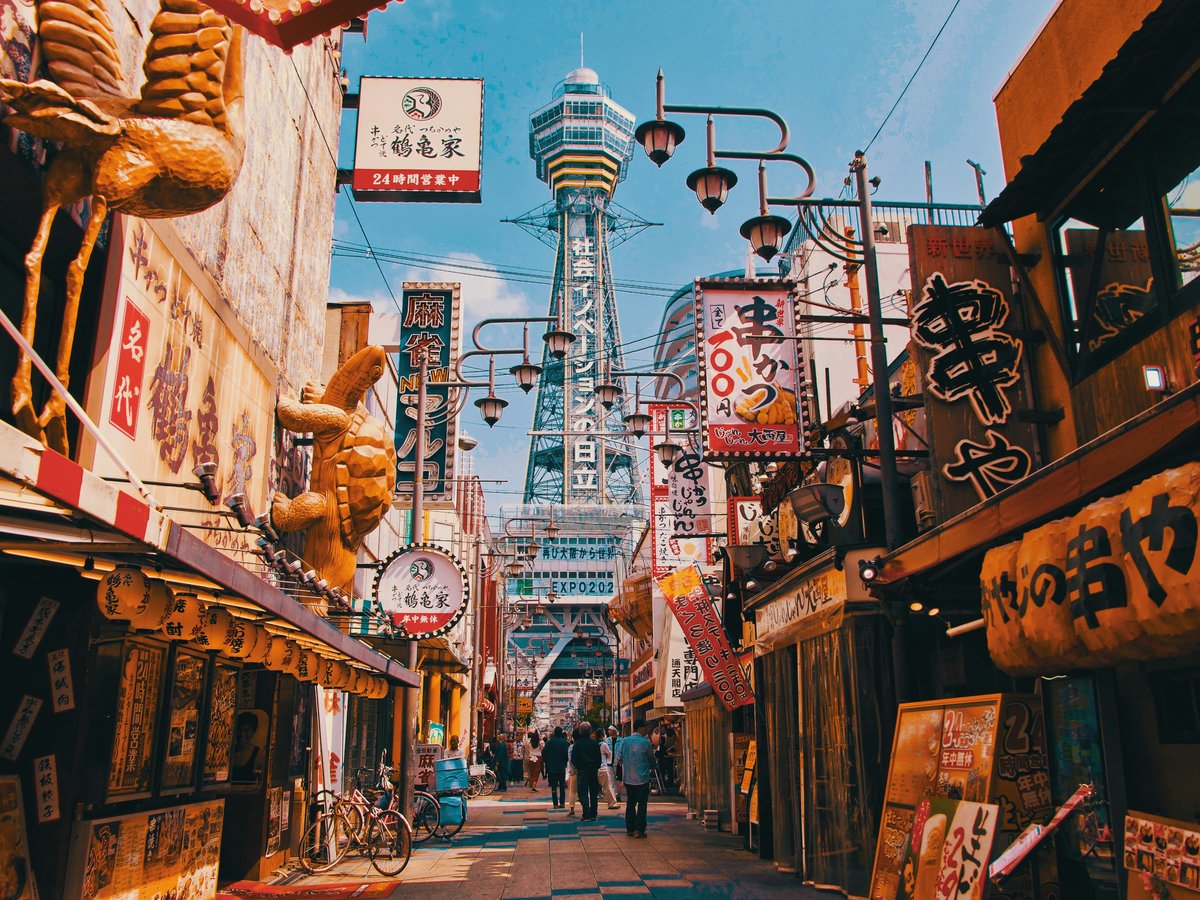
Monday is Osaka's museum-dark day. The National Museum of Art in Nakanoshima and the Osaka Science Museum both close, a pattern shared across most Japanese cities. Use the day for Shinsekai, the neighborhood built around the 1955 Tsutenkaku tower, where kushikatsu restaurants fry pork and vegetable skewers 7 days a week for ¥100-150 per stick. Tuesday through Thursday, Osaka feels more residential. The tourist crowds in Dotonbori thin by half on a Wednesday night compared to Saturday. Kuromon Market opens around 9am for visitors, though the fishmongers have been working since 5am. Go on a weekday morning. By Saturday after 11am, the market corridor packs tight, and the smell of charred octopus legs competes with eel smoke from every third stall.
Friday night is when Amerikamura fills up. The 4-block grid south of Shinsaibashi station draws university students from across Kansai. Secondhand clothing shops close by 9pm, but the bars on upper floors stay open past 2am. Saturday and Sunday at Universal Studios Japan, which opened in 2001, mean 90-minute waits for rides like Hollywood Dream. A weekday visit cuts those waits to 30-40 minutes. Sunday mornings in Nakanoshima Park are the quietest window in central Osaka. Joggers circle the 1.5km island between the Dojima and Tosabori rivers, and the breeze off the water feels 3-4 degrees cooler than the pavement south of Yodoyabashi. By Sunday evening, takoyaki stands along Dotonbori canal are 3-deep with visitors who want one last round before the train to Shin-Osaka.
Osaka's Central Wholesale Market in Fukushima-ku closes Sundays and holidays. Monday sushi at the better omakase counters runs on Saturday's catch. Worth factoring if you're spending ¥15,000 per person, about $92 at the current rate of 163.82 JPY to the dollar. Weeknight izakaya in Tenma, the tight grid of lanes north of Ogimachi, fill by 7pm but rarely need a reservation before Friday. Tenjinbashisuji shopping street runs 2.6km under a covered roof, the longest covered arcade in Japan and the best rainy-afternoon option in summer. On a weekday afternoon, you can stop at a taiyaki stand without blocking the flow. The fish-shaped pastry comes hot, the shell crisp, the red bean filling almost too warm to bite. Budget ¥200.
No verified events are listed for this week. We publish only events we can confirm against an official source, never guesses.
Last verified by automated review (v1.7.2) on . What is automated review?