Where do locals actually go in Osaka?
Osakans drink standing under the JR tracks at Tenma and Kyobashi, buy kimchi and dried fish in Tsuruhashi's market alleys, and read in Nakazakicho's cafes, which occupy old wooden row houses. Office workers fill Kitahama's riverside terraces at lunch. Skip Dotonbori and Kuromon Market, both priced for visitors all day.
Tenma is where Osaka's office workers drink on a Tuesday. Tenjinbashisuji Shotengai runs about 2.6 km north from Tenjinbashisuji 1-chome, and near JR Tenma Station the pharmacies and fishmongers give way to standing bars. By 6pm the lanes east of the station smell of charcoal and grilled offal, and a draft beer at most counters still costs ¥400 to ¥500. At Tenma most seats are upturned beer crates, few staff speak English, and none of them mind if you point at the menu. Tenma also passes the month-long-stay test that most Osaka nightlife districts fail: Super Tamade, the neon-signed local discount supermarket, has branches within walking distance, coin laundries sit on most residential side streets north of the arcade, and the Tanimachi Line, the Sakaisuji Line and the JR Loop Line all stop here. The trade-off is noise. Ask any Airbnb host near the station whether the unit faces the tracks, because Loop Line trains keep rattling past until around midnight.
Kyobashi, two stops east of Tenma on the Loop Line, is the home of sembero, Osaka slang for getting drunk on ¥1,000. At 158 yen to the dollar, that comes to about $6.33 for a beer, a highball and two small plates. The standing bars around the north exit of JR Kyobashi Station open before noon, and on Saturdays retirees tend to fill them by 11am. You can smell Tsuruhashi, five stops further round the loop, before you leave the station: yakiniku smoke drifts onto the JR and Kintetsu platforms. The market alleys behind the station sell kimchi by weight, dried fish and hanbok fabric, and Saturday mornings usually bring Zainichi Korean families doing the week's shopping. Ikuno Korea Town on Miyukidori, a 15-minute walk south, has filled with K-pop day-trippers since the late 2010s. The covered maze beside Tsuruhashi Station still serves the people who live in Ikuno-ku.
Nakazakicho works for daytime, with conditions attached. One Tanimachi Line stop from Higashi-Umeda, its prewar nagaya row houses now hold small cafes, vintage shops, and galleries. Salon de AManTO Tenjin, with its creaking timber floors, is the neighbourhood's long-runner. Most Nakazakicho cafes have 10 to 20 seats and few outlets, and pulling out a laptop on a Saturday afternoon will earn you stares. Come Tuesday to Thursday mornings, order a second drink after 90 minutes, and do your real work somewhere else. Osaka's digital-nomad suitability score is 6.8/10 (sourced from TTDI's editorial rubric), and cafe etiquette like this is part of the reason. For a lunch break, Kitahama on the Tosabori River is the better call: Kitahama Retro serves scones and milky tea inside a 1912 brick building, and on weekdays the terraces along the river fill with office workers in suits.
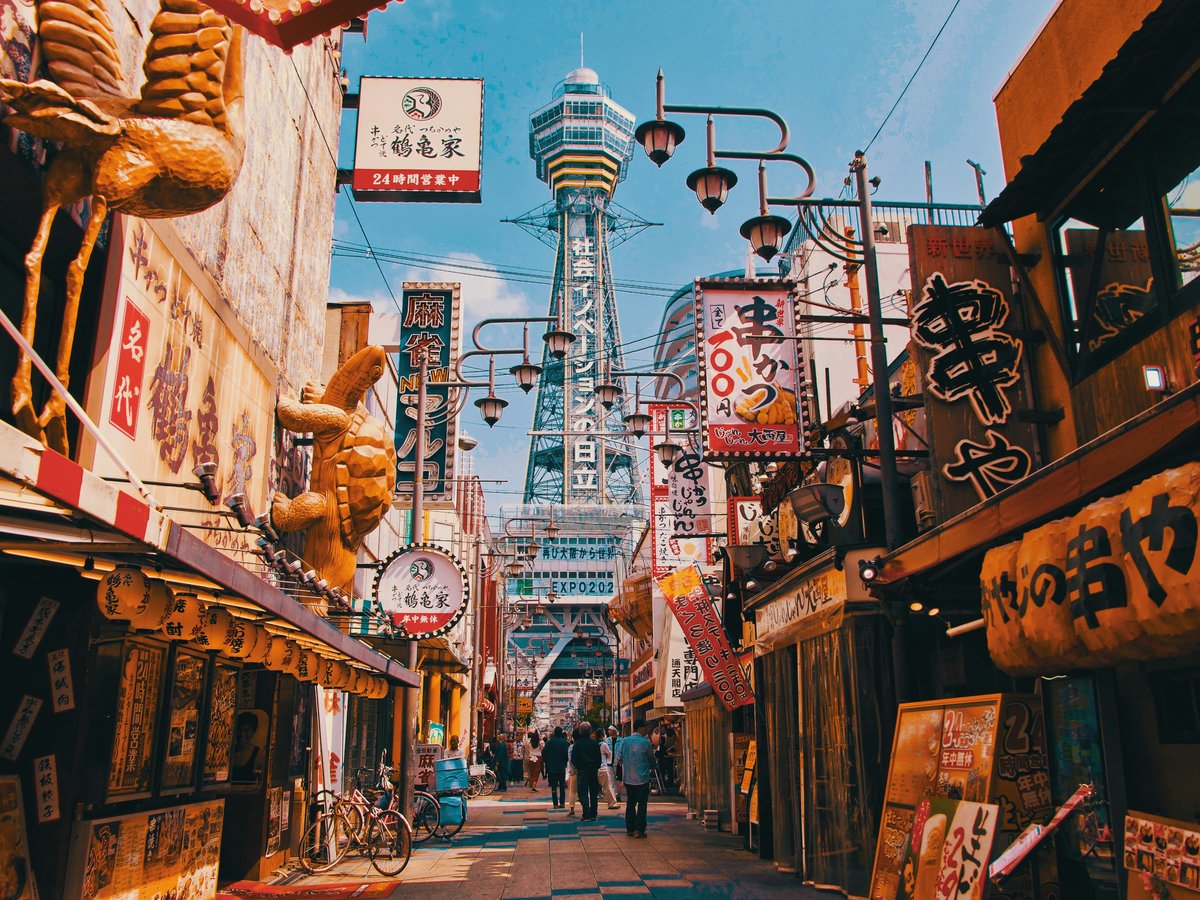
Skip the obvious. Dotonbori, Kuromon Market, and the kushikatsu strip below Tsūtenkaku in Shinsekai are now priced and staffed for visitors. That said, Jan Jan Yokocho, south of the tower, still has a shogi parlour or two where old men clack pieces into the evening. Osakans who want green space go to Utsubo Park in Nishi-ku, where joggers and dog walkers have the tree-lined paths to themselves before 8am. For dinner, they go to Fukushima, one Loop Line stop west of Osaka Station: the izakayas under the elevated tracks fill by 7pm on Fridays, and the popular ones expect a reservation by phone, in Japanese. On a clear 15°C October night like this weekend's, the outdoor tables in Fukushima tend to stay busy until around 11pm.
Where they actually go
Tenma standing-bar lanes
Tenma, Kita-ku: Office workers loosen their ties on upturned crates east of JR Tenma Station. Offal sizzles over charcoal, and the Loop Line rumbles overhead every few minutes. Menus are in Japanese only.
Kyobashi sembero bars
Kyobashi, Miyakojima-ku: Counters by the north exit open before noon. Retirees in flat caps nurse highballs over plates of doteyaki. The air is heavy with fryer oil, and two drinks with snacks rarely pass ¥1,000.
Tsuruhashi market alleys
Tsuruhashi, Ikuno-ku: Yakiniku smoke greets you at the station exit. Inside the narrow covered lanes you'll find vinegary kimchi tubs, hanbok fabric shops and Zainichi Korean grandmothers haggling on Saturday mornings.
Salon de AManTO Tenjin
Nakazakicho, Kita-ku: A prewar nagaya house with creaking timber floors and mismatched chairs. Students and local artists fill it on weekday mornings. It has few outlets and a short laptop tolerance.
Kitahama Retro
Kitahama, Chuo-ku: This tea room occupies a 1912 brick building on the Tosabori River, serving warm scones and clotted cream to Osaka office workers and shoppers. The weekday lunch queue can reach 20 minutes.
Utsubo Park
Utsubo, Nishi-ku: Before 8am, the gravel paths belong to joggers, dog walkers, and the players at the Utsubo Tennis Center. Rose beds bloom in May and October, and it is easily the quietest green space in central Osaka.
Fukushima under-track izakayas
Fukushima, Fukushima-ku: Small izakayas crowd under the JR viaduct one stop west of Osaka Station, filling with salaryman chatter and the smell of yakitori smoke. On Fridays, the popular counters take phone reservations only.
Jan Jan Yokocho shogi parlours
Shinsekai, Naniwa-ku: Old men clack shogi pieces behind open shopfronts in the one stretch of Shinsekai that still belongs to its residents. The kushikatsu crowds wash past outside.
Best times to visit
Tenma and Fukushima on weeknights from 6pm to 9pm. Kyobashi standing bars on Saturdays from 11am. Tsuruhashi market on Saturdays from 9am to noon. Nakazakicho cafes from Tuesday to Thursday before 1pm. Utsubo Park before 8am.
Last verified by automated review (v1.7.2) on . What is automated review?