Is Osaka LGBTQ-friendly?
Osaka scores 5.8/10 for LGBTQ+ friendliness (sourced from TTDI's editorial rubric). Japan lacks national same-sex marriage, though Osaka city has issued partnership certificates since 2018. The scene concentrates in Doyama-cho, a tight grid of small bars near Umeda. Personal safety is high for queer travelers, and same-sex PDA tends to draw brief glances rather than hostility.
The distance between personal safety and legal protection is the defining tension here. You will walk through Namba or Shinsaibashi without incident. The worst case is a lingering look from an older couple, and even that happens less in Osaka than in Tokyo. Osaka's social contract runs on cheerful indifference. People mind their own business with more warmth than in most Japanese cities. The Kansai temperament tends toward directness and humor, which means you are more likely to get a friendly question from a bar owner than a cold shoulder. To be fair, indifference is not affirmation. There are no rainbow crosswalks in Osaka, no visible queer infrastructure outside the annual Pride festival. For couples used to Berlin or San Francisco, the absence of visible public queer life can feel flat. For couples coming from Taipei or Seoul, the social temperature reads about the same.
Doyama-cho comes alive after dark. FrenZ Frenzy Bar, on the 3rd floor of a building near Ohata-jinja shrine, is the default for English-speaking visitors. The bartender speaks fluent English and will steer you toward whichever other bar matches your mood that night. Explosion draws a younger local crowd on weekends, loud and warm. Physical skews leather and bears. Cover charges run ¥500 to ¥1,500 (roughly $3-9 at current rates) and typically include one drink. The format is counter seating, a single bartender who controls the music, and smoke that still hangs in about half these rooms. For couples, the small scale is an advantage. You sit at a counter, the master or mama-san introduces you to regulars, and by your second whisky highball you are trading neighborhood tips. You can cover 3 or 4 bars in a single evening without walking more than 200 meters.
Hotels book double rooms to same-sex couples without comment. The W Osaka in Shinsaibashi and Hotel Granvia near Osaka Station both have proper king beds, not two singles pushed together with a gap that swallows your phone at 3am. That matters for couples. For a ryokan experience, communal onsen are gender-separated, so a same-sex couple shares the bath naturally, but rooms have futons laid side by side rather than a double. Worth noting, ryokan with private outdoor baths solve every logistical question at once. Minoh, about 40 minutes north of Umeda by Hankyu Railway, has several with rotenburo where steam rises into cedar branches overhead. In summer you hear nothing but cicadas. In autumn, rain on leaves. Book the room with the private bath and you avoid navigating anyone else's expectations. Capsule hotels, for their part, remain single-occupancy by design, priced at ¥3,000-4,500 per pod.
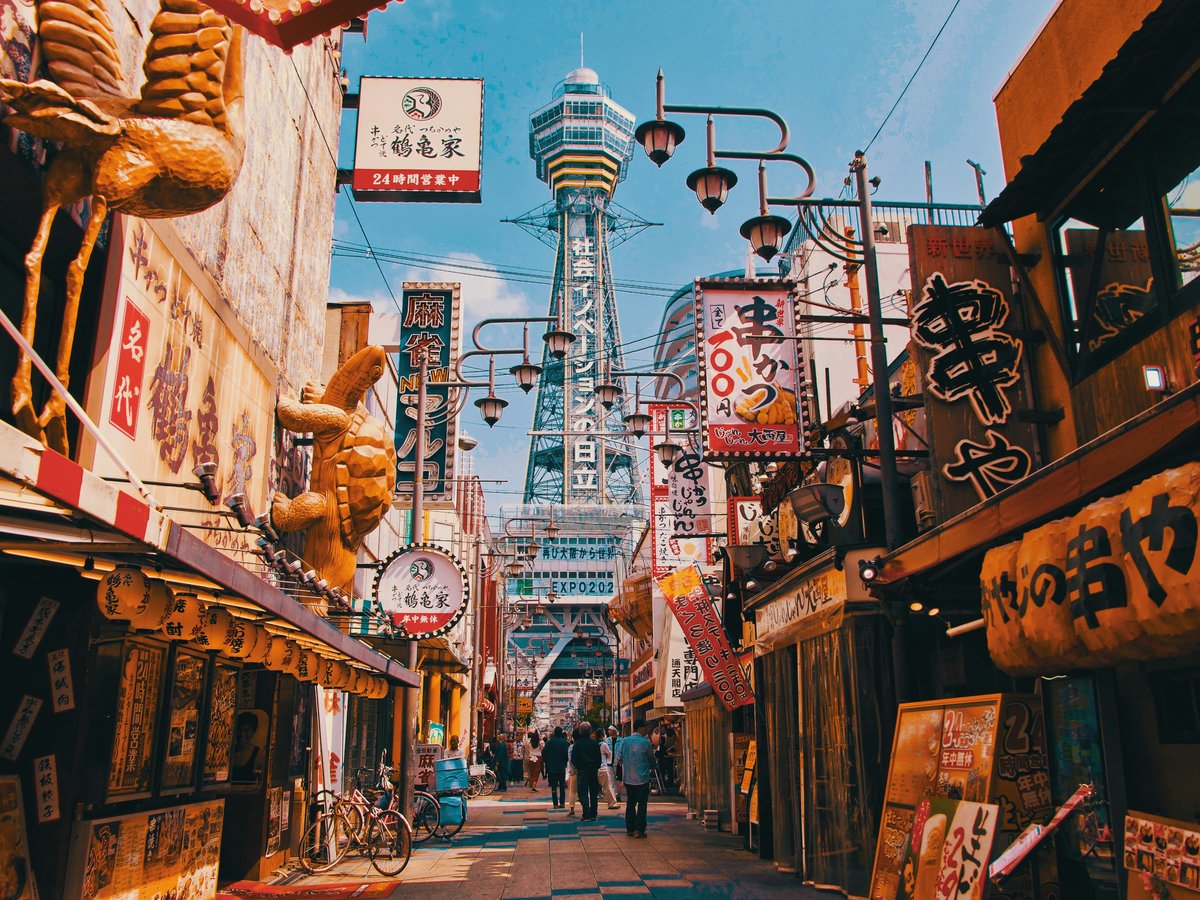
A good couples formula for Osaka splits the day and reunites at dinner. One partner takes the Osaka Monorail to Expo '70 Commemorative Park in Suita. The Tower of the Sun, built for the 1970 World Exposition, still looks like a fever dream in white and gold, and the Japanese Garden behind it is quiet enough to hear your own footsteps on gravel. The other sleeps in, gets a pour-over at Lilo Coffee Roasters on a backstreet in Minamisenba (4-minute brew, roasted walnut in the finish), and reads until noon. Regroup for dinner at Hozenji Yokocho, a stone-paved alley behind Dotonbori where lantern light throws an amber wash over wet pavement. The Mizukake Fudo statue there has been splashed with water by visitors for over 400 years. The alley smells of damp moss and charcoal. For kushikatsu, Ajinoya in Namba is the call. Counter seats, hot oil, panko crumbs. ¥2,000-3,000 per person for a full set.
Composite of legal status, social acceptance, and visible scene.
Legal status
Same-sex relations are legal
Same-sex relations have been legal in Japan since 1881. Marriage is not recognized nationally, though over 200 municipalities offer partnership certificates and courts have increasingly ruled the ban unconstitutional. Tokyo's Shinjuku Ni-chome is one of Asia's largest queer districts.
Verified against equaldex.com and en.wikipedia.org .
The scene
Doyama-cho in Kita-ku, a 5-minute walk north of Umeda Station, packs roughly 30-40 bars into a space smaller than two city blocks. Most hold 8 to 15 people. Kansai Rainbow Festa, Osaka's Pride event, runs each October in Ogimachi Park near Nakanoshima. The scene comes alive after 9pm and stays quiet during daylight.
Safety notes
Physical violence against visibly queer travelers is extremely rare in Osaka. Social friction is the ceiling, not physical danger. Older passersby in residential wards may stare, but confrontation is almost unheard of. Doyama-cho feels safe at all hours. Tourist zones in Namba and Shinsaibashi register no more attention than central Tokyo.
Last verified by automated review (v1.7.2) on . What is automated review?