What's the must-see thing in Osaka?
Dōtonbori at dusk, not as a restaurant pick, as THE orientation point. Walk south from Namba station, hit the canal when neon signs switch on around 5pm, and stand on Ebisu Bridge with takoyaki smoke curling past the mechanical Glico Running Man overhead. Osaka makes sense from here. The food district, the subway map, the city's personality: it all clicks standing on that bridge.
Dōtonbori runs along a canal in the Namba district, maybe 600 metres end to end. Short walk. But the density is what gets you: takoyaki stalls where you watch the cook flip each ball with a pick, the sweet char smell of okonomiyaki batter hitting a flat griddle, crab legs the length of your forearm rotating on spits at street level. The Glico Running Man sign has faced the Dōtonbori Canal since 1935 (the current version dates to 2014), and at dusk the whole strip goes from ordinary commercial street to a corridor of moving neon reflected in black water. Eat here your first night. Grab takoyaki from Wanaka near the Ebisu Bridge end: 8 pieces, around ¥700, roughly $4.40 at current rates: eat them standing by the canal rail, and burn your tongue on the molten octopus inside. That's your welcome to Osaka.
Osaka Castle sits in a 106-hectare park in Chūō-ku, and from the outside it looks like a painting: white walls, green-copper roofs, the wide moat reflecting the whole structure on still mornings. Here's the honest part: the interior is a 1931 concrete reconstruction with an elevator. The original burned in 1615 during the siege that ended the Toyotomi clan, on a site where the Ishiyama Hongan-ji temple had stood since 1496. What you're walking through is a museum inside a replica, and if you've seen Himeji Castle (90 minutes by train), the contrast is brutal. That said, the grounds earn the visit. Even a humid June morning in the outer park gives you space, quiet, and the sight of the tower above stone walls that ARE original: some blocks weighing over 100 tonnes, hauled there in the 1620s. Free to walk the park; ¥600 (about $3.75) for the tower museum.
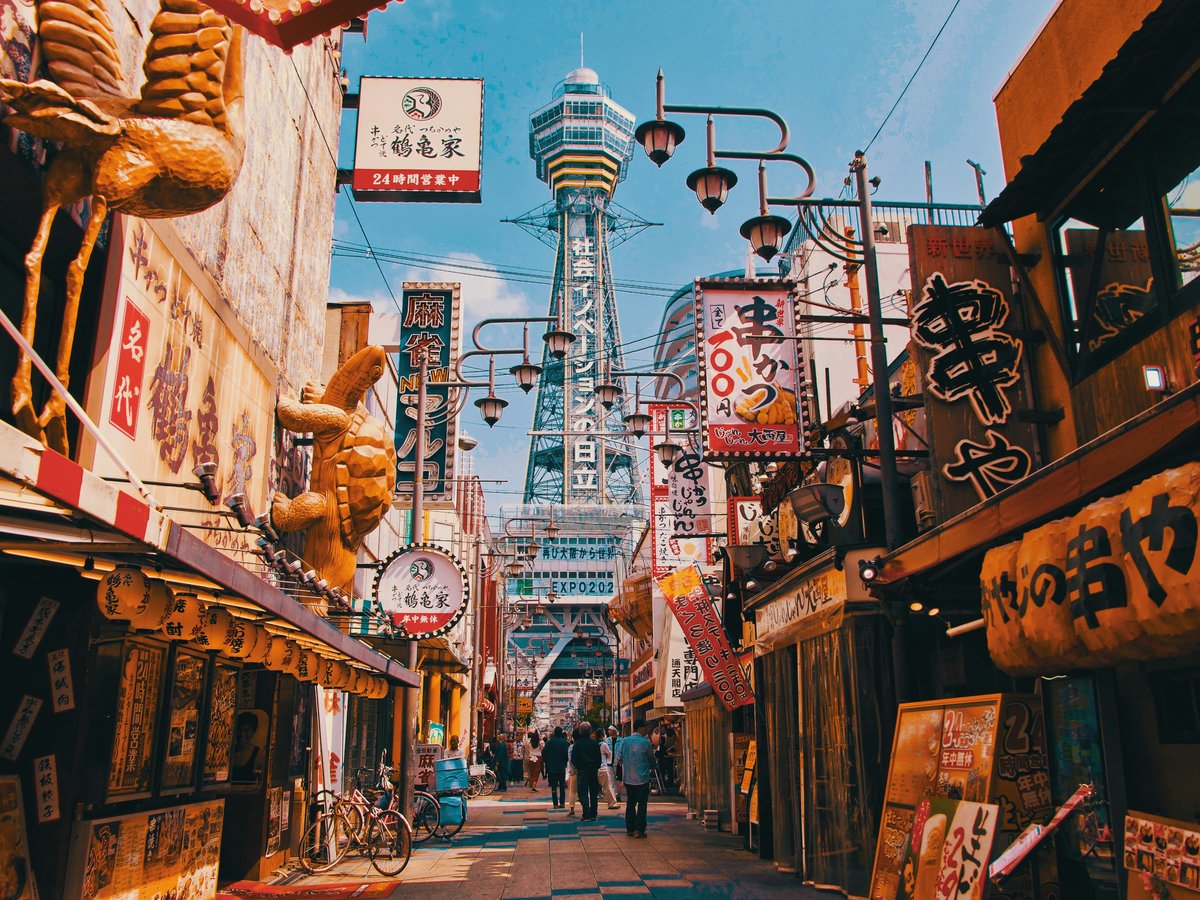
Shinsekai is the neighbourhood south of Tennōji that everyone calls 'retro,' and it is, but not in a curated way. This is where Tsūtenkaku tower has stood since 1955: a 103-metre steel observation tower built as a replacement for the 1912 original that burned down during the war. The streets around its base are packed with kushikatsu restaurants, the deep-fried-skewer joints where the only rule posted on every wall is 'no double-dipping in the communal sauce.' You'll smell the frying oil a block away. The area looks rough at first glance: faded signs, narrow lanes, pachinko parlours with their doors open and the mechanical clatter spilling out. It's safe, though. It just hasn't been polished for tourists, and that's the draw. An hour here and a plate of kushikatsu at Daruma (the original location on Janjan Yokochō, not the tourist branch) shows you an Osaka that Dōtonbori's neon doesn't.
Sequencing matters more than most guides let on. Fly into Kansai International, pick up an ICOCA card at the airport station, and take the Nankai Rapi:t into Namba; about 40 minutes, reserved seat, warm air conditioning after the humid terminal. Drop your bags, walk to Dōtonbori for dinner. Day two: Osaka Castle in the morning when it opens at 9am (the park is cooler and the light hits the moat before the tour buses arrive), then subway south to Shinsekai for a late kushikatsu lunch. That gives you the three pillars of the city in 36 hours, with room for jet lag and a slow start. Save Universal Studios Japan for day three only if you're staying four or more nights: it is a full day out in Konohana-ku, and for a first visit, the city itself is what you came for.
The top three
Dōtonbori
The single place that captures what makes Osaka different from Tokyo or Kyoto: the street food, the neon, the noise, the humor. Walk the canal at dusk your first night and the city's personality clicks into place immediately.
Osaka Castle & Grounds
The exterior and park are the real draw: 100-tonne stone walls from the 1620s, a wide moat, and the tower silhouette against open sky. The interior is a concrete museum replica, but the park earns the morning.
Shinsekai & Tsūtenkaku
Unpolished, loud, full of kushikatsu joints and pachinko parlours: the neighbourhood around Tsūtenkaku tower (built 1955) shows you an Osaka that hasn't been cleaned up for visitors. That honesty is the point.
Verified attractions
Sourced from Wikidata and OpenStreetMap: each entry links to its authoritative page.
-
Hōryū-ji Temple
place of worshipBuddhist temple in Nara Prefecture, Japan
View on Wikidata -
Yanmar Stadium Nagai
stadiumbuilding in Higashisumiyoshi-ku, Osaka Prefecture, Japan
View on Wikidata -
Shitennō-ji Temple
place of worshipBuilt in 593 A.D., this famous Buddhist temple features a five-story pagoda, statues and turtle ponds
View on Wikidata -
Universal Studios Japan
theme parktheme park in Osaka, Japan
View on Wikidata -
Buddhist Monuments in the Hōryū-ji Area
place of worshipWorld Heritage Site in Nara Prefecture, Japan
View on Wikidata -
Suita Stadium
stadiumbuilding in Suita, Osaka Prefecture, Japan
View on Wikidata -
Tsūtenkaku
towerobservation tower
View on Wikidata -
Church of the Light
churchchapel in Ibaraki, Osaka Prefecture designed by Tadao Ando
View on Wikidata -
Gate Tower Building
historic house16-story building in Japan notable for highway going through it
View on Wikidata -
Kyocera Dome Osaka
stadiumbaseball stadium in Osaka, Japan
View on Wikidata -
Osaka Aquarium Kaiyukan
aquariumaquarium in Osaka, Japan
View on Wikidata -
Ishiyama Hongan-ji
place of worshiphistorical Buddhist temple located in Osaka, Japan
View on Wikidata -
Osaka Expo '70 Stadium
stadiumfootball stadium
View on Wikidata -
Sumiyoshi Taisha
place of worshipShinto shrine in Osaka Prefecture, Japan
View on Wikidata -
Hokki-ji Temple
place of worshipBuddhist temple in Nara Prefecture, Japan
View on Wikidata -
Mozu Tombs
monumentMegalithic tombs in Japan
View on Wikidata -
Hanazono Rugby Stadium
stadiumrugby football venue in Higashiosaka, Japan
View on Wikidata -
Osaka Castle Park
castlepark
View on Wikidata -
Yodoko Sakura Stadium
stadiumbuilding in Higashisumiyoshi-ku, Osaka Prefecture, Japan
View on Wikidata -
Museum of Oriental Ceramics, Osaka
museumart museum in Osaka, Japan
View on Wikidata -
National Museum of Art, Osaka
museummuseum in Japan
View on Wikidata -
Row House in Sumiyoshi
historic housebuilding in Sumiyoshi-ku, Osaka Prefecture, Japan
View on Wikidata -
Dai Heiwa Kinen Tō
monumentarchitectural structure
View on Wikidata -
Daisen Kofun
monumentBurial mound in Sakai
View on Wikidata -
Hirota Shrine
place of worshipShinto shrine in Hyōgo Prefecture, Japan
View on Wikidata -
National Bunraku Theatre
theatertheater
View on Wikidata -
National Museum of Ethnology
museummuseum and research institute in Japan
View on Wikidata -
Osaka City Museum of Fine Arts
museumMunicipal museum in Osaka City
View on Wikidata -
Tennōji Park
gardenPark in Osaka, Japan
View on Wikidata -
Tennōji Zoo
zoozoo
View on Wikidata -
Furuichi Kofun Cluster
monumentcemetery in Osaka Prefecture, Japan
View on Wikidata -
Katsuō-ji Temple
place of worshipBuddhist temple in Osaka Prefecture, Japan
View on Wikidata -
Minato Bridge
bridge1974 double-deck cantilever truss bridge
View on Wikidata -
Naniwa-kyō
castlehuman settlement in Japan
View on Wikidata -
Tower of the Sun
museumbuilding by Tarō Okamoto
View on Wikidata -
CupNoodles Museum Osaka Ikeda
museumscience museum
View on Wikidata -
Konohana Bridge
bridgeroad traffic structure in Japan
View on Wikidata -
Museum Yamato Bunkakan
museummuseum in Nara, Nara, Japan
View on Wikidata -
Nipponbashi
bridgeshopping district in Osaka, Japan
View on Wikidata -
Nishinomiya Shrine
place of worshipShinto shrine in Hyōgo Prefecture, Japan
View on Wikidata
Last verified by automated review (v1.7.2) on . What is automated review?