Is Osaka safe?
Osaka scores 8.8 out of 10 for solo-traveler safety (see the TTDI Solo-Safety Index). Violent crime against tourists is near zero. The real risks are bicycle accidents, typhoon season from June through October, and drink-topping scams in Namba's tout-heavy nightlife strips. Trains stop around midnight, and taxis are metered and honest. Emergency numbers are 110 for police and 119 for fire or ambulance.
Osaka has the highest reported crime rate of any Japanese prefecture, which tells you more about Japan's floor than about Osaka's ceiling. Per-capita, the city still runs below London, Paris, or Barcelona. Violent crime against foreign visitors barely registers in Osaka Prefectural Police reports. Bike riders are Osaka's real hazard. Roughly 1.2 million commuters share the sidewalks along Midosuji Boulevard and the Dotonbori canal path, and few yield to pedestrians. Drink-topping has been reported in tout-run bars along Soemoncho and the southern end of Shinsaibashi-suji, where touts target solo drinkers after 11pm with a consistent playbook. A friendly stranger steers you to an unmarked second-floor bar, your beer arrives already poured, and the bill lands at ¥50,000 (around $313 at current rates). Stick to Dotonbori-dori and the main arcades where menus and prices hang at the door. Pickpocketing is rare, though crowds around the Glico sign during Golden Week and Obon pack tight enough to create openings.
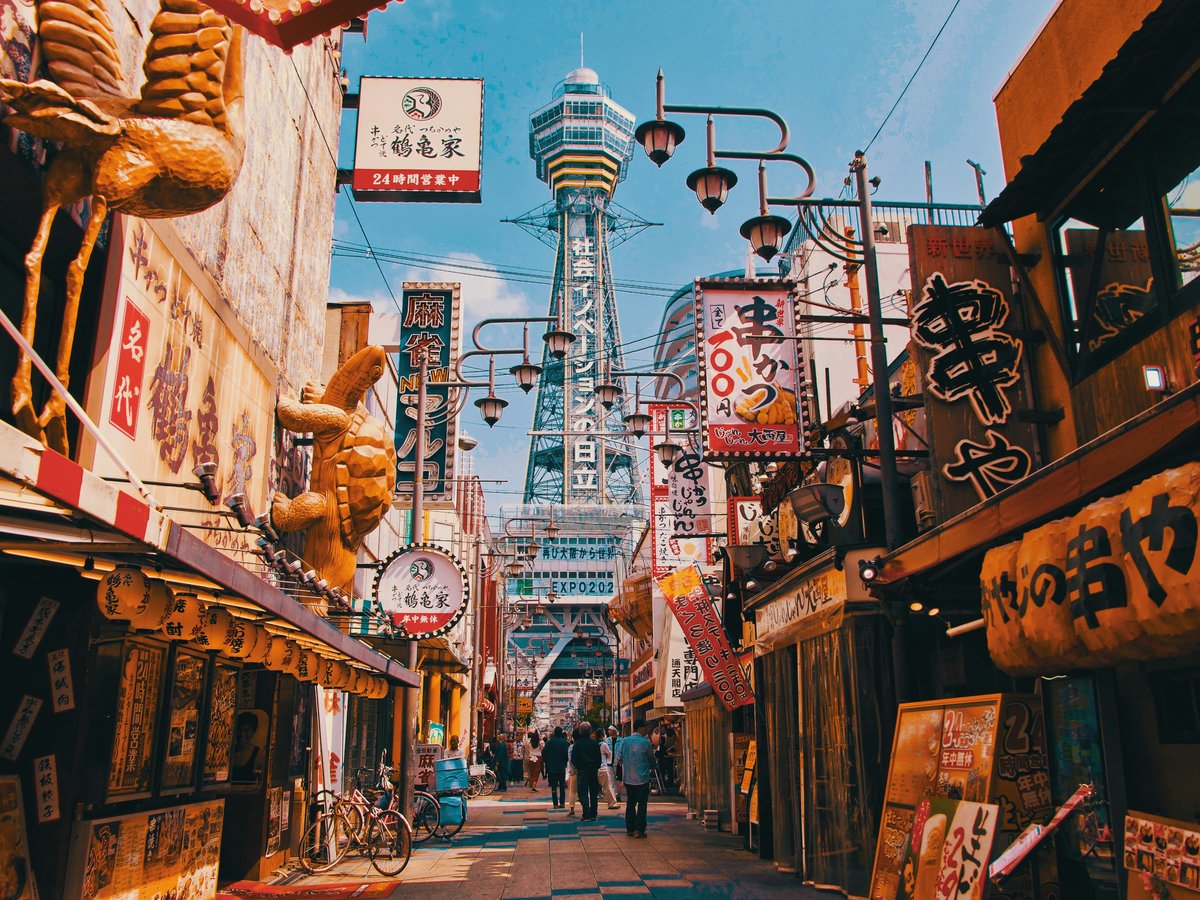
Nishinari-ku, specifically the Airin district around Shin-Imamiya Station, is Osaka's one genuinely rough neighborhood. It's a day-labor district with visible rough sleeping, ¥200 sake cans from sidewalk vending machines, and occasional confrontations between residents. You won't wander into it by accident unless you're walking south from Tennoji toward Tobita Shinchi. That said, even Airin is more depressing than dangerous. Solo women report feeling comfortable walking Namba, Shinsaibashi, and Umeda well past midnight. The Midosuji Line platforms at 11:30pm on a Friday smell like warm sake and yakitori grease, and the biggest hazard is a salaryman dozing against your shoulder. Tobita Shinchi, a red-light district 10 minutes south of Shinsekai, is not unsafe, but the narrow alleys and opaque storefronts make most solo travelers uncomfortable after dark. Shinsekai itself changes at night. The neon-lit blocks around Tsutenkaku (rebuilt in 1955) stay lively until about 10pm, then empty fast. By 11pm the kushikatsu joints on Jan Jan Yokocho are pulling down metal shutters, and the streets go quiet.
The Osaka Metro's last Midosuji Line train leaves Namba at roughly 00:12. After that, taxis are metered and honest, with a Namba-to-Shin-Osaka ride running about ¥2,500 ($16). Women-only cars operate on all Metro lines during morning rush, marked by pink floor stickers at the platform edge. Mind you, earthquakes are the one risk in Osaka where preparation matters more than avoidance. The city sits on the Uemachi fault, and the June 2018 Northern Osaka earthquake (magnitude 6.1) killed 6 people and halted trains for 3 days. Download the Yurekuru Call app for English-language real-time alerts. Typhoon season runs June through October, with September the peak month. During a typhoon, konbini like 7-Eleven and Lawson stay open 24 hours while restaurants close. A can of hot coffee and an onigiri from the Lawson downstairs at 3am is a reliable fallback when a September storm pins you indoors.
Solo travelers will find Osaka easier to navigate alone than almost any city outside Scandinavia. Single-seat counter dining is an Osaka standard, not the exception. Ichiran Ramen in Dotonbori seats you in a private booth behind wooden partitions, where you order from a ticket machine and eat without exchanging a word. Most ramen spots near Namba seat solo diners within 10 minutes at peak lunch, with bowls running ¥900 to ¥1,200 ($6 to $8). For meeting other travelers, the hostel common areas along Nishi-Shinsaibashi fill up around 9pm with backpackers and long-stay workers. Free walking tours depart from Osaka Castle's Otemon Gate at 10am most mornings, drawing 8 to 15 people. The 24-hour police boxes (koban) along Shinsaibashi-suji sit every 300 to 500 meters, so help is never more than a 2-minute walk. Most Osaka koban officers speak limited English. Carry your hotel's address card written in Japanese, which any APA Hotel or Toyoko Inn front desk will prepare for you.
Emergency number: 110 / 119
Official travel advisories
Normal precautions the most cautious of 3 government assessments
- Government of CanadaLevel 1Take normal security precautions View advisory
- UK Foreign OfficeLevel 1No FCDO travel restriction View advisory
- US State DepartmentLevel 1Exercise Normal Precautions View advisory
Verified from the issuing governments' own feeds.
Areas to avoid
- Airin/Kamagasaki district around Shin-Imamiya Station (Nishinari-ku) after dark
- Tobita Shinchi red-light district south of Shinsekai after dark
- Unmarked second-floor bars in Soemoncho (tout-heavy strip targeting solo drinkers after 11pm)
Common concerns
- Bicycle collisions on sidewalks and canal paths (1.2 million daily bike commuters)
- Drink-topping scams at tout-run bars in Namba and Soemoncho after 11pm
- Earthquakes (Uemachi fault; M6.1 in June 2018; download Yurekuru Call app)
- Typhoon season June through October with September peak
- Last Metro trains around midnight with limited night transit after
- Language barrier at police koban (carry hotel address written in Japanese)
Last verified by automated review (v1.7.2) on . What is automated review?