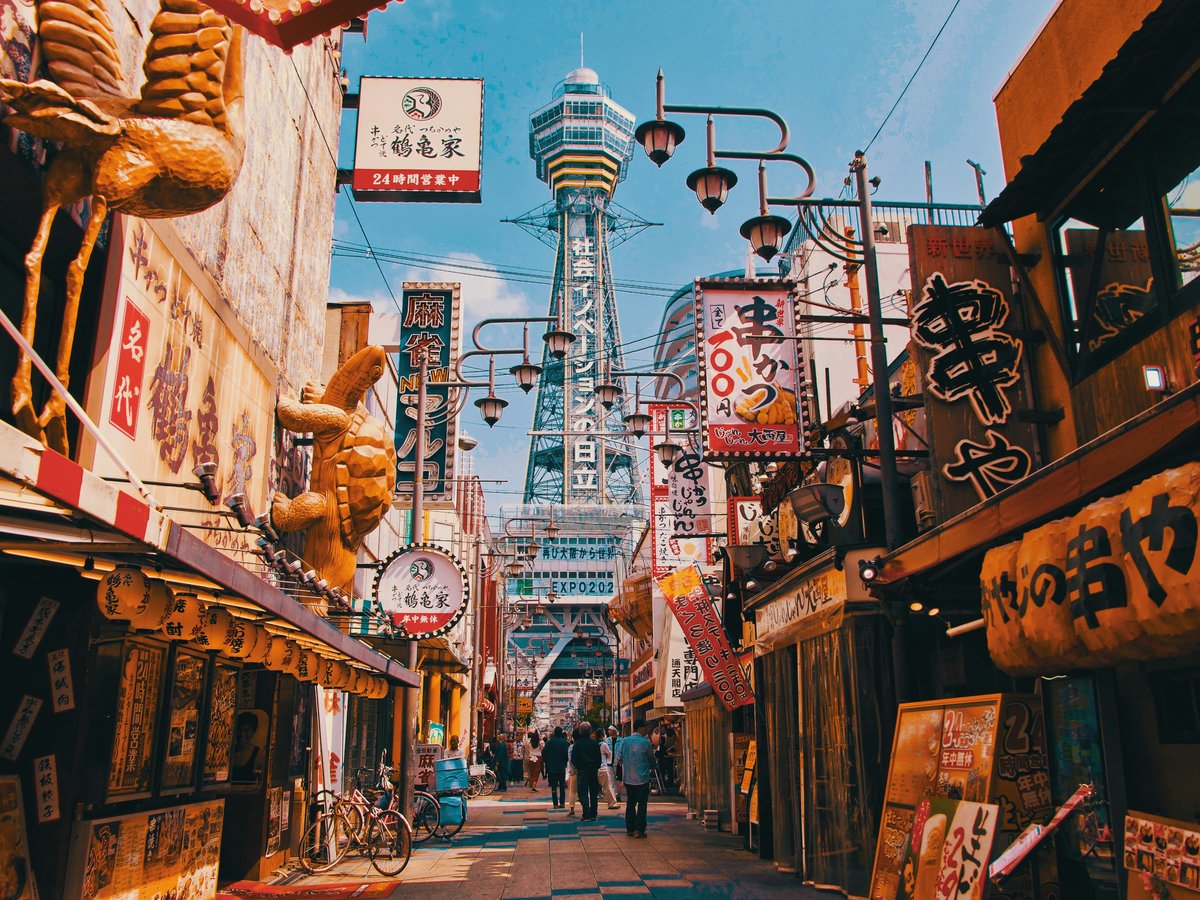
Osaka doesn't do nightlife the way Tokyo does, and that's the whole point. Where Tokyo's scene can feel curated and a little self-conscious, Osaka leans into chaos, warmth, and a kind of cheerful excess that locals call 'kuidaore' (eating yourself into ruin). The drinking culture here is loud, generous, and deeply social. Strangers talk to each other. Bartenders pour heavy. The neon stays on until the first trains start running around 5 AM, and the streets between last call and dawn have their own strange rhythm: salarymen sleeping on benches, taxi drivers smoking by the river, couples sharing takoyaki from a street stall that never seems to close. Osaka's nightlife isn't polished. It's honest. People come out to eat, drink, laugh too loud, and stumble home together. The city rewards you for staying out late and punishes nobody for having a good time.
Osaka's Bar Scene: From Whisky Dens to Standing Bars
The cocktail bar scene in Osaka tends to be quieter and more personal than what you'd find in Ginza or Shibuya. Many of the best spots seat six to ten people at a single counter, and the bartender (usually the owner) works in near silence, measuring with jiggers, hand-carving ice from a block. The Japanese cocktail tradition runs deep here, and Osaka has its share of bars that have been open for decades, passed between generations. You'll find clusters of these in Kitashinchi, where the bars hide behind unmarked doors in office buildings, and in the backstreets around Shinsaibashi. Expect to pay a moderate premium per cocktail at a serious bar, sometimes with a seating charge (otoshi) that comes with a small snack. But Osaka's real drinking culture lives in the tachinomi: standing bars. These are everywhere, especially in Tenma and around Shinsekai, and they're where regular people drink on weekday evenings. Beers and highballs go for remarkably little (some of the cheapest pours you'll find in any major Japanese city) with yakitori on the grill behind the counter, everyone shoulder to shoulder. The atmosphere is communal in a way that seated bars rarely manage. Tenma in particular has become known as one of the great standing-bar neighborhoods in Japan, with narrow alleys packed with tiny spots that spill onto the sidewalk. No reservations, no dress code, no pretense. Wine bars have been gaining ground in Namba and Horie, though the selection tends to lean French and Chilean with the occasional Japanese bottle. Rooftop bars exist but they're not really an Osaka thing: the city's skyline doesn't have the drama of Tokyo's, and locals seem to prefer being down in the thick of things rather than above it. That said, a few hotel rooftops in Umeda offer decent views if you want a quieter drink with a panorama of the city lights stretching south toward Namba.
Clubbing in Osaka: Late Starts and Long Nights
Osaka's club scene is smaller than Tokyo's but has its own identity: less fashion-forward, more about the music and the crowd. The main genres you'll encounter are techno, house, hip-hop, and a strong local affection for reggae and dancehall that you might not expect. There's also an active underground scene for experimental electronic music, mostly clustered in Amerikamura and the buildings around Shinsaibashi. Things don't really get going until midnight, and the peak hours tend to fall between 1 AM and 4 AM. Most clubs stay open until 5 AM or later on weekends. Since the 2016 revision to Japan's fueiho (entertainment business law), clubs with proper licenses can legally operate past midnight, and most established venues in Osaka have sorted their paperwork. That said, you'll still find semi-legal parties and pop-up events operating in gray areas. Dress codes are generally relaxed by global standards: clean sneakers are fine almost everywhere, though a few of the more upscale spots in Kitashinchi might turn you away in flip-flops or beachwear. Entry charges vary by venue and night but typically include one or two drinks. Some clubs offer reduced entry for women, and weeknight events tend to be cheaper or free. ID is required: bring your passport if you're not a resident. Bouncers at the larger venues will check, and being foreign isn't a problem in itself, though the language barrier can make the door interaction a little awkward if you don't speak Japanese. Friday and Saturday are the obvious big nights, but Sunday afternoon events (daytime raves, outdoor parties along the river in warmer months) have been building a following. Worth keeping an eye on flyers in record shops around Amerikamura or checking event listings on Resident Advisor.
Live Music: From Jazz Kissaten to Noise Basements
Osaka has a live music culture that tends to fly under the radar internationally, but it's been churning out interesting sounds for decades. The city's jazz scene is old and deep: some of the jazz kissaten (listening bars) have been open since the 1960s and 1970s, with walls of vinyl and a house rule against talking during the good parts. You sit, you drink coffee or whisky, you listen. These places are scattered around Umeda and Nakanoshima, and they're worth seeking out even if jazz isn't normally your thing. The ritual itself is the draw. The live house circuit (small venues with a stage, a PA, and room for maybe 100 to 300 people) is where the rock, punk, and indie scenes live. Osaka has always had a reputation for harder, louder music than Tokyo, and the local bands tend to have a raw energy that reflects the city's personality. There are clusters of live houses in Shinsaibashi and Namba, and shows typically start early (doors at 6 or 7 PM) with three or four bands on a bill. Expect a ticket charge plus a separate drink order at the bar: this two-fee system is standard across Japan and catches some visitors off guard. The noise and experimental scene has deep roots here too: Osaka is one of the birthplaces of the Japanese noise music movement, and small basement venues still host harsh noise, drone, and improvised sets on weeknights. These shows often draw fewer than 30 people and feel genuinely intimate in a way that larger venues can't replicate. Check flyers at record shops in Amerikamura or the bulletin boards at venue entrances for schedules: a lot of this scene still runs on paper and word of mouth rather than social media. Weeknight shows (Tuesday through Thursday) tend to feature local and emerging acts, while weekends bring touring bands and bigger draws. Monday is generally dead for live music.
Nightlife neighborhoods
-
Dōtonbori & Namba
Sensory overload after dark: giant mechanical signs, running water reflecting neon, the smell of grilled meat drifting from every alley. Tourist-heavy along the canal but peel one block back and you find izakaya packed with locals. Loud, dense, and unapologetically commercial.
- Best for
- First-timers, bar crawls with big groups, late-night street food between drinks, people who want energy and don't mind crowds
-
Amerikamura (Ame-Mura)
Osaka's answer to Harajuku, but scruffier and more music-oriented. By day it's vintage shops and streetwear; by night the clubs and bars in the upper floors of narrow buildings come alive. The Triangle Park area gathers skaters, musicians, and people pregaming before heading to a club. Graffiti on the walls, hip-hop leaking from open windows.
- Best for
- Club nights, DJ events, hip-hop and electronic music, a younger crowd (20s and early 30s), finding flyers for underground parties
-
Kitashinchi
Osaka's upscale drinking district, tucked south of Umeda station. Narrow streets lined with small bars, many seating fewer than ten. The crowd skews older: business dinners winding down, couples on date nights, seasoned drinkers who know their bartender by name. Quieter than the south side, more refined, but still unmistakably Osaka in its warmth. The hush of a well-run cocktail bar here, ice cracking against glass, is its own kind of nightlife.
- Best for
- Cocktail aficionados, intimate date nights, whisky exploration, anyone who prefers conversation over volume
-
Tenma & Tenjinbashisuji
The working person's drinking quarter. The covered shopping arcade (the longest in Japan) feeds into a web of narrow alleys crammed with tachinomi and tiny izakaya. Smoke from charcoal grills hangs in the air. The crowd is local, the vibe is unpretentious, and the conversation flows freely between strangers. Things get going early here, around 5 or 6 PM, and wind down sooner than in the south. A Tuesday evening in Tenma can feel livelier than a Friday in some cities.
- Best for
- Standing bars, cheap eats with drinks, after-work atmosphere, meeting locals, an authentic neighborhood feel far from tourist circuits
-
Shinsekai
Retro, rough around the edges, and completely itself. The Tsutenkaku tower glows above streets lined with kushikatsu joints and old-school game arcades. Shinsekai used to have a seedy reputation, and traces of that linger in a way that gives the area its character: it feels unpolished, a little defiant. The drinking spots tend to be no-frills, brightly lit, and full of regulars. Street noise, frying oil, the clatter of pachinko machines bleeding out of doorways.
- Best for
- Kushikatsu and beer, retro atmosphere, budget drinking, anyone who finds overly curated nightlife exhausting
-
Horie & Minami-Horie
The quieter, design-conscious counterweight to Amerikamura just to its west. Horie's nightlife is more wine bar than dance floor: small plates, natural wine, conversation-level music. The streets are cleaner, the crowds thinner, and the overall pace is slower. A neighborhood that rewards walking without a plan, ducking into whatever catches your eye.
- Best for
- Wine bars, relaxed evenings, couples, a break from the sensory assault of Namba without leaving the south side entirely
Safety after dark
Osaka is generally quite safe after dark, even in the busier entertainment districts, but a few things are worth keeping in mind. Touts in Dōtonbori and around Namba sometimes steer visitors toward overpriced bars or clubs: if someone on the street is aggressively inviting you somewhere, it's likely best to keep walking. Mind you, this is more of a wallet risk than a safety risk, but the bills at these places can be eye-watering. Drink spiking is rare but not unheard of in any major city; keep your glass in sight at crowded venues. The last trains leave between roughly 11:30 PM and midnight, and missing them means either a taxi, a night bus (limited routes), or staying out until the first trains around 5 AM, which, to be fair, is what a lot of people do intentionally. Taxis are safe and metered. If you're walking back late through quieter areas, you'll likely encounter nothing worse than other people doing the same thing. The Tobita Shinchi area near Shinsekai is a red-light district that's still nominally active; it's not dangerous but it's easy to wander into without realizing what it is. Earthquakes can happen anytime: know your nearest exit in any building you enter, especially basement venues.
Practical tips
- Cover charges and otoshi
- Many bars charge a small seating fee (otoshi) that comes with a snack: this is standard practice across Japan, not a scam. Clubs generally charge a door fee that includes a drink or two. Check at the entrance so you're not caught off guard.
- Last train timing
- Osaka's trains stop running between roughly 11:30 PM and midnight depending on the line. The gap between last train and first train (around 5 AM) is prime time for nightlife: many people plan to stay out rather than rush for the last departure. Taxis fill the gap but expect longer waits and higher fares in busy areas late on weekends.
- Cash vs. cards
- Smaller bars, standing bars, and street food vendors still overwhelmingly run on cash. Clubs and larger establishments are more likely to accept cards or IC cards, but carrying a reasonable amount of yen is the safer bet for a night out. Convenience store ATMs (7-Eleven and Lawson) accept most international cards and are open around the clock.
- Language at the door
- Most venues in the main nightlife districts are welcoming to non-Japanese speakers, though English menus and English-speaking staff are hit or miss outside of tourist areas. A few words of Japanese (even just ordering in Japanese) tends to warm things up considerably. Google Translate works in a pinch for reading menus. Some smaller, local-oriented bars in residential areas may politely decline foreign visitors, which is frustrating but not uncommon.
- Smoking indoors
- Japan's indoor smoking laws have tightened, but Osaka's smaller bars (especially the older tachinomi and izakaya) still often allow smoking or have designated smoking sections that aren't well separated. If smoke bothers you, check before settling in. The haze is part of the atmosphere in some places, less welcome in others.
FAQ
What time does nightlife start in Osaka?
It depends on what you're after. Standing bars and izakaya in areas like Tenma fill up as early as 5 or 6 PM with the after-work crowd. Sit-down cocktail bars and wine bars tend to get going around 7 or 8 PM. Clubs are a different story entirely: most don't really come alive until midnight, with peak energy between 1 AM and 4 AM. The city has a rhythm that stretches across the whole evening rather than concentrating in one window.
Is Osaka's nightlife safe for solo travelers?
Generally yes, and Osaka might be one of the easier cities in the world to go out alone. The standing bar culture is naturally social: you're shoulder to shoulder with strangers, and people talk to each other. Solo women should exercise the same caution as in any large city (watch your drink, trust your instincts about a venue), but violent crime targeting nightlife-goers is rare. The biggest practical risk for solo visitors is probably the tout situation around Dōtonbori, just decline and keep moving.
Do I need to speak Japanese to enjoy Osaka's nightlife?
Not in the main entertainment districts, though it helps everywhere. Dōtonbori, Namba, and Shinsaibashi have enough tourist traffic that pointing and gesturing will get you through most transactions. Smaller neighborhood bars (Tenma, Shinsekai) are more Japanese-language environments, but the warmth of Osaka people means a friendly attitude and a translation app go a long way. At clubs, the music does most of the talking regardless.
What's the best neighborhood for a first night out in Osaka?
Dōtonbori and the surrounding Namba area give you the full sensory hit: neon, crowds, street food, bars stacked on top of each other. It's touristy, sure, but it's also genuinely fun and easy to navigate. If that sounds like too much, start in Tenma for a more local, low-key evening of standing bars and grilled skewers. Both are accessible by subway and walkable once you arrive.
Are there nightlife options on weeknights?
Osaka stays lively through the week, though the character shifts. Monday is the quietest night: many smaller venues close, and live music is scarce. Tuesday through Thursday you'll find izakaya and standing bars in good form, plus weeknight live shows featuring local bands at smaller venues. Club events run on weeknights too, often with lower or no cover charges and a more relaxed crowd. The city never fully shuts down on a weeknight the way some places do.
Last verified by automated review (v1.7.2) on . What is automated review?