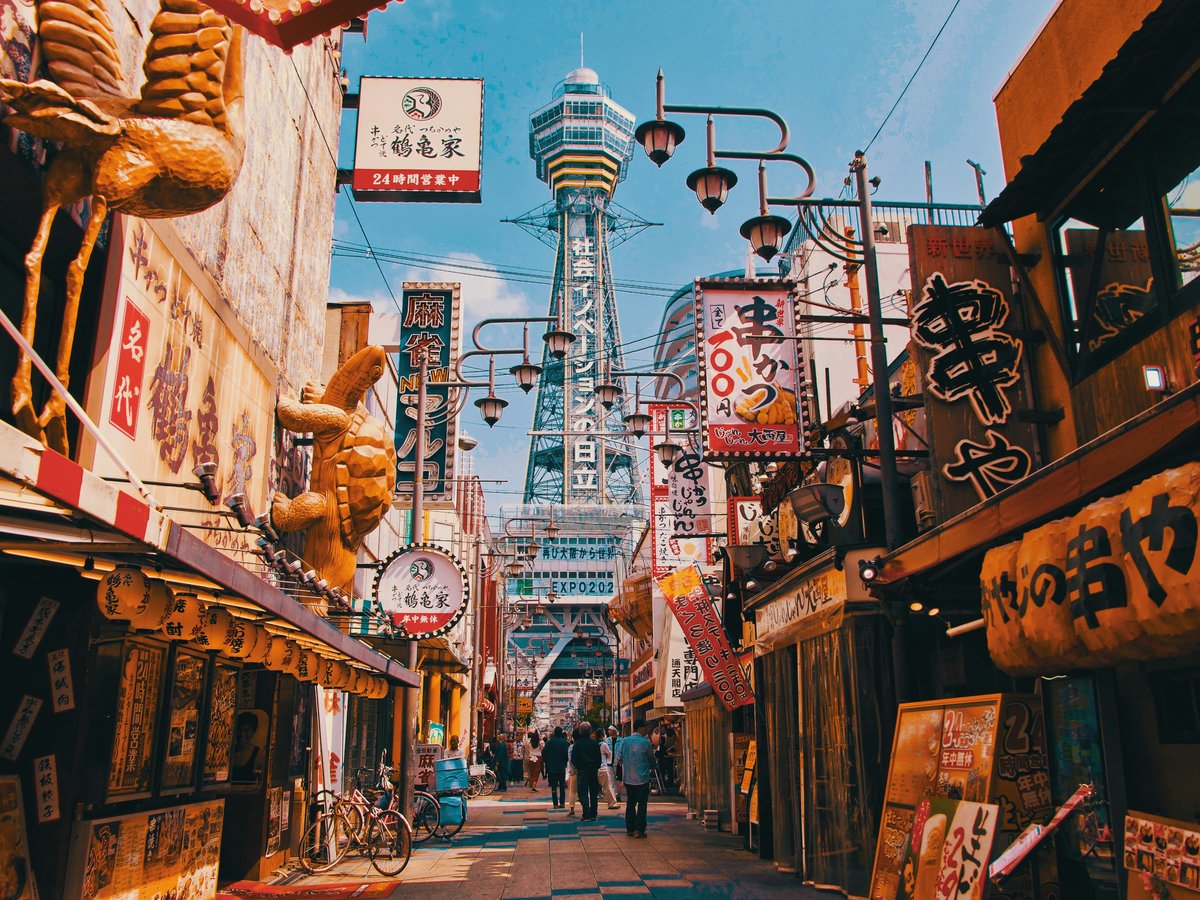
Osaka is, at its core, a north-south city split by a single idea: Kita is uptown, Minami is downtown. Kita means Umeda: train stations stacked on top of department stores, office towers, the kind of place where people wear suits and walk fast. Minami means Namba and everything south of it: louder, messier, more fun, and the part of Osaka that most visitors fall in love with. The Midosuji subway line runs between them in about eight minutes, which means you're never far from either world. But that binary sells Osaka short. East of center you've got working-class neighborhoods that haven't changed much since the 1960s. West toward the bay, things get newer and more spread out. And tucked between the big districts are pockets (a few blocks here, a side street there) where the city still feels like it belongs to the people who live in it. The whole thing is threaded together by rivers and canals, which matters more than you'd think: the waterways set the borders, and once you start navigating by bridges instead of station exits, the layout clicks.
Neighborhoods
-
Namba & Dotonbori
This is the Osaka most people picture: the Glico running man sign reflected in the canal, takoyaki smoke drifting across packed sidewalks, and a noise level that stays constant from about 10 AM until well past midnight. Dotonbori itself is just one canal-side street, maybe 600 meters, but it anchors a sprawl of covered arcades, pachinko parlors, and restaurants that bleeds south into Namba Parks and east toward Nipponbashi. The architecture is pure commercial chaos: buildings wrapped floor-to-ceiling in signage, mechanical crabs waving from storefronts, the occasional shrine squeezed between a gyoza chain and a capsule hotel. It smells like frying batter and soy sauce, constantly.
- Best for
- First-time visitors, street food obsessives, anyone who feeds on crowd energy and doesn't mind sensory overload. Also surprisingly practical as a base: Namba station connects to five different rail lines, including the Nankai line direct to Kansai Airport.
- Key streets
- Dotonbori-dori along the canal for the full spectacle. Hozenji Yokocho, the narrow stone-paved alley just south of Dotonbori: moss-covered Fudo Myo-o statue, tiny bars, a different century. Shinsaibashi-suji arcade runs north for 600 meters of covered shopping. Sennichimae Doguyasuji for restaurant supply shops selling plastic food samples and industrial woks.
-
Umeda & Kita
Umeda feels like it was designed by someone who thought Osaka needed a Manhattan. High-rise department stores, underground shopping labyrinths that stretch for literal kilometers, and a pace of foot traffic that's noticeably faster than anywhere else in the city. But it's not soulless: the sky gardens at Umeda Sky Building have a strange retro-futurism to them, and the underground food halls in the basements of Hankyu and Daimaru are some of the best eating in the city if you know where to look. The area around Osaka Station City has been rebuilt so many times it has a permanently unfinished quality to it, scaffolding somewhere or other most months. Mostly concrete and glass. Gets quieter fast once you move north past the Yodobashi Camera building.
- Best for
- Business travelers, people who like department store culture and clean hotels, anyone arriving via JR who wants to minimize transfers. Also the gateway to Nakazakicho and Tenjinbashi, both walkable from here.
- Key streets
- The underground passages connecting Hankyu Umeda, Hanshin Umeda, and JR Osaka: they form a city beneath the city, and getting lost in them is basically a rite of passage. Midosuji Boulevard south toward Yodoyabashi is Osaka's widest street, lined with ginkgo trees that turn gold in November. The narrow alleys east of HEP Five still have standing bars and yakitori joints that cater to the after-work crowd.
-
Shinsekai
Shinsekai was built in 1912 to look like New York and Paris. It doesn't look like either anymore. What it looks like now is a neighborhood that peaked mid-century and then froze: Tsutenkaku Tower presiding over blocks of kushikatsu restaurants with hand-painted signs, game arcades running machines from the 1990s, and old men in slippers drinking canned coffee on the street at 2 PM. The lighting skews fluorescent and yellow. The streets are narrow. There's a pawnshop district on the eastern edge, Jan Jan Yokocho, that still has the feel of postwar Osaka. It sounds rough on paper, and it was genuinely rough two decades ago, but now it's mostly just characterful: a tourist circuit by day, quieter and slightly edgier after dark.
- Best for
- Anyone who wants to see a version of Osaka that isn't polished for visitors. Good for an afternoon, maybe not where most people would choose to sleep, though the budget hotels around here are some of the cheapest in the city.
- Key streets
- Jan Jan Yokocho, the narrow covered alley running south from the main Shinsekai strip: shogi parlors, tiny kushikatsu counters, the occasional cat sleeping in a doorway. Tsutenkaku Hondori is the main drag under the tower. The blocks around Spa World are oddly quiet for how close they are to the tourist core.
-
Nakazakicho
A few blocks north of Umeda Station, the towers just stop and you're suddenly in a grid of pre-war wooden nagaya townhouses, most of them converted into coffee shops, used bookstores, vintage clothing racks, and one-person galleries. The streets are barely wide enough for a car. There are potted plants everywhere. It's the quietest neighborhood this close to a major station in any Japanese city I can think of: you can hear birds and bicycle bells instead of traffic. The aesthetic is somewhere between Brooklyn and a Japanese village, but it got there organically over the past 15 years as young creatives moved in because the rent was cheap. Still feels genuinely local, not curated.
- Best for
- People who like finding their own coffee shop and sitting with a book. Design-oriented travelers. Anyone who needs a reset from the intensity of Namba. Not ideal for families or nightlife seekers: there's almost nothing open past 9 PM.
- Key streets
- The main strip runs roughly north-south along Nakazaki-dori, but the best finds are on the unnamed side streets branching east. Tenjinbashi-suji, Japan's longest shopping arcade, is a 10-minute walk east and has a completely different energy: discount stores, taiyaki stands, and foot traffic that hasn't changed much since the 1980s.
-
Tennoji & Abeno
Tennoji sits at the southern end of the Midosuji line and has been slowly rebuilding itself around Abeno Harukas, which at 300 meters is still the tallest skyscraper in Japan as of early 2026. The area around the station has the energy of a place that's caught between eras: new shopping malls next to covered markets that have been here for decades, Tennoji Park's broad lawns butting up against the noise of Shin-Sekai just to the northwest. The Tennoji Zoo is right here, looking a little worn but still popular with families. Shitennoji temple, one of the oldest in Japan, is a 10-minute walk east, and the monthly flea market on its grounds is one of the best in Kansai.
- Best for
- Families with kids who want park space and a zoo. Budget travelers: accommodation is cheaper here than Namba or Umeda. People who want a residential feel with easy transit access.
- Key streets
- Abeno-suji running south from the station. The covered market streets east of Tennoji Station still have fish sellers, mochi shops, and the kind of produce stands where the owner shouts prices at you. Shitennoji-sando, the approach road to the temple, lines up with food stalls during the monthly 21st and 22nd flea market.
-
Horie & Minami-Senba
West of Shinsaibashi and south of Yotsubashi, Horie is where Osaka's design-conscious crowd moved when Amerikamura got too loud. The streets here are wide enough to feel calm but still walkable, lined with independent furniture shops, concept stores, bakeries with four items on the menu, and coffee roasters that take themselves very seriously. Tachibana-dori (locals call it Orange Street) is the spine of the neighborhood: vintage shops, a few good Italian restaurants, and a pace of life that feels like a different city from Dotonbori, which is maybe a 15-minute walk east. South toward Minami-Senba the scale gets a bit bigger, more galleries and showrooms, but the residential quiet holds.
- Best for
- Design-minded travelers, couples, anyone who wants to be close to the action but sleep somewhere peaceful. Good restaurant density for dinners that don't involve standing in line.
- Key streets
- Tachibana-dori (Orange Street) running east-west through the center of Horie. Kitahorie 1-chome and 2-chome streets north of Orange Street have the densest cluster of independent shops. Minami-Senba 3-chome is gallery territory.
-
Amerikamura
Amerikamura (everyone just says Ame-Mura) is a few square blocks wedged between Shinsaibashi and Horie. It earned the name from the secondhand American clothing shops that opened here in the 1970s, and that DNA is still visible: vintage Levi's, band tees, sneaker resellers. The crowd skews young, maybe 16 to 25, and the triangle park at its center fills up on weekends with street performers, skateboarders, and teenagers eating crepes. The walls are tagged. The music leaking from shops runs to hip-hop and punk. It's loud and messy and smells like fried chicken from the stands on the periphery. Not everyone's thing, but it's a genuine youth culture hub, not a manufactured one.
- Best for
- Younger travelers, vintage shopping enthusiasts, anyone who wants to feel the energy of Osaka's street culture. Less suited for families or anyone who prefers quiet.
- Key streets
- The triangle park (Mitsu Park) at the center is the anchor point. The streets radiating west toward Big Step mall have the highest density of shops. East toward Shinsaibashi-suji, the tone shifts rapidly from indie to chain retail.
-
Kitahama & Nakanoshima
Nakanoshima is literally an island: a long sandbar in the Dojima River that Osaka built its civic institutions on. The Museum of Oriental Ceramics, the National Museum of Art with its bizarre silver-tube entrance, the Central Public Hall with its copper dome from 1918. There's something about the wide riverside walkways here that feels more like a European capital than a Japanese commercial city. Kitahama, on the south bank, is where Osaka's old money settled: the stock exchange is here, and the pharmacies and chemical companies that made fortunes in the Edo period still have their headquarters on Doshomachi. The streets are quieter than you'd expect for a city center. Lots of stone facades, a rare thing in Osaka.
- Best for
- Architecture and museum lovers, people who want a calm base within walking distance of both Umeda and Namba, anyone who appreciates a good riverside walk. Hotels here tend toward the higher end.
- Key streets
- Nakanoshima's east promenade along the river is a genuinely pleasant walk, especially around sunset when the bridges light up. Doshomachi in Kitahama is the old pharmacy district: the Sukunahikona Shrine here is dedicated to medicine, and the surrounding blocks still have traditional shopfronts. Tosabori-dori along the south side of Nakanoshima has a growing cluster of wine bars and small restaurants.
-
Tsuruhashi
Tsuruhashi is Osaka's Korea Town, and it hits you the moment you step out of the station: the smell of grilling galbi, sesame oil, and kimchi is intense enough to make you hungry even if you just ate. The market (Tsuruhashi Shijo) is a warren of narrow covered lanes packed with butcher shops, Korean cosmetics vendors, kimchi sellers with 30 varieties in plastic tubs, and restaurants that have been family-run for two or three generations. It's not pretty. The lighting is fluorescent, the lanes are tight, and there's a rawness to it that makes it feel like a real working market rather than a tourist attraction. Which it mostly still is: this is where Korean-Japanese families in Osaka have shopped for decades.
- Best for
- Food-driven travelers, anyone interested in Osaka's Korean-Japanese community and its deep roots here. Not a place to stay: it's a visit destination, best combined with nearby Tennoji.
- Key streets
- The market lanes extending west and south from Tsuruhashi Station: there's no single main street, just a branching grid of alleys. The yakiniku restaurants cluster along the north side of the tracks.
-
Nipponbashi & Den Den Town
Nipponbashi is Osaka's answer to Akihabara, but smaller and with a different energy: less corporate anime branding, more actual shops run by people who care about what they sell. Den Den Town is the strip of electronics and otaku shops running along Nipponbashi-suji Shoten-gai, roughly from Namba Station south to Ebisucho. Retro game shops with bins of Famicom cartridges, figure stores sorted by series, maid cafes with hand-drawn signs, and hobby shops selling model kits and gunpla. The architecture is unremarkable (mid-rise commercial buildings, most from the 1970s and 80s) but the density of niche retail is remarkable. On weekends there's a cosplay presence on the street. The sound environment is a wall of competing store jingles.
- Best for
- Gamers, anime and manga fans, electronics hobbyists, anyone who collects anything Japanese and niche. Also a useful transit corridor: Nipponbashi Station connects to Namba in two minutes.
- Key streets
- Nipponbashi-suji from Namba south to Ebisucho is the main corridor. The side streets west toward Sakai-suji have the more specialist shops: retro audio equipment, vintage synthesizers, components. Ota Road (Otaku Road) is the stretch with the highest concentration of figure and doujinshi shops.
FAQ
Where should I stay in Osaka if it's my first visit?
Namba is the most practical base for a first trip. You're walking distance from Dotonbori, Shinsaibashi, and Amerikamura, the Nankai line runs direct to Kansai Airport, and the Midosuji subway gets you to Umeda in about eight minutes. The hotel density means there's something at every price point. The main trade-off is noise: if you're a light sleeper, look for accommodation a block or two off Dotonbori-dori rather than directly on it. Horie is a strong alternative if you want the proximity without the intensity.
Is Osaka walkable, or do I need to use the subway constantly?
The core is surprisingly walkable. You can get from Umeda to Namba on foot along Midosuji in about 40 minutes, and most of the interesting neighborhoods between them (Horie, Shinsaibashi, Amerikamura) are within a 15-minute walk of each other. That said, the subway is cheap and fast, and you'll likely use it to reach Tennoji, Tsuruhashi, or Shinsekai from the center. Buy an ICOCA card at any station and load it with a few thousand yen: it works on every train, subway, and bus in the city.
What's the best neighborhood in Osaka for food?
Honestly, every neighborhood has its specialty and arguing about the best is a losing game. Dotonbori and Namba have the widest variety and the most options past midnight. Tsuruhashi has the best yakiniku in the city, possibly in Japan. Shinsekai owns kushikatsu. Nakazakicho has the best specialty coffee. Umeda's department store basements are an underrated food experience. If you're only in Osaka for two days, staying in Namba gives you the widest reach, but making a trip to Tsuruhashi for a yakiniku lunch is worth prioritizing: it's only one subway stop from Tennoji.
Is it worth staying in Umeda instead of Namba?
It depends on what you're doing. Umeda makes sense if you're traveling onward by JR: the shinkansen, Kyoto, Kobe, and the airport limousine bus all connect through Osaka Station. The hotels tend to be slightly more expensive and more business-oriented. For sightseeing and nightlife, you'll find yourself taking the subway south to Namba most evenings anyway. Namba is the better base for most leisure travelers; Umeda is more convenient for day trips to other Kansai cities.
Are there neighborhoods in Osaka to avoid at night?
Osaka is generally very safe by global standards, and violent crime affecting visitors is extremely rare. Shinsekai can feel a bit rough around its southern edges late at night, and the area around Tobita Shinchi south of Shinsekai is a red-light district that most visitors will want to steer around. Parts of Nishinari-ku west of Tennoji have a visible homeless population and more visible poverty than other parts of the city, but they're not dangerous to walk through, just a different side of Osaka than the tourist districts show. Common sense applies everywhere: watch your belongings in crowded areas, especially Dotonbori on weekend nights.
How do Osaka's neighborhoods compare to Tokyo's?
The scale is different: Osaka's entire central area is roughly the size of three or four Tokyo wards, so everything is closer together. Namba is often compared to Shibuya or Shinjuku, but it's more concentrated and more food-focused. Umeda is Tokyo Station with better underground shopping. Den Den Town is a smaller, scruffier Akihabara. Nakazakicho is like a compressed Shimokitazawa. The biggest difference might be the overall atmosphere: Osaka neighborhoods tend to blend into each other more gradually, and the city as a whole has a louder, less formal energy than Tokyo. People talk to strangers on the street here, which still catches some Tokyo residents off guard.
Last verified by automated review (v1.7.2) on . What is automated review?