How much does Osaka cost per day in 2026?
A budget day in Osaka costs around ¥7,000 ($45), covering a hostel dorm in Namba, three konbini or street-food meals, and a Metro day pass. Midrange runs ¥18,700 ($120) with a business hotel near Shinsaibashi and one paid attraction. Luxury starts at ¥55,000 ($350) for ryokan stays and kaiseki in Kitashinchi.
A ¥7,000/day ($45) budget in Osaka is realistic if you stay disciplined. Hostel dorms in Namba and Shin-Imamiya run ¥2,500-3,500/night ($16-22). Shin-Imamiya is cheaper but grittier; the area around Airin-chiku still has a reputation, though the hostels themselves tend to be clean and well-run. Breakfast is a ¥150 ($1) onigiri from Lawson or FamilyMart. Lunch should be takoyaki from a stall near Dotonbori, where 8 pieces cost ¥500-600 ($3.20-3.84) and you eat them standing in the steam off the griddle. You'll burn your mouth on the first one because the batter stays molten inside. Dinner at a gyudon chain like Matsuya or Yoshinoya is ¥500-650 ($3.20-4.16) for a beef bowl with miso soup. That leaves roughly ¥1,000-1,500 for transit and one cheap attraction.
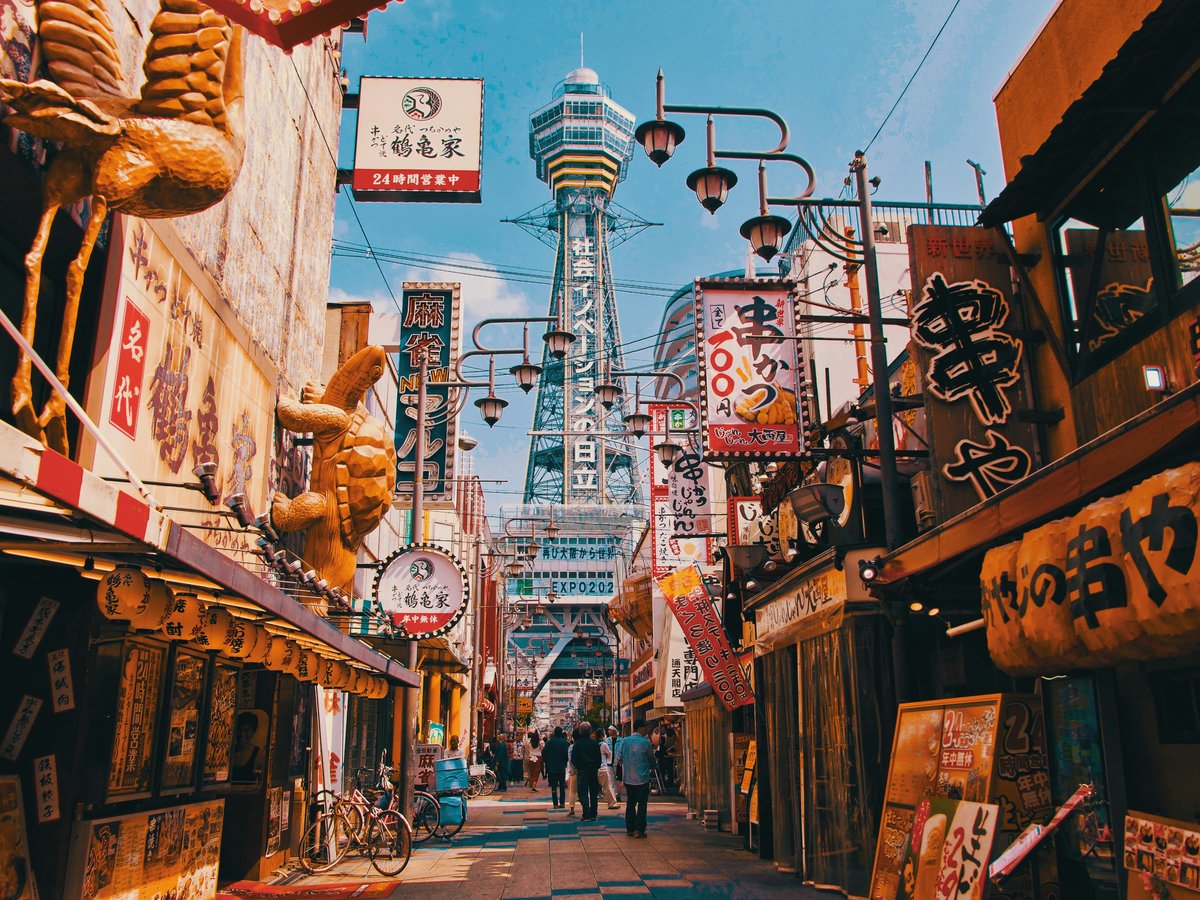
Midrange ¥18,700/day ($120) gets you a business hotel room near Shinsaibashi or Umeda for ¥8,000-12,000 ($51-77). Chains like Dormy Inn include a public bath, where the hot water smells faintly of minerals and the tile floors are warm underfoot, and sometimes a free ramen service after 21:00. Lunch at a kushikatsu counter in Shinsekai runs ¥1,200-1,800 ($8-12) for a set with 8-10 skewers, cabbage, and rice. The rule there is no double-dipping in the communal sauce. Worth noting, dinner at a mid-tier izakaya in Tenma or Ura-Namba will hit ¥3,000-5,000 ($19-32) per person after the mandatory otoshi, a small appetizer plate charged at ¥300-500 whether you want it or not. Add ¥2,400 ($15) for Osaka Aquarium Kaiyukan, which opened in 1990 and still holds the city's best single-attraction ticket value, and your day fills out.
The Osaka Metro Enjoy Eco Card costs ¥820 ($5.25) on weekdays and ¥620 ($3.97) on weekends and holidays. A single ride is ¥190-380, so you need 3-4 trips to break even on a weekday, 2-3 on a weekend. Most budget travelers staying in Namba or Shinsaibashi can walk to Dotonbori, Shinsekai, and Amerikamura without touching a train. The pass pays off only if you're hitting Osaka Castle in the morning and Sumiyoshi Taisha in the afternoon with a stop in Umeda between. For day trips, the Keihan line from Yodoyabashi to Kyoto costs ¥420 ($2.69), about 50 minutes; the Kintetsu from Namba to Nara is ¥580 ($3.71), 40 minutes. Neither uses Metro lines, so skip the day pass on those days. The ICOCA card carries a ¥500 deposit, refundable at any JR counter, and works on every train, bus, and konbini register across Kansai.
Osaka calls itself kuidaore, eat till you drop, and the budget math backs it up. The cheapest full meal is likely okonomiyaki at one of the no-name griddle counters along Janjan Yokocho in Shinsekai, where a pork-and-cabbage version costs ¥650-800 ($4.16-5.12). The sizzle of batter hitting the iron plate fills the narrow alley, and the sweet-savory tang of the sauce lingers on your jacket for hours. Mind you, prices on Dotonbori's main strip have drifted upward. Kani Doraku's crab set dinner starts at ¥8,000 ($51), and even Ichiran Ramen charges ¥1,090 ($7) for a single bowl in its partitioned booths. Walk one block south or north to any ramen shop without English signage and a similar bowl drops to ¥750-850 ($4.80-5.44). Konbini onigiri at ¥120-180 ($0.77-1.15) and egg sandwiches at ¥200 ($1.28) are solid fuel when you'd rather spend the savings on a second day trip.
Free sites worth your time include Osaka Castle's outer grounds and Nishinomaru Garden, though the castle tower interior is ¥600 ($3.84). Sumiyoshi Taisha, one of Japan's oldest Shinto shrines, costs nothing. Nakanoshima Park along the Dojima River works for a morning walk before the humidity climbs; September mornings currently sit around 23°C with 82% humidity. Tsutenkaku, the observation tower built in 1955 above Shinsekai, is ¥900 ($5.76) for the main deck. Skip the ¥500 ($3.20) special outdoor platform unless heights at 87 meters in open air appeal to you. Universal Studios Japan (opened 2001) runs ¥8,600+ ($55+) for a one-day pass, so front-load it and build cheaper days around it if USJ is your reason for coming. That said, the Osaka Amazing Pass at ¥2,800 ($18) for one day covers entry to over 40 sites. If your list includes the castle tower, Tsutenkaku, and a couple of others, the pass pays for itself by early afternoon.
Daily budget breakdown
Hostels, street food, and public transit. Local currency: JPY.
Comfortable hotels, sit-down meals, occasional taxis.
Upscale lodging, multi-course dinners, private transport.
Hidden costs to budget for
- Otoshi (table charge) at izakaya, ¥300-500 per person, non-negotiable and added automatically
- Osaka accommodation tax, ¥100-300/night scaled to your room rate
- Coin lockers at Osaka Station and Namba, ¥400-700 per use per day
- 10% consumption tax not always included in displayed menu prices (takeaway food is 8%)
- ICOCA card ¥500 deposit, refundable only at JR counters
- Dotonbori main-strip markup, the same dish costs 30-50% more than one block off the canal
- Luggage forwarding (takuhaibin) to your next city, ¥2,000-2,500 per bag
Last verified by automated review (v1.7.2) on . What is automated review?