What language is spoken in Osaka?
Japanese: specifically Osaka-ben, the Kansai dialect that locals are fiercely proud of. English signage covers trains and major stations well, but spoken English drops off fast outside hotel lobbies and ticket counters in Namba and Umeda. Learn 'ookini' (the Osaka thank-you) instead of standard 'arigatou' and you'll get noticeably warmer reactions at restaurants and market stalls.
Japanese, but not the Japanese your phrasebook taught you. Osaka runs on Osaka-ben (the Kansai dialect) and locals use it with real pride. Where a Tokyoite says 'arigatou gozaimasu,' an Osaka shopkeeper says 'ookini' with a rising lilt that sounds almost musical. 'Nandeyanen' (roughly 'what the hell?!') is the signature comedic retort you'll hear shouted between friends on the Dotonbori bridges and in every manzai comedy routine. The city's identity is tied to this dialect the way Brooklyn is tied to its accent. You don't need to speak it, but recognizing it helps you understand why phrasebook Japanese sometimes gets a knowing grin: you sound like someone from Tokyo, and Osaka has opinions about that.
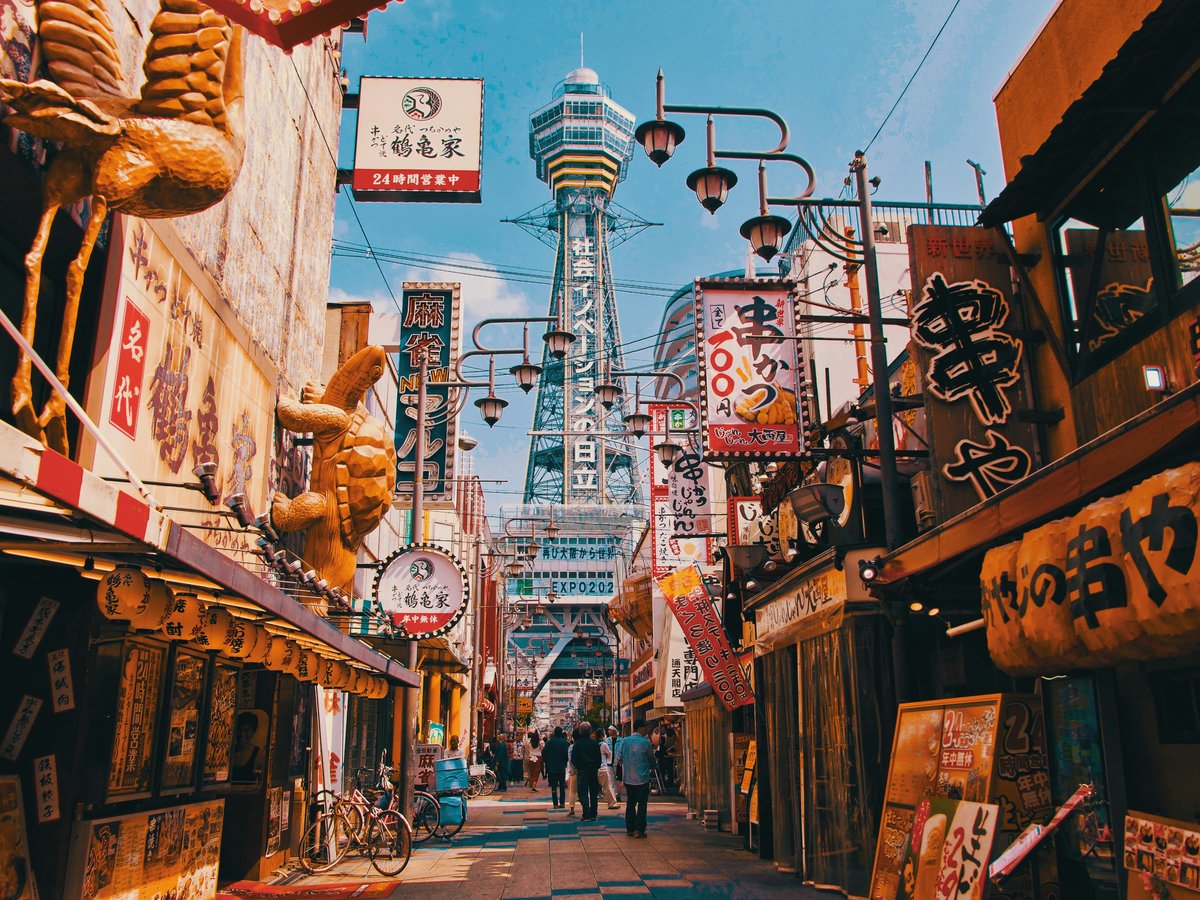
Japan currently ranks in the "low proficiency" band on the EF English Proficiency Index, and in practice, tourist-zone Osaka reflects that. Hotels in Namba and Umeda handle English fine. Convenience store clerks know transaction basics. But the woman running the tiny okonomiyaki stall under the Shinsekai neon, the one where the iron griddle pops and hisses and the batter smell hits you from half a block away: she speaks zero English and doesn't need to. Point at the menu photos. Hold up fingers for quantity. Bow slightly when she slides your plate over. That interaction works without a shared word. Train stations are the bright spot: JR, Osaka Metro, and Nankai all have romaji signage and English-mode ticket machines. Platform announcements run in Japanese then English. You won't get lost underground.
Three scripts run simultaneously (hiragana, katakana, and kanji) and together they make Japanese text look impenetrable to newcomers. Don't panic. You won't learn to read Japanese in a week, and you don't have to. Google Translate's camera mode handles restaurant menus and vending machines well enough; point your phone at the kanji and get a rough translation in seconds. The bigger practical challenge is the food ticket machines (called 'kenbaiki') at ramen shops and gyudon chains like Matsuya. These metal boxes with rows of buttons sit just inside the entrance: you feed in coins or bills, press the button for your meal, and hand the ticket to the cook behind the counter. Some have English labels. Many don't. Strategy: look at the plastic food models in the window display first, match the price to a button, or hit the top-left button. It's almost always the house specialty.
Skip the formal textbook Japanese. Osaka rewards casual over correct. 'Sumimasen' (excuse me, sorry, hey there) is your universal opener: at restaurants to flag down the waiter, on the street to ask directions, in the station when you're blocking the flow. 'Kore kudasai' (this one, please) plus a finger-point handles most ordering. 'Ikura desu ka' (how much?) at Kuromon Market, where the fish vendors' shouts bounce off the tin roof and the cold salt smell of fresh tuna hangs in the morning air. And 'ookini': always ookini. It's the password. Standard 'arigatou' works, but 'ookini' tells people you've been paying attention to where you are. That said, don't attempt Osaka-ben comedy timing. Locals tend to appreciate the effort on basic phrases, but a botched 'nandeyanen' just falls flat.
Languages spoken
Japanese
Primary language: Japanese (Osaka-ben / Kansai dialect).
Useful phrases
- Thank you (Osaka style)おおきにoh-kee-nee
- Excuse me / Sorryすみませんsoo-mee-mah-sen
- This one, pleaseこれくださいkoh-reh koo-dah-sigh
- How much is this?いくらですかee-koo-rah deh-soo kah
- This is deliciousおいしいoy-shee
- Check, pleaseお会計お願いしますoh-kai-kay oh-neh-guy-shee-mahss
- Do you speak English?英語できますかay-go deh-kee-mahss kah
- I'm fine / No thanks大丈夫ですdye-joh-boo dess
Last verified by automated review (v1.7.2) on . What is automated review?