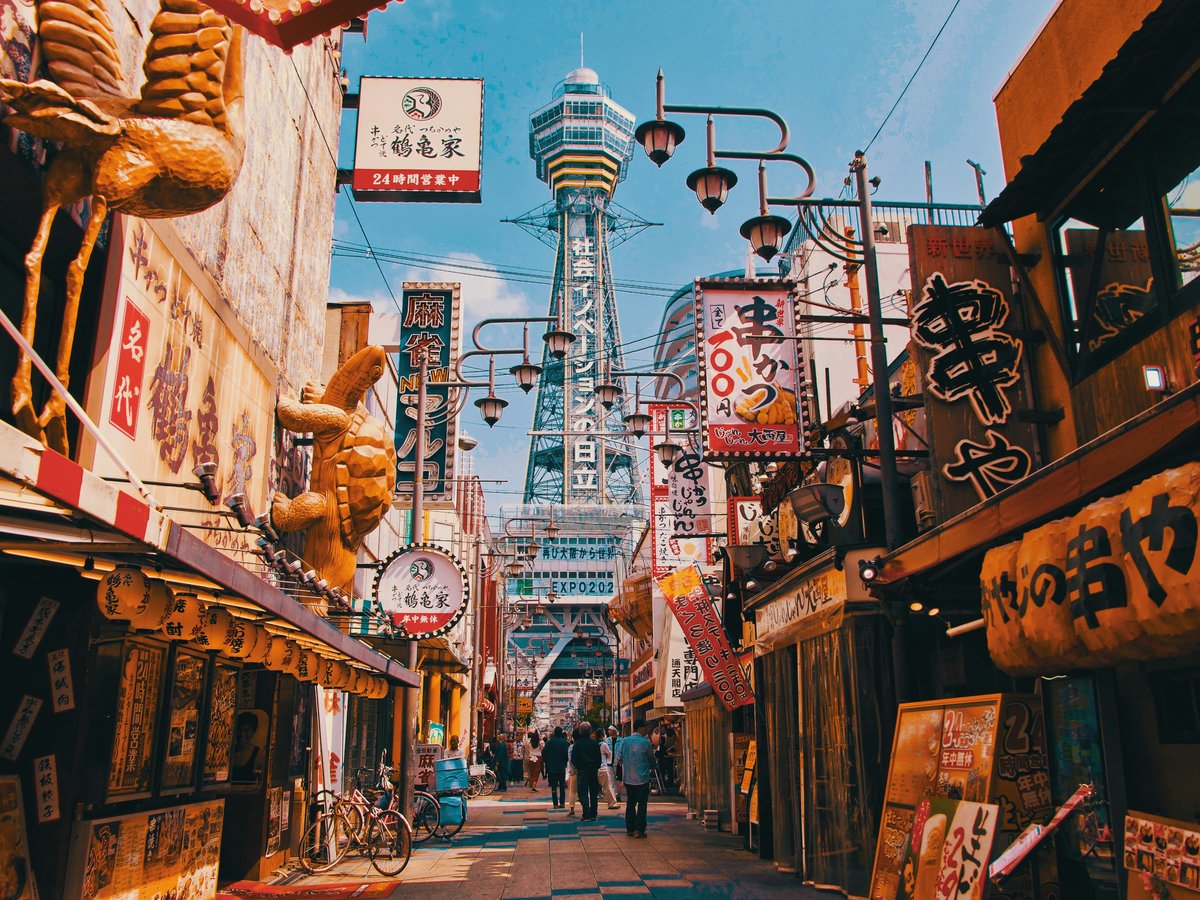
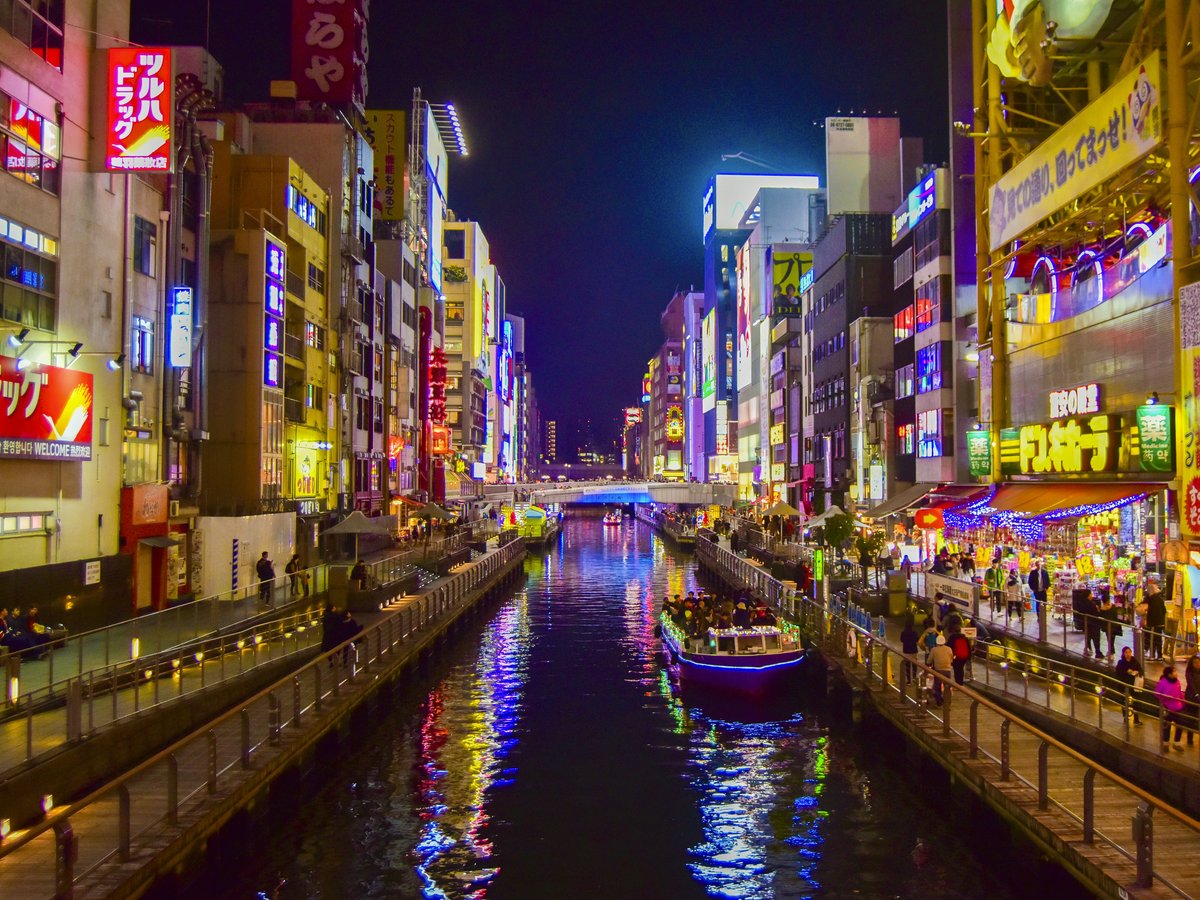
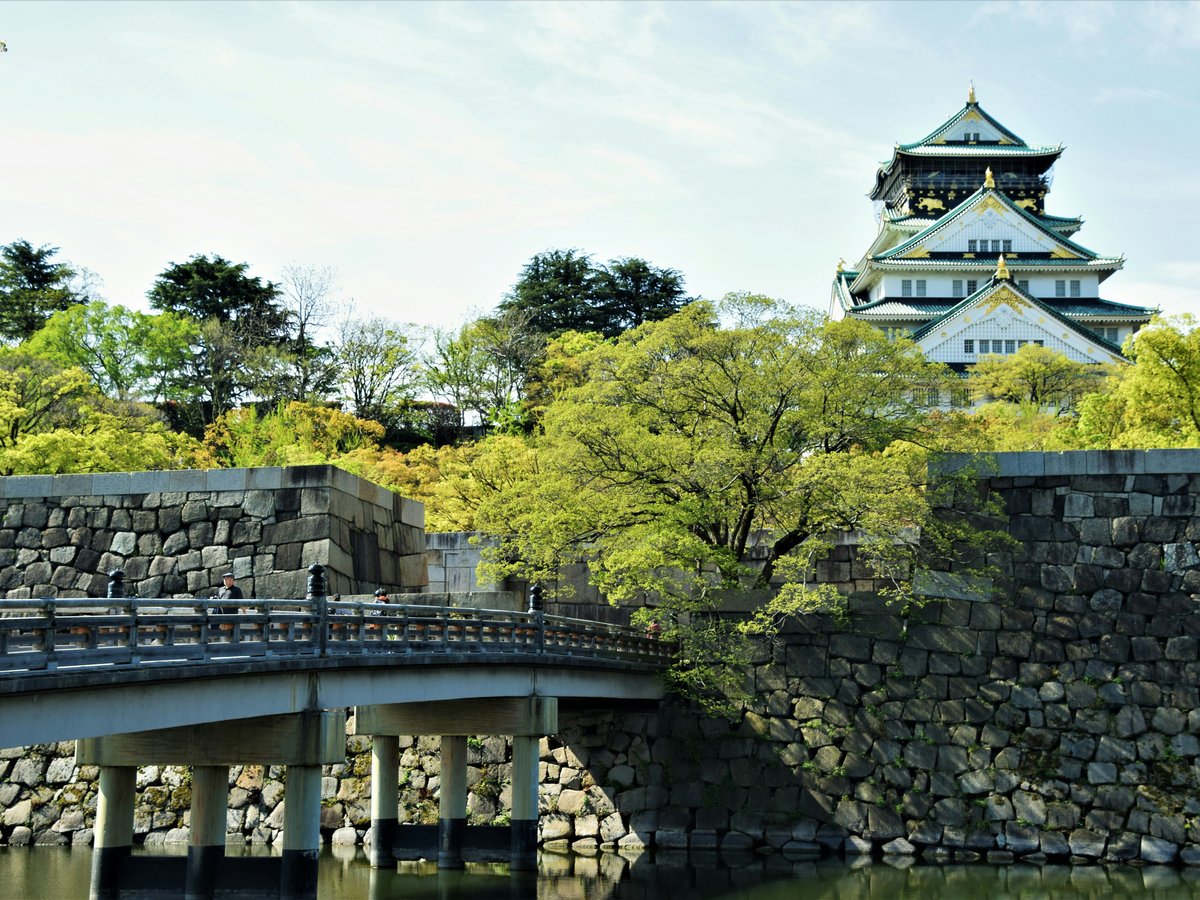
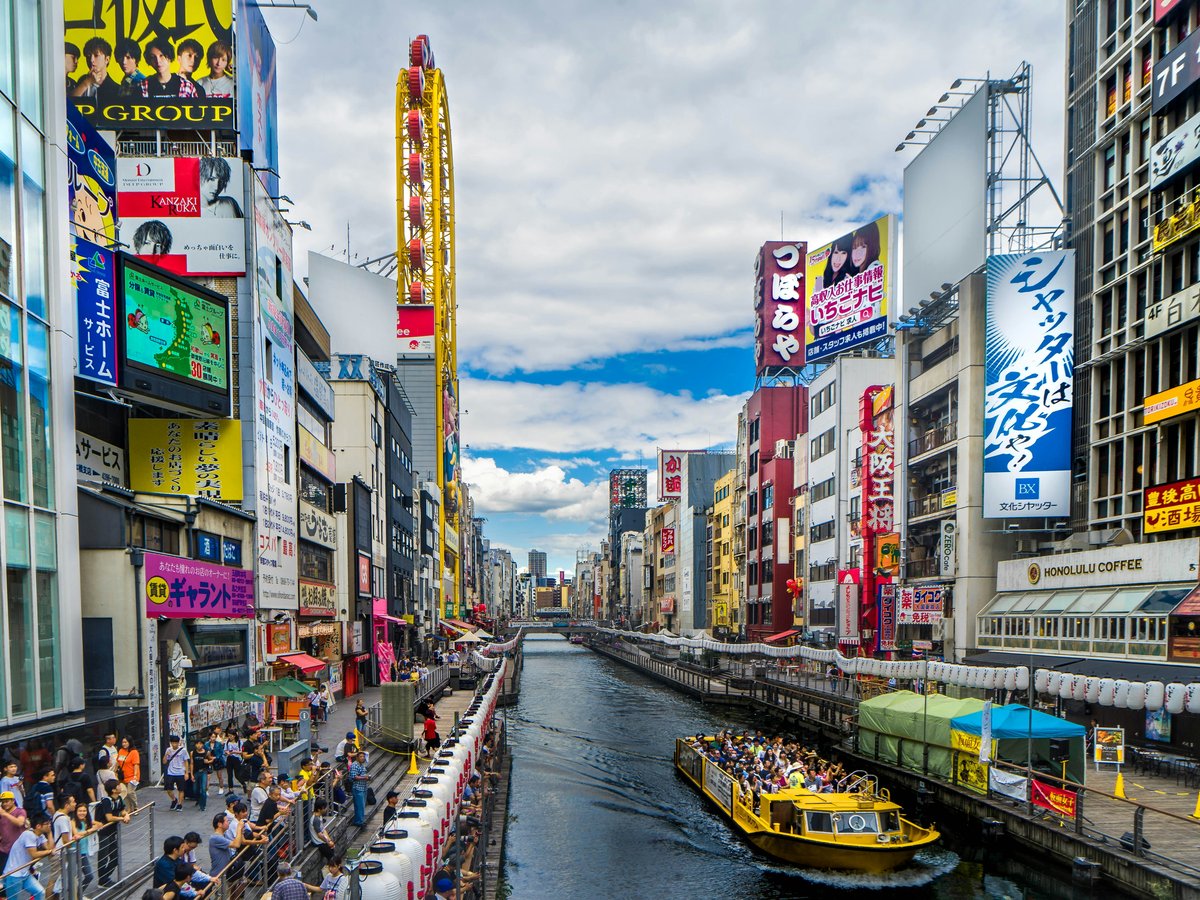
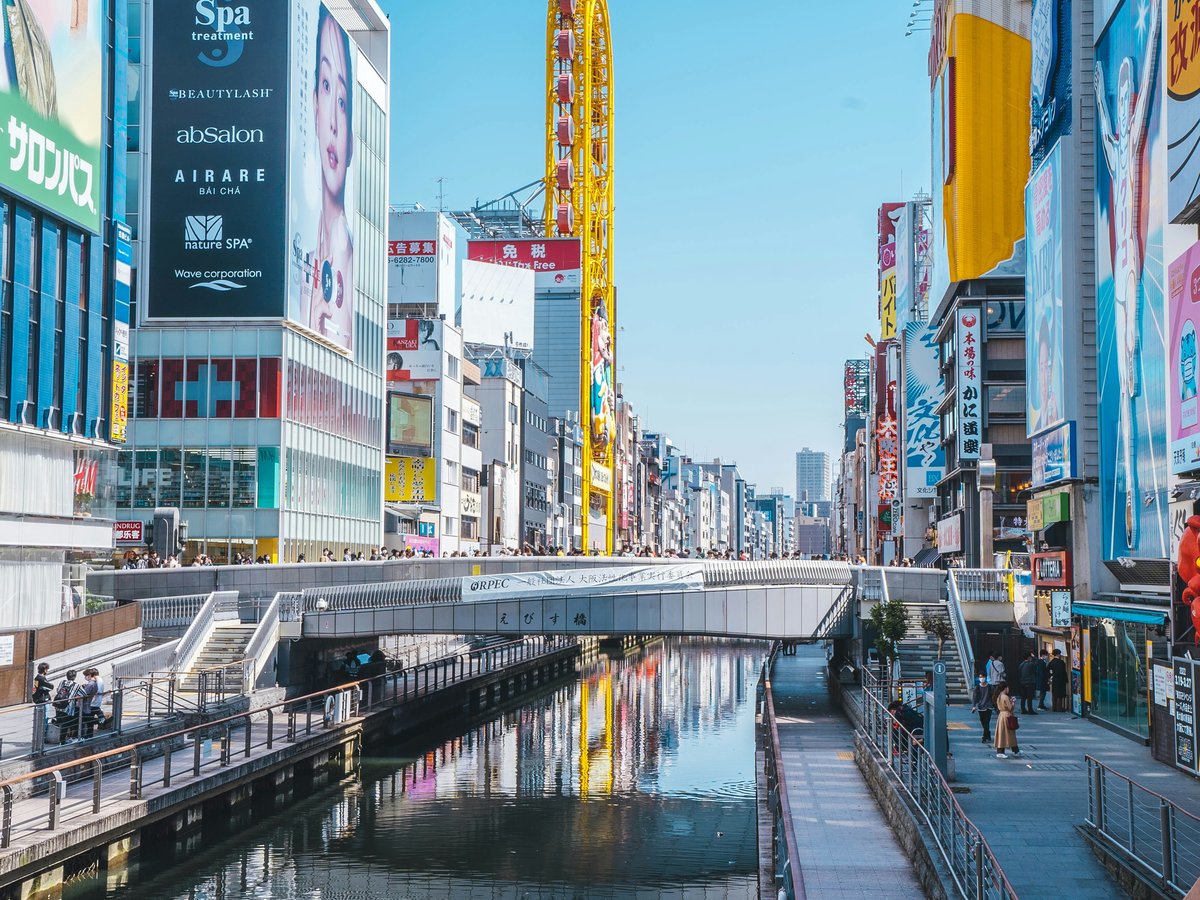
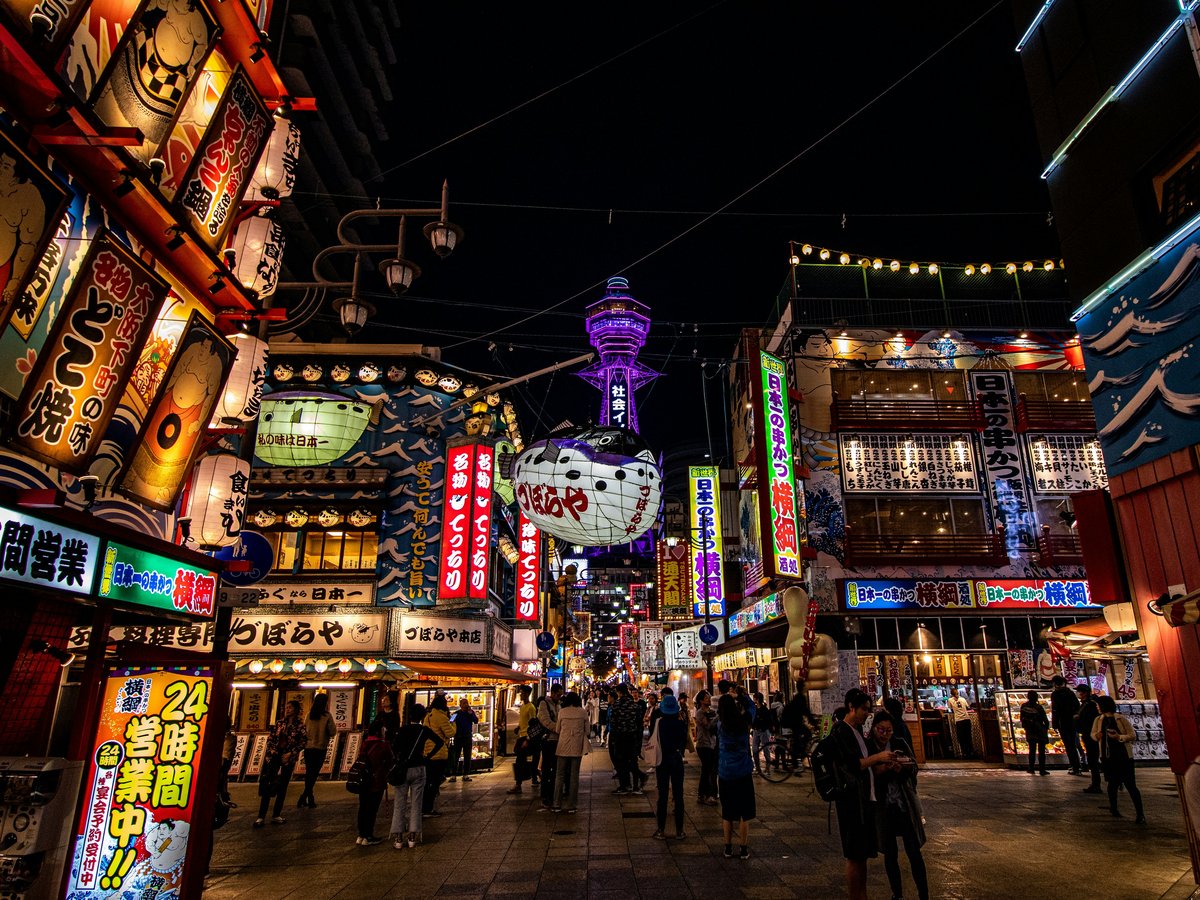
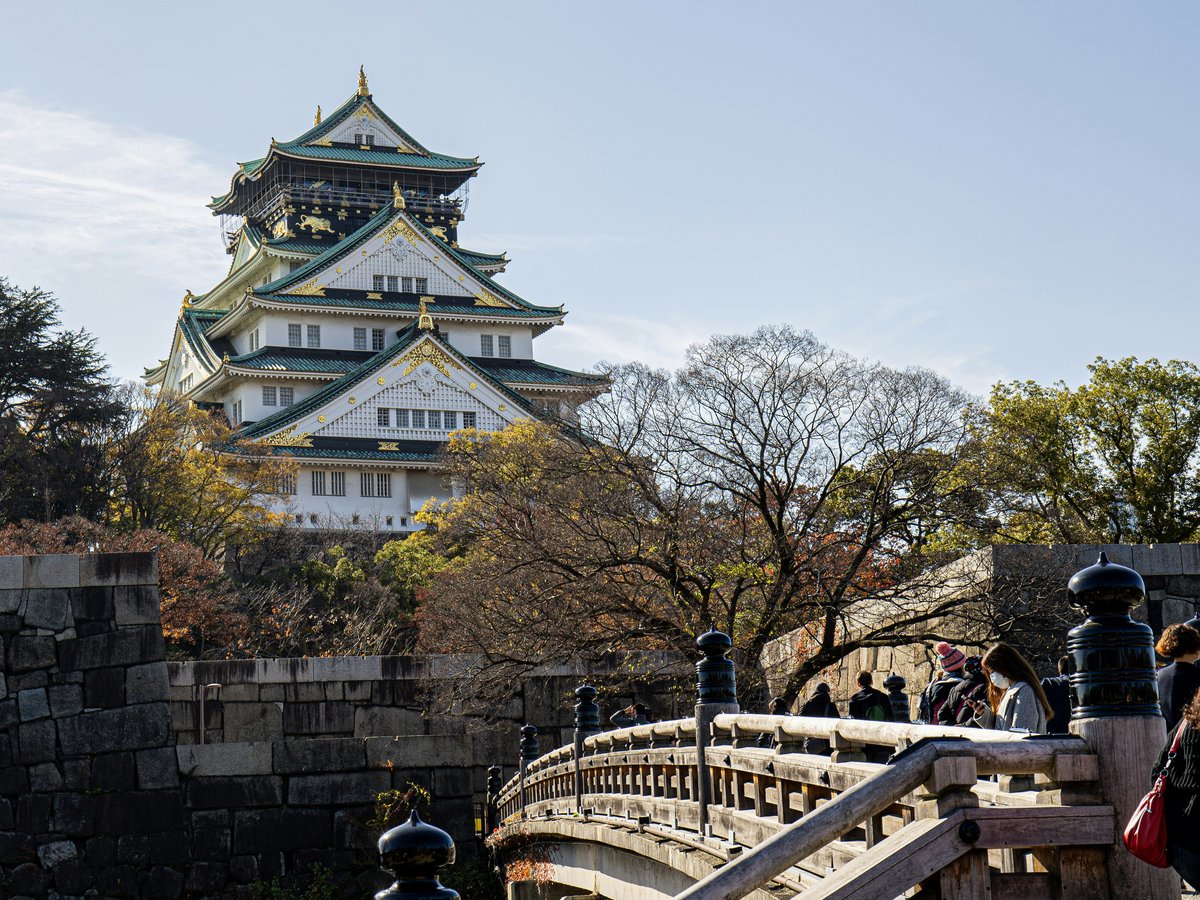
Osaka sits on a river delta where the Yodo empties into Osaka Bay, and the flatness matters: this is a city you read horizontally, through its canal-laced commercial districts and covered shopping arcades, not by craning at a skyline. For most of its history it functioned as Japan's mercantile capital, the place where rice futures were traded centuries before Chicago had a Board of Trade, and that commercial DNA still governs the rhythm of daily life here. Osakans call their city "tenka no daidokoro," the nation's kitchen, and the boast is earned: a first evening in Namba means standing at a counter in Dotonbori eating takoyaki from a paper boat while the mechanical crab signs and neon reflect off the canal below. The local ethos of kuidaore (eat yourself into ruin) is less a slogan than an observable fact in neighborhoods like Shinsekai, where kushikatsu joints stack four deep along Jan Jan Yokocho, or Tenma, where the Tenjinbashisuji shopping arcade runs for two and a half kilometers under a continuous roof. Osaka-ben, the local dialect, is blunter and funnier than Tokyo's standard Japanese, and that directness carries into how strangers interact with you: conversations happen faster, formality drops sooner, and unsolicited restaurant recommendations arrive whether you asked or not. The city rebuilt almost entirely after 1945 firebombing flattened its wooden core, which explains why Osaka Castle's reconstructed concrete keep feels more like a museum exhibit than a medieval fortress: the real texture is in the postwar commercial fabric that grew around it. Tsuruhashi's Korean quarter smells of yakiniku smoke at ten in the morning. The Nakazakicho backstreets convert prewar row houses into coffee shops that close by dusk. A city of nearly 2.8 million people manages, against all probability, to feel like it runs on the logic of a neighborhood.
Osaka in photos
Osaka right now
Answers about Osaka
-
Airport to city
Take the Nankai Rapi:t limited express from Kansai International Airport directly to Namba Station; 38 minutes, ¥1,450 (about $9). No transfers needed, signed in English throughout, and it drops you in Osaka's main eating and nightlife district. Trains run roughly every 30 minutes from about 7:30am to 10:20pm.
Read the full answer → -
Best time to visit
Go between mid-October and late November: by then the humid summer and the September typhoon season are over, daytime highs sit in the low 20s °C, and the maples at Minoo Park turn late in November. Late March into early April comes second, for cherry blossom at Osaka Castle, but rooms cost more and the crowds are heavier.
Read the full answer → -
Cost per day
A budget day in Osaka costs around ¥7,000 ($45), covering a hostel dorm in Namba, three konbini or street-food meals, and a Metro day pass. Midrange runs ¥18,700 ($120) with a business hotel near Shinsaibashi and one paid attraction. Luxury starts at ¥55,000 ($350) for ryokan stays and kaiseki in Kitashinchi.
Read the full answer → -
Cultural etiquette
Osaka runs looser than Tokyo but the core rules still apply: shoes off indoors, bow when greeted, never tip. Stand on the right side of escalators (the opposite of Tokyo, and locals will correct you). Chopsticks never go upright in rice. Quiet on trains. Loud at dinner is fine.
Read the full answer → -
Best day trips
Kyoto is the strongest single-day pick from Osaka (30 minutes on JR Special Rapid, ¥580 each way) with temples by day and Gion's riverside kaiseki for dinner. Nara is the easier half-day. Kobe works best as an evening trip built around teppanyaki beef. Himeji and Mount Kōya need a full day and early departure.
Read the full answer → -
Digital nomads
Osaka scores 6.8/10 for digital-nomad suitability (sourced from TTDI's editorial rubric). Residential fiber hits 1 Gbps, but short-term apartments typically deliver 50-150 Mbps via pocket WiFi. Coworking starts at ¥9,800/month at Billage Osaka, and monthly all-in runs about $1,900. Japan's Digital Nomad Visa (April 2024) grants 6-month stays with ¥10 million annual income proof. Cheaper than Tokyo by 20%, with street food keeping daily meals under ¥2,000.
Read the full answer → -
Family-friendly
Osaka scores 8.5/10 for family friendliness (see the TTDI Family-Friendliness Index). Universal Studios Japan keeps kids 4+ occupied for a full day, Kaiyukan aquarium holds toddler attention through the whale shark tunnel, and the city's street food solves most picky-eater standoffs. Strollers work on flat Minami sidewalks but metro elevator hunts add 5-10 minutes per transfer.
Read the full answer → -
Food culture
Osaka calls itself tenka no daidokoro (the nation's kitchen) and the city earns it nightly. Counter-seat takoyaki carts, kushikatsu stands in Shinsekai, late-night izakaya under the Tenma rail tracks. The palate runs on dashi, Worcester sauce, and pork fat. Budget ¥3,000–5,000 a day ($19–31) to eat well; expect cash, standing room, and food that prizes flavor over presentation.
Read the full answer → -
Getting around
Osaka Metro's Midosuji Line is your spine: it connects Umeda, Namba, and Tennoji in under 20 minutes. Buy an ICOCA card from any station machine (500 yen deposit, load 2000-3000 yen) and it works on every subway, JR train, and bus. Walk between Namba and Shinsaibashi. Taxis after midnight via the GO app.
Read the full answer → -
How to get there
Kansai International Airport (KIX), 50 km south of central Osaka on an artificial island, handles nearly all international flights. Direct service runs from major Asian cities plus Los Angeles and San Francisco. From Europe, connect through Helsinki, Istanbul, or Gulf hubs. Many visitors fly into Tokyo and take the shinkansen to Shin-Osaka: 2 hours 22 minutes on the Nozomi.
Read the full answer → -
Is it safe?
Osaka scores 8.8 out of 10 for solo-traveler safety (see the TTDI Solo-Safety Index). Violent crime against tourists is near zero. The real risks are bicycle accidents, typhoon season from June through October, and drink-topping scams in Namba's tout-heavy nightlife strips. Trains stop around midnight, and taxis are metered and honest. Emergency numbers are 110 for police and 119 for fire or ambulance.
Read the full answer → -
Language basics
Japanese: specifically Osaka-ben, the Kansai dialect that locals are fiercely proud of. English signage covers trains and major stations well, but spoken English drops off fast outside hotel lobbies and ticket counters in Namba and Umeda. Learn 'ookini' (the Osaka thank-you) instead of standard 'arigatou' and you'll get noticeably warmer reactions at restaurants and market stalls.
Read the full answer → -
Layover guide
Yes, with at least seven hours between flights at Kansai International Airport. The Nankai express line reaches central Namba in under 40 minutes. From there, Dotonbori's solo-friendly counter restaurants and Shinsekai's kushikatsu bars are within walking distance. Most Western passports enter Japan visa-free, but verify yours before leaving the terminal.
Read the full answer → -
LGBTQ-friendly
Osaka scores 5.8/10 for LGBTQ+ friendliness (sourced from TTDI's editorial rubric). Japan lacks national same-sex marriage, though Osaka city has issued partnership certificates since 2018. The scene concentrates in Doyama-cho, a tight grid of small bars near Umeda. Personal safety is high for queer travelers, and same-sex PDA tends to draw brief glances rather than hostility.
Read the full answer → -
Where locals go
Osakans drink standing under the JR tracks at Tenma and Kyobashi, buy kimchi and dried fish in Tsuruhashi's market alleys, and read in Nakazakicho's cafes, which occupy old wooden row houses. Office workers fill Kitahama's riverside terraces at lunch. Skip Dotonbori and Kuromon Market, both priced for visitors all day.
Read the full answer → -
Must-see
Dōtonbori at dusk, not as a restaurant pick, as THE orientation point. Walk south from Namba station, hit the canal when neon signs switch on around 5pm, and stand on Ebisu Bridge with takoyaki smoke curling past the mechanical Glico Running Man overhead. Osaka makes sense from here. The food district, the subway map, the city's personality: it all clicks standing on that bridge.
Read the full answer → -
Solo travel
Osaka rates 9/10 for solo travel. Counter dining is the default here: kushikatsu bars, ramen shops, and kappo counters all seat one without awkwardness. The subway runs until midnight, crime is negligible, and the city's loud, friendly energy means strangers talk to you first. Capsule hotels start around ¥3,500 per night (about $22).
Read the full answer → -
This week
Osaka runs on a weekly rhythm shaped by summer heat. Weekday mornings at Kuromon Market are manageable before 34°C afternoons force everyone underground into the Whity Umeda and Namba Walk arcades. Monday shuts most museums. Dotonbori peaks Friday and Saturday nights after 8pm. Shinsekai's kushikatsu strip and Tenma's izakaya row operate 7 days a week. Food is the one constant.
Read the full answer → -
3-day itinerary
Day 1 covers Minami on foot: Kuromon Market, kushikatsu in Shinsekai, Dotonbori at dusk. Day 2 heads north to Osaka Castle by 8:30 AM, through Nakanoshima to Umeda Sky Building for sunset. Day 3 takes the Chuo Line west to Kaiyukan aquarium, then back east to Nakazakicho's quiet cafés. About 30 kilometers total, mostly flat.
Read the full answer → -
What to avoid
Skip Kuromon Ichiba Market's inflated wagyu skewers, the paid deck at Tsūtenkaku, and a taxi from Kansai Airport to Namba. Take the Nankai Rapit train and eat at Tsuruhashi instead. Don't go to Universal Studios Japan on a Saturday without an Express Pass, and if your trip stays in Osaka, the Japan Rail Pass will cost you more than it saves.
Read the full answer → -
What to pack
Slip-on walking shoes: you remove them at every temple and half the restaurants in Osaka. A packable rain shell for tsuyu season, when June through mid-July brings daily downpours. Quick-dry layers for 25–35°C humidity. Skip the umbrella and toiletries; Daikoku Drug in Namba sells both for less than you'd pay at home.
Read the full answer → -
Where to stay
Namba for a first trip: you're walking distance from Dotonbori's food stalls, two subway lines, and the Nankai Airport Express from Kansai. Budget ¥6,000–12,000 per night ($38–75) for a business hotel; ¥20,000–35,000 ($125–220) for something with a proper bath. Umeda if you want polish over personality.
Read the full answer →
Deep guides for Osaka
Curated lists for Osaka
accommodation
-
Best boutique hotels
Osaka splits its hotel inventory across two distinct axes: the north-south Midosuji Line corridor running from Shin-Osaka through Umeda down to Namba, and the east-west sprawl pushing from the castle grounds toward the bay. Most visitors default to the Namba and Shinsaibashi strip because it is loud, well-signed, and close to the food. That instinct is not wrong, but it concentrates demand on a narrow slice of the city and pushes nightly rates above what the rooms deserve. The better question is which version of Osaka you want on foot from your door. The neighborhoods north of Yodoyabashi are quieter, business-oriented, and connected by underground walkways that matter in August heat and November rain. The areas south of Dotonbori canal trade polish for price and put you closer to the residential blocks where the morning coffee is cheaper and the konbini is less picked over. Out west toward Universal Studios, the strip serves one audience: families who will spend their days in the park. In the eastern wards near Osaka Castle, the hotel density thins but the green space and the river walks deliver a city that does not feel like it is performing for tourists. The price spread across these neighborhoods runs from about $82 to $173 a night, which means Osaka rewards the traveler who picks the right area before picking the right room.
See the picks → -
Best hostels
Osaka's budget beds scatter across a city that runs on two axes: the north-south Midosuji subway line connecting Umeda to Namba, and the east-west Chuo line linking business Hommachi to the bay. Most hostels and budget hotels cluster in the Minami shopping district between Shinsaibashi and Namba stations, where neon and foot traffic run past midnight. A second concentration sits around Shin-Osaka, the shinkansen hub, where rooms cost less and the commute south is a few metro stops. The airport fringe at Izumisano serves early departures from Kansai International, while Sakurajima on the bay caters to Universal Studios visitors more than city explorers. Budget travelers benefit from a transit grid dense enough that a short walk from any major station covers groceries, a konbini, and at least one public bath. Japanese hospitality standards hold the floor high across every price tier, so the real decision is neighborhood character: late-night Namba versus quiet residential blocks near Shin-Osaka, or the southern grit of Shin-Imamiya versus polished Umeda. Choose the area first; the room will follow.
See the picks → -
Best luxury hotels
Osaka's luxury hotel market stretches wider than the brand-name corridor most visitors book into on a first trip. The ten properties on this list share a luxury-tier classification on Trip.com, but the similarities end there. Some compete on wellness infrastructure and amenity density. Others lead with personal service. One is not a hotel at all but a private house, booked by the night. The range in nightly rates is steep; the range in philosophy, steeper. Whether you are booking for facility, service, views, or the room itself, the list below names the cited detail that earns each property its slot. Sorted by editorial rank, not by price or guest rating.
See the picks → -
Where to stay
Osaka splits into neighborhoods that reward knowing which side of the river you sleep on. The commercial core around Shinsaibashi and Namba stacks the densest hotel inventory in the city, with budget guesthouses and onsen-equipped mid-range towers sharing the same covered arcades. North of the river, Umeda and Hommachi anchor the business traveler's Osaka: train access radiates in every direction, and the price spread from $35 budget rooms to $344 luxury suites is wider than anywhere else in the city. South of the tourist belt, Tennoji runs quieter and cheaper, while fringe districts near Universal Studios Japan and Kansai Airport serve travelers whose itinerary starts or ends at a gate. The biggest hotel clusters sit in the center; the satellite neighborhoods earn a stay only when a specific reason outweighs the commute. Ratings run high across the board; even the budget tier regularly clears 9.0 on Trip.com, which says more about Osaka's service floor than about any single property. Choose your area by what you want at your doorstep: late-night street food, a morning run along the castle moat, or a shuttle bus to a theme park. The hotel will be clean. The question is whether the walk home suits you.
See the picks →
attractions
-
Best free attractions
Osaka's no-ticket days are mostly spent outdoors, and this list reflects that: 8 parks, 2 botanical gardens, an arboretum, and Keitaku-en, the one entry here with published opening hours. The dated ones span more than a century, from a park on record since 1873 to a botanical garden from 1990. Two cautions before you plan. First, not everything sits inside the city: two entries are in Toyonaka, one is in Sakai City, and one sits across the line in Hyogo Prefecture. Second, our verified sources can place these spots on a map and tell you how long they have been there, but they do not confirm what each gate charges, if anything. Open parkland rarely asks for money, but a garden with a fence and a closing time often does, so check the official site linked in each entry before you count on a free afternoon. This list is for walkers, runners, picnickers and anyone whose Osaka budget has already gone on dinner.
See the picks → -
Best museums
Osaka's museums reward the visitor who reads the map before the brochure. This list covers a municipal art museum dating from 1936 that holds the status of a Registered Tangible Cultural Property of Japan, a World War II history museum, a museum that also serves as a research institute, and a building by Tarō Okamoto that dates from 1970. Some sit in the city proper, while others take you out to the 565-8511 postal area, to Kanan, and across to Nara. This is a list for people who would rather spend an hour with one good object than a day in queues, and who will build a full day around a single destination when that destination is worth it. Check the hours before you leave the hotel: the National Museum of Ethnology closes on Wednesdays, the Osaka Museum of History keeps no Tuesday hours, and the Osaka City Museum of Fine Arts was listed as closed for renovation from 2022 Sep 26 to 2025 Feb 28. Choose two or three and give each one a proper visit, not a sprint.
See the picks → -
Must-see attractions
Osaka's must-see list runs mostly on age and lineage, with a few modern landmarks between them. Shitennō-ji Temple dates from AD 593, Ōsaka Tenmangū from AD 949, and the Tsūtenkaku observation tower from 1955. Three of these twelve places are outside the city, and you should know that before you plan your days: Hōryū-ji Temple and the Buddhist Monuments in the Hōryū-ji Area are in Nara Prefecture, and the Church of the Light, designed by Tadao Ando, is in Ibaraki. The rest sit in or close to the city proper, covering two Shinto shrines, a castle park that is a Special Historic Site, a national puppet stage, a 1963 cathedral, and one theater whose audience is mostly devoted fans. This list is for travellers who will give a temple a full morning, and who would rather read a heritage register than a queue board. Where a place has no street address on record, we give its map coordinates. Paste them into your phone and they will get you to the gate.
See the picks →
food
-
Best cafes
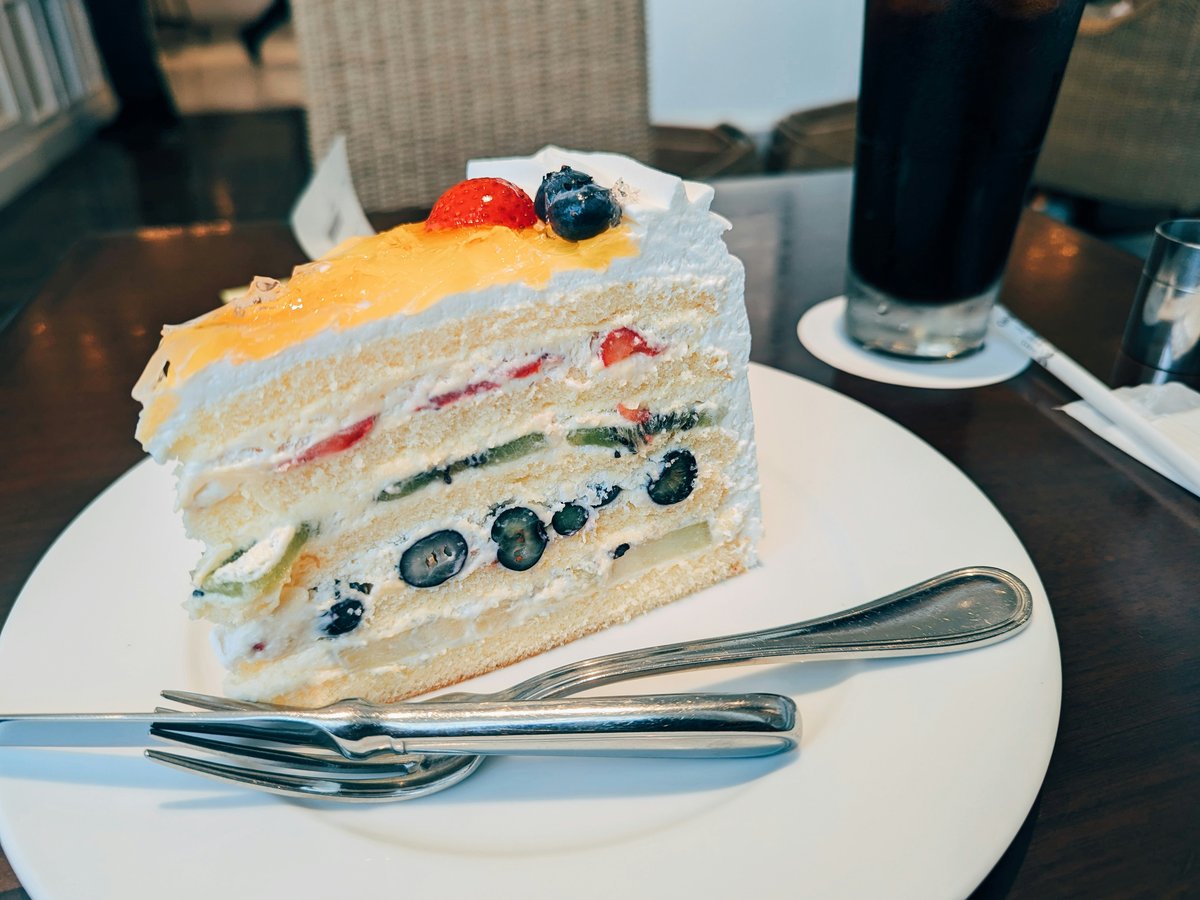
Osaka's cafe map is not a monoculture. Walk five minutes off the Midosuji spine and the room changes: a wood counter in Nakazaki, a hotel bar overlooking the Umeda towers, a converted machiya in Abeno, a design studio on Nakanoshima that pours coffee between exhibitions. What the city rewards is patience with the neighbourhood, not a chase down a single trophy street. The twelve rooms below were chosen for that reason. They sit across the wards, from Kita to Nishiyodogawa to Chuo to Abeno, on nine different postal grids, and they open at hours that will not line up with any tidy itinerary. Some pour a single-origin at 07:15 on a Tuesday morning; others do not unlock the door until 11:00 and hand you a cake plate. A few close on Sunday, which is the honest tell of a working neighbourhood cafe. Read the addresses. If a room sits inside a station arcade or a hotel lobby, its context is doing half the work; if it sits on a numbered soi in a residential ward, the coffee has to. Match the hour to the ward, not the ward to a guidebook, and Osaka will feed you well between meals.
See the picks → -
Best restaurants
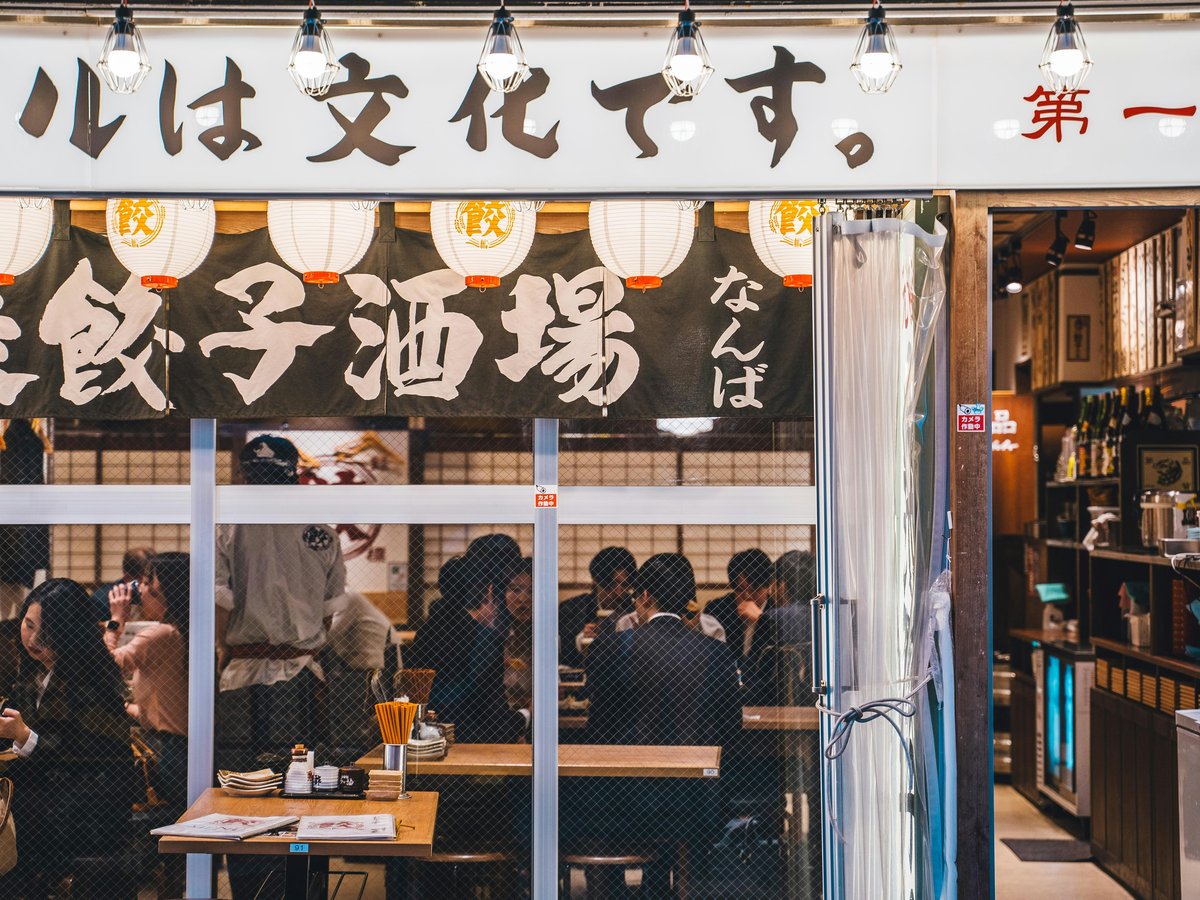
Osaka eats hard and eats early. This is a working city that built its reputation on kuidaore, eating yourself broke, and the honest map of it runs from unagi counters in Sonezaki to ramen bowls in Chuo, from a French room hidden behind a Utsubo side street to a hotel steakhouse forty-something floors above Umeda. The list below is twelve addresses across Kita, Nishi, and Chuo, drawn from what the venues themselves publish and what regulars have mapped, arranged the way a local would walk them, lunch to late. There is a grilled-eel specialist, two ramen counters that keep opposite hours, a Neapolitan-adjacent Italian chain that Osakans genuinely love for what it costs, a curry shop that only opens for lunch, a coffee-shop cafeteria inside a landmark hotel, an izakaya that runs to midnight, and a French kitchen with hours so cryptic you should phone first. If you want the tourist checklist of takoyaki stalls, look elsewhere. This is where people go on a Tuesday.
See the picks →
Browse by traveler type
- For foodies
Osaka for foodies
- For families with kids
Osaka for families
- For digital nomads
Osaka for digital nomads
- For solo travelers
Osaka for solo travelers
- For couples
Osaka for couples
- For budget travelers
Osaka on a budget
- For luxury travelers
Osaka for luxury travelers
- For first-timers
Osaka for first-time visitors
Book experiences in Osaka
 Free cancellation
 Osaka Kickstart: Hotspots & Hidden Gems Tour
Day trip: free cancellation.
via Viator Free cancellation
 Sushi Making Osaka Roll and Authentic Japanese Sushi Class
Cooking class: 1.7 hours, free cancellation.
via Viator Free cancellation
 Ultimate Osaka Walking Tour: Castle, Dotonbori, Gems & Lunch
Day trip: free cancellation.
via Viator Free cancellation
 Kyoto Day Tour: Fushimi Inari, Arashiyama, Kinkaku-ji & Kiyomizu
Day trip: 10 hours, free cancellation.
via Viator Free cancellation
 Osaka Local Foodie Walking Tour in Dotonbori and Shinsekai
City tour: 3 hours, free cancellation.
via Viator Free cancellation
 From Kyoto / Osaka: Kyoto Must-see Spots & Nara Park One Day Tour
Day trip: 9 hours, free cancellation.
via Viator Free cancellation
 4-Stop Bar Crawl in Tenma: An Intro to Osaka's Best Bites & Sips
City tour: 3.5 hours, free cancellation.
via Viator Free cancellation
 Tea Ceremony Experience in Osaka Doutonbori
Cooking class: 45 minutes, free cancellation.
via Viator Free cancellation
 Matcha Making Class in Osaka with Authentic Japanese Sweets Set
Cooking class: 1 hour, free cancellation.
via Viator Free cancellation
 Osaka Private Guided Tour with a Local and a Custom Itinerary
Day trip: free cancellation.
via Viator Free cancellation
 Nara Afternoon Tour from Kyoto or Osaka: Todai-ji, Nara Park
Day trip: free cancellation.
via Viator Free cancellation
 Kyoto Morning Tour: Kinkaku-ji, Nijo Castle & Imperial Palace
Day trip: free cancellation.
via ViatorBrowse by interest
Compare Osaka with
Find a flight to Osaka
Live fares to Osaka appear here once cookies are accepted.
Last verified by automated review (v1.7.2) on . What is automated review?