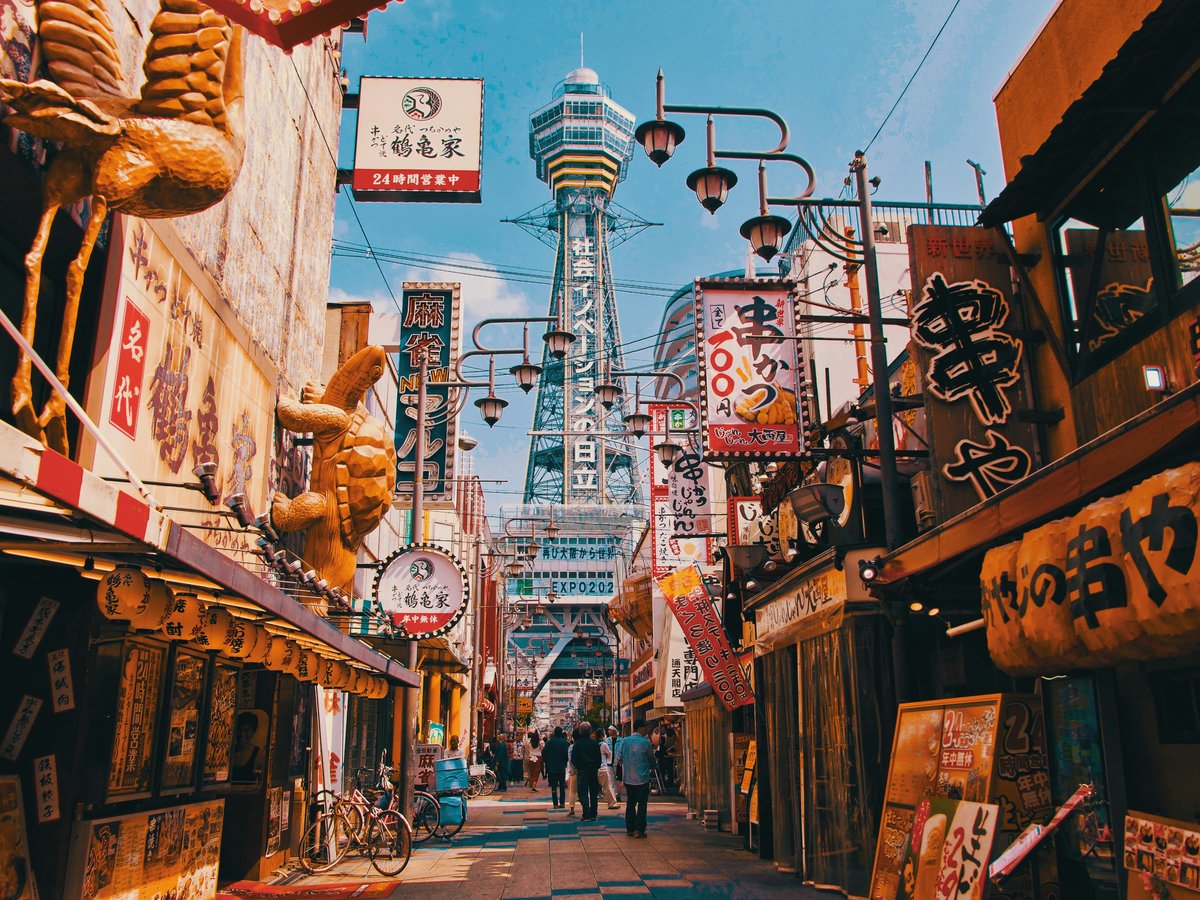
What should I pack for Osaka?
Slip-on walking shoes: you remove them at every temple and half the restaurants in Osaka. A packable rain shell for tsuyu season, when June through mid-July brings daily downpours. Quick-dry layers for 25–35°C humidity. Skip the umbrella and toiletries; Daikoku Drug in Namba sells both for less than you'd pay at home.
Shop the packing list (14 items)Shoes are the single most important packing decision for Osaka. You take them off constantly: at temples like Shitennō-ji and Sumiyoshi Taisha, at every ryokan, at most izakaya, and at any restaurant with tatami seating. Lace-up boots become a liability when you're slipping shoes on and off fifteen times a day. Go with something you can step into and out of in seconds that still handles a full walking day. Osaka's sidewalks tend to be well-maintained compared to, say, Bangkok, but the Shinsekai neighborhood has uneven pavement and the metal grating around Tsūtenkaku gets slick in rain. Closed-toe slip-ons or low-top sneakers with pull tabs: that's the answer. Leave the flip-flops for the hotel.
Right now in early June, Osaka sits at around 23°C with nearly 80% humidity, and it's about to get worse. Tsuyu, the rainy season, runs from early June through mid-July, delivering afternoon downpours that can drench you in the thirty seconds between Kuromon Market's covered arcade and the open street. A packable rain shell matters more than an umbrella here because your hands need to be free for street food: you'll be eating grilled takoyaki from a paper boat while walking through Dotonbori, and an umbrella just gets in the way. Three quick-dry shirts rotate well for a week; cotton is miserable in Kansai humidity, clinging and staying damp well into the evening. One light long-sleeve layer for the over-air-conditioned JR trains: the Midosuji Line runs cold enough that the temperature swing from the platform to the car is jarring.
Japan runs on 100V with Type A flat-pin outlets: the same physical shape as North American plugs, so US travelers don't need an adapter. Europeans and Australians do. The lower voltage means a US hair dryer works but runs weak; a European one might not run at all. Pack a portable battery bank rated at least 10,000 mAh. Between Google Maps navigation, the ICOCA app for transit, and the constant urge to photograph every street food stall in Shinsekai, your phone battery won't survive a full day. A small crossbody bag or sling keeps your hands free for the standing-only counter seats at kushikatsu joints: you'll want quick access to your phone for translation apps, not a backpack you have to swing around every time you sit down.
Skip packing toiletries. Matsumoto Kiyoshi and Daikoku Drug have locations every two blocks in Namba and Shinsaibashi, and Japanese sunscreen is legitimately better: thinner texture, higher UV protection, no white cast, around ¥600–800 (roughly $4–5 USD). Same for face wash and moisturizer. Umbrellas are ¥500 at any 7-Eleven or Lawson: transparent vinyl, the same ones every salaryman carries, functional and disposable. The one thing you can't easily replace locally is deodorant that matches Western preferences; Japanese brands tend to be milder. Bring your own or hunt the import section at Don Quijote in Dotonbori. Worth noting: Uniqlo AIRism undershirts are cheaper here than abroad and purpose-built for this humidity; pick them up at the Shinsaibashi flagship and free up suitcase space for the trip home.
Essentials
- Slip-on closed-toe walking shoes: removed at temples (Shitennō-ji, Sumiyoshi Taisha), ryokan, tatami-seated restaurants, and most izakaya Shop
- Packable rain shell: tsuyu season (June–mid-July) drops sudden downpours; keeps hands free for street food unlike an umbrella Shop
- 3–4 quick-dry shirts (no cotton: Kansai humidity keeps it damp for hours) Shop
- Light long-sleeve layer for over-air-conditioned trains, especially the Midosuji Line Shop
- Knee-covering pants or skirt for temple visits at Shitennō-ji and Sumiyoshi Taisha Shop
- Portable battery bank, 10,000+ mAh: Google Maps, ICOCA app, and photo-heavy days drain phones by mid-afternoon Shop
- Small crossbody bag or sling: keeps hands free at standing-only kushikatsu counters in Shinsekai Shop
- Plug adapter for European or Australian travelers (US/Canadian Type A plugs fit Japanese outlets directly) Shop
- Deodorant: Japanese drugstores carry milder formulas than most Western travelers prefer; bring your own Shop
Seasonal extras
- Compact folding fan: June through September; sold everywhere but useful from the airport onward Shop
- Sweat-wicking base layer: July and August push past 35°C with 85%+ humidity Shop
- Thermal mid-layer and down jacket: December through February mornings drop to 2–5°C Shop
- Waterproof phone pouch: tsuyu rainstorms soak through pockets in seconds Shop
- UV-blocking arm sleeves: cheap at Daiso if you forget, but summer sun along the Dotonbori canal is relentless Shop
Buy on arrival
- Sunscreen: ¥600–800 at Matsumoto Kiyoshi or Daikoku Drug; thinner texture and higher UV protection than most Western brands
- Umbrella: ¥500 at any 7-Eleven, Lawson, or FamilyMart; transparent vinyl, functional, disposable
- Uniqlo AIRism undershirts: Shinsaibashi flagship; cheaper than abroad, built for Kansai humidity
- Face wash and moisturizer: any drugstore; Japanese formulations tend to outperform Western equivalents at half the price
- Tenugui hand towel: ¥300–500 at Don Quijote or any 100-yen shop; locals carry them for sweat in summer
- ICOCA card: ¥2,000 deposit at any JR station; covers all Osaka metro, buses, and konbini tap-to-pay
Last verified by automated review (v1.7.2) on . What is automated review?