What's a good 3-day itinerary for Osaka?
Day 1 covers Minami on foot: Kuromon Market, kushikatsu in Shinsekai, Dotonbori at dusk. Day 2 heads north to Osaka Castle by 8:30 AM, through Nakanoshima to Umeda Sky Building for sunset. Day 3 takes the Chuo Line west to Kaiyukan aquarium, then back east to Nakazakicho's quiet cafés. About 30 kilometers total, mostly flat.
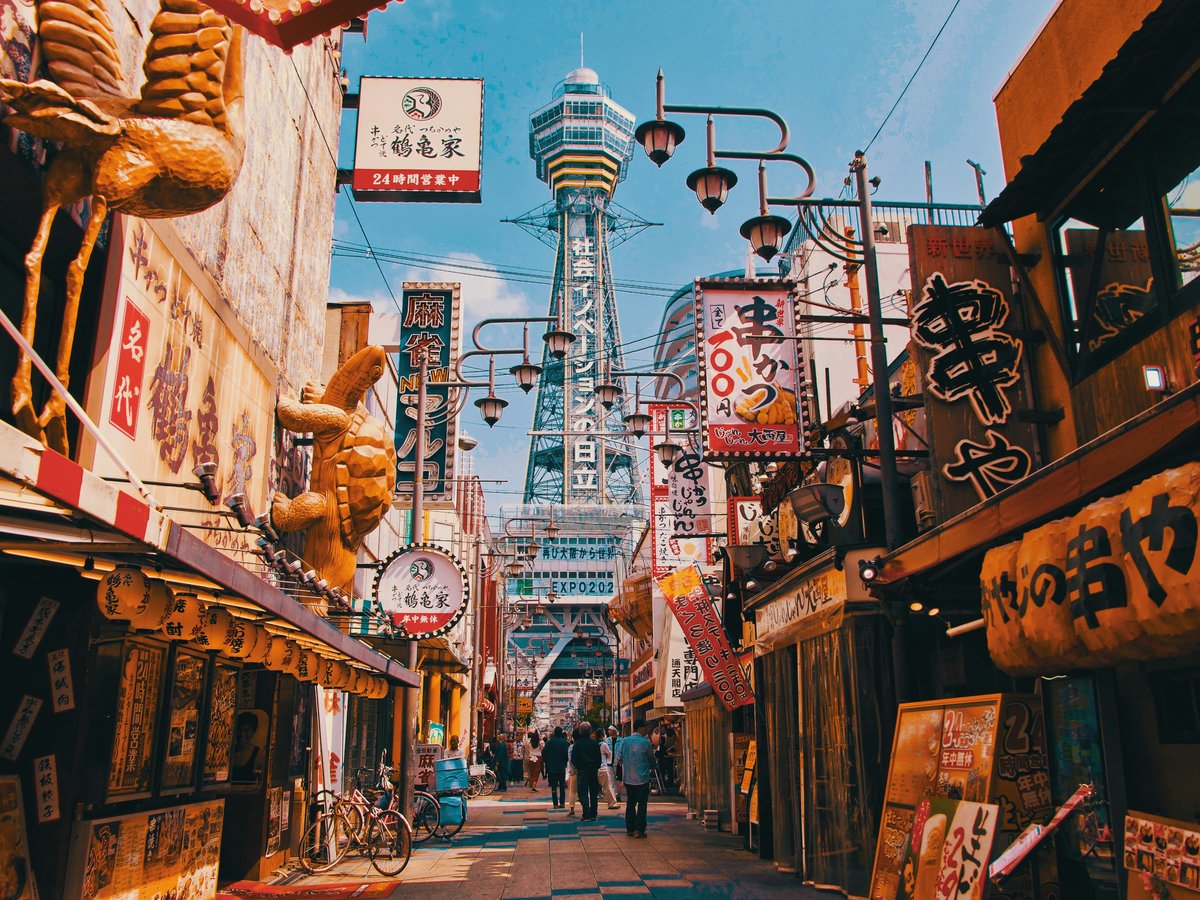
Day 1 stays south of the Shinsaibashi-suji arcade. Start at Kuromon Market around 9:30 AM, not the 6 AM some guides suggest, since most stalls don't open fully until 9. The tuna cheek skewers run about ¥800, and the grilled scallop counters near the east entrance fill the narrow corridor with smoke that sticks to your jacket. By 11, walk ten minutes south to Hozenji Yokocho, a stone-flagged alley where water drips constantly over a moss-covered Buddhist statue. Lunch is kushikatsu in Shinsekai: Daruma on Janjan Yokocho has the fastest queue, but Yaekatsu two blocks north is better and the wait tends to be shorter. The rule at every kushikatsu counter: never double-dip in the communal sauce. Tsutenkaku tower, rebuilt in 1955 after the wartime original was scrapped for steel, is worth the ¥900 entry mostly for the straight-down views of Shinsekai's neon grid. Come back to Dotonbori by 6 PM when the signs hit the canal water and the takoyaki smoke gets thick enough to taste from Ebisu Bridge. That first evening walk is probably the single best sensory hit in the city.
Day 2 runs north. Osaka Castle by 8:30 AM; the keep is a 1931 concrete reconstruction, not the 1583 original, whatever the signage implies. The park around it is the real draw: 105 hectares of moats and massive stone walls, quiet at that hour except for joggers and the thwack of baseball practice from the diamond below the east gate. The interior museum takes about 45 minutes. By 11, walk west to Nakanoshima, the narrow island between the Dojima and Tosabori rivers, and give 90 minutes to the Museum of Oriental Ceramics: the celadon collection is one of the best outside Korea. Lunch in Kitashinchi at Tsurutontan, where the udon comes in bowls the size of serving platters for about ¥1,200. Spend the mid-afternoon walking Tenjinbashisuji, the longest covered shopping street in Japan at 2.6 kilometers: the smell of fresh sembei from the rice-cracker shops follows you the whole length. By 5:30 PM, take the Midosuji Line to Umeda and ride up to the Floating Garden Observatory. The open-air deck at 173 meters catches wind you feel through your shirt.
Day 3 heads west to the bay. Take the Chuo Line from Honmachi to Osakako: 20 minutes, ¥280. Osaka Aquarium Kaiyukan, open since 1990, starts at 10 AM. The main tank is a nine-meter-deep Pacific Ocean column with whale sharks turning slowly through blue-green light, and it's best before school groups arrive around 11. The whole loop takes about two hours. Tempozan Marketplace next door has a takoyaki museum on the upper floor where six regional styles sit side by side: more interesting as a tasting comparison than as a proper meal. Head back east on the Chuo Line to Nakazakicho by 2 PM for Osaka's quiet counterpoint: former row houses turned into coffee roasters, record shops, and galleries where the wooden floors creak underfoot. The area is maybe four blocks square. Walk south to Shinsaibashi by late afternoon, then dinner at Hokkyokusei on Shinsaibashi-suji: they've served omurice since 1922, and the original with demi-glace is ¥880. That's a good final meal.
A few things that tend to trip people up. The ICOCA card works on every train and bus: buy one at any JR station kiosk for ¥2,000 (¥500 deposit, ¥1,500 loaded) and you won't need to puzzle out individual fares. Osaka's subway shuts down around midnight; taxis after that cost roughly ¥1,500 for a three-kilometer ride. Mind you, the humidity from late May through September is serious: mid-afternoon in Shinsekai in summer feels like walking through warm soup. Grab mugicha from any konbini for ¥150, the cold barley tea that every local drinks all summer. Most restaurants in the tourist zones have photo menus or ticket machines with pictures, so ordering is less stressful than you might expect. Point, pay, sit. The biggest first-timer mistake is cramming too much in. This itinerary covers three distinct zones with room to breathe in each day: resist the urge to bolt on Nara or Kyoto. Those are proper day trips that deserve their own planning.
Walking + transit across the three-day route.
Day one
-
9:30 AM NippombashiKuromon Market for breakfast: tuna cheek skewers (¥800), grilled scallops, and iced matcha at the stalls near the east entrance
-
11 AM NambaWalk to Hozenji Yokocho, a stone-flagged alley with a moss-covered Fudo Myo-o statue and two small bars worth remembering for later
-
12 PM ShinsekaiKushikatsu lunch at Yaekatsu in Shinsekai: shorter queue than Daruma, better batter, about ¥1,500 for a full set
-
2 PM ShinsekaiTsutenkaku tower (¥900) for the straight-down views of Shinsekai's neon grid: 30 minutes is enough
-
3:30 PM ShinsekaiWalk Janjan Yokocho for shogi parlors and cheap beer, or duck into Spa World for a 90-minute soak if the heat is bad
-
6 PM DotonboriDotonbori canal walk: takoyaki at Wanaka on the south bank, then dinner at Kani Doraku or Ajinoya okonomiyaki
Day two
-
8:30 AM Chuo-kuOsaka Castle park: walk the outer moat and stone walls first, then the interior museum (45 minutes inside the reconstructed keep)
-
11 AM NakanoshimaMuseum of Oriental Ceramics on Nakanoshima island: 90 minutes for the Korean celadon and Chinese Song dynasty galleries
-
1 PM KitashinchiLunch at Tsurutontan in Kitashinchi: udon in oversized bowls, about ¥1,200 for the mentai cream
-
2:30 PM Kita-kuWalk Tenjinbashisuji shopping street, 2.6 km covered arcade: sembei shops, used-book stalls, and cheap kitchen goods
-
5:30 PM UmedaUmeda Sky Building Floating Garden Observatory (¥1,500): open-air deck at 173 meters, time it for golden hour
-
7:30 PM UmedaDinner at Grand Front Osaka basement food hall or Yukari okonomiyaki in Sonezaki
Day three
-
10 AM TempozanOsaka Aquarium Kaiyukan (¥2,700): arrive at opening to see the whale shark tank before school groups, allow two hours for the full loop
-
12:30 PM TempozanTakoyaki museum on the upper floor of Tempozan Marketplace: six regional styles side by side for comparison
-
2 PM NakazakichoNakazakicho neighborhood: converted row houses with coffee roasters, vinyl shops, and small galleries on quiet backstreets
-
4 PM ShinsaibashiShinsaibashi-suji arcade and Amerikamura for last shopping: the triangle park area has the best people-watching
-
7 PM ShinsaibashiFinal dinner at Hokkyokusei on Shinsaibashi-suji: omurice with demi-glace since 1922, ¥880 for the original
Last verified by automated review (v1.7.2) on . What is automated review?