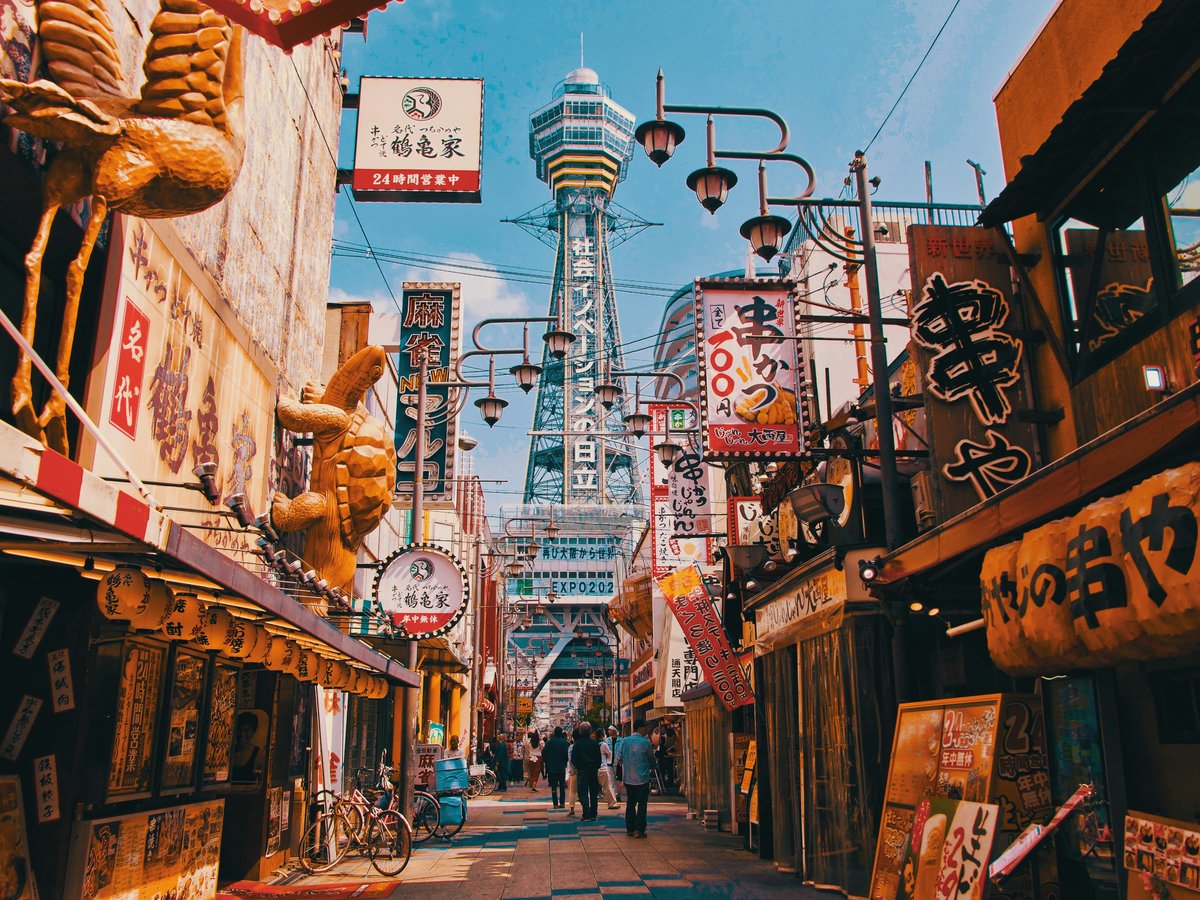
Osaka has always been a merchant city. The locals still say 'kuidaore' (eat till you drop) but the same appetite applies to shopping. Where Tokyo tends toward the curated and polished, Osaka leans scrappier, louder, more willing to haggle and hustle. You'll find century-old knife shops a few blocks from neon-drenched electronics arcades. The covered shopping streets here, called shotengai, are some of the longest in Japan, and they still function as genuine neighborhood retail, not just tourist corridors. Osaka is particularly known for kitchen goods (this is the nation's food capital, after all), textiles from the old Senba wholesale district, ceramics, and a street-fashion scene that runs more playful and less self-serious than Harajuku. The city also has a deep discount culture. Bargain bins, outlet malls, and hundred-yen shops are woven into even the fancier districts. Nobody here is embarrassed about finding a deal.
Shopping districts
-
Shinsaibashi-suji
mixedThe main artery of Osaka shopping, a covered arcade that stretches roughly 600 meters north from Dotonbori. It's a mix of international fast fashion, Japanese department stores, cosmetics chains, and smaller independent boutiques tucked into side streets. The arcade itself can feel overwhelming during peak hours (shoulder-to-shoulder crowds, especially on weekends) but the side lanes east toward Amerikamura and west toward Horie reward those who wander. Daimaru department store anchors the north end. The atmosphere is commercial but lively, with shop staff calling out from doorways and seasonal decorations draped overhead.
Best for: Mainstream fashion, cosmetics, department store shopping, and a general sense of Osaka's commercial energy
-
Amerikamura
budget to mid-rangeJust west of Shinsaibashi, Amerikamura (or Ame-mura) started as a hub for imported American vintage clothing in the 1970s and still carries that secondhand, youth-culture DNA. The triangle park at its center draws skaters, musicians, and teenagers. The shops tend toward streetwear, sneakers, and vintage denim, though you'll also find record stores and independent accessory brands. It feels a bit grittier than the main arcade. Prices are generally reasonable, though rare vintage pieces can climb. The energy here is younger and louder than most of Osaka's shopping areas.
Best for: Vintage clothing, streetwear, sneakers, vinyl records, and youth culture browsing
-
Tenjinbashi-suji Shotengai
budgetAt roughly 2.6 kilometers, this is often cited as the longest covered shopping street in Japan. It runs north from Minami-Morimachi and has a noticeably more local feel than Shinsaibashi. Fewer tourists, more neighborhood shops: fishmongers, pharmacies, cheap ramen joints, shoe repair stalls. The south end near Tenmangu shrine is busier; the north thins out and gets quieter. Some stretches feel genuinely old-school, with wooden storefronts and hand-lettered signs. If you want to see how Osaka residents shop day to day, this is it.
Best for: Local everyday shopping, street food, kitchen supplies, and experiencing a working shotengai
-
Namba and Dotonbori area
mixedNamba sits at the convergence of several rail lines and shopping channels. Namba Parks has a terraced garden on its roof and mid-range fashion inside. Namba City runs underground with a decent variety of Japanese brands. Dotonbori itself is more eating than shopping, but the streets feeding into it (particularly the Sennichimae corridor) have electronics shops, souvenir stores, and the huge Don Quijote that's become a landmark with its ferris wheel. It's loud. The canal reflects all the signage at night, and the smell of takoyaki drifts through pretty much everything.
Best for: Electronics, souvenirs, brand-name Japanese fashion, and combining shopping with eating
-
Horie
mid-range to highSouth of Shinsaibashi and west of Amerikamura, Horie is where Osaka's more design-conscious shoppers tend to gravitate. The streets are quieter and lined with independent furniture stores, lifestyle boutiques, specialty coffee shops, and small-run fashion labels. It has the feel of a neighborhood that gentrified about fifteen years ago and settled into something comfortable. Orange Street (Tachibana-dori) is the spine. You might walk past a ceramics studio next to a Danish furniture importer next to a shop selling nothing but handmade leather bags. Prices reflect the curation.
Best for: Design goods, independent fashion labels, furniture, homeware, and a quieter browsing pace
-
Nipponbashi (Den Den Town)
budget to mid-rangeOsaka's answer to Akihabara, though smaller and arguably more walkable. The main strip runs along Sakai-suji and is lined with electronics shops, anime and manga retailers, figure stores, retro game shops, and maid cafes. It's less corporate than its Tokyo counterpart: more family-run shops with handwritten price tags. If you're looking for vintage game consoles, model kits, or specific manga volumes, you can spend hours here. The side streets have smaller specialist shops that reward exploration. Weekend afternoons get busy with cosplayers.
Best for: Electronics, anime merchandise, retro games, manga, model kits, and otaku culture
-
Senba
budget to mid-rangeThe old textile wholesale district sits between Honmachi and Shinsaibashi stations. It's still partially a working wholesale area, though many buildings have converted to retail or office space. A few fabric wholesalers remain and will sell to individuals: you might need to buy minimum quantities, but the per-meter prices on Japanese cotton and linen can be significantly lower than retail. The architecture in this area is interesting too, a mix of prewar commercial buildings and modern glass towers. Not a tourist destination, but worth knowing about if textiles matter to you.
Best for: Wholesale fabrics, Japanese textiles, and a glimpse of Osaka's merchant heritage
Markets
-
Kuromon Market
foodSometimes called Osaka's kitchen, Kuromon has been operating since the early 1800s as a wholesale fish and produce market. It's shifted considerably toward tourism in recent years: you'll see stalls selling skewered wagyu and uni on rice at tourist-oriented prices. That said, the professional shops are still there if you look. The knife shops alone justify a visit; some carry Sakai-forged blades that are genuinely difficult to find elsewhere. Early morning is less crowded and more authentic-feeling. The covered lanes smell of grilled seafood and dashi, and the lighting has that pleasant fluorescent warmth you get in old Japanese market buildings.
Most stalls open roughly 9:00 to 17:00, though some close earlier; busiest mid-morning to early afternoon
-
Shitenno-ji Flea Market
fleaHeld in the grounds of Shitenno-ji temple, one of Japan's oldest temples, this market draws vendors selling antiques, vintage kimono, ceramics, old tools, secondhand books, and general bric-a-brac. The quality varies (you'll sift through genuine finds alongside pure junk) but the setting is lovely, with temple buildings visible behind the stalls. Kimono dealers here tend to have good stock at reasonable prices compared to vintage shops in the shopping districts. Arrive early for the best selection; by afternoon the good pieces are gone. The temple grounds themselves have a calm, slightly worn-in atmosphere even when the market is busy.
21st and 22nd of every month, from early morning until around 16:00
-
Tenjin-san Flea Market at Osaka Tenmangu
flea and artisanThe shrine market at Osaka Tenmangu runs on the 25th of each month and has a character distinct from Shitenno-ji. It tends slightly more toward crafts, handmade goods, and food stalls alongside the usual antiques and vintage clothing. The shrine precinct is atmospheric (stone lanterns, old trees) and the stalls wind through the grounds in a way that feels less gridded than some flea markets. Vendors here seem to skew a bit younger, with more handmade jewelry and small-batch ceramics mixed in with the estate-sale antiques.
25th of every month, morning until late afternoon
-
Shinsekai area night stalls
night and street foodShinsekai isn't a formal night market, but the area around Tsutenkaku Tower and Jan Jan Yokocho takes on a lively, market-like atmosphere after dark. The narrow covered alley of Jan Jan Yokocho is lined with kushikatsu joints, shogi parlors, and small shops selling cheap goods. Street vendors sometimes set up along the wider streets, particularly on weekends. The neon signs reflect off wet pavement and the whole area smells of deep-fried skewers. It's rough around the edges and not particularly polished, which is exactly why it's worth an evening stroll.
Evenings, roughly 17:00 to 23:00; most active on weekends
-
Kizu Market (Kizu Wholesale Market)
food wholesaleLess visited than Kuromon, Kizu is a working wholesale fruit and vegetable market in the Fukushima area. It's not set up for tourists (there are no skewered snacks or Instagram backdrops) but if you're interested in seeing where Osaka's restaurants source their produce, it's worth an early morning visit. The scale of the stacking and sorting is something. Some vendors will sell small quantities to individuals, though don't count on English. The air smells of citrus and earth and cardboard.
Early morning, roughly 4:00 to 10:00; closed Sundays and some Wednesdays
Souvenirs worth bringing home
The souvenirs worth bringing home from Osaka tend to be the ones that reflect the city's food and craft obsessions. Sakai-forged knives are likely the most respected local product: the city of Sakai, just south of Osaka, has been making blades for centuries, first swords, then kitchen knives. You can find Sakai knives at Kuromon Market and at specialty shops in Namba. They range widely in price, from a few thousand yen for a basic petty knife to well over 50,000 yen for a hand-forged yanagiba. Osaka is also known for konbu (kelp) and related dashi ingredients: Kuromon and department store basement floors carry high-quality konbu from Hokkaido that's been aged and processed in Osaka, a tradition tied to the city's role in the historical konbu trade route. Takoyaki-related goods make lighthearted gifts: cast-iron takoyaki pans, the distinctive wooden picks, or takoyaki-flavored snacks. Naniwa tinware is a traditional Osaka craft: tin sake cups and small plates with a distinctive hammered texture. The Osaka-specific sweets to look for include okoshi (puffed rice brittle, a very old Osaka confection), 551 Horai's butaman (pork buns, though these need to be eaten quickly), and various matcha and regional wagashi from department store confectionery floors. For textiles, tenugui (thin cotton towels) with Osaka-specific designs are lightweight and genuinely useful. Mind you, the department store basements (depachika) at Takashimaya in Namba, Hankyu in Umeda, and Daimaru in Shinsaibashi are arguably the best single stops for edible souvenirs; the selection is curated and the packaging is already gift-ready.
Practical tips
- Bargaining norms
- Fixed prices are the norm in most of Osaka. Department stores, chain retailers, and brand shops don't negotiate. That said, electronics shops in Den Den Town and some shops in Kuromon Market may offer small discounts if you're buying multiple items or spending above a certain threshold: it doesn't hurt to ask politely. At flea markets like Shitenno-ji, gentle bargaining is generally acceptable, especially later in the day when vendors are looking to reduce inventory. Keep it friendly and don't push hard; a smile and a reasonable counter-offer work better than aggressive haggling.
- Tax-free shopping
- Japan's tax-free system lets foreign visitors skip the 10% consumption tax on purchases above certain thresholds at participating stores: currently 5,000 yen minimum for general goods at most retailers. You'll need your passport (the physical document, not a photocopy). Major department stores and chain shops have dedicated tax-free counters, usually on an upper floor or near customer service. Smaller shops may handle it at the register. The process has been digitized recently: your passport gets scanned rather than having a form stapled in. Worth noting: tax-free items are technically meant for export, so consumables get sealed in a bag you're not supposed to open in Japan, though enforcement on this is inconsistent.
- Opening hours
- Most shops in the main districts open between 10:00 and 11:00 and close around 20:00 to 21:00. Department stores tend to close at 20:00 sharp. Smaller independent shops, especially in Horie and Amerikamura, might not open until noon and may close on irregular weekdays: Wednesday and Thursday closures seem common. Kuromon Market is a morning-to-afternoon affair; plan to arrive before 11:00 for the best selection. Convenience stores are 24 hours and carry a surprising range of useful items, from quality umbrellas to decent socks to surprisingly good ready-made meals.
- Payment methods
- Cash is still widely used in Osaka, especially at smaller shops, market stalls, and flea markets. That said, IC cards like ICOCA work at an increasing number of shops and all transit. Credit cards are accepted at department stores, chain retailers, and most larger shops: Visa and Mastercard have the widest acceptance. Some smaller independent shops remain cash-only, so keeping 10,000 to 20,000 yen on hand is sensible. ATMs at 7-Eleven and Japan Post accept foreign cards reliably; bank ATMs can be hit or miss with international cards.
- Navigating shotengai
- Osaka's covered shopping arcades can feel disorienting because they stretch for long distances with few obvious landmarks inside. The trick is to note which cross-streets you pass: major intersections are usually signed in both Japanese and English. Most shotengai run roughly north-south, so orienting yourself by the sun won't work under the covered roof. Google Maps works well for pinpointing where you are along the arcade. If you're looking for a specific type of shop, the areas near anchor stores or transit entrances tend to cluster similar businesses.
- Luggage and shipping
- If you buy anything bulky (a good knife set, ceramics, a takoyaki pan) most department stores offer domestic shipping (takkyubin) that's fast and reliable. You can also ship purchases to Kansai Airport for pickup before your flight, or to your hotel. Yamato Transport (Kuroneko) has counters in many shopping areas and convenience stores. For international shipping, Japan Post's EMS service is available at post offices. Some shops in tourist-heavy areas will handle international shipping directly, though this is more common at high-end knife shops and department stores than at market stalls.
FAQ
What is the best area for shopping in Osaka if I only have a few hours?
Shinsaibashi-suji gives you the most variety in a compact area. You can walk the main covered arcade for mainstream shops, duck west into Amerikamura for vintage and streetwear, or east into the backstreets for smaller boutiques. Dotonbori is right at the south end for food. If your interests run more toward food souvenirs and kitchen goods specifically, head to Kuromon Market instead: it's a tighter area but deeply focused.
Is Osaka cheaper for shopping than Tokyo?
Generally, yes, though the gap has narrowed. Osaka tends to have lower rents, which shows up in slightly lower prices at independent shops and a stronger discount culture overall. Electronics are priced similarly across both cities: those are largely standardized. Where Osaka clearly wins is on food, street fashion, and vintage clothing, where competition and local norms keep prices lower. Department store goods cost about the same everywhere in Japan.
Are Osaka's flea markets worth visiting for non-Japanese speakers?
Absolutely. Prices at flea markets are almost always displayed on tags or written on cardboard signs, so language isn't a major barrier for browsing and buying. Vendors at Shitenno-ji and Tenmangu are accustomed to foreign visitors and will use calculators or phone screens to communicate prices. The real value is in vintage kimono, ceramics, and old household goods: items where you can judge quality visually. Arrive before 10:00 for the best selection.
Can I get Sakai knives sharpened or customized while visiting Osaka?
Several knife shops at Kuromon Market and in the Namba area offer sharpening services, and some will engrave your name on a blade you purchase. If you're buying a higher-end knife, ask about handle options: some shops let you choose wood type and shape. For the full experience, the city of Sakai is about 20 minutes south on the Nankai line and has a knife museum and workshops where you can watch the forging process, though factory visits typically need to be arranged in advance.
What are Osaka department store basements like?
The depachika floors at Osaka's major department stores are genuinely worth visiting even if you don't plan to buy much. They're essentially curated food halls: rows of confectionery counters, wagashi shops, pickles, tea, fresh produce, prepared meals, and regional specialties, all beautifully presented. Hankyu Umeda and Takashimaya Namba are particularly good. Staff often offer samples. The prepared bento and side dishes are high quality and reasonably priced for what you get. Late afternoon, some counters discount items approaching their sell-by time.
Is it safe to buy electronics in Den Den Town as a tourist?
Generally, yes. Most shops in Den Den Town are legitimate retailers, and prices are competitive with or slightly lower than chain electronics stores. The main thing to watch for is voltage and region compatibility: some items are configured for Japanese standards only. Shops with tax-free service are accustomed to foreign buyers and can usually advise on compatibility. For cameras, game consoles, and audio equipment, check that the warranty is international if that matters to you. Receipts are always provided, so keep them for any tax-free processing at the airport.
Last verified by automated review (v1.7.2) on . What is automated review?