When's the best time to visit Osaka in 2026?
Go between mid-October and late November: by then the humid summer and the September typhoon season are over, daytime highs sit in the low 20s °C, and the maples at Minoo Park turn late in November. Late March into early April comes second, for cherry blossom at Osaka Castle, but rooms cost more and the crowds are heavier.
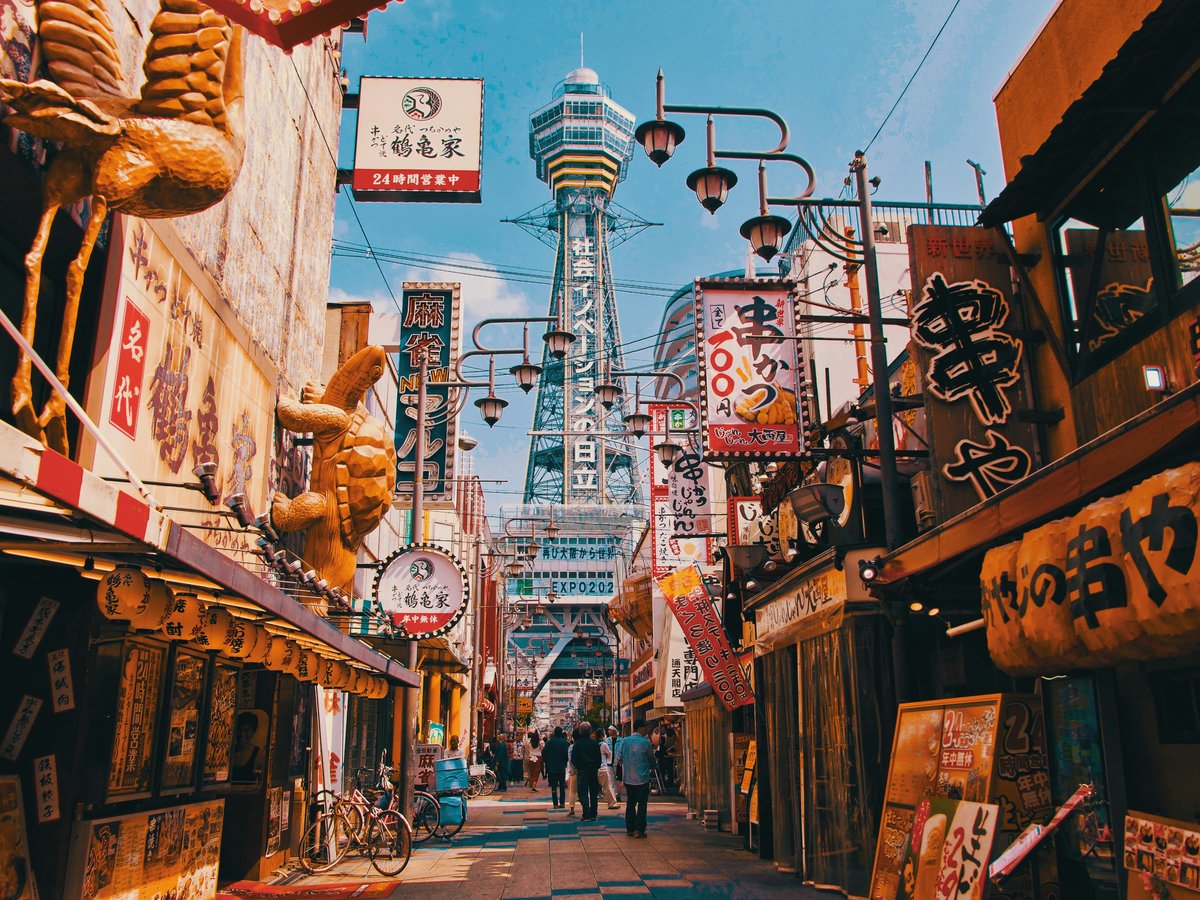
Autumn is the answer. In Osaka the good stretch lasts about six weeks, from mid-October to the end of November. At 2am on 18 October 2026 the city read 15.1°C under a clear sky, which is light-jacket weather on the Dotonbori bridges, and cool air matters here more than in most cities because Osaka is a city you walk and eat your way through. An evening of takoyaki stalls along Dotonbori, then kushikatsu counters in Shinsekai under Tsūtenkaku, is hard going at 30°C and easy at 18°C. Minoo Park is 30 minutes from Umeda on the Hankyu line, and its maples peak in the third and fourth weeks of November. The shops on the waterfall trail fry maple leaves in sweet batter, a snack called momiji tempura that crackles like a rice cracker. The one autumn trap is Universal Studios Japan: its Halloween season currently fills October weekends, so go on a weekday and buy an Express Pass before you fly.
Spring comes second, and it costs more. Cherry blossom in Osaka usually opens in the last week of March and lasts about ten days, with roughly 3,000 trees around the moats at Osaka Castle Park. On the Okawa riverbank at Kema Sakuranomiya, families stake out blue tarps from dawn and the air smells of grilled squid from the yatai stalls. If you miss the main bloom, the Japan Mint opens its 560-metre cherry walk for about a week in mid-April. The catch is Golden Week, Japan's run of holidays from 29 April to 5 May: hotel rates around Namba and Umeda can run 50% higher that week, and the Shin-Osaka platforms fill with domestic travellers. Arrive before 28 April or after 6 May.
Skip June through August. Tsuyu, the rainy season, usually sits over Kansai from early June to around 20 July, bringing the wettest weeks of the year, and the heat that follows is worse. August afternoons in Osaka reach 34°C or more, nights rarely drop below 27°C, and the cicadas in Osaka Castle Park are loud enough to drown out a conversation. If summer is the window you have, aim for 24 and 25 July: that is Tenjin Matsuri, when around 100 boats move along the Okawa under fireworks. Spend the afternoons in the underground malls of Umeda, where air-conditioned passages link Osaka Station to Umeda Station. Typhoons are most common in August and September, and one can stop the JR Haruka from Kansai Airport for a day.
Winter is underrated if you are a first-timer on a budget. January highs stay near 9°C, the sky over Osaka Bay tends to be dry and blue, and hotel rates in Namba often reach their lowest of the year once the New Year week ends. Many restaurants and some museums close from 29 December to 3 January. Shitennō-ji holds a flea market on the 21st and 22nd of every month, and the busiest is Hatsu-Daishi on 21 January, when steam rises off amazake stands by the gate. Kitsune udon, the fried-tofu noodle soup Osaka claims as its own, costs about ¥700 to ¥900 at counters in Namba. At ¥158 to the dollar, that is roughly $5.
Month-by-month outlook
- Jan Shoulder
- Feb Shoulder
- Mar Shoulder
- Apr Shoulder
- May Shoulder
- Jun Avoid
- Jul Avoid
- Aug Avoid
- Sep Shoulder
- Oct Ideal
- Nov Ideal
- Dec Shoulder
Year-round climate
Averages from the last 5 years.
| Month | Avg high (°C) | Avg low (°C) | Rainfall (mm) |
|---|---|---|---|
| Jan | 9 | 1 | 42 |
| Feb | 10 | 1 | 61 |
| Mar | 15 | 5 | 123 |
| Apr | 20 | 10 | 158 |
| May | 23 | 14 | 235 |
| Jun | 27 | 20 | 253 |
| Jul | 32 | 25 | 202 |
| Aug | 33 | 26 | 206 |
| Sep | 30 | 23 | 197 |
| Oct | 24 | 15 | 135 |
| Nov | 18 | 9 | 97 |
| Dec | 12 | 3 | 44 |
Osaka averages about 6°C in January and 29°C in August. The June-to-July rainy season brings roughly 185 mm of rain a month, while October and November dry out with highs of 17 to 23°C.
Go deeper into Osaka
Last verified by automated review (v1.7.2) on . What is automated review?