What's the food culture in Osaka?
Osaka calls itself tenka no daidokoro (the nation's kitchen) and the city earns it nightly. Counter-seat takoyaki carts, kushikatsu stands in Shinsekai, late-night izakaya under the Tenma rail tracks. The palate runs on dashi, Worcester sauce, and pork fat. Budget ¥3,000–5,000 a day ($19–31) to eat well; expect cash, standing room, and food that prizes flavor over presentation.
Osaka's food identity comes down to one word: kuidaore; eat until you drop. This is not Tokyo's precision-plated, reservation-months-ahead dining culture. Osaka is a blue-collar food city where the best meals cost under ¥1,000 and come on paper plates or skewered on sticks. The local palate runs heavy on dashi stock, Worcester-style sauce, and rendered pork fat: sometimes all three on the same dish. Lunch starts around 11:30 and the dinner rush hits at 7, but the real Osaka eating happens after 9pm in the izakaya corridors under elevated rail lines, where salarimen stand three deep at counters no wider than a cutting board. Street food runs until midnight in Dotonbori and Amerikamura. If you're eating dinner at 6pm in a restaurant with English menus and table seating, you're likely in the tourist layer, and you're paying tourist prices for it.
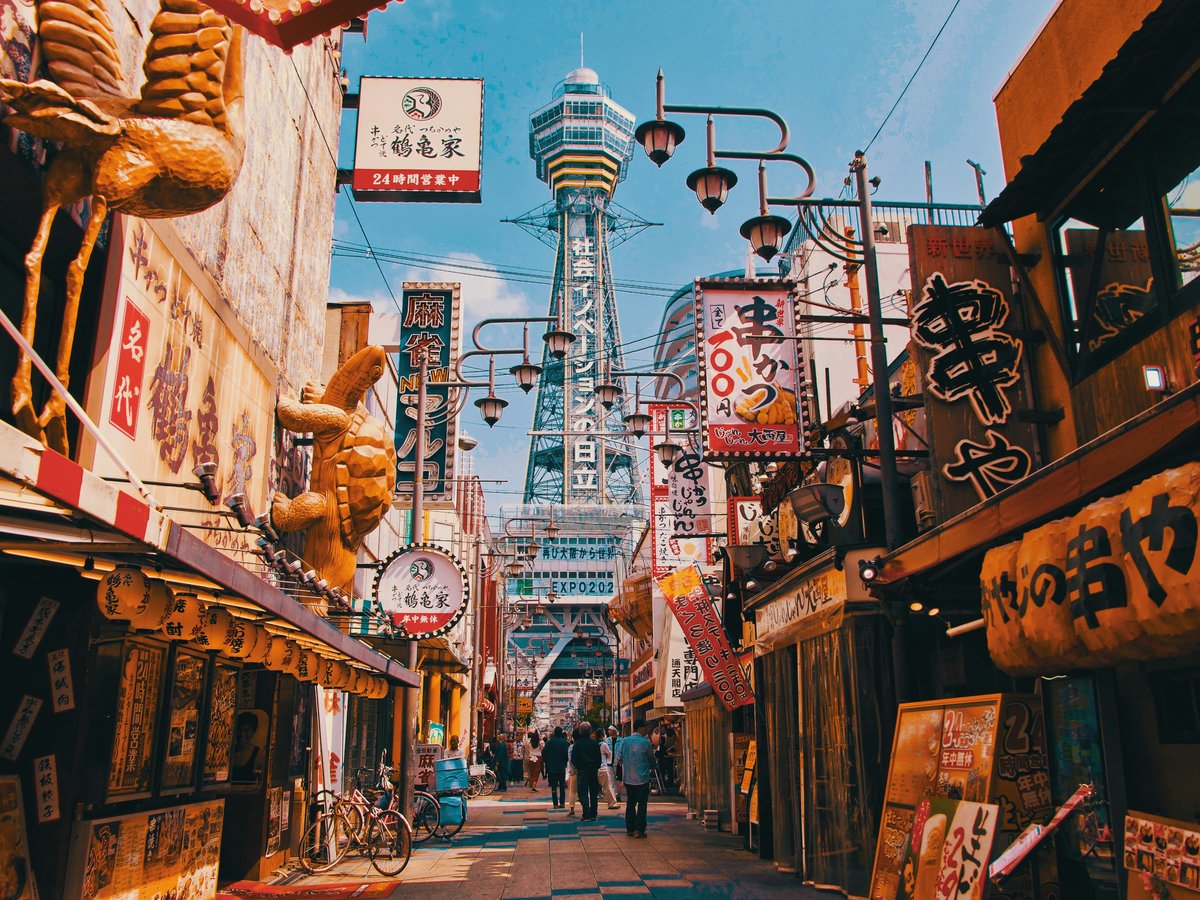
Start in Shinsekai if you want kushikatsu done right. The neighborhood around Tsutenkaku tower (that retro steel tower rebuilt in 1955) is lined with deep-fry counters where battered skewers of lotus root, shrimp, pork belly, and quail egg hit the oil at 180°C and land on your tray in under a minute. Daruma on Jan Jan Yokocho is the tourist-famous one; the line wraps the block by noon. Yaekatsu, two streets east, serves the same quality at half the wait. The rule everywhere: never double-dip in the communal sauce trough. One dip, cabbage leaf to scoop more sauce if needed. Eight skewers and a beer runs about ¥1,500 ($9). From Shinsekai, walk north to Dotonbori. Yes, it's the postcard strip. The takoyaki at Wanaka near Ebisu Bridge has a crispier shell than the more photographed Kukuru next door: the octopus inside is tender enough that biting through releases a burst of hot dashi broth that will scald your tongue if you're not careful.
The neighborhoods that separate food tourists from food pilgrims sit north and east of Namba. Tenma: the stretch of Tenjinbashi-suji shopping arcade between Tenjinbashisuji Rokuchome and Ogimachi stations: is where Osaka's izakaya culture lives densest. Tiny 8-seat bars pour Asahi draft for ¥350 and serve horumon, grilled offal marinated in a sweet miso tare that caramelizes black on the edges. The smell of rendered fat and charcoal hangs in the alley even at 2am. East of Namba, Tsuruhashi is Osaka's Koreatown, and the yakiniku here is some of the best beef you'll eat in Kansai. Rikimaru on the main drag does thick-cut beef tongue grilled over binchotan charcoal: the fat renders slowly, the char turns almost sweet, and a full meal with rice and kimchi runs ¥2,500–3,500 ($16–22). The market corridor under the rail tracks at Tsuruhashi station still has stalls selling fresh kimchi, dried chili, and sesame oil by weight.
Kuromon Market gets called Osaka's Kitchen, and that was accurate before Instagram. Now it skews toward tourist-priced skewered wagyu ($15 for three bites) and ¥1,000 uni cups. Worth noting: the fishmongers toward the east end still sell to restaurants, and the sashimi plates at Maguroya Kurogin are priced for locals; five thick cuts of yellowtail for ¥600. Go before 10am on a weekday. For a market that still functions as a market, Kizu Wholesale Market in Fukushima ward opens to walk-in buyers at 5am. The tuna auction finishes by 4, but the retail stalls sell sashimi-grade cuts, pickled vegetables, and dried kelp through mid-morning. No English signage. Point, nod, pay cash. That said, language barriers at Osaka's food counters tend to be lower than you'd expect: many places have plastic food models outside, ticket machines with pictures, or photo menus. The phrase osusume (recommendation) gets you the cook's best pick.
Late-night eating in Osaka runs harder than almost any city in Asia outside Bangkok. Ura-Namba: the grid of narrow streets south of Namba Parks, between Namba and Daikokucho stations: stays lit past 1am with standing bars and ramen counters. Kamukura on Sennichimae-dori does a pork-chicken broth ramen with a raw egg cracked into it; the noodles are thin and firm at 11pm but start going soft past midnight when the kitchen is on autopilot. For okonomiyaki: Osaka's thick savory pancake of cabbage, pork belly, tempura scraps, egg, and sweet brown sauce: Fukutaro in Namba is the benchmark. You cook it yourself on the teppan griddle built into your table, which means your clothes will smell like sauce and bonito flakes for the rest of the night. Mind you, that's half the experience. Okonomiyaki peaks between 8 and 10pm at most shops; after that, ramen and gyoza take the late shift.
Signature dishes
-
Takoyaki
Balls of wheat batter filled with diced octopus, pickled ginger, and green onion, fried in a cast-iron mold until the shell crisps and the center stays molten with dashi broth. Sold at street carts citywide, best eaten with a toothpick while still too hot.
-
Okonomiyaki
A thick griddle-cooked pancake of shredded cabbage, egg, tenkasu (tempura scraps), and pork belly, finished with sweet-savory brown sauce, Kewpie mayo, dancing bonito flakes, and aonori seaweed. You cook it yourself on the table's teppan at most Osaka shops.
-
Kushikatsu
Skewered meat, seafood, and vegetables dipped in panko batter and deep-fried. Shinsekai is the spiritual home. The communal sauce trough has one rule: single dip only, use a cabbage leaf for seconds.
-
Kitsune udon
Thick wheat noodles in a kelp-and-bonito dashi broth topped with a slab of aburaage: sweetened fried tofu soaked until it turns almost custard-soft. Osaka claims the original; Usami Tei Matsubaya near Namba has served it since 1893.
-
Butaman (551 Horai)
A steamed pork bun with a juicy ground-pork-and-onion filling, sold from the 551 Horai chain counters across Osaka. The shop at Namba station has a permanent queue; two buns for ¥380, eaten standing on the platform.
-
Horumon
Grilled offal (pork or beef intestine, stomach, and heart) marinated in sweet miso or soy tare and charred over a tabletop grill. The Tenma izakaya strip under the JR tracks is ground zero for this working-class staple.
-
Tecchiri (fugu nabe)
Pufferfish hot pot simmered in a clay nabe with tofu, mushrooms, napa cabbage, and ponzu dipping sauce. Osaka handles most of Japan's licensed fugu trade; Shinsekai's Zuboraya is the landmark with its giant blowfish lantern, though locals lean toward smaller shops in Kita-Shinchi.
-
Negiyaki
A thinner, crispier cousin of okonomiyaki loaded with chopped green onion instead of cabbage, often folded in half like a crepe. Less known outside Kansai. Negiyaki Yamamoto in Juso has been the standard since 1965.
Meal times
Lunch hits around 11:30, dinner at 7–8pm. The real eating starts after 9pm: izakaya and street food counters run until midnight or later. Breakfast is light: rice, miso, pickles at home. Tourists eat at hotel buffets or grab onigiri from convenience stores by 8am.
Tipping
Don't tip. At all. Leaving money on the table confuses staff or causes them to chase you down the street. Service charge is built into the price at higher-end restaurants.
Dietary notes
Vegetarian and vegan options are limited: dashi stock (bonito fish) hides in nearly everything, including miso soup and okonomiyaki batter. Halal restaurants cluster around Namba and Shinsaibashi. Gluten-free is difficult; wheat is in soy sauce, udon, takoyaki, and okonomiyaki. Carry a printed Japanese allergy card: verbal requests in English are often misunderstood.
Cooking classes in Osaka
 Free cancellation
 Sushi Making Osaka Roll and Authentic Japanese Sushi Class
Cooking class: 1.7 hours, free cancellation.
via Viator Free cancellation
 Tea Ceremony Experience in Osaka Doutonbori
Cooking class: 45 minutes, free cancellation.
via Viator Free cancellation
 Matcha Making Class in Osaka with Authentic Japanese Sweets Set
Cooking class: 1 hour, free cancellation.
via Viator Free cancellation
 Osaka Sushi Making Experience
Cooking class: 1.5 hours, free cancellation.
via Viator Free cancellation
 Osaka Cooking Class: Okonomiyaki and Japanese Cuisines Experience
Cooking class: 2.5 hours, free cancellation.
via Viator Free cancellation
 Ramen and Gyoza Cooking Class in Osaka
Cooking class: 2.5 hours, free cancellation.
via Viator Free cancellation
 Osaka Sake Tasting & Takoyaki Cooking Experience
Cooking class: 2 hours, free cancellation.
via Viator Free cancellation
 Cooking Ramen&Gyoza/KatsuCurry/Bento/Okonomiyaki+Store Tour@Osaka
Cooking class: 3 hours, free cancellation.
via Viator Free cancellation
 Three Types of Ramen Cooking Class in Osaka
Cooking class: 2.5 hours, free cancellation.
via Viator Free cancellation
 【For adult】Traditional Mochi Pounding Experience with Tasting
Cooking class: 1 hour, free cancellation.
via Viator Free cancellation
 Eat Osaka: Street Food Cooking in an Authentic Kitchen!
Cooking class: 2.5 hours, free cancellation.
via Viator Free cancellation
 Osaka Soul Food Cooking Class: Market Tour, 3 Dishes & Recipes
Cooking class: 4 hours, free cancellation.
via ViatorLast verified by automated review (v1.7.2) on . What is automated review?