What should I avoid in Osaka?
Skip Kuromon Ichiba Market's inflated wagyu skewers, the paid deck at Tsūtenkaku, and a taxi from Kansai Airport to Namba. Take the Nankai Rapit train and eat at Tsuruhashi instead. Don't go to Universal Studios Japan on a Saturday without an Express Pass, and if your trip stays in Osaka, the Japan Rail Pass will cost you more than it saves.
Your first expensive mistake might happen at Kansai International Airport, about 50 km from Namba, where a taxi into Minami currently costs ¥15,000 to ¥20,000, roughly $95 to $125 at today's rate of 158 yen to the dollar. The navy-blue Nankai Rapit gets to Namba in about 38 minutes for around ¥1,500, and the JR Haruka goes to Tennoji, Shin-Osaka and Kyoto. Don't buy the 7-day Japan Rail Pass for a trip that stays in Osaka: it has cost ¥50,000 since October 2023, and the trains you'll ride most belong to Osaka Metro, which isn't part of JR. Put an ICOCA card on your phone instead, or buy the Enjoy Eco Card day pass at about ¥820 on weekdays. On the escalators at Umeda Station, stand on the right. Osaka does the opposite of Tokyo, and if you get it wrong the 8am commuter crowd lets you know with a sharp click of the tongue.
Kuromon Ichiba Market is the trap almost every first-timer walks into. The 580-metre covered arcade near Nippombashi used to supply Osaka's restaurant kitchens, and now its stalls sell grilled wagyu skewers for ¥3,000 to ¥5,000 and single sea urchin shells for over ¥2,000, the air heavy with burnt butter and soy. To be fair, the seafood at Kuromon is fresh, but the prices are set for tour groups. Eat at Tsuruhashi instead, three stops from Tennoji on the JR Osaka Loop Line, where the Korean market sells kimchi by the scoop and you can smell the yakiniku smoke from the station platform. On Dotonbori, people wait 40 minutes at the canal-side takoyaki stands mostly for the photo under the Glico Running Man sign. Kogaryu in Amerikamura sells the same molten octopus balls, hot enough to burn your tongue, for around ¥500 with a much shorter line. In Shinsekai, the kushikatsu shops still ban double-dipping in the shared sauce tin, so use the free cabbage leaves to scoop up more sauce.
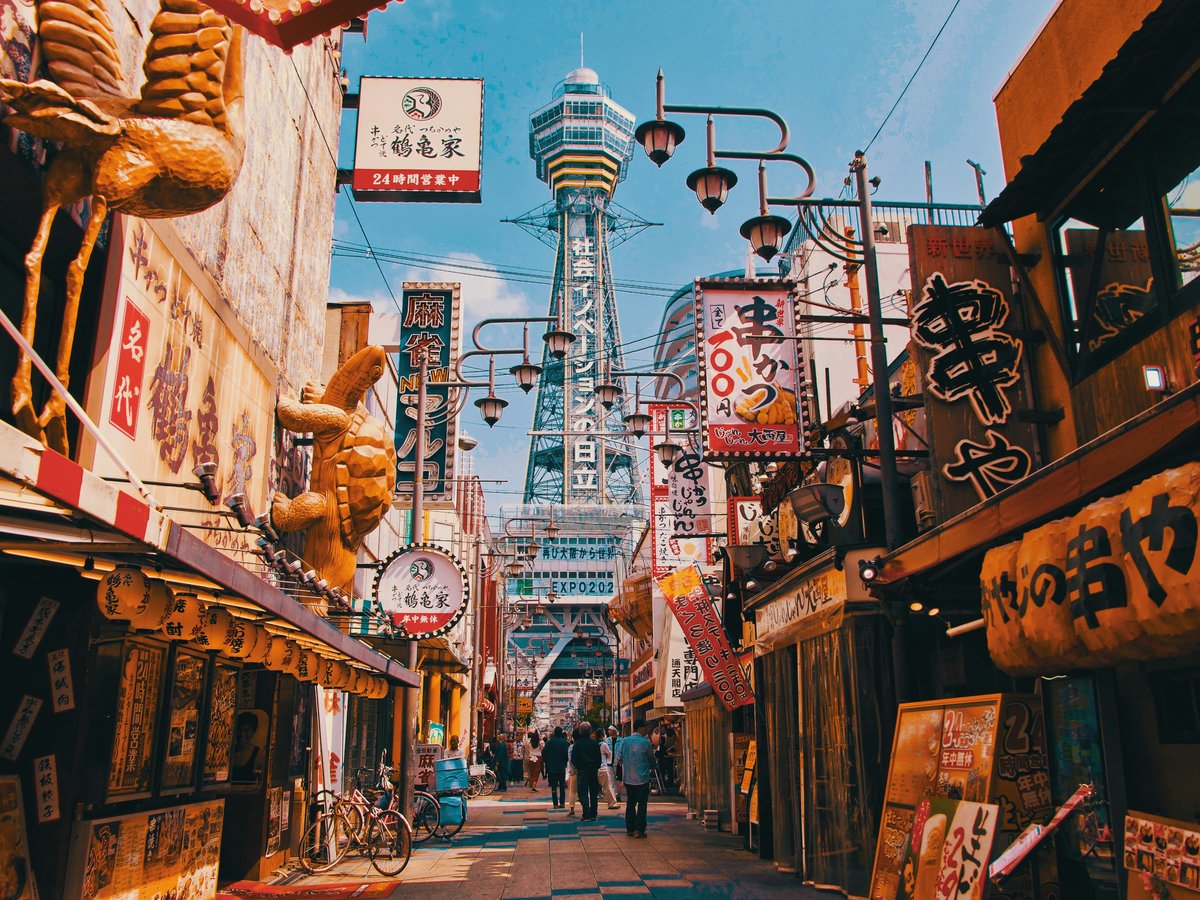
Osaka Castle's main tower is a 1931 concrete rebuild with an elevator and a museum inside, and on weekends the ticket queue can take an hour; the stone walls and moats date from the 1620s. Walk the grounds at 7am and skip the inside of the tower. Tsūtenkaku, the 1955 tower in Shinsekai, charges around ¥1,200 for a view of rooftops and expressways, but the Floating Garden at the Umeda Sky Building is a better use of your money at sunset, with the wind on the open-air deck and the hum of Umeda 170 metres below. Universal Studios Japan, open since 2001, is the costliest mistake you can make here: go on a Saturday or a Japanese school holiday without an Express Pass and you'll face 120-minute waits with no timed-entry slot for Super Nintendo World. Book a weekday and arrive 45 minutes before opening. Yumeshima, the island that hosted Expo 2025 until 13 October 2025, is now mostly a fenced construction site for a casino resort.
Two nighttime situations call for care. Touts on Soemoncho and around the Ebisubashi bridge push bars with cheap all-you-can-drink deals, and once table charges are added the bill can reach ¥30,000. Walk past anyone who stops you on Midosuji or Dotonbori, because Osaka's honest bars don't send staff out to recruit on the street. Tobita Shinchi, near Dobutsuen-mae station, is an active red-light district where photography is banned, and the women who sit by the entrances will shout at anyone holding up a phone. Weather is the other risk. Typhoon season runs August to October, and Typhoon Jebi flooded Kansai Airport in September 2018 and shut it down. This afternoon it's 27.7°C and clear in Osaka, and the vinyl seats on the Loop Line stick to bare legs. July and August are worse, with highs that often reach 35°C and heavy, damp air, so save Dotonbori for after 7pm. Osaka scores 8.8/10 for solo-traveler safety (see the TTDI Solo-Safety Index).
Tourist traps to skip
- Kuromon Ichiba Market wagyu and sea urchin stalls priced for tour groups
- Canal-side takoyaki queues on Dotonbori under the Glico sign
- Tsūtenkaku observation deck in Shinsekai
- Osaka Castle main tower interior on weekends
- Universal Studios Japan on Saturdays or Japanese school holidays without an Express Pass
- A 7-day Japan Rail Pass for an Osaka-only trip
- Yumeshima, the former Expo 2025 site, now a construction zone
Common scams
- Street touts on Soemoncho and near Ebisubashi pushing all-you-can-drink bars that add table charges up to ¥30,000
- Taxis from Kansai International Airport to Namba at ¥15,000 to ¥20,000 when the Nankai Rapit costs about ¥1,500
Seasonal hazards
- Typhoon season from August to October, when flights at Kansai International Airport can be cancelled
- July and August highs often reach 35°C with heavy humidity
- The rainy season runs from early June to mid-July
Last verified by automated review (v1.7.2) on . What is automated review?