Compare every Japan city in December →
Stay in Osaka in December
125 hotels in the Trip.com pool for Osaka, from US$13 a night.
Opens Trip.com on Fri 4 Dec to Sun 6 Dec 2026; change the dates there.
December in Osaka is defined by two things: winter illuminations and the city's best eating season. Nakanoshima and Midosuji Boulevard light up in the evenings, fugu season hits full stride, and the dry cold: averaging 11.7°C (53°F) during the day, dipping to around 3.3°C (38°F) at night: feels crisp but honestly manageable if you dress for it. The air tends to carry that clean winter sharpness, the kind that makes neon signs along the Dotonbori canal look a little more vivid than usual. Rainfall is light, just 44mm spread across maybe six days, which makes this one of the driest months of the year.
The catch comes in the final week. From roughly December 27 onward, Osaka shifts into oshogatsu mode: restaurants shutter for New Year preparations, train platforms fill with domestic travelers heading to shrines like Sumiyoshi Taisha, and hotel rates spike noticeably. The first three weeks of December are the sweet spot: you get the illuminations, the food, the comfortable pace of a city between peak seasons.
That said, this is a trip for people who'd rather warm their hands on a bowl of tecchiri in Shinsekai than lie on a beach. Daylight is short (sunset arrives before 5 PM) so your outdoor window compresses. The covered shopping arcades along Tenjinbashi-suji and Shinsaibashi-suji become genuinely useful, not just a novelty, when the temperature drops and the sky darkens early. You adapt to the rhythm or it frustrates you. Most people adapt.
Why visit in December
- One of the driest months of the year at just 44mm of rain: Osaka's rainy season (June) gets nearly six times as much precipitation, so December feels reliably clear
- Winter food season peaks with fugu, crab, oden, and nabe: Osaka's reputation as Japan's kitchen city arguably shines brightest in the cold months
- The Osaka Hikari Renaissance and Midosuji Illumination turn the city's central corridors into genuine spectacles, drawing smaller crowds than similar events in Tokyo
- Shoulder-season pricing through mid-December means hotel availability is solid and rates sit below the cherry blossom and autumn foliage peaks
- Comfortable temperatures for walking: you can cover serious ground through Tennoji, Shinsekai, Namba, and Umeda without the energy-draining humidity of summer
Worth knowing
- Daylight is short: the sun sets before 5 PM, cutting into outdoor sightseeing and temple visits that close at dusk
- The last week of December sees closures across restaurants and smaller shops as oshogatsu preparations begin, which can catch visitors off guard
- Evenings get genuinely cold, especially if you're standing still watching illuminations: the gap between a pleasant 12°C afternoon and a 3°C evening surprises people
- Some seasonal attractions like Osaka Castle's garden foliage are past peak by December, having shed most autumn color in November
Best for
Think twice if
December in Osaka brings dry, cool days with sharp evenings. The humidity sits around 73%, which sounds high on paper but feels far more comfortable than the summer months when that number climbs above 80% alongside 33°C heat. Mornings can carry a thin frost on quieter streets in residential neighborhoods, though it rarely lingers past 9 AM. Rain, when it comes, tends to be brief and light: nothing like the sustained downpours of the June-July tsuyu season. The wind off the rivers (particularly along Nakanoshima) adds a bite to the evening chill that the temperature alone doesn't communicate. You'll notice locals bundled in down jackets and scarves well before sunset.
Year-round climate
Averages from the last 5 years.
| Month | Avg high (°C) | Avg low (°C) | Rainfall (mm) |
|---|---|---|---|
| Jan | 9 | 1 | 42 |
| Feb | 10 | 1 | 61 |
| Mar | 15 | 5 | 123 |
| Apr | 20 | 10 | 158 |
| May | 23 | 14 | 235 |
| Jun | 27 | 20 | 253 |
| Jul | 32 | 25 | 202 |
| Aug | 33 | 26 | 206 |
| Sep | 30 | 23 | 197 |
| Oct | 24 | 15 | 135 |
| Nov | 18 | 9 | 97 |
| Dec | 12 | 3 | 44 |
Headline events
Osaka Hikari Renaissance
Mid-December to December 25
The centerpiece of Osaka's winter calendar: Nakanoshima's tree-lined riverside and the surrounding buildings transform into a corridor of light installations, projection mapping, and illuminated walkways. The reflections on the Dojima River at night are the visual highlight, and the scale of the installations has grown steadily since the event began. It draws dedicated visitors from across the Kansai region and, increasingly, international travelers timing trips around it.
Best things to do in December
Walk the Midosuji Illumination
sightseeingMidosuji Boulevard (Osaka's main north-south artery) lines its ginkgo trees with lights from Umeda down to Namba for several kilometers. The scale is hard to appreciate until you're standing at one end and the glow just keeps going. The walk takes about 40 minutes at a comfortable pace, and you'll pass through the Shinsaibashi shopping district midway, which makes it easy to duck inside when the cold gets to you.
The illumination runs through the winter season, but December is when the evening temperatures are still bearable for a long walk and the holiday energy in the surrounding streets peaks.Booking tipNo booking needed: it's a public street. Start from the Umeda end around 6 PM when the lights are freshly lit and foot traffic is lighter than later in the evening.
Eat your way through Shinsekai
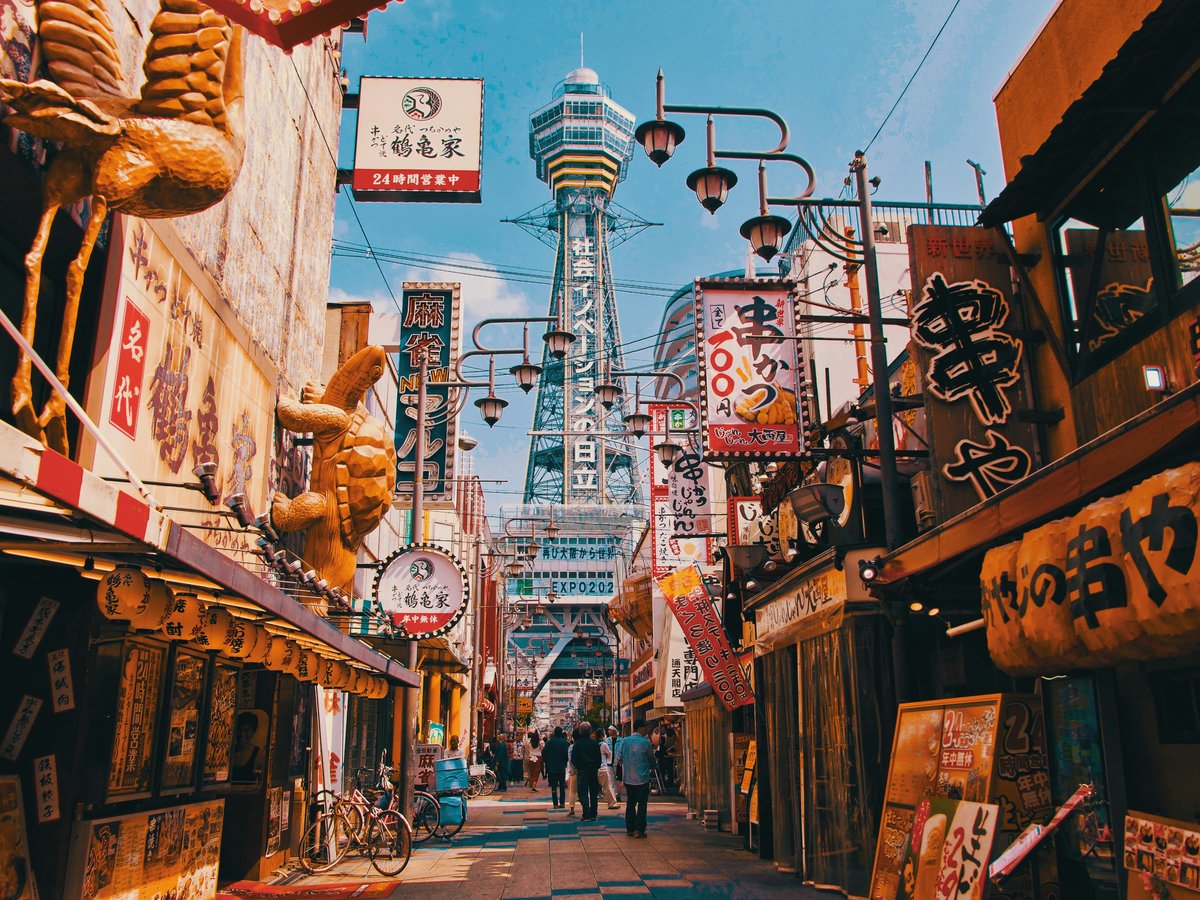
foodShinsekai in December is fugu territory. The narrow streets around Tsutenkaku Tower fill with the smell of deep-frying kushikatsu and simmering hot pots, and the old-school restaurants with their hand-painted signs and plastic food displays feel like a step back several decades. The neighborhood has a rougher energy than Dotonbori: less polished, more local. That said, it's been heavily touristed in recent years, so the authentic-gritty balance shifts depending on when you go. Weekday lunchtimes still feel genuinely neighborhood-like.
Fugu and oden peak in December, and the cold weather makes standing outside a kushikatsu stall with something fried and hot in your hand feel like the right call rather than a compromise.Booking tipMost Shinsekai spots are walk-in only. The popular fugu restaurants can have waits on weekend evenings: arrive before 6 PM or try a weekday.
Visit Sumiyoshi Taisha before the New Year rush
culturalOne of Japan's oldest shrines, Sumiyoshi Taisha is famous for its New Year hatsumode crowds: we're talking hundreds of thousands of visitors in the first three days of January. Going in early to mid-December gives you the shrine grounds largely to yourself. The arched Sorihashi bridge, the four main halls with their distinctive sumiyoshi-zukuri architecture, and the surrounding pine grove feel properly contemplative without the crush. The sound of gravel underfoot and wind in the pines is the whole experience.
Early December offers quiet access before the New Year pilgrimage season transforms the shrine into one of western Japan's busiest sites.Booking tipFree entry. Take the Nankai Main Line to Sumiyoshi Taisha Station. Morning visits are quietest.
Browse the Tenjinbashi-suji shopping arcade
shoppingAt roughly 2.6 kilometers, Tenjinbashi-suji is Japan's longest covered shopping arcade, and in December it functions as a weather-proof corridor through the heart of north Osaka. The mix runs from tiny shops selling pickles and dried fish to vintage clothing and used bookstores. The covered roof means rain and cold are irrelevant, and the foot traffic thins out as you walk further from the Tenma end. The far northern stretch around Tenjinbashisuji Rokuchome Station is where the real finds tend to hide.
December's short daylight and cold evenings push you indoors earlier: a covered arcade that stretches for kilometers and stays lively into the evening becomes a genuine asset rather than just a novelty.Booking tipEnter from the south end near Tenma and work your way north. The arcade connects directly to Osaka Tenmangu shrine, which is worth a detour.
Soak at Spa World
wellnessA massive onsen complex in Shinsekai with themed bath floors: one modeled on Asian bathing traditions, the other on European ones. The floors alternate by gender monthly. The rooftop pool is open year-round, and sitting in hot water with cold December air on your face while looking out at Tsutenkaku Tower is one of those quietly perfect contrasts. The facility also has saunas, rest areas, and a food court, so you can easily spend half a day here.
Cold weather is what makes onsen culture click. The contrast between frigid air and steaming water is the whole point, and December delivers that better than any month except January or February.Booking tipWeekday mornings are significantly less crowded. Check which floor your gender has access to that month before going: it rotates.
Explore Osaka Castle Park
sightseeingThe castle itself is a concrete reconstruction with an elevator inside: worth knowing going in so it doesn't disappoint. But the surrounding park, especially the Nishinomaru Garden area, has a stark winter beauty in December. The ginkgo and maple trees have mostly dropped their leaves, which means clearer sightlines to the castle walls and moat, and the bare branches against the stone ramparts photograph well in the flat winter light. A few late-holding maples might still carry color in early December, though don't count on it.
The autumn crowds have thinned, the winter light is low and photogenic, and the park's open spaces feel spacious rather than exposed when the humidity is gone.Booking tipThe park grounds are free and open. The castle tower museum has set hours: arrive early if you want to go inside, as it closes relatively early in winter.
Catch a show at the National Bunraku Theatre
culturalOsaka is the birthplace of bunraku (traditional puppet theater) and the National Bunraku Theatre in Nipponbashi is the only dedicated venue for it in Japan. December typically hosts a special year-end performance season. The puppets are about two-thirds life-size, operated by three puppeteers in plain view, and the emotional range they pull off is startling. English-language audio guides are available and genuinely helpful for following the story.
The December performance season is one of the major annual runs, and it coincides with a period when evening cultural activities fill the gap left by early sunset.Booking tipBook tickets through the theatre's website in advance: the December season draws strong local attendance and popular performances sell out.
What to eat in December
In season: fruit
Mikan (satsuma mandarins)
December is peak mikan season, and you'll see bags of them stacked at every fruit stand and supermarket across Osaka. The skin peels off in seconds, the segments separate cleanly, and the flavor is that perfect balance of sweet and tart that only comes when they've had enough cold nights on the tree. Locals eat them constantly: at home under the kotatsu, on train platforms, tucked into coat pockets for later. They're one of winter's small, reliable pleasures.
On menus now
Fugu (blowfish)
December is the heart of fugu season in Osaka, and Shinsekai is the city's epicenter for it. Tecchiri (fugu hot pot), fugu sashimi sliced translucent-thin, and hire-zake (hot sake with toasted fugu fin) are everywhere. The texture is firm, almost chewy, nothing like regular fish, and the flavor is subtle enough that the experience is really about texture and the ritual of it. Osaka consumes more fugu than any other city in Japan.
Zuwaigani (snow crab)
Snow crab from the Sea of Japan hits peak season in December. Kani-douraku along Dotonbori is the famous spot (the one with the giant mechanical crab sign) but smaller izakaya in Tenma and Umeda tend to offer better value. Expect it boiled, grilled, in hot pot, or as tempura. The sweet, briny flavor of winter crab is noticeably different from what you'll find in warmer months.
Nabe (hot pot)
The collective term for the hot pots that take over Osaka's dining scene once temperatures drop. Kimchi nabe, chanko nabe, shabu-shabu, sukiyaki: every neighborhood izakaya runs at least a few varieties through December. The communal pot steaming at the center of the table, everyone fishing out their own pieces, is the social ritual that carries the meal. It smells like home cooking even in a restaurant.
Street food peaks
Oden
Winter street food at its most comforting. Konbini oden from 7-Eleven or Lawson is the quick version (daikon radish, boiled egg, chikuwa fish cake simmering in dashi broth) but the real experience is at a yatai (street stall) or standing bar in Shinsekai. The broth smells faintly of kelp and soy, and warming your hands around the bowl on a cold evening is half the appeal.
Regular events in December
Midosuji IlluminationFree
Ginkgo trees lining Midosuji Boulevard are wrapped in lights from Umeda to Namba, creating one of Japan's longest illumination corridors. The color scheme changes in sections, shifting as you walk south.
November through early JanuaryGerman Christmas Market at Umeda Sky BuildingFree
A Christmas market in the open-air plaza beneath the Umeda Sky Building, featuring stalls selling glühwein, sausages, ornaments, and baked goods. The Floating Garden Observatory above it gives a panoramic view of the city lights. It feels more compact and authentic than some of Japan's larger Christmas market productions.
Mid-November to December 25Toka Ebisu Festival preparationsFree
While the main Toka Ebisu festival at Imamiya Ebisu Shrine falls in January, December sees merchants and shrine staff begin preparations. Bamboo branches (fukuzasa) start appearing in shop windows across Namba as the commercial district gears up for the business-prosperity prayers that define the festival.
Late DecemberYear-end Beethoven performances
Osaka's concert halls host multiple performances of Beethoven's Ninth Symphony in December: a uniquely Japanese tradition that dates back decades. The Osaka Philharmonic and visiting orchestras perform to packed houses, and the audience sometimes joins in singing the 'Ode to Joy' finale. It's one of those cultural quirks that surprises first-time winter visitors.
Throughout December, concentrated in the final two weeksBest places this December
Nakanoshima
neighborhoodThe narrow island between the Dojima and Tosabori rivers becomes Osaka's winter showpiece during the Hikari Renaissance. The combination of Meiji-era brick buildings, modern towers, riverside walkways, and reflected illuminations on the water creates the city's most photogenic December scene. The area around the Central Public Hall is particularly striking after dark.
KitaShinsekai
neighborhoodOsaka's retro entertainment district centered around Tsutenkaku Tower. In December, the narrow alleys steam with hot pot and kushikatsu smoke, and the neon signs reflect off wet pavement when it drizzles. The neighborhood's slightly worn, old-school character is part of its charm: it looks like a postwar entertainment district because it largely still is one.
TennojiSumiyoshi Taisha
shrineOne of Japan's most important Shinto shrines, predating the use of Chinese architectural influence in Japanese shrine design. The distinctive straight-line roofs and vivid vermillion buildings stand out against bare winter trees. Early December visits are contemplative and uncrowded; the shrine becomes one of western Japan's busiest hatsumode destinations from New Year's Eve onward.
SumiyoshiDotonbori
entertainment districtThe canal-side strip that is effectively Osaka's calling card: the Glico Running Man sign, the giant mechanical crab, the takoyaki stalls. In December, the neon reflections on the canal water are sharper in the cold air, and the street food vendors stay busy with visitors warming up on takoyaki and butaman (pork buns). It's crowded and loud and unapologetically commercial. That's the point.
NambaShitennoji Temple
templeFounded in 593, Shitennoji is one of Japan's oldest temples. The December atmosphere is quieter than the tourist-heavy spots, and the flea market held on the 21st and 22nd of each month brings out antiques, secondhand kimono, and street food stalls across the temple grounds. The five-story pagoda and surrounding gardens have a stripped-down winter elegance.
TennojiTenma and Tenjinbashisuji
neighborhoodThe area around Osaka Tenmangu shrine and the northern stretch of the Tenjinbashi-suji arcade is where you'll find Osaka's most interesting concentration of small bars, standing-only izakaya, and independent shops. December evenings here have a warmth that comes from ducking into tiny, steamy bars where the owner is cooking two meters from your seat.
KitaUmeda Sky Building
landmarkThe Floating Garden Observatory on the 39th floor gives a 360-degree view of Osaka, and on clear December evenings the visibility can stretch to the mountains ringing the Osaka plain. The open-air observation deck is genuinely cold in December: that's the trade-off for the sharp winter visibility. The Christmas market at the base adds a reason to linger at ground level afterward.
Umeda
Your packing checklist
Tick items off as you pack. Your progress saves in this browser.
All packed — have a great trip.
Insider tips
The Osaka Amazing Pass covers entry to dozens of attractions and unlimited subway/bus rides: if you're planning to hit multiple paid sites in a day, it typically pays for itself by mid-afternoon. The winter version covers some illumination events as well.
Konbini (convenience store) oden is an underrated December experience. 7-Eleven and Lawson keep simmering pots by the register from autumn through winter: point at what you want, they'll fish it out. It's not gourmet, but standing outside a konbini eating hot oden at 10 PM is a memory that sticks.
The last train times in Osaka are earlier than you might expect coming from Tokyo: most lines stop running between 11:30 PM and midnight. If you're out late in Dotonbori or Shinsekai, keep an eye on the clock or budget for a taxi back.
Osaka's depachika (department store basement food halls) in Umeda and Namba are where locals buy year-end osechi ingredients and gift boxes in December. The food quality is extraordinary, the free samples are generous, and the energy of pre-New Year shopping is infectious. Hankyu and Takashimaya are the ones to hit.
If you're visiting Sumiyoshi Taisha, combine it with a walk through the surrounding residential streets. The area has traditional machiya-style houses, small neighborhood shrines, and a pace that feels nothing like central Osaka. It's a thirty-minute detour that shows a completely different side of the city.
Temple flea markets run on fixed dates: Shitennoji on the 21st, Tenjinsan at Osaka Tenmangu on the 25th. If your December dates overlap with either, they're worth building a morning around. Secondhand kimono, vintage ceramics, and hot street food in a temple courtyard.
Avoid these mistakes
- Booking hotels for the last week of December at regular-season rates: prices surge as domestic travelers flood Osaka for New Year. The first three weeks are the value window; the final week requires advance booking and a higher budget.
- Assuming all restaurants stay open through New Year: many close from December 28 through January 3 for oshogatsu preparations. Check individual restaurant closures if you're visiting in that window, especially for smaller family-run spots.
- Packing for indoor temperatures and forgetting how much time you'll spend outside: the covered arcades and department stores are heated, but the walk between them is cold, and illumination events are entirely outdoors.
- Skipping Osaka for Kyoto entirely: many visitors treat Osaka as just a food stop between Tokyo and Kyoto. December Osaka has its own distinct character, and the illuminations, food scene, and urban energy are worth dedicated days, not just a dinner detour.
- Trying to visit Sumiyoshi Taisha between December 31 and January 3 expecting a peaceful shrine experience: it's one of the most popular hatsumode shrines in western Japan and draws enormous crowds during that window.
Practical tips for December
December in Osaka is manageable with the right expectations. Dress in layers you can adjust: heated trains and department stores contrast sharply with cold outdoor stretches, and you'll move between the two constantly. An IC card (ICOCA) for transit saves time at every gate and works at konbini and vending machines too. Restaurant reservations matter more in the final week of December when many places close and the remaining ones fill up with year-end bonenkai parties. For the illuminations, weeknights draw noticeably fewer people than weekends. Keep cash on hand, while major spots take cards, smaller izakaya in Shinsekai and Tenma are often cash-only. The subway system is straightforward and covers nearly everything you'd want to see; taxis are clean and metered but rarely necessary unless you're out past the last train.
FAQ
Is December a good time to visit Osaka?
December is a solid month for Osaka, particularly the first three weeks. You get winter illuminations, peak fugu and crab season, comfortable walking temperatures, and shoulder-season hotel rates. The main trade-offs are short daylight hours and the oshogatsu closures that begin in the final week. It's not the single best month (October and November tend to edge it out with autumn foliage and milder evenings) but it's comfortably in the upper half of the year.
How cold does Osaka get in December?
Daytime highs tend to sit around 11-12°C (low 50s°F), dropping to around 3°C (37°F) at night. It's not the bone-deep cold of northern Japan (Osaka rarely sees snow) but the evening chill, especially near the rivers, is sharper than the numbers suggest. A warm coat, scarf, and gloves handle it. The bigger adjustment is the early darkness: sunset before 5 PM compresses your outdoor time.
What should I eat in Osaka in December?
Fugu (blowfish) is the signature December eat: Shinsekai is the neighborhood for it, whether as tecchiri hot pot or paper-thin sashimi. Snow crab from the Sea of Japan peaks now too. Beyond the headliners, oden from street stalls, nabe hot pot at izakaya, and mikan mandarins from every fruit stand round out the winter food landscape. Osaka in cold weather is arguably the city at its culinary best.
Are the Christmas illuminations in Osaka worth seeing?
The Osaka Hikari Renaissance at Nakanoshima and the Midosuji Illumination are both genuinely impressive: the Nakanoshima reflections on the river at night are the visual highlight, and the Midosuji corridor stretches for kilometers. They draw fewer crowds than Tokyo's equivalent events, which means less jostling and better photo opportunities. They're free, and you can combine them with dinner in the surrounding neighborhoods.
Should I avoid Osaka during New Year's?
Not necessarily, but plan for it. From around December 28 through January 3, many restaurants and smaller shops close for oshogatsu preparations and celebrations. Hotel rates spike, and popular shrines like Sumiyoshi Taisha draw massive hatsumode crowds. If you book accommodation and dining in advance and embrace the New Year's atmosphere rather than fighting it, it can be memorable, but going in unprepared leads to closed doors and frustration.
Things to Do in Osaka in December
 Free cancellation
 Osaka Kickstart: Hotspots & Hidden Gems Tour
Day trip: free cancellation.
via Viator Free cancellation
 Sushi Making Osaka Roll and Authentic Japanese Sushi Class
Cooking class: 1.7 hours, free cancellation.
via Viator Free cancellation
 Ultimate Osaka Walking Tour: Castle, Dotonbori, Gems & Lunch
Day trip: free cancellation.
via Viator Free cancellation
 Kyoto Day Tour: Fushimi Inari, Arashiyama, Kinkaku-ji & Kiyomizu
Day trip: 10 hours, free cancellation.
via Viator Free cancellation
 Osaka Local Foodie Walking Tour in Dotonbori and Shinsekai
City tour: 3 hours, free cancellation.
via Viator Free cancellation
 From Kyoto / Osaka: Kyoto Must-see Spots & Nara Park One Day Tour
Day trip: 9 hours, free cancellation.
via ViatorFind a flight to Osaka
Live fares to Osaka appear here once cookies are accepted.
Last verified by automated review (v1.7.2) on . What is automated review?