Compare every Japan city in July →
Stay in Osaka in July
125 hotels in the Trip.com pool for Osaka, from US$13 a night.
Opens Trip.com on Fri 2 Jul to Sun 4 Jul 2027; change the dates there.
July in Osaka is, honestly, a test of endurance. Daytime temperatures hover around 32°C (90°F), but that number alone doesn't capture what it feels like: the humidity sits at roughly 77%, turning the air into something you can practically chew. You'll step outside your hotel and feel the moisture wrap around you like a warm towel that nobody asked for. The first half of the month still carries the tail end of tsuyu, the rainy season, so expect grey skies and sudden downpours that can drench a neighborhood in fifteen minutes flat.
That said, there's a reason people still come. Tenjin Matsuri, held July 24-25 at Osaka Tenmangu shrine, is one of Japan's three great festivals and over a thousand years old. The river procession along the Okawa, with dozens of illuminated boats and a massive fireworks display overhead, is the kind of spectacle that genuinely justifies the sweat. The whole city shifts into a different gear for those two days: you'll hear taiko drums echoing off buildings in Kitahama and smell yakitori smoke from yatai stalls lining the riverbanks.
Outside the festival window, July is a month of contrasts. Dotonbori and Namba come alive after dark when the temperature drops to a more tolerable 25°C (77°F), and rooftop beer gardens across Umeda fill up with office workers escaping the concrete heat. But midday sightseeing is genuinely unpleasant, and you'll find yourself ducking into department store basements and shotengai covered arcades more than you planned. If you can structure your days around early mornings and late evenings, July becomes manageable. If you're the type who wants to walk 25,000 steps in the sun, look at October instead.
Why visit in July
- Tenjin Matsuri (July 24-25) is one of Japan's three great festivals: the boat procession and fireworks on the Okawa river are worth planning a trip around
- Rooftop beer gardens open across Umeda and Namba, offering cold draft beer with city views in the evening breeze: a distinctly summer-in-Japan experience
- Hotel rates sit below the spring cherry blossom and autumn foliage peaks, so you'll likely find decent deals outside the Tenjin Matsuri weekend itself
- Summer street food peaks: yatai stalls multiply around festivals, and hamo (pike conger), Osaka's prized summer fish, appears on menus everywhere from high-end kappo to casual izakaya
- Evening and night temperatures drop enough to make Dotonbori and Shinsekai genuinely enjoyable after 7 PM, with longer daylight hours giving you until about 7:15 PM
Worth knowing
- Humidity at 77% makes outdoor sightseeing between 11 AM and 4 PM physically draining: the wet-bulb temperature pushes the perceived heat well above the 32°C reading
- Roughly 202mm of rainfall across about 15 days means you'll encounter rain more often than not, sometimes in sudden heavy bursts that stall plans
- Typhoon season is underway, while direct hits on Osaka in July are relatively rare, nearby typhoons can cancel flights, delay trains, and dump additional rain for days
- The combination of heat, humidity, and crowds during Tenjin Matsuri week makes the city's public transit notably more packed and uncomfortable than usual
Best for
Think twice if
July marks the transition from tsuyu (rainy season) into full summer. The first week or two tends to be cloudier and wetter, with the rainy season typically breaking around mid-July, though the exact date shifts year to year. Once tsuyu lifts, you get clearer skies but significantly more oppressive heat. The humidity rarely drops below 70% even on clear days, and nighttime offers limited relief with lows around 25°C. Afternoon thunderstorms can roll in fast, dump 20-30mm in under an hour, and clear out just as quickly. Wind is minimal, which makes the still, heavy air feel even thicker.
Seasonal caution
- Heat index regularly exceeds 38°C (100°F) when factoring humidity: heat exhaustion is a genuine risk during midday outdoor activities, especially around Osaka Castle and Tennoji where shade is scarce
- Typhoon season runs June through October; while July typhoons more commonly affect Kyushu and Shikoku, Osaka can still see disrupted transit, flight cancellations, and heavy rain bands from storms passing nearby
- Sudden intense downpours can drop 30-50mm in under an hour, temporarily flooding low-lying streets around Namba and parts of Shinsekai: waterproof phone protection is worth having
Year-round climate
Averages from the last 5 years.
| Month | Avg high (°C) | Avg low (°C) | Rainfall (mm) |
|---|---|---|---|
| Jan | 9 | 1 | 42 |
| Feb | 10 | 1 | 61 |
| Mar | 15 | 5 | 123 |
| Apr | 20 | 10 | 158 |
| May | 23 | 14 | 235 |
| Jun | 27 | 20 | 253 |
| Jul | 32 | 25 | 202 |
| Aug | 33 | 26 | 206 |
| Sep | 30 | 23 | 197 |
| Oct | 24 | 15 | 135 |
| Nov | 18 | 9 | 97 |
| Dec | 12 | 3 | 44 |
Holidays and festivals in July
Public holidays
- Marine Day(海の日)19 July 2027
Headline events
Tenjin Matsuri
July 24-25
One of Japan's three great festivals, held at Osaka Tenmangu shrine since 951 AD. The highlight is the funatogyo river procession on July 25th: over 100 boats carrying mikoshi (portable shrines) float down the Okawa river while roughly 5,000 fireworks light up the sky overhead. The land procession on the 24th features 3,000 participants in Heian-period costume marching from the shrine through Kitahama. The smell of river water mixes with gunpowder and grilled squid from the hundreds of food stalls that line the riverbanks. Easily a million spectators pack the area over two days.
Best things to do in July
Tenjin Matsuri riverside viewing
festivalClaim a spot along the Okawa river banks in the late afternoon of July 25th and watch the funatogyo boat procession glide past as the sun sets. The fireworks start around 7 PM and reflect off the water while the taiko drums from the boats carry across the river. The air smells like gunpowder, grilled corn, and river water. Locals spread blue tarps hours in advance for prime spots near Tenmabashi bridge: arriving by 3 PM is not too early.
The boat procession and fireworks happen exclusively on July 25th, with the land procession on the 24th: this is the only time of year for this spectacleBooking tipNo tickets needed for riverside viewing, but some restaurants along the Okawa offer reserved window seats for the fireworks: book these weeks in advance as they fill fast
Rooftop beer garden crawl in Umeda
food_and_drinkThe department stores atop Umeda's skyscrapers (Hankyu, Hanshin, Daimaru) transform their rooftops into open-air beer gardens from late June through September. Each has a slightly different vibe. The breeze at rooftop level takes the edge off the humidity, and the views across the Osaka skyline at dusk, with the sky turning orange behind the mountains to the west, make the overpriced draft beer feel earned. Office workers flood in after 6 PM, so arriving at opening gets you a table without waiting.
Beer gardens are a distinctly summer institution in Japan, typically running late June through early September: July is peak season with the longest daylight and warmest eveningsBooking tipMost operate on a walk-in basis, but some offer reserved seating for groups: check individual department store websites in Japanese for reservation forms
Night walk through Dotonbori and Shinsekai
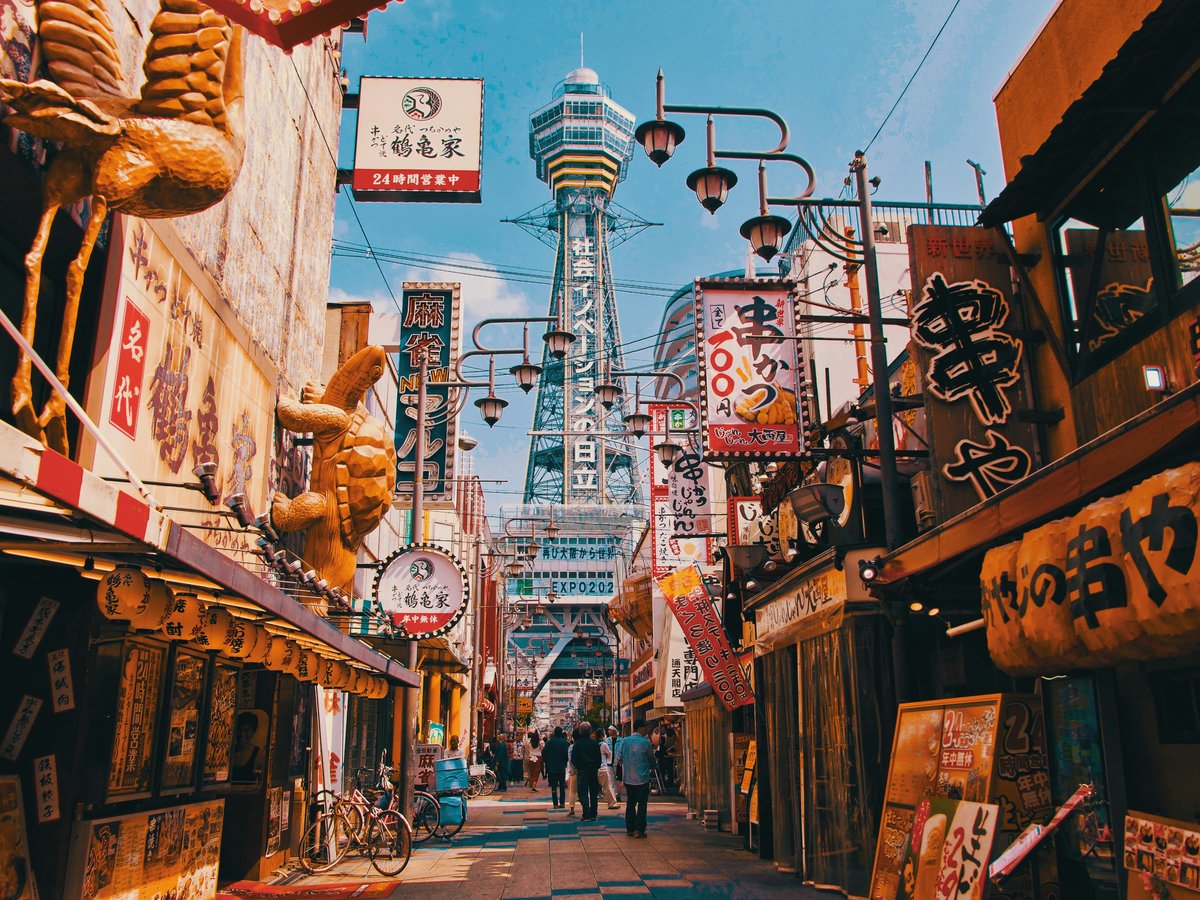
sightseeingAfter 8 PM, when the day's heat finally loosens its grip, Dotonbori transforms into a river of neon reflections and food smoke. The giant mechanical crab above Kani Doraku clicks its legs, barkers call out from takoyaki stalls, and the whole strip hums with a chaotic energy that feels uniquely Osaka. Then head south to Shinsekai, where the Tsutenkaku tower glows against the dark sky and the kushikatsu joints stay packed until late. The contrast between the two neighborhoods (one glossy and tourist-forward, the other gritty and local) covers a lot of ground in one evening.
July's extreme daytime heat makes evening the prime window for street-level exploration, and both neighborhoods are at their most atmospheric after darkEscape to Minoh Falls
natureAbout 30 minutes north of central Osaka by train, Minoh offers a forested gorge with a 33-meter waterfall at the end of a paved riverside path. The canopy provides genuine shade (a commodity in July) and the temperature along the stream drops noticeably compared to the city below. The walk is about 2.7 kilometers each way, mostly flat with a gentle incline at the end. Cicadas scream from every direction, and the air tastes different up here: cooler, greener, slightly damp from the spray.
The forested gorge runs several degrees cooler than central Osaka, making it one of the few outdoor activities that remains comfortable in July's heatBooking tipTake the Hankyu Minoh Line from Umeda: the trailhead starts practically at the station
Morning walk through Kuromon Market
food_and_drinkGet there before 9 AM, when the heat hasn't yet made standing over a grill unbearable and the stalls still have their best stock out. The vendors have been here since 5 AM and the concrete floor is still wet from hosing down. Kuromon has shifted more tourist-facing in recent years, but the fishmongers and produce sellers in the back alleys still cater to local restaurant buyers. The smell of fresh uni (sea urchin) and the sight of whole tuna being broken down with specialized knives is worth the early alarm.
Early morning is the only comfortable window for market browsing in July: by 10:30 AM the covered market's ventilation can't keep up with the heat and crowdsSumiyoshi Taisha early visit
cultureOne of Japan's oldest shrines, founded in the 3rd century, with a distinctive architectural style that predates Chinese Buddhist influence. The grounds are quieter than Osaka Castle and far more shaded, with mature trees forming a canopy over the approach. The iconic arched Sorihashi bridge glows in the early light. Getting there by 7 AM means near-solitude and temperatures that still feel human. The vermillion paint against the green foliage is striking, and the lack of crowds means you can hear the gravel crunch underfoot.
July's heat makes early-morning shrine visits the only practical option, and Sumiyoshi Taisha's tree cover provides relief unavailable at more exposed sites like Osaka CastleDepachika (department store basement) food hall grazing
food_and_drinkWhen the afternoon heat drives you off the streets (and it will) the climate-controlled basement food halls beneath Osaka's department stores become a destination in themselves. Hankyu Umeda, Takashimaya in Namba, and Daimaru Shinsaibashi each stock seasonal sweets, bento boxes, pickles, wagashi, and samples. The cool air hits you the moment you descend the escalator. You can graze for an hour, assembling a picnic for later, and never step back into the humidity.
Depachika serve as de facto cooling stations in July, and the seasonal wagashi and summer fruit displays are at their most elaborate during midsummer gift-giving season (ochugen)Spa World visit
wellnessA massive hot spring complex in Shinsekai with themed bathing floors: one modeled on European spas, the other on Asian bath traditions. They rotate between men's and women's floors monthly. In July, the outdoor pool zone on the roof opens, giving you the odd pleasure of sitting in warm water while humid air hangs around you. The whole place is climate-controlled, which honestly matters more than the themed decor. Plan for half a day; the scale of the facility and the variety of baths can absorb hours.
The rooftop pool zone operates through summer, and the air-conditioned interior provides genuine midday heat relief while still feeling like you're doing something rather than just hiding in your hotelWhat to eat in July
On menus now
Hamo (pike conger)
Osaka's defining summer fish: the city has claimed hamo as its own for centuries. Skilled chefs make hundreds of precise knife cuts (honegiri) through the pin bones, then briefly blanch the flesh so it curls into delicate white petals. Served with umeboshi plum sauce, in clear dashi soup, or as tempura. You'll find it at kappo restaurants in Kitashinchi and at more casual spots around Tenma. The texture is silky and clean, with a faint sweetness that pairs well with a cold junmai ginjo sake.
Kakigori (shaved ice)
Not the syrupy snow cones you might be imagining. Osaka's specialty kakigori shops shave blocks of pure ice into impossibly fine, snow-like mounds, then top them with handmade syrups: matcha from Uji, seasonal fruit like Wakayama peach, or condensed milk with kinako. The texture is closer to fresh powder snow than anything frozen. Lines form outside popular shops well before opening in July, and the whole ritual of waiting, watching them shave the ice, and eating it before it melts is part of the experience.
Edamame and beer sets
Less a specific dish, more a cultural moment. Rooftop beer gardens across Umeda's department stores serve cold draft beer alongside bowls of salted edamame, and the combination in the humid evening air (cold glass sweating in your hand, warm pods splitting between your teeth) is summer in Osaka distilled into two items. The gardens typically run from late June through September.
Natsu yasai tempura (summer vegetable tempura)
July brings the peak of shishito peppers, myoga ginger buds, and kabocha squash. Tempura shops shift their seasonal platters to feature these summer vegetables, fried in a light, crackling batter. The bitterness of the shishito against the oil, and the floral punch of myoga: those flavors don't exist in the winter version. Street-side tempura stalls near Kuromon Market and around Shinsekai tend to showcase them prominently.
What to drink
Umeshu (plum wine)
June is when the ume plums go into the jars, and by July the fresh-batch umeshu starts appearing at izakayas. The new-season batches are lighter and more tart than the aged versions, often served on the rocks or with soda water. Some places in Tenma and Ura-Namba make their own in-house, and you can taste the difference from the bottled commercial versions: less sweet, more stone-fruit brightness.
Regular events in July
Aizen Matsuri at Aizen-do TempleFree
Often considered the first summer festival of Osaka's season, held in late June through early July. Ceremonial processions feature women in traditional palanquins, and the temple grounds fill with stalls and lanterns. Smaller and more local-feeling than Tenjin Matsuri.
June 30 - July 2Sumiyoshi MatsuriFree
Held at Sumiyoshi Taisha, one of Osaka's oldest and most important shrines. Features a lively procession through the surrounding neighborhood, with mikoshi bearers, traditional dance, and evening fireworks. Draws a local crowd rather than tourists, giving it a neighborhood-festival atmosphere.
July 30 - August 1Tanabata festivalsFree
The star festival on July 7th is celebrated with bamboo branches hung with colorful paper wishes (tanzaku) at shrines and shopping arcades across the city. Shitennoji temple and the Shinsekai area put on notable displays. More of an ambient cultural moment than a destination event: you'll notice the decorations everywhere.
July 7Naniwa Yodogawa Fireworks FestivalFree
One of the larger fireworks displays in the Kansai region, launched over the Yodogawa river. Draws large crowds who spread out along the riverbanks north of central Osaka. The show typically runs about an hour with increasingly elaborate multi-launch sequences.
Late July or early August (date varies)Best places this July
Osaka Tenmangu Shrine
shrineThe spiritual center of Tenjin Matsuri and worth visiting even outside festival days. The shrine grounds are compact but atmospheric, with stone lanterns and a plum grove. During the festival, the whole area transforms into a dense maze of food stalls and performers. The shrine itself dates to 949 AD.
Minami-MorimachiOkawa River promenade
waterfrontThe riverside walkway between Tenmabashi and Sakuranomiya comes alive during Tenjin Matsuri but is pleasant for evening walks throughout July. Illuminated bridges reflect off the water, and the breeze coming off the river provides some of the only natural relief from the humidity you'll find downtown.
KitahamaShinsekai
neighborhoodOsaka's retro entertainment district centered around Tsutenkaku tower. The neon signs, kushikatsu restaurants, and pachinko parlors give it a time-capsule atmosphere that feels most alive after dark. In July, the evening crowds and steam rising from kitchen vents create a scene that's unmistakably Osaka. Grittier and more local than Dotonbori.
ShinsekaiNamba Parks
shoppingA terraced shopping complex with rooftop gardens that cascade down the building like a hanging garden. The greenery provides shade and the elevation catches whatever breeze exists. In July, it functions as both a shopping destination and an oasis: the contrast between the lush plantings and the concrete city surrounding it is striking from the upper levels.
NambaNakanoshima Park
parkA narrow island between two branches of the Tosabori river, lined with rose gardens and shaded walkways. The roses are past peak by July, but the mature trees and waterside setting make it one of the cooler spots downtown. The adjacent Museum of Oriental Ceramics is air-conditioned and rarely crowded: a good pairing for a hot afternoon.
NakanoshimaHozenji Yokocho
historic streetA narrow, stone-paved alley tucked behind Dotonbori that feels like it belongs to a different century. The moss-covered Fudo-myo statue at Hozenji temple sits under a canopy of greenery, and the air in the alley runs cooler than the surrounding streets. Tiny bars and kappo restaurants line both sides. At night, the lanterns and wet stones create the kind of atmosphere that stops you mid-step.
NambaTempozan Harbor Village
waterfrontThe harbor area around the Osaka Aquarium catches a sea breeze that the inland city doesn't get. The giant Ferris wheel and the aquarium itself are both air-conditioned respites. The waterfront promenade at sunset, with the industrial port cranes silhouetted against the sky, has a different visual register than central Osaka's neon-and-concrete palette.
Minato
Your packing checklist
Tick items off as you pack. Your progress saves in this browser.
All packed — have a great trip.
Insider tips
Tenjin Matsuri's river viewing spots fill hours before the procession: locals stake out spots along the east bank of the Okawa near Tenmabashi by early afternoon. The west bank is less packed but has slightly worse sightlines for the fireworks. Either way, a folding mat to sit on beats standing for four hours.
The subway and JR trains crank the air conditioning hard in July: the temperature difference between a platform and a train car can be 10°C. Carrying a light long-sleeve layer avoids the chill-then-sweat cycle that wears you down over a full day of transit.
Convenience stores are legitimate cooling stations. Nobody will blink if you spend fifteen minutes browsing the magazine rack at a Lawson or FamilyMart to recover from the heat. The onigiri and cold tea selection peaks in summer too: grab a cold barley tea (mugicha) for the road.
If you're visiting Osaka Castle, approach from the Tanimachi Yonchome side through Nishinomaru Garden rather than the main south entrance: more tree cover, fewer tour groups, and a slightly shorter exposed walk to the keep. Morning before 9 AM is the only tolerable window in July.
The Tenjin Matsuri food stalls set up a day before the main events and stay up a day after: if the July 25th crowds sound overwhelming, walking the stall area on the 23rd or 26th gives you the atmosphere and food without the crush of a million people.
For the best kakigori, skip the shops with lines visible from the main street in Shinsaibashi: the smaller side-street spots in Ura-Namba and Nakazakicho tend to use better-quality ice and more interesting syrups, with wait times that won't eat your afternoon.
Avoid these mistakes
- Scheduling outdoor sightseeing between 11 AM and 3 PM: this is the window where heat exhaustion becomes a real risk, not just discomfort. Plan indoor activities (museums, depachika, aquarium) for midday and save walking for early morning or evening.
- Underestimating hydration needs: you can lose a surprising amount of fluid just walking between train stations. The vending machines with sports drinks exist for a reason; plain water alone may not be enough if you're sweating for hours.
- Wearing cotton: it feels natural to pack cotton t-shirts for hot weather, but cotton absorbs sweat and stays wet, making you feel worse as the day goes on. Linen or synthetics are genuinely better in Osaka's humidity.
- Assuming Tenjin Matsuri is just a temple festival: it's a city-wide event that affects transit, restaurant availability, and hotel pricing across central Osaka for the better part of a week. Plan around it, not through it.
- Skipping meals because of the heat: appetite drops in humidity, but going without food in these conditions leads to energy crashes. Light meals, cold noodles, and frequent hydration keep you functional.
Practical tips for July
Book accommodation well ahead if your dates overlap with Tenjin Matsuri (July 24-25): rates climb and availability tightens as the festival approaches, particularly in Kitahama and Temmabashi near the river route. For the rest of July, last-minute bookings are usually fine. Carry a portable battery pack; phone batteries drain faster when you're using maps and cameras in extreme heat. The IC card (ICOCA) works across all Osaka transit and most convenience stores: load it up rather than buying individual tickets. Most department stores and major stations have rest areas with seating and air conditioning that are free to use. If a typhoon warning is issued, don't try to power through your itinerary; trains will stop running and attractions will close. Use the downtime for a long meal at a covered shotengai arcade or an afternoon at Spa World.
FAQ
Is July a good time to visit Osaka?
Honestly, it depends on your heat tolerance. July is hot and humid: the kind of weather that limits what you can comfortably do outdoors. That said, Tenjin Matsuri alone can justify the trip if you time it for July 24-25. The city has a particular energy in summer, with beer gardens, festival stalls, and late-night street food that you won't find in cooler months. If you structure your days to avoid midday sun and embrace the evening culture, it's manageable. If you want temple-hopping in comfort, October or November are better bets.
What should I wear in Osaka in July?
Lightweight, breathable fabrics: linen or moisture-wicking synthetics, not cotton. Loose-fitting clothes in light colors help. You'll see locals in sandals and carrying small towels (tenugui) to wipe sweat, and nobody dresses up beyond what's necessary. Bring at least one pair of closed-toe shoes for shrine visits that require covered feet, and something with sleeves for heavily air-conditioned trains and department stores where the temperature drop is dramatic.
Does it rain a lot in Osaka in July?
The first half of July tends to be wetter: it's the tail end of tsuyu (rainy season), which typically breaks around mid-July. After that, you'll still get afternoon thunderstorms that roll in without much warning, dump heavy rain for 30-60 minutes, and clear out. Overall, expect rain on roughly half the days in the month. A compact umbrella in your bag at all times is the standard approach: locals never leave home without one in summer.
How crowded is Osaka during Tenjin Matsuri?
Very. The festival draws around 1.3 million people over two days, concentrated along the Okawa river and around Osaka Tenmangu shrine. Public transit gets noticeably more packed, especially on the evening of July 25th when the boat procession and fireworks draw massive crowds to the riverbanks. Hotels near the festival route book up well in advance. Outside the July 24-25 window, crowd levels are high but not dramatically different from other summer months.
Is it safe to visit Osaka during typhoon season in July?
Japan's typhoon season technically runs from June through October, and July is the early phase. Direct hits on Osaka in July are relatively uncommon: typhoons are more likely to affect Kyushu and Shikoku first. That said, a nearby typhoon can still bring heavy rain bands, strong winds, and transit disruptions to Osaka for a day or two. Check weather forecasts before your trip and have flexible plans. If a typhoon is approaching, the JR and private rail lines will announce service suspensions in advance: take the warnings seriously and stay indoors.
Things to Do in Osaka in July
 Free cancellation
 Osaka Kickstart: Hotspots & Hidden Gems Tour
Day trip: free cancellation.
via Viator Free cancellation
 Sushi Making Osaka Roll and Authentic Japanese Sushi Class
Cooking class: 1.7 hours, free cancellation.
via Viator Free cancellation
 Ultimate Osaka Walking Tour: Castle, Dotonbori, Gems & Lunch
Day trip: free cancellation.
via Viator Free cancellation
 Kyoto Day Tour: Fushimi Inari, Arashiyama, Kinkaku-ji & Kiyomizu
Day trip: 10 hours, free cancellation.
via Viator Free cancellation
 Osaka Local Foodie Walking Tour in Dotonbori and Shinsekai
City tour: 3 hours, free cancellation.
via Viator Free cancellation
 From Kyoto / Osaka: Kyoto Must-see Spots & Nara Park One Day Tour
Day trip: 9 hours, free cancellation.
via ViatorFind a flight to Osaka
Live fares to Osaka appear here once cookies are accepted.
Last verified by automated review (v1.7.2) on . What is automated review?