Compare every Japan city in October →
Stay in Osaka in October
125 hotels in the Trip.com pool for Osaka, from US$13 a night.
Opens Trip.com on Fri 1 Oct to Sun 3 Oct 2027; change the dates there.
October in Osaka is when the city finally becomes walkable again. After months of summer humidity so dense you could practically feel it on your skin, daytime temperatures settle to around 23.5°C (74°F) and nights cool to 15.2°C (59°F): the kind of range where you can spend a full afternoon wandering from Shinsekai to Tennoji without ducking into a konbini every twenty minutes to defrost under the air conditioning. The light changes, too. That harsh summer glare softens into something warmer, more golden, and it makes the whole city look different.
This is also when Osaka's food identity sharpens. The autumn menu appears almost overnight: grilled sanma at izakaya in Namba, matsutake mushrooms in clear broth at higher-end spots in Kitashinchi, roasted chestnuts from street vendors near Shitennoji. In Minoo, about thirty minutes north of the city center, vendors start frying actual maple leaves in sweet batter, a snack so specific to this place and season that most Japanese people outside Kansai have never tried it. The first maples begin to turn at the edges by late month, though the real color show doesn't land until November.
That said, October is still technically typhoon season. Osaka tends to dodge direct hits, but peripheral bands from storms tracking further south can bring a day or two of sideways rain. About 135mm falls across ten or so rainy days on average, not enough to wreck a trip, but enough that a compact umbrella should live in your bag. The trade-off is favorable: you're getting near-ideal weather at shoulder-season prices, with autumn produce at its peak and the November foliage crowds still a few weeks away.
Why visit in October
- Near-ideal temperatures between 15–24°C (59–74°F) after four months of punishing heat: you can comfortably walk 20,000 steps a day through the city's neighborhoods without overheating
- Autumn food season hits its stride with matsutake mushrooms, fresh sanma, new-harvest rice, and persimmons appearing across Osaka's markets and izakaya
- Shoulder-season pricing before November's foliage surge: hotel rates tend to run 15–25% below peak cherry blossom and koyo seasons
- Crowds are noticeably thinner than spring or November, especially at popular spots like Osaka Castle Park and Dotonbori, making the city feel more like itself
Worth knowing
- Late typhoon season carries real if declining risk: a peripheral storm system can ground flights and shut down JR lines for a day with relatively little warning
- Autumn foliage hasn't peaked yet, so if fiery red maples are your primary draw, you're arriving about three weeks early
- Humidity still sits around 76%, which is lower than summer but noticeable: mornings can feel muggy before the air dries out by afternoon
Best for
Think twice if
The oppressive summer finally breaks. Days are warm and mostly clear, averaging 23.5°C (74°F), while nights drop to a genuinely pleasant 15.2°C (59°F): the kind of evening air that makes you want to stay out longer. Humidity sits at 76%, still present but no longer the wall-of-water feeling of August. Rain arrives in spells, roughly ten days of the month, usually as frontal systems passing through rather than the all-day soaking of tsuyu season. Early October can still surprise you with a warm, almost summery afternoon; by late month there's a crispness after sunset that says autumn has properly arrived.
Seasonal caution
- Late typhoon season: Japan's typhoon window extends through October, and while Osaka rarely takes a direct hit, storms tracking through the western Pacific can bring heavy rain, high winds, and transit disruptions to the Kansai region. The JR and private rail lines will pre-emptively suspend service when wind speeds exceed thresholds, sometimes a day ahead of the storm's closest approach. Check the Japan Meteorological Agency forecasts a week ahead and keep your plans flexible for any outdoor-heavy days.
Year-round climate
Averages from the last 5 years.
| Month | Avg high (°C) | Avg low (°C) | Rainfall (mm) |
|---|---|---|---|
| Jan | 9 | 1 | 42 |
| Feb | 10 | 1 | 61 |
| Mar | 15 | 5 | 123 |
| Apr | 20 | 10 | 158 |
| May | 23 | 14 | 235 |
| Jun | 27 | 20 | 253 |
| Jul | 32 | 25 | 202 |
| Aug | 33 | 26 | 206 |
| Sep | 30 | 23 | 197 |
| Oct | 24 | 15 | 135 |
| Nov | 18 | 9 | 97 |
| Dec | 12 | 3 | 44 |
Holidays and festivals in October
Public holidays
- Sports Day(スポーツの日)12 October 2026
Best things to do in October
Early autumn foliage walk at Minoo Park
natureThe forested ravine trail from Minoo Station to Minoo Falls (about 2.7 km / 1.7 miles one way) is one of Kansai's best autumn walks. The path follows a stream uphill through Japanese maples that begin turning by late October, not peak color yet, but patches of gold and orange against the green canopy. The waterfall at the end, about 33 meters high, is framed by trees in transition. Momiji tempura vendors line the lower portion of the trail.
Maples begin their autumn turn in late October, with early color along the ravine trail. The walk is comfortable in October's mild temperatures: neither the summer heat that makes this uphill path miserable nor the November crowds that pack the trail shoulder to shoulder.Booking tipNo booking needed. Arrive before 10:00 on weekends to have the trail relatively quiet; by noon it gets noticeably busier.
Autumn food crawl through Shinsekai and Ura-Namba
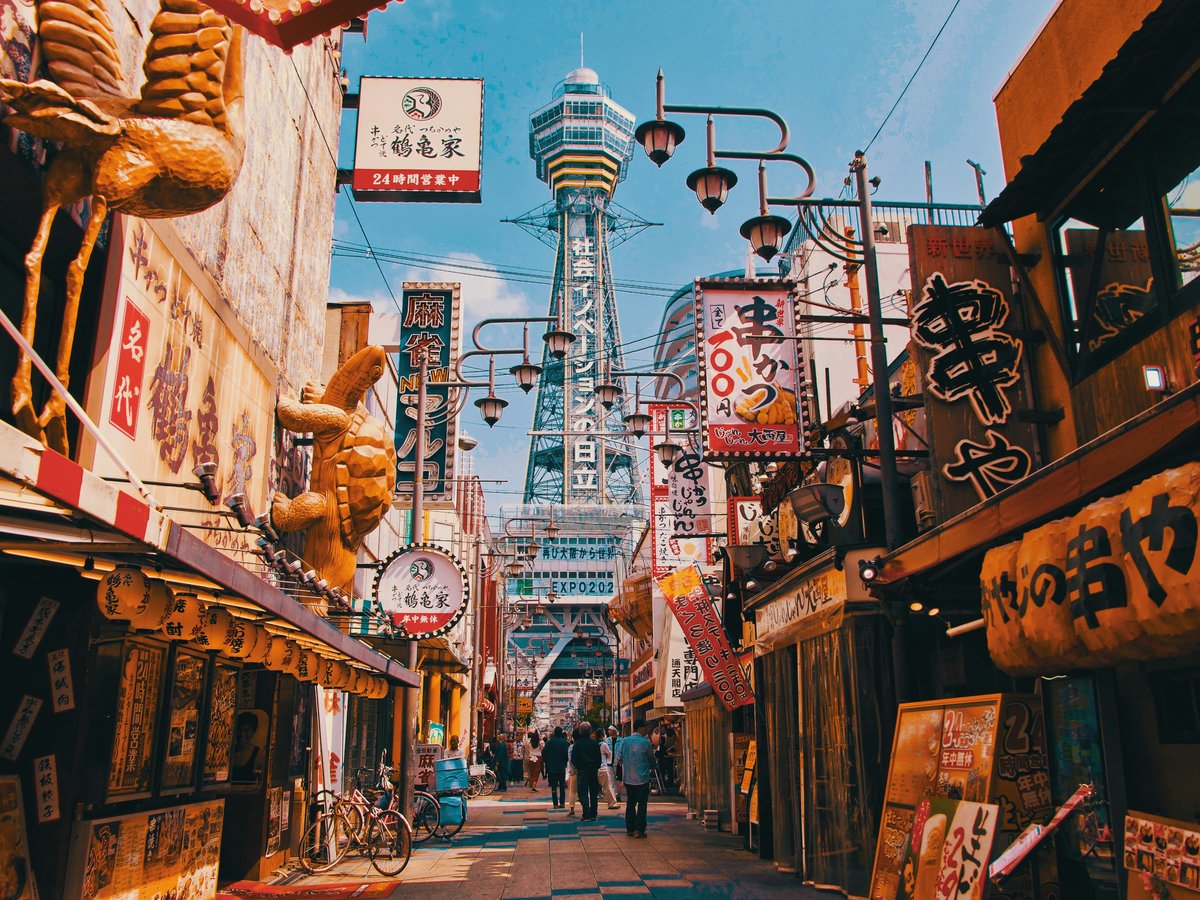
foodOctober is when Osaka's street food and izakaya scene shifts to autumn mode. In Shinsekai, the kushikatsu shops add seasonal ingredients like lotus root and chestnuts to their skewer menus. Ura-Namba (the tangle of small alleys behind Namba station) has a concentration of standing bars and tiny izakaya where sanma, matsutake, and seasonal sashimi appear on handwritten daily menus. The cooler evening air makes the walking between stops far more pleasant than summer.
Autumn ingredients peak in October, and the cooler temperatures make spending hours walking between food stalls and izakaya comfortable rather than endurance-testing.Osaka Castle Park afternoon walk
sightseeingThe park surrounding Osaka Castle spans about 106 hectares and is genuinely pleasant in October. The ginkgo trees along the main approach begin turning yellow by late month, and the moat reflects the changing light in ways that reward slow walking. The castle tower itself is a 1931 concrete reconstruction: worth seeing from outside, though the interior museum is skippable if you're short on time. The Nishinomaru Garden on the west side is quieter and often overlooked.
October's mild 23°C days make the park's long walking paths enjoyable instead of grueling. Ginkgo trees begin turning, the summer haze lifts for clearer views of the castle against blue sky, and foot traffic is well below spring and November levels.Booking tipThe park is free and open; Nishinomaru Garden charges a small entry fee. Weekday mornings are the quietest.
Day trip to Nara for early autumn color
day tripNara is about 35 minutes from Osaka's Namba station on the Kintetsu line, and October is one of the better months to go. The deer in Nara Park are shedding their summer coats, the park's maple trees start showing color by late month, and the crowds are lighter than during November's foliage peak. Todai-ji and Kasuga Taisha are both more pleasant to visit at comfortable temperatures. The walk through the forest path behind Kasuga Taisha is particularly good in the slanting autumn light.
Comfortable temperatures for the considerable walking Nara requires, with early autumn color in the park and significantly fewer visitors than the November foliage peak or spring deer-and-cherry-blossom surge.Booking tipNo reservations needed. Take the Kintetsu Nara Line from Osaka-Namba: it's faster and drops you closer to the park than JR.
Sake brewery visits in Sakai
food and drinkSakai, Osaka's southern neighbor city, has a centuries-old sake brewing tradition. Several breweries open for tours in autumn as the new brewing season begins with the fresh rice harvest. The connection between shinmai and new-season sake is direct: October is when brewers start working with the year's crop. A few of the smaller operations in Sakai offer tastings that are less polished but more genuine than the big-name Fushimi breweries in Kyoto.
The new sake brewing season kicks off in October with the arrival of shinmai rice. Breweries are actively producing, and some offer harvest-season tours and tastings of shiboritate (freshly pressed, unpasteurized) sake available only this time of year.Booking tipCheck individual brewery websites for tour schedules: most require advance reservation and some only run on specific weekdays.
Cosmos flower viewing at Expo '70 Commemorative Park
natureThe sprawling park in Suita: built on the 1970 World Expo grounds, still anchored by Taro Okamoto's Tower of the Sun sculpture: plants massive cosmos flower fields that peak in October. The flowers cover broad meadows in pink, white, and orange, and the park is large enough that it rarely feels crowded. It's a genuinely pleasant half-day outing that most overseas visitors skip entirely.
Cosmos flowers bloom from late September through October, hitting their peak color in mid-to-late October. The mild weather makes the park's wide open spaces comfortable to explore.Booking tipTake the Osaka Monorail to Banpaku-Kinen-Koen Station. Entry fee is modest. Weekday visits are notably quieter.
Evening canal walk and street food in Dotonbori
food and nightlifeDotonbori's neon-lit canal is admittedly touristy, but October evenings transform the experience. The cooler air (around 15–18°C after sunset) makes standing in line for takoyaki at a stall along the canal enjoyable instead of sweat-inducing. The reflections off the water are sharper in the clearer autumn air. Walk south from the main strip into the quieter backstreets of Ura-Namba for a different energy.
October's cooler evenings make the outdoor street-food experience far more pleasant than summer, and the thinner shoulder-season crowds mean shorter waits at popular stalls.Sumiyoshi Taisha autumn visit
cultureOne of Japan's oldest shrines, Sumiyoshi Taisha sits in a residential area south of Tennoji and feels completely removed from the tourist circuit. The iconic arched Sorihashi bridge, the gravel-and-pine grounds, the distinctive Sumiyoshi-zukuri architecture: it all hits differently in October's softer light. The shrine holds its autumn festival (Hounen Matsuri) in mid-October with traditional performances and food stalls.
The autumn festival brings traditional performances and offerings, but even outside festival days, the shrine's pine-tree grounds and gravel paths are at their most photogenic in October's angled afternoon light.What to eat in October
In season: fruit
Kaki (Japanese persimmon)
Japanese persimmons hit their sweetest in October. The fuyu variety is firm enough to slice and eat like an apple: you'll see them at every fruit stand and supermarket. The hachiya type, softer and richer, shows up at better fruit shops in Tennoji and Namba. Both are at their best right now, with that particular honeyed sweetness that fades by December.
On menus now
Sanma (Pacific saury)
Autumn's signature fish in Japan, grilled whole over charcoal with a squeeze of sudachi citrus. The fat content peaks around October, giving the flesh a rich, almost buttery quality you won't find in summer. The smell of sanma smoking on a grill near Kuromon Market or in an izakaya in Ura-Namba is one of those sense-memories that sticks.
Street food peaks
Momiji tempura
Deep-fried maple leaves, dipped in a light sweet batter: a street snack almost entirely unique to Minoo, the forested park suburb north of Osaka. Vendors along the walking path to Minoo Falls make them fresh, and the tradition goes back well over a century. More dessert than savory, with a satisfying crunch. You likely won't encounter this anywhere else.
In markets
Matsutake mushrooms
Japan's most coveted wild mushroom, foraged from pine forests and available for a brief window in autumn. October is the heart of the season. You'll find it in dobin mushi (a fragrant clear soup steamed in a clay teapot) or grilled simply with salt. The earthy, pine-resin aroma is completely unlike any other mushroom. Pricey, but ordering it once is worth the experience.
Kuri (chestnuts)
Roasted chestnuts appear at street stalls across the city, and kuri gohan (rice cooked with whole chestnuts) shows up on izakaya and home-cooking menus as the defining autumn comfort dish. Wagashi shops in Nakanoshima and Shinsaibashi produce kuri manju and mont blanc-style sweets that sell out by afternoon.
Shinmai (new harvest rice)
Japan's new rice crop arrives in October, and the difference from stored rice is surprisingly noticeable: slightly sweeter, more fragrant, with a stickier, glossier texture. Any decent sushi counter, donburi shop, or onigiri stand will be using shinmai by mid-month, and some places make a point of advertising it. Worth paying attention to.
Regular events in October
Sports Day (スポーツの日)Free
National holiday on the second Monday of October. Some museums and cultural facilities offer free or discounted entry, public parks host community sports events, and transit is slightly busier than a typical weekday as locals take advantage of the day off. Worth knowing about for scheduling: popular spots will be busier than a normal Monday.
Second Monday of OctoberKishiwada October Danjiri FestivalFree
A smaller but still intense follow-up to the famous September Danjiri Matsuri, held in different neighborhoods of Kishiwada. Massive wooden festival floats weighing around four tons are pulled through narrow streets at speed, with teams of young men riding on top. Less chaotic than the September main event but still a raw, physical spectacle with real energy. Kishiwada is about 25 minutes south of Namba on the Nankai line.
First weekend of OctoberSumiyoshi Taisha Autumn Festival (宝之市神事)Free
An autumn harvest thanksgiving observance at one of Osaka's most important shrines. Traditional kagura dance performances, seasonal offerings, and food stalls around the shrine grounds. Smaller and more contemplative than the summer festival, with fewer tourists and a distinctly local atmosphere.
Mid-OctoberCosmos Festa at Expo '70 Commemorative Park
The park's annual cosmos flower celebration runs through most of October, with the broad flower meadows at peak bloom. Occasional weekend events include craft markets and food stalls alongside the flower fields. The Tower of the Sun provides a striking backdrop.
Early October through early NovemberBest places this October
Minoo Park (箕面公園)
natureA forested ravine with a 2.7 km trail leading to a 33-meter waterfall, lined with Japanese maples that begin turning in late October. The momiji tempura vendors along the lower trail are a unique Osaka tradition. The park is free and accessible via Hankyu Railway: about 30 minutes from Umeda.
MinooOsaka Castle Park (大阪城公園)
parkThe castle's massive grounds are at their most pleasant in October. Ginkgo trees along the approach begin turning gold by late month, and the Nishinomaru Garden on the west side (often empty on weekdays) offers a quieter view of the castle tower across the inner moat. The park is free; garden and castle tower have small entry fees.
Chuo-kuNakanoshima Park and Rose Garden
parkThe narrow island between the Dojima and Tosabori rivers has a public rose garden that puts on a second bloom in October. About 3,700 rose bushes flower through the month in a setting that feels unexpectedly peaceful given that it's sandwiched between Osaka's business district. Free entry. The surrounding Nakanoshima district has some of the city's best architecture: the old public hall, the central library, the newer art museum.
NakanoshimaSumiyoshi Taisha (住吉大社)
shrineThe oldest shrine in Osaka, with a distinctive architectural style found almost nowhere else and a famous arched vermillion bridge over a pond. Quieter than Kyoto's major shrines, with a residential neighborhood atmosphere. The autumn festival in mid-October adds energy without overwhelming the grounds.
SumiyoshiKuromon Market (黒門市場)
marketOsaka's central market has shifted over the years from a strictly wholesale fish market to a mix of local shoppers and visitors, but the quality of the seafood, produce, and prepared food is still high. October brings autumn seasonal items (persimmons, chestnuts, fresh sanma) to the stalls. Go early on a weekday morning for the closest thing to the old market atmosphere.
Namba/NipponbashiExpo '70 Commemorative Park (万博記念公園)
parkSprawling parkland on the former 1970 World Expo site in Suita, anchored by Okamoto Taro's Tower of the Sun sculpture. The cosmos flower fields peak in October, and the Japanese Garden within the park begins its autumn transition. Large enough that even on busy weekends you can find a quiet corner.
SuitaShitennoji Temple (四天王寺)
templeFounded in 593 and considered Japan's oldest officially administered temple. The monthly flea market on the 21st and 22nd draws vendors selling antiques, secondhand kimono, ceramics, and street food. In October, the market benefits from comfortable browsing weather: a marked improvement over the summer edition. The temple grounds and five-story pagoda are worth seeing on their own.
Tennoji
Your packing checklist
Tick items off as you pack. Your progress saves in this browser.
All packed — have a great trip.
Insider tips
Shitennoji's monthly flea market falls on the 21st and 22nd: the October edition is one of the most comfortable for browsing, and the secondhand kimono vendors in particular have better autumn stock. Arrive by 8:00 for first pick; by 10:00 the aisles get tight.
The Nakanoshima rose garden's autumn bloom peaks in mid-to-late October and is completely free. Most visitors heading to Nakanoshima go to the art museum or the old public hall and walk right past it. It's one of those places that's popular with local office workers on lunch breaks but barely registers with visitors.
If you're heading to Minoo for the foliage and momiji tempura, take the Hankyu line to Minoo Station and walk from there: the trail starts almost immediately. Skip weekends if you can; the trail is narrow in places and gets genuinely congested on Saturday and Sunday afternoons in late October.
The standing bars (tachinomiya) in Tennoji and around Shinsekai are where a lot of Osaka's drinking culture lives: cheaper, livelier, and more local than the Dotonbori tourist strip. October evenings are warm enough to stand outside with a beer and kushikatsu without needing a coat. Many of these places have no English menu; pointing at what others are eating works fine.
Sports Day (second Monday of October) means some museums and facilities offer free entry or extended hours. Osaka Museum of History and the National Museum of Art in Nakanoshima have both done this in past years. Worth checking their websites a week before the holiday.
Avoid these mistakes
- Arriving in October expecting peak autumn foliage and feeling disappointed when the maples are still mostly green. Osaka's koyo peaks in mid-to-late November, not October. What you get in October is the beginning of the transition: patches of color, golden ginkgo leaves, a preview. Adjust your expectations and you'll appreciate what's there rather than mourning what isn't.
- Ignoring typhoon forecasts because the sky looks clear. Late-season typhoons can develop and track toward Kansai with less than a week's warning. JR and private rail lines will suspend service pre-emptively, and Kansai International Airport has historically flooded during severe storms. Check the JMA forecast every few days and keep at least one indoor backup plan per day.
- Packing for full autumn when early October still has a summery edge: daytime highs of 23–24°C in direct sun can feel warm, and the humidity is noticeable. First-time visitors often overdress and end up carrying a coat they never wear. Pack for layering, not for cold.
- Spending the entire trip in the Dotonbori–Shinsaibashi tourist corridor and missing Osaka's actual neighborhood character. Shinsekai, Tennoji, Nakanoshima, and Ura-Namba are all within easy train or walking distance and offer a completely different texture: less polished, more local, and often better food at lower prices.
Practical tips for October
Book hotels 3–4 weeks ahead for October stays, especially if your dates overlap with Sports Day weekend or fall on a Friday–Saturday. The Namba and Shinsaibashi areas fill up first; Tennoji and Shin-Osaka offer lower rates and are well-connected by metro. JR Kansai-area trains and Osaka Metro run on normal schedules, but check for typhoon-related suspensions during any rainy stretches. Most temples and shrines close grounds by 17:00, though the surrounding parks often stay accessible later. October is still warm enough that dress codes are relaxed, no temple will turn you away in shorts and sandals, though covered shoulders are appreciated at more formal shrines like Sumiyoshi Taisha. ICOCA or Suica IC cards work on all Osaka transit and at most konbini and vending machines: load one at the airport and avoid buying individual tickets for each ride. Restaurant reservations are generally unnecessary except for high-end kaiseki spots in Kitashinchi; most izakaya and casual places in Namba and Shinsekai are walk-in friendly, especially on weeknights.
FAQ
Is October a good time to visit Osaka?
October is one of the best months to visit Osaka. The brutal summer heat has broken, with comfortable daytime temperatures around 23.5°C (74°F) and cool evenings near 15°C (59°F). Autumn food season is in full swing, hotel prices haven't hit the November foliage premium yet, and the crowds are noticeably thinner than cherry blossom season or Golden Week. The main trade-off is that you're still technically in typhoon season, and autumn foliage won't peak until November, but for overall comfort, value, and culinary timing, October ranks as roughly the second-best month of the year.
What is the weather like in Osaka in October?
Expect daytime highs around 23.5°C (74°F) and overnight lows near 15.2°C (59°F). Humidity is still present at about 76% but no longer oppressive. Rain falls on approximately ten days of the month, totaling about 135mm: usually in passing spells rather than all-day downpours. Early October can still feel summery in direct sun; by late month, evenings have a noticeable autumn chill. Pack layers rather than committing to either summer or autumn clothing.
Is Osaka crowded in October?
Moderately so. October sits in a sweet spot between the summer lull and the November foliage rush. Popular spots like Osaka Castle Park and Dotonbori see steady visitor numbers but rarely the shoulder-to-shoulder density of cherry blossom season or the November koyo peak. Sports Day weekend (second Monday of October) brings a bump in domestic tourism. Weekdays are noticeably calmer than weekends across the board.
Can you see autumn leaves in Osaka in October?
You'll catch the very beginning of the season. Ginkgo trees start turning gold by late October, and some early-changing maples at Minoo Park and Osaka Castle Park show patches of orange and yellow. But honest answer: if fiery red momiji is what you're after, November is the month. October gives you a preview (beautiful in its own right, with green canopies punctuated by early color) but it's not the full show.
Are there typhoons in Osaka in October?
October is the tail end of typhoon season, and while Osaka rarely takes a direct hit, it happens. More commonly, storms passing further south bring bands of heavy rain and wind to the Kansai region, and rail operators will pre-emptively suspend service when conditions warrant. The risk decreases through the month: late October is substantially safer than early October. Check the Japan Meteorological Agency (JMA) forecasts regularly, have indoor backup plans, and keep your schedule flexible enough to shift outdoor activities by a day if needed.
Things to Do in Osaka in October
 Free cancellation
 Osaka Kickstart: Hotspots & Hidden Gems Tour
Day trip: free cancellation.
via Viator Free cancellation
 Sushi Making Osaka Roll and Authentic Japanese Sushi Class
Cooking class: 1.7 hours, free cancellation.
via Viator Free cancellation
 Ultimate Osaka Walking Tour: Castle, Dotonbori, Gems & Lunch
Day trip: free cancellation.
via Viator Free cancellation
 Kyoto Day Tour: Fushimi Inari, Arashiyama, Kinkaku-ji & Kiyomizu
Day trip: 10 hours, free cancellation.
via Viator Free cancellation
 Osaka Local Foodie Walking Tour in Dotonbori and Shinsekai
City tour: 3 hours, free cancellation.
via Viator Free cancellation
 From Kyoto / Osaka: Kyoto Must-see Spots & Nara Park One Day Tour
Day trip: 9 hours, free cancellation.
via ViatorFind a flight to Osaka
Live fares to Osaka appear here once cookies are accepted.
Last verified by automated review (v1.7.2) on . What is automated review?