Compare every Japan city in February →
Stay in Osaka in February
125 hotels in the Trip.com pool for Osaka, from US$13 a night.
Opens Trip.com on Fri 5 Feb to Sun 7 Feb 2027; change the dates there.
February in Osaka is cold. There's no getting around that. Daytime temperatures hover around 9.9°C (50°F), and once the sun drops, it slips close to freezing: 1.4°C (35°F) on a typical night. But here's the thing worth knowing before you write off the month entirely: this is one of the quietest periods to explore a city that normally thrums with tour groups, and the temple celebrations for Setsubun on February 3 offer something you simply won't see during peak season. Monks at Sumiyoshi Taisha hurl roasted soybeans into crowds while celebrities join the ritual at Shitennoji. The smell of roasting beans carries across the cold temple grounds. It's strange and joyful and distinctly Japanese.
The plum blossoms at Osaka Castle Park tend to start opening in the last week of the month: pale pink and white petals against grey winter branches, a quiet preview of the cherry blossom spectacle that will overwhelm the city in April. You'll likely have Nishinomaru Garden nearly to yourself.
Is it the best time to visit? Honestly, no: that belongs to April or October, when the weather cooperates and the city is at its most photogenic. But February has a stripped-back quality that some travelers genuinely prefer. The air carries the clean bite of winter. You can walk into any restaurant along Dotonbori without a wait. Hotel rates drop well below the annual average. If you pack properly and come with realistic expectations, you might find you enjoy the city more without the crowds pressing in from every side.
Why visit in February
- Hotel rates tend to run 20-35% below the annual average, with business hotels in Namba and Umeda dropping to genuinely cheap levels: this is about as affordable as Osaka gets
- Setsubun celebrations on February 3 bring temple ceremonies you won't find at any other time of year, particularly the elaborate bean-throwing at Sumiyoshi Taisha and Shitennoji where the energy is contagious
- Crowds at major sites are noticeably thin: Osaka Castle, Kuromon Market, and Dotonbori all feel more walkable than during cherry blossom season or summer holidays
- Late February marks the start of ume (plum blossom) season, with early blooms appearing at Osaka Castle Plum Grove before the tourist wave arrives in March
- Winter is peak fugu season: Osaka's Shinsekai neighborhood has some of the best and most affordable blowfish restaurants in Japan, and February is right in the sweet spot
Worth knowing
- It's genuinely cold, especially after dark: temperatures near freezing mean outdoor sightseeing gets uncomfortable without proper layers, and the wind off Osaka Bay can cut right through a light jacket
- Daylight is short, with sunset around 5:30 PM, which limits how much outdoor sightseeing you can pack into a day
- Some outdoor attractions and rooftop spots are less appealing in the cold: the Umeda Sky Building observation deck at 8°C with wind is a different experience than in October
- Rain is moderate at around 61mm across roughly 7 days, but a cold February rain in Osaka feels more miserable than the same amount in a warmer month
Best for
Think twice if
February in Osaka is solidly winter. Expect dry cold rather than the bone-chilling damp of some coastal cities, though the wind can make 10°C feel more like 5°C. Mornings tend to be the coldest, with occasional frost on the ground in parks like Tennoji. Skies are often grey and overcast for stretches, punctuated by crisp blue days that make the city look sharp and clean. Rain comes in short spells: roughly 7 days see measurable precipitation, typically light and passing rather than all-day downpours. Snow is rare in Osaka proper but not unheard of; a dusting might appear once or twice and melt by noon.
Seasonal caution
- Nighttime temperatures regularly dip near freezing at 1.4°C (35°F), and wind chill along the waterfront and elevated observation decks can push the feels-like temperature below 0°C: dress accordingly if you're heading to spots like the Umeda Sky Building or Tempozan area after dark
Year-round climate
Averages from the last 5 years.
| Month | Avg high (°C) | Avg low (°C) | Rainfall (mm) |
|---|---|---|---|
| Jan | 9 | 1 | 42 |
| Feb | 10 | 1 | 61 |
| Mar | 15 | 5 | 123 |
| Apr | 20 | 10 | 158 |
| May | 23 | 14 | 235 |
| Jun | 27 | 20 | 253 |
| Jul | 32 | 25 | 202 |
| Aug | 33 | 26 | 206 |
| Sep | 30 | 23 | 197 |
| Oct | 24 | 15 | 135 |
| Nov | 18 | 9 | 97 |
| Dec | 12 | 3 | 44 |
Holidays and festivals in February
Public holidays
- Foundation Day(建国記念の日)11 February 2027
- The Emperor's Birthday(天皇誕生日)23 February 2027
Headline events
Setsubun at Sumiyoshi Taisha and Shitennoji
February 3
Setsubun marks the eve of spring on the traditional Japanese calendar, and Osaka's major temples host elaborate mamemaki (bean-throwing) ceremonies to drive out evil spirits. At Sumiyoshi Taisha, one of Osaka's oldest shrines, priests and invited celebrities hurl roasted soybeans and small prizes into excited crowds while taiko drums pound in the cold air. Shitennoji holds its own ceremony with a procession of oni (demon) performers that's equal parts theatrical and earnest. The atmosphere is festive and a little chaotic: families, elderly couples, and small children all jostling for lucky beans. You'll smell roasted soybeans and incense from the temple gates.
Best things to do in February
Setsubun temple hopping
culturalFebruary 3 brings Setsubun ceremonies to temples and shrines across the city, and you can hit several in a single day. Start at Sumiyoshi Taisha in the south for the main event with celebrity bean-throwers, then work your way to Shitennoji for the oni procession. Smaller neighborhood shrines hold their own quieter ceremonies: less spectacle, more intimacy, and you might end up chatting with locals who've been coming for decades.
Setsubun falls on February 3 every year and the ceremonies only happen on that single dayEarly plum blossom viewing at Osaka Castle
natureThe plum grove in Osaka Castle Park holds over a hundred trees of different varieties, and the earliest bloomers tend to start opening in the last week of February. The fragrance is subtle and sweet: you have to get close to catch it. Unlike cherry blossom season, there are no crowds, no tarps staked out at dawn, no selfie stick forests. Just you and the blossoms and the castle walls behind them.
Early-blooming ume varieties typically open in late February, before the March peakWinter onsen day trip to Arima Onsen
relaxationArima is one of Japan's oldest hot spring towns, tucked into the mountains about 30 minutes from central Osaka by train. February is arguably the best month for it: the cold makes the transition from frigid air to steaming mineral water feel almost electric on your skin. The town's kinsen (gold spring) is iron-rich and rust-colored, with a distinctive metallic tang. The narrow streets between bathhouses smell of sulfur and grilled mochi.
Cold temperatures make the contrast between winter air and hot spring water most satisfyingEating through Shinsekai's winter menu
foodShinsekai looks like a fever dream of neon signs and retro Osaka atmosphere, and February is when its restaurants lean hardest into winter comfort food. Fugu specialists line the streets: look for the pufferfish lanterns hanging outside. The kushikatsu (deep-fried skewers) shops run year-round, but the winter additions like oyster and root vegetable skewers are seasonal. The whole neighborhood smells of frying oil, dashi, and cold air.
Peak fugu season overlaps with the lowest tourist crowds, meaning shorter waits and fresher stockExploring Nakanoshima in winter light
sightseeingThe island district between the Dojima and Tosabori rivers has a quiet grandeur in February. The rows of bare trees along the riverbanks, the neoclassical facade of the Central Public Hall, the art museums: it all photographs well in flat winter light. The area around the Museum of Oriental Ceramics and the Science Museum tends to be nearly empty on weekday mornings.
Low crowds and soft winter light give this normally busy district a contemplative qualityShopping the Tenjinbashi-suji covered arcade
shoppingAt roughly 2.6 kilometers, this is one of the longest covered shopping streets in Japan. February is when it shines: the roof keeps you out of the cold and rain, and the shops run winter sales through the month. The smell of taiyaki (fish-shaped cakes filled with hot red bean paste) drifts from the stalls, and the warmth inside the arcade is a relief after the cold streets outside.
Winter sales run through February, and the covered arcade provides shelter from the cold and rainNight illuminations at Osaka Castle
sightseeingThe castle runs evening illumination events through parts of winter, and seeing it lit against a dark February sky is genuinely striking. The moat reflects the lights, the stone walls glow warm against the cold air. Far fewer people than during cherry blossom light-ups, so you can find a quiet spot along the moat to take it in.
Winter illumination schedules often extend into February, and low crowds mean unobstructed viewsWhat to eat in February
In season: fruit
Strawberries (ichigo)
February is the heart of strawberry season in the Kansai region. Nara and surrounding prefectures grow several prized varieties: you'll find them at department store food halls in Umeda and Namba, served whole, in parfaits, or as daifuku (wrapped in mochi). The sweetness and fragrance of a peak-season Japanese strawberry is genuinely different from what most visitors are used to.
On menus now
Fugu (blowfish)
Winter is peak fugu season in Osaka, and February sits right in the sweet spot. Shinsekai is the neighborhood to head to: the restaurants along Janjan Yokocho alley serve fugu sashimi (tessa), hot pot (tecchiri), and deep-fried fugu at prices well below what you'd pay in Tokyo. The flesh has a clean, delicate flavor and a slight chewiness that's unlike any other fish.
Kani nabe (crab hot pot)
February is prime crab season in the Kansai region, with snow crab (zuwaigani) at its fattest. Dotonbori's famous mechanical crab sign marks just one of dozens of restaurants serving steaming crab hot pot: the broth takes on a rich, sweet depth from the crab shells. The warmth of the pot is as much the draw as the flavor when it's 5°C outside.
Oden
Osaka-style oden tends to use a lighter, kelp-based dashi compared to the soy-heavy Tokyo version. Convenience stores and yatai stalls both serve it, but the sit-down oden specialists in Tenma and Kyobashi are where the depth of flavor shows. The daikon absorbs the broth until it's almost translucent. A cold-weather staple that warms you from the inside.
Kasujiru (sake lees soup)
A thick, warming soup made with sake kasu: the lees left over from sake production. It has a slightly sweet, fermented flavor and a creamy texture. Osaka's proximity to the Nada sake-brewing district in Kobe means the sake lees tend to be fresh and high quality. You'll find it at izakayas and home-style restaurants, usually loaded with salmon, root vegetables, and tofu.
Regular events in February
Osaka International Women's MarathonFree
One of Japan's major women's marathon events, typically held in late January or early February. The course winds through central Osaka, and spectators line the route despite the cold: bundled up with hand warmers, cheering runners past landmarks like Osaka Castle and Nakanoshima.
Late January to early FebruaryToka Ebisu afterglow at Imamiya Ebisu ShrineFree
While the main Toka Ebisu festival runs in January, the shrine in Namba stays decorated and active into early February. The bamboo branch good-luck charms (fukuzasa) are still available, and the commercial energy of the place (it's a shrine to the god of business) is palpable. Worth a stop if you're nearby.
Early FebruaryValentine's Day chocolate cultureFree
Japan's Valentine's Day tradition runs in reverse from Western norms: women give chocolate to men, with elaborate handmade varieties alongside department store luxury boxes. The basement food halls in Hanshin and Takashimaya department stores in Umeda become chocolate wonderlands for most of February, with limited-edition collections from Japanese and international chocolatiers. The visual displays alone are worth seeing.
Throughout February, peaking February 14Best places this February
Sumiyoshi Taisha
shrineOne of Japan's oldest Shinto shrines, with a distinctive architectural style that predates Chinese Buddhist influence. The arched Sorihashi bridge over the pond is one of Osaka's most photographed spots. In February, the Setsubun ceremony on the 3rd is the main draw, but the shrine is worth visiting any day: the grounds are peaceful, the gravel crunches underfoot, and the vermilion buildings stand out sharply against grey winter skies.
SumiyoshiOsaka Castle and Plum Grove
parkThe castle itself is a concrete reconstruction housing a museum, but the grounds are the real attraction in February. The plum grove southwest of the main tower has over a hundred trees, with early varieties blooming from late February. Nishinomaru Garden, with its view of the castle keep framed by bare branches, is nearly empty this time of year.
ChuoShinsekai
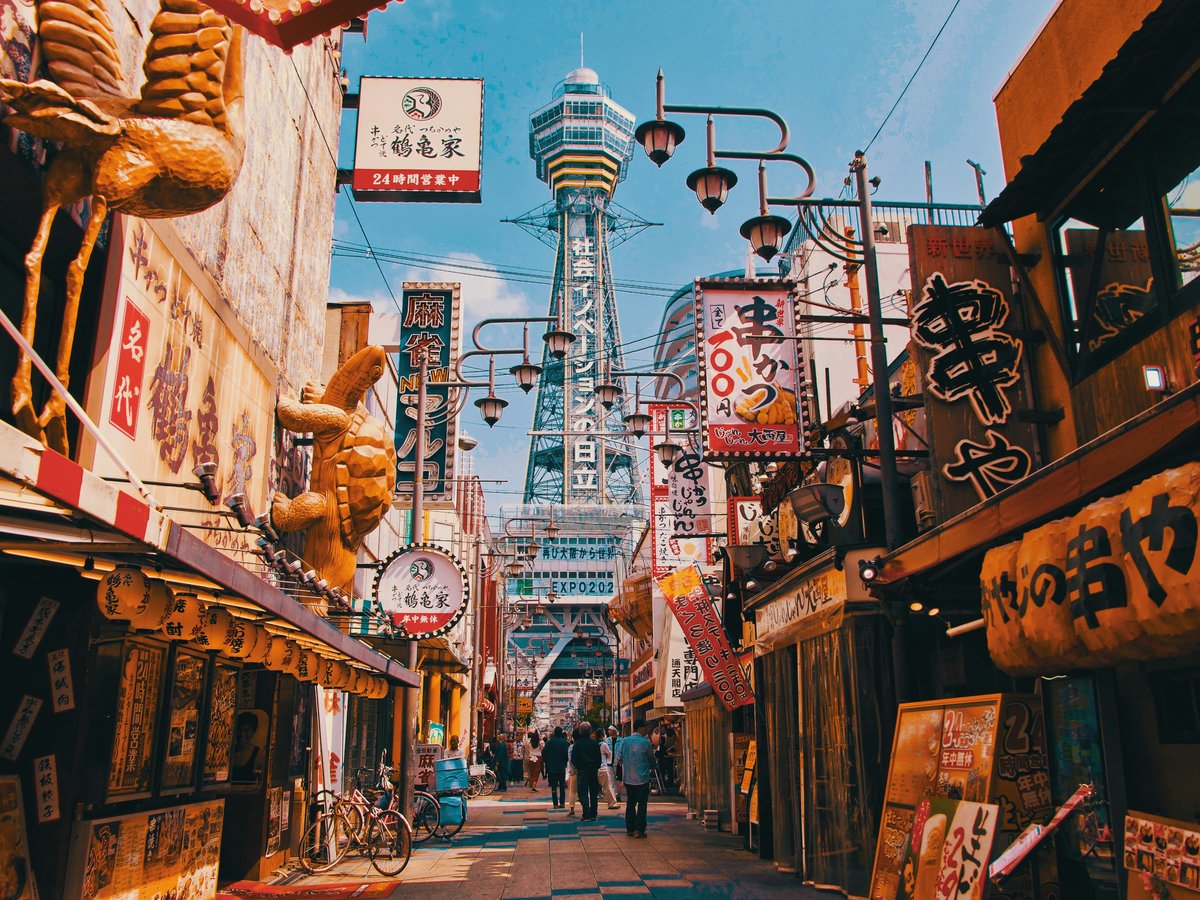
neighborhoodA retro entertainment district that feels like it's been frozen in time since the 1960s. The Tsutenkaku Tower rises above streets packed with kushikatsu restaurants, fugu specialists, and small bars. In February, the neon signs reflect off wet pavement after rain, and the lack of tourist crowds means you can hear the neighborhood: the clatter of kitchens, the hiss of deep fryers, locals calling out to each other.
NaniwaKuromon Market
marketSometimes called Osaka's kitchen, this covered market stretches for several blocks and sells fresh seafood, produce, and street food. February means fewer tourists competing for the grilled scallops and sea urchin. The vendors are more relaxed, more likely to chat. The market smells of charcoal-grilled seafood and the slightly briny tang of fresh fish on ice.
NippombashiNakanoshima Museum of Art
museumOpened in 2022, this striking black building on the island between Osaka's two rivers holds a strong collection of modern and contemporary Japanese and Western art. On a cold February day, spending a few hours inside with the art and the warmth is a genuine pleasure. The building itself is worth seeing: a dark, angular form that contrasts with the neoclassical Central Public Hall next door.
NakanoshimaShitennoji Temple
templeFounded in 593, this is one of Japan's oldest Buddhist temples. The main hall and five-story pagoda are reconstructions, but the layout follows the original plan. The monthly flea market on the 21st and 22nd draws antique dealers and food stalls. In February, the Setsubun ceremony with its oni procession is theatrical and slightly eerie: masked demons chased through the cold by priests.
TennojiSpa World
onsenA massive hot spring complex in Shinsekai with themed bathing floors: one floor styled after European spas, another after Asian bathing cultures. In February, it's a perfect escape from the cold. The outdoor rooftop pool steams in the frigid air. The whole building is warm and slightly humid, and after a few hours you forget it's winter outside.
NaniwaTempozan Harbor Village
attractionThe waterfront area around the Osaka Aquarium Kaiyukan. The aquarium itself is one of the largest in the world, and February's thin crowds mean you can linger at the massive central tank without being jostled. The harbor walk is bracing in the cold (wind comes straight off the bay) but the views across to the port are clear on crisp winter days.
Minato
Your packing checklist
Tick items off as you pack. Your progress saves in this browser.
All packed — have a great trip.
Insider tips
Convenience stores are your secret weapon in February: they sell disposable kairo hand warmers, hot canned coffee, steaming nikuman (meat buns), and even thermal socks. The heated seating areas in some Lawson and FamilyMart locations make decent warming stations between sightseeing stops.
If you're visiting for Setsubun, arrive at Sumiyoshi Taisha at least an hour before the main ceremony starts. The crowd fills in fast, and positioning matters: the beans and prizes get thrown in specific directions, and regulars know exactly where to stand.
The underground shopping arcades (Namba Walk, Whity Umeda, Diamor Osaka) connect major stations and run for blocks beneath the surface. In February, they're climate-controlled alternatives to walking above ground, and the restaurants down there tend to be less touristy than their street-level neighbors.
For plum blossoms in late February, check Osaka Castle Park's official updates before visiting: the bloom timing shifts by a week or more depending on the winter's temperatures. An early warm spell can push first blooms into mid-February; a cold snap delays them into March.
The Tennoji area is underrated in winter: Abeno Harukas has indoor observation floors with panoramic views (warmer than the Umeda Sky Building's open-air deck), and the adjacent Tennoji Park and zoo are nearly empty on February weekdays.
Avoid these mistakes
- Underdressing for the evening cold: visitors who pack for 10°C daytime temperatures forget that it drops to near freezing after dark, and the walk back to the hotel from dinner can be genuinely uncomfortable without proper layers
- Planning too much outdoor time: February daylight ends around 5:30 PM, and the cold means you burn energy faster. Build in indoor stops (museums, department stores, covered markets) to break up the day
- Skipping Shinsekai because it looks rough around the edges: the neighborhood's retro, slightly gritty character is part of its charm, and the fugu restaurants here are some of the best-value in Japan
- Assuming plum blossoms will be in full bloom: late February might catch the earliest flowers, but full bloom typically comes in March. Check forecasts and manage expectations
- Buying a rail pass for Osaka-only trips: if you're staying within the city, the subway and local trains are affordable enough that a Japan Rail Pass won't pay for itself. It only makes sense if you're doing significant day trips to Kyoto, Nara, or Kobe
Practical tips for February
February in Osaka calls for a layering strategy: heated interiors run warm, but stepping outside into wind chill near 0°C demands proper insulation. IC cards (ICOCA or any compatible transit card) work on all Osaka Metro lines and most buses, and they eliminate fumbling for change with cold fingers. Most temples and shrines are free to enter, though specific inner areas may have a small fee. Restaurant reservations aren't usually needed this month, even popular spots in Dotonbori and Shinsekai tend to have open seats on weeknights. If you're arriving at Kansai International Airport, the Nankai Rapi:t express to Namba takes about 40 minutes and is the most straightforward route into central Osaka. Drugstores like Matsumoto Kiyoshi stock cold-weather essentials and are open late.
FAQ
Is February a good time to visit Osaka?
It's a fair time, not the best month weather-wise, but the low crowds, cheap hotels, and winter food scene make it worthwhile if you don't mind the cold. You'll get a more local, unhurried experience than during peak season. That said, if your heart is set on cherry blossoms or warm evenings, April or October would suit you better.
How cold does Osaka get in February?
Daytime highs sit around 9-10°C (about 50°F), which is manageable with layers. Nights drop to around 1-2°C (34-35°F), and wind chill along the waterfront or on observation decks can push the feels-like temperature below freezing. It's not Hokkaido-level cold, but it's real winter: a proper coat and warm accessories are necessary, not optional.
Does it snow in Osaka in February?
Rarely. Osaka might see a light dusting once or twice during winter, but it almost never sticks or accumulates. The city sits in a relatively sheltered position along Osaka Bay. If you want snow, the mountains north of Kyoto or a day trip to the Japan Sea coast are your best bet from Osaka.
What should I eat in Osaka in February?
Winter is peak fugu season, and Shinsekai is the neighborhood for it: blowfish sashimi, hot pot, and fried fugu at prices well below Tokyo. Kani nabe (crab hot pot) is at its best with snow crab in season. Osaka-style oden with light kelp dashi is a cold-weather staple. And the strawberry season is in full swing, so department store food halls have gorgeous displays of Kansai-grown varieties.
Are there any major events in Osaka in February?
Setsubun on February 3 is the highlight: temples across the city hold bean-throwing ceremonies to mark the transition to spring on the old calendar. Sumiyoshi Taisha and Shitennoji have the biggest celebrations. Valentine's Day chocolate culture takes over department store basements for most of the month. Beyond that, February is relatively quiet on the events calendar, which is part of its appeal for some visitors.
Is it worth visiting Osaka Castle in February?
The castle grounds are genuinely pleasant in February if you dress warmly. The plum grove starts blooming in late February, and the lack of crowds means you can explore the moat walls and gardens at your own pace. The castle museum inside is a good warming stop. Mind you, the outdoor areas can feel exposed on windy days: the castle sits on a hill with little shelter from the wind.
Things to Do in Osaka in February
 Free cancellation
 Osaka Kickstart: Hotspots & Hidden Gems Tour
Day trip: free cancellation.
via Viator Free cancellation
 Sushi Making Osaka Roll and Authentic Japanese Sushi Class
Cooking class: 1.7 hours, free cancellation.
via Viator Free cancellation
 Ultimate Osaka Walking Tour: Castle, Dotonbori, Gems & Lunch
Day trip: free cancellation.
via Viator Free cancellation
 Kyoto Day Tour: Fushimi Inari, Arashiyama, Kinkaku-ji & Kiyomizu
Day trip: 10 hours, free cancellation.
via Viator Free cancellation
 Osaka Local Foodie Walking Tour in Dotonbori and Shinsekai
City tour: 3 hours, free cancellation.
via Viator Free cancellation
 From Kyoto / Osaka: Kyoto Must-see Spots & Nara Park One Day Tour
Day trip: 9 hours, free cancellation.
via ViatorFind a flight to Osaka
Live fares to Osaka appear here once cookies are accepted.
Last verified by automated review (v1.7.2) on . What is automated review?