Compare every Japan city in January →
Stay in Osaka in January
125 hotels in the Trip.com pool for Osaka, from US$13 a night.
Opens Trip.com on Fri 1 Jan to Sun 3 Jan 2027; change the dates there.
January in Osaka is defined by one thing above all else: the first week is a ghost town. Oshogatsu (Japanese New Year) shuts down the city from roughly January 1st through the 3rd, and many smaller shops and restaurants stay closed through the 5th or even longer. If you arrive expecting Dotonbori's usual sensory overload, you'll find metal shutters and silence instead. That said, there's something oddly appealing about it. The crowds thin dramatically after the holiday rush clears, temperatures hover around 9°C (48°F) during the day and dip near freezing at night, and the air carries that particular winter clarity you only get in dry, cold weather: the kind where Osaka Castle's white walls seem to glow against pale blue skies.
Once the city wakes back up around January 7th, you get Osaka at its most local. Tourists are sparse, the Toka Ebisu festival fills Imamiya Ebisu Shrine with thousands of Osakans praying for business prosperity, and the winter food scene hits its stride: fugu season is in full swing, oden carts steam on every corner in Shinsekai, and the izakayas of Kitashinchi feel warmer for the chill outside. It's not the month that lands on postcards. But if you like cities when they're being themselves rather than performing for visitors, January has a quiet honesty to it.
Why visit in January
- Hotel rates drop significantly from the autumn peak once the New Year holiday passes: mid-January through month's end is one of the cheapest windows of the year
- Clear, dry weather with only about 5 rainy days and 42mm total rainfall: far less precipitation than any month from March through November
- Fugu (blowfish) season peaks in winter, and Osaka's take on it (particularly at the concentrated cluster of fugu restaurants around Shinsekai) is arguably the best in the country
- The Toka Ebisu festival (January 9-11) at Imamiya Ebisu Shrine gives you a genuine local celebration without the tourist crowds that descend on spring and autumn festivals
- Shorter queues at Osaka Castle, Dotonbori, and Kuromon Market compared to cherry blossom season or autumn foliage months
Worth knowing
- Early January closures catch visitors off guard: many restaurants, shops, and even some attractions close January 1-3 or longer, and the city feels half-asleep
- Temperatures near or below freezing at night (average low 0.8°C / 33°F) make evening street-food walks less comfortable than in milder months
- Daylight hours are short: sunset comes before 5pm, limiting time for outdoor sightseeing and photography
- No single spectacular natural event (no cherry blossoms, no autumn color, no summer festivals) to anchor a trip around
Best for
Think twice if
Winter in Osaka is cold but manageable: think layers rather than arctic gear. Days tend to be crisp and clear with that winter-specific light that photographers appreciate. Mornings feel genuinely cold, the kind where your breath hangs visible in the air as you walk to the station. By midday the sun takes the edge off, but you'll rarely feel warm outdoors. Rain is infrequent (maybe one day a week) and tends to be light drizzle rather than sustained downpours. Wind chill along the river near Nakanoshima can make it feel several degrees colder than the thermometer suggests. Humidity sits around 73%, which sounds high but feels dry compared to the oppressive summer months.
Seasonal caution
- Overnight temperatures regularly dip below freezing, particularly in the second and third weeks of January: exposed skin and inadequate layering can make early morning shrine visits uncomfortable
- Wind chill near waterfront areas like Tempozan and along Nakanoshima can drop perceived temperature 3-5°C below actual readings
Year-round climate
Averages from the last 5 years.
| Month | Avg high (°C) | Avg low (°C) | Rainfall (mm) |
|---|---|---|---|
| Jan | 9 | 1 | 42 |
| Feb | 10 | 1 | 61 |
| Mar | 15 | 5 | 123 |
| Apr | 20 | 10 | 158 |
| May | 23 | 14 | 235 |
| Jun | 27 | 20 | 253 |
| Jul | 32 | 25 | 202 |
| Aug | 33 | 26 | 206 |
| Sep | 30 | 23 | 197 |
| Oct | 24 | 15 | 135 |
| Nov | 18 | 9 | 97 |
| Dec | 12 | 3 | 44 |
Holidays and festivals in January
Public holidays
- New Year's Day(元日)1 January 2027
- Coming of Age Day(成人の日)11 January 2027
Headline events
Toka Ebisu
January 9-11
Osaka's biggest winter festival draws over a million worshippers to Imamiya Ebisu Shrine across three days to pray for business success in the new year. The atmosphere is electric: dense crowds, the constant sound of clapping prayers, bamboo lucky rakes (fukuzasa) decorated with gold coins and sea bream, and food stalls stretching for blocks along the approach road. This is Osaka at its commercial-spiritual best, a city that has worshipped the god of prosperity for centuries.
Best things to do in January
Hatsumode at Sumiyoshi Taisha
cultureOsaka's most important shrine draws enormous crowds for the first shrine visit of the new year. The distinctive arched Taiko-bashi bridge, the crunch of gravel underfoot, the smoke from incense curling in the cold air: it's a sensory experience even if you're not religious. The approach is lined with food stalls selling amazake (sweet rice drink) and yakitori.
Hatsumode is specifically a New Year tradition: the first three days of January are when the shrine is at its most atmospheric and culturally significant.Booking tipGo early morning on January 2nd or 3rd to avoid the densest crowds. The 1st is shoulder-to-shoulder.
Fugu dining in Shinsekai
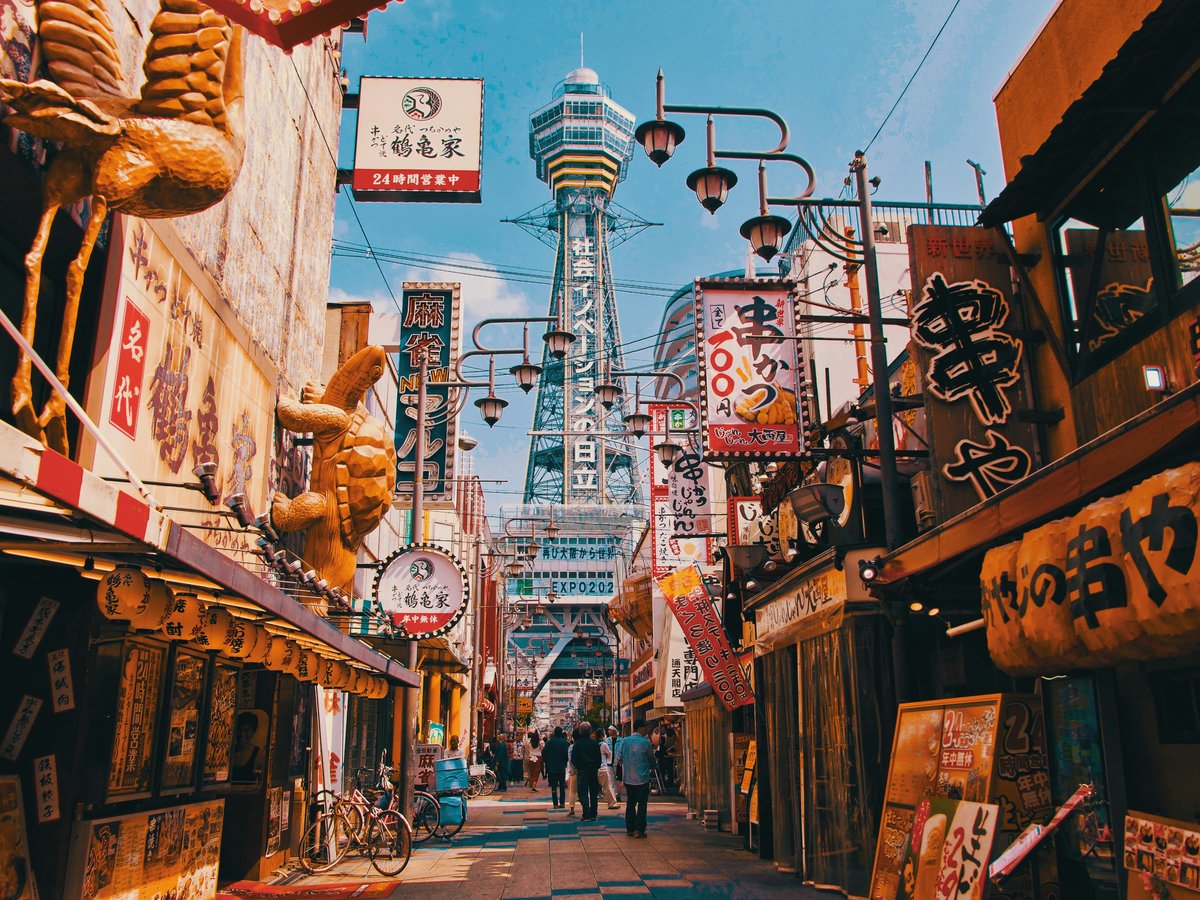
foodShinsekai's neon-lit streets are home to Japan's densest concentration of fugu restaurants. The neighborhood itself is a throwback: retro signage, the clatter of shogi parlors, tsutenkaku tower glowing overhead. Sit at a counter, watch the chef slice translucent fugu sashimi, and wash it down with hirezake (hot sake with a charred fugu fin).
Fugu is at its peak flavor in the coldest months. January's chill also makes the hot pot version (tecchiri) especially satisfying: you want that steaming broth when it's near freezing outside.Booking tipWeekday evenings are easier to walk into. Weekend dinner service at popular spots fills up, so consider arriving before 6pm or calling ahead.
Winter illuminations at Osaka Station City
sightseeingThe Umeda area around Osaka Station transforms with large-scale light installations through mid-January. The scale is impressive: thousands of LED lights reflecting off the steel-and-glass architecture of the station complex, with the cold air adding a crispness to the colors you don't get in warmer months.
Most illumination displays run through mid-to-late January before being taken down. The early sunset means you can enjoy them from late afternoon onward.Osaka Castle winter walks
sightseeingThe castle grounds are almost eerily quiet in January compared to the cherry blossom chaos of April. The bare plum trees are just starting to bud by month's end, the moat reflects a pale winter sky, and you can stand on the observation deck without jostling for position. The interior museum is heated, which becomes a genuine selling point.
Low crowds mean you can photograph the castle without hundreds of selfie sticks in frame. The winter light (low angle, warm tone) is arguably the best for photography of the white castle walls.Booking tipThe castle park is free to enter. The main tower has a modest admission fee: check current pricing at the ticket office.
Onsen day trip to Arima Onsen
day_tripA 60-minute train ride from central Osaka brings you to one of Japan's oldest hot spring towns, tucked into the mountains behind Kobe. The kinsen (gold water) baths are iron-rich and rust-colored, and the sensation of sinking into naturally heated mineral water while cold mountain air bites your face is hard to replicate anywhere else.
January cold makes the contrast between freezing outdoor air and steaming bath water at its most dramatic. The narrow streets of Arima are also far less crowded than in autumn.Booking tipSome ryokan offer day-use bathing without an overnight stay: useful if you want the experience without the full commitment.
Kuromon Market morning grazing
foodOsaka's kitchen market stretches for several blocks near Nippombashi, with vendors selling fresh seafood, grilled items, and seasonal fruit. In January the crab legs and grilled scallops are particularly good: the cold drives you from stall to stall, steaming skewer in hand, breath visible between bites.
Winter seafood (crab, oysters, uni) peaks in January. The market is also noticeably less packed than during peak tourist months, so you can browse without being swept along by the crowd.Tenjin Matsuri preparations and Tenmangu shrine visit
cultureWhile the main Tenjin Matsuri is in July, Osaka Tenmangu shrine in January has a contemplative quality. The plum grove behind the main hall starts showing the first buds in late January, and the smell of incense mixes with cold air in the covered walkways. Worth noting: the shrine's flea market on the 25th of each month is a low-key treasure hunt.
Late January catches the very earliest plum blossoms, and the monthly flea market on the 25th offers antiques, ceramics, and vintage kimono at a fraction of shop prices.Spa World in Shinsekai
relaxationA massive multi-floor bathing complex with themed floors rotating between Asian and European spa styles. The rooftop pool is heated year-round. It sounds kitschy (and parts of it are) but on a freezing January day, spending hours moving between different temperature pools and saunas is genuinely restorative.
Cold weather outside makes hot bathing culture more appealing. January's low tourist numbers also mean the pools are less crowded than in peak months.What to eat in January
In season: fruit
Mikan (satsuma mandarin oranges)
Peak citrus season fills every supermarket and convenience store with boxes of bright orange mikan from Wakayama and Ehime prefectures. The cold-weather ritual of eating mikan under a kotatsu heated table is practically a national pastime: the sweet-tart juice and the faint citrus oil on your fingers are as much a part of Japanese winter as the cold itself.
On menus now
Fugu (blowfish)
Winter is peak fugu season and Osaka (particularly the Shinsekai neighborhood) is Japan's consumption capital. The flesh has a delicate, almost sweet quality when served as translucent sashimi (tessa), and the hot pot version (tecchiri) warms you from the inside on cold January nights. The slight thrill of eating a potentially lethal fish adds something to the experience.
Kasujiru (sake lees soup)
A thick, warming soup made with sake lees from Nada and Fushimi breweries, simmered with salmon, root vegetables, and konnyaku. The lees give it a slightly sweet, fermented depth that feels like it was invented specifically for January evenings. You'll find it at izakayas and home-cooking restaurants across the city.
Street food peaks
Oden
Street-side oden carts and standing bars serve this simmered hodgepodge of daikon, eggs, konjac, and fish cakes in a kelp-based broth. January cold makes the steam rising from the pot genuinely inviting. Osaka's version tends sweeter than Tokyo's soy-heavy style.
Festival food
Ozoni
New Year mochi soup appears everywhere in early January: Osaka's version uses white miso broth with round mochi, a distinctly Kansai preparation that's richer and sweeter than the clear-broth Tokyo style. Available at department store food halls and traditional restaurants through mid-month.
Regular events in January
New Year HatsumodeFree
The first shrine and temple visits of the year. Major sites like Sumiyoshi Taisha, Shitennoji, and Osaka Tenmangu see huge crowds in the first three days, then taper off. Many locals also visit smaller neighborhood shrines: less famous but more intimate.
January 1-3Coming of Age Day (Seijin no Hi)Free
The second Monday of January celebrates those turning 20, the age of majority. Young women in elaborate furisode kimono and young men in hakama or suits fill the streets around ceremony venues. Osaka-jo Hall typically hosts the city's main ceremony: the sight of thousands of dressed-up twenty-year-olds against the castle backdrop is striking.
Second Monday of JanuaryTenmangu Monthly Flea MarketFree
Osaka Tenmangu shrine hosts a flea market on the 25th of every month. January's edition draws vendors selling vintage kimono, ceramics, calligraphy supplies, and assorted antiques. The cold keeps the crowds manageable and sometimes drives sellers to negotiate more readily.
January 25Shitennoji Flea MarketFree
Another major monthly flea market, held on the 21st and 22nd at Shitennoji temple. Larger than Tenmangu's version, with more variety: everything from old woodblock prints to used tools to Buddhist altar items. The temple grounds add atmosphere that a parking-lot flea market can't match.
January 21-22Best places this January
Sumiyoshi Taisha
shrineOne of Japan's oldest shrines and Osaka's most important: the distinctive straight-line architectural style predates Chinese-influenced shrine design. The arched bridge over the pond, the gravel paths, and the towering camphor trees create a stillness that feels particularly potent in winter quiet.
SumiyoshiShinsekai
neighborhoodThis retro entertainment district buzzes with neon signs, fugu restaurant touts, and kushikatsu joints. The area has a grittier energy than Dotonbori: more local, less polished, and that's precisely its appeal. Tsutenkaku tower presides overhead like a miniature Eiffel Tower designed by someone who'd only heard one described.
ShinsekaiNakanoshima
districtThe narrow island between the Dojima and Tosabori rivers has a European-district quality: stone-clad buildings, rose gardens dormant in winter, and the Nakanoshima Museum of Art underground with its striking exterior. Walking the riverfront on a clear January day, with the low sun reflecting off the water, is quietly beautiful.
NakanoshimaOsaka Tenmangu
shrineThe shrine of learning and scholarship, popular with students praying for exam success: January is peak prayer season as university entrance exams approach. The plum grove behind the main hall starts budding in late January, and the monthly flea market on the 25th adds a practical reason to visit.
Minami-MorimachiHozenji Yokocho
alleyA narrow stone-paved alley behind Dotonbori that feels like it belongs in a different century. The moss-covered Fudo-myo statue at Hozenji temple is perpetually wet from water offerings, and the lantern-lit lane of tiny bars and restaurants glows warmly against the January cold. Two drinks here and you forget you're in a city of 2.7 million.
NambaTempozan Harbor Village
waterfrontThe waterfront area around the Osaka Aquarium offers wide-open views across the bay. Wind chill can be sharp in January (dress warmly) but the giant Ferris wheel and harbor walks are far less crowded than in warmer months. The aquarium itself is one of the world's largest and makes a good cold-weather indoor activity.
TempozanAbeno Harukas observation deck
observationJapan's tallest skyscraper offers 360-degree views from the 58th-60th floors. January's clear, dry air means visibility is often at its best: on a good day you can see as far as Awaji Island and Mount Ikoma. The sunset view, with the city lighting up below you, peaks around 4:45pm this month.
Abeno
Your packing checklist
Tick items off as you pack. Your progress saves in this browser.
All packed — have a great trip.
Insider tips
Convenience stores are your winter survival kit: they sell hot canned coffee, kairo hand warmers, and surprisingly decent hot food from the counter. The egg sandwiches at Lawson and the fried chicken at Family Mart become genuine comfort food when you've been walking in the cold for hours.
Train stations have heated waiting areas on most platforms. If you're early for a train, step inside rather than standing on the exposed platform: the temperature difference is dramatic.
Department store basement food halls (depachika) at Takashimaya in Namba or Hankyu in Umeda are warm, free to browse, and full of seasonal specialties. They're also where locals shop for quality food: the free samples alone can constitute a light lunch.
The IC card (ICOCA in Kansai) works on virtually all transit, convenience stores, and vending machines. Loading one at the airport on arrival saves you from fumbling with coins in the cold at every ticket machine.
If Toka Ebisu interests you, go on the evening of January 9th (Yoi Ebisu) rather than the main day on the 10th. The crowds are still substantial but more manageable, and the atmosphere of lanterns and food stalls against the night sky is at its best.
January 2nd and 3rd are the traditional start of winter sales (hatsu-uri) at department stores and shopping malls. The fukubukuro (lucky bags) (sealed bags of merchandise sold at steep discounts) draw serious queues at popular stores, but mid-January clearance sales offer better selection without the crowds.
Avoid these mistakes
- Arriving January 1-3 expecting a normal city: the Oshogatsu closures are extensive and can't be worked around. Plan indoor attractions, hotel restaurants, and convenience store meals for those days, or better yet, embrace the quiet.
- Underdressing for evening temperatures: 9°C during the day feels manageable, but the drop to near-freezing after sunset is abrupt. Visitors from warmer climates consistently underestimate how cold riverside and waterfront areas get after dark.
- Skipping Toka Ebisu because it's not in English-language guidebooks: this is one of Osaka's defining cultural events and it's bewildering that most travel sites ignore it. A million locals can't be wrong.
- Assuming Kuromon Market is closed in early January, while some stalls close for Oshogatsu, the market reopens faster than most shopping streets. By January 4th or 5th, most vendors are back.
- Trying to squeeze in too many outdoor activities: sunset before 5pm means your outdoor window is shorter than you think. Front-load outdoor sightseeing and save indoor activities (museums, aquarium, shopping) for late afternoon.
Practical tips for January
Layer aggressively: the temperature swing between heated interiors and the outdoor cold is the real challenge, not the cold itself. Trains and department stores run warm, streets and shrine grounds run frigid, and you'll cycle between them all day. A packable down jacket over a thermal base layer, with a heavier coat for evenings, covers most situations. Book accommodations in Namba or Umeda for walkable access to transit and restaurants: both areas stay active even during the quieter early-January period when outer neighborhoods feel deserted. Carry cash in smaller denominations; while card acceptance has improved, many of the small izakayas and market stalls that make Osaka's food scene special still prefer cash. For transit, the Osaka Metro day pass offers unlimited subway rides and is worth it if you plan three or more trips in a day: buy it from any station ticket machine.
FAQ
Is January a good time to visit Osaka?
It's a trade-off. You get low crowds, the cheapest hotel rates of the year, and peak winter food season (fugu, oden, nabe) at their best. The downsides are real though: cold evenings near freezing, short daylight hours, and significant closures in the first week for New Year. If you're primarily after cherry blossoms or warm-weather activities, January isn't your month. But for budget-conscious food lovers who don't mind bundling up, it's quietly one of the more rewarding times to visit.
What is Toka Ebisu and should I plan around it?
Toka Ebisu is a three-day festival (January 9-11) at Imamiya Ebisu Shrine where Osakans pray for business prosperity in the new year. It draws over a million visitors and the energy is infectious: clapping prayers, bamboo lucky rakes, and food stalls as far as you can see. If your dates are flexible, being in Osaka for at least one evening of it is worth the effort. It's free and deeply local in a way that more famous festivals sometimes aren't.
How cold does Osaka get in January?
Daytime highs sit around 9°C (48°F), which is manageable with a good coat. Nights are the real test: the average low is 0.8°C (33°F) and it regularly dips below freezing in the second and third weeks. Wind chill near the rivers and waterfront makes it feel colder still. It's not Hokkaido cold, but it's cold enough that you'll want proper winter layers rather than just a hoodie and optimism.
Are restaurants and attractions open during the first week of January?
Many close for Oshogatsu (New Year) from January 1-3, and some smaller businesses stay shut through the 5th or later. Major attractions like Osaka Castle and the aquarium typically reopen by January 2nd or 3rd, but hours may be shortened. Convenience stores and chain restaurants stay open throughout. By January 7th, nearly everything is back to normal operations. The closures are cultural, not arbitrary: planning around them rather than fighting them makes for a better trip.
What winter foods should I try in Osaka in January?
Fugu is the headline: Osaka consumes more blowfish than anywhere else in Japan, and Shinsekai is the neighborhood to try it. Beyond that, oden from street carts is perfect cold-weather eating, ozoni (New Year mochi soup in white miso) appears through mid-month, and kasujiru (sake lees soup) is a warming Kansai specialty you won't find easily outside the region. The nabe (hot pot) options at izakayas are also at their best when there's genuine cold to justify them.
Things to Do in Osaka in January
 Free cancellation
 Osaka Kickstart: Hotspots & Hidden Gems Tour
Day trip: free cancellation.
via Viator Free cancellation
 Sushi Making Osaka Roll and Authentic Japanese Sushi Class
Cooking class: 1.7 hours, free cancellation.
via Viator Free cancellation
 Ultimate Osaka Walking Tour: Castle, Dotonbori, Gems & Lunch
Day trip: free cancellation.
via Viator Free cancellation
 Kyoto Day Tour: Fushimi Inari, Arashiyama, Kinkaku-ji & Kiyomizu
Day trip: 10 hours, free cancellation.
via Viator Free cancellation
 Osaka Local Foodie Walking Tour in Dotonbori and Shinsekai
City tour: 3 hours, free cancellation.
via Viator Free cancellation
 From Kyoto / Osaka: Kyoto Must-see Spots & Nara Park One Day Tour
Day trip: 9 hours, free cancellation.
via ViatorFind a flight to Osaka
Live fares to Osaka appear here once cookies are accepted.
Last verified by automated review (v1.7.2) on . What is automated review?