Compare every Japan city in May →
Stay in Osaka in May
125 hotels in the Trip.com pool for Osaka, from US$13 a night.
Opens Trip.com on Fri 7 May to Sun 9 May 2027; change the dates there.
May in Osaka is a tale of two halves, and the first week changes everything. Golden Week (Japan's longest holiday stretch, running from late April through May 5) floods the city with domestic travelers. Dotonbori gets shoulder-to-shoulder. Train platforms pack tight. Hotel rates spike. If you're arriving in those opening days, you're walking into one of the busiest periods of the entire year, and you should plan accordingly. That said, once Golden Week passes, something shifts. The crowds thin out noticeably, the weather settles into this comfortable range around 22.7°C (73°F) during the day and 14.2°C (58°F) at night, and Osaka starts to feel like it belongs to you again. It's warm enough for shirtsleeves by afternoon but cool enough that you'll want a layer for evening walks along the river in Nakanoshima.
The catch (and this matters) is rain. May averages about 235mm of rainfall spread across roughly 13 days, which puts it firmly in the wet end of Osaka's calendar. You're not in tsuyu yet (the proper rainy season typically lands in early-to-mid June), but you'll feel it approaching. Afternoon showers tend to roll in without much warning, last maybe 30 to 45 minutes, then clear. The humidity sits around 74%, which is noticeable but not the suffocating blanket that July and August bring. The air still has that late-spring freshness to it, the kind of mild dampness that makes the greenery in places like Osaka Castle's Nishinomaru Garden look almost unreasonably lush. If you can tolerate a bit of rain and you time your trip for the second half of the month, May is genuinely one of the more pleasant windows to experience the city.
Why visit in May
- Post-Golden Week (May 6 onward) offers comfortable 20-23°C daytime temperatures with manageable humidity: arguably the last stretch of mild weather before summer hits hard in June and July
- Wisteria and roses are at peak bloom: the trailing purple clusters at Noda Fuji in Fukushima-ku and the 3,700-bush rose garden at Nakanoshima Park both peak in mid-May, giving you that visual payoff without cherry blossom crowds
- It's shincha season: the year's first green tea harvest arrives in shops and teahouses across the city, and the difference between fresh shincha and regular sencha is something you'll taste
- Osaka's food scene is fully operational without the summer heat that makes street food stalls in Shinsekai feel punishing: the temperate air makes a long evening graze through Dotonbori or Tsuruhashi genuinely enjoyable
Worth knowing
- Golden Week (April 29-May 5) sends hotel prices up 50-100% above normal and packs every major attraction with domestic tourists: Osaka Castle wait times can stretch past an hour, and popular restaurants in Namba adopt queue-only policies
- Rainfall is the second highest of any month at 235mm across 13 rainy days: you'll likely encounter at least three or four wet days in a typical week-long trip, and umbrella-juggling at crowded temples gets old fast
- The transition toward rainy season means overcast skies on many days, which dulls the light for photography and can make the city feel gray between showers
Best for
Think twice if
May in Osaka sits in a comfortable middle ground: warm but not hot, humid but not oppressive. Daytime highs average 22.7°C (73°F) with lows around 14.2°C (58°F), which means layers are still useful, especially for evenings near the water in Nakanoshima or Tempozan. The 235mm of rainfall across about 13 days is significant: this is the second-wettest month after June. Showers tend to come in the afternoon, often lasting under an hour, though you'll get the occasional full-day drizzle. Humidity hovers at 74%, which feels damp but bearable compared to the 80%+ wall that arrives in summer. Mornings are often the clearest part of the day, with a softness to the light that's genuinely lovely before the clouds build.
Seasonal caution
- While tsuyu (the East Asian rainy season) typically arrives in early-to-mid June, some years it starts late May: check the Japan Meteorological Agency's tsuyu-iri forecast before finalizing outdoor-heavy itineraries in the last week of the month
Year-round climate
Averages from the last 5 years.
| Month | Avg high (°C) | Avg low (°C) | Rainfall (mm) |
|---|---|---|---|
| Jan | 9 | 1 | 42 |
| Feb | 10 | 1 | 61 |
| Mar | 15 | 5 | 123 |
| Apr | 20 | 10 | 158 |
| May | 23 | 14 | 235 |
| Jun | 27 | 20 | 253 |
| Jul | 32 | 25 | 202 |
| Aug | 33 | 26 | 206 |
| Sep | 30 | 23 | 197 |
| Oct | 24 | 15 | 135 |
| Nov | 18 | 9 | 97 |
| Dec | 12 | 3 | 44 |
Holidays and festivals in May
Public holidays
- Constitution Memorial Day(憲法記念日)3 May 2027
- Greenery Day(みどりの日)4 May 2027
- Children's Day(こどもの日)5 May 2027
Headline events
Golden Week
April 29 – May 5
Japan's longest public holiday stretch clusters four national holidays into a single week, and the entire country travels. Osaka draws millions of domestic visitors: Dotonbori, Osaka Castle, and Universal Studios Japan hit their highest attendance numbers outside of New Year. The energy is real, the crowds are intense, and the city puts on special food festivals and illumination events along the riverfront. Worth experiencing once, but plan around it or lean into it: there's no ignoring it.
Best things to do in May
Wisteria viewing at Noda Fuji
natureThe wisteria (fuji) trellises in Osaka's Fukushima-ku neighborhood around Kasuga Shrine have been famous since at least the Edo period. The cascading purple and white flower clusters drip from wooden pergolas, some trailing over a meter long, and the scent is thick and sweet: almost honey-like. The area around Noda Station fills with vendors selling festival food during peak bloom. It's a much smaller, more local experience than the massive wisteria parks you'll find elsewhere in Japan.
Wisteria peaks in late April through mid-May in Osaka's climate: by late May the blooms are gone, and there's no equivalent the rest of the year.Booking tipNo booking needed. Go on a weekday morning to avoid the weekend crowds that bottleneck the narrow paths around the shrine.
Rose garden stroll at Nakanoshima Park
natureNakanoshima's rose garden sits on a narrow island between two branches of the Dojima River, right in the middle of the city's business district. About 3,700 rose bushes across nearly 90 varieties hit peak bloom in May, and the contrast between the flowers and the surrounding office towers is striking. The park is free, open all hours, and there's something genuinely pleasant about walking through it in the early evening when the office workers have gone home and the light is soft. The smell alone (hundreds of roses in warm, humid air) is worth the detour.
The spring rose bloom peaks mid-to-late May. There's a smaller autumn bloom in October, but the May display is significantly larger and more fragrant in the warm air.Evening canal cruise along Dotonbori
sightseeingThe Tombori River Cruise runs small boats along the Dotonbori canal, and in May the temperature is perfect for it: warm enough to enjoy the open air, cool enough that you're not sweating. The neon signs reflect off the water, you pass under the iconic bridges, and the whole thing takes about 20 minutes. It's touristy, sure, but the perspective from the water is genuinely different from street level, and May's mild evenings make it far more pleasant than the sweltering summer version.
May's evening temperatures around 14-18°C make open-air boat rides comfortable: by July and August the humidity and heat make the same cruise feel claustrophobic.Booking tipThe boarding point near Tazaemon Bridge gets a long queue during Golden Week: show up after May 6 or go on a weekday evening.
Osaka Castle grounds walk and Nishinomaru Garden
sightseeingThe castle itself is a concrete reconstruction and the interior museum is skippable, honestly. But the grounds in May are another story. Nishinomaru Garden (the western section) catches the tail end of late-blooming cherry varieties and the beginning of fresh green foliage. The moat reflects the castle walls and the surrounding trees, and on clear mornings the whole scene is striking. The main park area fills with families and picnickers, especially during Golden Week when koinobori (carp streamers) fly from poles around the grounds.
The transition from cherry blossom pink to fresh summer green gives the grounds a uniquely layered look in May. The koinobori displays for Children's Day add visual interest through May 5.Booking tipNishinomaru Garden charges a small entry fee (a few hundred yen). The main castle grounds are free. Early morning (before 9am) gives you the most peaceful experience.
Street food grazing through Shinsekai
foodShinsekai's retro arcade-and-kushikatsu district is good year-round, but May's temperatures make a long wander through it genuinely comfortable. The neighborhood smells like frying oil and grilled meat at every turn: kushikatsu (deep-fried skewers), takoyaki, and cheap beer at standing bars. The Tsutenkaku Tower looms overhead. The area has a rough-edged charm that Dotonbori has largely polished away. You'll see older men playing shogi at sidewalk tables. It feels like a different city from the glossy shopping districts a few blocks north.
May's 20-23°C temperatures make extended outdoor eating comfortable: Shinsekai's food scene is largely street-side and standing-counter based, which becomes unpleasant in July's 32°C heat and humidity.Booking tipNo reservations possible or needed: the whole point is wandering. Avoid the first week of May when Golden Week crowds swamp the narrow streets.
Day trip to Mount Koya (Koyasan)
day_tripThe mountain monastery complex of Koyasan is about 90 minutes south of Osaka by train and cable car, and May is arguably the best month to visit. The cedar forest paths between temples are lush and green, the air up at 800 meters is noticeably cooler and fresher than the city below, and Okunoin (the enormous cemetery winding through ancient trees) has an almost otherworldly quiet to it. The moss on the stone lanterns and grave markers is vivid green after spring rain. You can smell the incense from temple halls mixing with damp cedar.
May offers the ideal combination: warm enough for comfortable walking but cool enough at altitude to avoid overheating, with spring greenery at its peak. Summer crowds haven't arrived yet, and the mountain's famous moss is lush from spring rain.Booking tipIf staying overnight at a temple lodging (shukubo), book at least 3 weeks ahead for May weekends. The Nankai Railway limited express from Namba is the most direct route.
Flea market hunting at Shitennoji Temple
shoppingShitennoji (Japan's oldest Buddhist temple) hosts a large flea market on the 21st of every month in its outer grounds. Vendors spread across the temple's stone-paved courtyards selling vintage kimono, ceramics, old woodblock prints, secondhand tools, antique coins, and general curiosities. The atmosphere is unhurried and the sellers are mostly older collectors. Prices are reasonable. The temple's five-story pagoda rises behind the market stalls, and in May the surrounding trees are fully leafed out.
The May 21 market falls in the post-Golden Week lull, meaning fewer tourists and more space to browse. The mild weather makes the outdoor browsing comfortable: winter markets are cold, summer ones are sweltering.Booking tipArrive before 10am for the best selection. The market runs roughly 8am to 4pm, though vendors start packing up earlier if it rains.
Korean food exploration in Tsuruhashi
foodOsaka's Koreatown around Tsuruhashi Station is Japan's largest, and the covered market streets feel like stepping into a different country. The smell of grilling galbi hits you before you even exit the station. In May the market's semi-outdoor layout is comfortable to navigate: narrow alleys lined with yakiniku restaurants, kimchi vendors, Korean cosmetics shops, and stalls selling hotteok (sweet filled pancakes). The neighborhood has been here since the early 20th century and the food reflects generations of Korean-Japanese fusion cooking.
Yakiniku smoke and charcoal grills make Tsuruhashi's narrow alleys uncomfortably hot in summer: May's mild temperatures keep the experience enjoyable for extended exploration.Booking tipMost restaurants don't take reservations and operate first-come. Weekday lunchtimes are the least crowded. The JR or Kintetsu Tsuruhashi Station exits drop you right into the market.
What to eat in May
On menus now
Hamo (pike conger)
Osaka's signature summer fish starts appearing on restaurant menus in May. The preparation is a craft: chefs make dozens of hairline cuts through the tiny bones, a technique called honegiri, then briefly blanch or grill the fillets. You'll find it served as tempura, in clear soup, or chilled with pickled plum. It tastes clean and delicate, with a texture somewhere between eel and whitefish. Tennoji's traditional kappo restaurants tend to get the first catches.
Hatsu-gatsuo (first bonito of the season)
The spring bonito run brings hatsu-gatsuo to Osaka's fish markets and sushi counters in May. It's leaner and lighter than the autumn return run: the flavor is clean, almost metallic in a good way, and it's traditionally served as tataki (seared, sliced, with ginger and ponzu). Kuromon Market stalls will have it, and it's noticeably different from the frozen bonito served year-round.
Takenoko gohan (bamboo shoot rice)
Late-spring bamboo shoots are at their tender best in May, and takenoko gohan (rice cooked with fresh bamboo shoots, dashi, and soy) is a Kansai comfort staple. The shoots have this gentle crunch and a sweetness you don't get from canned versions. Look for it as a set-meal option at teishoku restaurants around Tennoji and Nakanoshima.
What to drink
Shincha (first-flush green tea)
The year's first tea harvest arrives from Uji (just up the train line in Kyoto prefecture) in late April and early May. Shincha has this grassy sweetness and almost buttery body that regular sencha doesn't match. Tea shops in Shinsaibashi and the depachika floors of department stores in Umeda offer tastings. The window is short: a few weeks and it's gone until next year.
In markets
Sora-mame (fava beans)
Peak fava bean season hits Osaka in May. You'll see them grilled in their pods at izakaya across Shinsekai and Ura-Namba, the charred shells splitting open to reveal bright green beans with a nutty, slightly sweet flavor. They pair well with beer, which is to say, every izakaya in the city knows this and prices them accordingly.
Festival food
Chimaki (bamboo leaf rice dumplings)
Tied to Children's Day on May 5, these sticky rice dumplings wrapped in bamboo or iris leaves appear in wagashi shops and department store food halls across the city throughout the first week of May. The filling varies: sweet red bean, plain mochi-like rice, or savory versions. The bamboo leaf gives them a faintly herbal aroma that's subtle and seasonal.
Regular events in May
Kodomo no Hi (Children's Day)Free
Part of Golden Week, May 5 is Children's Day: you'll see koinobori (carp-shaped streamers) flying from poles, balconies, and public spaces across the city. Osaka Castle grounds and Tennoji Park both put up large displays. Families fill parks and temples. Department stores in Umeda and Namba set up special children's sections with kashiwa mochi (oak leaf-wrapped rice cakes) and samurai helmet displays.
May 5Shitennoji Flea Market (Kobo-san)Free
A monthly flea market held on the 21st at Shitennoji Temple. Hundreds of vendors sell antiques, vintage kimono, ceramics, old books, and assorted curiosities in the temple's outer grounds. It has a loyal following among locals and collectors, and the May edition falls in a comfortable weather window.
May 21Tenjinsan Market at Osaka TenmanguFree
Held on the 25th of each month at Osaka Tenmangu Shrine in Minami-Morimachi, this market is smaller than Shitennoji's but has a different character: more focused on used books, calligraphy supplies, and traditional crafts. The shrine grounds are atmospheric, shaded by old trees, and the May market benefits from pleasant weather and lighter post-Golden Week foot traffic.
May 25Nakanoshima Rose FestivalFree
The annual celebration of Nakanoshima Park's spring rose bloom draws flower enthusiasts and casual visitors to the park's riverside gardens throughout mid-to-late May. Light-up events in the evenings, occasional pop-up food stalls, and photography gatherings around the peak bloom. It's low-key compared to cherry blossom season but has a dedicated local following.
Mid-May through early JuneBest places this May
Nakanoshima Park Rose Garden
parkNearly 3,700 rose bushes peak in May, set on a slender island between two river channels in the heart of the business district. Free entry, open around the clock. The evening atmosphere when the office crowd has cleared out is particularly good: warm May air, rose scent, river reflections.
NakanoshimaOsaka Castle Nishinomaru Garden
gardenThe western garden catches the transition from late cherry varieties to lush green, with koinobori streamers during Golden Week. The view of the castle keep reflected in the moat is strongest in the soft May morning light. Small entry fee. Considerably quieter than the main castle grounds.
Chuo-kuShinsekai and Tsutenkaku Tower
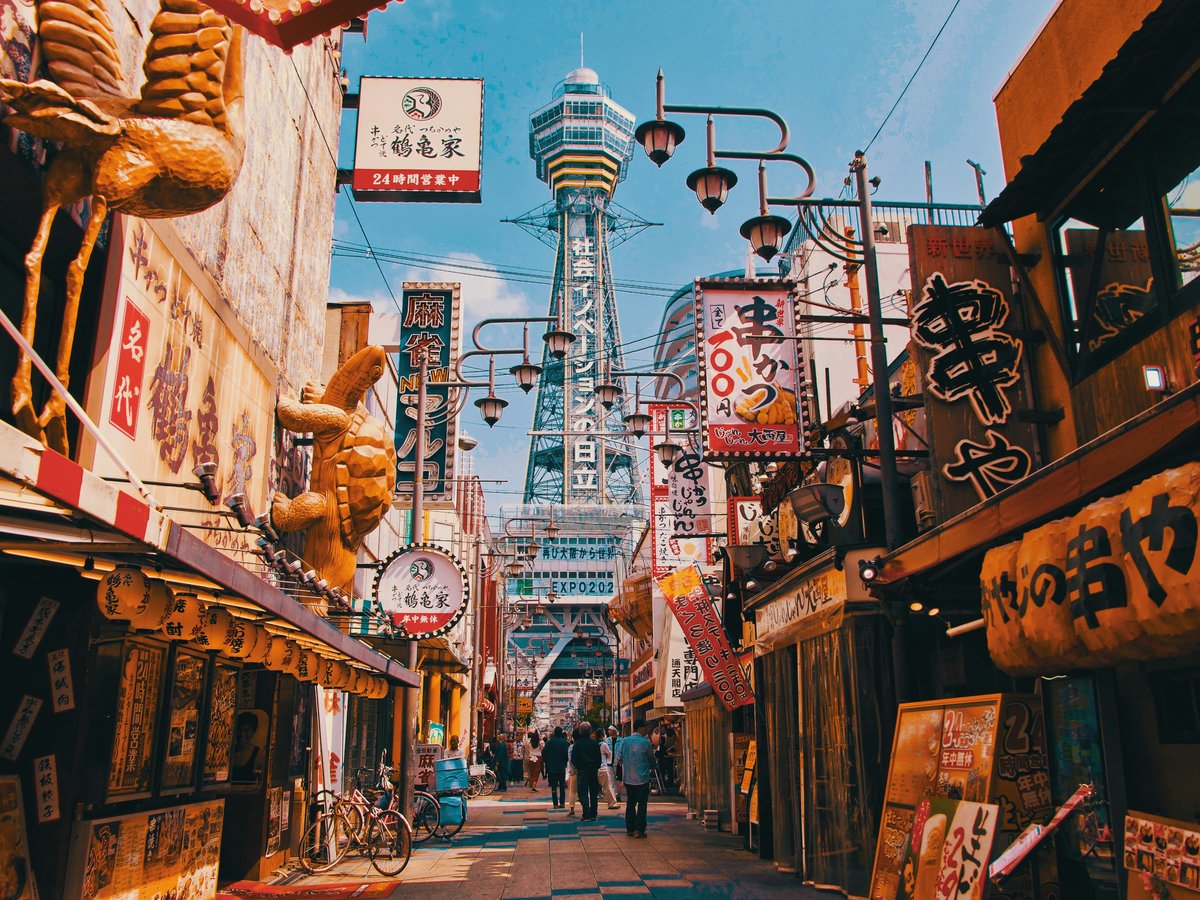
neighborhoodThe retro neighborhood around Tsutenkaku Tower is at its most walkable in May's mild temperatures. Kushikatsu restaurants line Jan Jan Yokocho alley, and the whole area has a slightly chaotic, old-school energy that rewards unhurried wandering. The tower itself offers decent views but the neighborhood is the real draw.
ShinsekaiSumiyoshi Taisha
shrineOne of Japan's oldest shrines, and its distinctive straight-line architecture (pre-dating Chinese-influenced curved roofs) is worth seeing regardless of month. In May the grounds are green and quiet, the famous arched Sorihashi bridge reflects in the pond, and you'll likely have more space to appreciate it than during New Year or summer festival periods.
SumiyoshiKuromon Market
marketOsaka's kitchen market is partly a tourist draw now, but May is a good time for it: seasonal fish like hatsu-gatsuo (first bonito) appears at the stalls, and the market's partly covered layout means rain doesn't shut it down. The tuna-cutting demonstrations at some stalls are still genuinely skilled work worth watching.
NippombashiMinoo Park and Minoo Falls
natureA 30-minute train ride north of Umeda puts you at the base of a forested valley trail leading to a 33-meter waterfall. May's greenery turns the trail into a tunnel of fresh leaves, and the sound of the stream builds as you approach the falls. The maple trees are fully green: they're famous for autumn color, but the spring version has its own quiet appeal. The walk is about 2.5km each way on a paved path.
Minoo (north Osaka)Amerikamura
neighborhoodOsaka's youth culture district near Shinsaibashi is compact and walkable, full of vintage clothing shops, independent record stores, and small cafes. May's comfortable temperatures make the outdoor browsing (and the triangle park people-watching) much more pleasant than the sweat-soaked summer version. Weekend afternoons are the liveliest.
Shinsaibashi
Your packing checklist
Tick items off as you pack. Your progress saves in this browser.
All packed — have a great trip.
Insider tips
The Kintetsu and JR exits at Tsuruhashi Station drop you into completely different parts of Koreatown: the Kintetsu side has the older, more atmospheric covered market with the best yakiniku smoke and kimchi vendors, while the JR side leads to the newer restaurant strip. Most tourists default to the JR exit and miss the better half.
Osaka's depachika (department store basement food halls) are where locals shop for high-quality takeaway meals, and in May you'll find seasonal specialties like hamo sushi and shincha gift sets that street-level tourist areas don't stock. Hankyu Umeda's basement floor is particularly deep. The trick is going after 6pm when many items get marked down 20-30%.
If you're visiting during Golden Week and want to avoid the worst crowds at Osaka Castle, go to Shitennoji Temple instead: it's one of the city's most significant historical sites, almost never crowded even during peak weeks, and the five-story pagoda against May's green canopy is more photogenic than the reconstructed castle interior.
For the flea markets at Shitennoji (21st) and Osaka Tenmangu (25th), bring cash in small denominations: most vendors don't take cards or mobile payment, and haggling gently in Japanese (even just pointing and saying 'sukoshi yasuku?' with a smile) often works, especially after 2pm when sellers want to pack up lighter.
Avoid these mistakes
- Booking a Golden Week trip to Osaka without reserving trains and hotels months in advance: shinkansen seats from Tokyo sell out, popular hotels double in price, and by March the best options are gone. If you're set on Golden Week, book by January. If you're flexible, shifting to May 8-15 gives you similar weather at half the cost and a fraction of the crowds.
- Assuming the rain is a dealbreaker and canceling outdoor plans: Osaka's May rain tends to come in bursts, not all-day washouts. A morning that starts overcast often clears by lunch. Carry rain gear and keep your plans flexible rather than retreating to indoor malls at the first cloud.
- Spending all your time in Dotonbori and Namba: these are the tourist center and they're worth seeing, but May's comfortable walking weather is wasted if you don't venture to neighborhoods like Shinsekai, Tsuruhashi, or Nakanoshima where the crowds thin out and the food gets more interesting and cheaper.
- Overdressing for the temperature and underpreparing for rain: May's 23°C highs tempt people into summer clothes, but the 14°C mornings and rain-cooled evenings catch them out. Layers plus rain protection beats any single outfit choice.
Practical tips for May
Book accommodations well ahead if your dates overlap with Golden Week (April 29-May 5): this is non-negotiable, as Osaka is one of Japan's top domestic holiday destinations and availability vanishes early. For the rest of May, a week or two of lead time is usually sufficient for mid-range hotels. An IC card (ICOCA in Kansai) simplifies transit across Osaka Metro, JR, and private railways: buy one at Kansai Airport or any major station, and load it with cash. Most temples and shrines close grounds by 5pm, sometimes earlier, so plan cultural visits for mornings and save the food neighborhoods for evenings. Convenience stores (konbini) are legitimately useful for cheap, quality onigiri, coffee, and rain gear in a pinch: 7-Eleven, Lawson, and FamilyMart are on practically every block and open 24 hours. Restaurant etiquette note: some kushikatsu places in Shinsekai have a strict no-double-dipping rule for the communal sauce; there will be signs, sometimes aggressive ones, and they mean it. Tipping is not practiced in Japan and can cause confusion. May's daylight runs roughly 5am to 7pm, giving long days for exploration: take advantage of early mornings when popular spots are quietest.
FAQ
Is May a good time to visit Osaka?
May is a solid choice, particularly the second half of the month after Golden Week clears out. Temperatures are mild and comfortable at around 22-23°C (72-73°F), the city is green and in bloom, and the brutal summer heat hasn't arrived yet. The main trade-off is rain: 235mm across about 13 days means you'll get wet at some point, and Golden Week (April 29-May 5) brings serious domestic tourist crowds and peak pricing. If you can time your visit for roughly May 8-25, you'll hit a genuine sweet spot of pleasant weather, reasonable prices, and thinner crowds.
What is the weather like in Osaka in May?
Expect daytime highs around 22.7°C (73°F) and nighttime lows near 14.2°C (58°F): warm enough for light layers during the day, cool enough for a jacket at night. Humidity sits at about 74%, which is noticeable but manageable. The significant factor is rain: 235mm over roughly 13 rainy days makes this the second-wettest month after June. Showers tend to be intermittent rather than all-day events, but a rain jacket and waterproof shoes are non-negotiable. You'll get clear stretches too: May isn't a washout, just reliably wet.
Is Osaka crowded in May?
It depends entirely on which week. Golden Week (April 29-May 5) is one of the most crowded periods of the year: Osaka Castle, Dotonbori, Universal Studios Japan, and major train stations are packed with domestic travelers. After May 5, crowds drop sharply. The second and third weeks of May feel noticeably calmer than cherry blossom season (late March-early April) or Golden Week, and by mid-May most major attractions return to normal wait times. Weekdays are always lighter than weekends.
What should I eat in Osaka in May?
May brings a few seasonal specialties worth seeking out. Hamo (pike conger) starts appearing on menus: it's an Osaka signature prepared with intricate bone-cutting technique. Hatsu-gatsuo (first bonito of the season) shows up at sushi counters and at Kuromon Market with a lighter, cleaner flavor than the autumn catch. Shincha (first-flush green tea) from nearby Uji is available for a brief window and tastes noticeably different from regular sencha. For Children's Day on May 5, look for chimaki (bamboo leaf rice dumplings) and kashiwa mochi at wagashi shops. And of course, Osaka's year-round street food (takoyaki, kushikatsu, okonomiyaki) is at its most enjoyable in May's mild temperatures.
Should I visit Osaka during Golden Week or avoid it?
That depends on what kind of traveler you are. Golden Week has real energy: the city is festive, parks are full of families, and there are special events and food festivals. If you thrive in crowds and book early enough (by January for hotels, ideally), it can be a memorable experience. But if you want to get into popular restaurants without hour-long waits, visit Osaka Castle without queueing, or pay less than double the normal hotel rate, skip Golden Week and come the second week of May instead. The weather is nearly identical, the seasonal food is the same, and the city is dramatically more navigable.
Things to Do in Osaka in May
 Free cancellation
 Osaka Kickstart: Hotspots & Hidden Gems Tour
Day trip: free cancellation.
via Viator Free cancellation
 Sushi Making Osaka Roll and Authentic Japanese Sushi Class
Cooking class: 1.7 hours, free cancellation.
via Viator Free cancellation
 Ultimate Osaka Walking Tour: Castle, Dotonbori, Gems & Lunch
Day trip: free cancellation.
via Viator Free cancellation
 Kyoto Day Tour: Fushimi Inari, Arashiyama, Kinkaku-ji & Kiyomizu
Day trip: 10 hours, free cancellation.
via Viator Free cancellation
 Osaka Local Foodie Walking Tour in Dotonbori and Shinsekai
City tour: 3 hours, free cancellation.
via Viator Free cancellation
 From Kyoto / Osaka: Kyoto Must-see Spots & Nara Park One Day Tour
Day trip: 9 hours, free cancellation.
via ViatorFind a flight to Osaka
Live fares to Osaka appear here once cookies are accepted.
Last verified by automated review (v1.7.2) on . What is automated review?