Compare every Japan city in June →
Stay in Osaka in June
125 hotels in the Trip.com pool for Osaka, from US$13 a night.
Opens Trip.com on Fri 4 Jun to Sun 6 Jun 2027; change the dates there.
June in Osaka means one thing above all else: tsuyu, the rainy season. It typically settles in during the first or second week of the month and tends to stick around until mid-July, bringing persistent grey skies, warm drizzle, and the kind of thick humidity (around 78% on average) that fogs your glasses the moment you step out of an air-conditioned konbini. Daytime temperatures hover around 27°C (80°F), dropping to about 20°C (67°F) at night, so the heat itself is manageable. The rain is the real story: roughly 253mm falls across 14 or so wet days, making June one of Osaka's two wettest months.
That said, there is a quiet charm to rainy-season Osaka that the peak-season crowds never see. Hydrangeas (ajisai) bloom in thick clusters of blue, purple, and pink at temples across the city. Sumiyoshi Taisha holds its centuries-old rice planting ritual. The famous hamo eel appears on menus for the first time all year, and locals treat its arrival the way Parisians treat Beaujolais Nouveau. Tourist numbers drop noticeably from the spring rush, which means shorter queues at Osaka Castle, easier reservations in Kitashinchi, and hotel rates that come back down to earth after the cherry blossom and Golden Week spike.
To be fair, you need to want this version of Osaka. If your mental image of the trip involves sunny strolls along the Dotonbori canal and clear views from Abeno Harukas, June will test your patience. But if you pack the right gear and lean into the season: covered shopping arcades, steaming bowls of ramen on rainy evenings, the smell of wet stone at Shitennoji: it rewards you with a city that feels more like itself and less like a backdrop for selfie sticks.
Why visit in June
- Hydrangea season transforms temple grounds across the city: Katsuoji, Fujiidera, and Nagai Botanical Garden put on some of the best displays in the Kansai region
- Tourist numbers drop sharply after Golden Week, meaning noticeably shorter lines at Osaka Castle, Dotonbori, and Universal Studios Japan
- Hotel rates fall 20-30% from the April-May peak, and last-minute availability opens up at places that were fully booked during cherry blossom season
- Hamo (pike conger) season begins: this is Osaka's signature summer delicacy, and June is when the top kappo restaurants start featuring it on their omakase courses
- Osaka's covered shopping arcades (Shinsaibashi-suji, Tenjinbashi-suji, Kuromon Market) become genuinely practical, not just convenient, keeping you dry for hours of browsing
Worth knowing
- Tsuyu brings persistent rain and overcast skies for roughly half the month, which limits outdoor sightseeing and makes day trips to Nara or Mount Koya less appealing
- Humidity sits around 78% and rarely lets up: the air feels heavy and damp even when it is not raining, and clothes take forever to dry
- Outdoor photography suffers from flat grey light and frequent drizzle, which is frustrating if you came for the Instagram shots of Osaka Castle or Shinsekai's neon
- Mold and mildew become a genuine nuisance: shoes left in hotel entryways can smell damp by morning, and anything leather needs attention
Best for
Think twice if
June is the heart of tsuyu. Warm but not yet hot, with temperatures in the mid-to-high twenties Celsius. The humidity is the defining feature: it clings to you from morning to night, and the frequent rain rarely clears the air for long. You might get a run of three or four dry days mid-month, and when the sun does appear the warmth feels almost tropical. Mornings tend to be the driest window. By afternoon, showers roll in: sometimes a light mist, sometimes a proper downpour that sends everyone ducking into the nearest arcade. The rain is rarely cold, though. It is warm rain, the kind that does not chill you but does soak through cotton in minutes.
Seasonal caution
- Tsuyu rainfall can be intense: 253mm across the month, with occasional heavy downpours that cause localized flooding in low-lying areas near rivers. Check weather apps for ooame (heavy rain) warnings and avoid riverbanks during alerts.
- Humidity at 78% combined with warm temperatures creates heat-fatigue risk even though the thermometer reads only 27°C. Drink more water than you think you need, especially if you are walking between covered arcades.
- Late June occasionally sees the first typhoon advisories of the season. The probability is low compared to August-September, but worth monitoring if you are planning ferry trips to Awaji Island or day trips that depend on train schedules.
Year-round climate
Averages from the last 5 years.
| Month | Avg high (°C) | Avg low (°C) | Rainfall (mm) |
|---|---|---|---|
| Jan | 9 | 1 | 42 |
| Feb | 10 | 1 | 61 |
| Mar | 15 | 5 | 123 |
| Apr | 20 | 10 | 158 |
| May | 23 | 14 | 235 |
| Jun | 27 | 20 | 253 |
| Jul | 32 | 25 | 202 |
| Aug | 33 | 26 | 206 |
| Sep | 30 | 23 | 197 |
| Oct | 24 | 15 | 135 |
| Nov | 18 | 9 | 97 |
| Dec | 12 | 3 | 44 |
Headline events
Otaue Shinji (Rice Planting Festival) at Sumiyoshi Taisha
June 14
A ritual rice planting ceremony dating back over 1,700 years, performed on the sacred rice paddies within Sumiyoshi Taisha shrine grounds. Women in traditional planting garb set seedlings to the accompaniment of taiko drums, dance, and Shinto prayers. It is one of the oldest continuously observed agricultural rites in Japan, and the combination of ancient choreography and the green of fresh rice shoots against the shrine's vermillion pillars is genuinely striking.
Best things to do in June
Walk the hydrangea trails at Katsuoji Temple
natureKatsuoji, about 30 minutes north of central Osaka in the Minoo hills, is famous for its daruma dolls and its ajisai garden. In June, the temple paths wind through dense banks of blue, purple, and pink hydrangeas set against mossy stone and forest. The rain helps here: wet petals hold their color deeper, and the mist hanging in the valley gives the whole place a quality that postcards cannot quite capture. Come on a weekday morning and you might have entire stretches to yourself.
Hydrangeas peak in mid-to-late June; the rainy-season moisture intensifies the flower colors and keeps the moss lush.Booking tipNo booking needed. Arrive before 10:00 on weekdays to avoid the weekend crowds who drive up from the city.
Eat your way through Shinsekai on a rainy afternoon
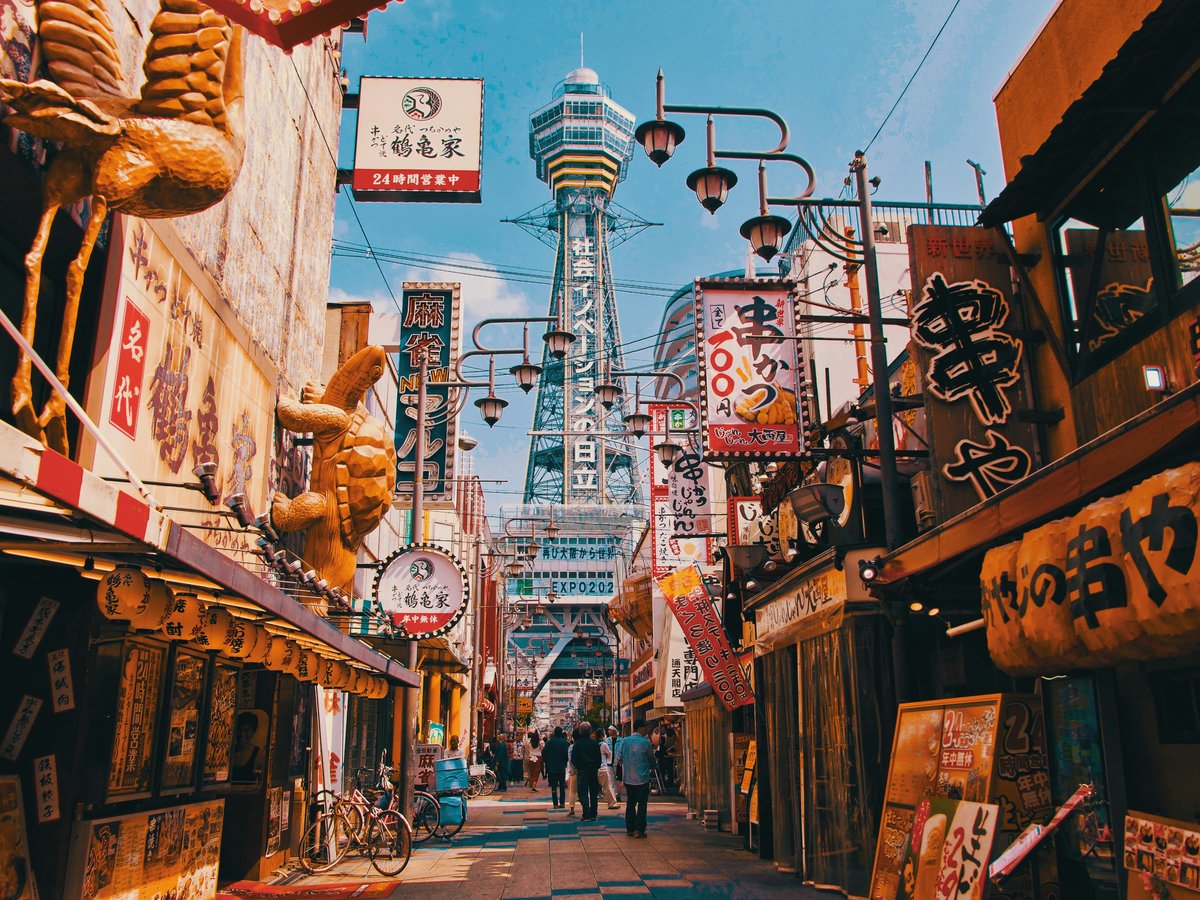
foodShinsekai's retro-futurist towers and old-school kushikatsu joints are at their atmospheric best in the rain. The neon reflects off wet pavement, the deep-fryer smoke curls out of open doorways, and the neighborhood's slightly rough edges feel more authentic when the fair-weather tourists are elsewhere. Order kushikatsu (skewered, deep-fried everything) and follow the one sacred rule: never double-dip in the communal sauce.
Rainy weather thins the crowds but the covered stalls and indoor counters keep operating; June's lower tourist volume means you will get a seat at popular spots like Daruma.Booking tipNo reservations at most kushikatsu counters, just queue. Lunch is less busy than the 17:00-19:00 rush.
Explore the covered arcades: Tenjinbashi-suji and Shinsaibashi-suji
shoppingTenjinbashi-suji shotengai stretches 2.6 kilometers and claims the title of Japan's longest covered shopping street. In June, it becomes your best friend: a dry, weatherproof corridor of tiny restaurants, second-hand kimono shops, household goods stores, and old kissaten coffee shops. Shinsaibashi-suji, closer to Namba, is more polished and fashion-oriented. Both keep the rain off your head for hours.
Tsuyu makes Osaka's extensive covered arcade network a practical lifeline, not just a shopping option. These streets function as the city's fair-weather infrastructure.Attend the Otaue Shinji at Sumiyoshi Taisha
cultureThe annual rice planting ceremony at Sumiyoshi Taisha on June 14 is one of Osaka's oldest Shinto rituals. Shrine maidens perform sacred dances while women in traditional garb plant rice seedlings by hand in the shrine's paddies, accompanied by taiko drumming and chanted prayers. The smell of wet earth and fresh rice straw, the rhythmic splashing of bare feet in the paddies: it is one of those rare events that feels genuinely unchanged by centuries.
The Otaue Shinji is held exclusively on June 14 each year: it is a fixed-date ritual tied to the agricultural calendar.Booking tipFree and open to the public. Arrive by 13:00 to get a spot with a clear sightline to the paddies. The main ceremony runs from about 13:00 to 15:00.
Day trip to Mimurotoji Temple in Uji for hydrangeas
natureIf Katsuoji whets your appetite for ajisai, take the 40-minute train to Uji and visit Mimurotoji, which grows roughly 20,000 hydrangea plants across its hillside garden. The scale is staggering: switchback paths cut through walls of flowers taller than your head. Uji itself is worth the trip for its matcha culture, and you can combine the temple visit with tea tasting along the old Byodoin-omotesando street.
The temple's ajisai garden is only open during peak bloom, typically early-to-late June, and the timing shifts slightly each year depending on rainfall.Booking tipCheck the temple's official site or social media for the exact ajisai garden opening dates: they announce them a week or two before based on bloom progress. Entry is around 1,000 yen.
Night photography walk through Dotonbori and Ura-Namba
photographyOsaka's neon-drenched canal district looks different in the rain. The famous Glico Running Man sign, the mechanical Kani Doraku crab, the riot of signage along the canal: all of it doubled in reflection on wet streets and the rain-dimpled water below. Duck into Ura-Namba's tighter alleys afterward, where tiny standing bars spill warm light onto rain-slicked pavement and the smell of yakitori smoke hangs heavy in the damp air.
Rainy evenings create natural reflections that double the visual intensity of Osaka's most photogenic district. The humidity softens neon light into glowing halos.Visit the Osaka Museum of Housing and Living
cultureThis indoor museum in the Tenjinbashi area recreates a full-scale Edo-period Osaka streetscape (wooden machiya townhouses, shops, a bathhouse) all indoors under a climate-controlled roof. You can rent a yukata and walk the streets as if you have stepped back 200 years. On a rainy June day, this is one of the most satisfying ways to spend two hours in the city.
A rainy-day fallback that is genuinely worth your time, not just a consolation prize. The artificial lighting even simulates weather changes, which feels oddly appropriate when real rain is falling outside.Booking tipYukata rental is first-come, first-served and tends to run out by early afternoon on weekends. Arrive when doors open at 10:00 if you want to dress up.
Evening onsen hopping in Spa World
relaxationSpa World in Shinsekai has two themed floors (one modeled on Asian bathing traditions, another on European ones) plus saunas, pools, and rest areas. After a sticky, humid June day of walking through drizzle, sinking into a hot bath and then a cold plunge is close to a religious experience. The facility stays open late, and there is something deeply satisfying about being warm and clean while rain hammers the windows.
June's persistent humidity and dampness make a proper onsen soak feel less like a luxury and more like a necessity. The contrast between the muggy outdoors and the clean heat of the baths is at its most dramatic this month.Booking tipWeekday evenings are least crowded. The themed floors swap gender access monthly: check which floor you can access before going.
What to eat in June
In season: fruit
Ume (Japanese plum)
June is ume season, and Osaka's depachika (department store food halls) fill with bins of green and blushing plums sold for making homemade umeshu (plum wine) and umeboshi (pickled plums). The tart, floral smell of ripe ume is one of June's signature scents. At bars in Ura-Namba, you will likely find fresh-ume cocktails that appear only this month.
Biwa (loquat)
These small, golden-orange stone fruits peak in early-to-mid June around the Kansai region. The skin is thin and slightly fuzzy, the flesh juicy and fragrant: somewhere between apricot and mango, with a floral note that fades fast after picking. Find them at Kuromon Market or any neighborhood greengrocer, sold in small foam-cradled trays.
On menus now
Hamo (pike conger)
Osaka's defining summer delicacy. The eel-like fish requires extraordinary knife skill: a chef makes over 500 cuts per fillet to sever the tiny bones while keeping the flesh intact. June is when hamo first appears on menus, and the best kappo restaurants in Kitashinchi and Fukushima treat opening day like a minor holiday. Try hamo otoshi (blanched slices served cold with ume (plum) paste) on a muggy evening. The texture is silky and clean, nothing like the heaviness you might expect from eel.
Ayu (sweetfish)
River-caught ayu comes into season in June, often grilled whole on skewers over charcoal: shioyaki style, with nothing but salt. The flesh tastes faintly of watermelon rind and fresh cucumber, a flavor that is hard to describe until you have tried it. Look for it at izakaya in Tennoji and Shinsekai, where the skewers come straight off the grill still sizzling.
Mizu-yokan
A chilled, jelly-like azuki bean dessert that Japanese households start buying the moment tsuyu hits. Lighter and more watery than winter yokan, it slips down cool and barely sweet: the kind of thing you eat standing at a wagashi counter in Shinsaibashi while rain patters on the arcade roof above you.
Regular events in June
Aizen Matsuri at Aizen-do (Shomanin Temple)Free
One of Osaka's three great summer festivals, marking the unofficial start of summer. Features a procession of beautifully decorated palanquins and women in yukata. The atmosphere around Shitennoji is festive and local: this is not a tourist-oriented event, and the food stalls lean heavily toward old-school Osaka street food.
June 30 - July 2Ajisai Matsuri (Hydrangea Festivals) at various temples
Multiple temples and gardens across the Osaka and Kansai region hold hydrangea viewing festivals throughout June, with special illuminations, tea ceremonies, and seasonal wagashi. Fujiidera and Katsuoji are the best known in the immediate Osaka area.
Throughout June, peak mid-monthNagoshi no Harae (Summer Purification Ceremony)Free
Shinto shrines across Osaka hold mid-year purification rituals on June 30, where visitors walk through a large chinowa (grass ring) to cleanse away the first half of the year's impurities. Sumiyoshi Taisha and Osaka Tenmangu both observe it with particular ceremony. Locals eat minazuki (a triangular wagashi topped with azuki beans) afterward, a tradition specific to this date.
June 30Best places this June
Sumiyoshi Taisha
shrineOne of Japan's oldest shrines, with its distinctive straight-line honden architecture predating Chinese Buddhist influence. The arched Sorihashi bridge over the shrine's pond is especially photogenic reflected in rain-dimpled water. Visit on June 14 for the Otaue Shinji, or any other day for a quieter experience: the grounds smell of wet cedar and incense, and the rain keeps casual visitors away.
SumiyoshiNagai Botanical Garden
gardenThe ajisai garden here has over 30 hydrangea varieties blooming across a hillside slope. It is less dramatic than Katsuoji but far more accessible: a short walk from Nagai Station on the Midosuji line. The surrounding park is pleasant for a walk even in light rain, and the greenhouses offer shelter when it comes down harder.
Higashi-SumiyoshiNakanoshima
neighborhoodThe narrow island between the Dojima and Tosabori rivers is Osaka's cultural spine. The National Museum of Art and the recently opened Nakanoshima Museum of Art sit side by side, and the rose garden along the riverbank (while past peak bloom) still holds late flowers into early June. The riverside walking paths, flanked by Meiji-era brick buildings and modern glass towers, have a particular melancholy beauty in the rain.
NakanoshimaKuromon Market
marketOsaka's kitchen market runs rain or shine under its covered roof. June is a good time to visit: the summer seafood starts arriving (look for uni and hamo), the crowd density drops from its spring peak, and the stallholders have more time to talk. The smell of grilling shellfish and fresh-cut fruit fills the covered arcade.
NippombashiShinsekai and Tsutenkaku Tower
neighborhoodThe retro entertainment district around Tsutenkaku Tower has a raw, unpolished energy that rain seems to amplify. The narrow streets fill with the clatter of pachinko parlors, the sizzle of kushikatsu fryers, and the glow of vintage signage. Climb Tsutenkaku for the city view: on clearer June days, the panorama extends to the harbor, though you are more likely to see an atmospheric blanket of low cloud.
ShinsekaiOsaka Tenmangu
shrineThis thousand-year-old shrine dedicated to the god of learning sits in the heart of the Tenjinbashi arcade area. While its famous Tenjin Matsuri falls in July, the shrine grounds in June are quiet and atmospheric, with stone lanterns and plum trees. It is where locals come for the Nagoshi no Harae purification rite on June 30.
KitaShitennoji Temple
templeJapan's oldest officially administered temple, founded in 593. The grounds are spacious enough to absorb rain-day visitors without feeling crowded, and the monthly flea market (held on the 21st and 22nd) runs regardless of weather, with vendors selling antiques, old ceramics, and secondhand kimono under tarps and umbrellas.
Tennoji
Your packing checklist
Tick items off as you pack. Your progress saves in this browser.
All packed — have a great trip.
Insider tips
The konbini (convenience store) umbrella economy is real: when tsuyu hits, everyone grabs a 500-yen vinyl umbrella from 7-Eleven or Lawson. But the shared-umbrella racks outside shops and restaurants operate on an informal honor system: you take one, you return one somewhere later. Locals cycle through these without thinking about it. Mind you, your nice travel umbrella will not survive this system: it will walk off within a day if you leave it in a communal rack.
Osaka's depachika (department store basement food halls) are June survival strategy. Daimaru Shinsaibashi and Hankyu Umeda both have world-class prepared food counters where you can assemble a full meal (hamo sushi, seasonal fruit parfaits, chilled udon) and eat it in nearby public seating without getting rained on or paying restaurant prices. The quality at Hankyu's basement rivals most sit-down restaurants.
If you want to try hamo at a top-tier kappo restaurant without the top-tier price, go for lunch instead of dinner. Several Kitashinchi and Fukushima kappo spots offer hamo-focused lunch courses at roughly a third of the dinner price, and the fish is the same: it came off the same morning delivery from Awaji Island.
The Shitennoji flea market on the 21st runs regardless of rain, and rainy days work in your favor: fewer competing buyers, and sellers become more willing to negotiate on antique ceramics, old woodblock prints, and vintage kimono fabric. Bring cash and a waterproof bag for your finds.
For the best ajisai (hydrangea) viewing without leaving the city, take the Midosugi line to Nagai and walk to the botanical garden rather than making the longer trip to Katsuoji. The variety count is higher, the access is easier, and you can combine it with the park's other June-blooming plants in a single morning.
Avoid these mistakes
- Planning a full day of outdoor sightseeing without a rain backup. Tsuyu rain is not a brief tropical shower that passes in 20 minutes: it can settle in for an entire day. Have two or three indoor alternatives queued up for any outdoor plan, or you will spend the afternoon sitting in your hotel watching rain streak down the window.
- Wearing cotton clothes and leather shoes for a full walking day. In 78% humidity, cotton shirts become damp washcloths by noon and leather shoes stay wet until tomorrow. This sounds like small-stakes advice until you are six hours into a soggy day with blistered feet and a shirt that smells like a gym bag.
- Skipping hamo because you are not sure what it is. Pike conger does not sound appealing in English, and the photos online do not do it justice. But this is Osaka's signature summer ingredient, prepared here with more care and tradition than anywhere else in Japan. Order the hamo otoshi (blanched with ume paste) at least once: it is unlike any fish dish you have had before.
- Assuming the Tenjin Matsuri happens in June. It is July 24-25, and visitors sometimes arrive a month early after misreading a blog post. The June ceremony at Sumiyoshi Taisha (Otaue Shinji, June 14) is the major shrine event this month: plan around that one instead.
Practical tips for June
Book accommodations with in-room laundry access or confirm coin laundry nearby: clothes take much longer to dry in June humidity, and you will want to wash more frequently. Carry a plastic bag in your daypack for wet umbrellas (Japanese etiquette expects you to bag or sleeve your umbrella before entering shops and restaurants: many provide sleeves at the door, but not all). Train schedules occasionally see minor delays during heavy rain advisories, so build 15-20 minutes of buffer into any connection-dependent plans, especially if heading to Kansai Airport. Reserve any specific restaurant you care about: Osaka's top kappo and sushi counters are small, and even in low season the best hamo spots fill up. Most temples and outdoor attractions keep regular hours through tsuyu, but check before heading to hilltop or mountain sites like Katsuoji, which occasionally close paths during heavy rain warnings. Convenience stores sell high-quality folding umbrellas, rain ponchos, and even waterproof phone pouches: do not overpack rain gear from home when you can buy exactly what you need at the first 7-Eleven.
FAQ
Is June a good time to visit Osaka?
Honestly, it depends on your tolerance for rain and humidity. June is tsuyu (the rainy season) and you should expect roughly half the month's days to see rain, with persistent 78% humidity even on dry days. It is not the worst time (that might be the sweltering August heat), but it is far from the best. If you have flexibility, October and November offer warm days, low rain, and autumn color. That said, June has real advantages: fewer tourists, lower hotel prices, the start of hamo season, and some of Japan's most photogenic hydrangea displays. If you plan around the rain rather than fighting it, the trip can still be rewarding, just come with realistic expectations.
What is the weather like in Osaka in June?
Warm and wet. Average highs sit around 27°C (80°F) with lows near 20°C (67°F), so the temperature itself is comfortable, not yet the oppressive heat of July and August. The issue is moisture: 253mm of rain across about 14 days, and humidity that rarely drops below 75%. The rain pattern varies: some days bring light drizzle on and off, others see sustained downpours. You might get a lucky stretch of three or four dry days, but count on needing rain gear daily. Mornings tend to be drier than afternoons.
Is Osaka crowded in June?
Noticeably less so than the spring peak. The combination of Golden Week ending in May and rainy season arriving in June clears out a significant chunk of both domestic and international tourists. Popular spots like Dotonbori and Osaka Castle will still have visitors, but the crushing shoulder-to-shoulder crowds of cherry blossom season are gone. You will find it easier to get restaurant reservations, shorter queues at attractions, and more breathing room on trains. Worth noting: the Otaue Shinji at Sumiyoshi Taisha on June 14 draws local crowds, so that specific site on that specific day will be busy.
What should I wear in Osaka in June?
Light, breathable, quick-drying layers. Linen shirts and moisture-wicking synthetics handle the humidity far better than cotton. Waterproof shoes are close to essential: your feet will get wet at some point, and spending the rest of the day in soggy sneakers is miserable. A light rain jacket with ventilation beats a heavy raincoat, since you will sweat through anything non-breathable. Bring a compact umbrella for your bag and consider a larger one for heavy rain days. Dress codes at restaurants are generally relaxed, but some high-end kappo spots in Kitashinchi expect smart casual even in summer.
Are there any festivals or events in Osaka in June?
The headline event is the Otaue Shinji at Sumiyoshi Taisha on June 14: a Shinto rice planting ritual that has been performed for over 1,700 years. It is free and open to the public. On June 30, the Aizen Matsuri begins at Aizen-do temple near Shitennoji, marking the start of the summer festival season (it runs into early July). The same day, shrines across the city hold Nagoshi no Harae, a purification ceremony where you walk through a large grass ring: Sumiyoshi Taisha and Osaka Tenmangu both observe it. Throughout the month, various temples hold hydrangea festivals with special viewings and tea ceremonies. Mind you, the big one everyone asks about (Tenjin Matsuri) is July, not June.
Things to Do in Osaka in June
 Free cancellation
 Osaka Kickstart: Hotspots & Hidden Gems Tour
Day trip: free cancellation.
via Viator Free cancellation
 Sushi Making Osaka Roll and Authentic Japanese Sushi Class
Cooking class: 1.7 hours, free cancellation.
via Viator Free cancellation
 Ultimate Osaka Walking Tour: Castle, Dotonbori, Gems & Lunch
Day trip: free cancellation.
via Viator Free cancellation
 Kyoto Day Tour: Fushimi Inari, Arashiyama, Kinkaku-ji & Kiyomizu
Day trip: 10 hours, free cancellation.
via Viator Free cancellation
 Osaka Local Foodie Walking Tour in Dotonbori and Shinsekai
City tour: 3 hours, free cancellation.
via Viator Free cancellation
 From Kyoto / Osaka: Kyoto Must-see Spots & Nara Park One Day Tour
Day trip: 9 hours, free cancellation.
via ViatorFind a flight to Osaka
Live fares to Osaka appear here once cookies are accepted.
Last verified by automated review (v1.7.2) on . What is automated review?