Compare every Japan city in April →
Stay in Osaka in April
125 hotels in the Trip.com pool for Osaka, from US$13 a night.
Opens Trip.com on Fri 2 Apr to Sun 4 Apr 2027; change the dates there.
April is sakura month in Osaka, and that single fact reshapes the entire city for roughly two weeks. The cherry blossoms typically peak in the first week of April (sometimes a few days earlier, sometimes later, depending on how warm March was) and for those seven to ten days, Osaka feels like a different place. Office workers spread blue tarps under the trees at Kema Sakuranomiya Park by noon to stake out evening hanami spots. Temperatures hover around 19.7°C (67°F) during the day, dropping to about 10.1°C (50°F) at night: comfortable for long walks, cool enough that you'll want a jacket once the sun goes down. The air smells faintly sweet near the blossoms, and the pale pink against grey castle stone at Osaka-jo is the kind of thing that lives up to the photographs.
The trade-off? Everyone knows April is peak time. Hotel prices jump sharply (sometimes doubling compared to winter rates) and the popular spots book up weeks ahead. The tail end of the month brings Golden Week, Japan's longest holiday stretch starting April 29 with Showa Day, which pushes domestic travel demand even higher. Train cars on the Midosuji Line get noticeably more packed. If you're watching your budget closely, this probably isn't your month.
That said, if you've been waiting for the right time to see Osaka at its most photogenic and alive, April is genuinely it. The weather sits in that narrow window between the chill of early spring and the heavy rains of June. You can eat outside. You can walk for hours without overheating. And Osaka's particular gift: the way its food culture just works better outdoors, with takoyaki in one hand and a beer in the other, standing under a canopy of blossoms along the Okawa River: is at its peak right now.
Why visit in April
- Cherry blossoms peak in the first week of April across the city: Osaka Castle Park alone has roughly 3,000 trees, and Kema Sakuranomiya Park lines nearly 5 kilometers of riverbank in pink
- Daytime temperatures around 19.7°C (67°F) make walking Osaka's sprawling neighborhoods genuinely pleasant: warm enough for shirtsleeves by afternoon, no summer humidity yet
- The Osaka Mint Bureau opens its grounds for one week in mid-April to showcase over 100 late-blooming yaezakura varieties you won't see anywhere else in the city: it's free and uniquely Osaka
- Street food culture hits its stride: Dotonbori and Shinsekai stalls stay open later, and seasonal items like sakura-flavored treats and fresh takenoko tempura appear on menus across the city
- Daylight stretches past 6:30 PM, giving you long golden-hour windows for photography along the Nakanoshima riverbanks and from Umeda Sky Building
Worth knowing
- Hotel prices spike well above annual average, and popular ryokan near Osaka Castle or in Namba can sell out a month ahead
- Hinoki cypress pollen peaks in April across the Kansai region: if you have pollen allergies, this month will test you, and pharmacies sell masks and eye drops specifically for kafunsho season
- Golden Week begins April 29, and domestic tourists flood the city from late April onward: Shinkansen reservations and day-trip destinations like Nara get significantly harder to book
- Rainfall picks up to about 158mm across 10 rainy days, noticeably wetter than March: an afternoon shower can cut a hanami session short with little warning
Best for
Think twice if
April in Osaka feels like proper spring: the kind of weather where you leave the hotel in a light jacket and peel it off by 2 PM. Mornings start cool, around 10°C (50°F), with a faint chill if you're walking along the river before the sun clears the buildings. By midafternoon the temperature climbs to about 19.7°C (67°F), occasionally touching 22-23°C on warmer days. Humidity sits around 72%, which you'll feel as a gentle dampness rather than anything oppressive: nothing like the wall of moisture that hits in July. Rain comes in bursts: expect roughly 158mm spread across 10 days, typically as afternoon showers that roll through in 30-45 minutes. The occasional full grey day happens, but sustained multi-day rain is uncommon. Evenings cool off enough that you'll want sleeves, especially if you're sitting outside for yozakura viewing.
Seasonal caution
- Hinoki cypress pollen peaks across the Kansai region in April: allergy sufferers should pack antihistamines and consider a mask for extended outdoor time, especially near parks and along the river
Year-round climate
Averages from the last 5 years.
| Month | Avg high (°C) | Avg low (°C) | Rainfall (mm) |
|---|---|---|---|
| Jan | 9 | 1 | 42 |
| Feb | 10 | 1 | 61 |
| Mar | 15 | 5 | 123 |
| Apr | 20 | 10 | 158 |
| May | 23 | 14 | 235 |
| Jun | 27 | 20 | 253 |
| Jul | 32 | 25 | 202 |
| Aug | 33 | 26 | 206 |
| Sep | 30 | 23 | 197 |
| Oct | 24 | 15 | 135 |
| Nov | 18 | 9 | 97 |
| Dec | 12 | 3 | 44 |
Holidays and festivals in April
Public holidays
- Shōwa Day(昭和の日)29 April 2027
Headline events
Sakura Season (Cherry Blossom Viewing)
Late March through mid-April, peak usually first week of April
Osaka's cherry blossoms typically peak in the first week of April, transforming parks and riversides across the city into hanami grounds. Osaka Castle Park, with roughly 3,000 trees, becomes the city's social center: families, coworkers, and couples spread tarps for picnic parties that run from afternoon into the evening under paper lanterns. The season lasts about 10-14 days from first bloom to the final petal drop, and timing it right is half weather prediction, half luck.
Osaka Mint Bureau Cherry Blossom Walkthrough (Sakura no Torinuke)
Mid-April, typically one week around April 9-15 (dates announced each year)
For roughly one week in mid-April, the Osaka Mint Bureau opens its grounds along the Okawa River to the public, showcasing over 100 varieties of late-blooming yaezakura (double-petaled cherry blossoms). These are varieties you won't see in the parks: heavier blooms, deeper pinks, some nearly crimson. The walkthrough is one-directional along a 560-meter path, and it draws serious crowds, but the density of unusual cultivars makes it worth the shuffle. Free and uniquely Osaka.
Best things to do in April
Hanami at Osaka Castle Park
natureOsaka Castle Park's roughly 3,000 cherry trees create one of the city's most concentrated sakura displays. The contrast of pale blossoms against the castle's grey stone and green-gold roof tiles is striking from every angle. Families and office groups claim spots on the lawns by early afternoon for evening picnics under the lantern-lit canopy.
Cherry blossoms typically peak in the first week of April, and this park is the city's de facto hanami headquartersBooking tipNo reservation needed, but arrive before noon on weekends to secure a good spot on the south lawn
Evening stroll along Kema Sakuranomiya Park
natureNearly five kilometers of cherry trees line the Okawa River through Kema Sakuranomiya, and in early April the branches form a pink tunnel over the walking path. The evening light through the petals (especially around sunset) makes this stretch feel almost surreal. Street food vendors set up along the way, so you can graze as you walk.
The riverside tunnel effect only happens during full bloom, which lasts roughly 10 days in early AprilOsaka Mint Bureau Walkthrough
cultureThe Mint Bureau's one-week public opening showcases over 100 varieties of yaezakura you won't find in the public parks: double-petaled cultivars in shades from pale blush to deep crimson. The 560-meter one-way path is tightly managed, which keeps the flow moving. Mind you, the crowds can be thick, especially mid-afternoon on weekends.
The late-blooming yaezakura varieties peak in mid-April, typically a week or so after regular sakuraBooking tipGo early on a weekday morning to avoid the densest crowds: the path opens around 10 AM
Street food crawl through Dotonbori and Shinsekai
foodApril's mild weather is when Osaka's outdoor food culture hits its stride. Dotonbori's neon-lit canal-side stalls and Shinsekai's retro shotengai both stay open later as the evenings warm up. Takoyaki, kushikatsu, okonomiyaki, ikayaki: the air along these streets smells like frying batter and dashi from about 4 PM onward.
Comfortable evening temperatures around 13-15°C mean you can eat outside without shivering or sweatingDay trip to Nara Park
excursionJust 45 minutes from Namba by Kintetsu Railway, Nara Park in April pairs sakura with its resident deer herd: roughly 1,200 of them. The deer are accustomed to visitors and will approach for shika senbei crackers. Walking the path from Nara Park through Todai-ji and up toward Kasuga Taisha under the blossoms takes a full morning and is genuinely peaceful midweek.
Cherry blossoms frame the ancient temple grounds, and the spring weather makes the long walking routes comfortableBooking tipGo on a weekday: Golden Week and weekends bring intense crowds, especially around Todai-ji
Yozakura (nighttime cherry blossom viewing) at Osaka Castle
natureAfter dark, temporary lighting illuminates the cherry trees around Osaka Castle, and the castle itself is lit dramatically against the sky. The atmosphere shifts completely: quieter than the daytime hanami chaos, with couples and photographers replacing the big picnic groups. The reflection of the lit castle and blossoms in the moat is particularly photogenic.
The evening illuminations only run during peak bloom, typically the first two weeks of AprilExplore Nakanoshima
cultureThe narrow island between the Dojima and Tosabori rivers is Osaka's quieter cultural corridor. The Nakanoshima Museum of Art, the Central Public Hall's neo-Renaissance facade, and the riverside rose garden (just starting to bud in April) make a half-day walk. Fewer tourists here than Dotonbori or the castle, and the waterfront cafes are a good afternoon pause.
Cherry trees along both riverbanks frame the island's architecture, and the mild weather suits the long walking pathsVisit Sumiyoshi Taisha
cultureOne of Japan's oldest Shinto shrines, predating the influence of Chinese architectural styles: the buildings have a distinctly Japanese profile you won't see at most shrines. The arched Sorihashi bridge over the pond, the grove of camphor trees, and the relative quiet compared to Fushimi Inari or Kiyomizu-dera make it a good counterweight to the high-energy tourist spots.
Spring festival activities pick up in April, and the grounds are less crowded than Kyoto's famous shrines while offering comparable atmosphereWhat to eat in April
In season: fruit
Ichigo (strawberries)
Japanese strawberry season peaks in spring, and Osaka's depachika (department store basement food halls) display rows of glossy, candy-red varieties like Amaou and Tochiotome. Worth the splurge: the flavor density compared to supermarket strawberries elsewhere is startling.
On menus now
Sakura-dai (cherry blossom sea bream)
Sea bream caught during spawning season turns a pinkish hue, and Osaka's sushi counters and izakaya feature it as a spring specialty. The flesh is leaner than winter tai but cleaner-tasting.
Sakura mochi
Pink-tinted rice cake wrapped in a pickled cherry leaf: the salty-sweet contrast is the taste of spring in Japan. You'll find them at every wagashi shop and konbini.
Street food peaks
Hanami dango
Tri-colored rice dumplings on a skewer (pink, white, and green) sold at park stalls and convenience stores throughout sakura season. More symbolic than gourmet, but the chewy texture and subtle sweetness pair well with green tea under the blossoms.
In markets
Takenoko (bamboo shoots)
Fresh bamboo shoots hit Osaka's markets and restaurant menus in April: grilled, simmered in dashi, or served as tempura. The tender spring harvest has a sweetness and snap that the vacuum-packed kind can't touch.
Regular events in April
Shitennoji Wasso FestivalFree
A procession celebrating ancient cultural exchange between Japan and East Asia, with participants in period costumes from Korean, Chinese, and Japanese courts. Held at Shitennoji, one of Japan's oldest temples, the parade winds through the grounds with traditional music and dance performances.
Early to mid-AprilNamba Yasaka Shrine Spring FestivalFree
A neighborhood festival at Namba's lion-head shrine, with taiko drumming, food stalls, and local processions through the surrounding streets. Smaller and more local than the big tourist-facing events, which is part of the appeal.
Mid-AprilShowa Day (start of Golden Week)Free
April 29 is a national holiday marking the start of Golden Week. Domestic travel surges from this date forward, and the city's energy shifts noticeably: trains are fuller, restaurants busier, and day-trip destinations like Nara and Kyoto feel the pressure.
April 29Best places this April
Osaka Castle Park
parkThe city's flagship hanami destination, with roughly 3,000 cherry trees surrounding the reconstructed castle. The Nishinomaru Garden on the west side offers a slightly less crowded vantage point with the castle framed by blossoms across the moat.
Chuo-kuKema Sakuranomiya Park
parkA nearly five-kilometer stretch of cherry trees lining the Okawa River, connected to the Mint Bureau grounds. The riverside path is one of the best sunset walks in the city during bloom season.
Miyakojima-kuDotonbori
diningOsaka's most concentrated nightlife and street food strip, running along a narrow canal. The neon signs, the Glico running man, and the constant sizzle of takoyaki griddles make it sensory overload in the best way, though the weekend crowds in April can be intense.
NambaShinsekai
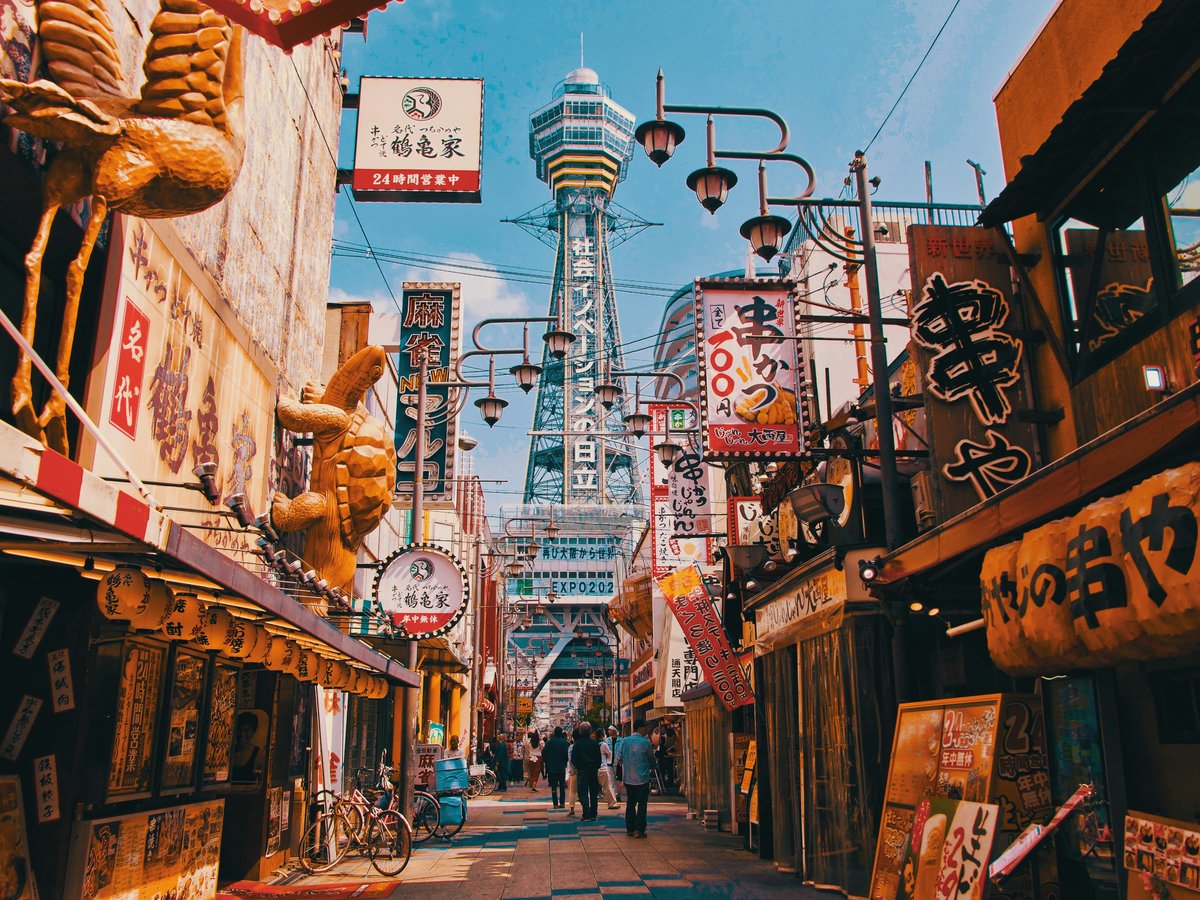
diningThe retro entertainment district around Tsutenkaku Tower, where kushikatsu shops have been deep-frying skewered everything since the 1920s. Grittier and more local-feeling than Dotonbori, with a character that's distinctly Osaka.
Naniwa-kuNakanoshima
cultureA slender island between two rivers, home to the Nakanoshima Museum of Art, the Central Public Hall, and waterfront cafes. Quieter than the main tourist corridors and lined with cherry trees along both banks.
Kita-kuSumiyoshi Taisha
shrineOne of Japan's oldest Shinto shrines, with a pre-Chinese-influence architectural style unique in Japan. The arched bridge, the camphor grove, and the working-class neighborhood surrounding it offer a very different atmosphere from Kyoto's temple circuit.
Sumiyoshi-kuUmeda Sky Building
viewpointThe floating garden observatory on the 39th floor gives a panoramic view of the entire city: on clear April days you can see to the mountains. The basement Takimi-Koji alley recreates a retro Showa-era streetscape with small restaurants.
Kita-kuKuromon Market
marketOsaka's kitchen market, where fish vendors, produce stalls, and prepared food counters line a covered arcade. Spring brings fresh takenoko, strawberries, and seasonal sashimi. It gets tourist-heavy by mid-morning, so go early if you want to see the market at its most functional.
Namba
Your packing checklist
Tick items off as you pack. Your progress saves in this browser.
All packed — have a great trip.
Insider tips
The south side of Osaka Castle Park (near the Nishinomaru Garden) is significantly less crowded than the main east approach during hanami, and gives you a better angle on the castle framed by blossoms across the moat
For the Mint Bureau walkthrough, go on the first or second day of the opening (dates are announced a few weeks ahead on the Mint Bureau's website) and arrive right when it opens: by mid-week, word has spread and the afternoon wait can stretch considerably
Convenience stores stock surprisingly effective allergy relief products during kafunsho season: look for masks, eye drops, and antihistamine tablets near the pharmacy counter if you forgot to pack your own
If you're taking a day trip to Nara during Golden Week, catch the first Kintetsu train from Namba: by 10 AM the park is packed, but at 8:30 you'll have the deer and the temple approach largely to yourself
The Nakanoshima riverside walk from Yodoyabashi to the art museum is one of the best quiet hanami routes in the city: locals know it, tourists generally don't, and the cafe terraces along the way are perfect for an afternoon pause
Avoid these mistakes
- Booking hotels too late: cherry blossom season pricing and availability kicks in weeks ahead for popular areas like Namba and Shinsaibashi, and waiting until March often means paying premium rates for less convenient locations
- Trying to time the peak bloom to the exact day: the blossoms last 10-14 days from first bloom, and Osaka has enough variety (early and late-blooming trees) that any visit in the first two weeks of April will catch significant color
- Skipping Shinsekai for Dotonbori: Dotonbori is the famous street food stretch, but Shinsekai's kushikatsu alleys and retro atmosphere are just as good for eating and far less crowded, especially on weekday evenings
- Ignoring pollen season: visitors who don't normally suffer from allergies at home can react to Japanese cypress pollen, and spending full days outdoors at hanami amplifies the exposure. Pack antihistamines even if you've never needed them
- Planning a packed itinerary for Golden Week dates: from April 29 onward, train reservations and popular attractions get noticeably more congested, and building in flexibility saves frustration
Practical tips for April
Book accommodation at least three to four weeks ahead for early April, and earlier if your dates overlap with Golden Week starting April 29. An IC card (ICOCA or Suica) simplifies transit: load it at any station and it works on trains, buses, and most convenience stores. The Osaka Metro day pass covers unlimited subway rides for a flat rate, which is worth it on days when you're crossing between Namba, Umeda, and the castle area. Restaurants and food stalls in Dotonbori and Shinsekai are overwhelmingly cash-friendly, though card acceptance has improved at larger establishments. For allergy sufferers, pharmacies (look for the green cross sign) stock kafunsho-specific remedies without a prescription. Cherry blossom forecasts update daily on weather sites: searching 'sakura forecast Osaka' gives you petal-level tracking to plan your park visits around peak bloom.
FAQ
When do the cherry blossoms typically peak in Osaka?
Full bloom in Osaka usually falls in the first week of April, though it can shift a few days earlier or later depending on late-winter temperatures. The blossoms last about 10-14 days from first bloom to the final petal fall, so most of the first half of April offers good viewing. Late-blooming yaezakura varieties at the Mint Bureau extend the season into mid-April.
Is April too crowded to enjoy Osaka?
The popular spots (Osaka Castle Park, Dotonbori, Kema Sakuranomiya) do get genuinely crowded on weekends and especially during Golden Week from April 29. That said, Osaka spreads out: Nakanoshima, Sumiyoshi Taisha, and even Shinsekai stay manageable. Going to popular spots early in the day or midweek makes a real difference. The crowds are part of the hanami experience to some degree: it's a social event, not a solitary one.
Do I need to worry about pollen allergies in Osaka in April?
If you have any pollen sensitivity, yes. Hinoki (Japanese cypress) pollen peaks across the Kansai region in April, and spending full days outdoors at parks amplifies exposure. Even people who don't normally have allergies sometimes react. Pharmacies sell masks, eye drops, and antihistamines without a prescription: look for the green cross sign. Bringing your own medication from home is the safest bet.
How far ahead should I book hotels for April in Osaka?
At least three to four weeks ahead for the first half of April, and six weeks or more if your dates fall near Golden Week starting April 29. Cherry blossom season drives strong demand across all price tiers, and popular neighborhoods like Namba and Shinsaibashi fill up first. Booking early also gives you better rates: last-minute availability tends to be limited to premium-priced options.
What's the best way to get around Osaka in April?
The Osaka Metro subway system covers most of what you'll want to see. An IC card (ICOCA is the local brand, but Suica works too) lets you tap through gates without buying individual tickets. The one-day subway pass offers unlimited rides at a flat rate, which pays for itself if you're making three or more trips. For day trips to Nara, the Kintetsu Railway from Namba Station is the most direct route: about 45 minutes each way.
Things to Do in Osaka in April
 Free cancellation
 Osaka Kickstart: Hotspots & Hidden Gems Tour
Day trip: free cancellation.
via Viator Free cancellation
 Sushi Making Osaka Roll and Authentic Japanese Sushi Class
Cooking class: 1.7 hours, free cancellation.
via Viator Free cancellation
 Ultimate Osaka Walking Tour: Castle, Dotonbori, Gems & Lunch
Day trip: free cancellation.
via Viator Free cancellation
 Kyoto Day Tour: Fushimi Inari, Arashiyama, Kinkaku-ji & Kiyomizu
Day trip: 10 hours, free cancellation.
via Viator Free cancellation
 Osaka Local Foodie Walking Tour in Dotonbori and Shinsekai
City tour: 3 hours, free cancellation.
via Viator Free cancellation
 From Kyoto / Osaka: Kyoto Must-see Spots & Nara Park One Day Tour
Day trip: 9 hours, free cancellation.
via ViatorFind a flight to Osaka
Live fares to Osaka appear here once cookies are accepted.
Last verified by automated review (v1.7.2) on . What is automated review?