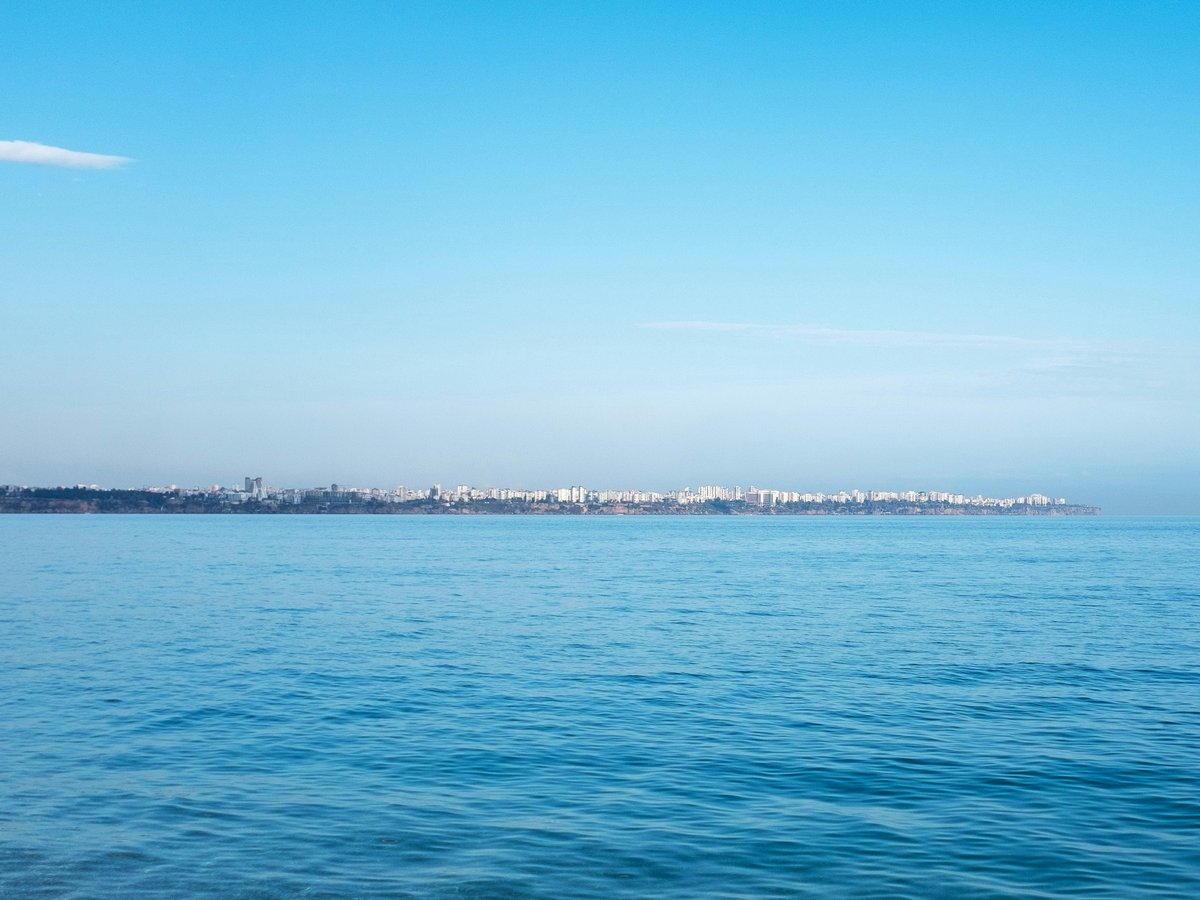
Compare every Turkey city in April →
Stay in Antalya in April
92 hotels in the Trip.com pool for Antalya, from US$26 a night.
Opens Trip.com on Fri 2 Apr to Sun 4 Apr 2027; change the dates there.
April in Antalya sits in that window between the winter rains and the summer furnace. Daytime temperatures reach about 22°C (72°F) while nights drop to around 11°C (52°F), the kind of air that feels warm on your skin by noon but sends you reaching for a jacket once the sun goes down. You can walk the Roman ruins at Perge for 3 hours without breaking a sweat, or wander Kaleiçi's narrow stone streets with the scent of orange blossom drifting from courtyard gardens. The Mediterranean is still around 18°C (64°F), though. Cold enough to discourage swimming. If your trip is built around beach days, hold off until late May.
This might be the best sightseeing month on Turkey's southern coast. The ancient city of Termessos sits at 1,000 meters in the Taurus Mountains, and April's mild air makes the steep approach through pine forest manageable in a way that July's 37°C heat does not. Düden Waterfalls carry strong flow from winter rains, and the mist off the lower falls at Lara drenches you from 20 meters away. The tourism infrastructure across Lara, Konyaaltı, and Kaleiçi is open and staffed, but you won't compete with the charter-flight crowds that pack the all-inclusive strip from June through September. About 60mm of rain falls across 6 days, a sharp drop from January's 157mm. Humidity tends to hover around 62%.
The April 23 national holiday, Ulusal Egemenlik ve Çocuk Bayramı, brings parades and children's performances to Cumhuriyet Meydanı. Domestic visitors from Istanbul and Ankara fill some hotels for the long weekend, but the numbers stay well below peak-season density. Hotel rates in April typically run 25-35% below their July and August peaks.
Why visit in April
- Comfortable sightseeing weather at 22°C (72°F), ideal for exposed archaeological sites like Perge, Termessos, and Aspendos where summer's 37°C makes extended visits risky
- Hotel rates across Lara and Konyaaltı run 25-35% below their July and August peaks, with better room availability and upgrade potential at resort properties
- Düden Waterfalls and Kurşunlu Şelalesi carry near-peak water flow from winter's 150mm+ monthly rainfall, reaching their most photogenic state before the dry summer months
- Kaleiçi's narrow streets, the Antalya Müzesi, and Hadriyanüs Kapısı are accessible without high-season queues or the need for advance bookings
Worth knowing
- Mediterranean sea temperature hovers around 18°C (64°F), which rules out comfortable swimming for most visitors until late May or early June
- Evening temperatures around 11°C (52°F) surprise travelers who packed only summer clothes expecting a warm Mediterranean coast
- Approximately 6 rainy days deliver 60mm of precipitation, enough to disrupt a planned day at fully exposed sites like Perge or Aspendos where shade is scarce
Best for
Think twice if
April in Antalya brings mild spring conditions along the Mediterranean coast. Daytime highs reach about 22.4°C (72°F) with overnight lows near 11.3°C (52°F). Rainfall drops to roughly 60mm spread across 6 days, typically as short afternoon showers rather than all-day downpours. Humidity sits around 62%, comfortable for walking. Mornings tend to start bright along the Konyaaltı waterfront, with clouds sometimes building over the Taurus Mountains by mid-afternoon. The Mediterranean sea temperature hovers around 18°C (64°F), still too cold for casual swimming. Wind off the Mediterranean is moderate, typically under 20 km/h, and rarely disrupts outdoor plans. Compared to January's 157mm deluge or July's 37°C heat, April occupies a comfortable middle ground.
Year-round climate
Averages from the last 5 years.
| Month | Avg high (°C) | Avg low (°C) | Rainfall (mm) |
|---|---|---|---|
| Jan | 15 | 7 | 157 |
| Feb | 16 | 6 | 91 |
| Mar | 18 | 8 | 71 |
| Apr | 23 | 11 | 60 |
| May | 27 | 16 | 59 |
| Jun | 33 | 21 | 21 |
| Jul | 37 | 25 | 10 |
| Aug | 35 | 24 | 7 |
| Sep | 33 | 21 | 21 |
| Oct | 27 | 16 | 45 |
| Nov | 22 | 12 | 83 |
| Dec | 17 | 8 | 173 |
Holidays and festivals in April
Public holidays
- National Independence & Children's Day(Ulusal Egemenlik ve Çocuk Bayramı)23 April 2027
Best things to do in April
Hike the ruins of Termessos
outdoorThe ancient Pisidian city of Termessos sits at 1,000 meters in Güllük Dağı National Park, about 30km northwest of Antalya. The site was never fully excavated, so temples, rock-cut tombs, and a 4,200-seat theater remain scattered through dense pine forest. The approach involves a steep 1.5km trail with roughly 300 meters of elevation gain over loose stone.
April's 20-22°C temperatures make the steep climb feasible. By July, the 37°C heat turns this hike genuinely dangerous.Booking tipNo reservation needed. Arrive before 09:00 to have the upper site largely to yourself. Bring at least 1.5 liters of water per person.
Walk the ancient city of Perge
culturalPerge, 18km east of central Antalya, preserves one of the best Roman stadiums in the Mediterranean along with a colonnaded street, a sprawling agora, and a 2nd-century bathhouse. The site is fully exposed to the sun with almost no shade across its 1km main axis.
At 22°C, you can spend 2-3 hours exploring comfortably. Summer visitors at 35°C+ face heat exhaustion risk on the shadeless colonnaded street.Booking tipCombine with Aspendos, 30km further east along the D400, for a full-day ancient cities circuit. A rental car gives the most flexibility.
Boat excursion from Kaleiçi old harbor
outdoorTraditional wooden gulet boats depart from Kaleiçi's Roman-era harbor for 4-6 hour trips along the clifftop coastline. Routes typically pass the Lower Düden Waterfall where it drops 40 meters directly into the sea, then continue to swimming stops in inlets east toward Lara.
April marks the start of excursion season. Operators offer lower prices than summer to fill early-season departures, and the sea tends to be calm.Booking tipBook directly at the harbor on the morning of your trip. Prices are negotiable in April before the summer rush begins.
Düden Waterfalls at spring flow
natureThe Upper Düden (Düdenbaşı) in Kepez and the Lower Düden on the Lara cliffs are fed by the same river. Upper Düden has a cave behind the falls you can walk through, the spray hitting your face as you duck behind the curtain. Lower Düden drops 40 meters directly into the Mediterranean from a cliff face.
Winter and spring rainfall totaling 300mm+ feeds peak water volume in April. By August, after months of near-zero rain, flow drops noticeably.Booking tipUpper Düden (Düdenbaşı Şelalesi) in Kepez is free to enter. Visit on a weekday morning to avoid domestic tour groups.
Aspendos Theater
culturalAspendos sits 47km east of Antalya, up the Köprüçay river valley. The 2nd-century Roman theater seats 15,000 and retains its full stage building, unusual for Roman theaters anywhere in the Mediterranean. The acoustics still function perfectly. Beyond the theater, an aqueduct and basilica ruins are largely unvisited.
The unshaded theater bowl is comfortable at 22°C. Summer visitors bake in the stone seats at 35°C+ with no escape from direct sun.Booking tipCombine with Perge for a full-day trip. The drive from central Antalya takes about 50 minutes via the D400.
Explore Kaleiçi without the crowds
culturalAntalya's walled old town covers roughly 35 hectares of Ottoman-era houses, Roman walls, and the 13th-century Yivli Minare. The narrow streets connect Hadriyanüs Kapısı in the east to the clifftop Karaalioglu Parkı in the south, passing tea gardens, carpet shops, and stone courtyards filled with bougainvillea.
April's low visitor numbers mean you can photograph Hadrian's Gate without 50 people in the frame. Restaurant tables in the harbor area are available without reservations.Cycle the Konyaaltı seafront promenade
outdoorA paved cycling and walking path runs about 7km along Konyaaltı Beach from the Antalya Müzesi clifftop down to the Beach Park area. Rental bikes are available near Beach Park. The snow-capped Taurus Mountains and Bey Dağları form a continuous wall to the west, reflected in the morning sea.
April mornings at 18-20°C are ideal for cycling. Summer heat makes midday rides unpleasant, and the path gets congested with beachgoers from June onward.Antalya Müzesi (Antalya Museum)
culturalOne of Turkey's largest archaeological museums, housing finds from Perge, Aspendos, Termessos, and Xanthos across 13 exhibition halls. The Hall of the Gods contains Roman-era marble statues recovered from Perge's theater and baths. The sarcophagus collection ranks among the Mediterranean's finest, and the Karain Cave prehistoric gallery goes back 50,000 years.
April's 6 expected rainy days make a museum backup plan likely. The air-conditioned halls rarely see crowds before summer, so you can stand in front of the Perge statues without shuffling through a tour group.Booking tipVisit the museum before driving to Perge. Seeing the statues in the Hall of the Gods before visiting the empty niches they came from transforms the experience.
What to eat in April
In season: fruit
Çağla (green almonds)
Fresh green almonds appear at Antalya's pazar market stalls in April, eaten whole with a sprinkle of coarse salt. The shell is still soft, the interior milky and tart. Vendors at the weekly neighborhood pazarı in Muratpaşa sell them by the kilo.
Çilek (strawberries)
Peak strawberry season on Turkey's southern coast runs through April. Roadside stalls along the D400 highway between Antalya and Manavgat sell punnets at a fraction of supermarket prices. The Antalya region's climate produces some of Turkey's earliest harvest.
Erik (green plums)
Tart, unripe green plums eaten with salt. A distinctly Turkish spring street snack that peaks through April and early May. Stalls across Muratpaşa and Kepez sell them by the bag, sometimes alongside çağla for a sour-and-milky combination.
On menus now
Enginar dolma (stuffed artichokes)
Artichoke season peaks in April across the Antalya coastal plain. Restaurants in Kaleiçi serve them stuffed with rice, dill, and lemon in the traditional Mediterranean style, often as a cold meze alongside olive oil.
Antalya piyazı
Antalya's signature white bean salad with tahini dressing appears on every esnaf lokantası menu in Muratpaşa. Spring brings the freshest flat-leaf parsley and young green onions to the April version, giving it a bite that the winter rendition lacks.
Kuzu tandır (slow-roasted spring lamb)
April marks the start of new-season lamb from the Taurus Mountain flocks. Tandır restaurants in the Döşemealtı area, a 20-minute drive north from Antalya's center, slow-cook whole legs in wood-fired pits until the meat falls apart at the touch of a fork.
Regular events in April
Ulusal Egemenlik ve Çocuk Bayramı (National Sovereignty and Children's Day)Free
Turkey's April 23 national holiday marks the 1920 founding of the Grand National Assembly in Ankara. In Antalya, children's choirs, folk dance troupes, and school parades take over Cumhuriyet Meydanı and the streets of Kaleiçi. International children's delegations from dozens of countries sometimes participate in cultural exchange programs. Government buildings and mosques fly flags, and many businesses close for the day.
April 23 (fixed date)Sandland (Antalya Kum Heykel Müzesi) season opening
The large-scale sand sculpture exhibition at Lara Beach typically opens in late April or early May, featuring works by international sculptors on a rotating annual theme. Past themes have included mythology, world civilizations, and Hollywood. The sculptures stand 3-5 meters tall across an open-air exhibition ground near the Lower Düden Waterfalls.
Late April to early May (opening dates vary by year)Ramazan Bayramı (Eid al-Fitr, periodic)Free
The 3-day national holiday marking the end of Ramadan follows the Islamic lunar calendar and shifts roughly 11 days earlier each year. When it falls in April, as it did in early April 2024, it creates a major domestic travel surge. Hotels in Lara and Konyaaltı fill with Turkish families, restaurants extend hours, and parks like Karaalioglu host evening festivities with live music and food stalls.
Shifts annually (lunar calendar). Fell in early April 2024, will overlap April again in the early 2030s.Best places this April
Karaalioglu Parkı
parkThis clifftop park on the southern edge of Kaleiçi stretches along the Mediterranean with views toward the Bey Dağları range. In April, the park's orange and lemon trees are in late blossom, filling the walking paths with citrus scent. The Hıdırlık Kulesi, a 2nd-century Roman tower, sits at the park's western end. Benches along the cliff edge face due south over open sea.
KaleiçiHadriyanüs Kapısı (Hadrian's Gate)
historic siteThe triple-arched Roman gate built in 130 AD for Emperor Hadrian's visit to Pamphylia stands at the boundary between modern Antalya and the old town. April's lower foot traffic means you can study the coffered ceiling carvings and Corinthian columns without being jostled through. Late afternoon light catches the marble at its best.
KaleiçiDüdenbaşı Şelalesi (Upper Düden Waterfalls)
natureThe upper falls in Kepez include a walking path behind the waterfall curtain, where you duck into a shallow cave as spray hits your face and the roar fills the space. In April, the falls run at near-peak volume. The surrounding park has tea gardens under plane trees where local families gather on weekends. Far less touristy than the lower falls at Lara.
KepezYivli Minare (Fluted Minaret)
historic siteThe 38-meter Seljuk-era minaret from the 13th century is Antalya's most recognizable silhouette. The surrounding complex includes a former medrese and the Nigâr Hatun Türbesi. In April, the adjacent tea gardens on the cliff edge are open but uncrowded, with views over the old harbor and the mountains beyond.
KaleiçiKurşunlu Şelalesi (Kurşunlu Waterfall)
natureAbout 22km northeast of the city center, this 18-meter waterfall sits in a pine forest nature park. A canyon trail below the falls takes about 45 minutes to walk. April's spring water levels make the cascade and the turquoise pool below it their most photogenic. The park is popular with Antalya residents for Saturday picnics.
AksuKonyaaltı Beach Park and seafront promenade
beach and promenadeThe pebble beach stretches 7km along the Mediterranean with the Taurus range rising steeply behind. In April, the seafront cafes reopen for the season and the promenade is quiet enough for morning runs without dodging crowds. The beach itself won't see sunbathers until water temperatures climb past 22°C in late May, but the walking and cycling path is at its most pleasant now.
Konyaaltı
Your packing checklist
Tick items off as you pack. Your progress saves in this browser.
All packed — have a great trip.
Insider tips
The Upper Düden Waterfalls (Düdenbaşı) in Kepez are where Antalya residents spend their weekends. The lower falls on the Lara cliffs get the tour bus crowds, but the upper falls have the cave behind the curtain and a proper park with tea gardens under old plane trees. Free entry.
Piyaz at the Kaleiçi tourist restaurants tends to cost 2-3 times the price for half the portion. The esnaf lokantası workers' restaurants a few blocks north in Muratpaşa serve the real Antalya version, heavy on tahini, with a side of şiş köfte. Ask any shop worker in the center where they eat lunch.
The Antalya Müzesi is routinely skipped by visitors who drive straight to Perge, but its Hall of the Gods has the actual Roman statues recovered from Perge's theater and baths. Seeing the marble figures in the museum before visiting the empty niches they came from at the site changes the experience entirely.
Dolmuş minibuses run fixed routes between Konyaaltı, the center, and Lara for a few lira per ride. The AntRay tram connects the Antalya Müzesi stop to the Otogar bus station. Both are cheaper and often faster than taxis for the main east-west corridor across the city.
Friday is the big pazar (open-air market) day in several Antalya neighborhoods. The Muratpaşa Friday pazarı has the widest selection of spring produce, including çağla, erik, and fresh artichokes in April. Arrive before 10:00 for the best selection.
Avoid these mistakes
- Packing only shorts and sandals expecting a beach holiday, then arriving to find the Mediterranean at 18°C (64°F). Antalya in April is a sightseeing destination, not a swimming one. The sea won't reach a comfortable 22°C until late May.
- Attempting Termessos in flip-flops or dress shoes. The site sits at 1,000 meters and the approach trail is steep, rocky, and unmarked in places. At least 2 visitors a season twist ankles on the descent. Proper hiking shoes with ankle support are non-negotiable.
- Scheduling a full outdoor day at Perge or Aspendos without checking the morning forecast. April's 6 rainy days are scattered, and both sites are fully exposed with no shelter beyond a small ticket building. Check conditions at breakfast and swap in the Antalya Müzesi on wet days.
- Staying exclusively in Lara's all-inclusive strip and never crossing into Kaleiçi or Muratpaşa. The resort zone is convenient but homogeneous. The 20-minute dolmuş ride into the old town reaches a completely different Antalya, with 2,000 years of layered architecture and restaurants that serve food to locals, not tour groups.
Practical tips for April
Most Lara and Konyaaltı resort hotels open for the season in April, but some smaller boutique pansiyons in Kaleiçi operate year-round and offer their lowest rates this month. Book Termessos and Perge day trips for mornings, when the sites open around 08:00, to get the most comfortable temperatures and the fewest visitors. The April 23 holiday (Ulusal Egemenlik ve Çocuk Bayramı) creates a long weekend that fills domestic flights from Istanbul and Ankara, so book air travel around that date at least 2-3 weeks ahead. Antalya Airport (AYT) receives early-season charter flights from Germany, the UK, and Scandinavia starting in April, though frequency is well below summer levels. Restaurant kitchens in Kaleiçi typically open for dinner between 18:00 and 19:00, later than some northern European visitors expect. Ramazan Bayramı (Eid al-Fitr) follows the lunar calendar and sometimes falls in April. In those years, domestic tourism spikes sharply for the 3-day holiday, and some restaurants outside the tourist core may adjust hours. Turkish lira cash is still preferred at pazar markets and on dolmuş rides, though card payments work at most restaurants and shops in Kaleiçi and the resort zones. Tipping at sit-down restaurants is typically 5-10% and appreciated but not obligatory.
FAQ
Is April a good time to visit Antalya?
April is one of the better months for sightseeing in Antalya, with comfortable daytime temperatures around 22°C (72°F) that make it ideal for exploring ancient sites like Perge, Termessos, and Aspendos without July's extreme heat. Hotel rates run 25-35% below summer peaks. The main drawback is the Mediterranean sea temperature of roughly 18°C (64°F), which is too cold for comfortable swimming. If you're coming primarily for the beach, wait until late May or June. For archaeology, hiking, and the old town of Kaleiçi, April is arguably the best time to visit.
What is the weather like in Antalya in April?
Expect daytime highs around 22°C (72°F) and nighttime lows near 11°C (52°F). Rainfall averages about 60mm spread over 6 days, typically as brief afternoon showers rather than all-day rain. Humidity sits around 62%, comfortable for walking. You'll want layers for the 11-degree temperature swing between morning and afternoon, and a light rain jacket for the scattered wet days. Compared to January's 157mm of rain or July's 37°C heat, April sits in a mild, comfortable middle ground.
Can you swim in the sea in Antalya in April?
Most people find the Mediterranean too cold at about 18°C (64°F) in April. Some determined swimmers manage it, but the water doesn't reach a comfortable 22-24°C until late May or June. Hotel pools along the Lara and Konyaaltı strips are a better option if you want to swim. Konyaaltı and Lara beaches are uncrowded in April, so walking, running, and beachside coffee are pleasant even without going in the water.
Is Antalya crowded in April?
Not compared to the June-through-September high season. The charter-flight season from European cities is still ramping up, and the all-inclusive resorts along Lara Beach haven't hit capacity. You'll find shorter queues at Hadrian's Gate, the Antalya Müzesi, and the ancient sites outside the city. The one exception is the April 23 national holiday weekend (Ulusal Egemenlik ve Çocuk Bayramı), which brings domestic visitors from Istanbul and Ankara for a 2-3 day break and fills some hotels.
How many days do you need in Antalya in April?
A 5-day trip covers the core well. Allow 1 day for Kaleiçi and the Antalya Müzesi, 1 day for Perge and Aspendos (combined day trip, about 8 hours with driving), 1 day for Termessos (half-day hike plus travel), 1 day for the Düden Waterfalls and Konyaaltı promenade, and 1 day as a buffer for rain or a boat excursion from the old harbor. With 7 days, you can add Kurşunlu Şelalesi and a day trip further east toward Side or the Köprülü Canyon.
Things to Do in Antalya in April
 Free cancellation
 Perge, Aspendos, Side and Waterfall Full Day Tour
City tour: free cancellation.
via Viator Free cancellation
 Full-Day Tour of Pamukkale from Antalya with Lunch
City tour: free cancellation.
via Viator Free cancellation
 Antalya City Tour 3 Waterfalls, Boat Trip – All Tickets Included
Cruise: 8 hours, free cancellation.
via Viator Free cancellation
 Perge Aspendos Side and Manavgat Waterfall Tour
Day trip: free cancellation.
via Viator Free cancellation
 Antalya /Belek : Guided City Tour w/Cable Car & Waterfalls & Boat
Cruise: free cancellation.
via Viator Free cancellation
 Antalya Full Day City Tour with Lunch History Nature and Shopping
Cruise: free cancellation.
via ViatorFind a flight to Antalya
Live fares to Antalya appear here once cookies are accepted.
Last verified by automated review (v1.7.2) on . What is automated review?