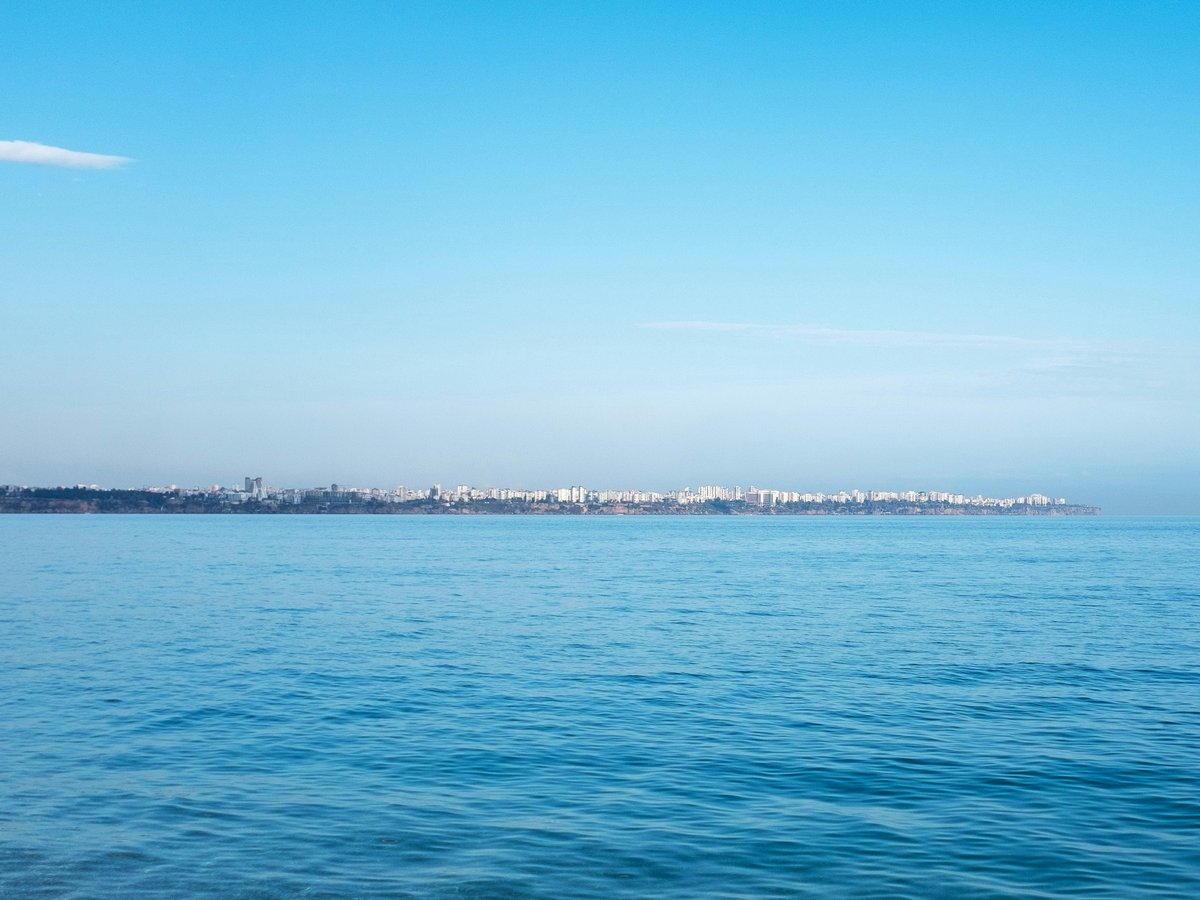
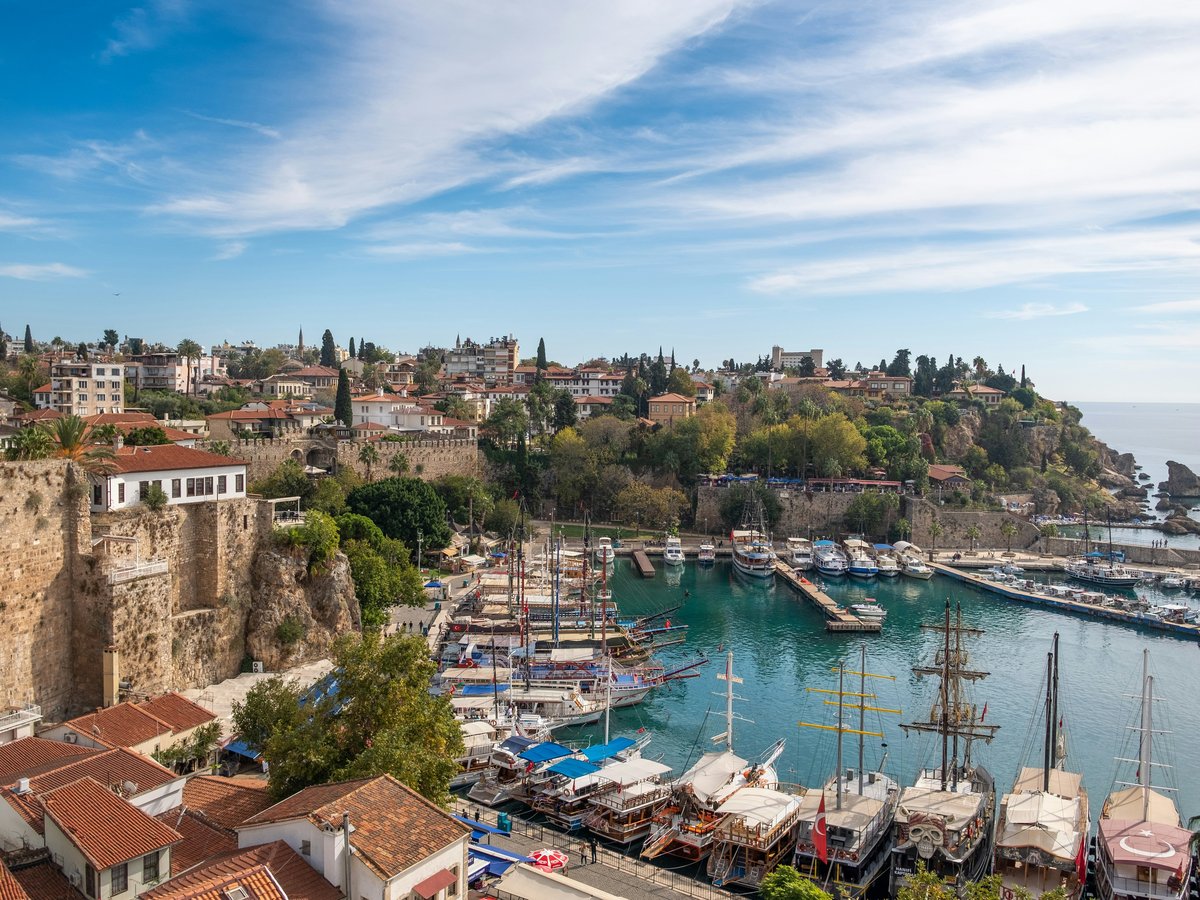
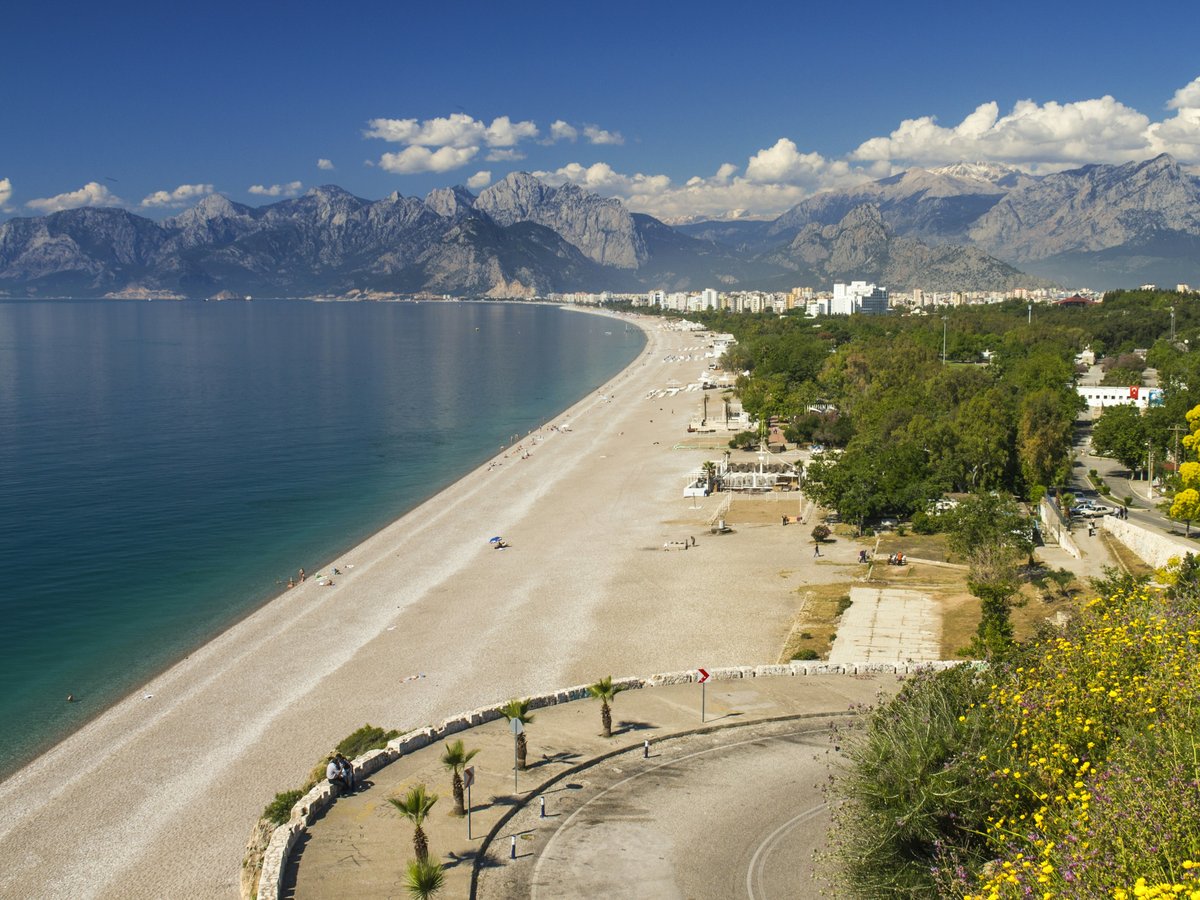
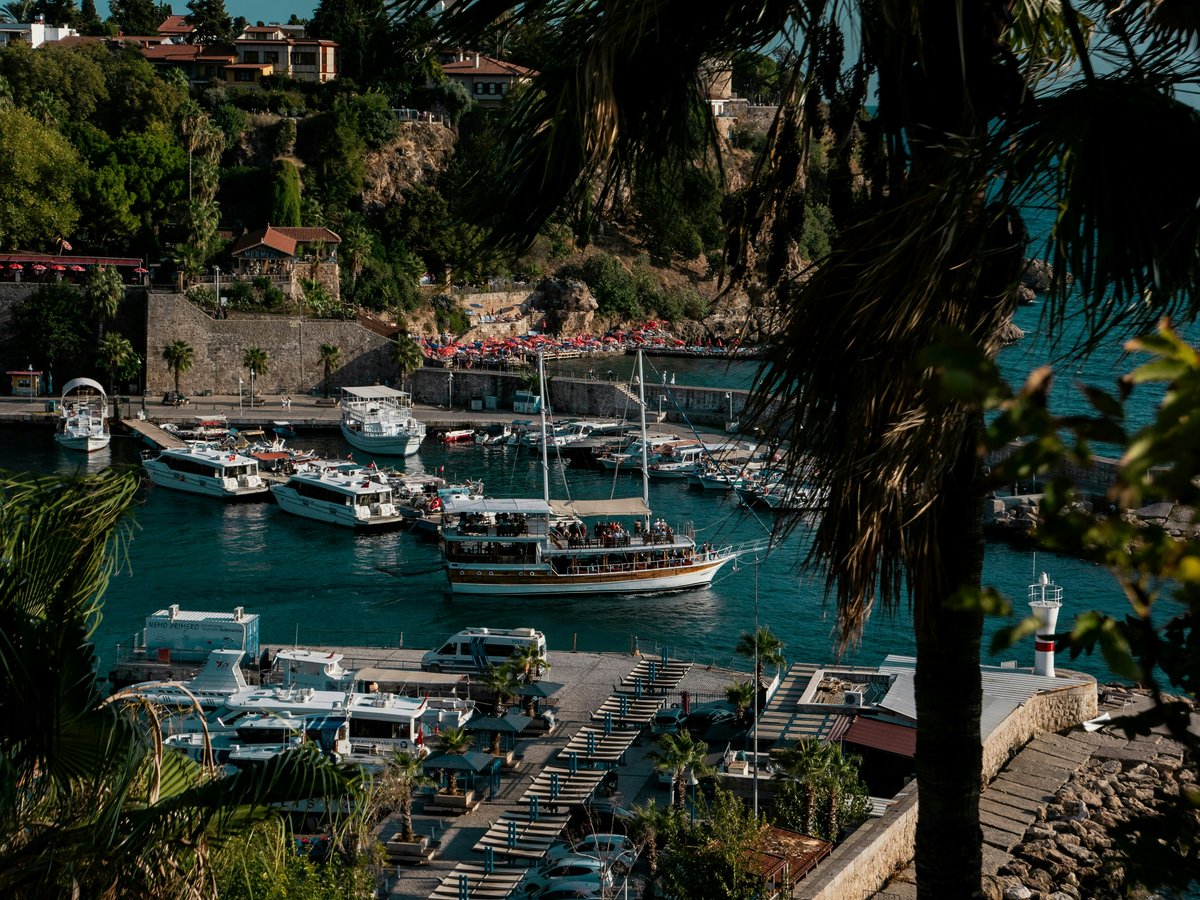
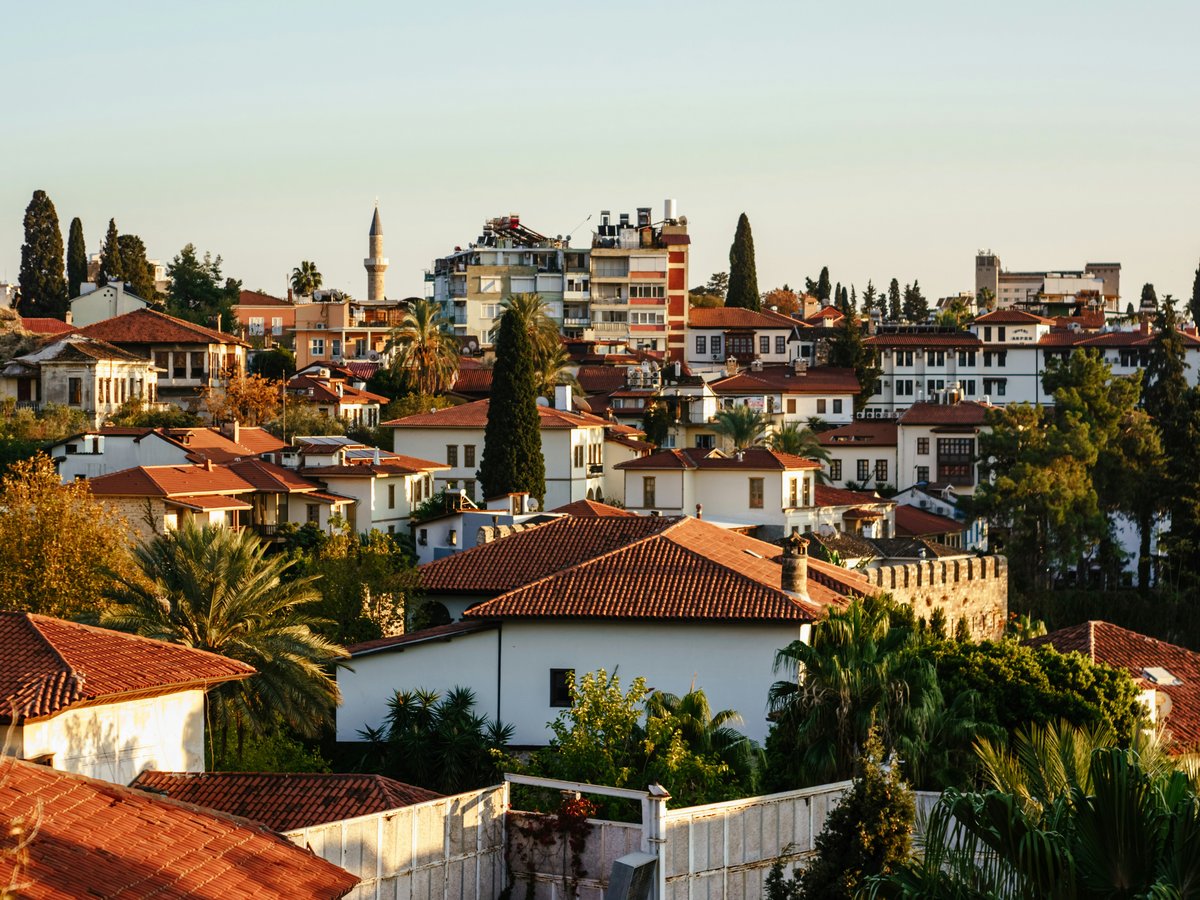
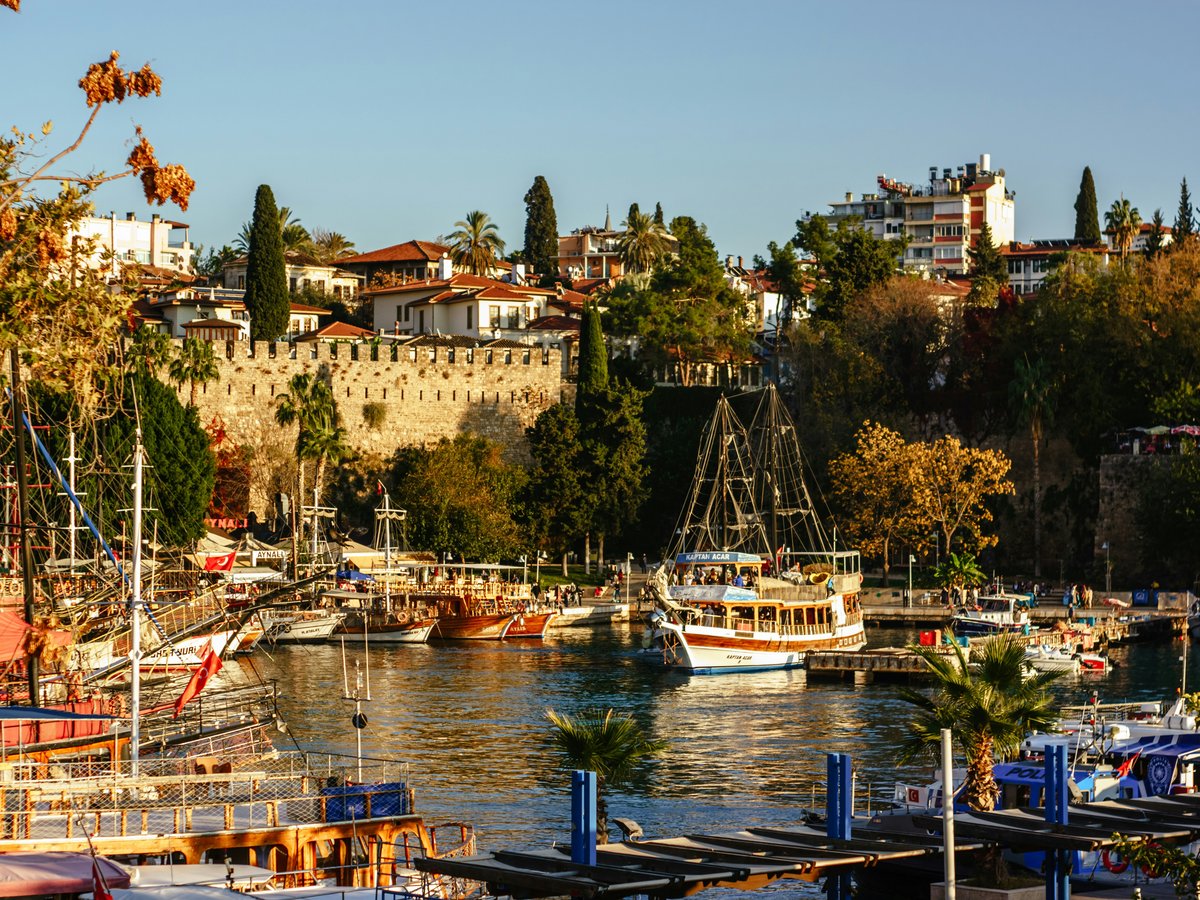
Antalya sits where the Taurus Mountains drop sharply to the Mediterranean, and the effect is immediate: you step off a plane into bright, dry heat, and within forty minutes you can be standing at the edge of the Lower Düden waterfall watching a river fall directly off a cliff into the sea. The city was founded around 150 BC by Attalus II of Pergamon, who reportedly chose the site because the crescent bay and the sheer rock plateau above it formed a natural fortress. That instinct held: Romans, Byzantines, Seljuks, and Ottomans all kept the place, each leaving a layer that's still readable in the old quarter called Kaleiçi. The name means "inside the castle," and the area earns it: Ottoman-era wooden houses lean over narrow stone lanes enclosed by remnants of Roman and Seljuk walls, and at the bottom of the slope the old harbour still shelters small boats beneath the same cliffs the Pergamene garrison once watched from. The Yivli Minare, a fluted Seljuk minaret from the thirteenth century, marks the skyline and serves as the practical orientation point locals use: if you can see it, you know which way Kaleiçi is. Modern Antalya spreads in two directions from that core. West toward Konyaaltı, a long pebble beach backed by cafés and apartment towers where residents actually spend their evenings, the promenade filling up after nine once the heat loosens. East toward Lara, where the sand is finer, the resort hotels are larger, and the coastline stretches toward the Düden cliffs. Between the two, the city runs on its own schedule: shops close in the early afternoon, reopen around five, and dinner rarely starts before eight-thirty. Antalya gets over three hundred days of sun a year, which explains why the mountains behind it stay snow-capped well into May.
Antalya in photos
Antalya right now
Answers about Antalya
-
Airport to city
From Antalya Airport (AYT), take the Havaş shuttle bus to the city center for about 150 TRY ($3.25), 40 minutes to the Otogar bus terminal. Taxis to Kaleiçi run 800-1,200 TRY ($17-26) on the meter. The public 600 bus is cheapest at 35 TRY but takes over an hour with stops.
Read the full answer → -
Best time to visit
Mid-April through mid-June and September through October. Spring brings 22-27°C days, wildflowers across the Taurus foothills, and hotel rates 40% below July peaks. September and October deliver 27-30°C air, 26°C sea water, and thinner crowds at Kaleiçi and Perge. Avoid July and August unless you don't mind 38°C heat and charter-flight crowds at Lara Beach.
Read the full answer → -
Cost per day
Budget travelers can manage Antalya on roughly $25/day (about 1,215 TRY), covering a hostel dorm in Kaleiçi, lokanta lunches, and tram rides. Midrange sits around $75 with a three-star near Konyaaltı Beach and sit-down dinners. The lira's weakness currently makes Antalya one of the cheaper Mediterranean stops, though Kaleiçi restaurant prices run 30-40% above local rates.
Read the full answer → -
Cultural etiquette
Refusing tea is the single fastest way to offend in Antalya. Accept the first glass offered in any shop along Kaleiçi's narrow streets, even if you don't finish it. Cover knees and shoulders at mosques like the 1230-built Antalya Mosque, remove shoes at the door, and tip 10% at sit-down restaurants.
Read the full answer → -
Best day trips
Perge (18 km east) and Aspendos (47 km east) pair well for a single day by dolmuş. Perge dates to roughly 1000 BC, and the Aspendos theater seats 15,000. Side (75 km east) splits between ruins and beach on the same peninsula. Phaselis (60 km southwest) has Lycian ruins and pine-forest swimming coves. Termessos (34 km northwest) rewards couples who want a mountain hike.
Read the full answer → -
Digital nomads
Antalya scores 7/10 for nomads. 100-Mbps fibre in Konyaaltı apartments runs $450-600/month, coworking options sit under $150/month, and a monthly all-in budget lands around $1,400. The 90-day e-visa works for most nationalities. Summer heat (35°C+ from June through September) drives most nomads to work mornings only, but the wifi holds and the cost stays low.
Read the full answer → -
Family-friendly
Antalya's resort infrastructure along Konyaaltı and Lara beaches means clean changing rooms, shallow wading areas, and shaded playgrounds within walking distance. The heat from June to September (regularly 38°C+) limits outdoor time to mornings. Kaleiçi's cobbled slopes defeat strollers, but the tram-connected beachfront promenade is flat and wide.
Read the full answer → -
Food culture
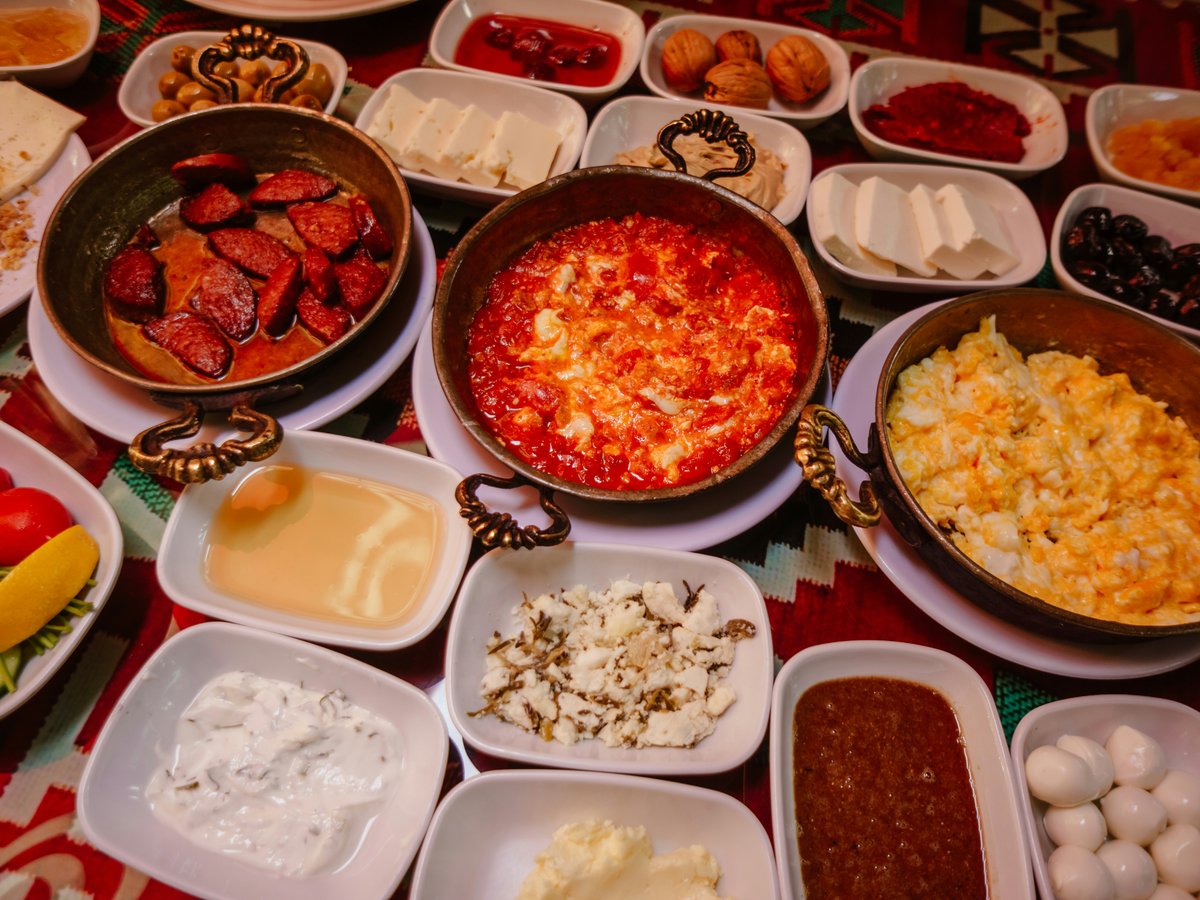
Antalya's food identity runs on piyaz, a white-bean-and-tahini salad eaten cold, and citrus that grows within city limits. Breakfast starts late, around 9:30am, with spread-style kahvaltı heavy on local cheeses and bitter orange jam. Kebab culture here leans toward tandır and şiş köfte rather than the döner that dominates Istanbul. Most sit-down meals cost 150-400 TRY ($3-8).
Read the full answer → -
Getting around
AntRay tram plus BiTaksi for the gaps. Load an AntalyaKart at any tram stop for around 20 TRY per ride (under $0.50). The tram runs a single east-west line through the center. For Kaleiçi, walk. For Lara or Konyaaltı beaches, grab a dolmuş from Sarısu or the D400 corridor. Uber does not operate in Turkey.
Read the full answer → -
How to get there
Antalya Airport (AYT), 13 km northeast of Kaleiçi, receives direct flights from over 100 European cities on Turkish Airlines, SunExpress, Jet2, and easyJet. From North America, connect through Istanbul IST. Charter traffic peaks April through October, with UK round-trips from £120 and German fares from €130.
Read the full answer → -
Is it safe?
Antalya scores 7.4 out of 10 for solo-traveler safety (see the TTDI Solo-Safety Index). Violent crime against visitors is rare. The real risks are taxi-meter refusals on the airport run, persistent carpet-shop touts in Kaleiçi after 9pm, and stray dog packs in the hillside neighborhoods above Kepez. Dial 112 for police, ambulance, or fire.
Read the full answer → -
Language basics
Turkish, written in Latin script since Atatürk's 1928 alphabet reform. English proficiency across Antalya's tourist zones sits around 5 out of 10. Hotel staff and tour operators at Lara Beach and Konyaaltı handle English well, but taxi drivers and market vendors beyond the resort hotels rarely do. Russian and German are often more common second languages here, given the city's large Russian and northern European tourist base.
Read the full answer → -
Layover guide
Yes, with 5 or more hours between flights. Antalya Airport sits 13 km east of Kaleiçi, the walled harbor district. A taxi takes about 25 minutes for roughly 500 TRY (about $10). Immigration at AYT is typically 10-15 minutes. Most Western passports enter Turkey visa-free for up to 90 days, but some nationalities need an e-visa arranged online beforehand.
Read the full answer → -
LGBTQ-friendly
Antalya scores 3/10 for LGBTQ+ friendliness (sourced from TTDI's editorial rubric). Turkey offers no same-sex marriage, civil unions, or anti-discrimination protections for queer citizens or visitors. Antalya has no visible queer scene. The Lara Beach resort strip operates on a don't-ask basis, but the city outside that corridor is conservative. Same-sex couples should book international-managed hotels and limit public affection to tourist zones.
Read the full answer → -
Where locals go
Antalya locals concentrate along Işıklar Caddesi in Muratpaşa for weeknight tea, the Konyaaltı sahil parkuru for post-work walks after 7pm, and the cheap lokantas behind Migros AVM in Hurma. Skip Kaleiçi after dark on weekends. The real social life happens in residential Güzeloba and along 100. Yıl Bulvarı's çay bahçeleri.
Read the full answer → -
Must-see
Hadrian's Gate, the 2nd-century Roman triumphal arch on Atatürk Caddesi. Walk through it into Kaleiçi, the old harbor quarter, where stone alleys drop steeply to the Roman-era marina. No ticket, no reservation. The Antalya Museum on Konyaaltı and the Lower Düden Waterfalls round out the top three, but Hadrian's Gate is the orientation point that makes the rest of the city click.
Read the full answer → -
Solo travel
Antalya rates 7/10 for solo travel. Kaleiçi's compact walkable streets, the T1 tram connecting Konyaaltı Beach to the Antalya Museum, and Turkey's çay-house culture mean you're never far from conversation or easy navigation. All-inclusive resorts in Lara and Kundu isolate solos. Stick to the city center and you'll find single-friendly pensions from 800 TRY per night.
Read the full answer → -
This week
Antalya's high-summer week runs on heat timing. Mornings before 10am are for Kaleiçi's stone alleys or the Antalya Museum (closed Monday). Beach from 10am to 4pm. Evenings revive after 7pm on the Konyaaltı cliff path. This week the Sand Sculpture Museum runs its 2026 season on Lara Beach, and Sponge Pub hosts a 90s Turkish pop night Wednesday.
Read the full answer → -
3-day itinerary
Day 1 covers Kaleiçi on foot, from Hadrian's Gate to the Roman harbor and Mermerli Beach. Day 2 heads west to Antalya Museum and Konyaaltı Beach, then north to Upper Düden Waterfall. Day 3 drives 18 km east to Perge's Roman ruins, returning via Lower Düden Waterfall and Lara Beach. About 22 km of walking total across three days.
Read the full answer → -
What to avoid
Skip the flat-fare taxi offers at Antalya Airport, the boat touts at the Kaleiçi marina, the Pamukkale day trip, and any Perge tour with a leather showroom stop. Take the Antray tram to İsmetpaşa, eat piyaz on Kazım Özalp Caddesi, and book a room near Hadrian's Gate, not a resort out in Kundu.
Read the full answer → -
What to pack
Shoes that grip on cobblestone and loose gravel top the Antalya packing list. Kaleiçi's polished limestone lanes and Termessus's mountain trails at 1,665 metres will shred flimsy soles. Pack a light scarf for mosque dress-code checks (shoulders and knees covered), quick-dry shirts for 33-35°C summer heat at 85% humidity, a Type F plug adapter for Turkey's 230V sockets, and SPF 30+ sunscreen.
Read the full answer → -
Where to stay
Kaleiçi for first-timers. The walled Ottoman quarter sits between Hadrian's Gate and the old harbor, with the AntRay tram a 5-minute walk away. Budget $50-90 for a converted mansion hotel with a stone courtyard. Konyaaltı Beach district is the alternative for a modern apartment with mountain views at $40-70 per night.
Read the full answer →
Deep guides for Antalya
Curated lists for Antalya
accommodation
-
Best boutique hotels
Antalya spreads its hotels across a coastline that runs from the limestone cliffs of Kaleiçi to the wide sand resorts east of the Düden River, with an inland plateau town completing the range. The neighborhoods closest to the old harbor carry Roman-era walls and Ottoman-quarter alleys; the eastern beach strip trades heritage for all-inclusive compounds behind long stretches of sand. Between the two, residential districts near the airport and the D-400 highway offer transit-forward bases at lower nightly rates. Price tiers compress here more than in Istanbul: a solid mid-range room runs from $88 at Kleopatra Plajı to $118 in Güzeloba, and Trip.com ratings above 8.0 are the norm rather than the exception. The choice is not luxury versus budget; it is old city texture versus beach convenience, walkable streets versus resort shuttles, coastal heat versus mountain air. These 8 neighborhoods map that split so you can match the base to the trip.
See the picks → -
Where to stay
Antalya's hotel map reads as three distinct strips. The walled old quarter, Kaleiçi, occupies a compact limestone headland above the Roman harbor; its converted Ottoman houses double as boutique hotels on lanes too narrow for cars. North of the walls, the commercial grid around Muratpaşa and Güllük runs along the tram corridor, where mid-range rooms hold ratings near 8.9 at $90 a night. East, the Lara and Kundu coastline trades cobblestone for sand and all-inclusive resort gates, stretching the price range from $68 budget rooms to resort towers above $1,200. Between these poles sit transitional neighborhoods, Barbaros and Haşimişcan, offering tram-accessible beds outside the old-town markup. The airport corridor northwest gives layover travelers a practical stop with rates around $115. Choosing a neighborhood here means choosing a trip: walkable history behind the walls, business convenience on the tram line, or a beach compound where you may not leave the property for a week.
See the picks →
attractions
-
Best museums
Antalya's museums cover more ground than a beach-first itinerary suggests, and this list puts the weight of the collecting on its oldest institution. Antalya Museum, an archaeology museum in Konyaaltı dating from 1922, is the obvious anchor, with three smaller, more personal stops around it: a museum on Hesapçı Sokak in Muratpaşa District, a house museum named for Atatürk that dates from 1986, and a toy museum on İskele Caddesi. The planning detail that matters most is the calendar. The archaeology museum keeps Monday-to-Saturday hours, and the toy museum opens Tuesday to Sunday, so a Sunday or a Monday visit still has somewhere to go. This list is for the traveller who wants an afternoon out of the sun with something to show for it: a parent looking for a stop the children will not resent, a history reader who wants the archaeology first-hand, and anyone who would rather spend 1 good hour in a room of real objects than another in a hotel lobby. Take them in rank order if you have the time, and start with the largest.
See the picks → -
Must-see attractions
Antalya's best sights sit in two very different settings, and you need both to understand the place. Up in the hills are the ancient cities: Perge, an ancient city of Pamphylia, and Termessus, another ancient city. In town, the sights stand within walking distance of each other: a cluster of mosques, one of them dating from 1230, a triumphal arch, and a structure in Kaleiçi, the old quarter. Further out there is a cave in Döşemealtı, and back in the centre a monument from 1964. This list is for the visitor who would rather spend a morning on stone and history than a fourth day on a sunbed. Skip the packaged coach days that try to cover all of it before lunch; pick one ancient city, give it a full morning, and walk the town sights in the cooler hours. We chose these twelve because each one tells you something about the city that the others do not, not because they are famous.
See the picks →
food
-
Best cafes
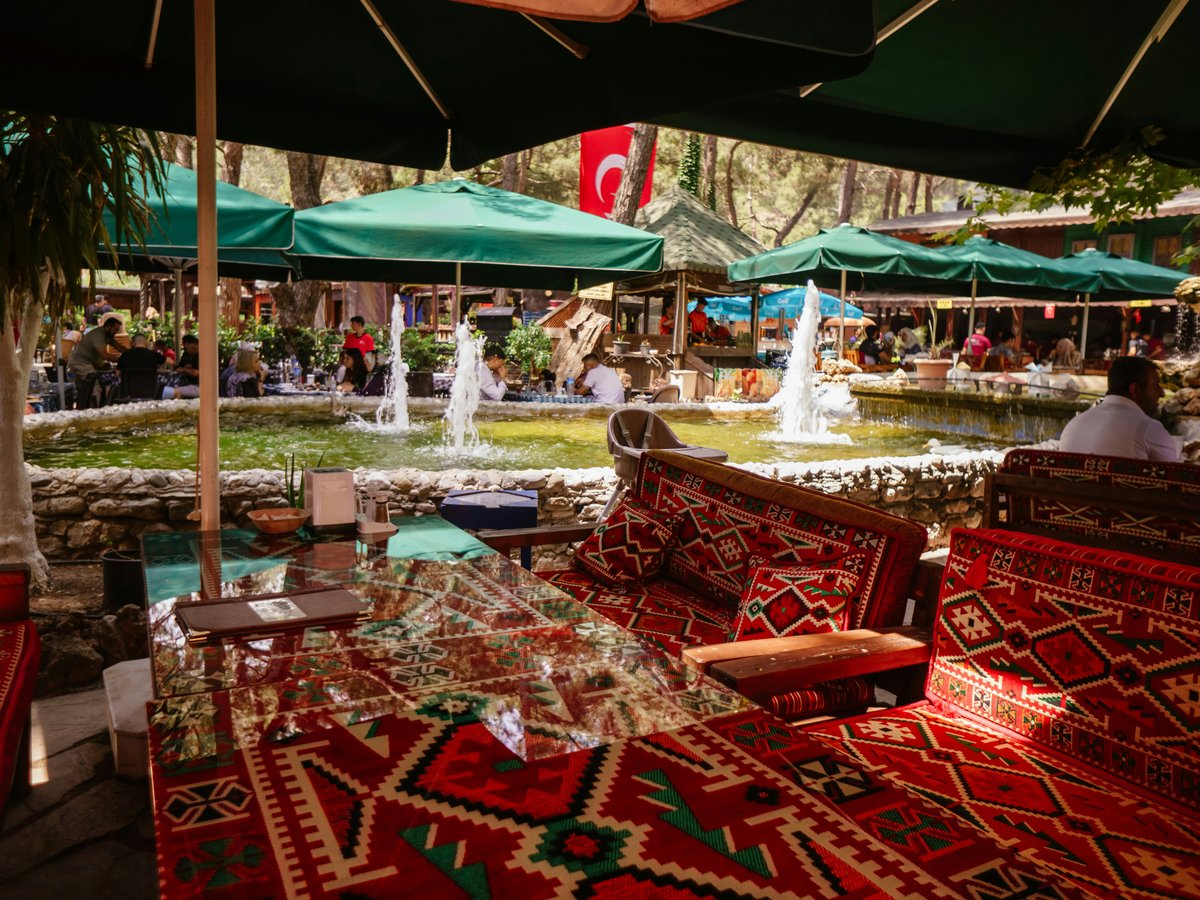
Antalya's cafe scene is not one thing. Along the boulevards and back streets you'll find espresso rooms doing modern third-wave work; farther out toward the Kepez neighbourhoods the day starts at a bakery counter with a paper wrapper and hot dough; along Lara Caddesi the coffee reads as a lifestyle product. The twelve places below are not a ranking of the 'best' cafes so much as a map of what different Antalya mornings look like: a 05:00 börek queue on Yener Ulusoy Bulvarı, an all-night coffee window, a pastane doing coffee, cake, breakfast and ice cream under one roof. Skip the beachfront chains chasing the cruise trade; the addresses here are where residents drink their first coffee and their last. Some are single rooms open before dawn, some are 24/7 rooms that never fully close, one is a shop-floor cafe inside a mall. Bring cash, keep expectations pragmatic, and let the hour of day decide which of these twelve is yours.
See the picks → -
Best restaurants
Antalya's restaurant scene splits along a coastline. Inside the Kaleiçi walls, tavernas and stone-walled meyhanes serve Ottoman-era classics on lanes barely wide enough for two people to pass; out along Lara Caddesi and the Fener seafront, hotel dining rooms and standalone kitchens work with the sea in view and menus that swing from Aegean fish to Tokyo-style sushi. Between them, the working neighbourhoods of Muratpaşa and Konyaaltı hold the places locals eat on a Tuesday: kebap counters that open at breakfast, dessert parlours that stay lit until midnight, sushi rooms that opened for the Russian-speaking families now living west of the airport. This list is twelve restaurants pulled from that spread, ranked, addressed, and cited. It is aimed at the traveller who wants to eat where the cooking has a point of view rather than where the tour bus stops, and it favours kitchens that keep unusual hours, hold a specific cuisine, or occupy an address worth walking to on its own.
See the picks →
Browse by traveler type
Book experiences in Antalya
 Free cancellation
 Pamukkale Hierapolis and Cleopatra's Pool Tour with lunch from Antalya
Day trip: 12 hours, free cancellation.
via Viator Free cancellation
 Perge, Aspendos, Side and Waterfall Full Day Tour
City tour: free cancellation.
via Viator Free cancellation
 Full-Day Tour of Pamukkale from Antalya with Lunch
City tour: free cancellation.
via Viator Free cancellation
 Antalya City Tour 3 Waterfalls, Boat Trip – All Tickets Included
Cruise: 8 hours, free cancellation.
via Viator Free cancellation
 Perge Aspendos Side and Manavgat Waterfall Tour
Day trip: free cancellation.
via Viator Free cancellation
 Antalya /Belek : Guided City Tour w/Cable Car & Waterfalls & Boat
Cruise: free cancellation.
via Viator Free cancellation
 Antalya Full Day City Tour with Lunch History Nature and Shopping
Cruise: free cancellation.
via Viator Free cancellation
 Pamukkale and Hierapolis Day Tour from Antalya with Lunch
Day trip: free cancellation.
via Viator Free cancellation
 ''Turkish Maldives'' Boat trip Adrasan-Suluada island from Antalya
Day trip: 10 hours, free cancellation.
via Viator Free cancellation
 Pamukkale and Hierapolis Daily Tour From Antalya
Day trip: free cancellation.
via Viator Free cancellation
 Antalya: City Tour with Boat Trip, Old Town & Waterfalls
City tour: 7 hours, free cancellation.
via Viator Free cancellation
 Antalya City Tour With Duden Waterfalls & Old Town Small Group
Day trip: 7 hours, free cancellation.
via ViatorBrowse by interest
Find a flight to Antalya
Live fares to Antalya appear here once cookies are accepted.
Last verified by automated review (v1.7.2) on . What is automated review?