Compare every Japan city in August →
Stay in Osaka in August
125 hotels in the Trip.com pool for Osaka, from US$13 a night.
Opens Trip.com on Fri 6 Aug to Sun 8 Aug 2027; change the dates there.
August in Osaka is, to put it plainly, a test of your heat tolerance. Daytime temperatures hover around 33°C (92°F), which looks survivable on paper until the 74% humidity wraps around you like a wet blanket the moment you step outside. The air between the buildings in Dotonbori barely moves. Concrete radiates stored heat back at you from below. By midday you will be ducking into every konbini you pass just to stand in the air conditioning and collect yourself. This is not a gentle summer: this is subtropical, sweat-through-your-shirt-by-10am summer.
That said, August carries a cultural weight the milder months simply don't offer. Obon, the Buddhist ancestor-honoring festival, falls around August 13–16 and completely reshapes the city's rhythm. Offices empty out, families reunite, and bon odori folk dances appear at temple grounds across Osaka: Shitennoji and Sumiyoshi Taisha among them. The Naniwa Yodogawa Fireworks Festival, typically held the first weekend of August, draws crowds to the banks of the Yodo River for one of the Kansai region's largest hanabi displays. If you time it right and structure your days around the heat rather than against it, August Osaka rewards the effort with things you genuinely cannot experience in October or April.
Expect domestic tourism to spike hard during Obon week: shinkansen trains fill to standing room, hotel rates jump, and popular restaurants in Namba and Shinsekai get noticeably busier. International visitor numbers tend to be lower than spring or autumn, since most seasoned travelers have learned to dodge the heat. Budget for more indoor time than you would normally plan. Shift your outdoor hours to early morning and after sunset. Keep cold mugicha within arm's reach at all times. August Osaka is a city best experienced in calculated bursts, not marathon sightseeing days.
Why visit in August
- Naniwa Yodogawa Fireworks Festival and PL Hanabi light up early August with some of the largest pyrotechnic displays in the Kansai region: genuine spectacle you cannot see in other months
- Obon (August 13–16) brings bon odori dances, toro nagashi lantern floatings, and a distinctly contemplative atmosphere to temples across the city that no shoulder-season visit replicates
- Rooftop beer gardens on department stores in Umeda and Namba operate only from roughly June through September, with August being their peak: cold draft beer above the city skyline while the evening breeze finally kicks in
- Evening food culture hits its stride as locals shift dining outdoors to cooler night hours, filling the yatai stalls and open-air seats along Dotonbori with an energy the daytime heat suppresses
Worth knowing
- The humidity pushes the feels-like temperature regularly past 38°C (100°F), making any sustained midday walking genuinely unpleasant and occasionally risky for heat exhaustion
- Obon week drives hotel prices sharply upward and fills shinkansen trains to capacity: if you haven't booked by early July, expect to pay a premium or miss out on central locations
- Typhoon season is active through August and September, with storms occasionally brushing or hitting the Kansai coast and disrupting transit, flights, and outdoor events with limited advance warning
- Roughly 206mm of rain across about 15 days means you will almost certainly hit at least a few heavy downpours that can sideline outdoor plans for hours
Best for
Think twice if
August is Osaka at its hottest and most humid. Temperatures peak around 33°C (92°F) during the day and rarely dip below 26°C (79°F) at night, which means the city never fully cools down. Humidity sits around 74% on average, though it regularly pushes higher after rain. You will likely see about 15 days with some rainfall, totaling roughly 206mm for the month: these tend to come as intense afternoon or evening downpours rather than all-day drizzle, often clearing within an hour or two. The combination of heat, humidity, and intermittent heavy rain defines the month. Morning hours before 9am and evenings after 6pm are when the city becomes tolerable for walking. Midday belongs to air-conditioned department stores, underground shopping arcades, and the blessed interior of Spa World.
Seasonal caution
- Heat stroke is a real and documented risk: Osaka's fire department reports a sharp increase in heat-related emergency calls every August. Carry water, take shade breaks, and watch for dizziness or nausea during outdoor time, particularly between 11am and 3pm
- Typhoon season runs from roughly July through October, with August and September being the most active months. Storms can escalate from advisory to direct hit within 48 hours, grounding flights, halting train service on the JR and Nankai lines, and flooding low-lying areas near the Yodo River
- UV index regularly reaches 8–10 (very high to extreme) through August: sunburn happens faster than most visitors expect, even on overcast days when the humidity tricks you into thinking the sun is weaker than it is
Year-round climate
Averages from the last 5 years.
| Month | Avg high (°C) | Avg low (°C) | Rainfall (mm) |
|---|---|---|---|
| Jan | 9 | 1 | 42 |
| Feb | 10 | 1 | 61 |
| Mar | 15 | 5 | 123 |
| Apr | 20 | 10 | 158 |
| May | 23 | 14 | 235 |
| Jun | 27 | 20 | 253 |
| Jul | 32 | 25 | 202 |
| Aug | 33 | 26 | 206 |
| Sep | 30 | 23 | 197 |
| Oct | 24 | 15 | 135 |
| Nov | 18 | 9 | 97 |
| Dec | 12 | 3 | 44 |
Holidays and festivals in August
Public holidays
- Mountain Day(山の日)11 August 2027
Headline events
Naniwa Yodogawa Fireworks Festival
First Saturday of August (sometimes second Saturday, depending on the year)
One of the largest fireworks displays in the Kansai region, launched from the banks of the Yodo River near Juso and Umeda. Roughly 10,000 shells go up over the course of an hour-plus show, with viewing spots stretching along both riverbanks. Hundreds of thousands of spectators in yukata line the bridges and embankments: the atmosphere is distinctly Osakan, loud and communal. Getting a decent spot means arriving two to three hours early with a ground sheet.
Obon
August 13–16 (some observances begin August 10, cleanup events through August 18)
Japan's annual Buddhist festival honoring the spirits of ancestors. In Osaka this means bon odori dance circles at temple grounds across the city, toro nagashi lantern floatings on rivers and canals, and a general shift in the city's pace as many businesses close and families gather. Shitennoji and Sumiyoshi Taisha both hold notable Obon observances. The holiday period also triggers one of the country's largest internal migration patterns: trains and highways fill as city residents return to family homes in the countryside.
Best things to do in August
Watch the Naniwa Yodogawa Fireworks from the riverbanks
festivalStake out a spot along the Yodo River embankment near Juso or on the Umeda side, spread a blue tarp, and watch roughly 10,000 fireworks shells explode over the water. The scale is hard to oversell: shells detonate close enough that you feel the concussion in your chest. Most spectators wear yukata, food stalls line the approach routes, and the whole thing has a communal, almost neighborhood-party energy that's distinctly Osaka.
Held only once a year, typically the first Saturday of August. This is the date: miss it and wait twelve months.Booking tipNo tickets needed for the free riverbank areas, but arrive by 5pm for a decent spot. Paid reserved seating sells out weeks in advance through the official website.
Bon Odori dancing at Shitennoji
culturalJoin the circular folk dance at one of Osaka's oldest temples during Obon. The dances are open to everyone, no experience expected: locals in yukata will wave you into the circle and the movements are repetitive enough to pick up within a few minutes. Taiko drums and folk songs provide the rhythm. The temple grounds glow with paper lanterns. Even if you only watch, the atmosphere is worth the trip to Tennoji.
Bon Odori happens exclusively during the Obon period in mid-August. The Shitennoji gathering is one of the largest in the city.Booking tipFree and open to all. Arrive around 7pm when the dancing typically starts. Wearing a yukata is welcome but absolutely not required.
Rooftop beer garden hopping in Umeda
food and drinkThe major department stores (Hankyu, Hanshin, Daimaru) open their rooftops as beer gardens every summer, each with its own theme, food lineup, and atmosphere. You pay a flat rate for a two-hour all-you-can-drink session, grab some yakitori or Korean barbecue depending on the venue, and sit above the city as the sun goes down and the Umeda skyline lights up. The beer is cold, the breeze finally arrives around 7pm, and the whole thing feels like Osaka's reward for surviving the daytime heat.
Rooftop beer gardens operate roughly June through September, but August evenings are the warmest and the gardens are at their liveliest. Several close by early September.Booking tipWeekend evenings fill up: some venues take reservations online starting in June. Weekday visits rarely need advance booking.
Night food crawl through Dotonbori and Shinsekai
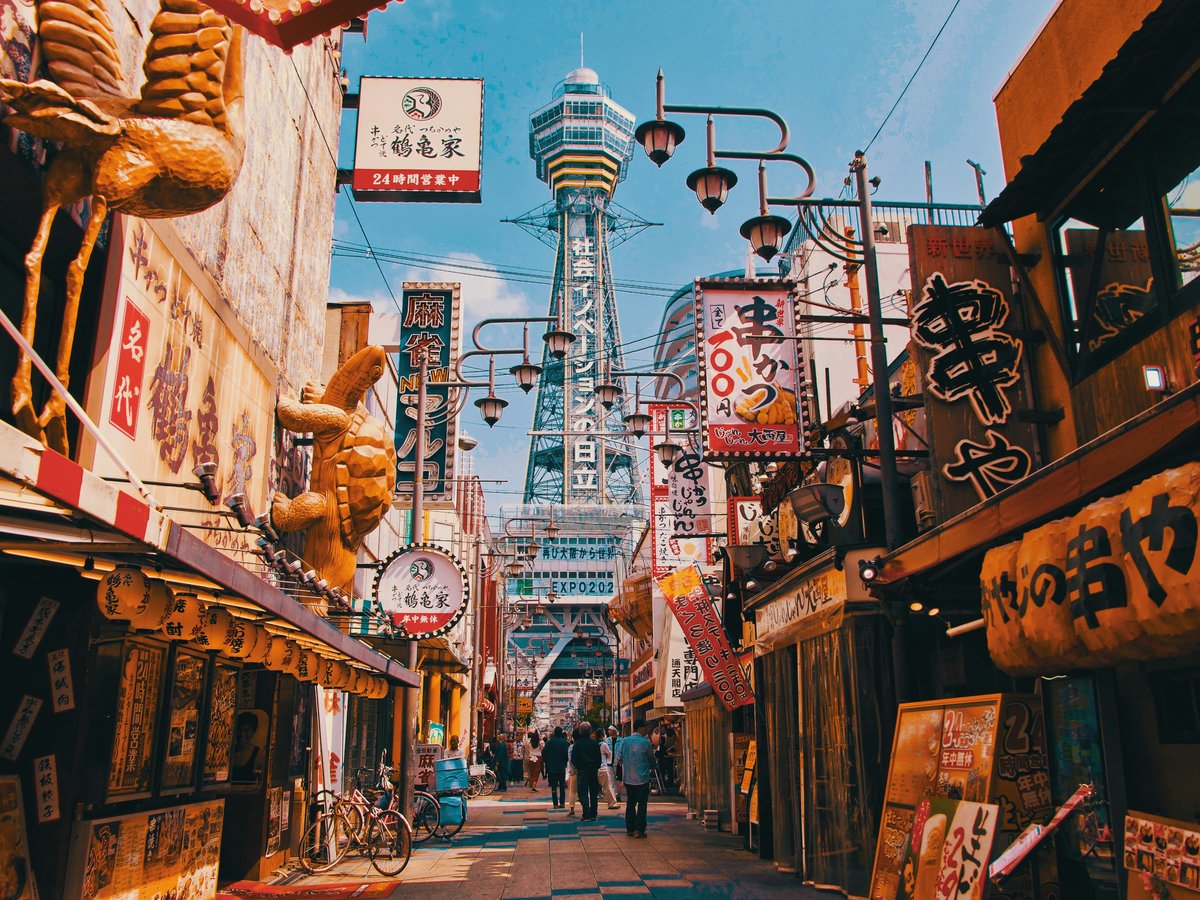
food and drinkAugust's heat makes daytime dining feel like a chore, but after sunset the energy inverts. Dotonbori's neon-lit canal banks fill with people eating takoyaki from Wanaka and Kukuru, grilled kushikatsu stalls in Shinsekai start their evening rush, and the tiny ramen joints under the Namba railway arches crank up their fans. The trick is starting around 8pm and grazing rather than committing to one big meal: a few takoyaki here, some kushikatsu there, cold beer in between.
The extreme daytime heat pushes Osaka's eating culture outdoors and later into the night through August. Street stall operators extend hours, outdoor seating appears along canals, and the atmosphere after dark is more lively than any other season.Escape the heat at Spa World in Shinsekai
relaxationA multi-story onsen and water park complex in Shinsekai with themed bathing floors rotating between Asian and European spa styles. The rooftop pool area is open in summer. Spending an entire afternoon here (soaking, swimming, napping in the rest areas) is how plenty of Osaka locals survive August weekends. The water park floor is family-friendly and genuinely fun. The bathing floors require going unclothed in the traditional Japanese onsen style, which catches some international visitors off guard.
When the outdoor temperature is 33°C with 74% humidity, a full day at an indoor water complex stops being indulgent and starts being strategic. The rooftop pool is only open during summer months.Booking tipWeekends get crowded by early afternoon. Arriving before 11am gives you the run of the place. Bring your own towel or rent one on-site.
Sunrise visit to Osaka Castle before the heat
sightseeingOsaka Castle Park opens at dawn and the grounds are free to enter. An early morning visit (arriving around 5:30–6am) lets you walk the stone walls, moats, and plum grove in temperatures fifteen degrees cooler than midday. The light is soft, the park is populated mostly by joggers and tai chi practitioners, and you can photograph the castle keep without the usual tourist crowds. By 9am the heat starts building and you retreat to an air-conditioned café with the whole morning's exercise done.
In spring or autumn you can visit the castle comfortably at any hour. In August, the only pleasant outdoor window is before 8am. The dawn strategy turns a heat liability into a genuinely atmospheric experience: misty moats, golden morning light on the white castle walls.Booking tipThe castle keep interior opens at 9am, but the park grounds are open from dawn. If you want to enter the keep, circle back when it opens or return another morning.
Underground shopping arcade marathon on a rain day
shoppingOsaka has one of the most extensive underground shopping networks in Japan. The Namba Walk, Whity Umeda, and Diamor Osaka complexes connect major stations through kilometers of air-conditioned, covered corridors lined with shops, cafés, and restaurants. When a typhoon warning or heavy downpour cancels your outdoor plans (and in August this will likely happen at least once) a full day underground is not a backup plan, it is a legitimate Osaka experience.
August averages 15 rainy days and 206mm of rainfall. Having a compelling rain-day plan is not optional, it is a scheduling necessity. The underground arcades turn a weather disruption into productive (and comfortable) exploration.Day trip to Koya-san for cooler temperatures and Obon atmosphere
day tripMount Koya sits at roughly 800 meters elevation in Wakayama Prefecture, about 90 minutes by train and cable car from Namba Station. The temperature drops noticeably (often 5–7°C cooler than Osaka city) and the ancient cedar forests around Okunoin cemetery feel like a different world from the concrete heat below. During Obon, the atmosphere at Koya-san intensifies with candle ceremonies at Okunoin, where tens of thousands of memorial stones line a moss-covered path through towering cryptomeria.
Obon is the most spiritually significant time to visit Koya-san. The Mantoroe candle ceremony at Okunoin on August 13 illuminates the cemetery path with 100,000 candles: a scene that only happens once per year. The cooler elevation is a physical relief.Booking tipShukubo (temple lodging) on Koya-san fills up fast during Obon week. Book at least a month ahead if you want to stay overnight. Day trips work without reservation.
What to eat in August
In season: fruit
Momo (white peach)
Japanese white peaches hit their peak in late July through August, and the ones from Okayama and Wakayama prefectures are startlingly fragrant: you can smell a ripe one from across the room. Juicy, low-acid, and so soft the flesh practically dissolves. You will find them whole at depachika fruit counters in Hankyu and Takashimaya department stores, or as the star of seasonal parfaits at kissaten across the city.
Suika (watermelon)
Watermelon is summer in Japan. August is peak season, and the large, dark-green Tama varieties are everywhere: sliced at festival stalls, served as dessert at izakaya, sold whole at supermarkets with a satisfying thump test. At Obon gatherings and fireworks festivals, eating cold watermelon outdoors is practically a ritual.
On menus now
Hamo (pike conger)
The defining summer delicacy of the Osaka-Kyoto corridor. Hamo has a complex bone structure that requires a specialized knife technique called honegiri: scores of precise cuts that render the tiny bones edible. You will find it served as hamo-otoshi (blanched and chilled with ume plum vinegar), in clear dashi soup, or tempura-fried. August is peak season, and Osaka's kappo restaurants and even some izakaya in Kitashinchi feature it prominently. The texture is delicate, almost creamy, nothing like the firm white fish most visitors expect.
Kakigori (shaved ice)
August is when Osaka's kakigori specialists hit their stride. Forget the neon-syrup snow cones: the good shops in Nakanoshima and Tennoji use hand-shaved blocks of natural ice from places like Nikko, topped with seasonal fruit syrups, condensed milk, or matcha from Uji. The texture of properly shaved natural ice is powdery, almost like fresh snow. Lines at popular spots can stretch thirty minutes on weekends, but in this heat, nobody complains.
Hiyashi chuka (cold ramen)
A summer-only dish that appears on menus roughly from June through September and then vanishes completely. Chilled ramen noodles topped with strips of ham, cucumber, egg crepe, and tomato, dressed in either a sesame or soy-vinegar sauce. It is the lunch default for half of Osaka when the idea of eating hot ramen in 33°C heat seems borderline reckless. Simple, cold, and satisfying.
What to drink
Nama biiru (draft beer) at rooftop beer gardens
Technically a drink, but the rooftop beer garden is a seasonal institution. Department stores in Umeda and Namba open their rooftops from June through September with all-you-can-drink draft beer packages, yakitori, and edamame. August is when these gardens peak: warm evenings, the city lights below, cold Asahi or Suntory in hand. The food is usually nothing special, but that is not really the point.
Regular events in August
PL Art of Fireworks (PL Hanabi Geijutsu)Free
Massive fireworks display organized by the Perfect Liberty religious organization in Tondabayashi, southern Osaka Prefecture. Roughly 20,000 shells: one of the largest single-night fireworks shows in Japan. Viewable from hilltops across southern Osaka. Not as well known to international visitors as the Yodogawa display, but arguably more spectacular in sheer volume.
August 1Bon Odori at Sumiyoshi TaishaFree
Osaka's most famous shrine hosts traditional bon odori folk dancing on its grounds during the Obon period. The shrine's distinctive arched Taikobashi bridge and vermillion buildings provide a striking backdrop. Food stalls selling yakisoba, takoyaki, and ramune line the approach path.
Mid-August (around August 13–15)Tenjinbashi-suji Summer Night MarketsFree
Japan's longest covered shopping street, Tenjinbashi-suji Shotengai in Kita-ku, extends its evening hours during August with occasional night market events featuring local food vendors, vintage clothing, and handmade goods. The covered arcade keeps rain off and the atmosphere stays lively past 9pm.
Select weekends in August (dates vary by year)Summermania and outdoor concerts at Maishima
Osaka's Maishima venue complex on the reclaimed island hosts several large-scale outdoor music festivals and concerts through August, drawing domestic and international acts. The lineup varies by year, but August typically sees at least one major multi-day festival.
Various dates through AugustBest places this August
Spa World
onsen and water parkWhen the heat becomes genuinely oppressive (and in August it will) this multi-story onsen and water park in Shinsekai is a full-day retreat. The themed bathing floors rotate between Asian and European styles each month, and the rooftop pool is open only in summer. The surrounding Shinsekai neighborhood has some of the best kushikatsu in the city for when you emerge.
ShinsekaiNakanoshima Park
park and riversideThe narrow island between the Dojima and Tosabori rivers is one of the few places in central Osaka where you can catch a breeze. In August, the rose garden is past its May peak but the riverside promenades come alive after sunset with joggers, couples, and the reflected lights of the Nakanoshima skyline. The nearby Museum of Oriental Ceramics offers air-conditioned cultural relief during the day.
NakanoshimaSumiyoshi Taisha
shrineOsaka's oldest and most architecturally distinctive shrine, with a pre-Buddhist design style you won't see at most other shrines in Japan. During Obon the grounds host bon odori dances and the atmosphere shifts from its usual quiet dignity to something more communal and festive. The Taikobashi drum bridge is particularly photogenic in the evening lantern light.
SumiyoshiAbeno Harukas Observation Deck (Harukas 300)
observation deckJapan's tallest skyscraper offers a 360-degree view from the 58th–60th floors in full air conditioning. On clear August days (which do happen between the rain) you can see from Rokko mountains to Awaji Island. On hazy, humid days the city disappears into a white-grey murk below you, which has its own atmospheric quality. Either way, it's a comfortable hour off your feet.
TennojiMinoo (Minoh) Park
park and natureA forested valley about 30 minutes north of Umeda by train, with a popular hiking trail leading to a 33-meter waterfall. The tree canopy provides genuine shade and the temperature drops a few degrees from the city center. August is before the famous autumn maple season, so crowds are lighter. The fried momiji tempura (maple leaf fritters) at trail-side stalls are a year-round Minoo specialty: crispy, sweet, and oddly satisfying.
Minoo (accessible from Hankyu Minoo Station)Kuromon Market
marketOsaka's central market, sometimes called the city's kitchen, is at its liveliest early in the morning before the heat builds. August is peak season for seasonal fruits (white peaches, grapes, watermelon) and the market stalls display them like art. Fresh sashimi, grilled seafood on sticks, and tamagoyaki from the vendors make for a proper breakfast crawl. Arrive before 9am; by noon the crowds and heat both become uncomfortable.
NippombashiHozenji Yokocho
alley and diningA narrow stone-paved alley just off the chaos of Dotonbori, lined with small bars, kappo restaurants, and the moss-covered Hozenji temple. The alley has an old Osaka atmosphere that the neon strips nearby have long since lost. In August evenings, the lantern light and the sound of water splashing on the moss-covered Fudo Myo-o statue create a pocket of calm. Several of the small restaurants here serve excellent hamo (pike conger) in season.
Namba
Your packing checklist
Tick items off as you pack. Your progress saves in this browser.
All packed — have a great trip.
Insider tips
The underground shopping arcades (Namba Walk, Whity Umeda, Diamor Osaka) are not just rain shelters. They connect major stations through kilometers of air-conditioned corridors and are how locals commute on foot in August without ever touching the outdoor heat. Learn the underground routes between your hotel and the nearest station and you will dramatically reduce your heat exposure.
Konbini (convenience stores like 7-Eleven, Lawson, FamilyMart) sell an entire category of summer cooling products that most international visitors walk past without noticing: instant cooling spray for clothes, adhesive cooling patches for your forehead and neck, frozen sports drinks, and cold hand towels. Stock up on your first morning and carry them daily.
If you want a decent free spot for the Naniwa Yodogawa Fireworks, cross to the Juso side (north bank) of the river rather than the more popular Umeda side. It is slightly less packed, the walk from Hankyu Juso Station is shorter, and the angle on the shells is just as good. Locals know this; first-timers default to Umeda.
Many small restaurants and family-run shops in Osaka close for three to five days during Obon week (August 13–16) as owners return to their home towns. If there is a specific restaurant you want to try, check ahead: a locked door with a handwritten sign is a common August disappointment. Chain restaurants and department store dining floors stay open.
For kakigori, skip the tourist-area spots charging 1,500 yen for Instagram-friendly mountains of ice and look for the small shops in residential neighborhoods of Tennoji or Fukushima that locals line up at. The ice quality (natural block ice versus machine-shaved) makes an enormous difference in texture, and the neighborhood spots tend to use it.
Avoid these mistakes
- Scheduling outdoor temple and castle visits between 11am and 3pm: this is not merely uncomfortable in August, it is a genuine heat stroke risk. Osaka's fire department reports a sharp increase in heat-related emergencies every August, and tourists who push through midday heat are disproportionately affected. Go at dawn. Seriously.
- Failing to book accommodation for Obon week (August 13–16) until July or later. Obon is one of Japan's three major holiday migrations, and Osaka (as a hub city with a major international airport) fills up fast. Hotels in Namba and Umeda can be fully booked or priced at 50–60% above normal. Travelers who wait pay more or end up in Sakai or Amagasaki instead.
- Underestimating typhoon disruption as something that only affects coastal areas or islands. A typhoon passing even 200km offshore can ground all Kansai International Airport flights, halt JR train service across the region, and shut down outdoor events including the fireworks festivals. Check the Japan Meteorological Agency forecasts daily starting a week before your trip and keep flexible backup plans.
- Bringing only one umbrella or rain plan for the entire trip. August rain in Osaka tends toward sudden, heavy cloudbursts that can dump 30mm in an hour and then stop. These can hit multiple times per day. The mistake is treating rain as a single-event inconvenience rather than a recurring feature of every August day: your rain gear should be on your person at all times, not back at the hotel.
Practical tips for August
Book Obon-week accommodation and any shinkansen seats by early July at the latest: availability drops fast and prices climb steeply after that. Carry a Suica or ICOCA transit card to avoid ticket machine queues in stations where crowds swell during the holiday period. Most convenience stores sell same-day travel insurance covering heat-related medical incidents if your home policy does not. Dress codes in Osaka are relaxed by Japanese standards (shorts and sandals are fine at almost all restaurants except high-end kappo) but carry a light cover-up for temples that request covered shoulders. JR and private rail lines occasionally suspend service ahead of approaching typhoons, sometimes preemptively, so monitor the JR West English-language app and have backup plans (subways typically run longer than surface rail). Department stores close around 8–9pm but food floors start discounting prepared foods after 7pm: a useful strategy for keeping food costs down. Pharmacies (look for the green cross) stock oral rehydration salts (OS-1 brand) and cooling products in dedicated summer displays near the entrance. If you are flying out of Kansai International Airport during Obon week, allow extra time: the airport access bridge can see unusual traffic volume.
FAQ
Is August a good time to visit Osaka?
Honestly, it is one of the more challenging months. The heat and humidity are at their annual peak (33°C (92°F) with 74% humidity) and the combination is draining for outdoor sightseeing. That said, August is not without its draws. Obon in mid-August brings unique cultural experiences you cannot get in the comfortable shoulder months, and the Naniwa Yodogawa Fireworks Festival is one of the Kansai region's best. If you go in with realistic expectations, shift your outdoor time to early morning and evening, and lean into the seasonal food and festival calendar, August has things to offer. But if you have flexibility on timing, October or November are significantly more comfortable.
What is the weather like in Osaka in August?
Hot and humid, consistently. Average highs sit around 33°C (92°F) with lows near 26°C (79°F), which means the city never fully cools down even at night. Humidity averages 74% and regularly pushes higher after rainfall. Expect about 15 days with some rain through the month, totaling roughly 206mm: usually as heavy afternoon or evening downpours rather than all-day drizzle. Typhoons are possible and can bring intense wind and rain for one to two days. The overall feel is subtropical: the kind of weather where you start sweating the moment you leave air conditioning.
Is Osaka crowded in August?
It depends on the week. International tourist numbers tend to be lower than the peak spring (cherry blossom) and autumn (fall foliage) seasons: most experienced travelers avoid the heat. However, Obon week (August 13–16) is one of Japan's biggest domestic holiday periods, and Osaka's hotels, trains, and popular restaurants fill up with Japanese families and returning residents. Outside Obon week, crowds at major attractions like Osaka Castle and Dotonbori are moderate by Osaka standards. The heat itself thins daytime crowds significantly: many visitors retreat indoors by midday.
What should I wear in Osaka in August?
Light, loose-fitting, moisture-wicking fabrics in light colors. Cotton feels good for about ten minutes before it absorbs sweat and stays damp. Quick-dry synthetics or merino blends handle the humidity much better. Shorts and sandals are perfectly acceptable almost everywhere: Osaka is not a formal city. Carry a light cardigan or long-sleeve layer for aggressively air-conditioned interiors, which can be 12–15 degrees cooler than outside. Comfortable waterproof footwear matters: puddles are a daily reality. A hat or parasol for sun protection is standard for locals and worth adopting.
Are typhoons common in Osaka in August?
August falls within Japan's typhoon season (roughly July through October), and one or two storms typically approach or affect the Kansai region each August. Direct hits on Osaka are not annual occurrences, but near-misses can still bring heavy rain, high winds, and transit shutdowns. The Japan Meteorological Agency issues warnings with 24–72 hours lead time in most cases. Trains (especially JR lines) tend to suspend service preemptively. Flights out of Kansai International Airport may be cancelled. The practical advice is to monitor forecasts daily, keep your schedule flexible during any typhoon advisory, and have indoor backup plans ready.
Things to Do in Osaka in August
 Free cancellation
 Osaka Kickstart: Hotspots & Hidden Gems Tour
Day trip: free cancellation.
via Viator Free cancellation
 Sushi Making Osaka Roll and Authentic Japanese Sushi Class
Cooking class: 1.7 hours, free cancellation.
via Viator Free cancellation
 Ultimate Osaka Walking Tour: Castle, Dotonbori, Gems & Lunch
Day trip: free cancellation.
via Viator Free cancellation
 Kyoto Day Tour: Fushimi Inari, Arashiyama, Kinkaku-ji & Kiyomizu
Day trip: 10 hours, free cancellation.
via Viator Free cancellation
 Osaka Local Foodie Walking Tour in Dotonbori and Shinsekai
City tour: 3 hours, free cancellation.
via Viator Free cancellation
 From Kyoto / Osaka: Kyoto Must-see Spots & Nara Park One Day Tour
Day trip: 9 hours, free cancellation.
via ViatorFind a flight to Osaka
Live fares to Osaka appear here once cookies are accepted.
Last verified by automated review (v1.7.2) on . What is automated review?