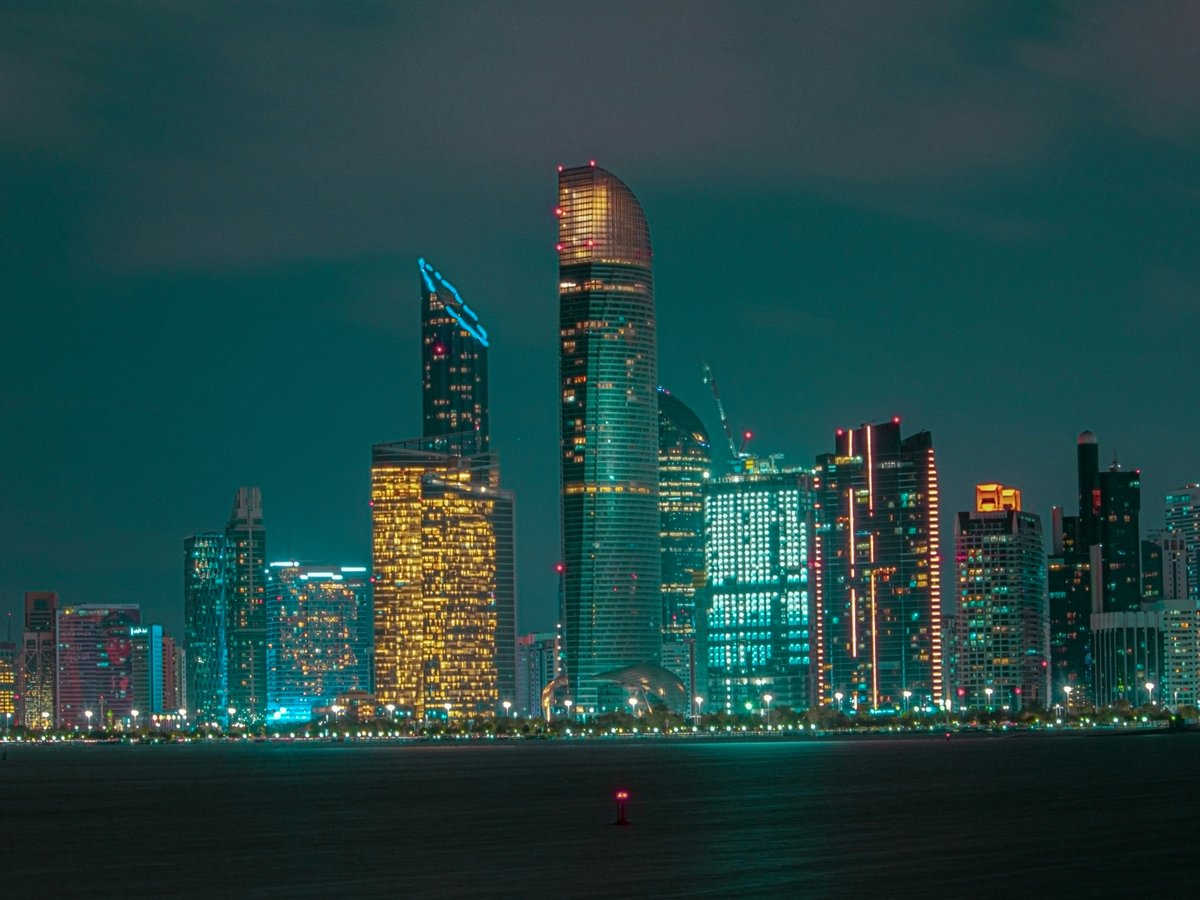
Stay in Abu Dhabi in March
64 hotels in the Trip.com pool for Abu Dhabi, from US$22 a night.
Opens Trip.com on Fri 5 Mar to Sun 7 Mar 2027; change the dates there.
March in Abu Dhabi sits in a sweet spot that the summer months can only dream about. Daytime temperatures average 28.9°C (84°F), warm enough for Saadiyat Beach but cool enough to walk the 8-kilometer Corniche without that crushing Gulf heat that arrives by May. Nights settle around 20.6°C (69°F), which means outdoor dining along the Al Maryah Island waterfront or the terraces in Al Bateen feels pleasant. Humidity holds at roughly 60%, noticeable but nothing like the 85%+ wall you hit in August.
This is the tail end of Abu Dhabi's high season, and the city is still running at full capacity. The Louvre Abu Dhabi, Sheikh Zayed Grand Mosque, and Qasr Al Watan all see steady visitor numbers through March. Hotel rates at the Saadiyat Island and Yas Island resorts remain elevated, though they've typically eased 10-15% from the December-January peak. One thing worth checking before you book. Ramadan shifts roughly 11 days earlier on the Gregorian calendar each year, and in some years it overlaps with March. During Ramadan, restaurants close during daylight fasting hours, iftar buffets take over every hotel lobby at sunset, and the city's pace slows considerably until evening. It's a fascinating time to visit if you're prepared, but it catches unprepared tourists off guard.
Outside of Ramadan years, March is one of the two or three best months to be here. The weather cooperates, the cultural calendar is still active, and you can do things like desert camping or kayaking through the mangroves at Jubail without battling 45°C heat. The Mother of the Nation Festival typically runs on the Corniche through March, adding free concerts, Emirati food stalls, and cultural programming to the mix.
Why visit in March
- Average highs of 28.9°C (84°F) allow full-day outdoor exploration, from the Corniche to the Empty Quarter. You won't need to retreat indoors by 10 a.m. the way you would in July.
- Beach season is in full swing at Saadiyat Public Beach and Al Bateen Beach without the overcrowding of December holiday weeks. Sea temperatures reach 23-24°C (73-75°F).
- The Mother of the Nation Festival typically runs through March on the Corniche, offering free cultural programming, Emirati food stalls, and evening concerts.
- Desert conditions are ideal for overnight camping and dune experiences. Morning temperatures in the Empty Quarter hover around 18-22°C (64-72°F).
- The Louvre Abu Dhabi and Qasr Al Watan keep extended evening hours through high season, and the softer March sun angle creates the best light conditions under the Louvre's latticed dome.
Worth knowing
- Hotel rates remain 25-40% above the annual average. Saadiyat Island resorts and the Emirates Palace still charge close to peak pricing through March.
- If Ramadan falls in March for your travel year, most daytime dining options close, alcohol service is restricted, and live entertainment pauses. Hotel iftar buffets become the main evening dining option.
- UV index reaches 8-9 on clear days, high enough to burn fair skin in under 20 minutes despite the moderate air temperature.
- Weekend crowds at Sheikh Zayed Grand Mosque can mean 30-45 minute queues for entry on Fridays and Saturdays, even with the timed-entry system.
Best for
Think twice if
March brings Abu Dhabi's most agreeable weather. The average high of 28.9°C (84°F) and low of 20.6°C (69°F) land in a narrow comfort band between the mild winter months and the approaching summer furnace. Rainfall is minimal at 15mm across roughly 1 rainy day, so you're unlikely to lose any outdoor plans to weather. Humidity sits at 60%, noticeable in the afternoon but not the drenching moisture of July-August which tops 85%. Mornings feel genuinely fresh, especially near the water along the Corniche or at Saadiyat Beach. By mid-afternoon the sun has real bite to it, but shade and a breeze off the Gulf make it manageable. Evenings cool enough that you might want a light layer if you're sitting still at a waterfront restaurant in Al Maryah Island past 9 p.m.
Seasonal caution
- UV index reaches 8-9 in March, categorized as 'very high' by the WHO. Sunburn is possible within 15-20 minutes of unprotected midday exposure, even though air temperatures feel moderate.
- Occasional shamal winds (typically 1-3 days in March) can reduce visibility with fine sand and dust, dropping air quality noticeably. If you have respiratory sensitivities, carry a light scarf or mask for these days.
Year-round climate
Averages from the last 5 years.
| Month | Avg high (°C) | Avg low (°C) | Rainfall (mm) |
|---|---|---|---|
| Jan | 24 | 18 | 13 |
| Feb | 25 | 18 | 10 |
| Mar | 29 | 21 | 15 |
| Apr | 33 | 23 | 14 |
| May | 37 | 27 | 7 |
| Jun | 39 | 30 | 0 |
| Jul | 40 | 32 | 1 |
| Aug | 41 | 32 | 1 |
| Sep | 39 | 30 | 0 |
| Oct | 35 | 28 | 2 |
| Nov | 31 | 24 | 1 |
| Dec | 26 | 20 | 6 |
Best things to do in March
Kayaking through Jubail Mangrove Park
natureJubail Mangrove Park on Jubail Island offers guided kayak tours through dense mangrove channels, with herons, greater flamingos, and the occasional sea turtle visible in the shallow waters. The park spans over 6,000 hectares of protected mangrove habitat and opened to the public in 2020. The boardwalks are free to walk, but the kayaking is the draw.
March water temperatures around 22-24°C are comfortable without a wetsuit, and the moderate air temperature means you won't overheat paddling. Greater flamingos feed in the shallows from October through April, making March one of the last months to spot them. By May, 36°C heat makes a 2-hour paddle genuinely miserable.Booking tipWeekend morning slots (Friday-Saturday) book out 2-3 weeks ahead. Weekday afternoon slots are easier to get. Book online through the official parks portal.
Sunset visit to Sheikh Zayed Grand Mosque
cultureThe Grand Mosque holds 40,000 worshippers and features 82 white marble domes, over 1,000 columns, and the world's largest hand-knotted carpet at 5,627 square meters. The transition from brilliant white marble in daylight to blue-purple illumination at sunset is the single most photographed moment in Abu Dhabi.
March sunset falls around 6:15-6:30 p.m., and the mosque stays open to visitors until 10 p.m. Evening temperatures around 22-24°C let you linger in the courtyards comfortably. In summer, the marble radiates stored heat well past sunset, making the experience less pleasant.Booking tipFree entry with timed tickets. Arrive 45 minutes before sunset for the best light transition. Guided tours in English run every 30 minutes.
Overnight desert camping in the Empty Quarter
adventureThe Rub' al Khali (Empty Quarter) begins roughly 2.5 hours south of Abu Dhabi city. Operators run overnight camps with dune driving, camel rides, and stargazing in one of the darkest-sky regions accessible from a major city. The dunes south of Liwa Oasis rise past 300 meters, some of the tallest in the world.
Nighttime desert temperatures in March drop to 15-18°C (59-64°F), ideal for sleeping outdoors. Summer nights stay above 30°C, making camping uncomfortable. December-January nights can dip below 10°C, which is too cold for light sleepers without serious gear.Booking tipBook at least a week ahead for weekend departures (Thursday-Friday nights). Operators run reduced schedules during Ramadan if it overlaps with March.
Exploring Qasr Al Hosn and the Heritage Festival
cultureQasr Al Hosn is Abu Dhabi's oldest stone building, dating to the 1760s. It served as the ruling Al Nahyan family's seat until the 1960s. The coral-and-stone construction tells you more about pre-oil Abu Dhabi than any of the glass towers around it. The adjacent Cultural Foundation hosts rotating exhibitions on Emirati heritage and contemporary art.
The Qasr Al Hosn Festival typically runs in late February through mid-March, adding live demonstrations of traditional crafts, pearl diving heritage, falconry, and Emirati cooking to the permanent exhibition. The outdoor courtyard events only work in cooler months.Booking tipEntry to the fort is 30 AED for adults. Festival events are generally free, but some craft workshops require advance registration.
Saadiyat Island beach day and Louvre Abu Dhabi
beach and cultureSaadiyat Public Beach stretches for 400 meters of white sand on the island's north shore, with sun lounger rentals for 75 AED. The Louvre Abu Dhabi sits 10 minutes away by car. Jean Nouvel's 180-meter latticed dome creates shifting geometric light patterns across the water features and galleries below, an effect that changes with the sun's position hour by hour.
March sea temperatures reach 23-24°C (73-75°F), warm enough for comfortable swimming without the need to brace yourself on entry. The beach-then-museum combination works because you can swim in the morning and retreat to the air-conditioned galleries by early afternoon when UV peaks. In summer, even the walk from the parking lot is punishing.Booking tipLouvre tickets cost 63 AED online, 80 AED at the door. Tuesday evenings the museum stays open until 10 p.m. and is noticeably quieter than weekends.
Al Ain day trip with Jebel Hafeet summit drive
day tripAl Ain sits 90 minutes east of Abu Dhabi at roughly 300 meters elevation. The Al Ain Oasis, a UNESCO World Heritage Site, contains over 147,000 date palms irrigated by a traditional falaj water channel system. Jebel Hafeet rises 1,249 meters and the 11.7-kilometer summit road offers views across the Hajar Mountains and into Oman.
March temperatures at the Jebel Hafeet summit run 5-7°C cooler than Abu Dhabi city, making the viewpoint stops comfortable. The oasis is walkable in March heat, while the same walk in June means temperatures above 43°C in the palm groves. March light on the orange-red Jebel Hafeet rock is particularly good in late afternoon.Booking tipDrive early to reach Al Ain Oasis by 9 a.m. for the best light through the palm canopy. The summit road has no shade or water, so carry supplies. The hot springs at the base are currently closed for development.
Friday brunch at a waterfront hotel
diningFriday brunch is Abu Dhabi's defining social ritual. Hotels like the St. Regis Saadiyat, Jumeirah at Saadiyat Island, and Shangri-La Qaryat Al Beri lay out 3-4 hour spreads with Emirati, Indian, Southeast Asian, and European stations. Some include beverage packages. The format is unique to the Gulf and has no real equivalent elsewhere.
March weather allows brunches with outdoor terrace seating overlooking the water. Summer brunches are confined indoors behind tinted glass. Pool and beach access is included at several Saadiyat properties, and March water temperatures make that a genuine perk rather than a formality. Note that Friday brunches may be paused or reduced during Ramadan.Booking tipBook by Wednesday for popular venues. Prices range from 200-600 AED per person depending on the venue and package. Cancellation policies tighten during high season.
What to eat in March
In season: fruit
UAE greenhouse strawberries
The UAE's hydroponic and greenhouse strawberry season runs December through March. By late March you're catching the tail end, but farms in Al Ain still produce sweet, compact berries. Look for them at weekend farmers' markets and supermarkets marketed as local produce rather than imported.
On menus now
Harees
A slow-cooked porridge of cracked wheat and lamb, harees is traditional Emirati comfort food that peaks during Ramadan iftar spreads. Hotels like the Shangri-La Qaryat Al Beri run dedicated Ramadan tents where harees is a centerpiece dish. Proper preparation takes 6-8 hours of gentle stirring.
Hammour (orange-spotted grouper)
March falls in the fishing season for hammour, the Gulf's most prized table fish. The Mina Zayed fish market in Al Meena sells it fresh off the dhows each morning. Ask for it grilled whole with bezar spice blend at any seafood restaurant in the port area. The flesh is firm, white, and mildly sweet.
Street food peaks
Luqaimat
Crispy fried dough balls drizzled with date syrup or dibs. These appear on Emirati menus year-round, but during Ramadan (which overlaps March in some years) they become the signature iftar sweet. Stalls along the Corniche during the Mother of the Nation Festival serve them fresh. The texture should be crunchy outside, pillowy inside, each about the size of a golf ball.
What to drink
Jallab
A chilled drink made from carob, dates, grape molasses, and rose water, served over crushed ice with floating pine nuts. Jallab peaks in popularity during Ramadan iftar, but March's warming afternoons make it a welcome refresher regardless of the calendar. Street vendors along Al Khalidiyah serve it for 5-8 AED.
Regular events in March
Mother of the Nation FestivalFree
A multi-week cultural festival on the Abu Dhabi Corniche celebrating Emirati heritage, with food markets, live music stages, carnival rides, and art installations. The festival honors Sheikha Fatima bint Mubarak and typically draws over 500,000 visitors across its run. Evening temperatures in March make the outdoor programming comfortable.
Mid-March through early April (dates shift annually)Abu Dhabi Classics concert series
The Abu Dhabi Classics program brings international orchestras and soloists to venues including the Emirates Palace Auditorium and Manarat Al Saadiyat throughout the cultural season. March typically features 2-3 performances before the season wraps in April. Past performers have included the London Philharmonic and Berlin Staatskapelle.
Various dates throughout MarchQasr Al Hosn FestivalFree
An annual heritage festival at Abu Dhabi's oldest fort featuring traditional crafts, pearl diving demonstrations, falconry displays, and Emirati cooking workshops. The festival runs alongside the permanent exhibition in the downtown Al Hosn district. Attendance has grown past 50,000 visitors in recent years.
Late February through mid-March (varies by year)Best places this March
Louvre Abu Dhabi
museumJean Nouvel's 9,200-square-meter museum on Saadiyat Island houses over 700 works spanning 12,000 years of human creativity. The 180-meter dome filters sunlight into shifting geometric patterns across the water features below. March's lower sun angle creates some of the most dramatic light effects of the year, particularly between 10 a.m. and noon. Quietest on Tuesday and Wednesday mornings.
Saadiyat IslandJubail Mangrove Park
natureA 6,000-hectare protected mangrove reserve on Jubail Island with elevated boardwalks and kayak launch points. Greater flamingos feed in the shallows from October through April, and March is one of the last months to spot them before they move on. The park is free to enter on foot. Kayak rentals run 75-100 AED per hour.
Jubail IslandQasr Al Watan (Presidential Palace)
landmarkThe working presidential palace opened to visitors in 2019. The Great Hall's 30-meter dome, the palace gardens spanning over 380,000 square meters, and the library of 50,000+ volumes on Arab governance are all open to the public. The evening light show projects onto the palace facade nightly at 7:30 p.m. in March. Outdoor areas are comfortable to walk in March temperatures.
Al Ras Al AkhdarAl Maryah Island waterfront
dining and walkingAbu Dhabi's financial district island has a 5.4-kilometer waterfront promenade lined with restaurants and cafes. The Galleria Al Maryah Island anchors the commercial area. March evenings on the waterfront terraces run 22-24°C, which tends to be the precise temperature range where outdoor dining in Abu Dhabi feels right. The promenade connects to the Cleveland Clinic and Four Seasons at the northern end.
Al Maryah IslandSaadiyat Public Beach
beachA 400-meter stretch of natural white sand on Saadiyat Island's north shore, backed by protected dunes where hawksbill turtles nest from March through June. Swimming is comfortable in March with water at 23-24°C. Sun lounger rental costs 75 AED for the day, and a small cafe serves drinks and light food. The beach sits a 10-minute walk from the Louvre Abu Dhabi.
Saadiyat IslandMina Zayed port area and fish market
marketThe traditional fish market near the old port sells hammour, kingfish, shrimp, and crab brought in by dhow fishermen each morning. Arrive before 7 a.m. for the best selection. The adjacent fruit and vegetable souk carries UAE-grown strawberries in the tail end of their season. The port area still has working wooden dhows and gives you a sense of pre-skyline Abu Dhabi that the rest of the city has paved over.
Al MeenaAl Bateen and Hudayriyat Island
beach and recreationAl Bateen is one of Abu Dhabi's older residential neighborhoods with a quieter public beach used more by residents than tourists. Nearby Hudayriyat Island opened its leisure district in 2021 with cycling tracks, a surf park, and an OCR obstacle course spread across reclaimed land. March weather makes the outdoor fitness facilities usable from dawn to dusk without heat risk.
Al Bateen
Your packing checklist
Tick items off as you pack. Your progress saves in this browser.
All packed — have a great trip.
Insider tips
The Louvre Abu Dhabi on Tuesday evenings stays open until 10 p.m. and draws a fraction of the weekend crowd. You can photograph the dome's rain-of-light effect without other visitors in your frame, and the waterfront cafe terrace is nearly empty by 8:30 p.m.
At Mina Zayed fish market in Al Meena, you can buy fresh fish and take it to any of the adjacent restaurants to cook. They charge 15-25 AED per kilogram to grill, fry, or curry it in any style. The same hammour costs 3-4 times more prepared at a waterfront restaurant.
The Grand Mosque is open to visitors until 10 p.m. Go at night rather than fighting the daytime crowds. The marble glows blue-white under the lighting, the reflecting pools mirror the illuminated domes, and the courtyard is typically quiet after 8:30 p.m. on weeknights.
Abu Dhabi's public buses are clean, air-conditioned, and cost 2 AED per ride. Route 94 connects downtown to Yas Island in about 40 minutes. Most tourists default to taxis (35-50 AED per trip to the islands), but the bus system works well for predictable routes.
If Ramadan overlaps with your March dates, the iftar tents at the Shangri-La Qaryat Al Beri and the Emirates Palace are worth experiencing even for non-Muslim visitors. The communal sunset meal is one of the most generous dining experiences in the Gulf, and the atmosphere shifts completely once the call to prayer sounds.
Avoid these mistakes
- Not checking whether Ramadan overlaps with March in your travel year. The Islamic calendar shifts roughly 11 days earlier each Gregorian year. If Ramadan falls in March, most restaurants close during daylight hours, alcohol service is restricted, and live entertainment pauses. This isn't necessarily bad, but it fundamentally changes the trip if you haven't planned for it.
- Skipping the desert because Abu Dhabi 'is the desert already.' The city itself is glass towers and manicured waterfronts. The actual Empty Quarter landscape, with 300-meter dunes and zero light pollution, starts 2-2.5 hours south. An overnight trip in March's comfortable 15-18°C nighttime temperatures is one of the best experiences reachable from the city.
- Spending all your time on Yas Island at Ferrari World and Warner Bros. World. Both are air-conditioned and operate identically year-round. March is one of the few months where outdoor activities genuinely shine in Abu Dhabi. Prioritize the mangroves, the desert, and the beaches while the weather cooperates, because by May that window closes.
- Underestimating mosque queue times on weekends. Sheikh Zayed Grand Mosque can have 30-45 minute entry queues on Fridays and Saturdays between 10 a.m. and 2 p.m. Weeknight evening visits between 7 and 9 p.m. are faster, cooler, and better lit for photos.
Practical tips for March
Book desert camping and Jubail Mangrove kayaking at least 1-2 weeks ahead for weekend slots. Both are popular with residents and tourists alike, and operators run smaller groups in high season. If your trip coincides with Ramadan, hotel restaurants remain open for hotel guests throughout the day, but standalone restaurants close during daylight fasting hours (roughly 5:30 a.m. to 6:30 p.m. in March). Dress modestly in public during Ramadan as a courtesy, and avoid eating, drinking, or smoking in public spaces during fasting hours. Tipping 10% at restaurants is standard but not mandatory at casual spots. The UAE weekend is Friday-Saturday, so plan mall and attraction visits for Sunday-Thursday for smaller crowds. Abu Dhabi taxis use meters, and rides between downtown and Saadiyat Island typically run 35-50 AED. The Darb toll system charges 4 AED per gate for cars entering Abu Dhabi island during peak hours. If renting a car, register the plate with the toll system to avoid accumulated fines. March sunset falls between 6:15 and 6:35 p.m. through the month, worth noting for mosque visits, outdoor photography, and dinner reservations at waterfront restaurants.
FAQ
Is March a good time to visit Abu Dhabi?
March is one of the best months to visit Abu Dhabi, ranking 3rd out of 12. Average highs of 28.9°C (84°F) and lows of 20.6°C (69°F) make outdoor activities comfortable all day. The main variable is Ramadan, which shifts 11 days earlier on the Gregorian calendar each year. In years when Ramadan overlaps with March, the dining and nightlife scene changes considerably, with most restaurants closed during daylight hours. Check the Islamic calendar for your specific travel dates. Outside of Ramadan, March offers great weather, active cultural programming, and hotel rates that have eased slightly from the December-January peak.
What is the weather like in Abu Dhabi in March?
Warm and dry. Average highs reach 28.9°C (84°F) with lows around 20.6°C (69°F). Rainfall is minimal at 15mm, typically falling across a single rainy day. Humidity sits at 60%, noticeable in the afternoon but not oppressive. The UV index reaches 8-9, so sun protection matters even though the temperature feels moderate. Occasional shamal winds bring 1-2 days of sand and dust haze. Compared to summer (June-September), when temperatures hit 39-41°C with humidity above 85%, March feels like a different climate entirely.
Is Abu Dhabi crowded in March?
Moderately to highly crowded. March is still high season, and popular attractions like the Sheikh Zayed Grand Mosque, Louvre Abu Dhabi, and Saadiyat Beach see steady visitor numbers throughout the month. Weekend queues at the Grand Mosque can reach 30-45 minutes between 10 a.m. and 2 p.m. Hotel occupancy remains high, particularly at the island resorts. That said, crowds are generally lighter than the December-January holiday period and the November F1 Grand Prix weekend. Weekday visits to major sites (Sunday-Thursday in the UAE) cut queue times significantly.
How much does a trip to Abu Dhabi cost in March?
March is late high season, so prices remain elevated. Mid-range hotels in downtown Abu Dhabi run roughly 400-700 AED (110-190 USD) per night. Saadiyat Island resorts start around 1,200 AED (330 USD). Restaurant meals range from 30-50 AED at casual spots to 200-400 AED per person at hotel restaurants. Attractions like the Louvre Abu Dhabi (63 AED) and Qasr Al Watan (60 AED) are moderately priced. Overall, March hotel rates sit 25-40% above the annual average. Prices drop 40-60% from June onward as summer heat reduces tourist demand.
Can you swim in the sea in Abu Dhabi in March?
Yes. Sea temperatures around Saadiyat Island and the Corniche reach 23-24°C (73-75°F) in March. That's comfortable for most swimmers, though people used to tropical waters above 28°C might find the first minute slightly brisk. The water warms to 25-26°C by April and hits 32-33°C in August. Main public beaches (Saadiyat Public Beach at 75 AED for a lounger, Al Bateen Beach, Corniche Beach) are all open and staffed with lifeguards during high season. March is also the start of hawksbill turtle nesting season on Saadiyat's protected dunes.
Things to Do in Abu Dhabi in March
 Free cancellation
 Abu Dhabi: Desert Safari with BBQ, Camel Ride & Sandboarding
Outdoor experience: 6 hours, free cancellation.
via Viator Free cancellation
 Half-Day Desert Safari from Abu Dhabi
Day trip: 6 hours, free cancellation.
via Viator Free cancellation
 Dubai Evening Desert Safari BBQ Premium Camp & optional Quad Bike
Outdoor experience: 7 hours, free cancellation.
via Viator Free cancellation
 Desert Safari Abu Dhabi With Camel Ride Sand Board BBQ & Shows
Outdoor experience: 6 hours, free cancellation.
via Viator Free cancellation
 Abu Dhabi: Morning Desert Safari with Camels and Sandboarding
Outdoor experience: 4 hours, free cancellation.
via Viator Free cancellation
 Abu Dhabi Desert Safari With BBQ Dinner & Live Shows
Outdoor experience: 6 hours, free cancellation.
via ViatorFind a flight to Abu Dhabi
Live fares to Abu Dhabi appear here once cookies are accepted.
Last verified by automated review (v1.7.2) on . What is automated review?