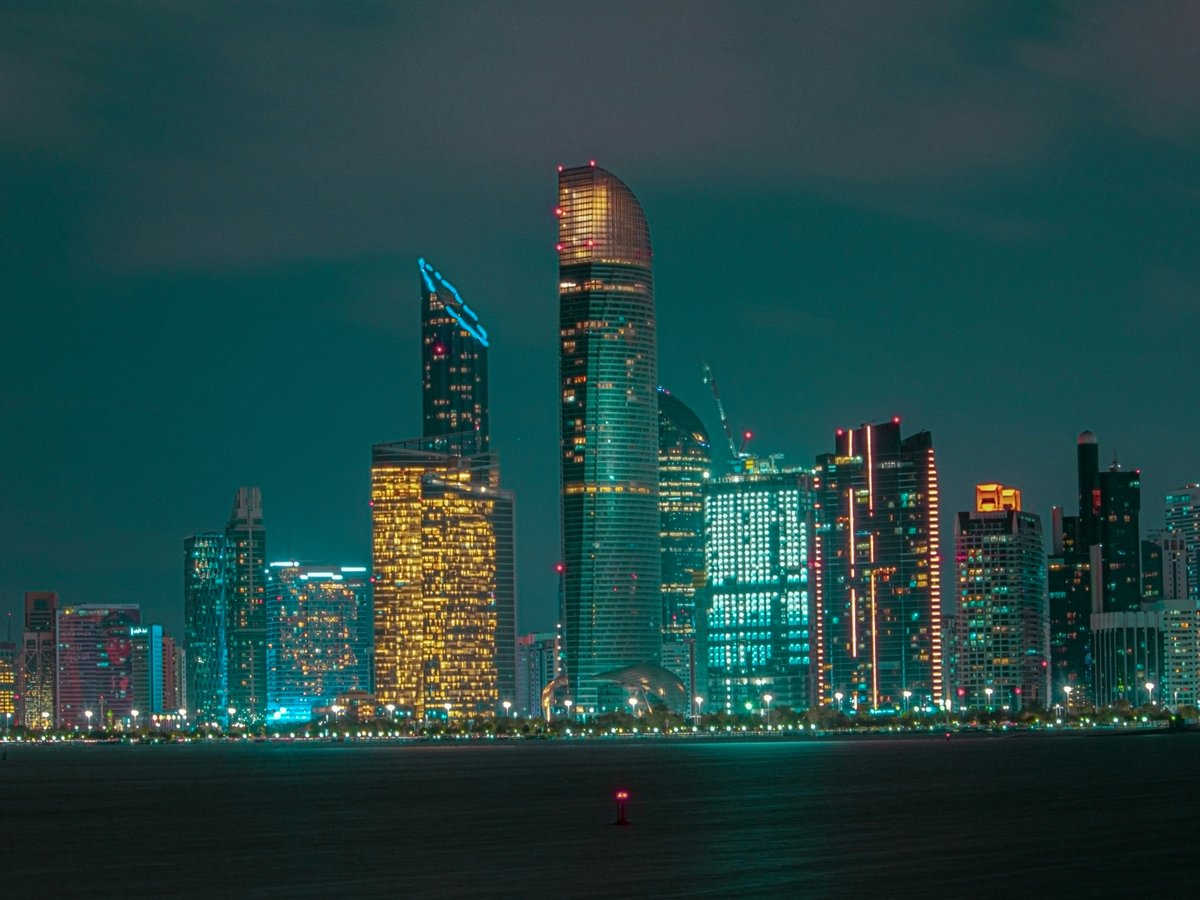
Abu Dhabi sits on a T-shaped island jutting into the shallow, warm waters of the Arabian Gulf. The city's outdoor character splits cleanly between two landscapes. On one side, flat desert stretching toward the Empty Quarter, punctuated by salt flats and hardy ghaf trees. On the other, a surprisingly lush coastline of mangrove forests, tidal channels, and white sand beaches that stay swimmable from October through May. The temperature dictates everything here. From November to March, daytime highs hover around 24-28°C, and the city empties outdoors. By June, 45°C heat and 80% humidity push all activity to dawn or dusk. Worth noting, the UAE has invested heavily in outdoor infrastructure over the past decade. You'll find well-maintained cycling tracks, graded hiking paths at Jebel Hafeet, and kayak launches along the Eastern Mangroves. The terrain is flat within the city itself, which makes Abu Dhabi surprisingly accessible for casual walkers and cyclists, even if serious elevation requires a 90-minute drive east to Al Ain.
Outdoor activities
-
Desert fat-biking at Al Wathba
The Al Wathba cycle track runs 22 km through flat desert terrain about 40 km southeast of downtown Abu Dhabi. The packed-sand surface suits fat bikes with 4-inch tires. You'll ride past the Al Wathba Wetland Reserve, where greater flamingos tend to congregate between November and March. The loop is pancake-flat, so the challenge comes from soft sand patches and headwinds rather than elevation. Several rental outfits in the city provide fat bikes for around 150 AED per day.
- Difficulty
- Easy to moderate
- Duration
- 2-3 hours for the full loop
- Best season
- November to March
-
Sandboarding at Liwa Oasis dunes
The Moreeb Dune near Liwa, about 3 hours south of Abu Dhabi city, rises roughly 300 meters and ranks among the tallest accessible dunes in the UAE. Smaller dunes closer to the Liwa crescent work better for beginners. The sand is fine and golden, and it squeaks underfoot when dry. You'll need a 4x4 to reach the dune fields. Board rental is available through tour operators in Abu Dhabi, or you can bring a waxed plywood board. Temperatures in Liwa run 3-5°C hotter than the coast, so early morning starts matter even more here.
- Difficulty
- Moderate (climbing soft sand is the hard part)
- Duration
- Half-day trip from Abu Dhabi
- Best season
- December to February
-
Road cycling along Al Hudayriyat Island
Al Hudayriyat Island opened its cycling and running tracks in 2021. The dedicated cycling loop covers 10.4 km of smooth asphalt with zero car traffic. It winds along the waterfront with views toward the Abu Dhabi skyline. The track is lit for evening riding, which matters because summer cycling only works after sunset. Gradient is essentially zero. Serious cyclists often combine it with the longer Yas Marina Circuit track on Sundays when open to public.
- Difficulty
- Easy
- Duration
- 30-60 minutes per loop
- Best season
- October to April for daytime; year-round after dark
-
Desert camping at Al Khatem
Al Khatem sits about 100 km east of Abu Dhabi on the road toward Al Ain. The area offers open desert with rolling dunes, ghaf woodland patches, and minimal light pollution. Winter nights drop to 12-15°C, comfortable for sleeping under a tarp. You'll hear the wind shift through the dunes and the occasional fox bark. No formal campsite exists, so you bring everything and leave nothing. A fire permit is technically required from Abu Dhabi Municipality for open flames.
- Difficulty
- Easy (logistics, not fitness)
- Duration
- Overnight
- Best season
- November to February
-
Falconry experience at Abu Dhabi Falcon Hospital
The Abu Dhabi Falcon Hospital on Sweihan Road is the largest falcon hospital in the world, treating over 11,000 birds annually. Their 2-hour public tours run at 10:00 and 14:00 Sunday through Thursday. You'll hold a peregrine or saker falcon, watch free-flight demonstrations in the outdoor arena, and walk through the falcon museum. Booking costs 170 AED per adult. The hospital also offers longer falconry field experiences in the desert during winter months, though these require advance arrangement.
- Difficulty
- Easy
- Duration
- 2 hours for the standard tour
- Best season
- Year-round (hospital is climate-controlled); desert experiences November to March
-
Dune driving and recovery practice
The area around Razeen and Al Khatem offers accessible dune fields where 4x4 owners practice off-road skills. You'll want to deflate tires to around 15 PSI for sand driving. The key skill is reading the dune face angle. Anything steeper than about 30 degrees risks a rollover. Weekend mornings bring groups of Land Cruiser and Patrol drivers who are typically happy to help if you get stuck. Recovery boards, a compressor, and a tow strap are non-negotiable. This is not a guided tourist dune-bash. It is genuine off-road driving with genuine consequences for poor judgment.
- Difficulty
- Moderate to difficult (vehicle skill, not fitness)
- Duration
- Half day
- Best season
- October to March
Day hikes
-
Jebel Hafeet summit road walk
Jebel Hafeet rises 1,249 meters on the outskirts of Al Ain, about 90 minutes by car from Abu Dhabi. The mountain road climbs 11.7 km with 60 hairpin turns to the summit. Some hikers walk the road itself, though vehicle traffic makes this less pleasant on weekends. The real hiking is on informal trails that cut through the rocky eastern face. The terrain is loose limestone scree with sparse vegetation. Summit temperatures run 5-8°C cooler than Al Ain city at the base. You'll want to start before 07:00 in any month. The views from the upper switchbacks stretch across the date palm farms of Al Ain's eastern suburbs.
- Difficulty
- Moderate to strenuous (the road walk is long; the off-road scrambles are steep and unmarked)
- Duration
- 4-6 hours for the full ascent on foot
- Best season
- November to February
-
Jebel Jais via ferrata and hiking trails
Jebel Jais in Ras Al Khaimah stands at 1,934 meters, the UAE's highest peak. The drive from Abu Dhabi takes about 2.5 hours. Several graded hiking trails opened in 2019-2020 as part of RAK's outdoor tourism push. The terrain is dramatic Hajar Mountain limestone with sharp ridgelines and deep wadis. The via ferrata route involves metal rungs, cables, and a suspension bridge at roughly 1,300 meters elevation. You'll need to book through an authorized operator. Temperatures at the summit can drop below 10°C in January mornings.
- Difficulty
- Moderate (hiking trails) to difficult (via ferrata requires harness and guide)
- Duration
- Full day from Abu Dhabi including drive
- Best season
- October to March
-
Wadi Shawka trail
Located in Ras Al Khaimah emirate, about 2 hours from Abu Dhabi. The wadi floor trail follows a dry riverbed between steep canyon walls, with occasional pools after winter rain. The initial section is flat and easy, following the gravel bed past tamarisk bushes and acacia trees. Further in, you'll scramble over boulders and potentially encounter standing water. The smell of damp rock and wild sage is distinctive after rainfall. Total trail length varies depending on how far you push into the upper wadi. Most hikers turn around after 5-7 km.
- Difficulty
- Easy to moderate (flat start, progressively rockier)
- Duration
- 3-5 hours depending on turnaround point
- Best season
- November to March (pools more likely December to February after rain)
-
Fossil Rock (Jebel Maleihah)
About 90 minutes east of Abu Dhabi in the Sharjah desert, this sandstone outcrop sits surrounded by red dunes. The rock itself contains visible marine fossils from when this area sat beneath a shallow sea roughly 80 million years ago. The hike is short, maybe 45 minutes to circle the formation and scramble to the top. The difficulty is minimal, but the drive through soft sand to reach it requires a 4x4. Best combined with a wider desert drive. Wind erosion has carved the sandstone into layered formations that catch golden light at dawn.
- Difficulty
- Easy (the drive is harder than the hike)
- Duration
- 1-2 hours on foot; half-day with travel
- Best season
- November to March
Water activities
-
Kayaking the Eastern Mangroves
The Eastern Mangroves kayak channels run through the national park's protected grey mangrove forest on the east side of Abu Dhabi island. Guided tours launch from the Anantara hotel area and several independent operators. The channels are narrow, calm, and sheltered from wind. You'll paddle at eye level with mangrove roots while herons stalk fish a few meters away. The water is shallow and warm, typically 22-28°C depending on season. Tours run 1.5 to 2 hours and cost around 100-150 AED. High tide offers better access to the deeper channels.
- Difficulty
- Easy (flat water, no current)
- Duration
- 1.5-2 hours
- Best season
- October to April for comfortable temperatures; available year-round
-
Open-water swimming at Saadiyat Beach
Saadiyat Public Beach offers 400 meters of lifeguard-patrolled swimming. The water is clear, shallow for 30-40 meters out, and the seabed is sandy with no rocks. Gulf water temperatures stay above 22°C year-round and reach 32-34°C by August. Morning swims before 08:00 bring calm conditions and water temperatures around 24°C in February. Beach access costs 25 AED on weekdays. Strong swimmers sometimes see small blacktip reef sharks in deeper water off the island's north coast, though encounters are rare and non-aggressive. Jellyfish appear occasionally in September and October.
- Difficulty
- Easy (sheltered, lifeguarded)
- Duration
- Open access during beach hours
- Best season
- October to May for comfortable air temperature; water is warm year-round
-
Stand-up paddleboarding at Al Bateen Beach
Al Bateen Beach sits on Abu Dhabi's western waterfront, facing the Gulf. The water here tends to be calmer than Saadiyat due to the island's sheltering effect. Several rental outfits offer SUP boards for 80-120 AED per hour. Early morning sessions before 09:00 catch glassy conditions. You'll paddle past traditional dhow boats moored in the Al Bateen marina. The waterfront view takes in the Louvre Abu Dhabi dome across the channel on Saadiyat. Wind typically picks up by 11:00, making afternoon paddling choppy.
- Difficulty
- Easy to moderate (depends on wind)
- Duration
- 1-2 hours
- Best season
- November to March for minimal wind; avoid summer midday heat
-
Scuba diving at Delma Island
Delma Island lies about 210 km northwest of Abu Dhabi city in the Arabian Gulf. The surrounding waters host coral formations, barracuda schools, and hawksbill turtles. Visibility ranges from 3-8 meters depending on currents and season. The Gulf is shallow here, with most dive sites at 8-15 meters depth. Water temperature varies from 20°C in February to 34°C in August. Several Abu Dhabi dive operators run day trips. Mind you, Gulf diving is not the Red Sea. Visibility is lower and conditions less predictable. But the marine life density around Delma's rocky outcrops still surprises.
- Difficulty
- Moderate (requires PADI Open Water certification minimum)
- Duration
- Full day including boat travel
- Best season
- March to May and September to November (best visibility windows)
-
Sailing from Yas Marina
Yas Marina offers dinghy sailing courses and catamaran rentals. The sailing area covers the sheltered waters between Yas Island and Saadiyat Island. Winter winds blow a consistent 10-15 knots from the northwest, which makes for reliable sailing conditions. The Abu Dhabi Sailing and Yacht Club runs beginner courses starting at around 800 AED for 3 sessions. Experienced sailors can rent Laser dinghies or Hobie Cats. Summer sailing is possible but the combination of 40°C air and intense UV reflection off the water makes it genuinely unpleasant for more than an hour.
- Difficulty
- Easy (courses) to moderate (independent rental requires certification)
- Duration
- 2-3 hours per session
- Best season
- November to March
Parks & gardens
-
Umm Al Emarat Park
Formerly Mushrif Central Park, this 20-hectare space in the Mushrif district reopened in 2015 after a 50-million-AED renovation. The park sits in the center of Abu Dhabi island and draws families, joggers, and picnickers throughout the cooler months. The landscaping uses a mix of date palms, bougainvillea, and native desert-adapted plants. Evening temperatures in winter hover around 18-20°C, and the park stays open until 22:00. Entry is 10 AED for adults.
Highlights: The Shade House botanical garden with its steel lattice structure, the 900-meter evening walking loop, a small animal barn with Emirati heritage breeds, and the climbing wall near the children's area.
-
Mangrove National Park
FreeThis 19-square-kilometer protected mangrove forest spreads along the eastern shoreline of Abu Dhabi island. The grey mangroves (Avicennia marina) filter tidal water and shelter herons, flamingos, and small crabs that click and scatter as you pass. The park is accessible by kayak or paddleboard, but a boardwalk section opened in 2020 for walkers. The air smells brackish and faintly sulfuric at low tide. You'll notice the water clarity changes dramatically with the tidal cycle. High tide is best for paddling, low tide reveals mudflats and bird-feeding grounds.
Highlights: The 1.3 km boardwalk loop, kayak channels threading between mangrove roots, and bird-watching platforms with views of grey herons and western reef egrets.
-
Al Ain Oasis
FreeA UNESCO World Heritage Site since 2011, this 1,200-hectare palm oasis sits in Al Ain, about 90 minutes from Abu Dhabi city. Over 147,000 date palms grow here, irrigated by the ancient falaj system of channels that has operated for at least 3,000 years. The temperature under the palm canopy drops noticeably, sometimes 5-8°C cooler than outside. Walking paths run about 3 km through the interior. The shade is dense enough that you can visit even in summer mornings without suffering.
Highlights: The restored falaj irrigation channels with flowing water, interpretive signage explaining 6 date palm varieties, and the surprisingly cool microclimate under the dense canopy.
-
Reem Central Park
FreeA 52,000-square-meter park on Reem Island that opened around 2019, designed primarily as a community recreation space. The park includes running tracks, a splash pad, and open lawns. Its waterfront location means you get a breeze off the Gulf most evenings. The park tends to fill up on Friday mornings with families. A 1.5 km jogging loop circles the perimeter.
Highlights: The waterfront promenade section, outdoor fitness stations every 200 meters along the running track, and shaded seating areas overlooking the channel.
-
Khalifa Park
A 500,000-square-meter park near the Sheikh Zayed Grand Mosque that opened in 2007. The park contains a small maritime museum, a miniature train, and large expanses of irrigated lawn. It feels quieter than the Corniche and draws fewer tourists. The aquarium section houses local marine species from the Gulf. Entry is 2 AED. The park stretches long enough that the far end, near the amphitheatre, is often nearly empty on weekday mornings.
Highlights: The underground aquarium with local Gulf species, the 2 km walking path, heritage village replica section, and the elevated viewing areas near the park's southern end.
Practical tips
- Sun protection
- The UAE's latitude (24°N) means UV index regularly hits 11+ from April through September. A standard SPF 30 fails within 90 minutes of continuous exposure here. Use SPF 50+, reapply every 60 minutes during activity, and wear a buff or wide-brim hat. Sunglasses with side coverage prevent reflected glare off sand and water, which causes cumulative eye damage that you won't notice until evening. Clothing with UPF rating outperforms any sunscreen for long exposure.
- Hydration
- You'll lose 1-1.5 liters per hour during moderate activity in winter, potentially 2+ liters in shoulder season. Carry a minimum of 3 liters for any hike over 2 hours. Water bladders with insulated tubes work better than bottles because the bite valve discourages rationing. Electrolyte tabs matter here. Pure water won't replace the salt you're sweating out. Signs of heat exhaustion appear fast in humidity above 60%. If you stop sweating, that is an emergency, not fatigue.
- Timing your activity
- From October to March, start between 06:00 and 07:00 for any outdoor effort longer than an hour. Even in January, midday temperatures reach 26-28°C, which feels hotter under direct sun on exposed terrain. From April to September, outdoor activity is realistically limited to pre-dawn (05:00-07:00) or after sunset (19:30+). The government issues outdoor work bans between 12:30-15:00 from June 15 to September 15. Those hours are genuinely dangerous for sustained physical effort.
- Footwear for desert terrain
- Loose sand, sharp limestone, and hot ground surface temperatures (60°C+ in summer, 35-40°C even in winter sun) rule out trail runners for most desert hikes. Approach shoes with stiff soles handle Jebel Hafeet's scree. For dune areas, gaiters prevent sand ingress that causes blisters within 20 minutes. The mangrove boardwalks are fine in any closed-toe shoe. If you plan to wade through wadis after rain, neoprene water shoes with a solid sole prevent cuts from submerged rock.
- Navigation and communication
- Phone signal covers most areas within 50 km of Abu Dhabi but drops in wadis and mountain valleys. Download offline maps (Wadi maps on Wikiloc have good UAE coverage) before leaving signal range. There is no mountain rescue service equivalent to European standards. Emirates Red Crescent and police respond to emergencies, but response times in remote wadi areas can exceed 2 hours. Always tell someone your planned route and expected return time. A personal locator beacon is worth carrying for Hajar Mountain hikes.
- Trail conditions and access
- UAE trails are not maintained to European or North American standards. Expect unmarked junctions, washed-out sections after rain, and zero signage in most wadis. Flash flooding occurs in the Hajar Mountains between December and March, sometimes with no local rainfall visible. If clouds gather over the mountains, exit any wadi immediately. Most desert and mountain areas are open-access with no permit required. Jebel Jais trails require registration through the RAK tourism portal. Carry a basic first-aid kit including blister treatment and a compression bandage for sprains.
FAQ
What months are best for outdoor activities in Abu Dhabi?
November through March offers the most comfortable conditions, with daytime highs between 24-30°C and manageable humidity. December and January are peak months when morning temperatures around 15-18°C make longer hikes and cycling genuinely pleasant. October and April are shoulder months where early morning activity still works but midday becomes uncomfortable. May through September limits outdoor time to brief dawn or post-sunset windows.
Is it safe to swim in the Arabian Gulf year-round?
The Gulf is swimmable year-round in terms of water temperature, which stays above 22°C even in winter. The main seasonal concerns are jellyfish (occasional in September-October), strong currents during tidal shifts near island tips, and extreme water temperature in summer (32-34°C provides no cooling effect during exercise). Lifeguarded beaches like Saadiyat and Corniche are the safest option. Open-water swimming without a buddy is not advisable given boat traffic in shipping lanes.
Do I need a 4x4 vehicle for desert activities around Abu Dhabi?
For any off-tarmac desert driving, yes. The sand around Abu Dhabi is fine and soft, and 2WD vehicles sink within meters of leaving paved roads. Rental companies like Hertz and Budget offer 4x4s from approximately 250-400 AED per day. Most require a damage waiver for off-road use. That said, many desert-adjacent activities like Al Wathba cycling and Jebel Hafeet hiking are accessible via normal paved roads. You only need a 4x4 for dune driving, camping access, and reaching trailheads like Fossil Rock.
Are there any outdoor activities suitable during Abu Dhabi's summer months?
Indoor-outdoor hybrid options work in summer. The Al Hudayriyat cycling track is lit for night riding after 20:00 when temperatures drop to 33-35°C. Dawn swimming before 06:30 catches water at its coolest (still 28-30°C). Air-conditioned indoor climbing at CLYMB on Yas Island provides year-round activity. Some operators run pre-dawn desert drives departing at 04:30. Realistically, sustained outdoor effort in July and August requires acclimatization that most visitors lack.
How difficult is the hiking at Jebel Hafeet compared to European or North American trails?
The elevation gain of about 1,000 meters over 12 km is comparable to a moderate Alpine valley-to-hut walk. The difference is terrain and exposure. There is no tree cover above the base, no water sources anywhere on the mountain, and surface temperatures on exposed rock reach 50°C by 10:00 even in winter. The limestone scree on off-road sections is loose and ankle-turning. Technically it is not difficult. The challenge is environmental, managing heat, hydration, and sun exposure over 4-6 hours on a reflective, shade-free mountain.
Where can I rent outdoor equipment in Abu Dhabi?
Adventure HQ in Yas Mall stocks hiking gear, camping equipment, and cycling accessories. For kayak and SUP rentals, operators along the Eastern Mangroves (Sea Hawk, Noukhada) provide equipment with guided tours. Fat bike rentals are available through Wolfi's Bike Shop in Al Quoz or cycle delivery services that drop to Al Wathba. Dive gear rentals come through operators like Al Mahara Diving Center. For camping equipment (tents, coolers, portable stoves), Carrefour and ACE Hardware carry budget options, while Adventure HQ stocks technical gear.
Outdoor experiences in Abu Dhabi
 Free cancellation
 Abu Dhabi: Desert Safari with BBQ, Camel Ride & Sandboarding
Outdoor experience: 6 hours, free cancellation.
via Viator Free cancellation
 Dubai Evening Desert Safari BBQ Premium Camp & optional Quad Bike
Outdoor experience: 7 hours, free cancellation.
via Viator Free cancellation
 Desert Safari Abu Dhabi With Camel Ride Sand Board BBQ & Shows
Outdoor experience: 6 hours, free cancellation.
via Viator Free cancellation
 Abu Dhabi: Morning Desert Safari with Camels and Sandboarding
Outdoor experience: 4 hours, free cancellation.
via Viator Free cancellation
 Abu Dhabi Desert Safari With BBQ Dinner & Live Shows
Outdoor experience: 6 hours, free cancellation.
via Viator Free cancellation
 Dubai Private Evening Red Dunes Safari, BBQ & Premium Camp
Outdoor experience: free cancellation.
via Viator Free cancellation
 Abu Dhabi Desert Safari with Camel Ride BBQ Dinner and Live Shows
Outdoor experience: 6 hours, free cancellation.
via Viator Free cancellation
 Morning Desert Safari From Abu Dhabi
Outdoor experience: 4 hours, free cancellation.
via Viator Free cancellation
 Desert Safari Abu Dhabi w/ Sand Boarding, Camel Ride & BBQ Dinner
Outdoor experience: free cancellation.
via Viator Free cancellation
 Abu Dhabi Desert Safari: Activities, Live Shows & VIP Area Dining
Outdoor experience: free cancellation.
via Viator Free cancellation
 Island Hopping Sharing-4 hours trip
Outdoor experience: 4 hours, free cancellation.
via Viator Free cancellation
 Dubai Evening4x4Desert Safari,BBQ Dinner,Belly Dance,Camel Ride
Outdoor experience: 6 hours, free cancellation.
via ViatorLast verified by automated review (v1.7.2) on . What is automated review?