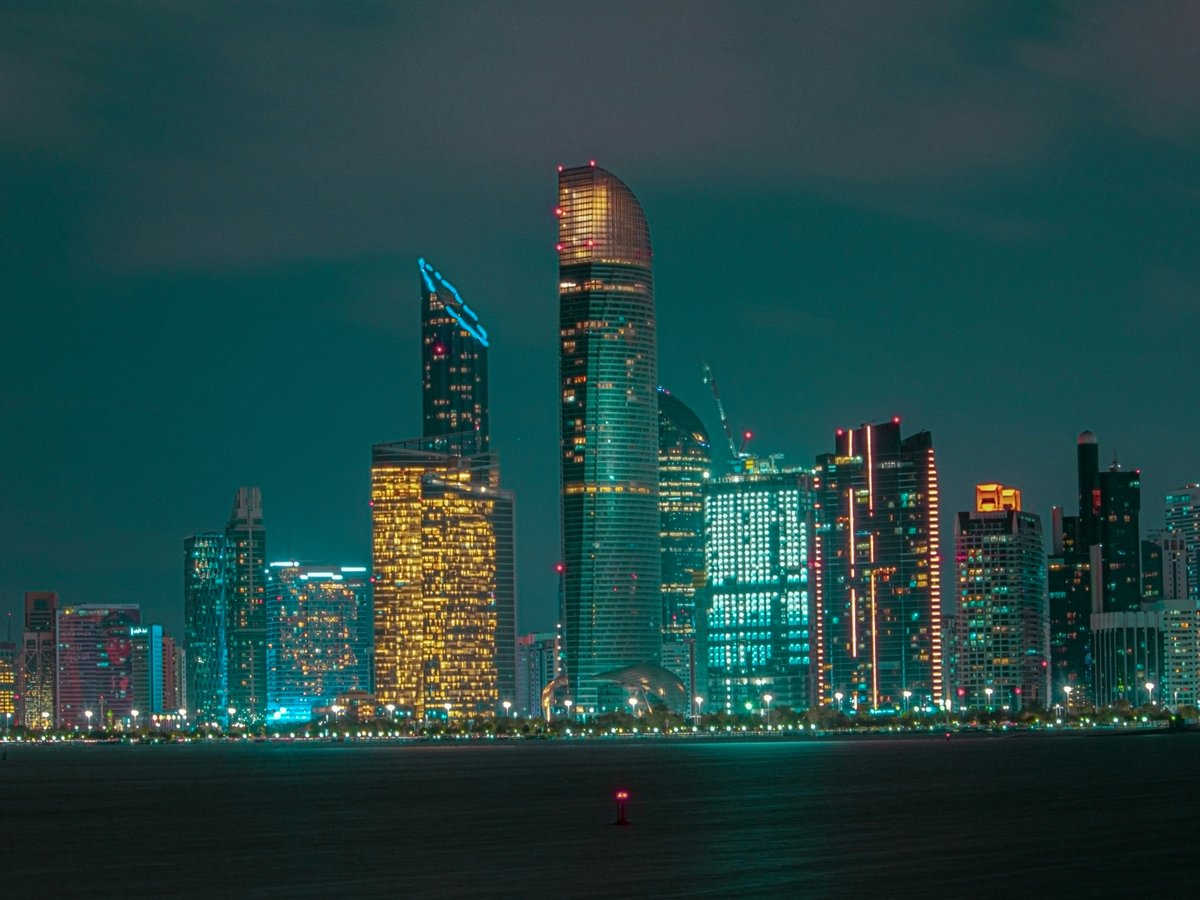
Is Abu Dhabi safe?
Abu Dhabi is one of the safest capitals a solo traveller can pick, and we score it 8.2 out of 10 for solo-traveler safety (see the TTDI Solo-Safety Index). Street crime is rare on the Corniche and in Al Zahiyah even at 1am, but the real risks are the law, the heat, and the eight-lane roads. Police answer on 999.
Numbeo's crowd-sourced crime index has put Abu Dhabi at or near the top of its safest-city table every year since 2017, and that matches what you'll see on Hamdan Street at midnight. Phones sit face up on cafe tables in Al Khalidiyah, women walk the 8 km Corniche promenade alone after dark past joggers and families eating on the grass, and the loudest sound is likely the isha call to prayer drifting over from the mosques behind the seafront. Pickpocketing is a far smaller worry here than in Barcelona or Rome. Abu Dhabi is not free of friction, though. Solo women tell us the older hotel bars in Al Zahiyah, still called the Tourist Club Area by taxi drivers, can feel leery after 11pm, with staring and the occasional blunt proposition, and our pick for a drink alone is a counter seat on Al Maryah Island or Saadiyat Island instead. Mussafah, the industrial district about 25 km south-west, is not dangerous, but its blocks are dark, empty, and short of passing cabs at night.
The law is what catches visitors in the UAE, and it tends to catch the ones who assumed Dubai-brochure rules. Alcohol is available in licensed venues, mostly hotels, to people aged 21 and over, and being visibly drunk on the street or in a taxi can mean arrest. Drink-driving tolerance is zero. Swearing, a rude hand gesture on Sheikh Zayed Bin Sultan Street, or photographing strangers and government buildings can each bring a fine or a court date. Codeine, tramadol and some ADHD and anxiety medicines are controlled, so check the UAE Ministry of Health and Prevention list and carry the prescription. Same-sex relationships are criminalised, which is why we rate the city 1 out of 10 for LGBTQ+ friendliness (sourced from TTDI's editorial rubric). Couples of any kind are expected to keep affection private in Abu Dhabi. At Sheikh Zayed Mosque women need a headscarf, long sleeves and ankle-length cover, and the prayer hall is chilled to a shiver after the white glare of the courtyard.
Heat and traffic catch more visitors out in Abu Dhabi than crime does. At 9pm on 13 October the city was still at 32.8°C, with 60% humidity lifting the felt temperature to 37.6°C, and that thickness clings to you on even the short walk from a mall door to the kerb. Carry water, and save the Corniche for after sunset until November. The roads are the other hazard: many arterial streets in the downtown grid run six to eight lanes, drivers move fast, so cross at signals or through the pedestrian underpasses beneath Corniche Road. Getting around alone is straightforward, because the silver taxis with yellow roof signs run on the meter and the pink-roofed cabs are driven by women for women and families. A metered ride from Zayed International Airport to the Corniche runs roughly AED 80 to 95, about 22 to 26 USD at the 13 October rate of 3.6725. City buses take the Hafilat card, and the front seats are reserved for women and families.
The solo penalties in Abu Dhabi are financial more than physical. Hotel rooms are priced per room, so one person pays the same as two; the fix is a single-occupancy filter on Trip.com or a private room in one of the handful of hostels in the city. Private desert 4x4 trips are charged per vehicle, but shared small-group departures to the Al Khatim dunes or Liwa on Viator charge per seat instead, and they are the quickest way we know to meet other travellers in a city with no backpacker strip. Saturday brunch at the island hotels is sold per head, which sidesteps the table-for-two problem, and a cup of sweet, cardamom-scented karak chai at a cafeteria counter costs about AED 2. For a low-effort evening among people, The Arts Center at NYU Abu Dhabi hosts Naseer Shamma and Richard Dubugnon on Friday 16 October. Ambulance crews answer on 998 and the fire service on 997, and insurance with medical evacuation, such as World Nomads, matters here because private hospital bills in the UAE are high.
Emergency number: 999
Official travel advisories
Reconsider non-essential travel the most cautious of 3 government assessments
- Government of CanadaLevel 2Exercise a high degree of caution View advisory
- UK Foreign OfficeLevel 1No FCDO travel restriction View advisory
- US State DepartmentLevel 3Reconsider Travel View advisory
Verified from the issuing governments' own feeds.
Areas to avoid
- Older hotel bars in Al Zahiyah (Tourist Club Area) after 11pm, for solo women
- Mussafah industrial blocks after dark, where cabs are scarce
- Unsignalled crossings on the six-to-eight-lane downtown arterials
Common concerns
- Arrest for public drunkenness outside licensed venues
- Fines for swearing, rude gestures or photographing strangers and government buildings
- Controlled medicines such as codeine and tramadol carried without a prescription
- Criminalisation of same-sex relationships
- Heat and humidity above 32°C well into October evenings
- Fast traffic on wide arterial roads
- Staring and propositions in older Al Zahiyah hotel bars
- Per-room hotel pricing and per-vehicle desert tours that penalise solo travellers
- High private hospital bills without insurance
Last verified by automated review (v1.7.2) on . What is automated review?