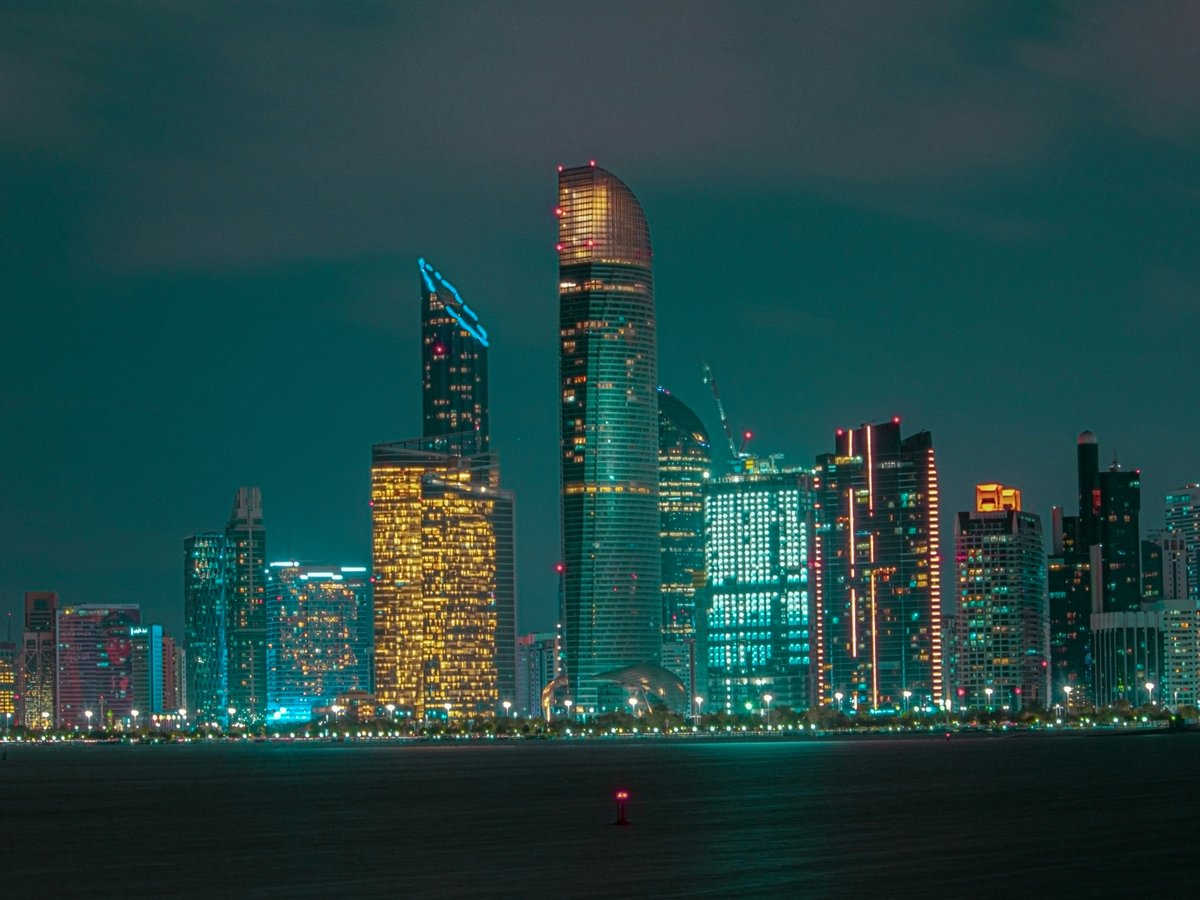
Abu Dhabi stretches across a T-shaped island connected to the mainland by three bridges, with a scattering of man-made islands to the north and east. The oldest parts sit at the northern tip of the main island, around Al Mina port and the Corniche waterfront. Moving south, neighborhoods get progressively newer and more residential. The real decision for visitors comes down to geography. Stay on the main island for walkability, local food, and proximity to the Grand Mosque. Stay on Saadiyat or Yas if beaches or theme parks matter more than street life. Al Maryah Island works if you want a polished, mall-adjacent base with water taxis to the older districts. The city is spread out. Distances between islands can reach 25 to 30 kilometers, and taxis remain cheap at roughly 1.5 AED per kilometer. That said, neighborhoods within the main island cluster tightly enough that you can walk between Al Khalidiyah, the Corniche, and Al Zahiyah in under 20 minutes.
Neighborhoods
-
Corniche & Al Khubeirah
The Corniche runs 8 kilometers along the western waterfront of the main island, backed by a paved cycling track and a thin strip of public beach divided into paid gates (10 AED entry) and free sections. Al Khubeirah sits behind it, a low-rise residential pocket where embassies occupy old villas and the cafes tend to be Lebanese-run with outdoor seating under date palms. Mornings here smell like cardamom from the small bakeries along Khalifa bin Shakhbut Street. The pace is slow by Gulf standards. You might see Filipino families having weekend picnics on the grass at 7am before the heat arrives.
- Best for
- Couples and solo travelers who want a seafront base with morning running paths, close to both old-town Al Mina and the newer Al Maryah Island bridge crossing.
- Key streets
- The Corniche Breakwater end (near Marina Mall and the Heritage Village), Khalifa bin Shakhbut Street running inland through Al Khubeirah, and the paid beach gates between sectors 1 and 3 of the Corniche public beach.
-
Al Khalidiyah
Al Khalidiyah feels like the city's living room. It occupies the middle of the main island, west of the Corniche, and its grid of low-to-mid-rise apartment blocks houses much of Abu Dhabi's long-term expat population. The streets are lined with shawarma spots, Indian restaurants charging 15 to 25 AED for a thali, and Filipino grocery stores. It is not photogenic. The buildings date mostly from the 1980s and 1990s. But the food density per square block likely beats anywhere else in the city. You'll hear Tagalog, Malayalam, and Arabic in equal measure walking down Khalidiyah Street.
- Best for
- Budget-conscious travelers and food-focused visitors who want to eat where residents eat, with hotel rates 30 to 40 percent lower than waterfront properties.
- Key streets
- Khalidiyah Street (the east-west artery with Al Ibrahimi restaurant and dozens of cafes), Zayed the First Street running north-south, and the small lanes behind Khalidiyah Mall where the Pakistani karahi restaurants cluster.
-
Al Zahiyah (Tourist Club Area)
Al Zahiyah earned its old name from the concentration of budget hotels along Hamdan Street and Sheikh Zayed the First Street. The grid here is tight, the signage multilingual, and the ground floors almost entirely given over to gold shops, electronics stores, and exchange houses. It smells like oud perfume near the Al Wahda Mall entrance and grilled meat near the Electra Street intersection. The architecture is utilitarian 1990s commercial. Noise levels peak around 9pm when the souq-style shops blare music. It is the closest Abu Dhabi gets to the energy of old Deira in Dubai.
- Best for
- Budget travelers, shopping-focused visitors, and anyone who wants to walk to restaurants at midnight without needing a taxi.
- Key streets
- Hamdan Street (the main commercial strip), Electra Street running parallel one block south, and the pedestrian stretch near Madinat Zayed Shopping Centre where the gold souq sits.
-
Al Mina
Al Mina is the port district at the northern tip of the island, and it still functions as a working dhow harbor. The fish market moved into a modernized Norman Foster-designed building in 2019, but the rhythm remains the same. Fishermen unload catches around 5:30am, and by 6am the stalls are piled with hamour, kingfish, and tiger prawns sold by the kilo. The carpet souq and dates market sit adjacent. Behind the port, the streets hold low-rise warehouses being gradually converted into galleries and workshops. The Warehouse421 arts space opened here in 2015. The air carries diesel, salt, and dried lime depending on which direction the wind pulls.
- Best for
- Photographers, early risers, and visitors who want the least polished, most textured corner of the city. Limited hotel options here, so it works better as a morning excursion from the Corniche or Al Zahiyah.
- Key streets
- Al Mina Road along the port, the fish market building entrance off the main roundabout, and the warehouse lane behind Warehouse421 heading toward the dhow yard.
-
Saadiyat Island
Saadiyat sits off the northeast coast of the main island, connected by a short bridge. The Louvre Abu Dhabi opened here in November 2017, and the Guggenheim remains under construction with a projected 2025-2026 opening. The public beach stretches 9 kilometers, and the sand is noticeably finer and whiter than the Corniche. Sea turtles nest on the western stretch between March and July. The residential areas are low-density villas and resort properties. It is quiet to the point of feeling empty on weekday mornings. The St. Regis, Park Hyatt, and Jai resorts anchor the beachfront. Expect to pay 180 to 350 AED for a beach day pass at the resort properties.
- Best for
- Families with young children, museum visitors, and travelers who prioritize beach quality over walkable nightlife. Couples seeking a quieter pace than Yas Island.
- Key streets
- Saadiyat Island Drive (the single main road connecting all properties), the Louvre Abu Dhabi promenade along the waterfront, and the walking path between the St. Regis and Park Hyatt beaches.
-
Al Maryah Island
Al Maryah is Abu Dhabi's financial center, a reclaimed island connected to the main island by two short bridges. Cleveland Clinic Abu Dhabi occupies the eastern end. The Galleria Al Maryah Island mall dominates the center, with its waterfront dining terrace facing the older city across the channel. Four Seasons and Rosewood hotels sit at the water's edge. The architecture is all glass-and-steel towers built after 2010. It feels corporate during working hours and restaurant-focused after 7pm. The water taxi service (10 AED per trip) connects to the Corniche and Al Mina in under 15 minutes.
- Best for
- Business travelers, luxury shoppers, and visitors who want high-end dining within walking distance of their hotel. The Four Seasons pool overlooks the channel and sees genuine foot traffic from the mall terrace.
- Key streets
- Al Maryah Island Promenade (the waterfront walkway circling the island), the Galleria's ground-floor terrace restaurants, and the pedestrian bridge connecting to Al Reem Island.
-
Yas Island
Yas sits 30 minutes east of the city center, a purpose-built entertainment island that hosts the Formula 1 Abu Dhabi Grand Prix each November at the Yas Marina Circuit. Ferrari World, Warner Bros. World, and SeaWorld Abu Dhabi (opened 2023) cluster in the island's center. Yas Beach faces west with views of the F1 track's marina section. The W Hotel and Hilton Yas Island straddle the circuit itself. Outside race week and school holidays, the island can feel engineered and underpopulated. Temperatures on the open stretches reach 48°C in July and August.
- Best for
- Families with older children who want theme park access, motorsport fans visiting during the November Grand Prix weekend, and golfers (Yas Links, an 18-hole Kyle Phillips design, sits on the western shore).
- Key streets
- Yas Marina Circuit perimeter road (open to cyclists on Tuesday mornings), the Yas Bay waterfront dining strip behind the Etihad Arena, and the beach access road past the W Hotel.
-
Al Reem Island
Al Reem is a cluster of residential towers on a reclaimed island north of Al Maryah, connected by a pedestrian bridge. The towers went up between 2012 and 2020, and the island now houses an estimated 60,000 residents. Boutik Mall and Shams Abu Dhabi provide ground-level retail, but the real draw is the apartment rental rates, which run 20 to 30 percent below equivalent Al Maryah properties. The Reem Central Park opened in 2022 with a 1.2-kilometer jogging loop and splash pads. The island has a functional, lived-in quality. You'll find more Carrefour Express runs than cocktail bars.
- Best for
- Longer-stay visitors (1 week or more) who want apartment-style accommodation with kitchen access, grocery stores, and a local residential rhythm without tourist pricing.
- Key streets
- Najmat Abu Dhabi (the central cluster with most restaurants), the Reem Central Park perimeter path, and the pedestrian bridge to Al Maryah Island's Galleria mall.
FAQ
Is it possible to walk between neighborhoods in Abu Dhabi, or do you need a car?
On the main island, Al Khalidiyah, the Corniche, Al Zahiyah, and Al Mina all sit within a 2-to-3-kilometer radius. Walking between them takes 15 to 25 minutes. The heat makes this impractical from June through September between 10am and 5pm, when temperatures exceed 40°C regularly. Saadiyat and Yas islands require a car or taxi, sitting 15 and 30 minutes from the city center respectively. Taxis start at 12 AED and meter at roughly 1.5 AED per kilometer.
Which Abu Dhabi neighborhood has the best food scene for budget travelers?
Al Khalidiyah and Al Zahiyah offer the densest concentration of affordable restaurants. Indian thalis run 15 to 25 AED, shawarma plates 8 to 12 AED, and full Arabic mezze spreads rarely exceed 60 AED for two people. The Pakistani karahi restaurants behind Khalidiyah Mall and the Yemeni spots on Electra Street represent the best value-to-portion ratio in the city.
Where should families with children stay in Abu Dhabi?
Saadiyat Island works for younger children who want beach time and a quieter pace, with resort kids clubs at the St. Regis and Park Hyatt. Yas Island suits older children (8+) who want Ferrari World, Warner Bros. World, and SeaWorld within a 5-minute drive of their hotel. The Corniche area offers a middle ground with the public beach, cycling paths, and closer proximity to restaurants than either island.
How far is the Sheikh Zayed Grand Mosque from the main hotel areas?
The Grand Mosque sits on the mainland side of the Mussafah Bridge, roughly 12 kilometers south of the Corniche area. A taxi from Al Zahiyah or Al Khalidiyah takes 15 to 20 minutes and costs approximately 30 to 40 AED. From Saadiyat Island, expect 20 to 25 minutes. From Yas Island, the drive runs 25 to 30 minutes via the E20 highway. Free parking is available at the mosque's visitor lot, which fills before Friday prayers.
What is the best area in Abu Dhabi for nightlife and evening dining?
Al Maryah Island's Galleria waterfront terrace and the Yas Bay strip behind Etihad Arena currently hold the highest concentration of licensed restaurants and bars. The Corniche hotel bars (St. Regis Nation Riviera, InterContinental) offer waterfront drinks but close by 1am most nights. Abu Dhabi's nightlife is hotel-based by law. Al Khalidiyah and Al Zahiyah have late-night shisha cafes and restaurants open until 2am, but no alcohol service outside hotels.
Last verified by automated review (v1.7.2) on . What is automated review?