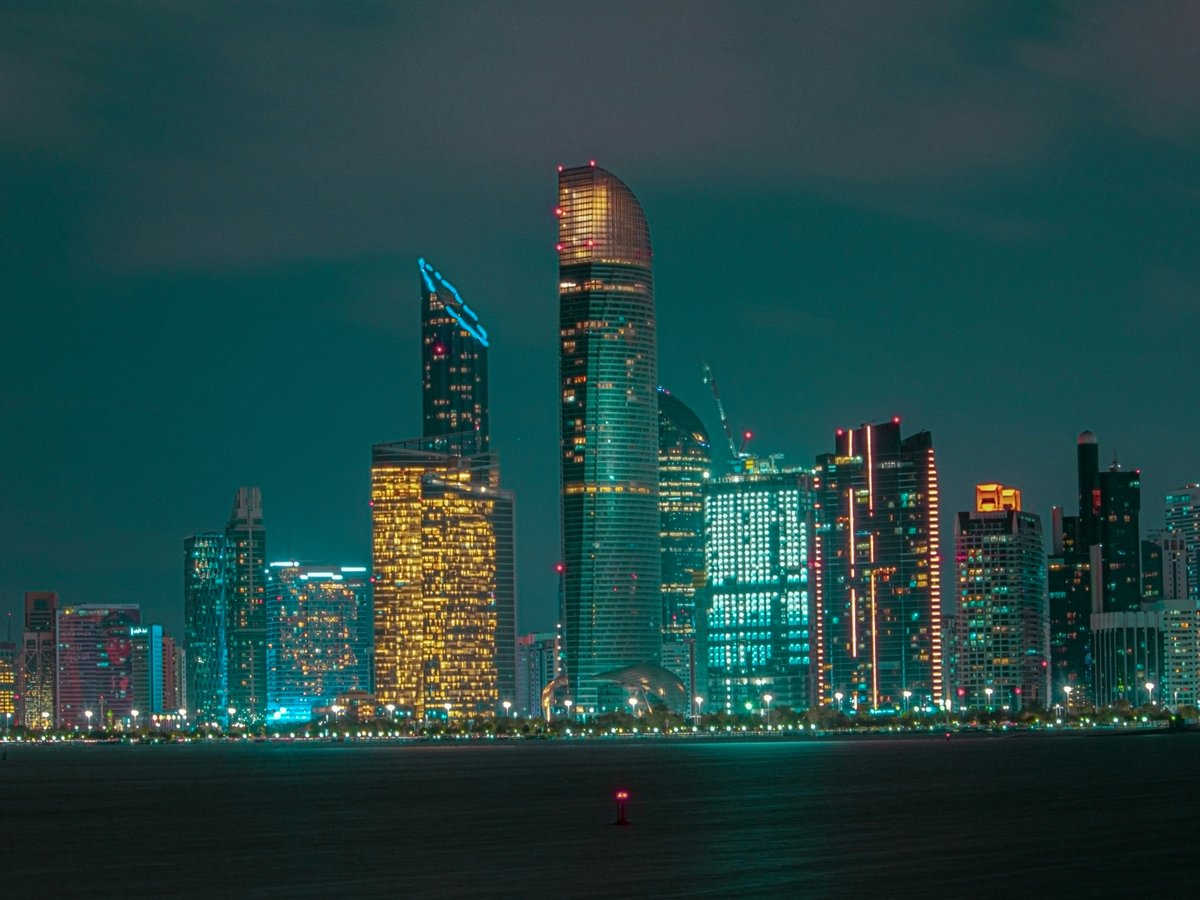
Abu Dhabi sits on a T-shaped island jutting into the Persian Gulf, connected to the mainland by three bridges: a geography that means you are rarely more than a few minutes from open water, even in the commercial core along the Corniche. The city grew from a modest pearl-diving settlement into the capital of the UAE in 1971, and unlike Dubai's sprint toward spectacle, Abu Dhabi took a slower, more deliberate path, reinvesting its oil wealth into cultural infrastructure that now rivals anything in the region. The Louvre Abu Dhabi, opened in 2017 on Saadiyat Island, sits beneath a perforated dome that filters Gulf sunlight into a shifting rain of light across its galleries: an architectural achievement worth seeing regardless of your interest in the collection inside. Most first-time visitors anchor their days between three zones: the Corniche waterfront, where residents jog and families picnic along white-sand public beaches; the older streets around Al Maryah Island and Al Zahiyah, where Indian and Filipino restaurants outnumber Emirati ones and the city's real demographic texture becomes visible; and Saadiyat and Yas islands to the east, where the cultural and entertainment investments cluster. Abu Dhabi runs four hours ahead of UTC, which means summer daylight hits hard by early morning and the city's rhythm shifts accordingly: shops and outdoor markets come alive after sunset, and a 10 PM dinner reservation is considered early by local standards. The heat between May and September is genuinely oppressive, pushing daily life indoors to malls and air-conditioned souqs, but the winter months from November through March deliver warm, dry days that make the emirate's desert excursions and coastal kayaking routes worth the trip on their own. Arabic is the official language, though English functions as the working lingua franca across nearly every interaction a visitor will have.
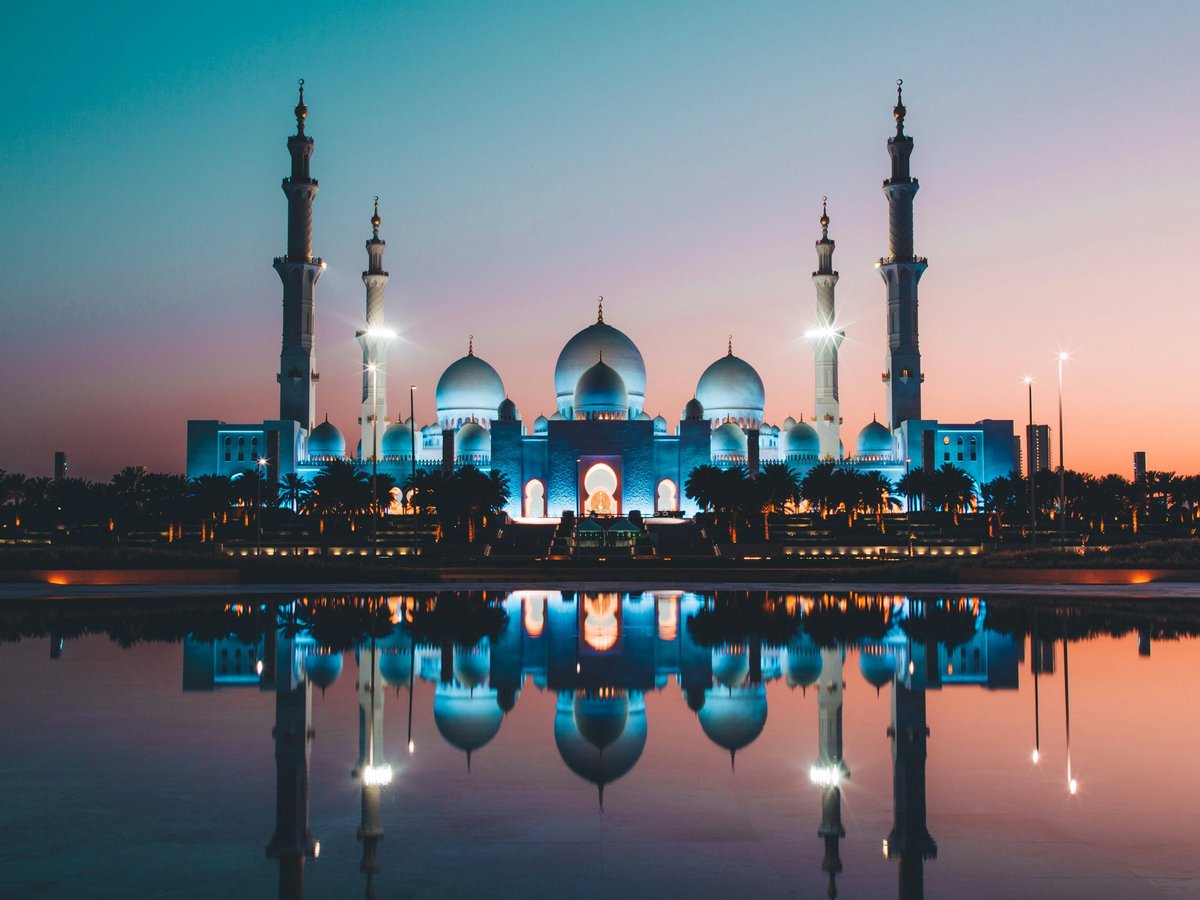
Abu Dhabi in photos
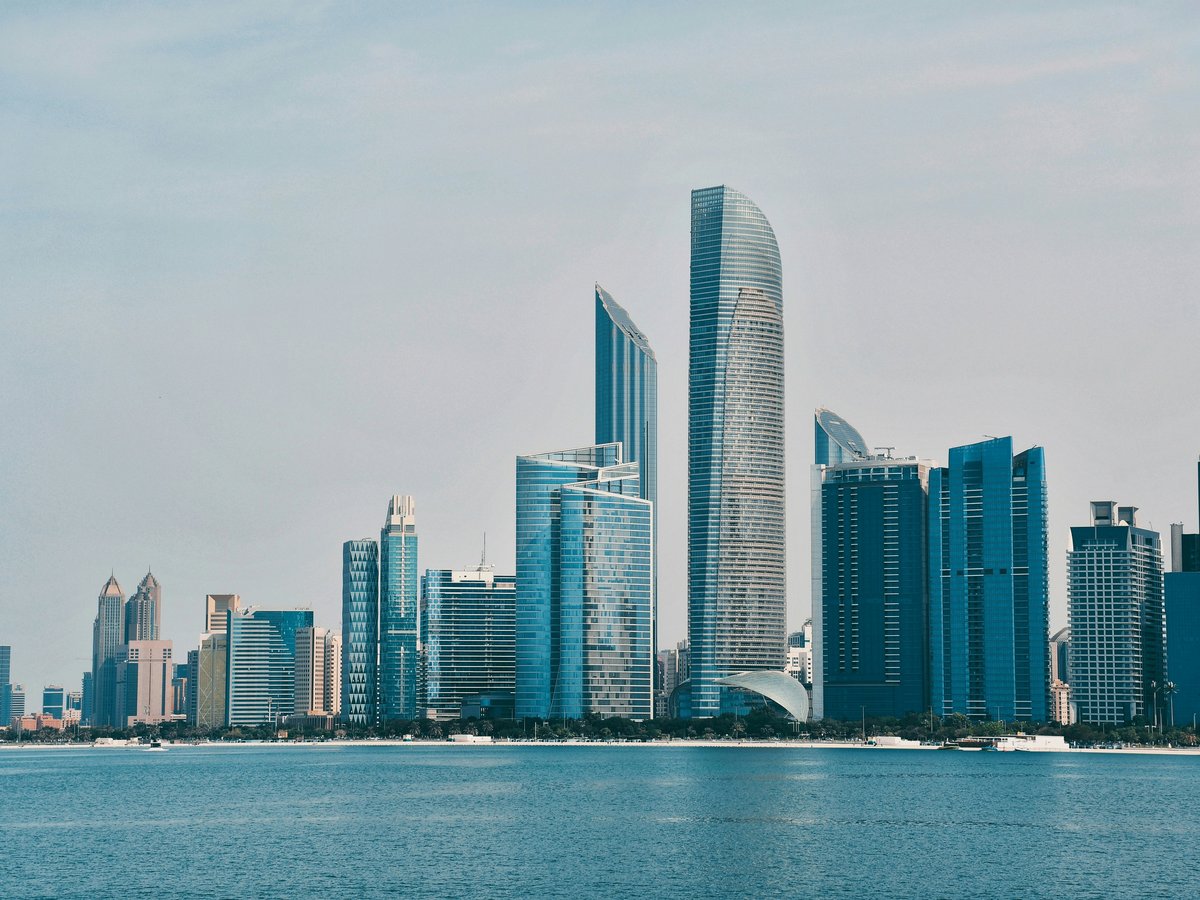

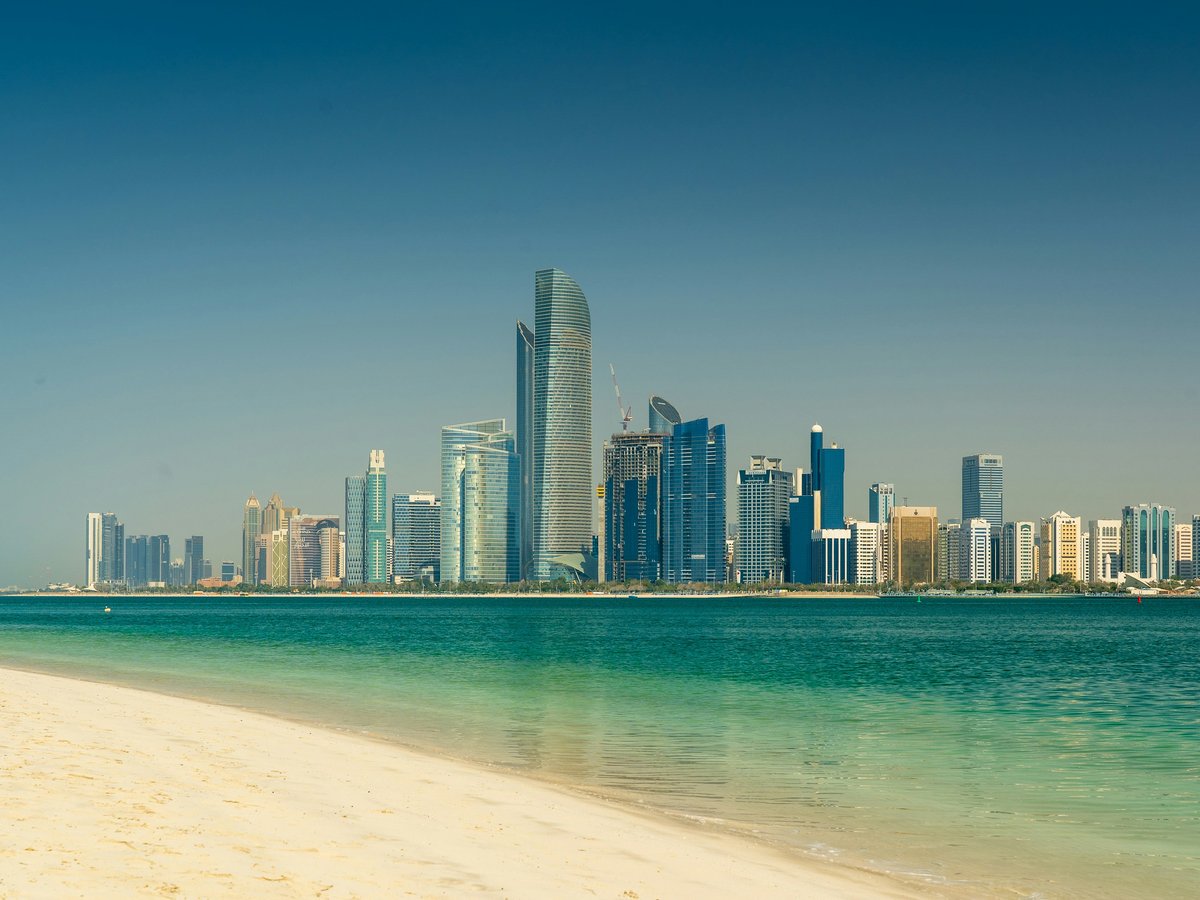
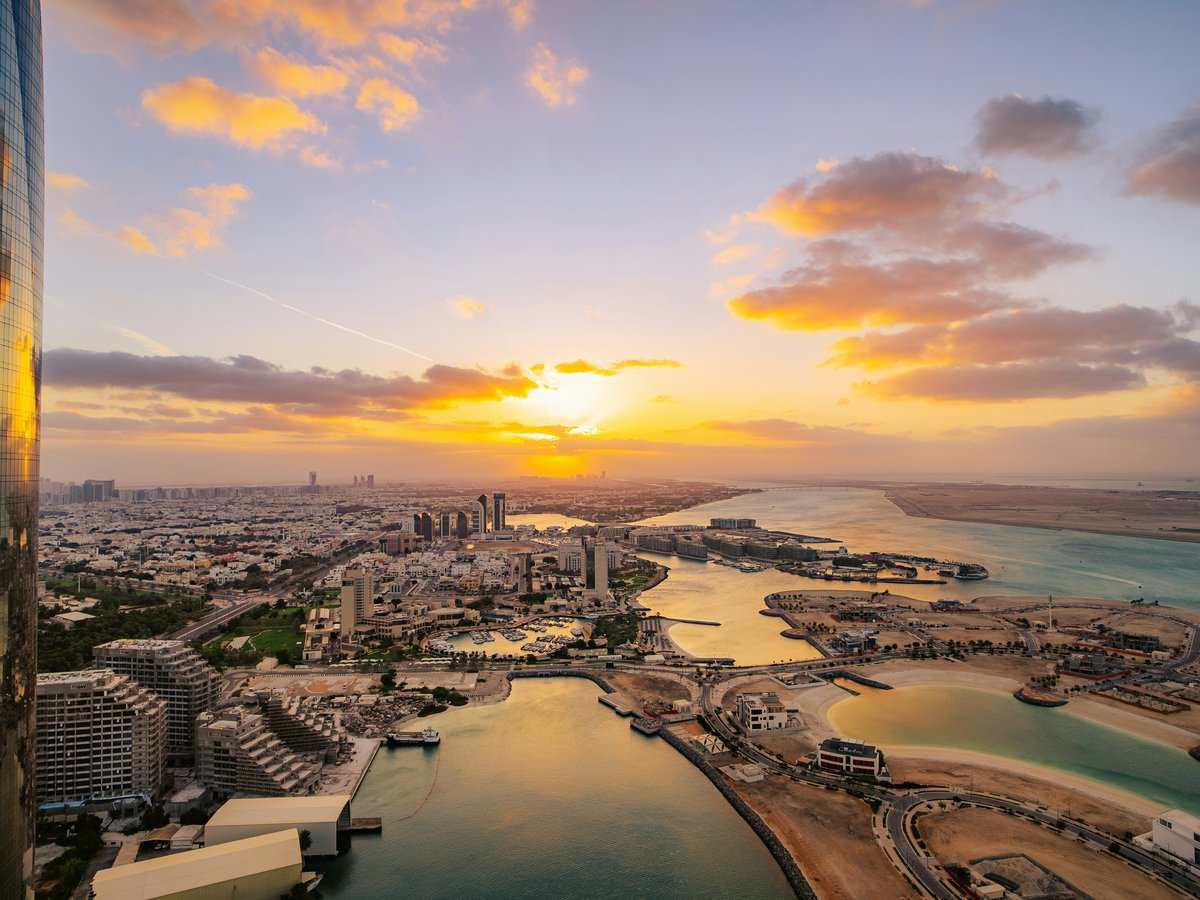
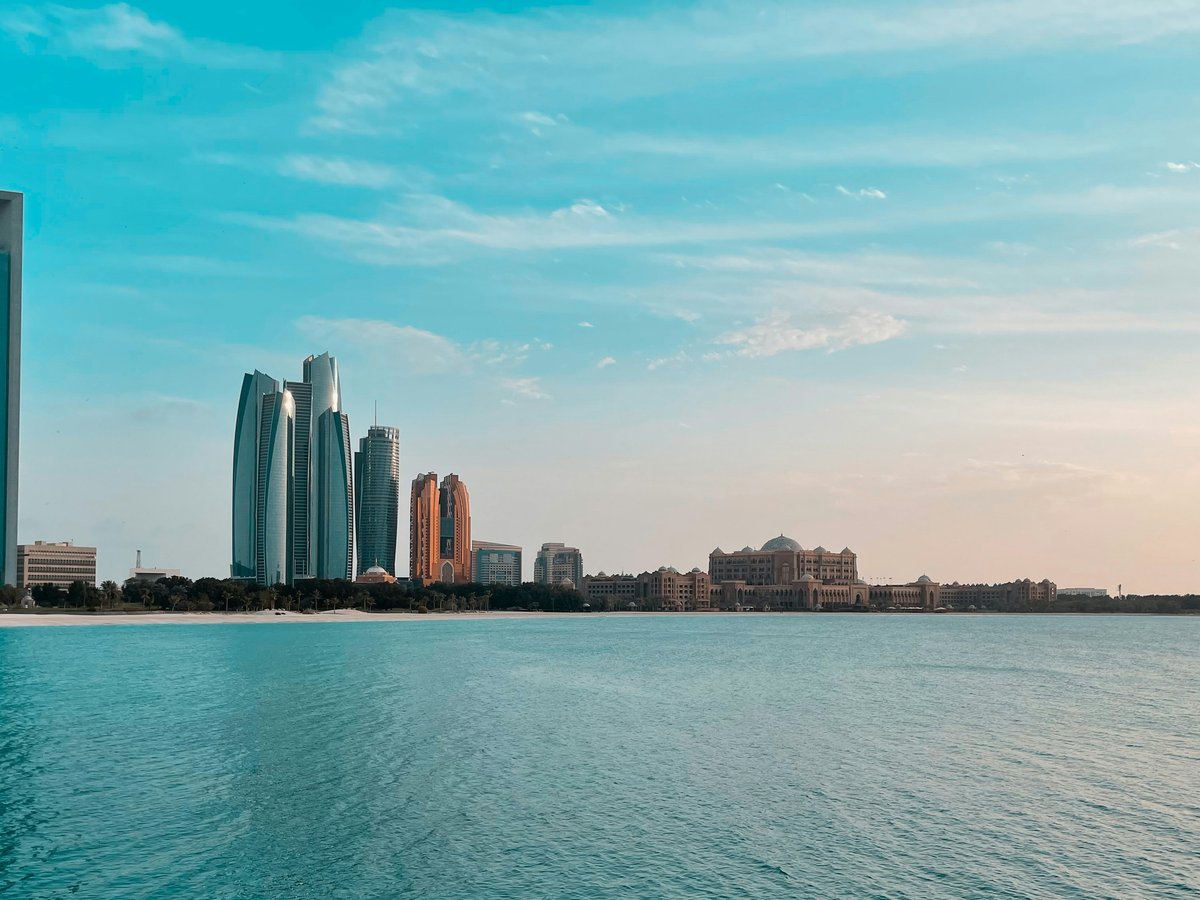
Abu Dhabi right now
Answers about Abu Dhabi
-
Airport to city
From Zayed International Airport (AUH), take a metered silver taxi from the rank outside Terminal A. The 30 km ride to the Corniche costs 70-100 AED ($19-27) and takes about 25 minutes. Uber and Careem run slightly cheaper at 55-80 AED. There is no metro or rail link. The A1 bus costs 4 AED but adds 45-60 minutes.
Read the full answer → -
Best time to visit
The window is mid-November to mid-March. Winter afternoons settle in the mid-20s Celsius, which makes both the Sheikh Zayed Grand Mosque courtyard and the Louvre Abu Dhabi waterfront comfortable at midday. May through September, heat and humidity will keep you indoors. Skip the early-December Grand Prix weekend unless you are going to the race, because Yas Island hotel rates spike.
Read the full answer → -
Cost per day
Abu Dhabi runs about 220 AED ($60) per day on a strict budget, 590 AED ($160) at midrange, and 1,500+ AED ($410+) for luxury. The budget figure assumes a hostel dorm near Hamdan Street, cafeteria meals in the Al Mina district, and free attractions like Sheikh Zayed Grand Mosque. Summer months push water and cooling expenses higher.
Read the full answer → -
Cultural etiquette
Abu Dhabi enforces modesty laws that carry real fines. Cover shoulders and knees in malls and public spaces. Public displays of affection risk arrest under UAE federal law. During Ramadan, eating or drinking in public before sunset is a prosecutable offense. Greet with 'as-salamu alaykum' and accept Arabic coffee with your right hand.
Read the full answer → -
Best day trips
Al Ain, 160 km east on the E22, is the strongest single-day trip from Abu Dhabi. A 25-AED intercity bus or 1h40 drive reaches the UNESCO-listed oasis, Jebel Hafeet's 1,249-metre summit road, and Green Mubazzarah hot springs. Dubai runs 140 km northeast on a 25-AED bus. Fujairah's east coast takes 2.5 hours but delivers Gulf of Oman swimming.
Read the full answer → -
Digital nomads
Abu Dhabi scores 5.8/10 for digital-nomad suitability (sourced from TTDI's editorial rubric). Fiber runs 250-500 Mbps in newer towers on Al Reem Island, and the UAE's 1-year Remote Work Visa requires $3,500/month income proof. Monthly all-in sits around $2,800-3,500. The 5.8 reflects high costs, a thin nomad community, and five months of 40°C-plus heat that keeps you indoors.
Read the full answer → -
Family-friendly
Abu Dhabi is strongly family-friendly. Ferrari World, Yas Waterworld, and Warner Bros World on Yas Island keep kids busy for days. Malls have nursing rooms, play areas, and air conditioning that matters when it feels like 36°C outside. The heat is the main caveat. Visit between October and April for outdoor time.
Read the full answer → -
Food culture
Abu Dhabi's food culture runs on subcontinental and Levantine kitchens more than Emirati ones. The 200+ nationalities built a city where a 12 AED shawarma in Al Zahiyah and a 900 AED omakase on Saadiyat Island coexist within 20 minutes of each other. Emirati food requires effort to find. The Friday brunch is the social institution that ties it together.
Read the full answer → -
Getting around
Taxis and Careem cover nearly all visitor movement in Abu Dhabi. No metro operates. The city stretches 30 km from Yas Island to the Corniche, making walking impractical beyond the waterfront. Silver taxis charge 5 AED flagfall plus 1.82 AED per kilometer. Download Careem before landing for upfront pricing and better driver coverage.
Read the full answer → -
How to get there
Abu Dhabi International Airport (AUH), 30 km east of downtown, is Etihad Airways' hub with nonstop flights from JFK (13 hours, $800-1,400), London Heathrow (7 hours, £350-600), and Sydney (14 hours, A$1,200-2,000). Dubai International (DXB), 130 km northeast, offers additional carrier options including Emirates. Cheapest fares fall May through September.
Read the full answer → -
Is it safe?
Abu Dhabi is one of the safest capitals a solo traveller can pick, and we score it 8.2 out of 10 for solo-traveler safety (see the TTDI Solo-Safety Index). Street crime is rare on the Corniche and in Al Zahiyah even at 1am, but the real risks are the law, the heat, and the eight-lane roads. Police answer on 999.
Read the full answer → -
Language basics
Arabic, specifically the Gulf dialect called Khaleeji, is Abu Dhabi's official language. In practice, over 80% of residents are expatriates and English functions as the city's working language. Every sign, menu, and transit display is bilingual. You'll hear more Hindi and Tagalog on the street than Arabic in many neighborhoods.
Read the full answer → -
Layover guide
Yes. Zayed International Airport sits 30 minutes from Abu Dhabi's Corniche by taxi. Immigration runs fast for the 70-plus visa-free nationalities. Six hours is the realistic floor for a city run. Sheikh Zayed Grand Mosque and a waterfront meal both fit inside that window. Under six hours, stay airside in Terminal A.
Read the full answer → -
LGBTQ-friendly
Abu Dhabi scores 1/10 for LGBTQ+ friendliness (sourced from TTDI's editorial rubric). The UAE's Federal Penal Code criminalizes same-sex relations with potential imprisonment. There is no visible queer scene, no legal recognition of partnerships, and no anti-discrimination protections. Same-sex couples should understand the legal reality before booking.
Read the full answer → -
Where locals go
Abu Dhabi residents head to Al Mina Fish Market before 9am, the Corniche lawns after sunset on Saturday and Sunday, and Lebanese Flower in Al Khalidiya after 10pm. Warehouse 421 in Mina Zayed draws the city's creative crowd. On Tuesday evenings, Yas Marina Circuit fills with residents running and cycling the Formula 1 track.
Read the full answer → -
Must-see
Sheikh Zayed Grand Mosque. Free entry, open daily except Friday mornings. The prayer hall carpet covers 5,627 square metres, hand-knotted by 1,200 artisans from Mashhad. Above it hangs a 10-metre-wide Swarovski crystal chandelier. Visit at 4:30pm when the Macedonian white marble courtyard shifts from noon glare to warm gold in under an hour.
Read the full answer → -
Solo travel
Abu Dhabi rates 8/10 for solo friendliness, with a safety score of 8.2/10. Transit works without a car, but the city lacks the hostel-bar social infrastructure of Southeast Asian or European hubs. Meeting people takes intention. No single supplement at most hotels, no dining stigma, and women report comfort after dark in tourist districts. Summer heat limits walking from June through September.
Read the full answer → -
This week
Abu Dhabi in peak summer revolves around heat avoidance. Outdoor activity compresses into two daily windows, before 9am and after 8pm. The weekly rhythm centers on Friday hotel brunch, Thursday-night dining on Al Maryah Island, and indoor attractions on Yas Island and Saadiyat Island filling the midday hours.
Read the full answer → -
3-day itinerary
Day 1 covers the Corniche waterfront and Sheikh Zayed Grand Mosque on the main island. Day 2 crosses to Saadiyat Island for the Louvre Abu Dhabi and the beach. Day 3 heads to Yas Island for Ferrari World and the F1 circuit walkway. Abu Dhabi is a taxi city. Budget 50-80 AED per ride between zones, and front-load indoor stops around the 1pm heat peak.
Read the full answer → -
What to avoid
Skip midday walks on the Corniche and cheap hotel-pickup desert safaris. At Zayed International Airport, walk past the limousine touts and take a metered TransAD taxi, Uber, or Careem. For the Sheikh Zayed Grand Mosque, book a free slot online before you go and dress to its code: staff turn first-timers away at the gate every day.
Read the full answer → -
What to pack
Lightweight modest clothing for mosque dress codes at Sheikh Zayed Grand Mosque, SPF 50+ sunscreen for summer UV indexes above 11, a Type G plug adapter for UAE's British-style 220V outlets, and a packable fleece for the 18-20°C AC in every mall and museum. Skip packing bulk toiletries. Pharmacies like Aster carry Western brands at comparable prices.
Read the full answer → -
Where to stay
Corniche area on Abu Dhabi Island for first-timers, with four-star hotels at $90-150 per night and the 8-km waterfront walkable before the morning heat. Saadiyat Island ($200-400) for beach resorts near the Louvre Abu Dhabi. Yas Island ($110-280) for families wanting Ferrari World and the Etihad Arena at their doorstep.
Read the full answer →
Deep guides for Abu Dhabi
Curated lists for Abu Dhabi
accommodation
-
Best boutique hotels
Abu Dhabi distributes its accommodation across a waterfront corniche, a commercial core, and a purpose-built island resort zone, with a desert retreat beyond the city limits. The geography matters more here than in most Gulf cities because the distances are real: staying on Yas Island for theme parks means a long taxi ride to the cultural district on Saadiyat, and booking the Corniche for its beach promenade puts the Formula 1 circuit out of convenient reach. The city center clusters around the old souk area and the newer towers along Hamdan Street, where walkability improves and restaurant density picks up after dark. Most visitors default to the Corniche strip or the newer island developments, but the smartest bookings match the neighborhood to the trip: beach mornings and museum afternoons call for the western waterfront, while families chasing roller coasters and water slides belong on Yas. Rates stay competitive across all zones, with mid-range properties consistently scoring above 9.0 on Trip.com and nightly prices running from under $90 to just under $200. The desert, for those who want silence and dunes over city noise, sits in its own category entirely.
See the picks → -
Best hostels
Abu Dhabi's budget accommodation clusters along two axes: the Corniche waterfront and the inland commercial grid around Al Wahda and Hamdan Street. Unlike Dubai, where hostels concentrate in a single backpacker quarter, Abu Dhabi spreads its affordable inventory across five pockets, each with a different commute calculus and a different answer to what to do after dark. The city's bus network, centered on the Al Wahda terminal, connects all five zones, but walking radius matters more than transit maps when the summer heat turns midday errands into a negotiation. Budget rooms here hold ratings that would anchor a mid-range tier elsewhere; a 9.5 at $60 a night or an 8.9 at $37 a night is standard, not exceptional, because competition among apartment hotels and branded budget chains keeps quality high and prices honest. The trade-off is character: most budget beds sit in commercial towers rather than heritage buildings, and the lobby aesthetic runs closer to business park than boutique. That suits the city. Abu Dhabi rewards travelers who pick a neighborhood for its walkable radius and its commute to the sights, not for balcony backdrops.
See the picks → -
Best luxury hotels
Abu Dhabi's luxury hotels sort themselves by island, and the island defines the stay. Al Maryah Island anchors the financial-district side of the city. The Corniche traces the waterfront. Saadiyat Island concentrates the private-beach resorts; 5 of these 11 properties sit there, most with a private beach on the sand. The rest spread across Al Maryah Island, the city center, the Corniche, and Yas Island. Nightly rates range from USD 211 to USD 1,837, with most falling between USD 218 and USD 349. Of these 11 properties, 10 score 9.0 or above on Trip.com; the floor is high. What separates these hotels is not the tier label; it is which pool faces which water, which balcony catches which light, and whether the beach is steps from your room or a transfer. This list is built for that decision.
See the picks → -
Where to stay
Abu Dhabi distributes its hotel inventory across islands, a mainland city grid, and a desert fringe: the neighborhood you choose determines whether your stay revolves around beach sand, museum corridors, theme-park queues, or an early-morning flight. The city center's older blocks around Electra Street and Hamdan Street hold the densest cluster of budget and mid-range rooms, with bus connections and shawarma counters at ground level. The Corniche waterfront stretches west from there, layering beachside luxury over a running path and park strip that locals use daily. Offshore, Saadiyat Island anchors the cultural end with the Louvre Abu Dhabi, while Yas Island stacks theme parks and race circuits for a different kind of visitor entirely. Al Maryah Island belongs to the financial district and its single flagship hotel. Farther out, the desert retreats at Al Wathba and the villa shores of Hudayriyat Island offer silence and open sky at rates that undercut the downtown towers. The airport area serves one function: a bed within shuttle range of the terminal. Prices start at $37 a night in the city center and climb past $1,837 on Saadiyat: a range wide enough that choosing the right neighborhood matters more than choosing the right hotel.
See the picks →
food
-
Best cafes
Abu Dhabi's cafe map is not one story but three, layered on top of each other. There is the hotel-lobby coffee that runs on airport time, the specialty roaster tier that arrived with the third wave and now anchors quiet residential streets, and the older pastry-and-shisha tradition that predates the skyline. Between them, the city has settled into a rhythm where an oat flat white at 07:00 and a knafeh at midnight are equally normal transactions. This list is 12 rooms across that spread, arranged by how much they reward a visitor who has planned the trip around them rather than one who wandered in from the mall. Coordinates and hours come from OpenStreetMap; the opinions are the editor's. Bring cash for the small independents, patience for the corniche traffic, and a preference: some of these places want you to linger for three hours, and some want the seat back in twenty minutes. Both are the point.
See the picks → -
Best restaurants
Abu Dhabi's restaurant map does not fit neatly into any one story. The city's kitchens run from Pakistani grills that open at 11:30 to Korean counters keyed to a hotel's breakfast, lunch and dinner windows, from Italian trattorias on 2nd Street to steakhouses inside hotel podiums on the Corniche. The list below is twelve rooms drawn from what OpenStreetMap contributors have mapped, verified by their own coordinates, hours and phone numbers, so that a visitor can walk from the citation to the door without the middle step of a review aggregator. What binds them is not a cuisine, a price band or a neighbourhood: it is that each one was worth someone taking the time to map. Skip the mall food courts that could sit in any Gulf city; the twelve below argue for themselves in address, hour and phone. Ranked in the order the city's mappers ranked them, they are the kind of list a local editor keeps in a notebook, not on a billboard.
See the picks →
Browse by traveler type
- For foodies
Abu Dhabi for foodies
- For families with kids
Abu Dhabi for families
- For digital nomads
Abu Dhabi for digital nomads
- For solo travelers
Abu Dhabi for solo travelers
- For couples
Abu Dhabi for couples
- For budget travelers
Abu Dhabi on a budget
- For luxury travelers
Abu Dhabi for luxury travelers
- For first-timers
Abu Dhabi for first-time visitors
Book experiences in Abu Dhabi
 Free cancellation
 Abu Dhabi: Desert Safari with BBQ, Camel Ride & Sandboarding
Outdoor experience: 6 hours, free cancellation.
via Viator Free cancellation
 Half-Day Desert Safari from Abu Dhabi
Day trip: 6 hours, free cancellation.
via Viator Free cancellation
 Dubai Evening Desert Safari BBQ Premium Camp & optional Quad Bike
Outdoor experience: 7 hours, free cancellation.
via Viator Free cancellation
 Desert Safari In Abu Dhabi With BBQ Dinner
Day trip: 6 hours, free cancellation.
via Viator Free cancellation
 Desert Safari Abu Dhabi With Camel Ride Sand Board BBQ & Shows
Outdoor experience: 6 hours, free cancellation.
via Viator Free cancellation
 Abu Dhabi: Morning Desert Safari with Camels and Sandboarding
Outdoor experience: 4 hours, free cancellation.
via Viator Free cancellation
 Abu Dhabi Desert Safari With BBQ Dinner & Live Shows
Outdoor experience: 6 hours, free cancellation.
via Viator Free cancellation
 Dubai Private Evening Red Dunes Safari, BBQ & Premium Camp
Outdoor experience: free cancellation.
via Viator Free cancellation
 Abu Dhabi Desert Safari with Camel Ride BBQ Dinner and Live Shows
Outdoor experience: 6 hours, free cancellation.
via Viator Free cancellation
 From Abu Dhabi: Sheikh Zayed Mosque, Royal Palace & Etihad Tower
Day trip: 6 hours, free cancellation.
via Viator Free cancellation
 Abu Dhabi Half Day City Tour - Sharing Experience
Day trip: 4 hours, free cancellation.
via Viator Free cancellation
 Private Abu Dhabi City Tour with Grand Mosque & Heritage Village
Day trip: free cancellation.
via ViatorBrowse by interest
Compare Abu Dhabi with
Find a flight to Abu Dhabi
Live fares to Abu Dhabi appear here once cookies are accepted.
Last verified by automated review (v1.7.2) on . What is automated review?