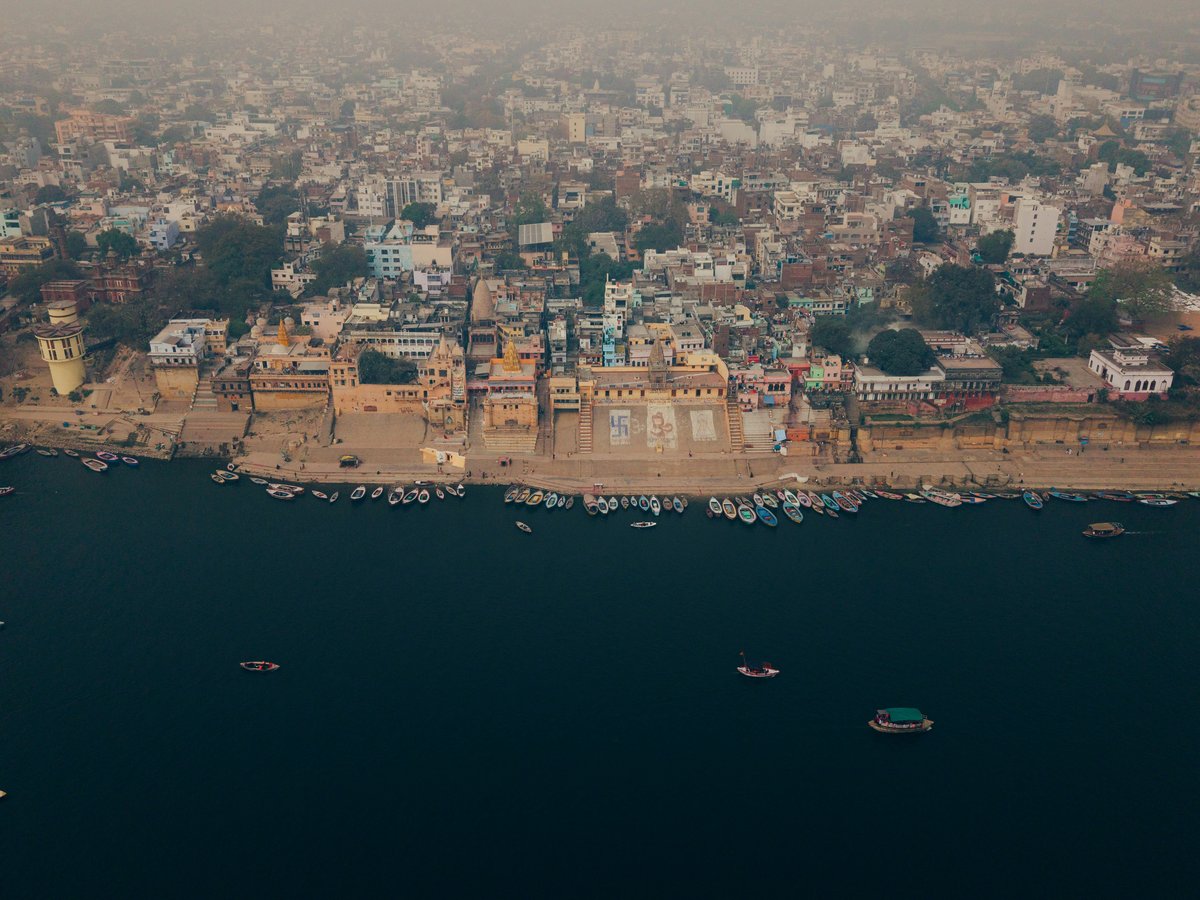
Stay in Varanasi in March
59 hotels in the Trip.com pool for Varanasi, from US$5 a night.
Opens Trip.com on Fri 5 Mar to Sun 7 Mar 2027; change the dates there.
March in Varanasi means one thing above all else. Holi. The city's celebration of the festival of colors tends to run longer and wilder than most Indian cities, often stretching over 2-3 days rather than the standard single day. If you arrive during Holi week, expect colored powder and water in every lane from Godowlia to the southern ghats. Daytime temperatures average 33°C (91°F) with lows around 18.7°C (66°F), which puts March firmly in the gap between the comfortable winter and the punishing summer that arrives in April.
Outside of Holi, March is a quieter proposition. The peak tourist season (November through February) has wound down, and you'll notice fewer tour groups at the ghats. Guesthouse owners in Assi and Lanka are more open to negotiation on room rates. That said, the warmth is real. By early afternoon, the narrow lanes of the old city trap heat in a way that discourages walking. If you plan your sightseeing for dawn and dusk, the month is perfectly manageable.
To be fair, this is not the most comfortable time to visit Varanasi on weather alone. The ideal window closed in February. But Holi tips the scales. Experiencing it in one of India's oldest continuously inhabited cities, with bonfires lit at every major intersection and the sound of dhol drums bouncing off 18th-century havelis along the riverfront, is something you won't replicate in a milder month.
Why visit in March
- Holi celebrations in Varanasi rank among the most intense in India, with ghat-side festivities that draw travelers specifically for the experience.
- Morning temperatures still allow comfortable dawn boat rides on the Ganges, unlike the 39°C days that start in April.
- Tourist crowds thin noticeably after February's peak season, making popular ghat-side guesthouses easier to book at short notice.
- Rainfall averages 12mm for the entire month, so outdoor plans are rarely disrupted by weather.
- The light over the river in early March mornings has a soft, golden quality that photographers tend to prefer over the harsher summer glare.
Worth knowing
- Afternoon temperatures in the low-to-mid 30s make walking the old city lanes between noon and 3 PM uncomfortable, with reflected heat from stone walls adding to the effect.
- Synthetic Holi colors (gulal) sold by street vendors can cause skin and eye irritation. Organic alternatives exist but require seeking out specific shops in Sigra.
- During Holi, many restaurants, shops, and some temples close for 1-2 days, which can strand visitors who have not planned around it.
- Air quality in the Gangetic plain tends to deteriorate in the pre-monsoon months, and March occasionally brings haze from agricultural residue burning in neighboring states.
Best for
Think twice if
March sits at the hinge between winter and summer in Varanasi. Mornings feel pleasant enough for a cotton shirt. By early afternoon, the sun bears down on the stone ghats and narrow lanes with real weight, and you'll want shade or an air-conditioned room. Evenings cool off enough to sit comfortably on the ghat steps. Humidity stays low compared to the monsoon months ahead, and rain is almost nonexistent. Wind occasionally picks up from the northwest, carrying fine dust from the plains.
Seasonal caution
- Pre-monsoon haze from agricultural burning in Punjab and Haryana occasionally reaches Varanasi in March, reducing air quality for 2-3 day stretches. Travelers with respiratory conditions should check AQI readings before booking.
Year-round climate
Averages from the last 5 years.
| Month | Avg high (°C) | Avg low (°C) | Rainfall (mm) |
|---|---|---|---|
| Jan | 21 | 10 | 12 |
| Feb | 27 | 13 | 10 |
| Mar | 33 | 19 | 12 |
| Apr | 39 | 24 | 2 |
| May | 39 | 27 | 41 |
| Jun | 38 | 28 | 158 |
| Jul | 34 | 27 | 304 |
| Aug | 32 | 26 | 306 |
| Sep | 32 | 26 | 256 |
| Oct | 31 | 22 | 98 |
| Nov | 28 | 16 | 5 |
| Dec | 23 | 12 | 10 |
Headline events
Holi
Full moon of Phalguna, typically mid-to-late March (varies by Hindu lunar calendar, sometimes falls in early March)
The Hindu festival of colors takes on a particularly fierce form in Varanasi, where celebrations center on the ghats along the Ganges. Colored powder (gulal) and water fill every lane of the old city. Bonfires (Holika Dahan) light up at major intersections the night before. The celebration in Banaras tends to extend over 2-3 days rather than the single-day observance common elsewhere in India, with deep ties to the city's Shaiva worship traditions.
Best things to do in March
Dawn boat ride on the Ganges
sightseeingHire a wooden rowboat from Dashashwamedh Ghat or Assi Ghat at sunrise. The boatman rows upstream past 84 ghats as the morning rituals begin. Cremation pyres at Manikarnika Ghat are visible from the water. The entire stretch covers roughly 6 km (3.7 mi).
March mornings still carry winter's coolness. By April, even 6 AM on the water feels warm, and the summer haze flattens the light.Booking tipNegotiate the price before boarding. A 90-minute ride for a small boat typically runs 300-500 INR. Avoid touts at the ghat top and walk to the water's edge to find boatmen directly.
Holi celebrations at the ghats
festivalThe open-air Holi festivities along the riverfront peak between 9 AM and noon. Dhol drummers lead processions through the narrow lanes near Godowlia. The atmosphere is chaotic, joyful, and impossible to observe without participating. Colored powder and water hit you from every direction.
Holi falls in March by the Hindu lunar calendar. This is the single defining event of the month in Varanasi.Booking tipNo booking needed. Wear old clothes you can discard. Protect your phone in a waterproof pouch. Apply coconut oil to exposed skin before heading out, which makes color removal significantly easier.
Visit Sarnath archaeological complex
culturalThe site where the Buddha gave his first sermon sits 10 km (6.2 mi) north of the city center. The Dhamek Stupa, a 43.6-meter (143 ft) cylindrical structure from the 5th century, dominates the open grounds. The Sarnath Museum, founded in 1910, houses the original Lion Capital of Ashoka.
Comfortable outdoor temperatures for walking the open ruins. The complex has minimal shade, and the midday heat from April onward makes a visit unpleasant.Booking tipGo early morning or late afternoon. The museum closes at 5 PM. An auto-rickshaw from Varanasi Cantonment costs roughly 200-300 INR one way.
Evening Ganga Aarti at Dashashwamedh Ghat
culturalA choreographed fire ceremony performed nightly by 5-7 priests on a raised platform at the river's edge. Brass lamps, incense smoke, and Sanskrit chanting fill the ghat. The ceremony draws several hundred spectators and lasts about 45 minutes, starting at sunset.
March evenings cool enough to make the 45-minute standing ceremony comfortable. In April and May, residual heat radiating from the stone ghat steps makes it harder to endure.Booking tipArrive at least 30 minutes before sunset for a spot on the ghat steps. Watching from a boat on the river gives a wider perspective if the steps are too packed.
Walk the old city lanes near Vishwanath Gali
explorationThe narrow alleys (galis) near Kashi Vishwanath Temple are barely wide enough for two people. Silk shops, sweet sellers, flower garland vendors, and small shrines line every turn. The smell of sandalwood incense and marigold mixes with frying ghee from nearby sweet shops.
The lanes trap heat badly in summer. March mornings, while warm, still allow a 2-3 hour walk without the oppressive conditions that set in from April onward.Booking tipStart at Godowlia crossing and follow the flow of pilgrims toward the temple. Security checks at the temple entrance require leaving bags, phones, and electronics at nearby shops (10-20 INR storage fee).
Subah-e-Banaras cultural program
culturalA sunrise event at Assi Ghat featuring live classical music, often tabla, sitar, or vocal recitals, against the backdrop of morning light on the Ganges. Local musicians and students from Banaras Hindu University's music faculty participate. The sound of a sitar over the water at 5:45 AM stays with you.
The program runs in the cooler months. March is typically the last comfortable month before the summer hiatus.Booking tipFree to attend. Arrive by 5:30 AM for a good spot on the ghat steps. Check locally for exact dates, as the schedule shifts.
Explore Bharat Kala Bhavan museum
culturalFounded in 1920, this university museum inside Banaras Hindu University's campus holds over 100,000 artifacts, including miniature paintings from the Mughal and Rajput schools, ancient sculptures, and a notable collection of Varanasi brocade textiles. The tree-lined campus avenues are worth the trip on their own.
March's dry weather and manageable warmth make walking the expansive BHU campus comfortable. The museum offers midday refuge from the sun without the crowds of peak season.Booking tipOpen Tuesday through Sunday, typically 10:30 AM to 4:30 PM. Small entry fee. The campus is in Lanka, about 4 km from the main ghats.
What to eat in March
Street food peaks
Kachori Sabzi
While available year-round, the breakfast kachoris in Bhelupur and the Chowk are made with fresh seasonal greens (sarson, methi) in March before the summer varieties take over. Served with spiced potato curry and tamarind chutney.
What to drink
Thandai
A cold milk-based drink blended with almonds, pistachios, saffron, fennel seeds, and cardamom. Peaks during Holi when every sweet shop and street stall in Godowlia serves it. Available with or without bhang (cannabis paste). Ask for 'sada thandai' for the non-intoxicating version.
Aam Panna
Tart, spiced raw mango drink that appears in late March as the first kairi (unripe) mangoes arrive from orchards in neighboring Malihabad. A natural coolant for the warming days.
Festival food
Gujiya
Crescent-shaped deep-fried pastry filled with khoya (reduced milk solids) and dried fruits. The definitive Holi sweet in Varanasi, sold across the city from about 2 weeks before the festival through the week after.
Malpua
Thin, crispy-edged pancakes fried in ghee and soaked in sugar syrup, often topped with rabri (thickened sweetened milk). Production peaks during Holi season at shops in the Chowk area near Kashi Vishwanath.
Regular events in March
Rangbhari EkadashiFree
A Varanasi-specific celebration held 3-4 days before Holi. The deity at Kashi Vishwanath Temple is symbolically adorned with colored powder (abir) by the temple priests, marking the official start of Holi festivities in the city. Processions move through the old city lanes with music and singing.
Ekadashi of Phalguna Shukla Paksha (3-4 days before Holi)Holika DahanFree
Bonfires are lit at major intersections and neighborhood crossings across Varanasi on the evening before Holi. Families gather around the fires, which symbolize the destruction of the demoness Holika. The largest fires appear near Dashashwamedh Ghat and in open grounds in Sigra and the Cantonment area.
Evening before Holi (Phalguna Purnima eve)Phag and Chowtal folk music gatheringsFree
Informal gatherings of folk musicians singing Holi-season songs (phag and chowtal) in the Banarasi tradition. These happen on ghat steps, in akharas (traditional gymnasiums), and at private homes throughout the month. The singing style is specific to the eastern Uttar Pradesh region and builds to a peak the week before Holi.
Throughout Phalguna month, peaking the week before HoliBest places this March
Assi Ghat
ghatThe southernmost of the major ghats, with a more relaxed atmosphere than the central ghats. Morning chai vendors set up along the steps. The area attracts long-stay travelers and has a cluster of guesthouses, bookshops, and cafes. March mornings here feel noticeably cooler than the old city due to the open riverfront and a wider breeze channel off the water.
AssiRamnagar Fort
heritageAn 18th-century sandstone fort on the eastern bank of the Ganges, a short boat ride from Tulsi Ghat. Houses a museum with vintage cars, palanquins, ivory carvings, and an astronomical clock. The open grounds and rooftop views of the river are best enjoyed before the summer heat arrives the following month.
RamnagarTulsi Manas Temple
templeA white marble temple built in 1964, dedicated to Lord Ram. The walls are engraved with verses from the Ramcharitmanas, the Hindi retelling of the Ramayana composed by the poet Tulsidas, who lived in Varanasi. Less crowded than Kashi Vishwanath and open to all visitors regardless of nationality.
BhelupurDhamek Stupa at Sarnath
archaeologicalA 43.6-meter cylindrical stone structure marking the spot of the Buddha's first sermon. The surrounding deer park has well-maintained lawns where you can sit in the March warmth without the scorching ground temperatures of summer. Worth combining with the adjacent museum for a half-day trip.
SarnathMan Mandir Ghat
ghatOne of the oldest ghats, built by Maharaja Man Singh of Amber in 1600. The stone balcony (jharokha) carvings are among the finest along the riverfront. A small astronomical observatory built by Jai Singh II sits above the ghat, though it is often locked. Best visited in the softer light of morning or late afternoon when the carved sandstone glows warmly.
GodowliaAlamgir Mosque (Beni Madhav ka Darera)
heritageA Mughal-era mosque built by Aurangzeb on a high point overlooking Panchganga Ghat. The minaret offers one of the widest river views in the city. The climb is steep and exposed to sun, so March mornings before the heat peaks are the right time to attempt it.
Panchganga
Your packing checklist
Tick items off as you pack. Your progress saves in this browser.
All packed — have a great trip.
Insider tips
The thandai sellers clustered near Godowlia crossing offer two versions. 'Sada thandai' is the standard milk-and-nut drink. 'Bhang thandai' contains cannabis paste, which is legal in Varanasi during Holi but hits harder than most tourists expect. Start with half a glass if you try it.
Assi Ghat runs a more foreigner-friendly Holi celebration than the central ghats. The space is wider, the crowds slightly less dense, and you are more likely to find other international travelers nearby. The central ghats get overwhelmingly packed.
Varanasi Junction railway station (also called Varanasi Cantt) is the main station. Do not confuse it with Varanasi City station, which is smaller and deeper inside the old city. Trains to Delhi (12-14 hours), Kolkata (12 hours), and Lucknow (6 hours) fill up during Holi week. Book at least 10 days ahead on IRCTC.
Varanasi scores 4.8/10 for family friendliness (see the TTDI Family-Friendliness Index). Holi week amplifies the challenges, since crowds overwhelm young children and the narrow lanes make strollers impossible. If traveling with kids during the festival, watch from a guesthouse rooftop rather than joining the ghat-level celebrations.
Avoid these mistakes
- Many tourists wear expensive or light-colored clothes during Holi week without planning to participate. The colored powder and water reach several blocks beyond any obvious celebration zone. Even if you stay indoors, color might find you between your guesthouse and the nearest restaurant.
- Some visitors schedule a midday walking tour of the old city. The lanes near Kashi Vishwanath trap heat from the stone walls, and there is almost no shade. By noon the temperature in the galis runs several degrees hotter than the reading at the airport weather station. Move all walking to before 9 AM or after 4 PM.
- Travelers arrive in Varanasi on Holi day itself without a hotel booking. Room availability drops sharply for the 3 days surrounding Holi, and ghat-side guesthouses charge 50-100% premiums during that window. Book at least 2 weeks ahead for Holi week.
- Tap water and street-vendor ice are common sources of illness. Varanasi's water supply is not reliably purified. Stick to sealed bottles from shops and avoid ice in lassi or thandai from roadside stalls. Established shops in Godowlia and Assi are generally safer bets.
Practical tips for March
March is Holi month, and the festival reshapes logistics for 2-3 days. Banks, post offices, and government buildings close for at least 1 full day. Many restaurants near the ghats shut on Holi day itself, so stock up on packaged snacks the evening before. The road from Varanasi Junction to Lal Bahadur Shastri International Airport (roughly 25 km / 15.5 mi) takes 45-60 minutes by auto-rickshaw on a normal day, but during Holi morning, road closures and processions can double that. Plan airport transfers for early morning or late evening.
Temple dress codes are enforced year-round. Cover shoulders and knees at Kashi Vishwanath Temple and most ghat-side shrines. Photography is prohibited inside the Kashi Vishwanath complex, and security confiscates phones at the entrance checkpoint.
The Indian Rupee currently trades at roughly 96 to 1 USD. ATMs are available in Godowlia and near the Cantonment area, but machines near the ghats often run dry during festival periods. Carry enough cash to cover 2-3 days. UPI payments (Google Pay, PhonePe) are widely accepted at shops in Lanka and Sigra, less reliably in the old city.
March sits in the shoulder season for domestic Indian flights. Fares to Varanasi from Delhi and Mumbai typically run 20-30% below December-January levels, though Holi-week flights fill early. Book domestic flights 3-4 weeks out for the best rates.
FAQ
Is March a good time to visit Varanasi?
March is a solid month, though not the most comfortable. The main draw is Holi, which Varanasi celebrates with a depth and duration that few Indian cities match. Temperatures have climbed out of winter but have not yet reached the extremes of late spring. If you specifically want to experience Holi in one of India's holiest cities, this is the month. If comfortable weather for extended sightseeing is your priority, the November-through-February window is better. Among all 12 months, March falls around the middle of the pack.
Is it safe to celebrate Holi in Varanasi as a foreign tourist?
Holi in Varanasi is generally safe but physically intense. You will be touched, colored, and likely doused with water by strangers. Most of this is good-natured. Stick to well-populated ghats, go with a group if possible, and avoid isolated lanes during peak celebration hours. Women travelers should be aware that unwanted touching increases during Holi in crowded areas. Apply coconut oil to skin beforehand, carry minimal valuables, and stay hydrated.
What is the weather like in Varanasi in March?
Warm and dry. Highs climb into the low 30s Celsius (around 90°F) and overnight lows dip below 20°C (upper 60s°F). Rain is practically absent for the entire month. Humidity sits under 50%, which feels dry compared to the monsoon that arrives in June. Mornings and evenings are comfortable for outdoor activities, but midday is warm enough to seek shade or air conditioning.
How crowded is Varanasi during Holi in March?
Holi week brings a noticeable surge of domestic Indian travelers, particularly to the ghats. The 3-4 days around the festival are considerably busier than the rest of March. Outside of Holi week, the city is quieter than the November-February peak. If you want to avoid the Holi crowds entirely, check the lunar calendar and visit during the week of March that falls furthest from the festival date.
What should I book in advance for a March trip to Varanasi?
Train tickets are the most important advance booking, especially for Holi week. IRCTC reservations open 120 days ahead and popular routes sell out quickly for the festival window. Guesthouse reservations near the ghats should be made 2-3 weeks before Holi. Domestic flights book well at 3-4 weeks out. Boat rides and local activities can all be arranged on arrival.
Things to Do in Varanasi in March
 Free cancellation
 Full Day Sightseeing Of Varanasi - Ultimate 1 Day in Varanasi
Day trip: 10 hours, free cancellation.
via Viator Free cancellation
 Private Full-Day Varanasi Tour with Boat Ride
Day trip: 12 hours, free cancellation.
via Viator Free cancellation
 Photo Tour In Holy Varanasi
Day trip: 3.5 hours, free cancellation.
via ViatorFind a flight to Varanasi
Live fares to Varanasi appear here once cookies are accepted.
Last verified by automated review (v1.7.2) on . What is automated review?