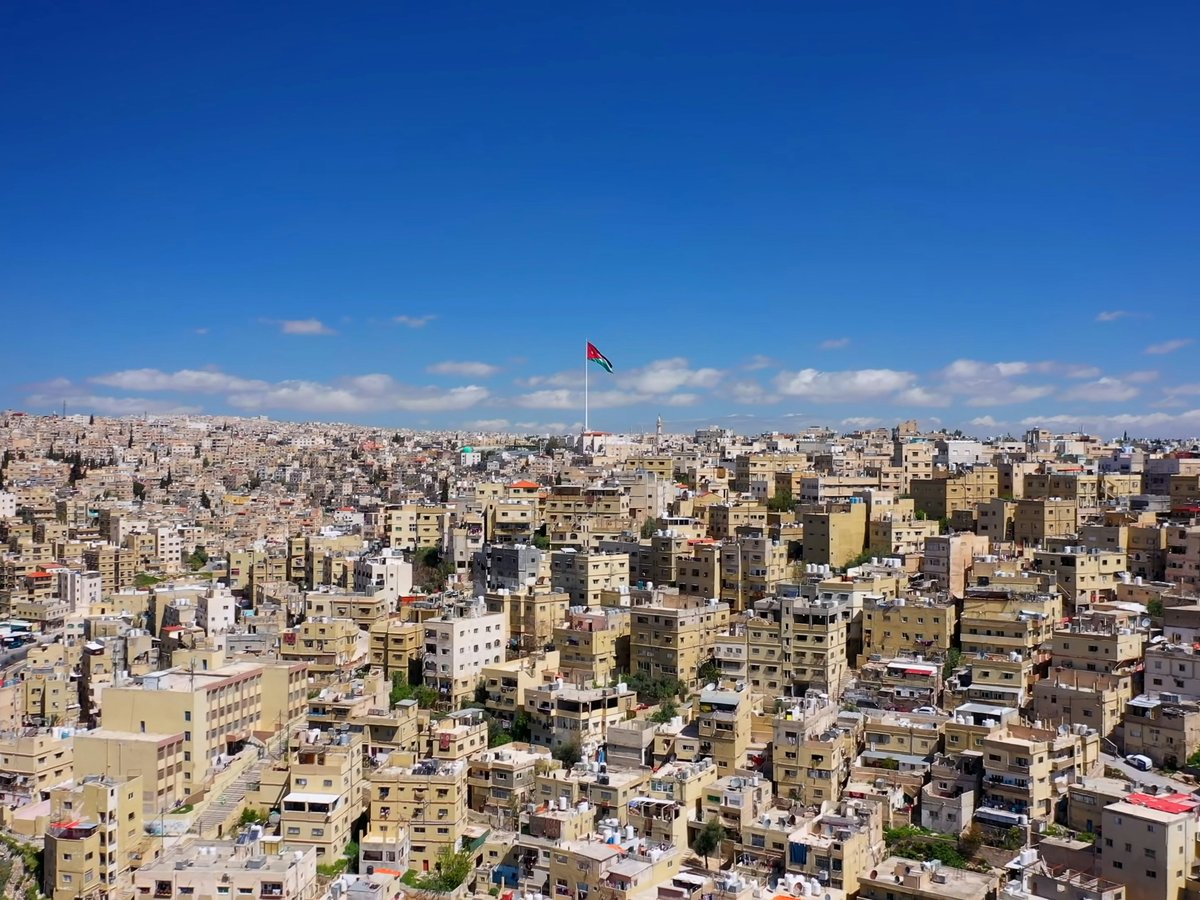
Stay in Amman in March
70 hotels in the Trip.com pool for Amman, from US$9 a night.
Opens Trip.com on Fri 5 Mar to Sun 7 Mar 2027; change the dates there.
March in Amman brings the first convincing warmth after 4 months of cold rain. Daytime temperatures typically reach 17°C (63°F), comfortable enough for a long walk up Rainbow Street or across the Citadel ridge, but mornings still hover near 8°C (47°F). You will want layers for the roughly 9°C swing between midday sun and evening chill. The city sits at about 800 meters (2,600 feet) above sea level, a fact that catches visitors off guard when they expect uniform Middle Eastern heat. Rain has not finished, with about 46mm falling across 7 days in an average March, though the heavier February downpours have eased. The hills north of the city begin showing patches of red anemones, Jordan's national flower, during the second half of the month.
Amman's shoulder season runs through March, the gap between two distinct tourist waves. Gulf-state families who fill the city's hotels in January and February have mostly departed, and the European and North American spring surge has not peaked yet. Hotel availability is straightforward, and rates sit near the annual average. The real pressure comes in April and May, when Jerash, Petra, and the Dead Sea circuit draw their heaviest visitor traffic.
March 21 carries double weight in Jordan. It is both Mother's Day and the anniversary of the 1968 Battle of Karameh. Flower vendors appear on nearly every block in the Al-Balad district and along the main streets of Sweifieh. The following day, March 22, is Arab League Day, a quieter observance that sometimes brings short government-office closures.
Why visit in March
- Wildflowers begin covering the hills north and east of the city, with red anemones peaking in the second half of March. The best carpets tend to appear near Ajloun, about 75 km northwest of Amman.
- Comfortable walking temperatures for the Citadel ridge, Rainbow Street, and Jabal al-Weibdeh without the punishing heat that makes outdoor sightseeing between June and September miserable.
- Shoulder-season hotel rates sit near or slightly below the annual average, typically 15-25% less than the April-May spring peak.
- Shorter queues at the Roman Theatre and The Jordan Museum compared to the Easter-season crowds that arrive a few weeks later.
Worth knowing
- Rain still arrives in sharp bursts, and the city's steep limestone sidewalks get slippery. Morning fog on the hilltops sometimes reduces visibility for an hour or two.
- Evenings and early mornings feel genuinely cold, particularly on exposed hilltops. A rooftop dinner reservation might mean retreating indoors by 8 PM.
- If Ramadan overlaps with your March dates (the Islamic calendar shifts roughly 11 days earlier each Gregorian year), many sit-down restaurants across Al-Balad and Jabal Amman close during daylight hours.
Best for
Think twice if
March sits at the hinge between Amman's cold, wet winter and its dry, warm summer. Mornings tend to carry a real chill on the exposed hilltops, but by midday the sun warms the limestone streets enough for a single layer. Rain tends to fall in focused bursts rather than all-day drizzle, more often in the first half of March. The second half is typically drier. The air feels noticeably less damp than February. Spring khamsin winds from the eastern desert occasionally appear, bringing dust and a sharp temperature spike for a day or two before clearing.
Seasonal caution
- Khamsin (sharav) winds blow in from the eastern desert 2-4 times during a typical March through May spring season. These hot, dry wind events can raise the temperature by 15°C (27°F) within hours, fill the air with fine sand, and cut visibility across the city. They typically last 24-48 hours. If one hits during your visit, stay indoors, keep windows sealed, and save the outdoor sightseeing for the remarkably clear air that tends to follow.
Year-round climate
Averages from the last 5 years.
| Month | Avg high (°C) | Avg low (°C) | Rainfall (mm) |
|---|---|---|---|
| Jan | 13 | 6 | 53 |
| Feb | 13 | 6 | 65 |
| Mar | 17 | 8 | 46 |
| Apr | 24 | 13 | 14 |
| May | 28 | 16 | 10 |
| Jun | 32 | 20 | 0 |
| Jul | 33 | 22 | 0 |
| Aug | 34 | 22 | 0 |
| Sep | 30 | 20 | 2 |
| Oct | 26 | 17 | 8 |
| Nov | 21 | 13 | 29 |
| Dec | 15 | 9 | 36 |
Best things to do in March
Day trip to Jerash for wildflower-framed ruins
day tripThe Roman city of Jerash, 48 km north of Amman, is one of the best-preserved Roman provincial sites in the eastern Mediterranean. In March, wild poppies and anemones grow between the columns of the Oval Plaza and along the Cardo Maximus, giving the site a visual layer that disappears entirely by May.
Wildflowers between the columns peak in late March. Summer heat makes the shadeless ruins punishing from June onward.Booking tipShared minibuses depart from Amman's Tabarbour bus station. Friday service is reduced, so plan accordingly.
Walk the Citadel ridge at golden hour
sightseeingThe Amman Citadel sits on Jabal al-Qal'a and holds the Temple of Hercules and the Umayyad Palace among other ruins spanning several millennia. The ridge gives a 360-degree view over the city's hills and minarets. March's clearer air and the softer angle of spring light make the late-afternoon visit sharper than anything you would get in summer's haze.
March air tends to be cleaner than summer's haze or winter's low cloud. The late-afternoon light through the columns is more angled and dramatic than the flat overhead light of July.Booking tipThe site closes at 6 PM in March. Arrive by 4:30 PM to avoid being rushed out at sunset.
Dead Sea float trip
natureThe Dead Sea shore lies about 60 km west of Amman, far below the city's hilltop elevation. March air temperatures at the water hover around 25°C (77°F), warm enough for comfortable floating but without the brutal 40°C+ (104°F+) readings that make summer visits oppressive. The mineral-dense water is unlike anything else on earth.
Air temperatures at the shore reach a comfortable mid-20s range. By June, the heat along the rift valley floor makes even short outdoor exposure exhausting.Booking tipThe public beach at the Dead Sea gets crowded on Fridays. Weekday visits are calmer and parking is easier.
Explore the galleries of Jabal al-Weibdeh
cultureAmman's main arts neighborhood clusters galleries, cafes, and studios within a few walkable blocks on the slopes of Jabal al-Weibdeh. Darat al Funun, a converted 1920s villa compound overlooking Downtown, is the anchor institution. March's mild weather makes the hilly walk between venues comfortable rather than a chore.
Spring temperatures suit the steep, shaded streets. Cafe owners start putting chairs and tables back outside after keeping everything indoors through winter.Booking tipMost galleries close on Fridays. Tuesday through Thursday afternoons offer the quietest visits.
Hike the trails around Dana Nature Reserve
hikingDana Nature Reserve, about 220 km south of Amman on the road toward Petra, drops from 1,500m highlands into the Wadi Araba rift. March brings green terrain and wildflowers across the upper elevations without the summer heat that limits hiking to early mornings.
Green landscape and comfortable trail temperatures. By June, the Wadi Araba floor reaches 40°C+ (104°F+) and most hikers avoid the lower trails entirely.Booking tipBook the Dana Guesthouse at least 2 weeks ahead for March weekends. The reserve limits visitor capacity by design.
Explore the Ottoman architecture of As-Salt
day tripThe town of As-Salt, 30 km northwest of Amman, earned UNESCO World Heritage status in 2021 for its late-Ottoman merchant architecture. The honey-colored stone buildings along the hillside streets photograph well in March light, and the town's pace is unhurried compared to the capital.
Spring warmth makes the steep hill walks pleasant. The town sees almost no tourist traffic outside of the April-May corridor, so March visitors tend to have the streets largely to themselves.Booking tipNo advance booking needed. Shared taxis from Amman's Raghadan station run frequently on all days except Friday.
Visit The Jordan Museum on a rainy afternoon
museumThe Jordan Museum, which opened in 2014 in the Ras al-Ain district, houses Dead Sea Scrolls fragments and the 9,000-year-old plaster statues from Ayn Ghazal, one of the world's oldest large settlements dating to around 7300 BCE. It is the country's premier indoor cultural experience.
March's rainy days create natural windows for indoor visits. The museum sees less foot traffic than during the April-May peak, when Petra-circuit tour buses add crowds.Booking tipThe museum closes on Tuesdays. Allow 2-3 hours for a thorough visit.
What to eat in March
In season: fruit
Jordan Valley strawberries
The Jordan Valley's strawberry harvest peaks in March. Look for them at roadside stands along the highway descending toward the Dead Sea. These tend to be smaller and sweeter than the imported varieties sold in Sweifieh supermarkets year-round.
On menus now
Khubbeizeh
Wild mallow leaves foraged from the hills around Amman through late winter and early spring. The leaves are slow-cooked with onions, garlic, and olive oil into a thick stew. Traditional restaurants in Al-Balad serve it during the final weeks of the foraging season, roughly through mid-March.
Musakhan
Layers of roasted chicken over taboon flatbread with caramelized onions and sumac. The dish has Palestinian roots and appears more frequently on Amman's restaurant menus in spring, when bakers fire their outdoor taboon ovens more regularly.
Ful Mudammas with fresh fava beans
Early spring brings fresh fava pods to Amman's breakfast carts. The ful shifts from the dried-bean version of winter to a lighter preparation using green pods, typically served with a heavier pour of olive oil and fresh lemon from the Jordan Valley.
Street food peaks
Loz Akhdar (green almonds)
Street vendors across Downtown sell fresh green almonds by the bag from late February through March. You eat them whole with a pinch of salt. The soft, slightly sour shell and milky interior disappear from the market by mid-April.
Regular events in March
Mother's Day and Karameh DayFree
Jordan celebrates Mother's Day on the same date as the anniversary of the Battle of Karameh, a significant national commemoration. Flower sellers crowd the streets of Al-Balad and Sweifieh, and restaurants run special family meals throughout the day.
March 21Arab League DayFree
A national observance marking the founding of the Arab League in 1945. Government offices may close for the day. There are no large public events, but the closure occasionally affects business hours and banking.
March 22Earth Hour at the CitadelFree
Jordan participates in the global Earth Hour event. The Citadel's floodlights go dark for one hour, along with many hotels and landmarks across Amman. A small gathering typically forms on the Citadel hill to watch the city dim.
Last Saturday of MarchBest places this March
Amman Citadel (Jabal al-Qal'a)
historical siteThe Citadel ridge holds layers of Bronze Age, Roman, Byzantine, and Umayyad remains. March's mild weather and clear air make the exposed hilltop comfortable for a 2-hour visit that would be punishing in July's 33°C (91°F) heat. The Temple of Hercules, dating to 162 CE, is the most photographed structure on the ridge.
Jabal al-Qal'aJabal al-Weibdeh
neighborhoodAmman's arts and cafe quarter. The neighborhood's hilly streets, lined with 1940s-era apartment buildings, feel alive in March when outdoor seating returns after winter. Darat al Funun and several independent galleries cluster within a 10-minute walk of each other.
Jabal al-WeibdehRoman Theatre of Amman
historical siteA 6,000-seat Roman theatre carved into the hillside of Downtown, built during the reign of Antoninus Pius (138-161 CE). March temperatures make sitting on the stone tiers for photographs and the view comfortable, unlike the scorching surfaces of summer. The adjacent folklore and traditions museums are worth the detour.
Al-BaladKing Hussein Park
parkAmman's largest urban park, in the western Dabouq area. Spring wildflowers and green grass peak in March. Families gather here around the March 21 holiday, and the open lawns offer views toward hills that are still green before the summer brown sets in by June.
DabouqAl-Balad (Downtown Amman)
neighborhoodThe oldest part of the city, centered around the Roman Theatre and Al Husseini Mosque. The narrow market streets sell spices, textiles, and street food. March is the right time to walk the souks without the heat-driven fatigue that empties these streets in summer afternoons.
Al-Balad
Your packing checklist
Tick items off as you pack. Your progress saves in this browser.
All packed — have a great trip.
Insider tips
Friday mornings between 8 and 11 AM are the quietest time to walk the galleries and cafes of Jabal al-Weibdeh. The neighborhood wakes up slowly while most of the city observes the Friday rest.
The area around Hashem Restaurant on King Faisal Street in Downtown has the cheapest and most consistent falafel and hummus in the city. Locals start showing up from around 7 AM. The tourist-oriented restaurants on Rainbow Street charge significantly more for the same dishes.
For the best wildflower displays, drive north toward Ajloun rather than south. The hills between Jerash and Ajloun Forest Reserve tend to hit peak color in the last 10 days of March, depending on that year's rainfall.
If a khamsin wind day hits, skip outdoor sightseeing entirely. Use it for The Jordan Museum or a traditional hamam (bathhouse) in Downtown. The dust clears within a day or two, and the air afterward is often the clearest you will experience all trip.
Avoid these mistakes
- Packing only summer clothes because it is the Middle East. Amman's elevation means March mornings carry a genuine chill, particularly on exposed hilltops around the Citadel. First-time visitors from the Gulf or Southeast Asia regularly underestimate how cold the evenings feel.
- Planning a full-day Dead Sea trip without a warm layer for the return drive. The climb from the Dead Sea, roughly 430 meters below sea level, back up to Amman crosses a temperature gap that can reach 8-10°C. The chill hits the moment you start gaining altitude on the 90-minute drive back.
- Dismissing a rainy day as a write-off. March rain in Amman tends to pass within an hour or two. The period right after a shower clears the air and offers the best long-range visibility from the upper streets of Jabal Amman and the Citadel ridge.
Practical tips for March
Amman's weekend falls on Friday and Saturday, so plan shopping and museum visits accordingly. The Jordan Museum closes on Tuesdays. If your March dates overlap with Ramadan (check the Islamic calendar for your specific travel year), most sit-down restaurants in Al-Balad and Jabal Amman close from sunrise to sunset, though hotel restaurants and several spots in Abdoun keep regular hours for non-fasting guests. Book Dead Sea or Petra day trips at least a week ahead, as operators run reduced March schedules compared to the April-May peak. Modest dress is expected at mosques and religious sites throughout the city. Shoulders and knees should be covered, and women will need a headscarf for entering the King Abdullah I Mosque. Taxis in Amman rarely use meters after dark. Agree on a fare before getting in, or use ride-hailing apps like Careem or Uber, which show the estimated cost in advance. Queen Alia International Airport (IATA code AMM) sits 32 km south of the city center, connected by the Airport Express bus running roughly every 30 minutes.
FAQ
Is March a good time to visit Amman?
March is a solid shoulder-season month for Amman. Spring is arriving, wildflowers appear on the surrounding hills, and tourist crowds have not reached their April-May peak. The main trade-off is that rain still falls on several days, and mornings feel chilly enough to need a warm jacket. If you prefer guaranteed dry, warm weather, late April or October tends to deliver more consistently.
What is the weather like in Amman in March?
Expect mild but variable conditions. Afternoons feel pleasant for walking and sightseeing, but mornings and evenings carry a genuine chill given how high the city sits. That said, the rain tends to come in short bursts rather than all-day downpours, so it rarely costs you a full sightseeing day. Layering is essential because the temperature swing between midday sun and evening shade catches many visitors off guard. Occasional khamsin winds bring brief, hot, dusty spells that pass within a day or two.
Is Amman crowded in March?
Amman sees low tourist traffic in March. The Gulf-state winter visitors have mostly departed, and the European and North American spring wave has not arrived. You can walk into the Roman Theatre, the Citadel, and The Jordan Museum without queuing on most days. Crowds pick up noticeably from April onward, especially around Easter and the Eid holidays.
Can I visit Petra as a day trip from Amman in March?
Petra is about 230 km (3 hours by car) south of Amman. A long day trip is feasible but tiring. March is one of the better months for Petra because the temperature in the canyon tends to hover around 20°C (68°F), making the 8 km walk to the Monastery comfortable. Most day-trip operators depart Amman by 6 AM and return after sunset. An overnight in Wadi Musa, the town beside Petra, gives a much less rushed experience.
Things to Do in Amman in March
 Free cancellation
 From Amman :Private or Group Full day tour to Petra
Outdoor experience: free cancellation.
via Viator Free cancellation
 Full Day Private Trip To Petra, Wadi Rum
Day trip: free cancellation.
via Viator Free cancellation
 Full-Day Tour: Umm Qais, Jerash, and Ajloun from Amman
City tour: free cancellation.
via Viator Free cancellation
 A Full Day Trip To Petra From Amman
Day trip: free cancellation.
via Viator Free cancellation
 Joyful Roads Private Car Service
Day trip: free cancellation.
via Viator Free cancellation
 Half Day Tour to Dead Sea From Amman
Day trip: 6 hours, free cancellation.
via ViatorLast verified by automated review (v1.7.2) on . What is automated review?