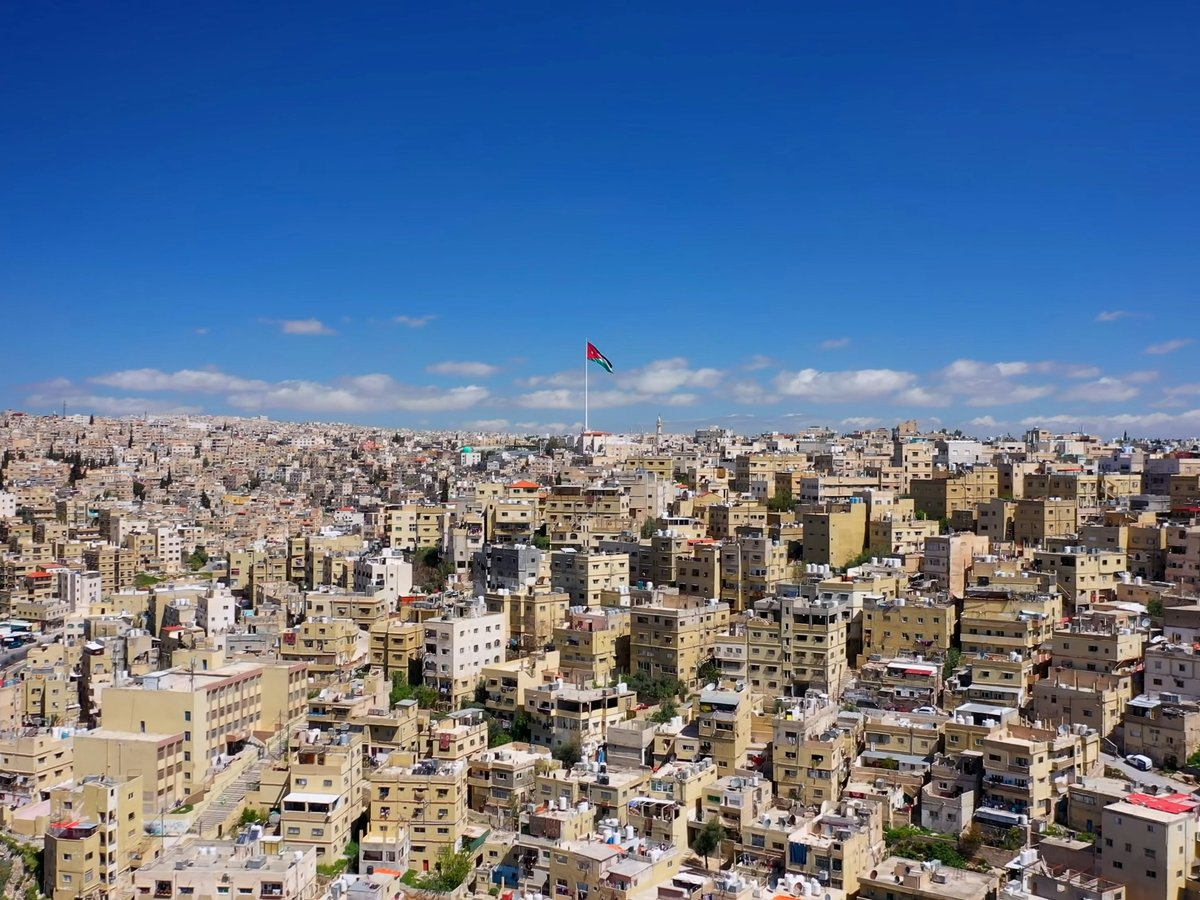
Amman keeps its past in layers, and this list is built to make you work through them rather than tick them off. Two archaeological sites ask more of you than a camera does. Salt is a UNESCO World Heritage city in Jordan and earns a full day of its own. One hotel in Abdali makes the cut, because a city this old should also be seen from its newest districts. This list is for travellers who would rather read stone, street signs and prayer times than queue for a viewpoint. Bring water and modest clothes, and leave room in the schedule. Most of these places reward a second look more than a fast first one.
-
1 Salt
A whole UNESCO World Heritage city to walk, not a single monument
Of everything on this list, Salt is the one that is a whole city in Jordan rather than a single monument. It holds UNESCO World Heritage Site status, and the right way to treat it is on foot, with no fixed route and no clock running. Skip the coach tours that squeeze it into an hour between other stops, because Salt deserves a full day, a slow lunch and an afternoon of wrong turns. Check the municipality's own website before you go, because a living town changes its opening times and street closures more often than a ruin does. Come back to Amman in the evening and you will see the capital differently.
UNESCO World Heritage Site
-
3 King Abdullah I Mosque
A working mosque dating from 1989
Arrive dressed for prayer at King Abdullah I Mosque, a mosque in Jordan, and you'll be treated as a guest rather than a spectator. Its recorded inception dates from 1989, which makes it a building of living memory rather than an antiquity, and that distinction matters for how you read it: as a statement about what Amman wanted its faith to look like in the late twentieth century. Don't treat it as a museum piece to photograph and leave. Sit for a few minutes, watch who comes and goes, and time your visit away from prayer hours. Covered shoulders and knees are the minimum courtesy. Patience counts for more.
Dates from 1989
-
4 Amman Citadel
The city's headline archaeological site, best walked slowly
Start early at the Amman Citadel, an archaeological site in Amman, before the heat and the tour groups arrive together. This is the stop everyone tells you about, and for once the consensus is right. The problem is how people do it: we'd skip the forty-minute guided sweep in favour of a slow, unguided circuit with a decent map and no agenda beyond noticing how much of the city's history sits in one place. Sit down somewhere shaded and let the site settle in. Bring water, wear real shoes, and plan to stay longer than you expected. It sets the context for every other ancient stop on this list.
-
5 Roman Theatre of Amman
Tiered Roman seating you can climb and sit in
The Roman Theatre of Amman, an ancient Roman theatre in Amman, Jordan, was built for sound, and every footstep in it echoes to prove the point. Skip the snapshot from the stage floor that every visitor takes; climb to the upper seats instead, sit down, and listen to how the space carries a voice. From up there the theatre makes sense as a working building rather than a backdrop. Go in the late afternoon if you can, when the stone is softer on the eyes and the crowds have thinned. Give it an unhurried hour. A theatre is meant to be sat in, not walked through.
-
6 Temple of Hercules
A historic site with a recorded inception of AD 162
AD 162 is the inception date recorded for the Temple of Hercules, a historic site in Amman, Jordan. Hold that number in mind as you walk up to what survives; the scale reads differently when you understand how long it has stood. Skip the quick selfie against the columns and walk the full footprint, because each side of the temple gives you a different reading of what it once was. A good guidebook page or a quiet ten minutes with the site plan does more than any audio tour. This is a stop for people who like to imagine a building whole, and coming with that patience is what it asks.
Dates from AD 162
-
7 Ayn Ghazal
An archaeological site for travellers who read before they look
Ayn Ghazal, an archaeological site in Jordan, is a place you read rather than tour, and the absence of grand columns to photograph filters the crowds more effectively than any ticket price could. Don't bother coming without doing your homework; the site makes sense when you know what was found here and why archaeologists still talk about it. Read up the night before, then come and stand in the place itself. It is a quieter, stranger hour than anything on the downtown circuit, and for the right traveller, the most memorable stop on this list.
-
8 Khirbet Yajouz archaeological site
ش. الرباب بنت النعمان، عمّانAn archaeological site inside the Greater Amman Municipality
On ش. الرباب بنت النعمان in Amman, Khirbet Yajouz is the sort of archaeological site that draws the few who bother to find it. It sits within Greater Amman Municipality, Jordan, so you reach it without leaving the capital. Skip the taxi-driver guesswork of a transliterated name; show the street name in Arabic exactly as written above and you will get there on the first try. Expect a place to explore at your own pace, not a staged attraction. Go in the morning, carry water, and leave the afternoon for something softer. It is a fine antidote to the busier ruins.
-
9 Al Husseini Mosque
The oldest mosque in Amman, in the downtown area
Al Husseini Mosque, the oldest mosque in Amman, stands on Talal Street in the downtown area, and it is less a monument you visit than a place you pass through on the way to everything else. That is its value. The streets around it function as the working heart of the city, so come when the locals do, not at the hour when tour groups do. Dress modestly and step aside for worshippers. Spend time on the surrounding streets before and after; the mosque makes most sense as part of a neighbourhood, not a standalone stop. Arrive hungry and leave slowly.
This is an early version of the Amman list. We add picks as we test more places.
Last verified by automated review (v1.7.2_regen1014c-1014-4329-20261014130537) on . What is automated review?