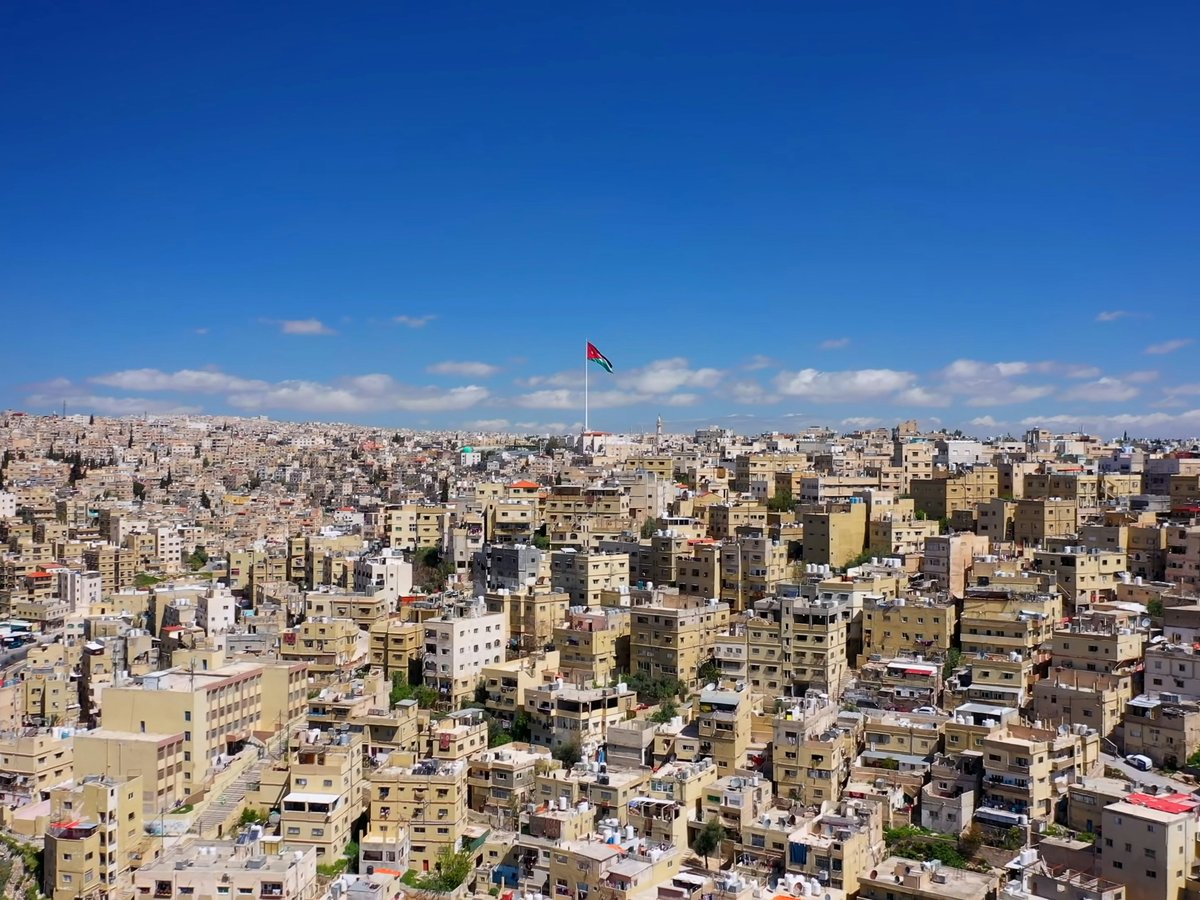
Amman's shopping culture splits cleanly between two worlds. Downtown, in the oldest quarters below the Citadel, narrow streets are stacked with spice vendors, gold shops, and textile merchants who have been trading in the same buildings for decades. West Amman, by contrast, runs on air-conditioned malls and boutique-lined avenues where Jordanian designers sell contemporary fashion alongside regional brands. The Jordanian dinar currently trades at roughly 0.709 JOD to 1 USD, and prices tend to feel moderate compared to Beirut or Dubai. What makes Amman distinctive is how much of what you find is still made locally or regionally. Hand-embroidered Palestinian and Jordanian textiles, Dead Sea mineral products, Ajloun olive oil, and Madaba mosaics are all genuine to this part of the world, not imported souvenir-shop filler. The city also has a growing contemporary design scene, concentrated in neighborhoods like Jabal Amman and Jabal al-Weibdeh, where young Jordanian artisans sell ceramics, leather goods, and jewelry from converted Ottoman-era houses. Worth noting, Amman scores 6.2/10 for solo-traveler safety (see the TTDI Solo-Safety Index), and navigating the shopping districts on foot is generally straightforward in daylight hours.
Shopping districts
-
Downtown (Al-Balad)
budgetThe oldest commercial district in Amman sits in the valley between Jabal al-Qala'a and Jabal Amman. Streets here are tight, loud, and stacked with merchandise from sidewalk level to the third floor. You'll find gold shops clustered along one stretch, fabric dealers on another, and household goods spilling onto the pavement everywhere else. The smell of roasting coffee beans and ground cardamom drifts from the spice vendors near Souk al-Sukar. Shoppers here are overwhelmingly local Jordanian families buying everyday goods at wholesale-adjacent prices. Expect Arabic to be the primary language, though many vendors speak enough English for transactions.
Best for: Spices, gold jewelry, textiles, household goods, and street food between stops
-
Rainbow Street (Jabal Amman)
mid-rangeRainbow Street runs along the ridge of Jabal Amman's 1st Circle area, about a 15-minute walk uphill from the Roman Theatre. The stretch has evolved from a residential lane into a corridor of cafes, small galleries, and boutiques. Several shops here stock Jordanian-designed jewelry, hand-poured candles, and locally printed books. The pace is slower than downtown, and you'll hear more English. Friday evenings bring foot traffic from young Ammani professionals. Prices sit above the downtown baseline but below the west Amman malls.
Best for: Jordanian-designed crafts, contemporary art, bookshops, and gallery browsing
-
Jabal al-Weibdeh
mid-range to upperThe neighborhood adjacent to Rainbow Street has become Amman's arts district over the past decade. Converted residential buildings house ceramics studios, independent fashion labels, and galleries that rotate Jordanian and regional contemporary work. The Jordan National Gallery of Fine Arts anchors the area's cultural identity. Foot traffic is lighter than Rainbow Street, and some shops keep irregular hours. You might find a leather workshop open at 11 a.m. and closed by 3 p.m. on the same day. That said, what's here tends to be genuinely handmade and priced accordingly.
Best for: Contemporary Jordanian art, ceramics, independent fashion, and studio visits
-
Sweifieh
mid-range to upperWest Amman's primary commercial strip runs through the Sweifieh neighborhood, roughly 8 km from downtown. This is where Amman's upper-middle class shops for international brands, electronics, and home furnishings. Baraka Mall and Taj Lifestyle Center sit along this corridor. The streets are car-oriented, not walkable in the downtown sense, and parking fills up on Thursday evenings. Prices align with mid-tier international retail. Air conditioning is the main sensory difference from the eastern districts.
Best for: International brands, electronics, home goods, and mall-style retail
-
Abdali Boulevard
upperThe Abdali development near the 3rd Circle opened as a mixed-use district with a pedestrian boulevard, high-end retail, and apartment towers. It positions itself as Amman's modern downtown. Shops here lean toward regional luxury brands and upscale Jordanian labels. The boulevard itself is pleasant for evening walks when September temperatures drop from the daytime 26-27°C range. Foot traffic is thinner on weekday mornings.
Best for: Upscale Jordanian brands, evening strolls with retail, and contemporary dining
-
Mecca Street (Sharia al-Mecca)
mixedMecca Street is a long commercial artery in west Amman that locals use for practical shopping. Electronics repair shops, phone dealers, furniture showrooms, and wedding-supply stores line both sides. It is not scenic, but it is where Ammanis go when they need something specific at a competitive price. The Mecca Mall, one of Jordan's largest, anchors the southern end with roughly 350 stores across multiple floors.
Best for: Practical purchases, electronics, furniture, and one-stop mall shopping
Markets
-
Souk al-Sukar (Sugar Market)
food and spiceLocated in the heart of Al-Balad, this is Amman's oldest continuously operating market area. The name dates to the Ottoman period when sugar was the primary commodity. Today the stalls sell dried fruits, nuts, spices by weight, Turkish coffee beans, and local sweets like knafeh ingredients. The air is thick with cumin, sumac, and za'atar. Vendors weigh everything on mechanical scales and prices drop when you buy in quantity. Locals shop here for Ramadan and Eid provisions.
Daily, roughly 8 a.m. to 8 p.m., with some stalls closing earlier on Fridays
-
Souk al-Bukharia
textileA fabric and textile souk near the Al-Husseini Mosque in downtown Amman. Bolts of cloth lean against every wall, and tailors work in back rooms behind the retail fronts. You'll find imported silks alongside locally woven Jordanian fabrics. The market still serves a practical function for families who buy fabric and have garments made to order. Prices are negotiable, and the quality range is wide.
Daily except Friday, typically 9 a.m. to 7 p.m.
-
Souk Jara
artisan and street fairA weekly open-air market on Rainbow Street that runs during the warm months, typically May through October. Jordanian artisans sell handmade jewelry, pottery, embroidered cushions, olive-oil soap, and paintings. Street food vendors serve falafel, fresh juice, and local pastries. Live music sometimes appears in the evening. It draws a mixed crowd of Ammani families, university students, and visitors staying in the Jabal Amman guesthouses. The atmosphere is relaxed and browsing without buying is normal.
Friday evenings, roughly 5 p.m. to 10 p.m., May through October
-
Al-Abdali Friday Market
fleaA secondhand and surplus market that appears near the old Abdali bus station area on Fridays. Vendors spread goods on blankets and tarps. You'll find used clothing, vintage electronics, old coins, phone accessories, and household items at very low prices. The crowd is almost entirely local, the atmosphere is hectic, and the smell of grilled corn from nearby carts mixes with diesel exhaust. Mind your belongings and arrive before noon for the best selection.
Friday mornings, roughly 7 a.m. to 1 p.m.
-
Downtown Gold Souk
specialty goldConcentrated along a few blocks near Al-Husseini Mosque, the gold shops of Al-Balad sell 21-karat gold jewelry in Levantine and Gulf styles. Prices follow the daily international gold rate plus a fabrication charge that varies by piece. Jordanian families traditionally buy gold here for weddings and engagements. The shop windows glow under fluorescent light, and each store typically has a digital board displaying the current gram price in JOD.
Daily, typically 10 a.m. to 8 p.m., some shops close mid-afternoon on Fridays
Souvenirs worth bringing home
Dead Sea products are the most recognizable Jordanian export. Mud masks, mineral salt scrubs, and magnesium-rich bath salts come from a handful of Jordanian manufacturers, and the genuine ones list the Dead Sea origin on the packaging. You'll find them cheaper in downtown Amman than at resort shops near the Dead Sea itself. Hand-embroidered textiles carry real cultural weight. Palestinian cross-stitch (tatreez) and Jordanian Bedouin weaving appear on cushion covers, wall hangings, and clothing. Each regional pattern has specific geometric motifs that identify its village of origin. Prices reflect the hours of handwork, and a well-made cushion cover might cost 15-40 JOD depending on complexity. Madaba mosaic art, produced in workshops near the town 30 km southwest of Amman, ranges from small coasters to large wall pieces. Ajloun olive oil and olive-oil soap from the northern highlands make practical gifts that travel well. Za'atar spice blends, usually combining dried thyme, sumac, and sesame seeds, cost a few dinars per bag in the downtown spice markets. Jordanian sand bottles, filled with layered colored sand shaped into desert scenes, are specific to the Petra and Wadi Rum region but available in Amman's tourist shops. For contemporary goods, look for Jordanian-designed ceramics and leather items from the Jabal Amman and Weibdeh studios mentioned above.
Practical tips
- Bargaining
- Bargaining is standard practice in downtown souks and the Friday flea market, but not in malls, branded stores, or boutiques with fixed prices. In the souks, a reasonable opening counter-offer is 50-60% of the first asking price, and you'll likely settle around 70-80%. Gold shops negotiate less because the base metal price is public, so the only flexible portion is the fabrication fee. Be friendly, accept the offered tea, and walk away calmly if the price doesn't work. Aggressive tactics are culturally unwelcome.
- Opening hours and weekly rhythm
- Friday is the weekly day of rest in Jordan. Many downtown shops close Friday morning and reopen in the afternoon, while some stay shut all day. Saturday is a normal shopping day. Mall hours typically run from 10 a.m. to 10 p.m., sometimes extending to 11 p.m. on Thursdays and Saturdays. Downtown shops often open by 9 a.m. and close around 8 p.m. During Ramadan, expect shorter daytime hours but lively evening shopping after iftar.
- Payment methods
- Cash in Jordanian dinars is king in the souks and smaller shops. Many downtown vendors have no card terminal at all. Malls and boutiques in west Amman accept Visa and Mastercard widely. Some Sweifieh and Abdali shops also take contactless payment. ATMs are common in both east and west Amman, and most dispense JOD in 10 and 20 notes. USD is sometimes accepted in tourist-facing shops but at a poor exchange rate, so converting at a bank or exchange office beforehand is more practical.
- Tax refunds
- Jordan charges a 16% general sales tax included in listed prices. Tourists can claim a refund on purchases above a threshold through the Jordan Customs Department at Queen Alia International Airport before departure. Keep your receipts and passport, and allow extra time at the airport. Not all shops participate, so ask at the point of sale whether they issue tax-refund documentation.
- What to avoid buying
- Mass-produced 'antiques' in the downtown tourist shops are almost always reproductions. Genuine Roman or Byzantine artifacts are illegal to export from Jordan, and any vendor claiming to sell them is either selling fakes or inviting legal trouble. Similarly, items labeled as Dead Sea products without clear Jordanian branding may be cheap imports repackaged. Look for brands like Ahava alternatives manufactured in Jordan, not re-labeled generics from elsewhere.
FAQ
Is Amman a good city for shopping compared to other Middle Eastern capitals?
Amman is smaller and quieter than Dubai or Istanbul for retail, but it has something those cities often lack. The craft traditions here are still connected to working artisan communities rather than staged for tourists. Prices tend to be lower than Beirut or Doha. The city scores 5.8/10 for digital-nomad suitability (sourced from TTDI's editorial rubric), and the combination of affordable living costs and walkable shopping districts in the eastern hills makes it practical for longer stays where you accumulate household goods alongside souvenirs.
Where should I shop for gifts if I only have a few hours in Amman?
Head to Rainbow Street in Jabal Amman. Within a single stretch you can pick up olive-oil soap, Jordanian ceramics, embroidered textiles, and local spice blends. If Souk Jara happens to be running on a Friday evening, that concentrates even more artisan vendors into one walkable area. The downtown souks offer lower prices, but require more time to navigate and bargain.
Can I use US dollars or euros for shopping in Amman?
Some tourist-oriented shops and hotels accept USD, but the exchange rate they apply tends to be unfavorable. The dinar is pegged to the dollar, which makes conversion straightforward at banks and exchange offices throughout the city. Euros are less commonly accepted outside formal exchange counters. For the best value, convert to JOD before shopping.
What are typical operating hours for Amman's malls?
Most malls in west Amman open around 10 a.m. and close at 10 p.m. on regular days. Thursday and Saturday evenings often see extended hours until 11 p.m. or later, reflecting the local social rhythm where families shop after dinner. During Ramadan, malls may open later in the morning but stay open past midnight after iftar.
Is it safe to walk around Amman's downtown shopping areas at night?
The downtown souks are generally busy and well-lit until about 9 p.m., and the presence of other shoppers and vendors provides a natural level of security. After shops close, the streets empty quickly and lighting becomes uneven in some side alleys. Amman scores 5.2/10 for family friendliness (see the TTDI Family-Friendliness Index), which partly reflects the practical challenge of navigating hilly, uneven sidewalks with young children rather than a safety concern. Sticking to main commercial streets after dark is a sensible approach.
Last verified by automated review (v1.7.2) on . What is automated review?