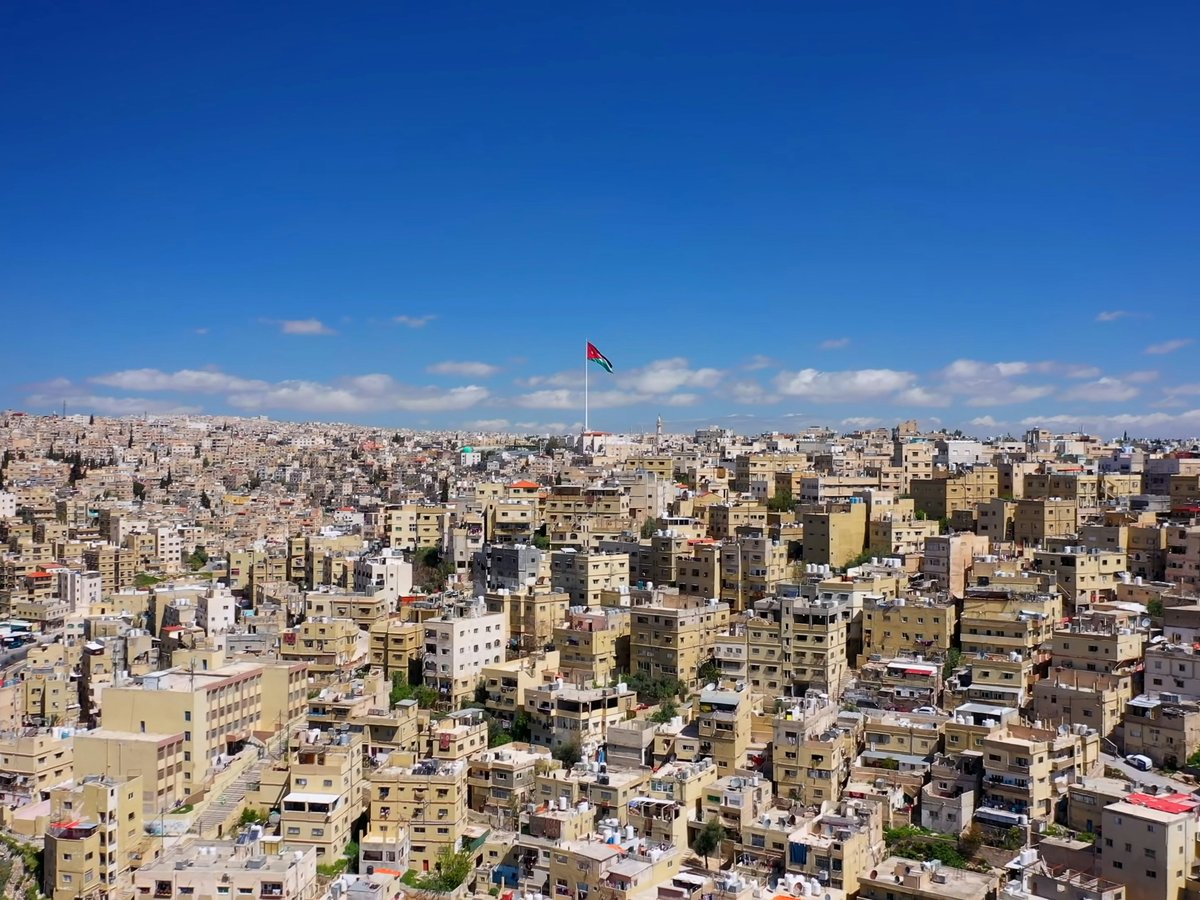
Stay in Amman in February
70 hotels in the Trip.com pool for Amman, from US$9 a night.
Opens Trip.com on Fri 5 Feb to Sun 7 Feb 2027; change the dates there.
February is Amman's wettest month. The city records roughly 65mm of rain across about 9 days, and daytime highs sit in the low teens while nights settle near 6°C (42°F). Visitors who picture Jordan as all desert heat need to recalibrate. Amman sits at approximately 800 metres (2,625 feet) above sea level on a series of limestone hills, and that elevation gives the city a proper winter. Snow falls perhaps once every 3 or 4 winters. When it does, the city grinds to a halt.
That said, there is a quiet appeal to February here. The Citadel on Jabal al-Qal'a and the Roman Theatre downtown sit largely free of tour groups. Hotel availability opens up, and rates drop well below the annual average. The air is cool enough to walk comfortably through hilly neighborhoods like Jabal Amman and Jabal al-Weibdeh, where summer heat makes the steep streets genuinely tiring. Almond trees in the surrounding hills begin to flower, a first sign that spring is approaching.
The honest downside is persistent grey skies. Daylight runs from about 06:30 to 17:30, and outdoor cafe terraces that define Amman's social life in warmer months are closed or feel exposed to the wind. If you want the Amman that stays outdoors until midnight, come in May or October. February is for the traveler who packs layers, prefers museums to rooftop bars, and finds rain more atmospheric than annoying.
Why visit in February
- Archaeological sites are nearly empty. You can explore the Citadel without weaving through the coach tours that crowd it from April through October.
- Hotel and guesthouse availability is wide open, with rates among the lowest of the year alongside January.
- Cool air makes walking Amman's steep hills between neighborhoods genuinely comfortable compared to the exhausting summer months.
- Day trips to the Dead Sea and Petra are far more physically manageable in winter's cooler temperatures.
Worth knowing
- This is the wettest month of the year, and overcast skies are common, sometimes persisting for several consecutive days.
- Outdoor terraces and rooftop cafes, central to Amman's social scene in other months, are largely shut or uncomfortable in the cold wind.
- Short winter days compress outdoor sightseeing, especially at sites that close at sunset.
Best for
Think twice if
February days in Amman feel like late autumn in a Mediterranean hill town. Morning air is crisp enough to see your breath in the older stone-built streets of downtown. Clear spells bring pleasant midday warmth in direct sun, but cloud cover frequently returns. Rain arrives in sustained showers rather than brief tropical bursts, and the staircases connecting Amman's hills get slippery. Wind picks up across exposed sites, particularly the Citadel plateau, where gusts amplify the chill considerably. Humidity runs higher than Amman's annual norm, though it never feels tropical. Nights are cold enough for a proper winter coat.
Seasonal caution
- Snowfall is possible at Amman's elevation. When it lands, roads close, taxis disappear, and attractions shut until the snow melts, typically within 1-2 days. The city has minimal road-clearance infrastructure.
- Flash flooding can occur in low-lying wadis after sustained rainfall. The Siq Trail at Wadi Mujib Nature Reserve is closed from November through March due to flash flood danger. Check conditions before any wadi-based day trips.
Year-round climate
Averages from the last 5 years.
| Month | Avg high (°C) | Avg low (°C) | Rainfall (mm) |
|---|---|---|---|
| Jan | 13 | 6 | 53 |
| Feb | 13 | 6 | 65 |
| Mar | 17 | 8 | 46 |
| Apr | 24 | 13 | 14 |
| May | 28 | 16 | 10 |
| Jun | 32 | 20 | 0 |
| Jul | 33 | 22 | 0 |
| Aug | 34 | 22 | 0 |
| Sep | 30 | 20 | 2 |
| Oct | 26 | 17 | 8 |
| Nov | 21 | 13 | 29 |
| Dec | 15 | 9 | 36 |
Best things to do in February
Explore the Amman Citadel at your own pace
sightseeingThe hilltop Citadel complex includes the Temple of Hercules, built around 162 CE, the Umayyad Palace, and a panoramic overlook across the city. In February, you can spend an unhurried 2-3 hours here without navigating around coach tours.
Peak-season crowds from April through October fill the narrow paths and the platform at the Temple of Hercules. February visitor numbers drop to a fraction, and mild daytime temperatures make the exposed hilltop comfortable.Booking tipNo advance booking needed. A Jordan Pass covers entry here and at 40+ other sites nationwide.
Visit The Jordan Museum on a rainy day
cultureThe Jordan Museum opened in 2014 in the Ras al-Ain district. It houses the Dead Sea Scrolls, statues from Ayn Ghazal (a Neolithic settlement dating to around 7300 BCE), and a walk through Jordan's archaeological record from the Stone Age onward.
February's rainy days need an indoor plan, and this museum merits a full 3-4 hour visit that summer visitors often cut short due to packed schedules.Booking tipThe audio guide adds context the wall labels lack. Allow 3 hours minimum.
Day trip to Petra in comfortable temperatures
day tripThe 3-hour drive south from Amman reaches Petra, where February daytime temperatures hover around 14°C (57°F). The walk from the Siq entrance to the Treasury takes about 30 minutes each way through a narrow canyon, and the cooler air makes the return climb far less exhausting than in summer.
Summer temperatures at Petra regularly exceed 37°C (99°F) with almost no shade. February is one of the most physically comfortable months to visit, with noticeably fewer visitors at the Treasury for photographs.Booking tipStay overnight in Wadi Musa to avoid 6 hours of round-trip driving. Book a guesthouse at least a week ahead, even in low season.
Walk Rainbow Street and gallery-hop in Jabal al-Weibdeh
cultureRainbow Street in Jabal Amman connects a string of cafes, bookshops, and small galleries. A 15-minute walk north reaches Jabal al-Weibdeh, home to Darat al Funun, a contemporary art space set in restored 1920s buildings overlooking the city center.
February's cool air makes the steep walk between these two neighborhoods pleasant. In summer, the same route is a sweaty, shade-deficient climb. Winter also brings quieter gallery openings and fewer tourist-oriented street vendors.Float in the Dead Sea at comfortable temperatures
day tripThe Dead Sea sits about 430 metres (1,410 feet) below sea level, roughly 60km west of Amman. At that depression, February air temperatures reach around 20°C (68°F), considerably warmer than Amman's hilltops. The hypersaline water stays relatively warm year-round.
Summer air temperatures at the Dead Sea regularly exceed 42°C (108°F), which makes the shore genuinely unpleasant. February offers a far more comfortable window for the float-and-mud experience.Booking tipPublic beaches are less maintained than resort day-passes. Visit on a weekday if possible, because Fridays fill with local families.
Soak at Hammamat Ma'in hot springs
relaxationNatural hot springs cascade down sandstone cliffs about 30km southwest of Madaba. The water emerges at around 63°C (145°F) and cools in a series of descending pools. The surrounding canyon walls block wind and create a sheltered microclimate.
Hot springs feel most rewarding in cold weather. The contrast between the chilly drive through Jordan's highlands and the steaming pools is the whole experience. A summer visit, when the air is already 40°C, loses that contrast entirely.Explore the Roman Theatre district at dusk
sightseeingThe 6,000-seat Roman Theatre, cut into the hillside of downtown Amman, dates to the 2nd century CE when the city was known as Philadelphia. Two small museums flank the stage. The adjacent Hashemite Plaza connects to the Nymphaeum a few minutes west.
February sunsets around 17:30 cast warm light across the theatre's stone tiers while downtown begins to light up. The cool air keeps the stone seats comfortable for sitting, unlike summer when they absorb and radiate heat well into the evening.What to eat in February
In season: fruit
Winter citrus (oranges, clementines, blood oranges)
Jordanian citrus peaks from December through February. Street carts in Al-Balad sell bags of Jordan Valley oranges, intensely sweet. Fresh-squeezed orange juice appears at nearly every cafe counter.
On menus now
Mansaf
Jordan's national dish of lamb cooked in fermented dried yogurt (jameed), served over rice. Hearty and warming, it appears at restaurants across downtown Amman throughout winter and feels especially right on a cold, rainy February evening.
Musakhan
Roasted chicken with caramelized onions, sumac, and olive oil on taboon flatbread. This Palestinian-Jordanian winter staple appears on menus across Amman from November through March, heavier and more aromatic than the lighter summer dishes.
Freekeh soup
This smoky, nutty soup uses roasted young green wheat, a cold-weather fixture across the Levant. Served in most traditional restaurants around the downtown area, it is filling and distinctly regional in flavour.
Street food peaks
Knafeh
Warm shredded pastry layered with soft white cheese and soaked in sugar syrup. Available year-round, but the contrast of hot, gooey knafeh against a cold February afternoon makes it feel like a different dish entirely.
What to drink
Maramiyyeh (sage tea)
Jordanians drink sage-infused tea throughout winter, often mixed with black tea. Corner cafes in Jabal al-Weibdeh serve it sweet and steaming. The herb grows wild in Jordan's northern highlands.
Regular events in February
Valentine's Day along Rainbow StreetFree
Restaurants and cafes in Jabal Amman and the Abdali district offer special menus and events on February 14. While imported from Western tradition, Amman's younger generation has embraced the occasion, and Rainbow Street carries a lively atmosphere that evening.
February 14Almond blossom season in the Salt highlandsFree
The hills of the Balqa Governorate, particularly around the town of Salt (30km northwest of Amman), see almond trees in bloom from mid-January through early March. Mid-February typically brings the peak, with pale pink and white flowers against otherwise bare winter branches. No organized festival, but the drive from Amman through the flowering hillsides is worth the trip on its own.
Mid-January through early March, peak in mid-FebruaryPossible start of RamadanFree
In some years (including 2026 and 2027), Ramadan begins in late February. During the holy month, most restaurants close during daylight hours, though hotel restaurants and tourist-oriented spots stay open. Evenings become festive as families gather for iftar meals. The Islamic calendar shifts by about 11 days annually, so check dates for your specific travel year.
Varies by Islamic calendar; overlaps with February in some years of the 2020sBest places this February
Wild Jordan Center
cafe and shopRun by the Royal Society for the Conservation of Nature, this center in Jabal Amman overlooks the downtown valley from an elevated terrace. The shop sells handmade products from Jordan's nature reserves, and the cafe serves organic Jordanian food. On a grey February afternoon, the heated interior and the sweeping view over the Roman Theatre below make it a comfortable stop between outdoor sightseeing.
Jabal AmmanThe town of Salt
historic townA 30km drive northwest from Amman reaches Salt, a hillside town with Ottoman-era yellow limestone architecture and a quieter pace than the capital. February's almond blossoms line the approach roads, and the old quarter rewards an hour or two of walking. The Salt Archaeological Museum gives context to the region's long settlement history.
Al-Balad souks
marketAmman's downtown souks sell spices, dried fruits, gold, and household goods in a warren of covered alleyways between old stone buildings. February rain drives more local shoppers indoors, and the covered sections carry a concentrated energy that contrasts with the quiet streets outside. Worth visiting on a Saturday or Tuesday morning for the fullest activity.
Al-BaladKing Abdullah I Mosque
mosqueThe blue-domed Ottoman Revival mosque on Suleiman Al-Nabulsi Street is one of the few mosques in Amman that welcome non-Muslim visitors. The interior is warm, the geometric dome is worth photographing, and it pairs well with a rainy-day itinerary through the Abdali area.
AbdaliThe Nymphaeum
archaeological siteA partially restored 2nd-century Roman fountain complex in the heart of downtown, a short walk from the Roman Theatre. February's wet conditions make the ancient water channels and drainage features visible in ways the dry summer months do not reveal. The site is still under gradual restoration and tends to be overlooked by visitors focused on the theatre next door.
Al-BaladDuke's Diwan
heritage houseA restored early-20th-century townhouse in the heart of downtown that operates as a free, informal museum and cultural gathering space. Old photographs on the walls trace Amman's transformation from a small settlement to a modern capital. Visitors are offered Arabic coffee on arrival, which feels especially welcoming on a cold February afternoon.
Al-Balad
Your packing checklist
Tick items off as you pack. Your progress saves in this browser.
All packed — have a great trip.
Insider tips
The spice and nut shops in the souks around Al-Husseini Mosque sell the same products as the tourist-facing shops on Rainbow Street at notably lower prices. Ask for za'atar by weight, not pre-packaged.
Amman's hills trap cold air in the valleys after sunset. If you walk from the Citadel area down to Al-Balad in the evening, it gets noticeably colder at the bottom, not warmer. Layer accordingly.
Ride-hailing apps operate in Amman and show the fare before you confirm, which removes the negotiation that yellow-cab rides sometimes involve. Useful for the airport transfer and Dead Sea day trips.
If you finish sightseeing at sunset and want food immediately, the falafel and hummus stalls in the downtown area serve continuously from morning. Sit-down restaurants tend to fill later in the evening, around 19:00 or after.
Avoid these mistakes
- Packing for warm weather because it is 'the Middle East.' Amman in February is colder than many southern European cities at the same latitude. Treat it as a winter trip and bring proper layers.
- Scheduling only outdoor sightseeing without a rainy-day backup. When showers arrive, they tend to last most of the day. Indoor options like The Jordan Museum and the downtown souks keep a wet afternoon productive.
- Underestimating walking distances because the map looks compact. Amman is built across steep hills, and a 1km distance on the map might involve descending 100 metres into a valley and climbing back up the other side, on wet stone steps.
- Visiting the Dead Sea without checking the forecast first. A rainy February day at the Dead Sea is windy, grey, and unpleasant. Wait for a clear day to make the 60km trip worthwhile.
Practical tips for February
Friday is Jordan's weekly day off, so government offices and many downtown shops close or reduce hours. Plan museum visits and souk shopping for Saturday through Thursday. If your visit overlaps with Ramadan, carry water and snacks for the daytime hours when dining options thin out considerably. Queen Alia International Airport sits 35km south of the city center, and the Airport Express bus connects to Tabarbour station in north Amman on a regular schedule. Dress conservatively when visiting mosques, and women should carry a headscarf for entry. Layers matter indoors too, because budget hotels and guesthouses sometimes have inconsistent heating. Most restaurants and cafes in Amman accept credit cards, but the souks and smaller shops in Al-Balad are cash-only. ATMs are easy to find along Rainbow Street and in the Abdali district.
FAQ
Is February a good time to visit Amman?
February is a fair choice, not ideal. It is the wettest month of the year, and grey skies are frequent. The trade-off is that tourist sites sit nearly empty, hotel rates are at their annual low, and the cool air makes sightseeing physically comfortable. If rain and cold bother you, April or October are stronger picks. If you prefer low prices and solitude at the ruins, February works.
What should I wear in Amman in February?
Dress as you would for a cool, wet European city. A waterproof jacket, warm mid-layer, and waterproof walking shoes with good grip are the essentials. Amman's streets involve steep stone staircases that get slippery in rain. Evenings are cold enough for a proper winter coat. Carry a scarf for warmth and for covering your head when visiting mosques.
Is Amman crowded in February?
No. February is deep low season for tourism. Attractions are quiet, hotel availability is wide, and popular restaurants have open tables most evenings. You will share the city primarily with residents rather than tour groups.
Can I visit Petra from Amman in February?
Yes. The 3-hour drive south is feasible as a long day trip, though an overnight stay in Wadi Musa is more comfortable and lets you enter the site at dawn before other visitors arrive. February temperatures at Petra are mild and pleasant for the extended walking the site requires.
Does it snow in Amman in February?
Snow is possible but not common. February is one of the likeliest months for it alongside January, and when it does fall, the city has limited capacity to clear roads. Most outdoor attractions close until it melts, and flights can be delayed. Conditions typically clear within a day or two.
Things to Do in Amman in February
 Free cancellation
 From Amman :Private or Group Full day tour to Petra
Outdoor experience: free cancellation.
via Viator Free cancellation
 Full Day Private Trip To Petra, Wadi Rum
Day trip: free cancellation.
via Viator Free cancellation
 Full-Day Tour: Umm Qais, Jerash, and Ajloun from Amman
City tour: free cancellation.
via Viator Free cancellation
 A Full Day Trip To Petra From Amman
Day trip: free cancellation.
via Viator Free cancellation
 Joyful Roads Private Car Service
Day trip: free cancellation.
via Viator Free cancellation
 Half Day Tour to Dead Sea From Amman
Day trip: 6 hours, free cancellation.
via ViatorLast verified by automated review (v1.7.2) on . What is automated review?