Stay in Amman in July
70 hotels in the Trip.com pool for Amman, from US$9 a night.
Opens Trip.com on Fri 2 Jul to Sun 4 Jul 2027; change the dates there.
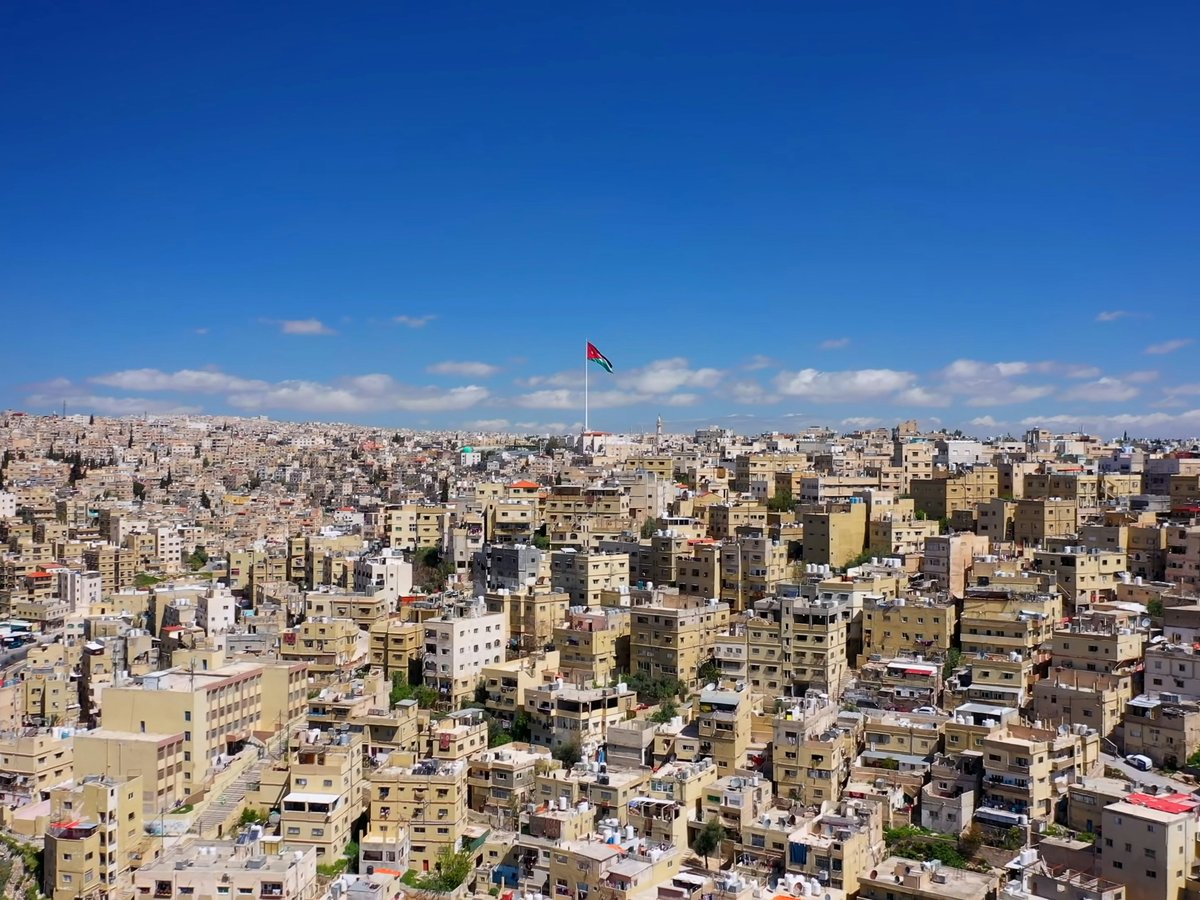
July in Amman is hot, dry, and reliably sunny. Daytime temperatures average 33.1°C (92°F) with lows settling near 21.6°C (71°F) after dark, and rainfall measures 0 mm for the entire month. The humidity hovers around 41%, which keeps the air sharp rather than heavy. Step outside at noon and you feel it in the limestone. The pale stone buildings that make the city so photogenic also store and radiate heat, turning the hillside streets into slow ovens by early afternoon. It is not the same oppressive wall you hit in Dubai or Doha, though. The elevation helps.
Amman shifts to a nocturnal rhythm in summer. Dinner reservations along Rainbow Street in Jabal Amman rarely start before 9 PM, and the sidewalk cafes in Jabal al-Weibdeh stay packed well past 11. Gulf Arab families arrive in significant numbers through July and August, drawn north by temperatures that run 10-15°C (18-27°F) cooler than Riyadh or Abu Dhabi. You'll notice more Khaleeji dialect in the Abdoun and Sweifieh shopping districts than at any other time of year. Meanwhile, some smaller family-run shops in Al-Balad close for 2-3 weeks during the school holiday.
The month's cultural anchor is the Jerash Festival of Culture and Arts, typically opening in late July at the ancient ruins about 50 km north of the city. Evening performances start after sunset, when the stone amphitheatre has cooled and the acoustics carry across Roman columns. If you can structure your days around early mornings and late evenings, July works. Spring remains the sweet spot for comfortable all-day sightseeing, and October offers similar warmth without the midday intensity. July's advantage lies in its festival calendar, its summer produce, and the 14 hours of daylight between a 5:30 AM sunrise and a 7:45 PM sunset.
Why visit in July
- Essentially no chance of rain through the entire month, meaning every outdoor plan holds without a backup
- The Jerash Festival of Culture and Arts brings leading Arabic and international performers to a 2nd-century Roman amphitheatre, typically opening in late July
- Gulf tourism pushes Amman's restaurant and cafe scene to peak energy, with extended hours and seasonal menus across Jabal Amman and Sweifieh
- Souk Jara, the weekly Friday summer market on Rainbow Street, runs every Friday from June through September with local artisans, street food, and live acoustic sets
Worth knowing
- Midday temperatures regularly reach 33-36°C (91-97°F), making extended outdoor sightseeing between 11 AM and 4 PM uncomfortable at exposed archaeological sites like the Citadel
- The Dead Sea, a common day trip, sits at roughly -430 m elevation where July temperatures routinely hit 40-45°C (104-113°F), limiting comfortable visit windows to early morning
- UV intensity at Amman's 800 m elevation leads to faster sunburn than most visitors expect, even on days that feel less fierce in the shade
- Some smaller family-run restaurants and shops in the Al-Balad district close for 2-3 weeks during the summer school holiday, reducing options in the downtown core
Best for
Think twice if
Relentlessly sunny with virtually no cloud cover for the full 31 days. The dry heat feels sharp in direct sun but tolerable in shade, especially in the western hillside neighbourhoods above 700 m. Mornings before 9 AM are genuinely pleasant, often still below 25°C (77°F). By 1 PM the stone buildings and pavement radiate stored warmth, and the glare off pale limestone can be intense. Evenings cool noticeably after 7 PM. You might want a light layer for rooftop dining past 11 PM.
Seasonal caution
- Heat waves can push Amman above 38°C (100°F) for 3-5 consecutive days, particularly in the lower-elevation eastern neighbourhoods. Carry at least 2 litres (68 oz) of water on any outdoor excursion and monitor local forecasts for sharav (hot wind) advisories.
- The Dead Sea area, a popular day trip, typically reaches 40-45°C (104-113°F) in July. Limit visits to before 10 AM or after 4 PM, and bring electrolyte supplements to prevent heat exhaustion.
- UV index regularly reaches 10-11 at Amman's elevation. Unprotected skin can burn in under 20 minutes of direct exposure, even for darker complexions.
Year-round climate
Averages from the last 5 years.
| Month | Avg high (°C) | Avg low (°C) | Rainfall (mm) |
|---|---|---|---|
| Jan | 13 | 6 | 53 |
| Feb | 13 | 6 | 65 |
| Mar | 17 | 8 | 46 |
| Apr | 24 | 13 | 14 |
| May | 28 | 16 | 10 |
| Jun | 32 | 20 | 0 |
| Jul | 33 | 22 | 0 |
| Aug | 34 | 22 | 0 |
| Sep | 30 | 20 | 2 |
| Oct | 26 | 17 | 8 |
| Nov | 21 | 13 | 29 |
| Dec | 15 | 9 | 36 |
Headline events
Jerash Festival of Culture and Arts
Late July through early August (dates shift annually, typically opening in the last week of July)
Jordan's premier cultural festival, held since 1981 among the Greco-Roman ruins of ancient Gerasa. The programme spans Arabic and international music, traditional dabke dance, theatre, and poetry readings. Performances take place in the South Theatre, a 3,000-seat Roman amphitheatre where the acoustics need no electronic amplification. Evening shows begin after 8 PM, when the stone has cooled and the floodlit columns create an atmosphere no modern venue can replicate. The festival typically runs for 10-14 days and draws performers from across the Arab world.
Best things to do in July
Dawn exploration of the Amman Citadel
sightseeingThe Citadel complex sits on Jabal al-Qal'a, the highest of Amman's original seven hills. At dawn the limestone catches the first orange light and the air temperature still hovers near 22-24°C (72-75°F). The site opens at 8 AM. Arrive at opening and you'll have the Temple of Hercules, built in 162 CE during Marcus Aurelius's reign, largely to yourself before tour groups arrive by 9:30.
July's extreme midday heat makes early morning the only comfortable window for open-air archaeological sites. By 10 AM there is no shade on the Citadel hilltop.Booking tipNo advance booking needed. Arrive right at 8 AM opening to beat the heat and the tour bus wave.
Evening concerts at the Jerash Festival
culturalPerformances begin after 8 PM in a floodlit Roman amphitheatre about 50 km north of Amman. The drive takes roughly 45 minutes. Acts range from Jordanian oud masters to Egyptian pop stars to international jazz ensembles. The cooled evening air, the 2,000-year-old stone seating, and the natural acoustics of the South Theatre create something no modern concert hall matches.
The festival runs only in late July and early August. It is Jordan's single biggest annual cultural event and the primary reason many regional visitors choose this month.Booking tipBuy tickets as soon as the annual programme is announced, typically 3-4 weeks before opening night. Headline acts sell out within days.
Friday evening at Souk Jara
marketThis open-air summer market sets up along Rainbow Street every Friday from roughly 4 PM until 10 PM. Local artisans sell ceramics, embroidered textiles, and hand-pressed olive oil soap. Street food stalls serve shawarma, falafel, and fresh-squeezed pomegranate juice. Live acoustic music drifts between the stone buildings of the Jabal Amman neighbourhood.
Souk Jara operates only during summer months, approximately June through September. July Friday evenings are warm enough for comfortable outdoor browsing without the midday intensity.Booking tipNo booking required. Arrive closer to 6 PM for the best combination of cooler temperatures and full vendor participation.
Morning float at the Dead Sea
natureThe Dead Sea lies about 60 km west of Amman and roughly 400 m below sea level. The water's 34% salinity makes sinking physically impossible. In July the water temperature reaches approximately 35°C (95°F). The mineral-rich mud along the shoreline is free to scoop and apply. The sensation of floating effortlessly while caked in warm black mud is unlike anything else in the region.
July's guaranteed clear skies and the warm water temperature make the float comfortable without any wetsuit. The key is arriving before 9 AM, since air temperatures at that elevation climb past 40°C (104°F) by late morning.Booking tipBook a hotel or resort day-pass to access maintained beaches with showers and shade. Public beaches exist but offer minimal facilities.
Sunset walk through Jabal al-Weibdeh
neighbourhood walkAmman's arts district occupies a compact hillside neighbourhood with independent galleries, small cafes, and street art on crumbling Ottoman-era walls. Darat al Funun, a contemporary art space set in a cluster of restored 1920s houses, offers free exhibitions and a garden overlooking downtown. The neighbourhood is walkable in about 90 minutes at an easy pace.
The late-July sunset falls around 7:30 PM, and the golden-hour light on the stone buildings is particularly striking. Temperatures by this hour typically drop below 28°C (82°F), making a walk pleasant rather than punishing.Booking tipNo booking needed. Check Darat al Funun's schedule for summer exhibition openings, which sometimes include evening receptions.
The Jordan Museum as a midday retreat
museumThe Jordan Museum in Ras al-Ain opened in 2014 and holds Dead Sea Scrolls fragments alongside a chronological journey from prehistory through the Nabataean and Ottoman periods. The air-conditioned galleries fill the noon-to-4 PM window when outdoor activity is inadvisable. The Ain Ghazal statues, dating to approximately 7300 BCE, are among the oldest large-scale human figures ever discovered.
July's midday heat creates a natural 4-5 hour gap when you need indoor activities. The museum fills that gap with substance rather than cool air alone.Booking tipWeekday mornings tend to be quieter. Friday and Saturday (the Jordanian weekend) see higher domestic visitor numbers.
Ajloun Castle day trip with forest walk
day tripQal'at ar-Rabad, the 12th-century Ayyubid castle above the town of Ajloun, sits at approximately 1,100 m elevation surrounded by pine and oak forest. The Ajloun Forest Reserve, managed by the Royal Society for the Conservation of Nature, maintains marked trails through the canopy. July temperatures at this altitude run 5-7°C (9-13°F) cooler than central Amman.
The elevation difference provides genuine relief from the valley heat. The forest canopy creates shaded walking conditions that the city cannot offer in July.Booking tipThe Ajloun Forest Reserve cabins book out weeks ahead in summer. Reserve through the RSCN website for an overnight stay.
What to eat in July
In season: fruit
Fresh figs (teen)
Jordanian fig season peaks in July and August. The small, dark-purple Ajloun figs are intensely sweet, with a fragrance close to warm honey. You'll find them stacked on carts in Al-Balad's produce alleys, soft enough to split open with your thumbs. They bruise within hours, so eat them the day you buy them.
Table grapes (inab)
Local green grapes from the Hebron-corridor tradition appear in every corner shop by mid-July. The best are firm, almost crunchy, with a tartness that offsets the sweetness. Salt grapes from the Jordan Valley tend to be smaller and more concentrated in flavour.
Watermelon (bateekh)
Peak season runs June through August. Jordanian watermelons from the Ghor (Jordan Valley) are dense and deeply red. Street vendors sell chilled slices from coolers outside every major mosque and market entrance. The cold, dripping sweetness is the city's default summer snack.
On menus now
Tabouleh
Summer parsley and mint reach peak freshness in July, and Ammani tabouleh leans heavier on herbs than the Lebanese version. The ratio tips roughly 70% chopped parsley to 30% bulgur. Served cold, it appears as a mezze fixture at every evening gathering.
Mansaf
Jordan's national dish appears year-round, but summer family gatherings and Gulf visitor demand keep it at peak presence on restaurant menus through July. The lamb is slow-cooked in fermented dried yoghurt (jameed) and served over rice and flatbread. The tangy, slightly gamey broth is the defining taste of Jordanian home cooking.
What to drink
Tamr hindi (tamarind juice)
This cold, dark, sweet-sour drink appears at every juice stand and restaurant table in summer. Dried tamarind pods are soaked overnight and strained to produce it. Vendors serve it over crushed ice. The flavour sits somewhere between tart apple and date, and locals consider it July's essential thirst-quencher.
Regular events in July
Souk Jara weekly summer marketFree
Open-air artisan and food market on Rainbow Street (Abu Bakr as-Siddiq Street) in Jabal Amman. Local crafts, street food, and acoustic live music. The market has run each summer since 2004 and remains the city's best weekly outdoor gathering.
Every Friday, approximately 4 PM to 10 PM, June through SeptemberSummer cultural evenings at the Odeon
The intimate 600-seat Odeon, adjacent to the Roman Theatre in downtown Amman, hosts occasional evening performances during summer months. Programming varies year to year and may include traditional Arabic music, spoken-word recitals, and short theatrical works. The small scale and open-air setting create a more personal atmosphere than the larger Jerash venues.
Varies, typically 2-3 scheduled evenings per month through July and AugustBest places this July
Amman Citadel (Jabal al-Qal'a)
archaeological siteThe hilltop archaeological complex holds layers from the Bronze Age through the Umayyad period. The Temple of Hercules columns frame panoramic views across downtown's tightly packed hillsides. Visit right at opening to avoid the worst of the heat.
Jabal al-Qal'aRoman Theatre of Amman
archaeological siteA 2nd-century amphitheatre carved into the hillside, seating 6,000. The adjacent Folklore Museum and Museum of Popular Traditions are small but air-conditioned. The theatre faces north, so the seating area picks up shade earlier in the afternoon than you might expect.
Al-BaladDarat al Funun
galleryA contemporary art foundation housed in restored 1920s residences on a terraced hillside. The sculpture garden overlooks the downtown core. Free admission. The thick stone interiors stay cool without heavy air conditioning, making it a natural refuge from the afternoon heat.
Jabal al-WeibdehWild Jordan Center
cafe and nature centreThe Royal Society for the Conservation of Nature operates this cafe and nature shop on Othman Bin Affan Street. The terrace overlooks Wadi Seer and catches evening breezes that make it one of the more comfortable outdoor seats after 6 PM in July. Jordanian craft goods and Dead Sea products are sold at fair-trade terms.
Jabal AmmanRainbow Street (Abu Bakr as-Siddiq Street)
streetJabal Amman's main pedestrian-friendly strip comes alive after dark in July. Cafes, bookshops, and small galleries line both sides. Friday evenings during Souk Jara season are the peak social hours, when the street fills with locals and visitors browsing under string lights.
Jabal AmmanKing Abdullah I Mosque
mosqueThe blue-domed mosque near the Parliament building is one of the few in Amman that welcomes non-Muslim visitors outside prayer times. The cool marble interior offers genuine respite from the heat. Modest dress is required. Head coverings are provided at the entrance for those who need them.
Abdali
Your packing checklist
Tick items off as you pack. Your progress saves in this browser.
All packed — have a great trip.
Insider tips
Souk Jara on Friday evenings is where Amman's young creative community gathers in summer. The tourist-facing shops on Rainbow Street are secondary. The best finds tend to be the ceramicists and textile makers tucked into the side streets off the main market row.
The Jordan Museum's ground-floor cafe serves better Arabic coffee than most of the tourist-oriented places in Al-Balad, and you can sit in air conditioning while looking out at the Ras al-Ain district. It stays open past the museum's own closing time.
For the most authentic mansaf experience, head to the restaurant cluster in downtown Al-Balad after 8 PM. The summer crowd thins by 10 PM, and the kitchen quality stays consistent through the late shift.
If you are visiting the Dead Sea, buy your mud and salt products in Amman rather than at resort gift shops. The Balqa governorate producers sell the same sourced products at a fraction of the markup. Wild Jordan Center stocks a curated selection.
Taxi apps work more reliably than street hails in July. Drivers who cruise for fares in summer heat tend to be less willing to negotiate, and the metered app fare removes the friction entirely.
Avoid these mistakes
- Scheduling the Citadel, Jerash, or any open-air archaeological site between 11 AM and 3 PM. The hilltop ruins have no shade, and the stone radiates stored heat. By noon in July the ground temperature at Jerash's forum plaza can exceed air temperature by 8-10°C (14-18°F). Go at dawn.
- Treating a Dead Sea day trip as an all-day outing. The temperature differential between Amman at 800 m and the Dead Sea at -430 m is roughly 7-10°C (13-18°F). Most visitors last about 90 minutes before the heat forces a retreat. Plan for a 6 AM departure and a return by noon.
- Packing only shorts and t-shirts. Western Amman tolerates casual dress, but attempting to enter King Abdullah I Mosque, the old downtown markets, or conservative East Amman neighbourhoods in above-the-knee shorts draws unwanted attention and may mean refused entry.
- Underestimating Amman's hilly terrain in the heat. The city is built across steep-sided wadis, and what looks like a 10-minute walk on a map may involve a 150 m elevation change on uneven stairs. In summer heat that walk takes twice as long and three times the effort.
Practical tips for July
Most businesses in Amman observe Friday-Saturday weekends, with Friday being the primary rest day. Government offices and banks close on Fridays entirely. During July, many smaller shops adopt summer hours, opening around 10 AM and staying open until 10 PM or later. Book Jerash Festival tickets as soon as the programme is announced, typically in late June or early July. Queen Alia International Airport sits 35 km south of the city centre, and the Airport Express bus runs to the 7th Circle station at a fixed fare. Taxis from the airport should be pre-booked or taken from the official rank to avoid fare disputes. If Eid al-Adha falls near your visit dates (its timing shifts annually on the Islamic calendar), expect 3-4 days of business closures and higher domestic travel volume. Dress modestly when visiting mosques, churches, or the more conservative neighbourhoods east of the downtown core. Shoulders and knees should be covered. Amman's tap water is technically safe but tastes heavily chlorinated. Most residents and visitors drink filtered or bottled water. The Jordanian dinar is pegged to the US dollar at a fixed rate, so currency fluctuations are minimal for dollar-carrying travellers. For other currencies, exchange offices in Al-Balad and Sweifieh typically offer better rates than hotel desks.
FAQ
Is July a good time to visit Amman?
July is a fair time to visit, not ideal. The heat is real but dry, making it more tolerable than humid summer destinations. Spring (March through May) and autumn (October through November) offer more comfortable conditions for all-day sightseeing. That said, July brings the Jerash Festival, Souk Jara's Friday markets, and a lively evening dining scene that the milder months lack. If you plan your days around early mornings and late evenings, and use museums and cafes to fill the midday gap, it works well enough.
What is the weather like in Amman in July?
Expect relentless sunshine with daily highs in the low-to-mid 30s Celsius (low 90s Fahrenheit) and comfortable overnight lows in the low 20s. Humidity stays moderate, so the heat feels dry and sharp rather than oppressive. Rain is essentially nonexistent. Mornings before 9 AM and evenings after 7 PM are pleasant. The midday hours, roughly 11 AM to 4 PM, are best spent indoors at museums or air-conditioned cafes.
Is Amman crowded in July?
Moderately. Western tourist numbers dip in summer, but Gulf Arab families visit in large numbers, particularly filling the upscale neighbourhoods of Abdoun and Sweifieh. The Jerash Festival draws regional visitors in late July. Major archaeological sites are less crowded than in spring, especially if you visit at opening time. Hotels in the mid-range and luxury segments fill more than budget properties.
Can I visit Petra and Wadi Rum from Amman in July?
You can, but manage expectations carefully. Petra sits at lower elevation than Amman, and July temperatures there reach 36-39°C (97-102°F). The walk through the Siq and back to the Treasury is largely exposed. Wadi Rum desert temperatures hit 40°C (104°F), and overnight camping in open-air tents is a challenge. If you go, start any Petra hike before 7 AM and carry at least 3 litres (100 oz) of water per person.
What should I wear in Amman in July?
Light, loose, breathable clothing in natural fabrics. Amman is more liberal in dress than much of Jordan, and western-style clothing is common in areas like Jabal Amman, Abdoun, and Sweifieh. Modest dress with covered shoulders and knees is still expected at mosques, in the older Al-Balad markets, and in conservative residential neighbourhoods. A cotton scarf is the most versatile single item you can pack, serving for sun protection, modesty, and cool evenings alike.
Things to Do in Amman in July
 Free cancellation
 From Amman :Private or Group Full day tour to Petra
Outdoor experience: free cancellation.
via Viator Free cancellation
 Full Day Private Trip To Petra, Wadi Rum
Day trip: free cancellation.
via Viator Free cancellation
 Full-Day Tour: Umm Qais, Jerash, and Ajloun from Amman
City tour: free cancellation.
via Viator Free cancellation
 A Full Day Trip To Petra From Amman
Day trip: free cancellation.
via Viator Free cancellation
 Joyful Roads Private Car Service
Day trip: free cancellation.
via Viator Free cancellation
 Half Day Tour to Dead Sea From Amman
Day trip: 6 hours, free cancellation.
via ViatorLast verified by automated review (v1.7.2) on . What is automated review?