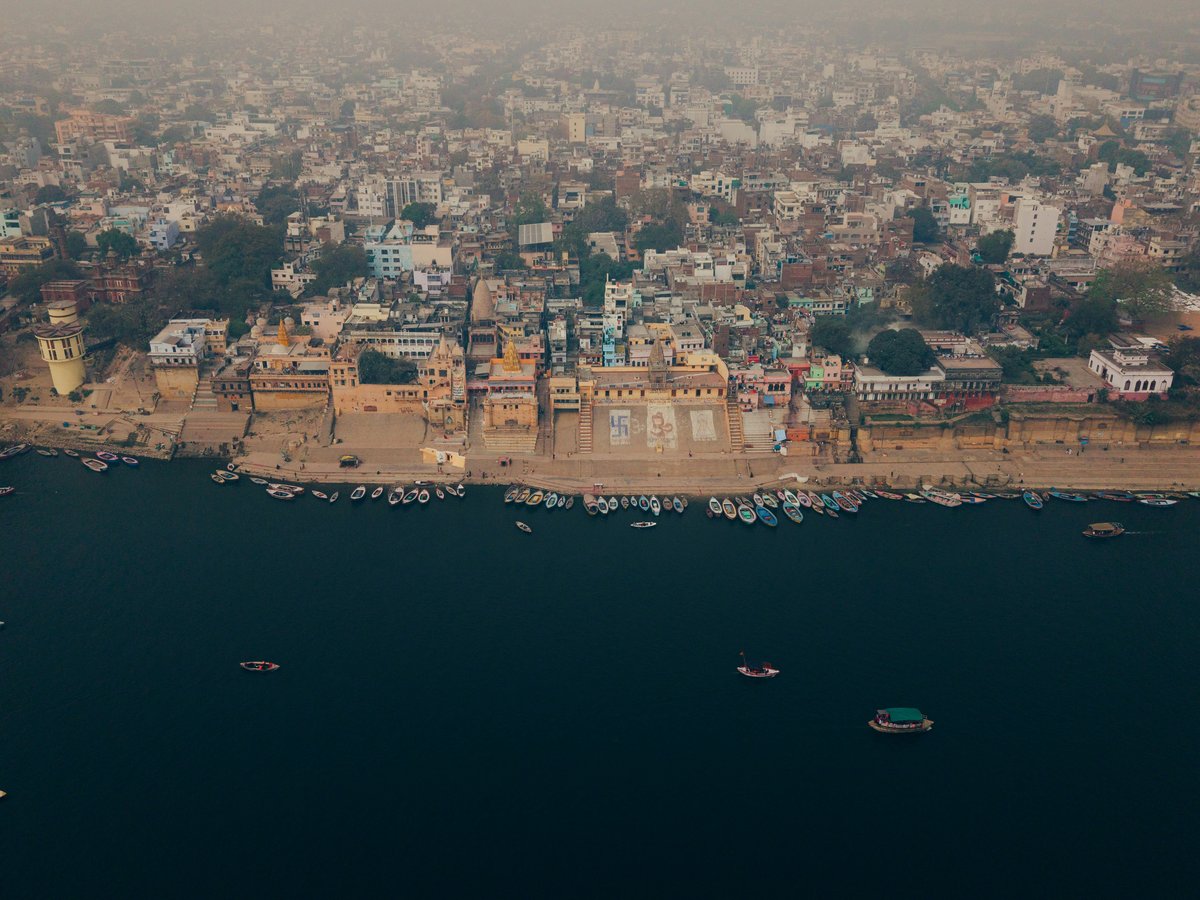
What's the food culture in Varanasi?
Varanasi eats vegetarian by default, and the food runs on a temple-town clock. Breakfast kachori at Ram Bhandar in Thatheri Bazar by 8am, tamatar chaat at Kashi Chaat Bhandar by noon, thick kulhad lassi at Blue Lassi near Kachori Gali by 3pm. Most meals cost 30-80 INR, under 1 USD at current rates.
Varanasi is a temple town first. That shapes every meal. Roughly 80% of the old city's stalls serve no meat, no eggs, no onion, no garlic. Shaivite and Vaishnava dietary codes have governed the lanes around Vishwanath Temple for centuries. The result is a vegetarian street-food tradition with no real equivalent in India. Where Delhi's chaat is dry and crunchy, Varanasi's runs wet and sour. Where Mumbai fries in refined oil, Varanasi fries in mustard oil, and you'll smell it from 30 meters out. It's sharp and pungent, the scent filling every gali from Godowlia to Maidagin. The base flavor across most preparations is asafoetida, green chili, black salt, and fresh coriander. If you eat meat, head south toward Lanka near BHU or the cantonment, where Muslim-owned restaurants serve seekh kebab and biryani after dark.
Breakfast starts by 7am. The kachori fryers on Thatheri Bazar are working through their first batch while the ghats are still quiet. Ram Bhandar has reportedly been there since the 1940s. Their kachori is a fist-sized sphere of wheat dough stuffed with spiced urad dal, dropped into a kadhai of mustard oil at roughly 180°C, and pulled out a deep copper brown. You eat it with thin aloo sabzi and green chutney at the counter or crouched on the stone step outside. A plate of two costs about 40 INR. The oil smell carries half a block. Mind you, this is not a dainty breakfast. Your fingers will be slick, the paper plate translucent with grease. Chai stalls 30 meters down the lane sell kulhad chai for 10-15 INR. The chai wallah pours it back and forth between steel tumblers to cool it.
By noon the chaat counters take over. Kashi Chaat Bhandar at Godowlia crossing, open since at least the 1950s, does the city's best tamatar chaat. Fried bread pieces arrive drowned in a spiced tomato sauce, topped with yogurt and thin sev, served in a pressed-leaf bowl for 30-40 INR. It's warm, sharp with black salt, and the texture goes soft-crispy in a way that falls apart if you wait too long. Eat immediately. Down the lane toward Dashashwamedh Ghat, Deena Chaat Bhandar leans harder on tamarind. For lassi, Blue Lassi sits on a narrow lane near Kachori Gali and has likely been pouring since the 1970s. The lassi is thick enough to hold a spoon upright, served in an unglazed clay kulhad, topped with cream and seasonal fruit. A medium runs 60-80 INR. The shop fits maybe 6 people. You will wait.
Dinner in the old city winds down early. Most dhabas near the ghats close by 9:30pm. Near Assi Ghat, Shree Cafe serves rice-dal-sabzi thalis for about 150 INR until 10pm. That said, the cantonment side stays open later, and you might find kebab shops near Sigra serving past 11pm. For malaiyo, the city's winter-only specialty, you need to visit between November and February. Vendors along Chowk sell it from brass bowls for 20-30 INR, usually gone by 9am. It's a saffron-scented milk foam whipped overnight in clay pots set on rooftops to catch the cold air, then collected at dawn. The texture is cold sweetened air dusted with cardamom and pistachio. Nothing else in Indian food feels like it. On food safety, the rule is turnover. The stalls and chaat counters near Godowlia move hundreds of plates before noon. Risk at those stands tends to be low. Skip the tourist-facing restaurants along the ghat walkway that advertise continental alongside paneer. They do neither well.
Thandai, the cold almond-saffron-cardamom milk, runs year-round from shops near Godowlia. During Holi in March, some vendors offer a bhang version with cannabis paste. Ask before you order if you'd rather skip it. A glass of plain thandai costs 40-60 INR. Banarasi paan, the betel leaf folded around gulkand (rose-petal jam), supari, and slaked lime, is the post-meal ritual here. Shops along Vishwanath Gali sell it for 20-50 INR depending on filling. The meetha (sweet) version stains your tongue bright red for an hour. Worth noting, menus in the old city lanes are nearly all in Hindi. Point-and-order works at every stall, no translation needed. Dhabas near Lanka and the BHU campus tend to have English menus. At 1 USD to roughly 96 INR, a full day of street food from breakfast through evening chaat might run 300-500 INR, somewhere around 3-5 USD.
Signature dishes
-
Kachori-sabzi
Fist-sized wheat-dough sphere stuffed with spiced urad dal, deep-fried in mustard oil until copper brown. Eaten with thin potato curry and green chutney for breakfast, 30-40 INR at stalls along Thatheri Bazar.
-
Tamatar chaat
Fried bread pieces soaked in spiced tomato sauce, topped with yogurt, sev, and black salt. Served warm in pressed-leaf bowls at Kashi Chaat Bhandar and Deena Chaat Bhandar near Godowlia, 30-40 INR.
-
Banarasi lassi
Thick curd lassi in unglazed clay kulhad cups, topped with cream and seasonal fruit. Blue Lassi near Kachori Gali is the go-to shop. A medium costs 60-80 INR.
-
Malaiyo
Winter-only saffron milk foam, whipped overnight in rooftop clay pots, collected at dawn. Available November through February along Chowk for 20-30 INR. Tastes like cold sweetened air with cardamom and pistachio.
-
Thandai
Cold almond-saffron-cardamom milk served year-round near Godowlia for 40-60 INR. During Holi in March, some vendors add bhang (cannabis paste). Ask before ordering if you'd rather skip it.
-
Banarasi paan
Betel leaf folded around gulkand (rose-petal jam), supari, and slaked lime. The meetha (sweet) version stains the tongue red for an hour. Sold along Vishwanath Gali for 20-50 INR.
-
Litti chokha
Hard wheat-flour balls stuffed with sattu (roasted gram flour), baked over coal, served with mashed brinjal and tomato chokha. Originally Bihari but now common across Varanasi's old-city lanes, typically 40-60 INR.
-
Chena dahi vada
Soft lentil dumplings soaked in sweetened spiced yogurt with chaat masala and coriander. The Varanasi version tends to be wetter and tangier than Delhi's, typically 30-50 INR near Godowlia.
Meal times
Breakfast at kachori stalls 7-9am, lunch at dhabas 12-1:30pm, afternoon chaat and lassi 4-6pm, dinner 7:30-9:30pm. Street vendors near Godowlia are busiest around 11am and 5pm. Evening eating wraps up earlier than in Delhi or Mumbai.
Tipping
Not expected at street stalls or chaat counters. Sit-down restaurants appreciate 5-10% or rounding up. Many old-city dhabas quote a flat price at the counter with no bill.
Dietary notes
Most of old-city Varanasi serves vegetarian food only, with many stalls also excluding onion, garlic, and eggs. Ghee and yogurt appear in nearly everything, limiting strict vegan options. Halal meat is available around Madanpura and the cantonment. Gluten-free is difficult given the dough-heavy street food.
Last verified by automated review (v1.7.2) on . What is automated review?