What's a good 3-day itinerary for Varanasi?
Day 1 covers the northern ghats and Old City lanes on foot, ending at the Ganga Aarti at Dashashwamedh Ghat by 7pm. Day 2 is Sarnath, 10km north, for the Buddhist circuit and its archaeological museum. Day 3 crosses to Ramnagar Fort and returns through the silk-weaving quarter in Madanpura. About 18km on foot across the three days, with auto-rickshaws and boats covering the longer distances.
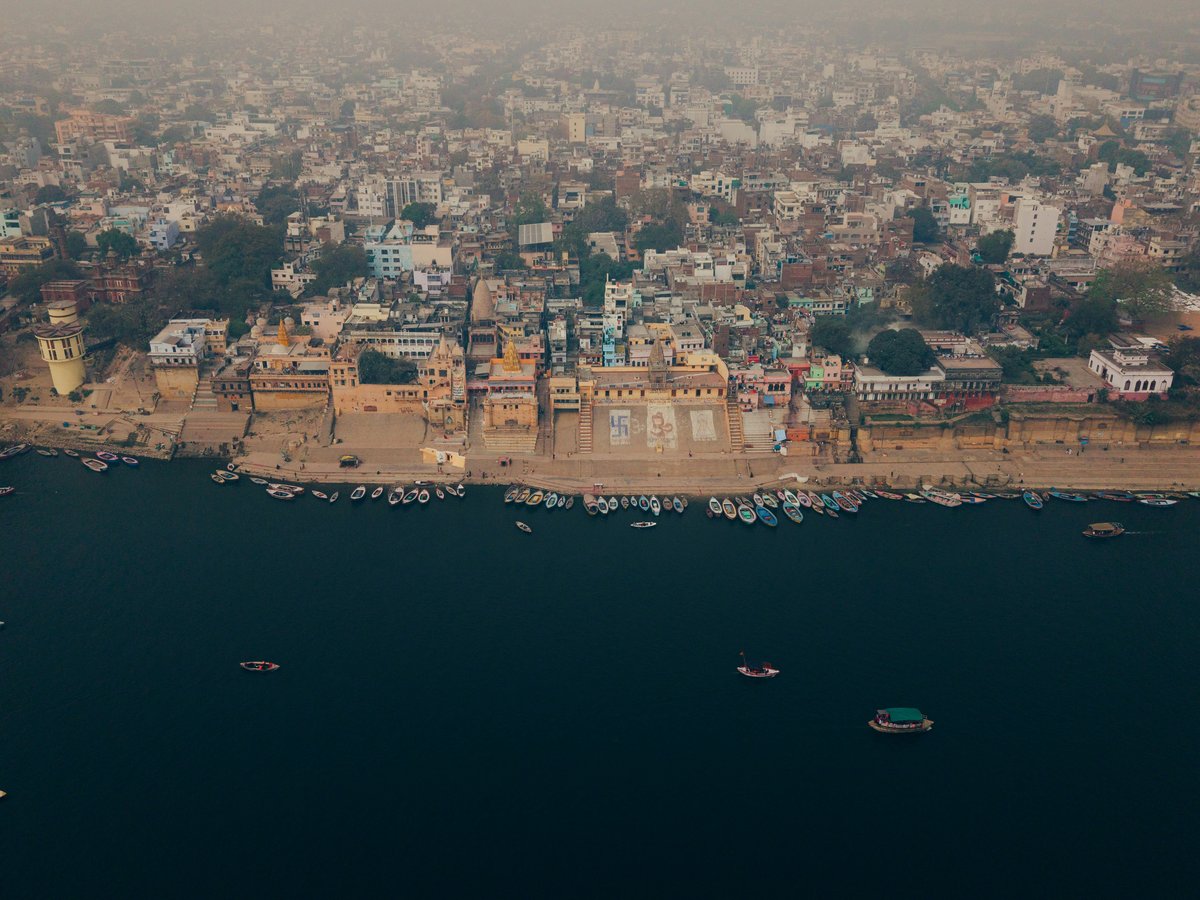
Start at 5:30am. The light on the Ganges at dawn earns every cliché written about this river, and you'll see why inside 10 minutes. Hire a shared rowing boat from Dashashwamedh Ghat for 100 to 150 INR per person. The boatman rows south past Harishchandra Ghat, the smaller of the two cremation ghats, where wood smoke and marigold petals drift across the water. You'll pass 15 to 20 ghats in about 45 minutes. Back on land by 7am, walk north through Godowlia Chowk to the Kashi Vishwanath Temple corridor, completed in 2021, now a wide polished-granite walkway. Entry is free but expect a 30 to 60 minute security queue. Shoes go into a locker. Lunch at Baati Chokha on Durgakund Road by 12:30pm. The litti chokha, a roasted wheat-dough ball served with mashed brinjal and tomato, costs about 180 INR for a thali. Smoky and dense. Walk it off along the lanes between Vishwanath Gali and Meer Ghat. By 6:45pm, claim a spot on the Dashashwamedh steps for the Ganga Aarti. The ceremony runs 45 minutes with brass bells, incense smoke, and fire. Arrive 30 minutes early.
Day 2 shifts 10km north to Sarnath, where Siddhartha Gautama delivered his first sermon around 528 BCE. An auto-rickshaw from Godowlia costs 200 to 250 INR one way, roughly 35 minutes in traffic. Start at the Dhamek Stupa by 9am. The cylindrical brick tower stands 43 metres tall and dates to roughly 500 CE in its current form. The Sarnath Museum, opened in 1910, holds the original Ashoka Lion Capital, the same image on every Indian banknote. Entry runs about 25 INR for Indian nationals, 300 INR for foreign visitors. The Chaukhandi Stupa and excavated monastery foundations take another hour. Back in Varanasi by 2:30pm, head to the Banaras Hindu University campus. Bharat Kala Bhavan, established in 1920, houses miniature paintings from the Mughal and Rajput periods and a focused collection of Buddhist sculpture. The BHU campus covers 1,300 acres, and the New Vishwanath Temple inside the grounds stays open until 9pm. End the evening at Assi Ghat, the southernmost major ghat, where a smaller aarti ceremony begins at 6:30pm.
Day 3 crosses the Ganges. Take a boat from Dashashwamedh to Ramnagar Fort, about 20 minutes on the water. The fort was built in the 18th century by Kashi Naresh Balwant Singh and is crumbling in places. The museum inside has dusty collections of vintage cars, ivory chess sets, and old weaponry behind smudged glass. To be fair, the sandstone exterior against the river is better than what's inside. Budget 90 minutes. Return to the west bank and take an auto to the Madanpura weaving quarter. Varanasi has been India's primary silk-weaving city for centuries, and in Madanpura you can watch weavers working handlooms in narrow ground-floor workshops. The clack of wooden shuttles carries down the alley. A Banarasi silk sari starts at about 3,000 INR for machine-assisted work, 15,000 INR and up for full handloom. Afternoon at Sankat Mochan Temple near Durgakund. The langurs are bold, so keep bags closed. Final evening, walk the ghats from Kedar Ghat north to Manikarnika, the primary cremation ghat. You will smell sandalwood. Photograph the architecture, not the pyres. That is the one firm rule.
Varanasi's Lal Bahadur Shastri Airport sits 26km northwest of the ghats. A prepaid taxi from the airport counter costs 800 to 900 INR to Godowlia, about 9 USD at the current rate of roughly 96 INR per dollar. Ola works better than Uber here. The Old City lanes are too narrow for any vehicle, so inside the ghat district, you walk. August temperatures hold around 30 to 32°C with 70 to 80% humidity, and monsoon showers arrive without warning. A packable rain jacket matters more than sunscreen this month. Hotels near Assi Ghat tend to be quieter and cleaner than those deeper in the lanes, where the trade-off is proximity to the morning boat at the cost of noise, narrow staircases, and power cuts. Mind you, the lane hotels put you 3 minutes from the river at dawn, which is hard to match when your alarm goes off at 5am. Carry a 500ml water bottle. Fill it at your hotel. The tap water is not safe.
Walking + transit across the three-day route.
Day one
-
5:30 AM Dashashwamedh GhatDawn boat ride from Dashashwamedh Ghat. Shared rowboat south past Harishchandra Ghat and back, 100 to 150 INR per person, about 45 minutes on the water.
-
7:00 AM GodowliaTea and kachori at Ram Bhandar near Godowlia Chowk. A plate of kachori sabzi with two cups of chai costs about 60 INR.
-
8:30 AM Old City LanesWalk through Vishwanath Gali to the Kashi Vishwanath Temple corridor. Free entry, 30 to 60 minute security queue, shoes into a locker.
-
10:30 AM Kachouri GaliBlue Lassi shop north of Vishwanath Gali. Mango or saffron lassi for 80 to 120 INR, served in a clay cup. The shop seats about 8 people.
-
12:30 PM DurgakundLunch at Baati Chokha on Durgakund Road. Litti chokha thali for about 180 INR. Smoky, filling, and specific to this region of Uttar Pradesh.
-
6:45 PM Dashashwamedh GhatGanga Aarti ceremony at Dashashwamedh Ghat. Arrive 30 minutes early for a step seat. The ceremony runs 45 minutes with fire, brass bells, and incense.
Day two
-
8:30 AM Godowlia to SarnathAuto-rickshaw to Sarnath, 10km north of Godowlia. Costs 200 to 250 INR one way, about 35 minutes in morning traffic.
-
9:00 AM SarnathDhamek Stupa and excavated monastery foundations at Sarnath. The stupa stands 43 metres tall. Walk the full archaeological park, roughly 90 minutes.
-
10:30 AM SarnathSarnath Museum for the original Ashoka Lion Capital. Entry 25 INR for Indian nationals, 300 INR for foreign visitors. Allow 45 minutes.
-
12:00 PM SarnathLunch at one of the dhabas near the Sarnath entrance. Options are limited here. A vegetable thali runs 120 to 180 INR.
-
2:30 PM BHU / LankaBharat Kala Bhavan museum on the BHU campus. Mughal miniatures, Rajput paintings, Buddhist sculpture. The campus covers 1,300 acres.
-
4:30 PM BHUNew Vishwanath Temple inside the BHU grounds. A different temple from the Old City one, open until 9pm, and far less crowded.
-
6:30 PM Assi GhatEvening aarti at Assi Ghat, the southernmost major ghat. Smaller and calmer than the main ceremony. Walk the riverbank afterward for chai.
Day three
-
8:00 AM Ramnagar (east bank)Boat from Dashashwamedh east across the Ganges to Ramnagar Fort. About 20 minutes on the water.
-
8:30 AM RamnagarRamnagar Fort and its museum. 18th-century sandstone, vintage cars, ivory chess sets, old weaponry. Budget 90 minutes. The exterior is better than the interior.
-
10:30 AM MadanpuraReturn to the west bank by boat. Auto-rickshaw to the Madanpura weaving quarter for silk workshops. Watch handloom weavers at ground-floor looms.
-
12:30 PM GodowliaKashi Chat Bhandar near Godowlia Chowk for tamatar chaat and dahi puri. Two plates and a cold drink for about 100 INR.
-
2:30 PM DurgakundSankat Mochan Temple near Durgakund. Dedicated to Hanuman. Langurs roam the grounds freely, so keep bags closed and food hidden.
-
4:30 PM Southern to Northern GhatsWalk the ghats from Kedar Ghat north to Manikarnika, the primary cremation ghat. About 2km along the riverbank. Photograph the architecture, not the pyres.
Last verified by automated review (v1.7.2) on . What is automated review?