Stay in Varanasi in October
59 hotels in the Trip.com pool for Varanasi, from US$5 a night.
Opens Trip.com on Fri 23 Oct to Sun 25 Oct 2026; change the dates there.
October in Varanasi belongs to the Ramlila. The UNESCO-recognized Ramlila of Ramnagar, a weeks-long open-air theatrical retelling of the Ramayana performed across the river at Ramnagar Fort, reaches its climax with Dussehra sometime in the first half of October depending on the Hindu lunar calendar. Navratri fills the lanes of Godaulia with drum processions and sandalwood smoke well past midnight, and the nightly Ganga Aarti at Dashashwamedh Ghat swells to 3-4 times its normal scale. If you time your visit to the first 2 weeks, you'll likely catch both.
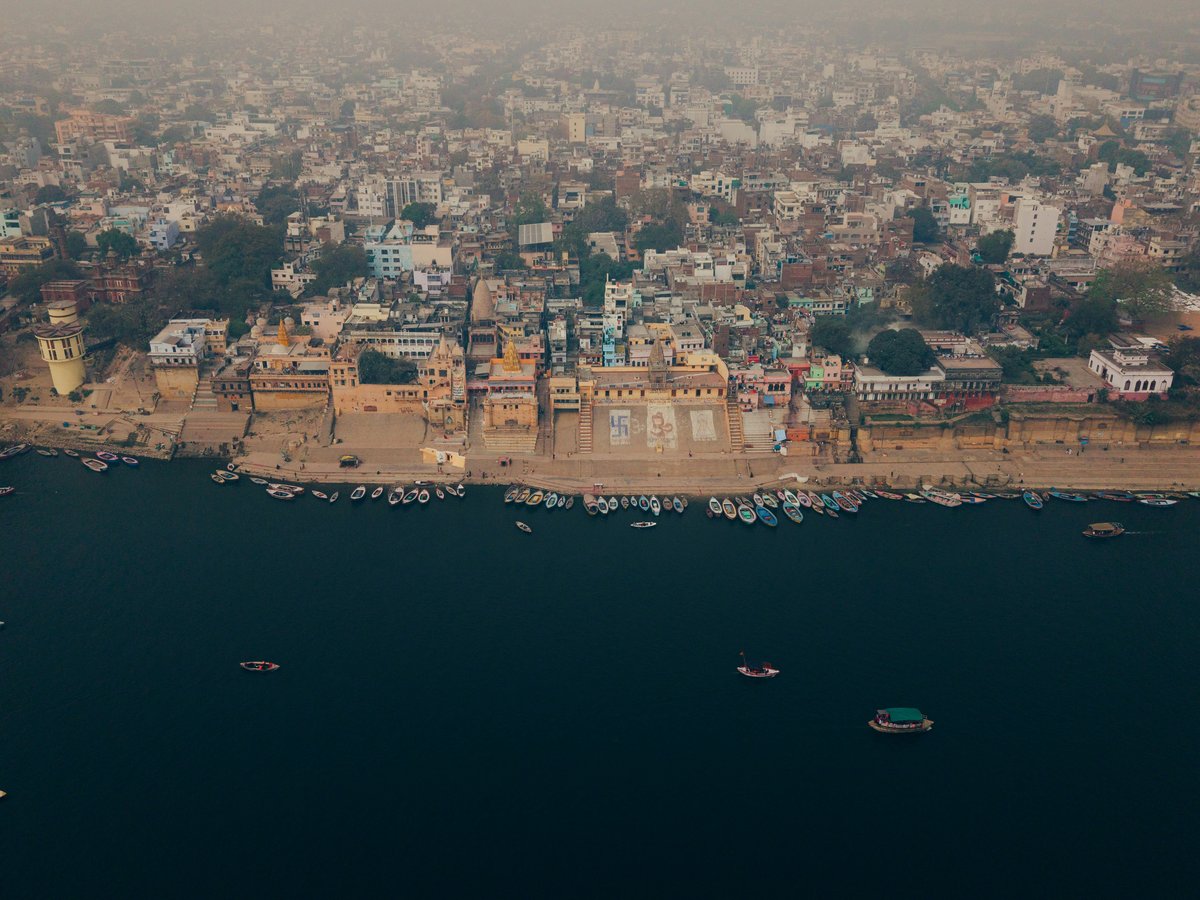
The monsoon is retreating but not gone. You'll still get rain on about 8 days through the month, and the humidity sticks to your skin the moment you step out of an air-conditioned room. Temperatures have dropped from the punishing 39°C of May to a more tolerable range, though the damp air makes the low 30s feel considerably warmer. The Ganga runs high and muddy from 4 months of rain, leaving lower steps at ghats like Harishchandra and Kedar partially submerged through mid-month.
The second half of October quiets down noticeably. Festival crowds thin out, guesthouse owners in Assi and Lanka become more flexible on rates, and the city settles into a brief pause before the November-February tourist season begins. Worth noting, air quality tends to deteriorate toward month's end as agricultural stubble burning starts in Punjab and Haryana, with smoke drifting east across the Gangetic Plain.
Why visit in October
- The Ramlila of Ramnagar, a UNESCO Intangible Cultural Heritage performance, culminates with Dussehra in early-to-mid October, and there is no equivalent theatrical experience anywhere else in India
- Navratri transforms the old city's ghat-side temples into stages for consecutive nights of live devotional music and dance, most of it free and open to anyone
- Temperatures have dropped roughly 8°C from the May peak, making walking the 6.8 km ghat stretch from Assi to Raj Ghat tolerable before 10 AM
- Foreign tourist numbers remain low compared to the November-February window, so boat operators at Dashashwamedh Ghat quote closer to local rates and queues at Kashi Vishwanath Temple are shorter
Worth knowing
- High humidity makes the low-30s temperatures feel closer to 38°C, and the sweat-soaked narrow lanes of Vishwanath Gali offer little air circulation
- Afternoon downpours still hit, sometimes heavy enough to flood the stepped ghats and shut down boat rides for hours at a stretch
- Mosquitoes peak in post-monsoon October across eastern Uttar Pradesh, and dengue cases in Varanasi typically rise through the month
- Air quality starts declining in the last week of October as crop stubble fires in northwestern states push AQI readings above 150 on some days
Best for
Think twice if
October sits on the boundary between monsoon and dry season in Varanasi. The first half of the month tends to see most of the remaining rainfall, often in concentrated afternoon downpours that clear within 90 minutes. Mornings start around 25-26°C and climb steadily through the afternoon. Nights cool noticeably into the low 20s compared to the monsoon months, which brings some relief if your guesthouse in Assi or Godaulia has a rooftop. By month's end, rainfall tapers off and the air begins its slow decline toward the drier November conditions. Wind is minimal across the Gangetic Plain, which means particulate haze from agricultural fires to the northwest tends to linger rather than dispersing.
Seasonal caution
- Dengue mosquito activity peaks across Varanasi in October. Apply DEET-based repellent at dawn and dusk, especially near the ghats where standing water collects in the crevices of the stone steps.
- Air quality deteriorates in the final 7-10 days of October as crop stubble burning intensifies in northwestern India. If you have asthma or respiratory conditions, carry an N95 mask and monitor local AQI readings.
- Afternoon downpours in the first half of October can dump 20-30 mm in under 2 hours. The stepped ghats become slippery with algae, and flash flooding in low-lying lanes around Maidagin is possible.
Year-round climate
Averages from the last 5 years.
| Month | Avg high (°C) | Avg low (°C) | Rainfall (mm) |
|---|---|---|---|
| Jan | 21 | 10 | 12 |
| Feb | 27 | 13 | 10 |
| Mar | 33 | 19 | 12 |
| Apr | 39 | 24 | 2 |
| May | 39 | 27 | 41 |
| Jun | 38 | 28 | 158 |
| Jul | 34 | 27 | 304 |
| Aug | 32 | 26 | 306 |
| Sep | 32 | 26 | 256 |
| Oct | 31 | 22 | 98 |
| Nov | 28 | 16 | 5 |
| Dec | 23 | 12 | 10 |
Holidays and festivals in October
Public holidays
- Gandhi Jayanti(गांधी जयंती)2 October 2026
Headline events
Ramlila of Ramnagar
Runs for 31 days, culminating on Dussehra (typically early to mid-October, shifting annually with the Hindu lunar calendar)
A UNESCO Intangible Cultural Heritage performance, this 31-day open-air theatrical cycle of the Ramayana unfolds nightly on sprawling grounds at Ramnagar Fort across the Ganga. The audience follows the actors on foot through different sets representing Ayodhya, Lanka, and the forest. The final night coincides with Dussehra, when a massive effigy of Ravana is burned. The Maharaja of Varanasi's family still sponsors the production.
Navratri and Dussehra (Vijayadashami)
9 nights plus the 10th day of Dussehra, typically falling in late September through mid-October (Hindu lunar calendar)
Nine nights of worship dedicated to Durga transform Varanasi's temples into stages for live devotional music, dance, and all-night prayer. Pandals (temporary shrines) appear across neighborhoods, each with its own musical program. The cycle ends on Vijayadashami, the 10th day, with processions and the burning of Ravana effigies at open grounds near the Ganga.
Best things to do in October
Attend the Ramlila at Ramnagar Fort
culturalCross the Ganga by boat to the Ramnagar side for the nightly open-air Ramayana performance. The audience walks with the actors through different sets across the fort grounds, following the story from scene to scene. Performances start after sunset and run 3-4 hours. The Dussehra finale with the Ravana effigy burning draws the largest crowd of the entire cycle.
The performance cycle culminates on Dussehra in early-to-mid October. There is no other month to see the finale.Booking tipNo tickets needed. Arrive 30-45 minutes before sunset to secure a position near the front. Boat crossings from Dashashwamedh run continuously on performance nights.
Walk the Navratri pandal circuit in the old city
culturalEach neighborhood in the old city erects its own pandal with distinct decorations and nightly musical programs. The walk from Godaulia through Chowk to Dashashwamedh takes about 90 minutes at pandal-hopping pace, with free chai offered at several stops along the way.
Pandals are assembled only for the 9 festival nights, typically falling in the first half of October, then dismantled within days.Dawn boat ride from Assi Ghat to Manikarnika Ghat
sightseeingThe post-monsoon Ganga in October runs about 2-3 meters higher than its winter level, giving you a closer, eye-level view of the ghat architecture. The morning light through residual monsoon haze produces a diffused golden quality that you won't see in the sharper winter sun.
The high water level changes the visual perspective dramatically compared to dry-season boat rides. Many photographers prefer the hazy October light to the clear December sky.Booking tipNegotiate directly with boatmen at Assi Ghat before dawn. A shared boat for the 2-hour northward drift should cost around 100-150 INR per person.
Visit Sarnath and the Sarnath Museum
historicalThe archaeological site where the Buddha gave his first sermon sits 10 km north of the old city. The Sarnath Museum, founded in 1910, houses the original Ashoka Lion Capital. October's temperatures make the open-air walk among the ruins, including the Dhamek Stupa, considerably more comfortable than the scorching months of April and May.
Post-monsoon temperatures and the green landscape from recent rains make the outdoor site more pleasant than any month from March through September.Booking tipGo early, ideally by 8 AM, before tour bus groups from Delhi arrive around 10 AM. The museum closes on Fridays.
Explore Banarasi silk workshops in Madanpura
culturalThe weaving quarter of Madanpura operates year-round, but production peaks in the weeks before Navratri and Diwali as demand for silk saris reaches its annual high. You can watch weavers working on jacquard looms and see the metallic zari thread being wound by hand. Buying direct from a workshop typically costs 40-60% less than the shops along Godaulia's tourist lanes.
Festival season drives peak silk production. Workshops are fully staffed and working extended hours, which means more looms active and more variety to see.Booking tipAsk your guesthouse to arrange a visit with a specific family workshop rather than the tourist-oriented showrooms. Mornings before noon are when the most weavers are active.
Watch the amplified Ganga Aarti during Navratri
spiritualThe nightly fire ceremony at Dashashwamedh Ghat expands during Navratri with additional priests, larger flames, and live chanting that echoes off the water. The smell of ghee, camphor, and marigolds is thick enough to taste. The crowd during festival nights differs from the usual tourist audience, mostly Indian families and pilgrims.
The Navratri-enhanced aarti is a distinctly different scale from the standard nightly ceremony. The festival energy during those particular nights is unmistakable.Booking tipFor the best view, book a boat and watch from the water. Arrive at least 60 minutes before sunset to claim a spot on the steps.
Browse the Navratri night market around Godaulia Chowk
shoppingA temporary market springs up along the lanes near Godaulia during Navratri, running from about 7 PM past midnight. Vendors sell everything from brass diyas to fasting-friendly snacks to glass bangles. The sound of competing loudspeakers playing devotional music overlaps from every direction.
The night market operates only during the festival nights and disappears within 48 hours of Dussehra.What to eat in October
In season: fruit
Singhara (water chestnut)
Fresh water chestnuts flood the markets during Navratri. Vendors boil them in large pots along the ghats and sell them by the plate. Their starchy, slightly sweet crunch is one of the few permitted foods during fasting, so demand peaks through the first 2 weeks of October.
Amrud (guava)
The Allahabad variety of guava comes into season across Uttar Pradesh in October. Street vendors near Bhelupur slice them and sprinkle chaat masala on top. The flesh is pale pink, firm, and slightly tart.
What to drink
Thandai
Varanasi's signature spiced milk drink, blended with almonds, fennel seeds, rose petals, and cardamom, is still widely consumed through the warm October days. The thandai vendors near Chowk tend to use more saffron than the tourist-facing shops.
In markets
Makhana (foxnuts)
Lotus seeds harvested from ponds in nearby Bihar arrive fresh in Varanasi's markets by October. Roasted with ghee and salt, they appear as a fasting snack during Navratri. The fresh crop tastes noticeably different from the dried version available year-round.
Festival food
Kuttu ki puri
Buckwheat flour flatbread fried in ghee, eaten during Navratri fasting. The stalls around Godaulia market make them to order, crisp and puffed, served with a potato curry cooked without onion or garlic. Only available during the fasting period.
Sabudana khichdi
Tapioca pearls sauteed with peanuts, green chili, and cumin appear at breakfast stalls across the city during the Navratri fasting period. The texture is sticky and pearly, somewhere between a porridge and a stir-fry.
Regular events in October
Gandhi JayantiFree
October 2 marks Mahatma Gandhi's birthday, a national holiday. Government offices, banks, and many shops close for the day. BHU campus holds a memorial ceremony at the Gandhi statue near the main gate.
October 2Durga Puja celebrations in Bengali TolaFree
Varanasi's Bengali community in the Bengali Tola neighborhood organizes its own Durga Puja pandals during the last 5 days of Navratri. The style and iconography differ from the city-native Navratri observance, with elaborate clay Durga idols that are immersed in the Ganga on Vijayadashami.
Last 5 days of Navratri (typically early October, lunar calendar dependent)Bharat Milap at Nati ImliFree
The day after Dussehra, the neighborhood of Nati Imli stages Bharat Milap, a theatrical re-enactment of the reunion of Rama and Bharat that has been performed at this location for over 400 years. The entire lane is decorated and the crowd packs in shoulder to shoulder.
The day after Dussehra (typically early to mid-October)Best places this October
Ramnagar Fort
historical siteThe 18th-century fort across the Ganga hosts the Ramlila performances on its grounds through October. Even on non-performance days, the fort's museum contains a collection of vintage cars, ivory artifacts, and astronomical clocks. The boat ride across the river takes about 15 minutes from Tulsi Ghat.
RamnagarDashashwamedh Ghat
ghatThe most active of the 84 ghats becomes the city's emotional center during Navratri, with the nightly aarti ceremony expanded to festival scale. Marigold sellers line the approach from Godaulia, and the steps are packed by late afternoon. Come early to watch the morning bathers and sadhus before the festival crowd arrives.
DashashwamedhBharat Kala Bhavan
museumFounded in 1920 inside the Banaras Hindu University campus, this museum holds one of India's finest collections of miniature paintings, sculptures, and rare textiles. The air-conditioned galleries offer a practical escape from the October humidity. The collection of 12th-century Pala bronzes alone is worth the visit.
LankaTulsi Ghat
ghatOne of the quieter southern ghats, named after the poet Tulsidas who wrote the Ramcharitmanas here. In October, the post-monsoon greenery on the ghat walls and the high waterline give it a lush, slightly overgrown character. Fewer tourists come here, and the morning light is excellent for photography.
Tulsi Ghat areaNati Imli neighborhood
neighborhoodThis narrow-laned residential area hosts the centuries-old Bharat Milap performance the day after Dussehra. Even outside that one night, it's worth walking through for its carved wooden balconies and lack of tourist foot traffic. The area feels like the old city did 30 years ago.
Nati ImliAssi Ghat
ghatThe southernmost major ghat is the backpacker and long-stay traveler hub. In October, the waterline reaches higher up the steps, and the morning yoga sessions move to the upper platforms. The cafes lining the approach road serve better coffee than anything you'll find in the old city proper.
AssiDhamek Stupa at Sarnath
archaeological siteThis 5th-century cylindrical stupa, 43 meters tall, marks the spot where the Buddha delivered his first sermon. The surrounding deer park and monastery ruins take on a green, almost tropical look in October after the monsoon. The carved geometric bands around the stupa's base are best photographed in the soft, diffused morning light this month provides.
Sarnath
Your packing checklist
Tick items off as you pack. Your progress saves in this browser.
All packed — have a great trip.
Insider tips
The Ramlila at Ramnagar is free, but getting back after dark is the real challenge. The last public boats from the Ramnagar side stop running around 10 PM, and the performance often ends later. Arrange a private boat return in advance through your guesthouse, or plan to take the Ramnagar Bridge by auto-rickshaw, which adds 30-40 minutes but is more reliable.
Varanasi scores 5.8/10 for solo-traveler safety (see the TTDI Solo-Safety Index). The old city lanes near Maidagin and Chowk are disorienting after dark, and Google Maps is unreliable inside them. Download an offline map, but more importantly, memorize 2-3 landmark ghats you can orient from. Dashashwamedh is the universal reference point that everyone can direct you toward.
Skip the tourist-oriented silk shops on the main Godaulia lanes, where commission structures mean you'll pay 3-4 times the actual price. Walk 15 minutes to the workshop area around Madanpura and Lohta, where you buy direct from the weaving families. Navratri is the best time to find variety since every loom is running.
If you eat at the famous Kachori Gali near Dashashwamedh Ghat, go before 9 AM. By mid-morning the kachoris are hours old and the crowd makes the lane nearly impassable. The freshest batch comes out around 6:30 AM, when the oil is clean and the sabzi is still hot.
The family-friendliness score sits at 4.8/10 (see the TTDI Family-Friendliness Index). If you're traveling with children, keep in mind that the narrow ghat steps become slippery when wet from October rain, especially the moss-covered lower sections near the waterline. Manikarnika Ghat's open cremation pyres can also be distressing for younger kids.
Avoid these mistakes
- Booking an open rooftop guesthouse room for October, expecting clear skies. The residual monsoon humidity means rooftop rooms without proper ventilation or AC become steam rooms by afternoon. Confirm your room has a working air conditioner or at minimum a ceiling fan before you pay.
- Wearing flip-flops on the ghats after rain. The stone steps grow a thin layer of algae during the monsoon months, and in October it's still there. Strapped sandals with rubber soles are the minimum requirement for the wet stone.
- Assuming the Ramlila of Ramnagar runs on a fixed printed schedule. Performances start after sunset, which shifts through the month, and there is no official timetable. Ask a local boatman or your guesthouse the morning of for that night's approximate start time. Showing up at a fixed hour and finding nothing happening is a common frustration.
- Scheduling outdoor sightseeing between noon and 3 PM. The combination of heat and humidity in October makes midday walking physically draining, even though the thermometer reads in the low 30s. Plan ghats and Sarnath for early morning, and use midday for the air-conditioned Bharat Kala Bhavan or a guesthouse rest.
Practical tips for October
Book accommodation for the Navratri and Dussehra period at least 3-4 weeks ahead, since domestic pilgrims fill the ghat-side guesthouses in Godaulia and Dashashwamedh quickly. The second half of October is walk-in territory. ATMs near Godaulia Chowk and Sigra are the most reliable, but withdrawal limits of 10,000 INR per transaction are common. Carry cash for boat rides, auto-rickshaws, and small vendors, none of whom accept cards. The ghats themselves have no public restrooms in most stretches, so use the facilities at your guesthouse or the paid restrooms near Dashashwamedh before heading out. Dress conservatively during Navratri, covering shoulders and knees, not only at temples but in the old city lanes where festival processions pass through residential areas. Train tickets from Delhi or Kolkata fill up during the Dussehra holiday window. Book at least 2-3 weeks ahead on the IRCTC website, and consider the Mahamana Express from Delhi which takes about 12 hours. The Lal Bahadur Shastri Airport (VNS) connects to Delhi, Mumbai, and Bangalore with several daily flights, though fares rise 30-40% around the festival period.
FAQ
Is October a good time to visit Varanasi?
October works well if you want to experience Varanasi during Navratri and the Ramlila of Ramnagar, which are among the city's most significant annual events. Humidity is still high, you'll get some rain, mosquitoes are at their post-monsoon peak, and air quality starts declining toward month's end. If festivals are not important to you and you want comfortable weather, November or February would serve you better.
What is the weather like in Varanasi in October?
Warm and humid. Daytime highs average around 31°C (87°F) and nighttime lows drop to about 22°C (72°F). You'll get roughly 98 mm of rain spread across 8 days, mostly in the first half of the month. Humidity averages 77%, which makes the temperatures feel hotter than the numbers suggest. It's not the 39°C heat of May, but it's not the pleasant dry cool of December either. Pack for sweat and sudden rain.
Is Varanasi crowded in October?
It depends on the week. During Navratri and Dussehra, typically the first 10-15 days, domestic pilgrim traffic is heavy at the main ghats, Kashi Vishwanath Temple, and the old city lanes. Foreign tourist numbers are still relatively low compared to the winter peak. After Dussehra, the city quiets noticeably and you'll find accommodation and boats easier to arrange.
What should I know about safety as a solo traveler in October?
The old city lanes near Maidagin and Chowk are disorienting after dark, and navigation apps are unreliable inside them. During Navratri, the festival crowds in narrow lanes can feel overwhelming. Memorize a few landmark ghats for orientation, keep your phone charged, and arrange transport back from Ramnagar in advance if attending the Ramlila. Common scams include inflated boat prices and unsolicited guides at temple entrances.
Can I see Dev Deepawali if I visit in October?
No. Dev Deepawali falls on the full moon of the Hindu month of Kartik, which lands in November. If that festival is your reason for visiting, October is too early. Diwali itself sometimes falls in late October depending on the year, but its main celebration in Varanasi is smaller and more domestic in character than the spectacle along the ghats during Dev Deepawali.
Things to Do in Varanasi in October
 Free cancellation
 Full Day Sightseeing Of Varanasi - Ultimate 1 Day in Varanasi
Day trip: 10 hours, free cancellation.
via Viator Free cancellation
 Private Full-Day Varanasi Tour with Boat Ride
Day trip: 12 hours, free cancellation.
via Viator Free cancellation
 Photo Tour In Holy Varanasi
Day trip: 3.5 hours, free cancellation.
via ViatorFind a flight to Varanasi
Live fares to Varanasi appear here once cookies are accepted.
Last verified by automated review (v1.7.2) on . What is automated review?