Stay in Varanasi in February
59 hotels in the Trip.com pool for Varanasi, from US$5 a night.
Opens Trip.com on Fri 5 Feb to Sun 7 Feb 2027; change the dates there.
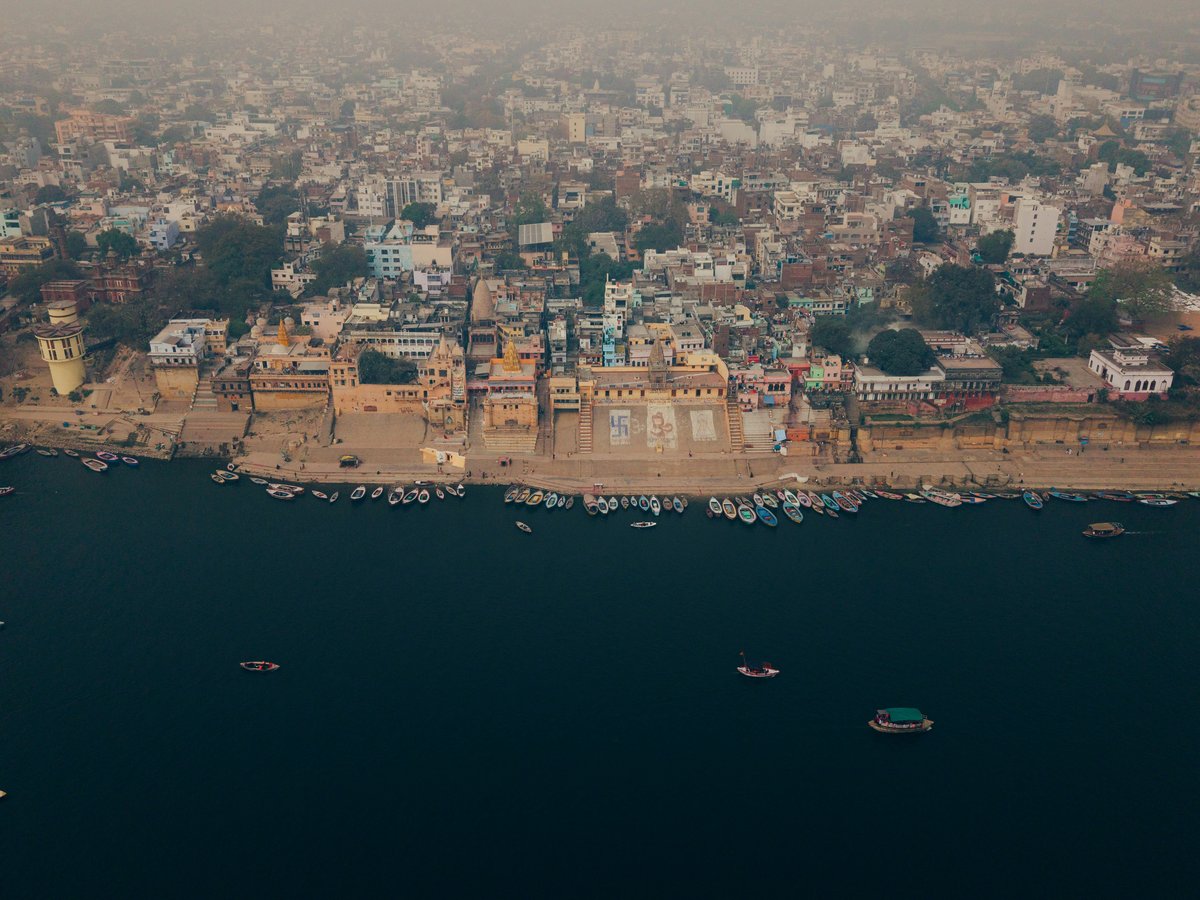
February in Varanasi likely gives you the most comfortable weather window of the year for exploring this city on foot. Afternoons reach about 27°C (80°F), warm enough for a single cotton layer along the ghat stairways. Nights cool to around 13°C (56°F), and the stone steps along the Ganges feel colder still when the wind picks up after sunset. The dense fog that grounds flights at Lal Bahadur Shastri Airport through most of January has mostly cleared by mid-February, so sunrise boat rides northward from Assi Ghat let you see the riverbank.
February still falls within tourist season, and you'll share the ghats with domestic pilgrims and international visitors. That said, the November-December festival crush around Diwali and Dev Deepawali has passed, and the narrow lanes near Dashashwamedh Ghat feel noticeably less compressed than they do in peak weeks. In some years, Maha Shivaratri falls in late February, which transforms the entire old city. Varanasi is Lord Shiva's city, and Shivaratri draws hundreds of thousands of devotees to the Kashi Vishwanath Temple area for all-night ceremonies and processions along the river. In years when Shivaratri falls in March instead, February still brings Basant Panchami and Ravidas Jayanti, with processions and temple music across the Godowlia and Lanka neighborhoods.
Varanasi's February rainfall rarely amounts to more than a single brief shower. The air feels dry and comfortable compared to the monsoon season that builds from June onward. The Ganges sits at one of its lower points in the annual cycle. Wide stone steps and carved temple foundations at Tulsi Ghat and Man Mandir Ghat that spend July through October underwater are fully exposed for walking.
Why visit in February
- Daytime temperatures in the mid-20s°C make all-day ghat exploration comfortable, without the 39°C+ heat that defines April and May in Varanasi
- Virtually no rain all month means every day is usable for walking the ghat stairways between Assi and Raj Ghat
- In years when Maha Shivaratri falls in late February, you catch Varanasi's most significant annual ceremony
- Exposed stonework along the low-water ghats makes February one of the strongest months for architectural photography
- Last chance each winter to find malaiyo, a cold-weather street dessert unique to Varanasi that disappears once mornings get too warm
Worth knowing
- Air quality can drop to unhealthy levels (AQI 150-200+) on calm days, particularly in the first half of February when winter thermal inversions trap pollution across the Indo-Gangetic plain
- Tourist-season pricing on ghat-area guesthouses in Assi and near Dashashwamedh still runs well above the monsoon-season baseline
- Pre-dawn boat rides at 5:30 AM start in genuinely cold air, and travelers who packed only for warm afternoons end up shivering through what should be the trip's highlight
Best for
Think twice if
The daily arc starts with a genuine morning chill that rewards layers, warms to pleasant single-layer comfort by late morning, and holds through mid-afternoon before easing back. Skies tend to be clear after any early haze burns off. Precipitation is negligible. The moderate humidity feels comfortable, a world away from the 300+ mm monthly rainfall and 80%+ humidity that define July and August. February sits at a pleasant tipping point in the annual cycle, well past the coldest weeks and before the steep March heat escalation.
Seasonal caution
- Winter air pollution in Varanasi typically improves through February compared to the November-December worst, but still poses health risks on calm, windless days. Travelers with respiratory conditions should carry masks and monitor local AQI readings before extended outdoor time.
- Dense fog is possible in the first 10-12 days of February, occasionally disrupting both air and rail connections into the city. Build buffer time into any early-February arrival plans, especially for connecting services.
Year-round climate
Averages from the last 5 years.
| Month | Avg high (°C) | Avg low (°C) | Rainfall (mm) |
|---|---|---|---|
| Jan | 21 | 10 | 12 |
| Feb | 27 | 13 | 10 |
| Mar | 33 | 19 | 12 |
| Apr | 39 | 24 | 2 |
| May | 39 | 27 | 41 |
| Jun | 38 | 28 | 158 |
| Jul | 34 | 27 | 304 |
| Aug | 32 | 26 | 306 |
| Sep | 32 | 26 | 256 |
| Oct | 31 | 22 | 98 |
| Nov | 28 | 16 | 5 |
| Dec | 23 | 12 | 10 |
Headline events
Maha Shivaratri
Late February to early March, varies annually by Hindu lunar calendar. Falls in February roughly every other year.
The night-long vigil honoring Lord Shiva reaches its most concentrated expression in Varanasi, his mythological home. Devotees queue for hours through the old city's narrow lanes for ritual abhishek offerings of milk, water, and bilva leaves. The ghats along the Ganges are lit with thousands of oil lamps. Naga sadhus who spend most of the year in Himalayan retreats appear in the city specifically for this night. The energy peaks between midnight and 4 AM, when temple bells and chanting carry across the river. In some years Shivaratri falls in early March rather than February, so check the Hindu calendar for the specific year before booking.
Best things to do in February
Sunrise boat ride from Assi Ghat to Harishchandra Ghat
sightseeingHire a wooden rowboat at the southern end of the ghat stretch and drift north as the sun rises over the east bank. You'll pass cremation pyres, yoga practitioners on stone ledges, and bathing pilgrims along a 3 km stretch of riverfront. The boatman rows in near-silence while the city wakes up around you. The smell of woodsmoke, incense, and river water mixes in the cold morning air.
February's clearer mornings, compared to the dense January fog, mean you see the sunrise. The pre-dawn temperature is cool but manageable with a fleece, unlike the bone-cold December and January rides.Booking tipBook for sunrise, not sunset. The morning light on the west-facing ghats is the payoff. Sunset boat rides are popular but you're looking into the glare.
Day trip to Sarnath archaeological site
cultureThe Buddhist pilgrimage site where Gautama Buddha delivered his first sermon sits 10 km northeast of Varanasi's old city. The Dhamek Stupa, a 5th-century cylindrical stone tower, anchors the grounds. The on-site Sarnath Museum, which opened in 1910, houses the original Lion Capital of Ashoka and Gupta-period sculpture that ranks among the finest in India.
February temperatures make the 2-3 hours of outdoor exploration at the stupa grounds genuinely comfortable. The same visit in April or May is punishingly hot.Booking tipGo on a weekday morning to avoid school-group crowds at the museum. The grounds open at sunrise and the first hour is the quietest.
Old-city food walk through Kachori Gali
foodThis narrow lane near Dashashwamedh is lined with sweet shops and snack stalls that have operated for generations. The morning circuit includes kachoris with potato curry, fresh jalebis, and malaiyo from the winter-only foam vendors. The sensory overload of sizzling ghee, cardamom, and wood smoke is concentrated in about 200 meters of lane.
February is the last reliable month for several winter-only street foods. The cooler temperatures also make navigating the crowded, poorly ventilated lanes far more tolerable than in summer.Basant Panchami kite flying from rooftops
cultureThe spring festival fills Varanasi's sky with paper kites and the rooftops of the old city with families competing to cut each other's lines. The area around Lanka Gate and the BHU campus is particularly active. Locals wear yellow to mark the arrival of spring and the celebration of Saraswati, goddess of learning. The crackle of kite string and the shouts from neighboring rooftops carry across the old city.
Basant Panchami typically falls in late January or the first two weeks of February, depending on the Hindu calendar. This is February's most reliably timed cultural event in Varanasi.Booking tipAsk your guesthouse host for rooftop access, or find one of the open rooftop cafes in the Assi area for a prime vantage point.
Silk weaving workshop visit in Madanpura
cultureThe Muslim weaving quarter of Madanpura, tucked into the old city's northern lanes, is where much of Varanasi's Banarasi silk is produced on pit looms. Families have worked these looms for generations. You can watch the painstaking process of creating zari-work saris, which takes 15-45 days per piece depending on design complexity. The rhythmic clack of the wooden shuttle is the soundtrack of the neighborhood.
February falls in the pre-wedding season production rush, when weavers are completing orders for spring weddings. More looms are active and artisans are more willing to demonstrate their craft to visitors.Booking tipGo with a local guide arranged through your guesthouse. Unannounced visits to family workshops can feel intrusive.
Evening Ganga Aarti at Dashashwamedh Ghat
spiritualThe nightly fire ceremony draws spectators to watch priests perform synchronized rituals with large brass lamps, incense, and conch shells. The ceremony runs for about 45 minutes starting at sunset. The smell of camphor and marigolds, the sound of bells and Sanskrit chanting, and the reflected firelight on the dark river create a sensory-dense 45 minutes.
February's lower crowd density compared to the October-December peak means you can secure a good viewing spot on the ghat steps without arriving 2 hours early. The evening temperature is comfortable for standing outdoors.Booking tipArrive 30-40 minutes before sunset for a step-level seat. Alternatively, watch from a boat on the river for a different perspective.
Ramnagar Fort visit via Ganges ferry
sightseeingThis 18th-century sandstone fort on the eastern bank houses a museum with vintage cars, ivory carvings, medieval weapons, and an astronomical clock from the 1800s. The 20-minute ferry ride from the western ghats is part of the experience, giving you a perspective on the riverfront that most visitors never see. The fort's terrace offers a panoramic view back toward the city.
The Ganges is low enough in February for the ferry crossing to be smooth and quick. During monsoon months the river's width and current make crossings rougher, and the fort grounds sometimes flood.What to eat in February
On menus now
Gajar ka halwa
Grated winter Desi carrots slow-cooked in milk and ghee until the mixture reduces to a dense, reddish-orange pudding. February is peak season for the red carrots that give the dish its natural sweetness. Most ghat-area restaurants serve it warm.
Street food peaks
Malaiyo
A frothy, saffron-dusted milk foam collected overnight on cold Varanasi mornings. The dessert depends on pre-dawn temperatures dropping low enough for the cream to set naturally in open clay pots. February's cool mornings are among the last each winter when vendors prepare it. By mid-March, malaiyo season is over.
Gajak
Thin brittle sheets of sesame seeds and jaggery, sometimes layered with peanuts or desiccated coconut. This winter staple across Uttar Pradesh fills Varanasi's sweet shops through February. The texture shatters with a toasty, caramelized bite.
Chura matar
Flattened rice tossed with fresh green peas, cumin, green chilies, and a squeeze of lime. This Banarasi breakfast dish peaks in February when local pea harvests are still coming in. Street vendors near the ghats serve it in small clay bowls.
What to drink
Thandai
A spiced, chilled milk drink with almonds, fennel, pepper, and rose water that starts appearing at drink stalls in February as the city prepares for the spring festival season. The version served in the old city's temple lanes tends to be richer and more heavily spiced than elsewhere.
Regular events in February
Basant PanchamiFree
Varanasi's spring festival marks the seasonal transition with Saraswati worship, yellow-clad processions, and citywide kite flying. BHU's campus ceremony is the largest in the city. Sweet shops sell special yellow-tinted laddoos for the occasion.
Late January to mid-February, varies by Hindu calendarRavidas JayantiFree
The birth anniversary of the 15th-century saint-poet Guru Ravidas, who was born in Varanasi's Seer Govardhanpur area. Large processions move through the old city, and the Shri Guru Ravidas Janam Asthan temple hosts continuous bhajan singing. The celebration coincides with Magh Purnima, a significant bathing day when thousands take a pre-dawn dip at the ghats.
Magh Purnima, typically mid to late FebruarySubah-e-Banaras morning concertsFree
Periodic classical music performances staged at dawn on the ghats during the tourist season. Local musicians play sitar, tabla, sarangi, and flute on temporary stages set up at the waterline. Check with the UP Tourism office in Varanasi for the current season's schedule.
Select mornings through February, schedule varies by yearBest places this February
Assi Ghat
ghatThe southernmost major ghat and the natural starting point for walking tours of the riverfront. February mornings bring a mix of yoga practitioners, chai vendors, and pilgrims performing puja at the large Shiva lingam under the peepal tree. The cafes and guesthouses along the ghat steps make it the de facto traveler base for the old city.
AssiDashashwamedh Ghat
ghatThe most famous of Varanasi's ghats and the center of the riverfront's daily rhythm. Flower sellers, pujari priests, and photography-seeking sadhus line the broad stone steps. February crowds are steady but not at the capacity-straining levels of Diwali week, leaving room to sit and watch the river traffic without being pressed into the stairs.
DashashwamedhManikarnika Ghat
ghatThe primary cremation ghat, where funeral pyres burn continuously, 24 hours a day. The sight of open-air cremation is confronting but central to understanding Varanasi's identity as a place where death is not hidden from daily life. Photography is strictly prohibited on the burning platforms. Approach quietly and with respect.
Old CityBharat Kala Bhavan
museumThe university museum at Banaras Hindu University, founded in 1920, holds one of India's most significant collections of Indian paintings, sculpture, and textiles. The miniature painting gallery and the Alice Boner collection are worth the visit alone. February's comfortable weather makes the walk across the sprawling 1,300-acre BHU campus part of the experience.
LankaMan Mandir Ghat observatory
historic siteBuilt by Raja Man Singh of Jaipur in the 18th century, this ghat features a small astronomical observatory on its upper level, one of five Jantar Mantars commissioned across India. The stone instruments for tracking celestial movements are less restored than the Jaipur version but compelling in their worn authenticity. February's clear skies make the open-air instruments easier to appreciate.
Old CityChowk market area
marketThe commercial heart of old Varanasi, a dense maze of lanes selling everything from Banarasi silk saris to handmade wooden toys and brass temple bells. The Vishwanath Gali pilgrimage lane passes through the center of the market. February's moderate temperatures make navigating these shade-poor lanes far more comfortable than a summer visit.
Chowk
Your packing checklist
Tick items off as you pack. Your progress saves in this browser.
All packed — have a great trip.
Insider tips
The best malaiyo vendors set up between 6 and 8 AM along Godowlia Chowk and near Luxa Road. By 9 AM the clay pots are empty. This winter-only dessert disappears by mid-March, so February mornings are your last reliable window each year.
Boat rides negotiated from Assi Ghat tend to run 40-50% cheaper than those arranged at Dashashwamedh Ghat, even though the route and duration are comparable. Walk south along the ghats and bargain there instead.
The Vishwanath Gali entrance to the Kashi Vishwanath Temple area requires passing through metal detectors and security checks. Leave your phone, camera, and bags at a nearby locker shop (several line the approach lane) to speed up the process. Only small personal items are allowed inside.
If Maha Shivaratri falls during your visit, consider experiencing the night vigil from the ghats or a boat rather than queuing for the temple. The darshan queue on Shivaratri night can stretch 4-6 hours through narrow lanes, and the view from the river, with the ghats lit and chanting echoing across the water, is arguably the more powerful experience.
Avoid these mistakes
- Underestimating the cold on sunrise boat rides. February visitors routinely board boats in light clothes and spend 90 minutes regretting it. The river wind at dawn is the coldest sensation you'll experience all day, and there's no shelter on an open wooden rowboat. Layer up before you step in.
- Scheduling tight onward connections when arriving in the first 10 days of February. Overnight trains from Delhi and Kolkata can pull into Varanasi Junction 3-5 hours behind schedule when residual fog blankets the plains. A half-day buffer prevents a missed connection or a wasted first day.
- Assuming you can walk the full ghat stretch continuously. Several ghats between Assi and Dashashwamedh have sections that are fenced off, privately managed, or under renovation. The 3 km walk typically requires 2-3 detours up into the old city lanes and back down, so allow 2-3 hours rather than the 45 minutes the distance might suggest.
Practical tips for February
February falls at the end of Varanasi's peak tourist season, so booking ghat-area guesthouses 2-3 weeks ahead is advisable, and 4-6 weeks ahead if Maha Shivaratri falls in February that year. Train tickets on popular routes like the Delhi-Varanasi Shiv Ganga Express fill up fast during tourist season. Book AC 2-tier or 3-tier sleeper on IRCTC as soon as the 60-day booking window opens. Most temples and ghats have no formal entry fee, but Kashi Vishwanath Temple requires registration through the official portal or on-site ID verification. Dress conservatively for temple visits, covering shoulders and knees. The area around Varanasi Junction in Cantonment has ATMs, but old-city machines near the ghats run empty on festival days. At the current exchange rate, 1 USD converts to approximately 96 INR. Carry small denominations for vendors and auto-rickshaws. Auto-rickshaws are the main transport between the station and the old city, and fares should be negotiated before boarding since meters are rarely used. For Sarnath day trips, shared auto-rickshaws depart from the Godowlia intersection at a fraction of a private hire's cost.
FAQ
Is February a good time to visit Varanasi?
February is one of the top 3 months for visiting Varanasi. The weather is comfortable for all-day outdoor exploration, rain is negligible, and the thick January fog has mostly cleared. Only October and November, which bring Diwali and Dev Deepawali respectively, consistently rank higher. The main drawback is winter air pollution, which can linger on calm days.
What is the weather like in Varanasi in February?
Warm and dry overall. Afternoons are comfortable in light clothing, while mornings and evenings are cool enough to need a fleece or jacket, especially near the river. You won't need an umbrella. The main weather concern is haze from winter pollution rather than rain or extreme temperatures. The temperature swing between midday and pre-dawn is significant, so pack layers rather than choosing one weight.
Is Varanasi safe for solo travelers?
Varanasi scores 5.8/10 for solo-traveler safety (see the TTDI Solo-Safety Index). The main concerns are aggressive touts near the major ghats, occasional petty theft in crowded lanes, and the general intensity of navigating the old city. February's daytime conditions are favorable for keeping your bearings. Women traveling alone should expect more attention and staring than in South Indian cities or Southeast Asian destinations. Stick to well-trafficked areas after dark, especially on the quieter southern ghats.
Is Varanasi crowded in February?
Moderately. February falls within the October-to-March tourist season, but the intense festival-driven crowds of November and December have passed. You'll find available rooms and walkable ghats without the crush of Diwali week. If Maha Shivaratri falls in late February, expect a 3-4 day surge in pilgrims around the temple area, with the rest of the riverfront noticeably busier than a typical February day.
Things to Do in Varanasi in February
 Free cancellation
 Full Day Sightseeing Of Varanasi - Ultimate 1 Day in Varanasi
Day trip: 10 hours, free cancellation.
via Viator Free cancellation
 Private Full-Day Varanasi Tour with Boat Ride
Day trip: 12 hours, free cancellation.
via Viator Free cancellation
 Photo Tour In Holy Varanasi
Day trip: 3.5 hours, free cancellation.
via ViatorFind a flight to Varanasi
Live fares to Varanasi appear here once cookies are accepted.
Last verified by automated review (v1.7.2) on . What is automated review?