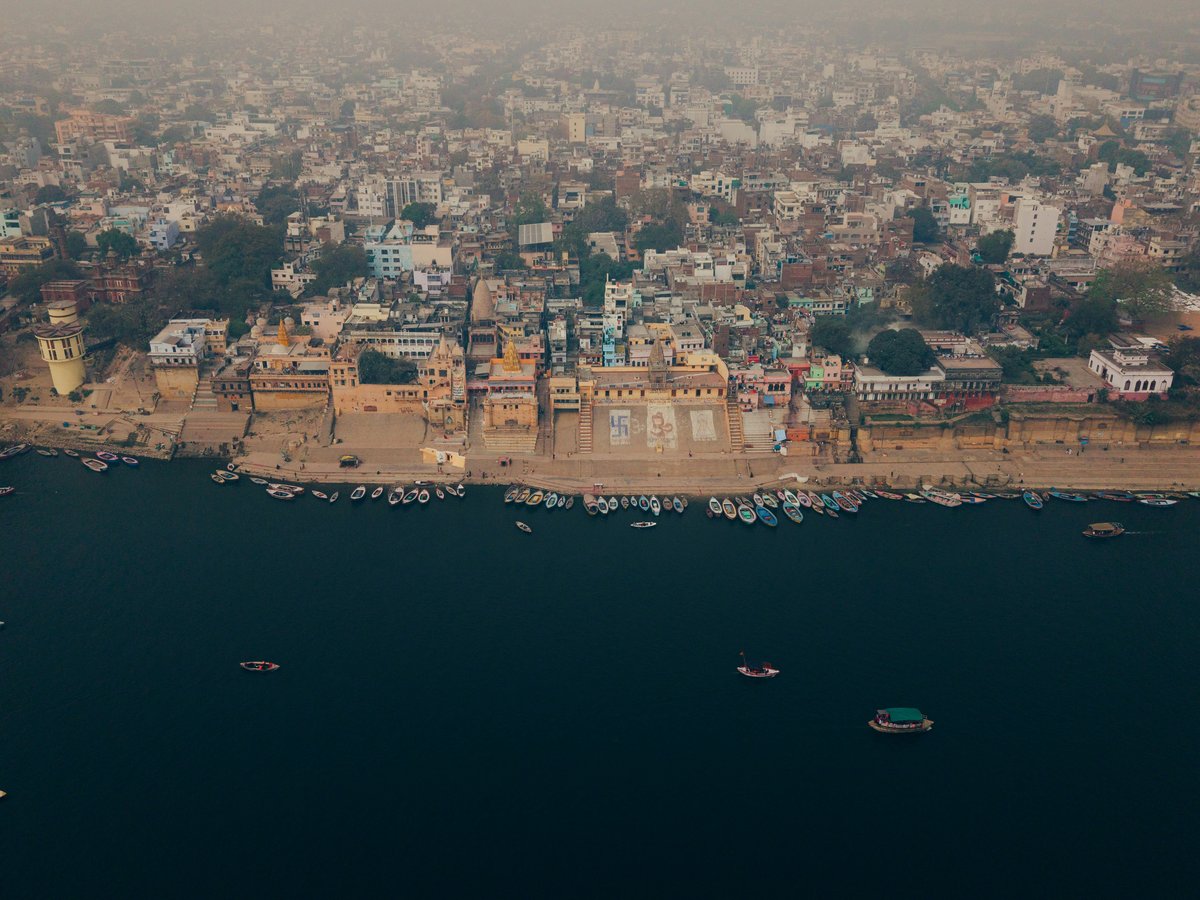
Stay in Varanasi in June
59 hotels in the Trip.com pool for Varanasi, from US$5 a night.
Opens Trip.com on Fri 4 Jun to Sun 6 Jun 2027; change the dates there.
June in Varanasi is, honestly, one of the toughest months to visit. Daytime temperatures average 38.2°C (101°F), and when the monsoon arrives around mid-month, it turns the dry furnace heat into something closer to a steam room. The Ganges begins to swell. Ghat steps that were bone-dry in May start to vanish under rising brown water by late June, and the narrow lanes of Godowlia trap heat with no breeze to speak of. Step outside between 11 AM and 4 PM, and the humidity hits your skin before the door closes behind you.
That said, June has a few honest advantages. This is peak Langra mango season, and Varanasi's own variety (named after a grove near Ramnagar) reaches its sweetest in the first half of the month. Foot traffic at the ghats drops to a fraction of what you'd see in November or December. If your timing overlaps with Ganga Dussehra, the festival that marks the river's mythological descent to earth, you'll see thousands of oil lamps float down the Ganges at Dashashwamedh Ghat in a ceremony that feels genuinely local rather than performed for cameras.
The straightforward answer is that October through February is when most travelers should come. But if June is your only window, a 5 AM start at Tulsi Ghat still gives you the river at its quietest, with first light warming the far bank before the heat builds. Bharat Kala Bhavan at Banaras Hindu University, founded in 1920, offers both cool air and one of India's finest collections of miniature paintings.
Why visit in June
- Langra mangoes, Varanasi's own variety, peak in early June. Fruit stalls along Lanka Road and in Godowlia sell them at their freshest, and prices sit well below what you'd pay in Delhi or Mumbai.
- Hotel rates across the Assi Ghat and Lanka areas drop 30-40% from November-February peaks. Occupancy stays well below half, so walk-in negotiation works in your favor.
- Sarnath, 10 km north of the old city, is practically empty. You can study the Dhamekh Stupa and the museum's Lion Capital sculpture without a single tour group in sight.
- The pre-monsoon dawn light along the Ganges has a hazy, warm quality from the humidity. Photographers working the northern ghats between Panchganga and Raj Ghat get conditions that the harsh winter sun does not offer.
Worth knowing
- The midday sun on the stone ghats is a genuine health risk, not merely uncomfortable. Vishwanath Gali and the old city lanes offer shade but trap humid air, and even short walks leave you drenched.
- The monsoon's arrival is unpredictable. It might hit in the first week of June or not until the last. Once it does, afternoon downpours can flood the lower ghat steps within an hour, and the narrow lanes near Maidagin turn into ankle-deep streams.
- Mosquito populations rise sharply with the first rains. Varanasi sits in a dengue-risk zone, and June marks the beginning of the transmission season in Uttar Pradesh.
- Power cuts become more frequent as air conditioning demand peaks. Even hotels in the Cantonment area experience outages of 1-2 hours on bad days.
Best for
Think twice if
June marks Varanasi's shift from dry pre-monsoon furnace to early monsoon humidity. The first 2 weeks tend to be cloudless and scorching, with the sun baking the stone ghats from dawn. Sometime around mid-June, the southwest monsoon typically reaches the city and drops the first real rain in months. Once it arrives, showers tend to come in intense late-afternoon bursts rather than all-day drizzle, with roughly 13 days of measurable rainfall across the month. Nights offer little relief, rarely dipping below the upper 20s Celsius. The heat index regularly climbs above 45°C (113°F) in the early afternoon, which is why locals stay indoors from late morning until evening.
Seasonal caution
- Extreme heat. Average highs sit above 38°C through most of the month, and the heat index with humidity frequently exceeds 45°C in the early afternoon. Heatstroke is a real risk for anyone active outdoors between 10 AM and 5 PM.
- Monsoon onset. The southwest monsoon typically reaches Varanasi around mid-June, bringing sudden heavy downpours that can dump 30-40mm in under an hour. Lower ghat steps and the riverside lanes flood quickly.
- Waterborne disease risk rises sharply once the monsoon begins. Stagnant water in the lanes and along parts of the riverfront becomes a breeding ground for mosquitoes. Dengue and chikungunya cases in Uttar Pradesh peak from June through September.
Year-round climate
Averages from the last 5 years.
| Month | Avg high (°C) | Avg low (°C) | Rainfall (mm) |
|---|---|---|---|
| Jan | 21 | 10 | 12 |
| Feb | 27 | 13 | 10 |
| Mar | 33 | 19 | 12 |
| Apr | 39 | 24 | 2 |
| May | 39 | 27 | 41 |
| Jun | 38 | 28 | 158 |
| Jul | 34 | 27 | 304 |
| Aug | 32 | 26 | 306 |
| Sep | 32 | 26 | 256 |
| Oct | 31 | 22 | 98 |
| Nov | 28 | 16 | 5 |
| Dec | 23 | 12 | 10 |
Headline events
Ganga Dussehra
Late May to early June, depending on the Hindu lunar calendar (Jyeshtha Shukla Dashami). Check the exact date for your travel year, as it shifts by 2-3 weeks annually.
The festival celebrates the mythological descent of the River Ganges to earth. In Varanasi, it is a major occasion. Thousands of devotees gather at the ghats to bathe, perform puja, and float oil lamps (diyas) on the river. The evening lamp ceremony at the main ghats draws tens of thousands of pilgrims and creates a river surface covered in tiny flickering lights as far as you can see. Worth noting that this is a domestic-pilgrimage event, not a tourist-facing production, so the energy is devotional rather than performative.
Best things to do in June
Dawn boat ride on the Ganges
culturalHire a rowboat from one of the quieter ghats south of the main tourist cluster for a 60-90 minute drift past the bathing ghats, the smoke of Manikarnika cremation ghat, and the old riverside palaces above Scindia Ghat. The boatman rows slowly. The sound of temple bells and splashing bathers carries across the water in the early silence.
Fewer boats on the water means an uncluttered view of the ghats. The river is rising with early monsoon inflows, and the humid dawn air softens the light in a way the crisp winter mornings do not.Booking tipWalk south past Dashashwamedh to Meer Ghat or Darbhanga Ghat. Boatmen there charge significantly less than the main-ghat crowd, and in June they have almost no other customers.
Evening Ganga Aarti at Dashashwamedh Ghat
culturalThe nightly fire ceremony involves 5-7 priests on raised platforms performing synchronized rituals with large brass oil lamps, incense, and conch shells. The smell of camphor and marigold garlands fills the air. In the winter peak, the crowd is so dense you hear more camera shutters than chanting. June is different.
The small crowd means you can sit on the front ghat steps and hear the priests' Sanskrit chanting clearly. Positions that require arriving 2 hours early in December are open at showtime.Booking tipNo booking needed. Arrive 20-30 minutes before sunset. The aarti runs nightly year-round, including during monsoon rains.
Banarasi silk weaving workshop in Sonarpura
culturalSeveral weaving families in the Sonarpura and Madanpura quarters open their ground-floor workshops to visitors. You sit beside the loom and watch the weaver create brocade patterns that can take 15-45 days per sari. The rhythmic clack of the loom in a cool, dim room is a world away from the glare outside.
Weavers have fewer customers in summer, so they have more time to explain their craft. The indoor setting makes this one of the few midday activities that is comfortable.Booking tipAsk your guesthouse to arrange a visit with a weaver they know personally. Avoid the shops along the main ghats that advertise 'weaving tours' since these are typically sales pitches rather than genuine workshop visits.
Early morning walk through the old city galis
sightseeingThe tangled lanes between Dashashwamedh and Maidagin are Varanasi's oldest living fabric. At 5 AM, the light is soft, the stone underfoot still holds a trace of the night's relative cool, and the smell of fresh chai and marigold garlands from the flower sellers fills the air. Cows, dogs, and a few early risers share the narrow passages.
The brutal heat forces a 5 AM start, which means you walk the lanes before any tourist traffic and before the shops open their aggressive sales pitches. This is the old city at its most honest.Booking tipConsider hiring a local guide through your guesthouse for the first walk. The lanes are genuinely disorienting, and GPS is unreliable in the dense construction.
Visit Ramnagar Fort across the Ganges
sightseeingThe 18th-century sandstone fort of the Maharaja of Kashi sits on the opposite bank. The boat crossing takes 15-20 minutes. Inside, the fort houses a museum with vintage cars, palanquins, ivory chess sets, and an astronomical clock. The thick stone walls keep the interior noticeably cooler than the outside air.
The rising river makes the boat crossing more dramatic than in winter when you walk across exposed sandbars. The fort's cool interior offers genuine relief, and you'll likely have the museum galleries to yourself.Booking tipGo in the morning. The boat service becomes unreliable once afternoon monsoon rains start. The fort closes at 5 PM.
Kabir Chaura Math visit during Sant Kabir Jayanti
culturalThe math (monastery) sits at the site associated with the 15th-century poet-saint Kabir's birth in the Kabir Chaura neighborhood. The complex includes a small museum of Kabir's writings and a meditation hall. During Jayanti celebrations, devotees gather for bhajans (devotional songs) and readings from the Bijak, Kabir's collected verses.
Sant Kabir Jayanti falls on Jyeshtha Purnima, typically in mid-June. The celebrations bring a concentrated atmosphere of devotional music and community that the site lacks during ordinary months.Booking tipNo booking required. The math is open daily and free to enter. During Jayanti, arrive before 9 AM for the quieter morning sessions.
Seasonal mango and summer food tasting
foodWalk from the Lanka Road fruit carts through to the juice stalls of Godowlia in the early morning. Sample the Langra mangoes, fresh litchis from Bihar, cold sattu sharbat, tart aam panna, and thick lassi. The contrast of sweet mango pulp against salty sattu, all at 6 AM with the ghat light behind you, is a sensory experience particular to this season.
Peak Langra mango availability, fresh litchi supply from Muzaffarpur, and the full summer drink menu at every stall. By July, the Langra season fades and the litchis disappear entirely.Booking tipNo booking needed. Start at Lanka Road and work north toward Godowlia. Budget 200-400 INR for a thorough tasting circuit.
What to eat in June
In season: fruit
Langra mango
Varanasi's signature mango variety has a smooth, fiberless pulp with an intense sweetness that fades into a slightly tart finish. The texture is almost custard-like when ripe. Look for them at the fruit carts rather than shops near the tourist ghats, where markup can triple.
Litchi
The Bihar-grown litchis from Muzaffarpur arrive at Varanasi's fruit markets in the first 2-3 weeks of June. They have a perfumed, floral sweetness and a translucent flesh that you peel and eat by the kilo in this heat.
On menus now
Dahi chura
Flattened rice soaked in thick, cold curd with sugar or jaggery. A common breakfast in Varanasi during the pre-monsoon heat, since nobody wants a hot meal at 7 AM when the air is already 32°C. Simple, cold, filling.
What to drink
Sattu sharbat
Roasted gram flour mixed with cold water, lemon, salt, and cumin. Sold at nearly every corner stall in the old city and in Sigra. It tastes savory and slightly nutty, and locals consider it the most effective cooler in the summer months. The drink has a chalky texture that takes a sip or two to get used to.
Aam panna
A cooked raw-mango drink sweetened with sugar and spiced with cumin and black salt. The best versions use green kairi mangoes that are available through early June. Tart, sweet, salty in a single glass. Juice stalls in Lanka and near Bhelupur sell it freshly prepared.
Bael sharbat
Wood apple pulp blended with cold water and sugar. The fruit has a gritty, aromatic pulp that smells like a cross between marmalade and something fermented. Considered cooling in Ayurvedic tradition, and sold fresh at juice stalls throughout the city from May into July.
Regular events in June
Sant Kabir JayantiFree
Birth anniversary of the 15th-century mystic poet Sant Kabir, who was born in Varanasi. Devotees gather at Kabir Chaura Math for bhajans, readings from the Bijak, and community meals. The celebration has a meditative, non-sectarian character that reflects Kabir's philosophy of unity across Hindu and Muslim traditions.
Mid-June (Jyeshtha Purnima, the full moon of Jyeshtha). Exact date shifts with the Hindu lunar calendar.Nirjala EkadashiFree
One of the strictest Hindu fasting days of the year. Devotees abstain from both food and water for 24 hours. Temples across the city hold special pujas, and the ghats see early-morning bathing rituals. Kashi Vishwanath Temple is notably more crowded than usual during the morning hours.
Early June, typically the day after Ganga Dussehra (Jyeshtha Shukla Ekadashi). The date varies by 2-3 weeks depending on the lunar cycle.Best places this June
Assi Ghat
ghatThe southernmost of the main ghats and a popular base for travelers. At dawn in June, the wide stone platform catches the first river breeze before the heat sets in. A large Shiva lingam under a peepal tree anchors the morning puja scene. Several cafes and guesthouses line the lane above.
AssiSarnath Museum
museumBuilt in 1910, this archaeological museum sits 10 km north of the old city at the site where the Buddha gave his first sermon. The air-conditioned galleries house the original Ashoka Lion Capital (now India's national emblem), a 5th-century seated Buddha in Chunar sandstone, and carved railings from the 3rd century BCE. In June, the cool interior is as much the attraction as the collection.
SarnathRamnagar Fort
fortThe 18th-century seat of the Maharaja of Kashi sits across the Ganges on the eastern bank. Red sandstone walls, a durbar hall, and a quirky museum with antique weaponry, vintage cars, and palanquins. The thick walls keep temperatures several degrees below the outside air. The boat ride across the swelling June river adds to the experience.
RamnagarKabir Chaura Math
religious siteThe monastery complex associated with Sant Kabir's birthplace. A small museum displays manuscripts and translations of Kabir's verses. The courtyard has a quietness that contrasts sharply with the noise of the surrounding lanes. During Sant Kabir Jayanti in mid-June, the space fills with devotional singers.
Kabir ChauraMan Mandir Observatory
historical siteMaharaja Jai Singh II built this rooftop astronomical observatory in the early 18th century, part of the same series as the more famous Jantar Mantar in Jaipur and Delhi. Stone instruments for tracking solar and stellar positions survive on the upper terrace. The covered sections below provide shade.
GodowliaDurga Kund Mandir
templeA red-painted Nagara-style temple dedicated to Durga, surrounded by a rectangular tank (kund). The resident monkey population is territorial, so keep food and loose items secured. In June, the tank begins to fill with monsoon rain, and the red temple reflected in the rising water makes for strong photographs in the morning light.
BhelupurSt. Mary's Cathedral
churchA 19th-century Catholic cathedral in the Cantonment area, well away from the ghat crowds. The stone interior stays cool, and the architectural contrast with the Hindu riverside cityscape is worth the autorickshaw ride. The surrounding Cantt neighborhood has tree-lined roads that offer more breathing room than the old city lanes.
Cantonment
Your packing checklist
Tick items off as you pack. Your progress saves in this browser.
All packed — have a great trip.
Insider tips
Buy Langra mangoes from the fruit carts along Lanka Road, not from shops near the tourist ghats. The quality is the same or better since the Lanka vendors source directly from Ramnagar-area orchards, and the markup at ghat-area shops can run 3 times higher.
The air-conditioned restaurants along Sigra-Mahmoorganj Road are where locals escape the midday heat for lunch. You'll eat better and pay about half of what the ghat-area places charge. The neighborhood feels entirely different from the old city.
If you visit Sarnath, arrive early enough to walk the deer park grounds before the tour buses pull in around 10 AM. The park opens at sunrise, and the atmosphere with no one else around, the ruins catching the early light, is worth the early alarm.
In the evenings, locals gather at Tulsi Ghat to swim in the rising Ganges. The current strengthens with the monsoon and swimming is not safe for visitors, but watching from the steps with a chai from the nearby stalls is one of the city's best free scenes.
Avoid these mistakes
- Walking the ghats or old city lanes between 10 AM and 5 PM. The heat on the shadeless stone steps along the river is not a matter of discomfort. It is a health risk. Plan your entire outdoor itinerary for before 9 AM and after 6 PM, and spend the middle of the day indoors.
- Wearing flip-flops on the ghat steps. Once the first monsoon rains hit, the limestone develops a slick film of algae and moss that makes ordinary footwear dangerous. Rubber-soled sandals with heel straps are the minimum for safe footing.
- Assuming boat rides operate throughout the day. Once monsoon rains start, afternoon currents in the Ganges strengthen enough that most boatmen refuse to go out. Book your ride for dawn and treat the afternoon as indoor time.
- Drinking tap water or eating ice from unknown sources. Waterborne illness risk rises sharply with the monsoon onset, and Varanasi's municipal water supply is not reliably treated. Stick to sealed bottles, and eat fruit only if you peel it yourself.
Practical tips for June
June is deep low season, and advance booking is rarely necessary for hotels or restaurants. Walk-in rates at guesthouses near Assi Ghat are often lower than online prices since owners prefer cash bookings that avoid platform commissions. Dress codes at Kashi Vishwanath Temple and other major mandirs remain strict year-round, so cover your shoulders and knees and remove shoes before entering. Varanasi scores 3.2 out of 10 for digital-nomad suitability (sourced from TTDI's editorial rubric). Wi-Fi in most guesthouses is unreliable, and pre-monsoon power cuts compound the problem. Cafes near Banaras Hindu University in the Lanka neighborhood tend to have the most stable connections. Trains to and from Varanasi Junction fill up around Sant Kabir Jayanti (mid-June) with domestic pilgrims, so book rail tickets for that window at least 2 weeks ahead through IRCTC. Autorickshaws are the most practical transport for beating the heat since they offer some airflow. Negotiate the fare before boarding, or insist on the meter.
FAQ
Is June a good time to visit Varanasi?
Honestly, no. June ranks near the bottom of the 12-month calendar for Varanasi. The cool, dry months from late October into early March are significantly more comfortable and offer better access to the full range of ghat activities and old-city exploration. That said, if June is your only option, the city still functions. The ghats are still there. The Ganga Aarti still happens nightly. You can have a meaningful visit if you accept the heat constraints and plan your days around the dawn hours.
What is the weather like in Varanasi in June?
Hot. Seriously hot. The first half of the month tends to be dry and scorching, with cloudless skies. The monsoon typically arrives around mid-June, which brings rain but also adds humidity that can make the perceived temperature feel closer to 45°C. Expect roughly 13 days of rain, usually in intense afternoon bursts. Nights stay warm, rarely dropping below 28°C. Pack for relentless heat and sudden downpours.
Is Varanasi crowded in June?
Not at all by Varanasi standards. June is deep low season for international tourism, and domestic visitor numbers are also well below the October-March peak. The exception is if Ganga Dussehra or Sant Kabir Jayanti falls during your visit, when domestic pilgrims fill ghat-area guesthouses for a few days. Outside those windows, you'll often have entire ghat stretches to yourself at dawn.
Can you take boat rides on the Ganges in June?
Yes, but only at dawn. Before the monsoon fully arrives, boat rides operate much as they do in other months, with the added benefit of almost no other tourists on the water. Once the rains begin, the river's current strengthens and most boatmen restrict trips to the calm early-morning window between about 5 AM and 8 AM. Afternoon rides become unreliable or unavailable.
Is Varanasi safe for solo travelers in June?
Varanasi scores 5.8 out of 10 for solo-traveler safety (see the TTDI Solo-Safety Index). The main risks are petty theft and aggressive touts near the tourist ghats, not violent crime. In June specifically, heat-related illness is the biggest physical danger for solo travelers since there is no one to notice if you become disoriented. Carry water at all times, tell your guesthouse staff where you are going, and avoid extended walks in the midday heat.
Things to Do in Varanasi in June
 Free cancellation
 Full Day Sightseeing Of Varanasi - Ultimate 1 Day in Varanasi
Day trip: 10 hours, free cancellation.
via Viator Free cancellation
 Private Full-Day Varanasi Tour with Boat Ride
Day trip: 12 hours, free cancellation.
via Viator Free cancellation
 Photo Tour In Holy Varanasi
Day trip: 3.5 hours, free cancellation.
via ViatorFind a flight to Varanasi
Live fares to Varanasi appear here once cookies are accepted.
Last verified by automated review (v1.7.2) on . What is automated review?