Stay in Varanasi in September
59 hotels in the Trip.com pool for Varanasi, from US$5 a night.
Opens Trip.com on Fri 3 Sep to Sun 5 Sep 2027; change the dates there.
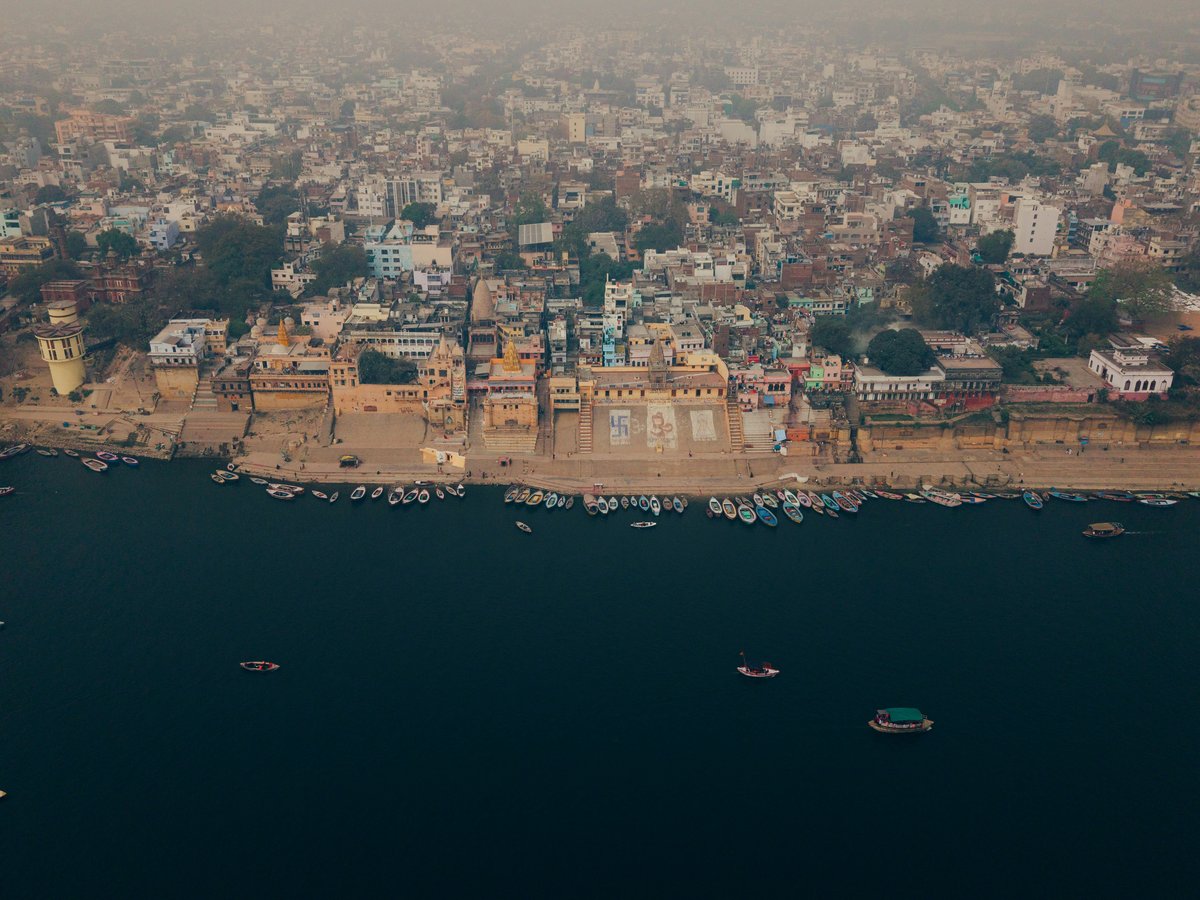
September in Varanasi means the Ganges is still swollen from 3 months of monsoon rainfall. The river covers the lower steps at Dashashwamedh Ghat and Assi Ghat, sometimes climbing to the second or third terrace. Rain is near-daily. The humidity sits on your skin from morning onward, and the low-30s air temperature feels heavier than the numbers suggest. The air carries the smell of wet sandstone, river silt, and sandalwood smoke from Manikarnika Ghat.
This is one of the quietest months of the year in a city that can feel overwhelming during November-February peak season. Hotel rates in the Godowlia and Lanka neighborhoods drop well below winter prices. Hindu pilgrims arrive for Pitru Paksha, the annual ancestor worship observance. At Harishchandra Ghat and along the steps near Pishachmochan Kund, pilgrims performing riverside rituals far outnumber camera-carrying tourists.
To be fair, September is not the month to expect the classic Varanasi postcard. Ghat stairways sit half-submerged, lanes near Kashi Vishwanath Temple flood after heavy downpours, and power cuts during storms still happen. If you're comfortable with monsoon India and want to see the city's religious rhythm without tourist crowds, there's a case for September. For first-time visitors, the October-February window offers lower humidity, full ghat access, and Dev Deepawali in November.
Why visit in September
- Accommodation costs drop to their annual low across the city, from Godowlia guesthouses to Lanka hotels, making September one of the cheapest months to visit
- Tourist crowds thin to near-zero at most ghats, temples, and museums, including the Sarnath Museum and Bharat Kala Bhavan
- The monsoon Ganges at full width creates photography conditions and perspectives that do not exist during the dry season
- Pitru Paksha pilgrims bring an authentic devotional intensity to the ghats that peak-season visitors rarely witness
Worth knowing
- Near-daily monsoon rainfall makes any outdoor plan subject to sudden cancellation, with some afternoons dropping 40-50mm in a single burst that floods lanes within minutes and fills the air with the smell of wet earth
- Many lower ghats between Shivala Ghat and Kedar Ghat are submerged by the high river, limiting the classic continuous waterfront walk to detours through upper lanes
- Mosquito populations spike during monsoon, and dengue cases in Varanasi typically rise through September and October. The high-pitched whine of mosquitoes is the soundtrack of any evening near standing water
Best for
Think twice if
Varanasi's monsoon tail brings warm, heavy air with rain as the default rather than the exception. Downpours tend to arrive in afternoon bursts of 30-60 minutes, hammering tin roofs and filling gutter channels along the ghats with fast-moving brown water. Mornings before 7am and evenings after 7pm offer brief comfortable windows. The humidity pushes the perceived temperature 4-5°C above the thermometer reading.
Seasonal caution
- The Ganges reaches near-peak flood levels in September. Strong currents make unsupervised wading or swimming in the river dangerous
- Dengue and malaria risk rises with monsoon standing water. Apply DEET-based repellent from late afternoon onward, and also during daylight near areas with standing water
- Flash flooding in the old city's narrow lanes can trap pedestrians during intense downpours. Move to higher ground at the first sign of heavy rain
- Waterborne illness risk peaks during monsoon. Drink sealed bottled water only and avoid ice from street vendors or unbranded sources
Year-round climate
Averages from the last 5 years.
| Month | Avg high (°C) | Avg low (°C) | Rainfall (mm) |
|---|---|---|---|
| Jan | 21 | 10 | 12 |
| Feb | 27 | 13 | 10 |
| Mar | 33 | 19 | 12 |
| Apr | 39 | 24 | 2 |
| May | 39 | 27 | 41 |
| Jun | 38 | 28 | 158 |
| Jul | 34 | 27 | 304 |
| Aug | 32 | 26 | 306 |
| Sep | 32 | 26 | 256 |
| Oct | 31 | 22 | 98 |
| Nov | 28 | 16 | 5 |
| Dec | 23 | 12 | 10 |
Headline events
Pitru Paksha (Shradh)
Mid-September to early October (lunar calendar, exact dates shift annually)
The 16-day Hindu ancestor worship period draws thousands of pilgrims to Varanasi's ghats to perform tarpan (water offerings) and pind daan rituals for deceased family members. Varanasi and Gaya in Bihar are considered the two holiest places for these ceremonies. The ghats shift from their usual tourist rhythm to one defined by solemn devotional activity, with priests chanting mantras along the waterline from dawn.
Best things to do in September
Dawn boat ride on the monsoon Ganges
sightseeingHire a boatman (typically 300-500 INR for a 1-hour ride) from whichever ghat is currently at water level and float past the full ghat panorama. The water runs brown and fast, carrying branches and occasional debris. The boatmen know which sections are navigable and which have submerged structures to avoid.
The Ganges stretches to its widest September flow, past the far bank's floodplain. The river and the ghat skyline look completely different from the narrow dry-season perspective.Booking tipNegotiate the fare before boarding. Morning rides leave around 5:30am. Your guesthouse can arrange a boatman the evening before.
Front-row evening Ganga Aarti
culturalThe nightly fire ceremony at Dashashwamedh Ghat features 5-7 priests performing synchronized rituals with brass lamps, incense, and conch shells. The sound of conch and the smell of camphor carry differently across wet evening air. The ceremony runs from roughly 6:45pm to 7:30pm year-round.
September's low tourist numbers mean you can arrive 15 minutes early rather than the 2 hours that December-January crowds demand for a front-row spot on the steps.Sarnath archaeological complex and museum
culturalA 10km trip northeast from central Varanasi brings you to where the Buddha delivered his first sermon after enlightenment. The Dhamek Stupa grounds are thick with monsoon green, and the wet grass smells of earth and rain. The Sarnath Museum (founded 1910) houses sculptures including the famous Ashoka lion capital. Allow a half-day.
The grounds are lush from 3 months of rain, the museum galleries are nearly empty, and temperatures run 7°C cooler than the scorching April-May window.Booking tipAuto-rickshaws from Varanasi Cantt charge around 200-300 INR one way. Arrange a round trip with waiting time.
Bharat Kala Bhavan art museum at BHU
culturalThis museum on the Banaras Hindu University campus was founded in 1920 and holds over 100,000 objects, from miniature paintings to Buddhist and Hindu sculptures and medieval textiles. The galleries are cool and dry regardless of the monsoon outside. Allow 2-3 hours.
A rain-proof cultural half-day when outdoor plans collapse. Visitor numbers in September are a fraction of peak season, and the BHU campus itself is green and quiet.Booking tipCheck BHU's academic calendar. The museum occasionally closes for university holidays.
Banarasi silk weaving workshop visits
culturalFamily-run workshops in the Madanpura and Alaipura neighborhoods weave Banarasi saris on handlooms. The rhythmic clack of the wooden shuttle echoes in narrow workshop rooms. Weavers can walk you through the zari (gold thread) patterns behind a single sari.
Low season means weavers are less busy with bulk orders and more willing to spend time with individual visitors. You'll see the full process without the pressure of peak production schedules.Booking tipAsk your guesthouse to connect you with a specific weaver family rather than following a tout from the ghats.
Pitru Paksha tarpan ceremony observation
culturalHindu pilgrims perform water offerings and ritual prayers for deceased ancestors along the ghats, concentrated near Pishachmochan Kund. The ceremonies begin at dawn and continue through mid-morning, with priests chanting and pilgrims wading knee-deep into the river.
This ancestor worship period falls in September and draws devoted pilgrims from across India. The volume and solemnity of rituals at the ghats has no equivalent in regular tourist months.Booking tipNo booking needed. Observe respectfully from a distance. Ask before photographing anyone mid-prayer.
Monsoon photography along the upper ghats
photographyDramatic monsoon clouds, the swollen Ganges reflecting grey-green light, pilgrims in rain-soaked white cotton, crumbling sandstone against dark skies. The upper terraces of Panchganga Ghat and Meer Ghat offer elevated compositions with the flooded river as backdrop.
Monsoon light gives Varanasi soft, diffused conditions that eliminate the harsh midday shadows of dry season. Fewer tourists in frame, and the river at full flood adds a scale the dry months cannot match.Booking tipBring a weather-sealed camera or a quality waterproof case. The best natural light falls in the 6-7am and 5-6pm windows.
What to eat in September
In season: fruit
Amrud (guava)
Guava season begins in September across Uttar Pradesh. The Allahabad variety, sold at fruit carts around Godowlia for 40-60 INR per kg, tends to be firm, sweet, and fragrant at its early-autumn best.
On menus now
Kachalu ki sabzi
Taro root curry with mustard oil and spices. Taro is a monsoon-season crop in eastern Uttar Pradesh, and September is when the fresh harvest reaches Varanasi's vegetable markets. The taro has a starchy texture that soaks up the mustard-seed-heavy gravy. Look for it at thali places near Godowlia Chowk.
Street food peaks
Pakora
Monsoon is pakora season across north India. Varanasi's street stalls fry onion, potato, and spinach fritters in mustard oil along the upper ghats. The smell of batter hitting hot oil is the signature scent of a rainy evening in the old city. Crisp on the outside, soft and spiced inside.
Banarasi paan
Varanasi's betel-leaf preparation benefits from the monsoon. September's leaves are softer and more aromatic than their dry-season counterparts, and the paan stalls near Dashashwamedh Ghat stay open late into the evening.
What to drink
Sattu ka sharbat
A cooling drink from roasted gram flour, water, lemon, and salt, salty-sour with a roasted grain finish. Sold at roadside stalls in the Lanka and Sigra areas for 15-20 INR per glass. It cuts through September humidity better than anything bottled.
Regular events in September
Ganesh ChaturthiFree
The Hindu festival honoring Lord Ganesha brings pandal installations, processions, and neighborhood celebrations across Varanasi. The Bhelupur and Lanka areas host community gatherings with decorated idols. In some years the festival falls primarily in August, with only the tail end reaching September.
Late August to early September (10-day festival, lunar calendar dependent)Anant Chaturdashi (Ganesh Visarjan)Free
The concluding day of the 10-day Ganesh Chaturthi festival features processions carrying Ganesh idols through central Varanasi to the ghats for immersion in the Ganges. The visarjan procession is the most visually striking moment of the festival, with drums and chanting winding through the lanes.
10th day after Ganesh Chaturthi (typically late August to mid-September, lunar calendar dependent)Vishwakarma PujaFree
A celebration honoring Lord Vishwakarma, the divine architect and craftsman. Workshops, factories, and artisan studios across Varanasi clean and decorate their tools and machinery. The silk weaving workshops in Madanpura are particularly festive, with flowers and sweets placed on the looms.
September 17 (Kanya Sankranti, fixed date)Hindi DiwasFree
National observance marking the 1949 adoption of Hindi as an official language. Schools, colleges, and cultural institutions in Varanasi host poetry recitals, essay competitions, and literary gatherings. Banaras Hindu University typically holds a formal program. Not a public holiday.
September 14Best places this September
Ramnagar Fort
historic siteThe Maharaja of Varanasi's fort sits across the Ganges in Ramnagar. The museum inside holds vintage cars, ivory carvings, medieval arms, and astronomical clocks. Stone interiors stay cool in the monsoon heat. The ferry crossing rocks gently in the swollen current, and the far-bank approach gives you a wide-angle view of the ghat skyline you will not get from the city side.
RamnagarTulsi Manas Temple
templeBuilt in 1964, this marble temple dedicated to Lord Rama has walls inscribed with verses from the Ramcharitmanas in Devanagari script. The white marble stays cool underfoot even in September's heat, and the temple draws fewer visitors during monsoon than in the winter pilgrimage season.
DurgakundPanchganga Ghat
historic siteOne of the highest ghats along the riverfront, Panchganga offers an elevated vantage point over the flooded Ganges. The Alamgir Mosque at the top was built by Aurangzeb on the site of an earlier Vishnu temple. In September, this is one of the few ghats where you can descend close to the current water level without being submerged. The wind here carries the river smell more strongly than at the lower, sheltered ghats.
PanchgangaBanaras Hindu University campus
campusThe 1,300-acre BHU campus is one of the largest university grounds in Asia. The monsoon turns its tree-lined avenues green, and the New Vishwanath Temple on campus sees lighter foot traffic in September. A post-rain walk means wet leaves underfoot, a dripping canopy overhead, and the sound of crows settling back into the neem trees.
LankaGodowlia Market
marketVaranasi's commercial center stays active through monsoon. The covered sections keep you dry while browsing Banarasi silk, wooden toys, and lac bangles. The smell of fresh jasmine garlands from the flower vendors fills the covered lanes. September's low customer traffic means shop owners are more willing to negotiate.
Godowlia
Your packing checklist
Tick items off as you pack. Your progress saves in this browser.
All packed — have a great trip.
Insider tips
The morning boat ride departure point shifts up and down the ghats as the river level changes through September. Ask your guesthouse each morning which ghat the boatmen are launching from, rather than walking to a fixed departure point and finding it underwater.
Blue Lassi, the well-known yogurt-drink shop near Manikarnika Ghat, draws 30-minute queues during winter peak season. In September you'll likely wait under 5 minutes for the same thick fruit lassi.
When the power cuts out in your old-city guesthouse during a storm, the chai stalls on the upper ghat terraces usually run on gas burners and stay open. A cup of masala chai under a tarp while rain hammers the stone steps is one of September's quiet pleasures.
Silk prices are more negotiable in monsoon. Shop owners in the Madanpura weaving district need the business, and September sari prices tend to run 15-25% below what you'd pay in November when group-tour buses keep the registers full.
If the lower ghats are fully submerged, temple priests at Kedar Ghat sometimes relocate their puja platforms to higher ground. Follow the sound of bells and conch shells to find where the riverside rituals have moved.
Avoid these mistakes
- Planning a dawn walk along the full waterfront of all 84 ghats. In September, many sections between Shivala Ghat and Kedar Ghat are underwater, forcing detours through upper lanes that double the walking time and lose the river views. Map your route with your guesthouse host the evening before.
- Skipping mosquito repellent during daytime hours. Most travelers remember to apply at dusk, but the Aedes aegypti dengue vector bites during daylight. September's standing water across the city means daytime exposure is real, not theoretical.
- Assuming the evening Ganga Aarti at Dashashwamedh Ghat gets cancelled in rain. The fire priests perform in nearly all weather conditions. Tourists who stay indoors during a downpour miss one of the most atmospheric ceremonies September has to offer.
Practical tips for September
Book guesthouses on upper floors or upper ghats rather than at river level. Ground-floor rooms near Meer Ghat and Narad Ghat risk water seepage during heavy September downpours. Most Varanasi lodgings accept cash INR or UPI payments; credit card terminals are more common in the Cantonment and Sigra hotel districts than in old city guesthouses. At roughly 96 INR to 1 USD, September accommodation sits at its annual low. Lal Bahadur Shastri International Airport (VNS) connects to Delhi, Mumbai, Kolkata, and Bengaluru with daily flights, and September fares on these routes tend to run below holiday-season rates. Varanasi Junction train station handles Northern Railway connections, but September trains sometimes arrive late due to waterlogged tracks between Prayagraj and Pt. Deen Dayal Upadhyaya Junction. Book rail tickets through IRCTC 2-3 weeks ahead. Temple dress codes remain strict in monsoon. Cover shoulders and knees at Kashi Vishwanath Temple and BHU's New Vishwanath Temple regardless of heat.
FAQ
Is September a good time to visit Varanasi?
For most visitors, no. September sits in the tail of monsoon season, with near-daily rain, limited ghat access, and humidity that makes moderate temperatures feel oppressive. The tradeoff is genuine solitude, low prices, and a window into the city's devotional life without tourist crowds. Repeat visitors and budget travelers might find that tradeoff worthwhile. First-timers are better served from October onward.
What is the weather like in Varanasi in September?
Warm, wet, and humid. Highs average 32°C (90°F) and lows stay near 26°C (78°F). Rain falls on roughly 23 of 30 days, totaling around 256mm for the month, mostly in intense afternoon or evening bursts. Humidity holds at about 85%. Overcast skies are the norm, with occasional bright gaps between storm systems.
Are the ghats in Varanasi accessible during September?
Only partially. The Ganges runs near its annual peak, submerging many lower ghat sections. The upper terraces at Dashashwamedh, Assi, and Panchganga remain open, and the nightly Ganga Aarti continues regardless of weather. A continuous walk along the full waterfront is not possible, so plan detours through the upper lanes.
Is Varanasi crowded in September?
It is one of the quietest months for tourism. International visitor numbers drop sharply during monsoon. The exception is a window during Pitru Paksha, when domestic pilgrims arrive for ancestor worship, but their activity concentrates at specific ritual ghats rather than tourist sites. Hotels, restaurants, and boat operators all have excess capacity.
What should I pack for Varanasi in September?
Waterproof sandals with grip for slippery ghat steps, a compact rain poncho, DEET mosquito repellent, quick-dry clothing that covers shoulders and knees for temples, a waterproof pouch for electronics, and a portable battery pack for power outages. Skip cotton fabrics that trap moisture and refuse to dry in the humidity.
Things to Do in Varanasi in September
 Free cancellation
 Full Day Sightseeing Of Varanasi - Ultimate 1 Day in Varanasi
Day trip: 10 hours, free cancellation.
via Viator Free cancellation
 Private Full-Day Varanasi Tour with Boat Ride
Day trip: 12 hours, free cancellation.
via Viator Free cancellation
 Photo Tour In Holy Varanasi
Day trip: 3.5 hours, free cancellation.
via ViatorFind a flight to Varanasi
Live fares to Varanasi appear here once cookies are accepted.
Last verified by automated review (v1.7.2) on . What is automated review?