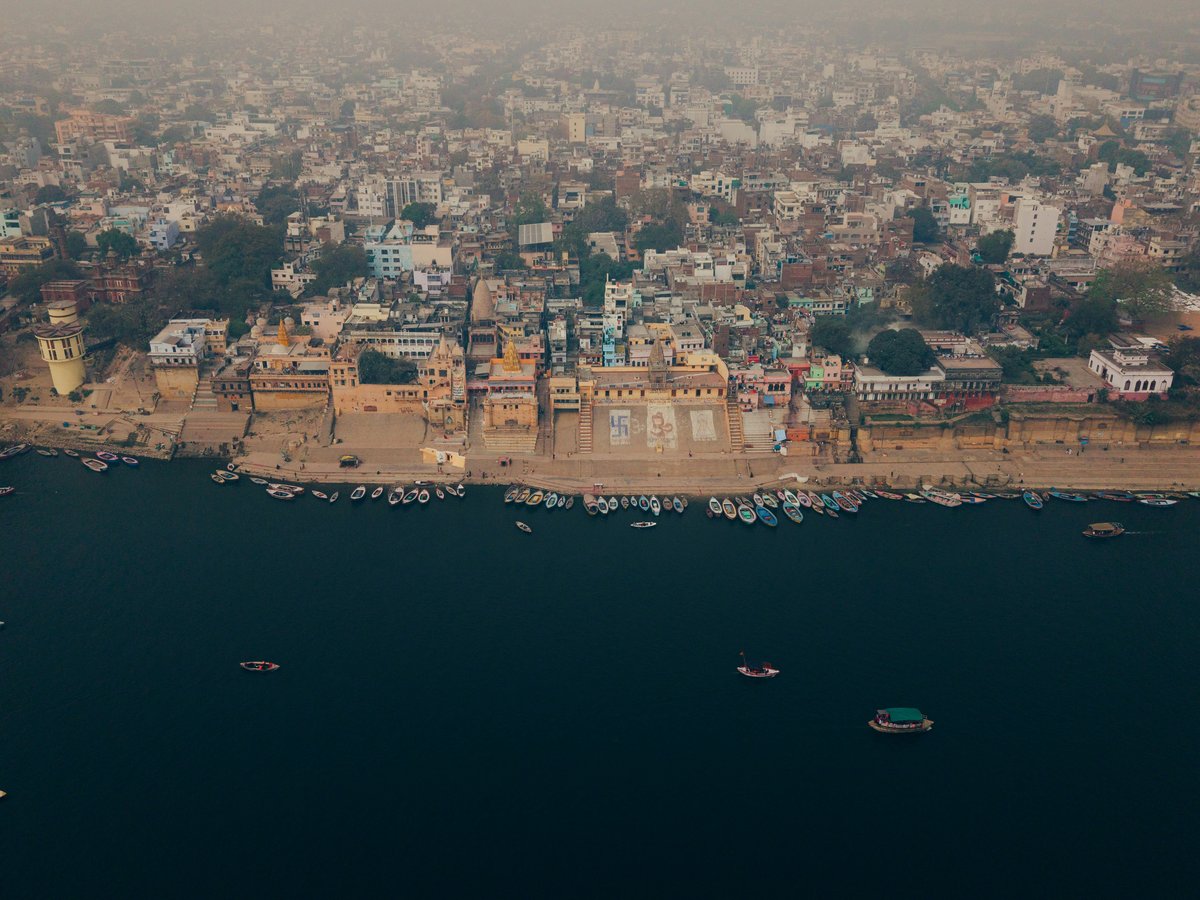
Stay in Varanasi in May
59 hotels in the Trip.com pool for Varanasi, from US$5 a night.
Opens Trip.com on Fri 7 May to Sun 9 May 2027; change the dates there.
May in Varanasi is, to put it plainly, punishing. Afternoon temperatures regularly push above 40°C (104°F), and the loo, a dry westerly wind that rolls off the Gangetic plain, can make it feel closer to 48°C on the worst days. The narrow lanes of the old city near Godowlia trap heat like a stone kiln, radiating warmth well after dark. Most domestic tourists avoid the city entirely until October, and international visitors are scarce. This is not a month you choose on impulse.
That said, one event draws a specific crowd. Buddha Purnima, marking Gautama Buddha's birth, enlightenment, and passing, falls on the full moon of Vaishakha, typically in mid-May. Sarnath, roughly 10 km north of the old city, is where the Buddha delivered his first sermon at the Deer Park. Pilgrims from Sri Lanka, Myanmar, Thailand, and Japan gather at the Dhamek Stupa and surrounding monasteries for prayers and candlelit processions. For that single week, this corner of Varanasi hums with purpose.
Outside Buddha Purnima, the ghats are quieter than any other month. Guesthouse rates in Assi and Lanka drop sharply from their winter peak. The compensation for enduring the heat is mango season, with crates of Dussehri and early Chausa varieties arriving at fruit stalls across Sigra. Plan each day around two outdoor windows, roughly 5 a.m. to 8 a.m. and 6 p.m. to 9 p.m.
Why visit in May
- Hotel and guesthouse rates reach their annual floor, dropping well below winter peak-season prices, and off-season pricing means even modest daily budgets stretch comfortably.
- The ghats are nearly empty of tourists, giving photographers unobstructed compositions at dawn and during the evening Ganga Aarti at Dashashwamedh Ghat.
- Mango season peaks across Uttar Pradesh in May. Varieties like Dussehri and Chausa appear at stalls throughout the old city at their freshest and cheapest.
- Buddha Purnima at Sarnath draws a genuine pilgrimage crowd, making it the one culturally rich window in an otherwise quiet month.
Worth knowing
- Daytime temperatures regularly exceed 40°C (104°F), with the loo wind pushing apparent temperatures toward 48°C. Heatstroke risk is real between 10 a.m. and 5 p.m.
- Power cuts hit most neighborhoods for 2 to 4 hours daily as the UP state grid strains under air-conditioning demand, leaving rooms without fans or cooling.
- Cycle-rickshaw drivers and many small shopkeepers in the old city reduce hours or close entirely during the afternoon, limiting midday mobility and options.
- The Ganges runs low before the monsoon, exposing muddy banks and intensifying the smell along cremation ghats like Manikarnika.
Best for
Think twice if
May is the crescendo of Varanasi's pre-monsoon summer. The loo, a hot dry westerly wind, drives afternoon heat to levels that make outdoor activity dangerous through the middle of the day. Humidity stays relatively low compared to the monsoon months that follow, but the sheer radiant heat from stone surfaces makes even short ghat walks exhausting by mid-morning. Expect roughly 5 days with rain, typically short violent bursts that drop heavy sheets of water for 20 to 30 minutes before clearing. Dawn and the hour after sunset are the only reliably tolerable outdoor windows.
Seasonal caution
- Extreme heat risk. Afternoon temperatures frequently climb past 42°C (108°F), and the loo wind can push the apparent temperature above 48°C. Heatstroke and severe dehydration are genuine medical risks between 10 a.m. and 5 p.m. Carry water at all times and know the signs of heat exhaustion.
- Sudden pre-monsoon squalls. While total monthly rainfall is modest, individual storms arrive with little warning and drop intense sheets of water. The lower steps of ghats like Assi and Dashashwamedh flood within minutes during downpours, and wet stone becomes dangerously slippery.
- Dust and particulate haze. Pre-monsoon dust from the Gangetic plain reduces air quality across Varanasi, which may affect travelers with asthma or other respiratory conditions.
Year-round climate
Averages from the last 5 years.
| Month | Avg high (°C) | Avg low (°C) | Rainfall (mm) |
|---|---|---|---|
| Jan | 21 | 10 | 12 |
| Feb | 27 | 13 | 10 |
| Mar | 33 | 19 | 12 |
| Apr | 39 | 24 | 2 |
| May | 39 | 27 | 41 |
| Jun | 38 | 28 | 158 |
| Jul | 34 | 27 | 304 |
| Aug | 32 | 26 | 306 |
| Sep | 32 | 26 | 256 |
| Oct | 31 | 22 | 98 |
| Nov | 28 | 16 | 5 |
| Dec | 23 | 12 | 10 |
Headline events
Buddha Purnima at Sarnath
Full moon in May (shifts annually with the lunar calendar, typically mid-May)
The full moon of Vaishakha celebrates Gautama Buddha's birth, enlightenment, and parinirvana. At Sarnath, where the Buddha preached his first sermon, pilgrims from across Asia gather at the Dhamek Stupa and surrounding monasteries for prayers, processions, and candlelit circumambulations. The Sarnath Museum extends its hours for the occasion, and temporary stalls sell Buddhist texts and artifacts outside the archaeological zone.
Best things to do in May
Pre-dawn boat ride on the Ganges
sightseeingHire a wooden rowboat from Dashashwamedh Ghat or Assi Ghat and drift north along the ghats as the sun rises around 5:20 a.m. The stone steps glow amber in the first light, and you'll pass morning bathers, small puja ceremonies, and the smoke rising from Manikarnika's cremation pyres. The smell of sandalwood and marigold garlands carries across the water.
May's sunrise comes early and the air temperature at 5 a.m. sits in the high 20s°C, making this the only comfortable multi-hour outdoor window. Tourist boats are rare, so you'll likely have the river to yourself.Booking tipNegotiate with boatmen the evening before at the ghat steps. Morning walk-up prices tend to be higher.
Sarnath pilgrimage and museum visit
culturalThe archaeological site at Sarnath, north of the old city, centers on the Dhamek Stupa (5th century CE) and the Sarnath Museum, founded in 1910, which houses the original Ashoka Lion Capital. The Mulagandhakuti Vihara nearby holds Kosetsu Nosu's frescoes depicting scenes from the Buddha's life.
Buddha Purnima in mid-May brings pilgrims and ceremonies that add living context no guidebook can replicate. The museum's air-conditioned galleries are also a practical midday refuge from the heat.Booking tipArrive by 7 a.m. to walk the grounds before the heat builds. The museum opens at 10 a.m.
Evening Ganga Aarti at Dashashwamedh Ghat
culturalSeven priests perform a synchronized fire ceremony with heavy brass lamps, smoking incense, and conch shells at sunset each evening. The ritual lasts about 45 minutes, accompanied by chanting that echoes off the water and the ghat walls.
The ceremony runs year-round, but May's thin tourist crowds mean you can sit in the front rows of the stone steps without arriving 2 hours early. The post-sunset temperature drop is the first comfortable moment of the day.Banarasi silk shopping in Madanpura
shoppingThe Madanpura neighborhood is where many of Varanasi's silk-weaving families live and work. You can visit small workshops where weavers operate handlooms producing the city's signature brocade saris, some pieces taking 15 to 45 days to complete.
May is deep off-season for the wedding-sari market. Weavers have more time to show their craft, and prices on ready stock tend to be more negotiable than during the October-March wedding and tourist seasons.Night walk along the ghat corridor
sightseeingAfter 9 p.m., walk the stone pathway connecting the ghats from Assi in the south toward Raj Ghat in the north. The lit temples, the distant sound of tabla from small music gatherings, and the still Ganges reflecting lamplight reveal a Varanasi that most tourists, who leave after the evening aarti, never see.
The stone steps finally release their stored daytime heat after 9 p.m., making the late-night stretch the most comfortable walking hours. In cooler months, this window has no particular advantage over any other time.Bharat Kala Bhavan museum at BHU
culturalThis university museum on the Banaras Hindu University campus in Lanka houses over 100,000 objects, including Mughal miniature paintings, ancient sculptures, and a notable textile collection. Founded in 1920, its galleries are well maintained and air-conditioned.
The cooled galleries offer genuine midday refuge. With BHU's academic session ending in May, the campus is quieter and parking easier than during the school term.Seasonal mango tasting at Godowlia market
foodThe old city's commercial heart, Godowlia Chowk, fills with seasonal mango vendors in May. Crates of Dussehri, Safeda, and early Chausa line the narrow lanes, and the sweet, resinous smell is unavoidable. Vendors will slice samples if you ask.
Mid-May is when UP's mango harvest shifts from early varieties to the premium mid-season ones. The selection and freshness peak at this moment before monsoon humidity complicates storage.What to eat in May
In season: fruit
Dussehri mango
The first premium mango variety of the UP season arrives in early May from Lucknow and Malihabad orchards. Small, intensely aromatic, with almost no fiber. Vendors in Godowlia and Sigra sell them by the dozen, and the smell of ripe crates fills the lanes.
Litchi
The first litchi crates of the season arrive from Muzaffarpur in Bihar by late May. Translucent, juicy, and briefly available before monsoon rains end the harvest a few weeks later. Fruit sellers along Sigra Road stack them in small bundles.
Street food peaks
Kulfi
Dense, slow-churned Indian ice cream made from reduced milk, typically flavored with mango, pistachio, or malai (cream). Kulfiwallas push carts through Lanka and the old city from late afternoon until midnight in May, when demand is at its annual peak.
What to drink
Aam panna
A chilled raw-mango drink made with green (unripe) mangoes, roasted cumin, black salt, and fresh mint. Sold at street stalls across the old city as a heat-relief remedy. The tart, salty flavor cuts through the heat far better than anything sweet.
Thandai
Varanasi's signature cold spiced-milk drink, blended with almonds, fennel seeds, rose petals, and cardamom. Available year-round at stalls near Vishwanath Gali, but consumption peaks in the summer months when the cooling properties feel essential rather than ceremonial.
In markets
Sattu
Roasted gram flour, mixed into cold water with salt and lemon as a savory drink (sattu sharbat) or stuffed into parathas. A staple of the Gangetic plains summer diet, valued by locals for its cooling effect. Vendors near Assi Ghat sell both versions from early morning.
Regular events in May
Ganga DussehraFree
Celebrates the mythological descent of the Ganges to earth. Devotees gather at all major ghats for ritual bathing, lamp floating, and collective puja led by priests. The celebration concentrates at Dashashwamedh and Panchganga Ghat, where the steps fill to a density unusual for the off-season.
10th day of the bright half of Jyeshtha. Falls in late May some years, early June in others.Evening classical music recitals at Sankat Mochan TempleFree
The Sankat Mochan Hanuman Temple hosts smaller evening music sessions through the summer months, distinct from its large April festival. Local and visiting musicians perform Hindustani classical ragas in the temple courtyard after dark, when evening temperatures finally allow outdoor gatherings.
Irregular schedule, typically weekend evenings through May and JuneBest places this May
Sarnath Museum
museumAir-conditioned archaeological museum housing the Ashoka Lion Capital and a collection of Buddhist sculptures spanning the 3rd century BCE to the 12th century CE. Founded in 1910, the building is a colonial-era structure with thick walls that stay cool. In May, the museum serves both as a cultural site and as practical relief from the heat outside.
SarnathBharat Kala Bhavan
museumBHU's art and archaeology museum, with over 100,000 objects spread across cooled galleries. The Mughal miniature painting collection and the Alice Boner gallery of Indian art are the strongest sections. Quieter in May when the university term winds down and student crowds thin.
LankaRamnagar Fort
historical siteThe 18th-century sandstone fort of the Maharaja of Varanasi sits on the eastern bank of the Ganges. Its museum holds vintage cars, palanquins, ivory chess sets, and an astronomical clock. The ferry ride across the river catches whatever evening breeze is moving, which feels like genuine relief after a May day.
Ramnagar (east bank)Tulsi Manas Mandir
templeA 20th-century white marble temple dedicated to Lord Rama, with verses from the Ramcharitmanas carved into its walls. The marble floors and thick walls keep the interior noticeably cooler than the surrounding streets and sandstone temples. A practical midday stop when the heat is at its worst.
near Sankat MochanAssi Ghat at dawn
ghatThe southernmost of the main ghats, popular with local bathers and the backpacker crowd from surrounding guesthouses. In May, the pre-dawn scene here is calmer than at Dashashwamedh. A large Shiva lingam under a peepal tree draws morning worshippers, and the chai stalls along the top of the ghat open around 4:30 a.m.
AssiKashi Vishwanath Temple corridor
templeThe rebuilt corridor connecting Varanasi's holiest Shiva temple directly to the Ganges at Lalita Ghat opened in 2021. The newer sections have covered walkways that provide shade, and the queue for darshan moves faster in May's off-season, typically 20 to 40 minutes compared to over 2 hours in November.
GodowliaSt. Mary's Cathedral
churchA quiet church in the Cantonment area, well away from the old city's density and heat-trapping lanes. The stone interior stays cool through the afternoon. Rarely included on tourist itineraries, it offers a counterpoint to the Hindu and Buddhist sites that fill most Varanasi visits.
Cantonment
Your packing checklist
Tick items off as you pack. Your progress saves in this browser.
All packed — have a great trip.
Insider tips
Book accommodation that explicitly advertises inverter or generator backup. Without it, the daily grid interruptions will leave your room without cooling or fans at the worst possible hours. In nighttime temperatures that stay warm through the small hours, a still room with no air movement becomes genuinely hard to sleep in.
The Ganges-facing rooms at guesthouses along Meer Ghat and Man Mandir Ghat cost far less in May than in the winter months. Request the top floor, which catches whatever breeze comes off the river after dark. Ground-floor rooms stay warmer because the stone walls radiate stored daytime heat.
Local families do their ghat visits and morning puja between 4:30 and 6:30 a.m., then disappear indoors until evening. If you want to see Varanasi's working devotional life rather than the tourist-oriented evening aarti, the pre-dawn hour, roughly 4:30 to 5:30 a.m., is when the city is most itself.
The thick malai lassi served in clay kulhad cups at stalls in Kachori Gali near Dashashwamedh Ghat is filling enough to replace a lunch you likely will not want in the heat. The porous clay keeps the lassi noticeably cooler than glass or plastic.
Auto-rickshaw drivers near Varanasi Junction station routinely quote tourist-rate fares to arriving passengers. Walk past the station forecourt to the main road where autos pick up locals. For the ride to Godowlia, the roadside fare is typically a third of what the forecourt drivers ask.
Avoid these mistakes
- Scheduling a walking tour of the old city between 10 a.m. and 4 p.m. The lane temperatures in Vishwanath Gali and the surrounding alleys regularly exceed 45°C in direct sun, with radiated heat from stone walls adding to the effect. Some tour operators still offer midday departures. Insist on a pre-dawn or post-sunset slot.
- Wearing dark-colored or synthetic clothing. Black and navy absorb radiant heat, and synthetics trap it against your skin. Light-colored, loose cotton is what Varanasi residents wear through May for good reason.
- Skipping proper meals because of suppressed appetite and relying on snacks and water. The calorie deficit accumulates by day 3, showing up as fatigue and irritability. Eat a substantial breakfast before 7 a.m. and a full dinner after 8 p.m. even if midday appetite disappears.
- Treating pre-monsoon showers as light drizzle. Individual storms arrive fast and can flood the lower ghat steps within minutes. Wet sandstone becomes slippery enough to cause serious falls. Move to higher ground on the ghats at the first sign of dark clouds building.
Practical tips for May
Most Varanasi hotels adjust checkout times seasonally. In summer, some shift to a 10 a.m. checkout for deep-cleaning during peak heat. Confirm your checkout time at booking, not on arrival. The city's two main railway stations, Varanasi Junction in Cantonment and Manduadih, both have air-conditioned waiting lounges where you can shelter if arriving during the worst afternoon hours. Cycle-rickshaw drivers typically refuse midday fares in May, so plan morning and evening transit in advance or use Ola, which tends to work more reliably than Uber in Varanasi. At current exchange rates, roughly 96 INR to 1 USD, meals and local transport are inexpensive even by Indian standards. The Kashi Vishwanath Temple requires you to deposit bags, phones, and all electronics at lockers before entry, and there is a separate queue for foreign nationals with passport verification. Book any Sarnath day trip for early morning, departing by 6 a.m. at the latest, so you can walk the archaeological grounds before mid-morning heat forces you indoors. If Ganga Dussehra falls in late May (the date shifts annually with the Hindu lunar calendar), expect the main ghats to be noticeably more crowded than usual on that single day.
FAQ
Is May a good time to visit Varanasi?
Honestly, no. May is one of the two worst months to visit, alongside June. The extreme heat restricts comfortable outdoor time to about 4 to 5 hours per day, split between dawn and dusk. The one exception is if you want to experience Buddha Purnima at Sarnath, which is a genuinely compelling reason to visit in mid-May. Budget travelers also benefit from the lowest accommodation prices of the year, but the heat is the price you pay.
What is the weather like in Varanasi in May?
Hot. Highs average close to 39°C (around 102°F), with many afternoons climbing past 42°C under the loo wind. Lows hover in the upper 20s°C (near 80°F), so nights stay warm without being punishing. Rainfall totals around 40mm across a handful of days, usually as short, intense pre-monsoon squalls that clear within 30 minutes. Humidity stays under 50%, lower than the monsoon months that follow but still noticeable in combination with the heat.
Is Varanasi crowded in May?
Not at all. May sees the lowest tourist footfall of any month. The ghats, which can be shoulder-to-shoulder in November or during Dev Deepavali, are largely empty apart from local bathers and sadhus. Queues at Kashi Vishwanath Temple move faster, and finding a boat at the ghats is effortless. The tradeoff is that some smaller guesthouses and restaurants reduce hours or close temporarily for the off-season.
Can I still do a boat ride on the Ganges in May?
Yes, and in some ways it is better than peak season. Fewer boats on the water mean a quieter, more contemplative experience. The key is timing. Launch by 5:15 a.m. from Dashashwamedh or Assi Ghat to catch the sunrise light. By 8 a.m., direct sun on the water becomes harsh. Evening rides after 6 p.m. are also comfortable once the sun angle drops. A midday ride is genuinely risky due to direct UV and intense reflected glare off the river surface.
What should I eat in Varanasi in May?
Mango season is the culinary highlight. Dussehri mangoes from UP orchards arrive in early May, followed by Chausa toward the end of the month. Cooling drinks like aam panna (raw mango with cumin and salt), thandai (spiced cold milk), and sattu sharbat (roasted gram flour with lemon) are sold at stalls throughout the old city. For meals, eat early and eat late. The morning kachori-sabzi at shops around Kachori Gali is substantial enough to carry you through the midday heat when appetite typically disappears.
Things to Do in Varanasi in May
 Free cancellation
 Full Day Sightseeing Of Varanasi - Ultimate 1 Day in Varanasi
Day trip: 10 hours, free cancellation.
via Viator Free cancellation
 Private Full-Day Varanasi Tour with Boat Ride
Day trip: 12 hours, free cancellation.
via Viator Free cancellation
 Photo Tour In Holy Varanasi
Day trip: 3.5 hours, free cancellation.
via ViatorFind a flight to Varanasi
Live fares to Varanasi appear here once cookies are accepted.
Last verified by automated review (v1.7.2) on . What is automated review?