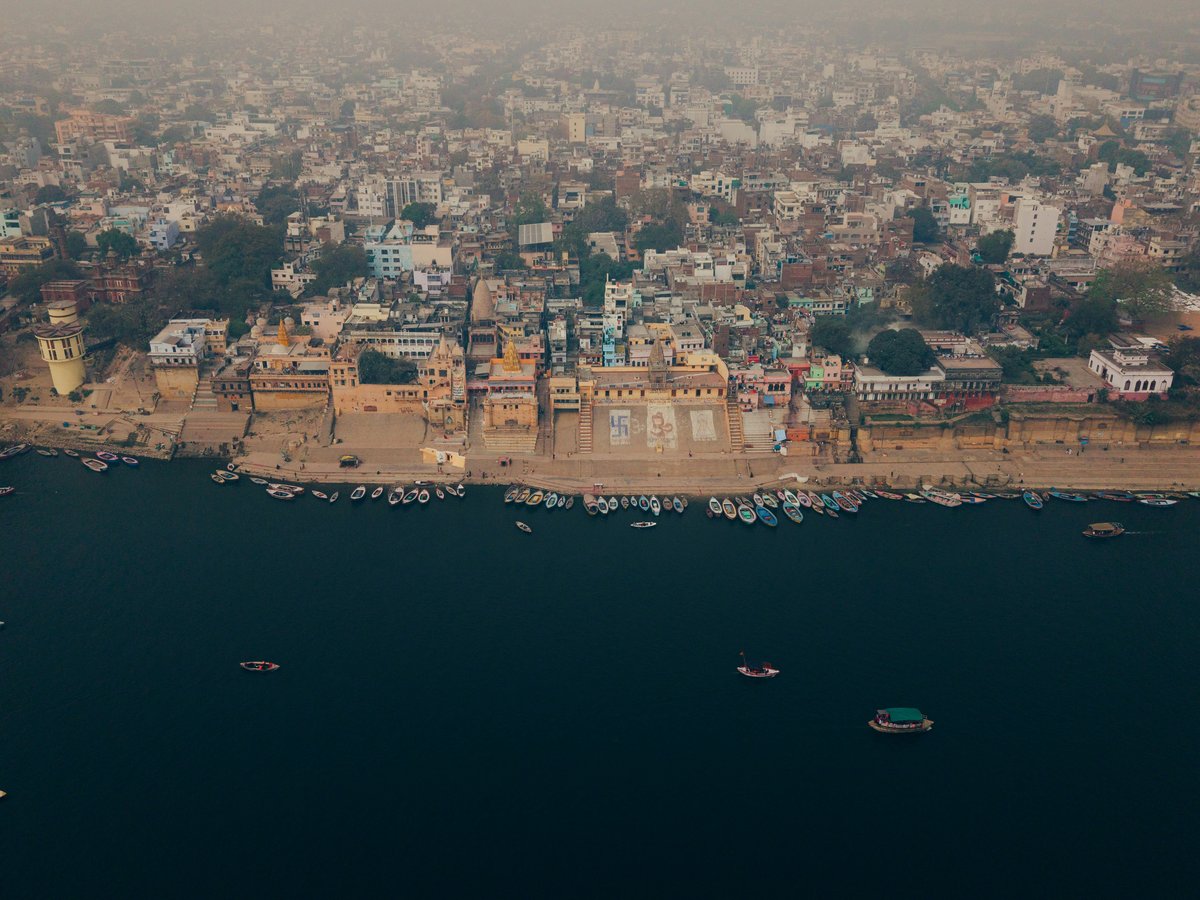
How do I get around Varanasi?
Walking and auto-rickshaws for most trips, boats along the Ganges for the ghats. The old city near Dashashwamedh Ghat narrows to under 2 meters, so no vehicle enters. Download Ola before arrival. Auto rides cost ₹100-200 within the city. A prepaid taxi from VNS airport runs about ₹900 for the 26 km into town.
The old city between Dashashwamedh Ghat and Manikarnika Ghat is foot traffic only. The galis (lanes) narrow to under 2 meters in places, slick with monsoon runoff and cow dung from June through September. You'll need rubber-soled shoes for the stone steps, which turn greasy after rain. These alleys carry cattle, motorcycles that shouldn't fit, and funeral processions heading to the Manikarnika burning ghat. Google Maps fails in the gali network. The lanes aren't mapped well, and GPS bounces between the 3-4 story buildings on either side. Navigate by asking shopkeepers for the nearest ghat name, then follow the slope downhill toward the river. The 84 ghats stretch about 6.8 km along the Ganges' western bank, and walking the full length takes roughly 90 minutes at a steady pace. During peak monsoon, 30-40 ghats flood and force you back into the lanes above.
Auto-rickshaws handle anything outside the old city. No meters exist. Negotiate before you sit down. Godowlia Crossing to Sarnath, 10 km north, should cost ₹150-200. Expect the opening ask to hit ₹400-500. E-rickshaws (battery-powered three-wheelers, called e-ricks locally) run shared routes for ₹10-20 per person along the main roads near Sigra and Lanka, by Banaras Hindu University. They won't take you door-to-door, but they're how students and locals move through the city. Cycle rickshaws still operate around Godowlia and Vishwanath Gali for ₹30-50 per short hop. The pedaling is slow, the wooden seats are narrow and hard, and every pothole sends a jolt through your spine. For a 1 km trip through the congested zone between Godowlia and Varanasi Junction station, though, they thread gaps that autos can't.
The Ganges is a transit corridor, not a tourist prop. A shared rowboat from Dashashwamedh Ghat costs ₹50-100 per person for the standard 1-hour loop past Manikarnika and back. A private boat runs ₹300-500 for the same route. The sunrise trip is the one to take, with boats leaving around 5:00 AM in August, closer to 6:00 AM in December. You'll see dhobis slapping wet laundry on stone, wrestlers oiling up at Tulsi Ghat's akhara, and woodsmoke off the pyres at Manikarnika. Motorboats cost ₹800-1500 per hour, and the engine drone wrecks the quiet. Stick with the wooden rowboats. Prices tend to run 20-30% higher from November through February when pilgrim traffic peaks.
Ola works in Varanasi. Uber technically operates, but driver supply is thin and cancellation rates run high. Download Ola before landing at Lal Bahadur Shastri International Airport (code VNS), 26 km northwest of the ghats. The prepaid taxi counter inside the terminal charges ₹800-1000 to Godowlia or Assi Ghat, and the drive takes 45-75 minutes depending on NH-56 traffic. Ola from the airport tends to cost ₹500-700 when a driver accepts, which saves money but means a 10-15 minute wait outside the terminal for pickup. After dark, take the prepaid counter. The road into the city narrows past Varanasi Junction railway station, and the final 3 km to any ghat-area hotel involves lanes where your driver will stop and point. You walk the rest.
Mind you, the biggest transport mistake in Varanasi is hiring a full-day auto-rickshaw through your hotel. Hotels take a 30-50% commission, and the driver recovers it by routing you through silk shops and "family workshops" where you'll sit through a 20-minute sales pitch over milky chai. Book autos off the street or through Ola for each leg instead. Varanasi Junction (also called Varanasi Cantt), the main railway station, sits about 2 km from Godowlia. That's walkable if you're light on bags, but unpleasant in 35°C heat and diesel exhaust on Station Road. The newer Banaras station (formerly Manduadih), 3 km south, sees less congestion and serves many of the same long-distance trains.
On-the-ground: ride-hail apps work.
Primary modes of transit
- Walking
- Auto-rickshaw
- Cycle rickshaw
- E-rickshaw
- Rowboat
- Ola ridehail
- Prepaid taxi
Varanasi's network by the timetable
Read from the published timetables, not from memory: one operator, 53 routes and 42 stops within 35 km of the centre.
- Operators, by routes here
- Indian Railways (53)
- Routes by mode
- 53 Rail
- Weekday service
- 01:55 to 35:27 (11:27 the next morning)
- Fares in the timetable
- not published
- Timetables valid
- 2026-08-30 to 2026-09-30
Read 2026-09-14, version 2026-08-30-02-22-43, from one feed:
- Indian Railways (a community national feed, Mobility Database source 2867). Licence: not stated in the catalog; the agency's terms apply.
More transport questions
How do I get from the airport to Varanasi?
From Lal Bahadur Shastri Airport (VNS), book a prepaid taxi at the counter inside arrivals. The fixed fare to the ghats runs ₹800-1,000 ($8-10) for the 26 km ride, taking 45-75 minutes. Cars cannot reach ghat-side hotels, so expect a 10-15 minute walk through narrow lanes to your door.
Full answerHow do I get to Varanasi?
Lal Bahadur Shastri International Airport (VNS) in Babatpur, 26 km northwest of the ghats, handles all flights to Varanasi. No nonstop international service. Connect through Delhi (DEL) or Gulf hubs like Dubai and Doha from the US or Europe. Domestic flights from Delhi take 90 minutes on IndiGo or Air India at ₹3,000+ ($31+). Trains from Delhi run 8-12 hours on the Vande Bharat or Rajdhani Express.
Full answerWhat are the best day trips from Varanasi?
Sarnath sits 10 km north of Varanasi and fills a comfortable half-day. The Dhamek Stupa and the archaeological museum hold Buddhist sculpture worth the 30-minute auto-rickshaw ride. For a full day, Chunar Fort (40 km southwest) or Jaunpur's Sharqi mosques (60 km northwest) give couples a reason to hire a car and split the driving with a long lunch.
Full answerLast verified by automated review (v1.7.2) on . What is automated review?