Stay in Varanasi in January
59 hotels in the Trip.com pool for Varanasi, from US$5 a night.
Opens Trip.com on Fri 1 Jan to Sun 3 Jan 2027; change the dates there.
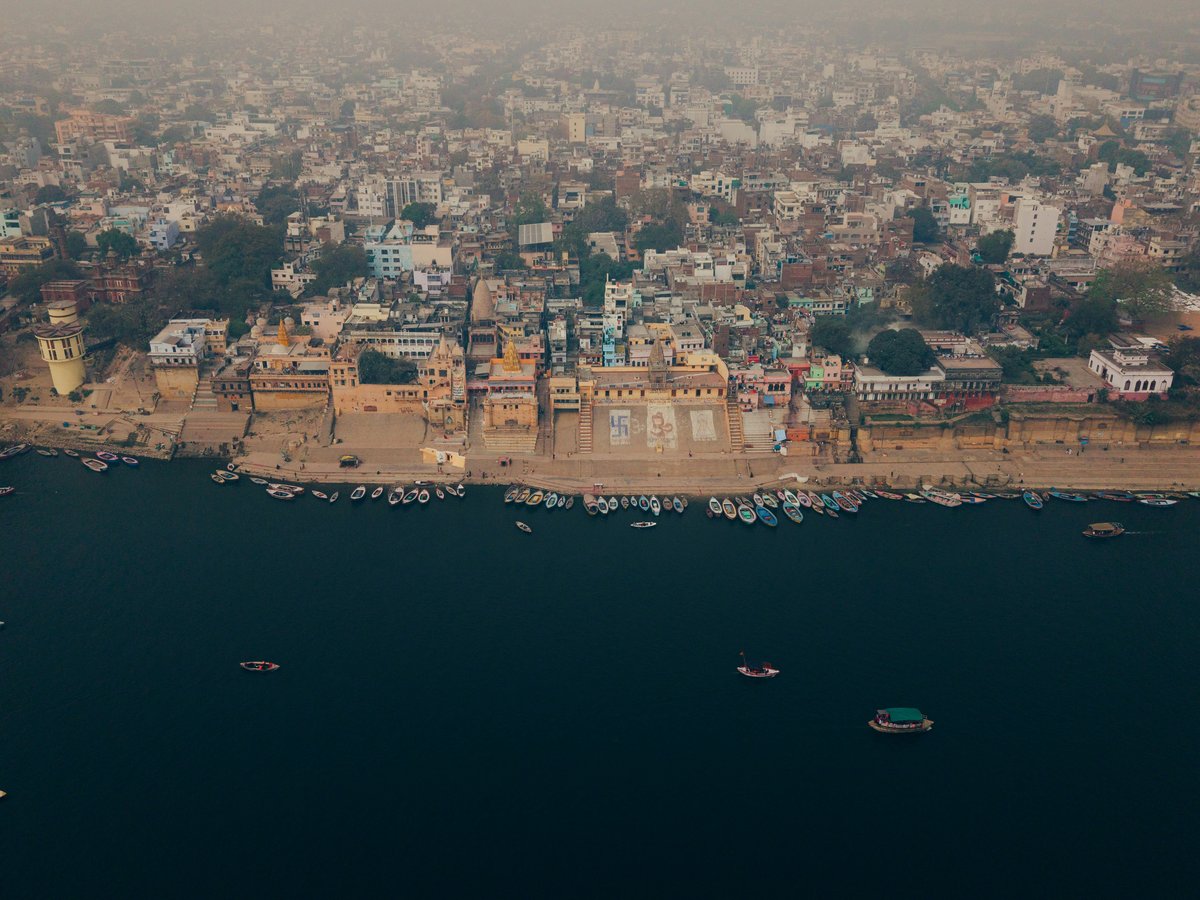
January in Varanasi means fog. Not a gentle haze, but the dense, grey blanket that settles over the Indo-Gangetic Plain and routinely grounds flights at Lal Bahadur Shastri International Airport for 4 to 8 hours. Trains arriving at Varanasi Junction can run half a day late on bad mornings. If you're connecting through Delhi, build a full buffer day into your schedule. That said, once you're on the ground, January is one of the most physically comfortable months to explore the city on foot. Daytime temperatures reach about 21°C (70°F), and the cool mornings near 10°C (50°F) carry the smell of woodsmoke and damp stone up from the river. The winter sun sits low enough at 8 AM to paint the sandstone ghats in warm amber tones that the overhead summer sun washes out entirely.
The month's defining moment is Makar Sankranti in mid-January, when tens of thousands of pilgrims descend on the ghats for ritual bathing at sunrise and the sky above the Old City fills with kites. Ghat-facing guesthouses in Godowlia and near Assi tend to book out 2 to 3 weeks ahead of Sankranti, and the narrow lanes get genuinely packed. Outside that week, the crowds are manageable and the lanes of Bengalitola feel almost contemplative in the cold morning air. Mind you, winter air quality across the Indo-Gangetic Plain reaches its annual worst right now, so an N95 mask earns its space in your bag. January's reward for that trade-off is the year's best light for photography and temperatures that make the 6-kilometer ghat corridor from Assi to Manikarnika a pleasure to walk rather than an endurance test.
Why visit in January
- Comfortable daytime temperatures for walking the full ghat corridor and exploring open-air ruins at Sarnath without the scorching heat of April and May
- Makar Sankranti draws one of the Ganges' largest annual bathing pilgrimages and the only city-wide kite competition of the year
- Nearly rainless conditions through the entire month make rained-out days essentially a non-issue
- Malaiyo, the cold-weather milk-foam delicacy unique to Varanasi, appears on street carts only from November through February and peaks in January
Worth knowing
- Morning fog across Uttar Pradesh disrupts nearly every mode of arrival in January. If your itinerary requires tight connections, this month is a scheduling gamble across northern India.
- Winter air quality is among the worst in India during January. The air is rated 'very unhealthy' on most mornings by international monitoring standards. Travelers with asthma or respiratory conditions should weigh this seriously before booking.
- Pre-dawn boat rides depart around 5:30 AM, and the wind off the Ganges at that hour makes the perceived temperature feel close to 5°C. Visitors from warmer climates are routinely caught without proper layers.
Best for
Think twice if
Varanasi's coolest month brings dry, foggy mornings and mild, sunny afternoons. Humidity sits around 81%, giving the cold air a damp, penetrating quality rather than dry crispness. Rainfall is negligible at 12mm across roughly 2 rainy days for the entire month. Dense fog typically forms before sunrise and can persist until 10 or 11 AM, occasionally lasting past noon. By early afternoon the sky over the Ganges usually clears to pale winter blue.
Seasonal caution
- Dense fog blankets the Indo-Gangetic Plain from late December through mid-February. Visibility at the airport and on highways regularly drops below 50 meters on January mornings, causing widespread flight cancellations and multi-hour train delays across Uttar Pradesh.
- Winter air quality in Varanasi regularly reaches AQI 200 to 300 due to temperature inversions trapping vehicle emissions, agricultural residue, and domestic cooking smoke. The particulate matter is fine enough to be invisible. Travelers with respiratory conditions should carry a filtering mask and appropriate medication.
Year-round climate
Averages from the last 5 years.
| Month | Avg high (°C) | Avg low (°C) | Rainfall (mm) |
|---|---|---|---|
| Jan | 21 | 10 | 12 |
| Feb | 27 | 13 | 10 |
| Mar | 33 | 19 | 12 |
| Apr | 39 | 24 | 2 |
| May | 39 | 27 | 41 |
| Jun | 38 | 28 | 158 |
| Jul | 34 | 27 | 304 |
| Aug | 32 | 26 | 306 |
| Sep | 32 | 26 | 256 |
| Oct | 31 | 22 | 98 |
| Nov | 28 | 16 | 5 |
| Dec | 23 | 12 | 10 |
Headline events
Makar Sankranti
January 14-15
One of the holiest bathing festivals on the Hindu calendar. Tens of thousands of pilgrims converge on Varanasi's ghats for a ritual sunrise dip in the Ganges, while the sky above the Old City fills with competitive kite flying. Families exchange sesame sweets and the energy along the riverfront is palpable for days on either side of the main event.
Best things to do in January
Dawn boat ride on the Ganges
sightseeingA wooden rowboat carries you along the western bank before sunrise, passing 84 named ghats while the morning mist lifts off the water. Cremation fires glow through the fog at the burning ghats, and the sound of conch shells and temple bells carries across the cold river. The ride typically lasts 60 to 90 minutes and covers the entire ceremonial waterfront.
Winter mist creates atmospheric conditions unique to December through February. The cool air means you'll be comfortable for the full ride, unlike the sweltering monsoon months when the humidity on the water is oppressive.Booking tipNegotiate directly at Tulsi Ghat or Assi Ghat the evening before. Hotel-arranged boats typically cost 2 to 3 times the going rate.
Exploring the old-city galis on foot
walkingThe labyrinthine lanes between Godowlia and Manikarnika are where the real texture of daily Varanasi lives. Chai stalls with steam rising off brass kettles, sweet shops stacking fresh laddoos, temples wedged between houses, wandering cows, and the constant sound of bicycle bells. The lanes are too narrow for cars, and every turn reveals something unexpected.
Cool temperatures make navigating the cramped, sheltered lanes comfortable. In summer, the lack of airflow turns them into ovens above 40°C.Kite flying during Makar Sankranti
culturalOn Sankranti morning, rooftops and ghat steps across the Old City fill with kite flyers. The tradition is competitive. Strings coated in ground glass cut rival kites from the sky, and the shouts of triumph and defeat carry through the narrow lanes. Vendors sell kites and manjha (the cutting string) for days beforehand along Vishwanath Gali.
Makar Sankranti falls once a year in mid-January. This tradition has no equivalent at any other time of year.Booking tipNo booking needed. Buy kites from any of the lane vendors for a few rupees and join in from a guesthouse rooftop.
Evening Ganga Aarti at Dashashwamedh Ghat
culturalThe nightly fire ceremony on the main ghat draws hundreds of spectators to the stone steps. Seven priests perform synchronized rituals with multi-tiered brass lamps, incense, and conch shells. The ceremony lasts about 45 minutes and starts at sunset, which in January falls around 5:30 PM.
Cold air keeps the incense smoke low and visible against the dark winter sky, and the flames stand out sharply. Summer aarti starts later and competes with lingering daylight, diluting the visual impact.Booking tipArrive 30 to 45 minutes early for a front-row spot on the steps. Alternatively, watch from a boat on the river for a wider perspective.
Day trip to Sarnath
historyThe site where the Buddha delivered his first sermon sits about 10 kilometers northeast of the Old City. The Dhamek Stupa, dating to the 5th century CE, anchors the archaeological park. The Sarnath Museum, founded in 1910, houses the original Lion Capital of Ashoka, now India's national emblem. The surrounding deer park is quiet and green.
Cool, dry weather makes the open-air ruins and gardens comfortable to explore on foot. The site has minimal shade, and summer highs near 40°C make the same walk genuinely dangerous.Booking tipTake an auto-rickshaw from Godowlia rather than arranging a car through your hotel. The museum is closed on Fridays.
Hindustani classical music performances
musicVaranasi is one of the historic seats of Hindustani classical music, home to the Benares gharana. January falls in the winter concert season, and performances by sitar, tabla, and vocal artists appear at venues including the International Music Centre Ashram and at private baithaks, the intimate living-room concerts that have been the genre's traditional format for centuries.
The winter concert season runs from October through February, with January typically offering the densest calendar of performances.Booking tipAsk your guesthouse host about upcoming baithaks. These are rarely advertised and often require a local introduction.
Visiting silk-weaving workshops
culturalVaranasi's Banarasi silk tradition dates back over five centuries. Families in the old-city weaving quarters still produce saris on wooden handlooms, and many welcome visitors to watch the process. A single sari can take 15 days to 6 months to complete depending on the intricacy of the zari (gold thread) work. The click-clack rhythm of the looms fills the upper floors of narrow lane houses.
Comfortable temperatures for sitting in non-air-conditioned weaving rooms. The weavers also work longer hours in cool weather, so you're more likely to see active production than in the torpid summer months.What to eat in January
On menus now
Baati Chokha
Roasted whole-wheat balls served with a smoky mash of eggplant, tomato, and potato, traditionally cooked over cow-dung cakes that give the dish its distinctive char. Hearty and warming, it becomes a staple at street stalls when the weather cools. The smoke from the cooking fires is part of January's sensory signature in the old city.
Street food peaks
Gajak
Thin, crisp brittle sheets of sesame seeds bound with jaggery, snapping cleanly when you bite through. A winter street snack sold from handcarts across the Old City. The texture and sweetness vary by vendor, and finding your preferred stall is half the appeal.
Tamatar Chaat
Winter tomatoes in Varanasi are sweeter and firmer than their summer counterparts. Street vendors toss them with green chili, roasted cumin, coriander, and chaat masala into a tangy, cold-weather snack that peaks between December and February. The crunch of raw onion and the heat of the chili cut through the morning chill.
What to drink
Malaiyo
A delicate milk foam collected overnight in open clay pots, possible only when nighttime temperatures drop low enough for the cream to set. Scooped into small kulhads and dusted with saffron strands, crushed pistachios, and cardamom. Street vendors begin selling before 6 AM and typically run out by 9. Available only from November through February.
Festival food
Tilkut
Pressed sesame-seed candy made specifically for Makar Sankranti. The flat discs come in plain, almond, and coconut varieties, and families exchange them as festival gifts. Vendors near Vishwanath Gali and at Chowk stack them high from early January onward.
Regular events in January
LohriFree
North Indian harvest bonfire festival with singing, dancing, and distributing peanuts, popcorn, and rewri (sesame candy). Celebrated in Varanasi's Punjabi communities and increasingly across the city. Bonfires appear in open spaces and on rooftops at dusk.
January 13Netaji Subhas Chandra Bose JayantiFree
The birth anniversary of independence leader Subhas Chandra Bose, observed with processions and speeches at public grounds. Particularly noted in Uttar Pradesh, where Bose retains a strong political and cultural following.
January 23Republic Day celebrationsFree
India's Republic Day brings flag-hoisting ceremonies, school parades, and cultural programs at public grounds across the city. The Banaras Hindu University campus hosts a notable ceremony with student performances.
January 26Best places this January
Dashashwamedh Ghat
religious siteThe main ghat and site of the nightly Ganga Aarti. January's early sunset means the ceremony begins while the sky still holds traces of color over the river. The cold keeps mosquitoes away and the smaller winter crowds let you sit closer to the priests than you'd manage in October or November.
GodowliaSarnath archaeological park and Dhamek Stupa
historical siteThe open-air ruins are best explored when temperatures stay comfortably below 25°C. January's dry conditions mean the paths are firm underfoot, and the grounds are still green from the late-monsoon growth. The deer park adjacent to the stupa is peaceful in the cool morning air.
Bharat Kala Bhavan
museumThis university museum at Banaras Hindu University, founded in 1920, houses miniature paintings, Buddhist and Hindu sculptures, and textiles spanning several centuries. A good indoor option for foggy mornings when the ghats are invisible until noon. The collection of Mughal-era miniatures is particularly strong.
LankaRamnagar Fort
historical siteAn 18th-century sandstone fort on the eastern bank of the Ganges, accessible by boat from Tulsi Ghat. The museum inside holds vintage cars, ivory-inlaid palanquins, and astronomical clocks. The boat crossing is especially pleasant in January's cool, calm mornings when the river is low and the current gentle.
Tulsi Manas Mandir
religious siteA white marble temple built in 1964 near Durgakund, with walls engraved in verses from the Ramcharitmanas in the Awadhi dialect. Significantly less crowded than Kashi Vishwanath and more contemplative. The marble stays cool to the touch on January mornings, and the open courtyard catches the winter sun by mid-morning.
DurgakundAssi Ghat morning scene
culturalThe southernmost major ghat is the backpacker and long-stay hub. January mornings bring yoga sessions on the stone platform, chai vendors serving ginger-heavy winter blends, and the daily ritual subculture of regulars doing their ablutions. The ghat faces east, catching the first sun as the fog clears, and the morning light here is consistently the earliest along the waterfront.
Assi
Your packing checklist
Tick items off as you pack. Your progress saves in this browser.
All packed — have a great trip.
Insider tips
The malaiyo vendors in Kachori Gali and near Godowlia Chowk set up before 6 AM and sell out by 8 or 9 most mornings. If you want to try this winter-only Varanasi specialty, make it your first stop, not an afterthought after the boat ride.
For silk shopping, the wholesale warehouses on the road between Lanka and BHU offer Banarasi saris at a fraction of the prices in the tourist shops near the temple corridor. The quality is identical because the goods come from the same looms in the Sonarpura and Madanpura weaving quarters.
The fog clears faster along the river than it does inland. If your morning flight is grounded and you're stuck waiting, head to the ghats rather than sitting at the airport terminal. The view often opens up an hour or two before flights resume.
January evenings get dark before 6 PM, and the Old City lanes have no street lighting in many sections. Locals navigate by phone flashlight. Follow their lead, watch your footing on the uneven stone, and avoid unfamiliar lanes after dark.
The chai stalls on the ghats switch to a heavier ginger-and-black-pepper blend called adrak wali chai in winter. Ask for it by name and you'll get the seasonal version. The warmth and spice hit is noticeably different from the standard summer chai.
Avoid these mistakes
- Booking a tight connecting flight through Delhi or Lucknow on a January morning. Fog delays are not exceptions in the Indo-Gangetic Plain during winter. They are the norm. Either book afternoon departure slots or build a full buffer day into both ends of your itinerary.
- Packing only cotton clothing and sandals because the destination is India. January mornings at the Ganges are cold enough to make you miserable without layers, and open-toed shoes on dew-slick ghat steps are a genuine slip-and-fall hazard. This is not tropical beach weather.
- Assuming every morning will deliver the famous golden-sunrise photograph of the ghats. Roughly half of January mornings are fogged in until 9 or 10 AM, and you might need 3 or 4 attempts before getting a clear sunrise. Plan enough days in the city, or learn to appreciate the fog as its own moody subject.
Practical tips for January
Book ghat-facing accommodation well in advance if your dates fall near Sankranti, especially in Godowlia or Assi. Auto-rickshaws are the main local transport, but the lanes of the Old City near Dashashwamedh are too narrow for anything except walking and the occasional motorcycle. Negotiate rickshaw fares before boarding, as meters are rare. The Kashi Vishwanath Corridor, completed in 2021, opened direct sightlines between the temple and the Ganges, but entry requires airport-style security. Leave bags, phones, and cameras at the lockers outside. Lines move faster on weekday mornings but can stretch past an hour during Sankranti week. Photography is welcome at most ghats but strictly prohibited at Manikarnika Ghat's active cremation platforms. Respect that boundary. ATMs cluster around Godowlia Chowk and Lanka, but carry cash for the old-city lanes where card readers are scarce. Varanasi's smart-city e-rickshaws run fixed routes between Lanka and Godowlia and are a reliable, cheap option for the commute between BHU and the old city. January's early sunset means evening plans should account for full darkness by late afternoon.
FAQ
Is January a good time to visit Varanasi?
January is one of the better months for Varanasi. Temperatures are comfortable for walking, rainfall is minimal, and Makar Sankranti makes mid-January culturally rich. The main downsides are dense morning fog that disrupts travel schedules and poor winter air quality. It ranks as one of the top 3 months to visit, behind November (which has Dev Deepawali and clearer skies) and February (which has less fog).
What is the weather like in Varanasi in January?
January is Varanasi's coolest month. Expect mild, sunny afternoons and cold mornings, especially near the river. Rain is rare, but dense fog is common before mid-morning and can persist past noon on some days. Humidity remains high at around 81% despite the low rainfall, giving the cold air a damp quality that makes it feel colder than the numbers suggest. You'll want layers, not shorts.
Is Varanasi crowded in January?
Moderately to heavily crowded, depending on the week. Sankranti week is the peak within the month, drawing large domestic pilgrim crowds to the ghats. Outside that window, the tourist population is a mix of international backpackers and Indian families on winter holiday. The ghats never feel empty, but the old-city lanes are walkable without the crush that Sankranti or Dev Deepawali brings.
Is Varanasi safe for solo travelers?
Varanasi scores 5.8 out of 10 for solo-traveler safety (see the TTDI Solo-Safety Index). The main risks are petty scams, including fake guides, overpriced boat rides, and aggressive silk touts, rather than violent crime. January's early darkness means you should navigate the old-city lanes with a light source after sundown. Stick to populated ghats and lanes, and be wary of unsolicited 'guides' who approach at the train station or near Dashashwamedh.
How do I get from the airport to the ghats in January?
Lal Bahadur Shastri International Airport sits about 25 kilometers northwest of the old city. Pre-paid taxis from the airport counter are the safest option and take 45 to 75 minutes depending on traffic. In January, expect your flight to arrive late due to fog, which means airport taxi lines can be long. Some guesthouse owners arrange pickup if you book in advance. The city's e-rickshaws don't serve the airport route.
Things to Do in Varanasi in January
 Free cancellation
 Full Day Sightseeing Of Varanasi - Ultimate 1 Day in Varanasi
Day trip: 10 hours, free cancellation.
via Viator Free cancellation
 Private Full-Day Varanasi Tour with Boat Ride
Day trip: 12 hours, free cancellation.
via Viator Free cancellation
 Photo Tour In Holy Varanasi
Day trip: 3.5 hours, free cancellation.
via ViatorFind a flight to Varanasi
Live fares to Varanasi appear here once cookies are accepted.
Last verified by automated review (v1.7.2) on . What is automated review?